




Stephen Rong
@alwaysrong.bsky.social
Marie Skłodowska-Curie Actions postdoc in Spivakov Lab at Imperial College. Formerly postdoc at in Reilly Lab at Yale University. The sounds of noncoding variants wake me from my slumber.
Reposted by Stephen Rong

The most precious commodity you have is your attention. You don’t have to waste it on poor-faith debates or arguments with strangers if you don’t think they’ll be productive. You can prioritize the things that matter to you and make your life richer.
November 30, 2025 at 8:00 PM
The most precious commodity you have is your attention. You don’t have to waste it on poor-faith debates or arguments with strangers if you don’t think they’ll be productive. You can prioritize the things that matter to you and make your life richer.
Reposted by Stephen Rong
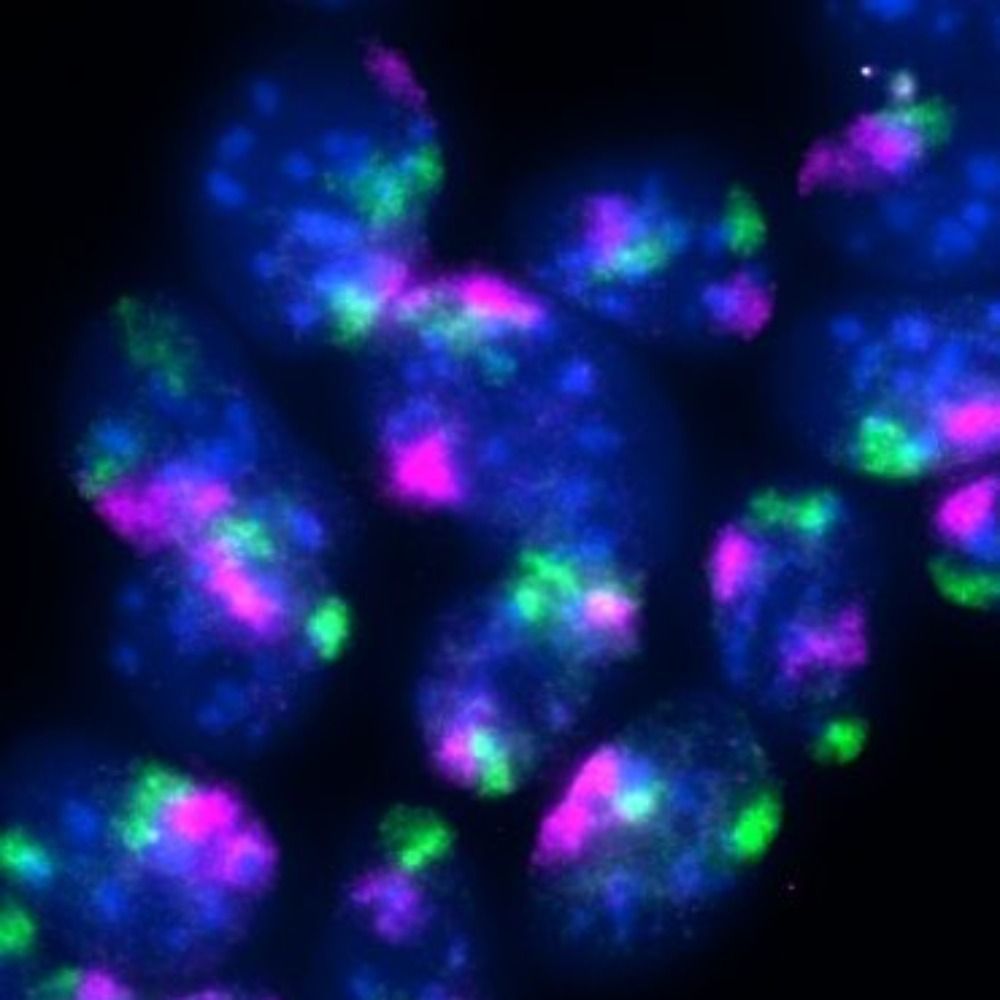
Here is a copy of last year's Twitter thread explaining our preprint - jump to (21) for the new stuff 👀
Synergy between cis-regulatory elements can render cohesin dispensable for distal enhancer function
now revised and journal accepted at www.science.org/doi/10.1126/...
🧵👇
Synergy between cis-regulatory elements can render cohesin dispensable for distal enhancer function
now revised and journal accepted at www.science.org/doi/10.1126/...
🧵👇
November 27, 2025 at 9:59 PM
Here is a copy of last year's Twitter thread explaining our preprint - jump to (21) for the new stuff 👀
Synergy between cis-regulatory elements can render cohesin dispensable for distal enhancer function
now revised and journal accepted at www.science.org/doi/10.1126/...
🧵👇
Synergy between cis-regulatory elements can render cohesin dispensable for distal enhancer function
now revised and journal accepted at www.science.org/doi/10.1126/...
🧵👇
Reposted by Stephen Rong

📣 I hereby make my Bluesky debut to announce that our work linking DNA binding affinities and kinetics 𝘪𝘯 𝘷𝘪𝘵𝘳𝘰 and 𝘪𝘯 𝘷𝘪𝘷𝘰 for the human transcription factor KLF1 just got published in Cell! @cp-cell.bsky.social
www.cell.com/cell/fulltex...
Key findings in a thread (1/6):
www.cell.com/cell/fulltex...
Key findings in a thread (1/6):

November 27, 2025 at 1:17 PM
📣 I hereby make my Bluesky debut to announce that our work linking DNA binding affinities and kinetics 𝘪𝘯 𝘷𝘪𝘵𝘳𝘰 and 𝘪𝘯 𝘷𝘪𝘷𝘰 for the human transcription factor KLF1 just got published in Cell! @cp-cell.bsky.social
www.cell.com/cell/fulltex...
Key findings in a thread (1/6):
www.cell.com/cell/fulltex...
Key findings in a thread (1/6):
Reposted by Stephen Rong
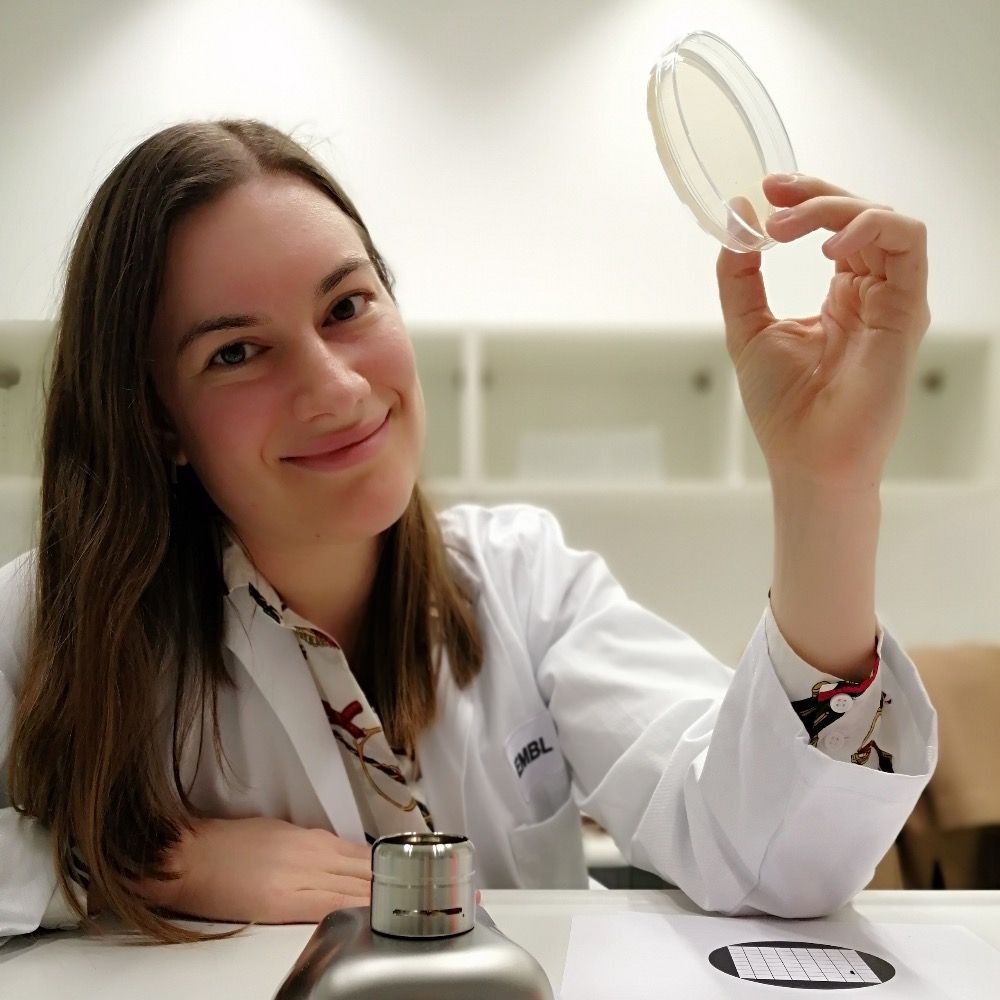
How do new centromeres evolve while staying compatible with the division machinery?
Discover it in our new Nature paper! We show centromeres transition gradually via a mix of drift, selection, and sex, reaching new states that still work with the kinetochore.
👉 doi.org/10.1038/s41586-025-09779-1
Discover it in our new Nature paper! We show centromeres transition gradually via a mix of drift, selection, and sex, reaching new states that still work with the kinetochore.
👉 doi.org/10.1038/s41586-025-09779-1

November 26, 2025 at 4:21 PM
How do new centromeres evolve while staying compatible with the division machinery?
Discover it in our new Nature paper! We show centromeres transition gradually via a mix of drift, selection, and sex, reaching new states that still work with the kinetochore.
👉 doi.org/10.1038/s41586-025-09779-1
Discover it in our new Nature paper! We show centromeres transition gradually via a mix of drift, selection, and sex, reaching new states that still work with the kinetochore.
👉 doi.org/10.1038/s41586-025-09779-1
Reposted by Stephen Rong

The last work of my PhD is finally out: www.pnas.org/doi/10.1073/...! This work is about accurately estimating branch length in the Ancestral Recombination Graph (ARG), which is achieved by a really simple framework with minimal assumptions. (1/n)
PNAS
Proceedings of the National Academy of Sciences (PNAS), a peer reviewed journal of the National Academy of Sciences (NAS) - an authoritative source of high-impact, original research that broadly spans...
www.pnas.org
November 25, 2025 at 8:27 PM
The last work of my PhD is finally out: www.pnas.org/doi/10.1073/...! This work is about accurately estimating branch length in the Ancestral Recombination Graph (ARG), which is achieved by a really simple framework with minimal assumptions. (1/n)
Reposted by Stephen Rong

This is a remarkable open access resource for genomic work on living great apes.
www.nature.com/articles/s41...
www.nature.com/articles/s41...

A curated dataset of great ape genome diversity - Scientific Data
Scientific Data - A curated dataset of great ape genome diversity
www.nature.com
November 25, 2025 at 3:13 PM
This is a remarkable open access resource for genomic work on living great apes.
www.nature.com/articles/s41...
www.nature.com/articles/s41...
Reposted by Stephen Rong

📣📣📣 Excited for our lab's latest preprint, led by Chief Ben-Eghan! www.medrxiv.org/content/10.1...
tl;dr We identify protein vQTLs in multiple ancestries then use MVMR to show independent effects of mean & variance on disease, suggesting targeting protein variance could have therapeutic potential.
tl;dr We identify protein vQTLs in multiple ancestries then use MVMR to show independent effects of mean & variance on disease, suggesting targeting protein variance could have therapeutic potential.


November 22, 2025 at 11:42 AM
📣📣📣 Excited for our lab's latest preprint, led by Chief Ben-Eghan! www.medrxiv.org/content/10.1...
tl;dr We identify protein vQTLs in multiple ancestries then use MVMR to show independent effects of mean & variance on disease, suggesting targeting protein variance could have therapeutic potential.
tl;dr We identify protein vQTLs in multiple ancestries then use MVMR to show independent effects of mean & variance on disease, suggesting targeting protein variance could have therapeutic potential.
Reposted by Stephen Rong

I wrote a little bit about the "missing heritability" question and several recent studies that have brought it to a close. A short 🧵

The missing heritability question is now (mostly) answered
Not with a bang but with a whimper
theinfinitesimal.substack.com
November 21, 2025 at 10:34 PM
I wrote a little bit about the "missing heritability" question and several recent studies that have brought it to a close. A short 🧵
Reposted by Stephen Rong
Many people hours, calls and messages later: OSTA is now “in (pre)print”, though the real thing lives at bioconductor.org/books/OSTA.
Check it out, get in touch. We welcome any feedback, suggestions, wishes (& contributions).
It’s been a joy working with you @estellayixingdong.bsky.social!
Check it out, get in touch. We welcome any feedback, suggestions, wishes (& contributions).
It’s been a joy working with you @estellayixingdong.bsky.social!
November 21, 2025 at 5:31 PM
Many people hours, calls and messages later: OSTA is now “in (pre)print”, though the real thing lives at bioconductor.org/books/OSTA.
Check it out, get in touch. We welcome any feedback, suggestions, wishes (& contributions).
It’s been a joy working with you @estellayixingdong.bsky.social!
Check it out, get in touch. We welcome any feedback, suggestions, wishes (& contributions).
It’s been a joy working with you @estellayixingdong.bsky.social!
Reposted by Stephen Rong

To celebrate the publication of the paper about GHIST 2024, the 2025 Genomic History Inference Strategies Tournament has been extended to December 1st, 2025.
Read about the 2024 competition in Molecular Biology and Evolution: doi.org/10.1093/molb...
And join the 2025 competition at ghist.bio!
Read about the 2024 competition in Molecular Biology and Evolution: doi.org/10.1093/molb...
And join the 2025 competition at ghist.bio!

GHIST 2024: The First Genomic History Inference Strategies Tournament
Abstract. Evaluating population genetic inference methods is challenging due to the complexity of evolutionary histories, potential model misspecification,
doi.org
November 10, 2025 at 8:49 PM
To celebrate the publication of the paper about GHIST 2024, the 2025 Genomic History Inference Strategies Tournament has been extended to December 1st, 2025.
Read about the 2024 competition in Molecular Biology and Evolution: doi.org/10.1093/molb...
And join the 2025 competition at ghist.bio!
Read about the 2024 competition in Molecular Biology and Evolution: doi.org/10.1093/molb...
And join the 2025 competition at ghist.bio!
Reposted by Stephen Rong

Hot off the press! Our latest paper led by @fernpizza.bsky.social, understanding how plasmids evolve inside cells. These small, self-replicating DNA circles live inside bacteria and carry antibiotic resistance genes, but also compete with one another to replicate. 1/
www.science.org/doi/10.1126/...
www.science.org/doi/10.1126/...

Intracellular competition shapes plasmid population dynamics
From populations of multicellular organisms to selfish genetic elements, conflicts between levels of biological organization are central to evolution. Plasmids are extrachromosomal, self-replicating g...
www.science.org
November 20, 2025 at 9:42 PM
Hot off the press! Our latest paper led by @fernpizza.bsky.social, understanding how plasmids evolve inside cells. These small, self-replicating DNA circles live inside bacteria and carry antibiotic resistance genes, but also compete with one another to replicate. 1/
www.science.org/doi/10.1126/...
www.science.org/doi/10.1126/...
Reposted by Stephen Rong

Population genetics simulations and analysis of experimental datasets in yeast, Drosophila and E. coli show that beneficial mutations are abundant but transient, as they become deleterious after environmental turnover (antagonistic pleiotropy)🧪 www.nature.com/articles/s41...

Adaptive tracking with antagonistic pleiotropy results in seemingly neutral molecular evolution - Nature Ecology & Evolution
Population genetics simulations and analysis of experimental datasets in yeast, Drosophila and E. coli show that beneficial mutations are abundant but transient, as they become deleterious after envir...
www.nature.com
November 20, 2025 at 4:31 PM
Population genetics simulations and analysis of experimental datasets in yeast, Drosophila and E. coli show that beneficial mutations are abundant but transient, as they become deleterious after environmental turnover (antagonistic pleiotropy)🧪 www.nature.com/articles/s41...
Reposted by Stephen Rong

My first @umasschan.bsky.social/@impvienna.bsky.social affiliated paper is up!
tomtom-lite is a re-implementation of tomtom targeting the ML age of genomics. Fast annotations ("what is this motif?") and simple large-scale discovery of motifs.
Check it out!
academic.oup.com/bioinformati...
tomtom-lite is a re-implementation of tomtom targeting the ML age of genomics. Fast annotations ("what is this motif?") and simple large-scale discovery of motifs.
Check it out!
academic.oup.com/bioinformati...
November 20, 2025 at 2:02 PM
My first @umasschan.bsky.social/@impvienna.bsky.social affiliated paper is up!
tomtom-lite is a re-implementation of tomtom targeting the ML age of genomics. Fast annotations ("what is this motif?") and simple large-scale discovery of motifs.
Check it out!
academic.oup.com/bioinformati...
tomtom-lite is a re-implementation of tomtom targeting the ML age of genomics. Fast annotations ("what is this motif?") and simple large-scale discovery of motifs.
Check it out!
academic.oup.com/bioinformati...
Reposted by Stephen Rong

We are pleased to announce a new preprint by @mlweilert.bsky.social: “Widespread low-affinity motifs enhance chromatin accessibility and regulatory potential in mESCs” (www.biorxiv.org/content/10.1...). See summary and longer recap below:
(TLDR; low-affinity motifs matter as pioneers!)
(TLDR; low-affinity motifs matter as pioneers!)

Widespread low-affinity motifs enhance chromatin accessibility and regulatory potential in mESCs
Low-affinity transcription factor (TF) motifs are an important element of the cis-regulatory code, yet they are notoriously difficult to map and mechanistically incompletely understood, limiting our a...
www.biorxiv.org
November 19, 2025 at 8:57 PM
We are pleased to announce a new preprint by @mlweilert.bsky.social: “Widespread low-affinity motifs enhance chromatin accessibility and regulatory potential in mESCs” (www.biorxiv.org/content/10.1...). See summary and longer recap below:
(TLDR; low-affinity motifs matter as pioneers!)
(TLDR; low-affinity motifs matter as pioneers!)
Reposted by Stephen Rong
Check out our newest work! This is a story on how to get selectivity in binders - both isoform and site selectivity. Read the paper or enjoy this brief Skytorial of what we did!
www.biorxiv.org/content/10.1...
1/n
www.biorxiv.org/content/10.1...
1/n

PANCS-spec-Binders: A system for rapidly discovering isoform- or epitope-specific binders
Proteins that bind to a target protein of interest, termed "binders," are essential components of biological research reagents and therapeutics. Target proteins present multiple binding surfaces with ...
www.biorxiv.org
November 19, 2025 at 6:10 PM
Check out our newest work! This is a story on how to get selectivity in binders - both isoform and site selectivity. Read the paper or enjoy this brief Skytorial of what we did!
www.biorxiv.org/content/10.1...
1/n
www.biorxiv.org/content/10.1...
1/n
Reposted by Stephen Rong

Wisconsin Evolution is accepting applications for our Seminar Series' Early Career Scientist Award. Come share your evolution research and visit UW-Madison's evolution community. Open to grad students and postdocs (<5 yrs post PhD) from outside UW-Madison.
Apply by Dec 15th here: shorturl.at/4a4O6
Apply by Dec 15th here: shorturl.at/4a4O6

Early Career Scientist Awards 2026
Application to the UW-Madison Evolution Seminar Series - Early Career Scientist Awards.
urldefense.com
November 19, 2025 at 8:55 PM
Wisconsin Evolution is accepting applications for our Seminar Series' Early Career Scientist Award. Come share your evolution research and visit UW-Madison's evolution community. Open to grad students and postdocs (<5 yrs post PhD) from outside UW-Madison.
Apply by Dec 15th here: shorturl.at/4a4O6
Apply by Dec 15th here: shorturl.at/4a4O6
Reposted by Stephen Rong

@hakha.bsky.social and I wrote a Research Briefing (with a lay summary + "behind the scenes") of our paper on how genes are prioritized by GWAS and rare variant burden tests. 🧬🧪
www.nature.com/articles/d41...
www.nature.com/articles/d41...

How do genetic association studies rank genes?
Genome-wide association studies and rare-variant burden tests reveal complementary aspects of trait biology.
www.nature.com
November 19, 2025 at 6:43 PM
@hakha.bsky.social and I wrote a Research Briefing (with a lay summary + "behind the scenes") of our paper on how genes are prioritized by GWAS and rare variant burden tests. 🧬🧪
www.nature.com/articles/d41...
www.nature.com/articles/d41...
Reposted by Stephen Rong

We are looking for a postdoctoral fellow to work on induced proximity 🤜🤛 and functional genomics! Join our team in Toronto 🇨🇦 to tackle major challenges in oncology and neurodegeneration. www.nature.com/naturecareer...

POSTDOCTORAL FELLOW - Toronto (City), Ontario (CA) job with Taipale Lab, Donnelly Centre, University of Toronto | 12849004
The Taipale lab in the Donnelly CCBR and University of Toronto is looking for a highly motivated Postdoctoral Fellow
www.nature.com
November 19, 2025 at 5:51 PM
We are looking for a postdoctoral fellow to work on induced proximity 🤜🤛 and functional genomics! Join our team in Toronto 🇨🇦 to tackle major challenges in oncology and neurodegeneration. www.nature.com/naturecareer...
Reposted by Stephen Rong

Connect with the UK’s #bioinformatics and #computationalbiology community at #ISCBUK 2026. Share your latest research, build new collaborations, and be part of this inaugural meeting.
Submissions are open until February 5, 2026.
📥 Submit: https://www.iscb.org/uk2026/call-for-submissions/abstracts
Submissions are open until February 5, 2026.
📥 Submit: https://www.iscb.org/uk2026/call-for-submissions/abstracts

November 19, 2025 at 11:16 AM
Connect with the UK’s #bioinformatics and #computationalbiology community at #ISCBUK 2026. Share your latest research, build new collaborations, and be part of this inaugural meeting.
Submissions are open until February 5, 2026.
📥 Submit: https://www.iscb.org/uk2026/call-for-submissions/abstracts
Submissions are open until February 5, 2026.
📥 Submit: https://www.iscb.org/uk2026/call-for-submissions/abstracts
Reposted by Stephen Rong

I'm a longtime fan of Affinity Designer as an affordable Illustrator-killer for figures, and... it's now free?! www.canva.com/newsroom/new...
Highly recommended if you're sick of paying Adobe $. Maybe Canva can buy NPG too and get rid of the OA fees.
Highly recommended if you're sick of paying Adobe $. Maybe Canva can buy NPG too and get rid of the OA fees.

Why we made Affinity free, and how we’ll keep it that way
We’ve made Affinity completely free, empowering professional designers with studio-grade creative software, supported by Canva’s sustainable ecosystem.
www.canva.com
November 18, 2025 at 11:28 PM
I'm a longtime fan of Affinity Designer as an affordable Illustrator-killer for figures, and... it's now free?! www.canva.com/newsroom/new...
Highly recommended if you're sick of paying Adobe $. Maybe Canva can buy NPG too and get rid of the OA fees.
Highly recommended if you're sick of paying Adobe $. Maybe Canva can buy NPG too and get rid of the OA fees.
Reposted by Stephen Rong

gggenomes: A Grammar of Graphics for Comparative Genomics thackl.github.io/gggenomes/ #Rstats

A Grammar of Graphics for Comparative Genomics
An extension of ggplot2 for creating complex genomic maps. It builds on the power of ggplot2 and tidyverse adding new ggplot2-style geoms & positions and dplyr-style verbs to manipulate the…
thackl.github.io
November 18, 2025 at 7:02 PM
gggenomes: A Grammar of Graphics for Comparative Genomics thackl.github.io/gggenomes/ #Rstats
Reposted by Stephen Rong

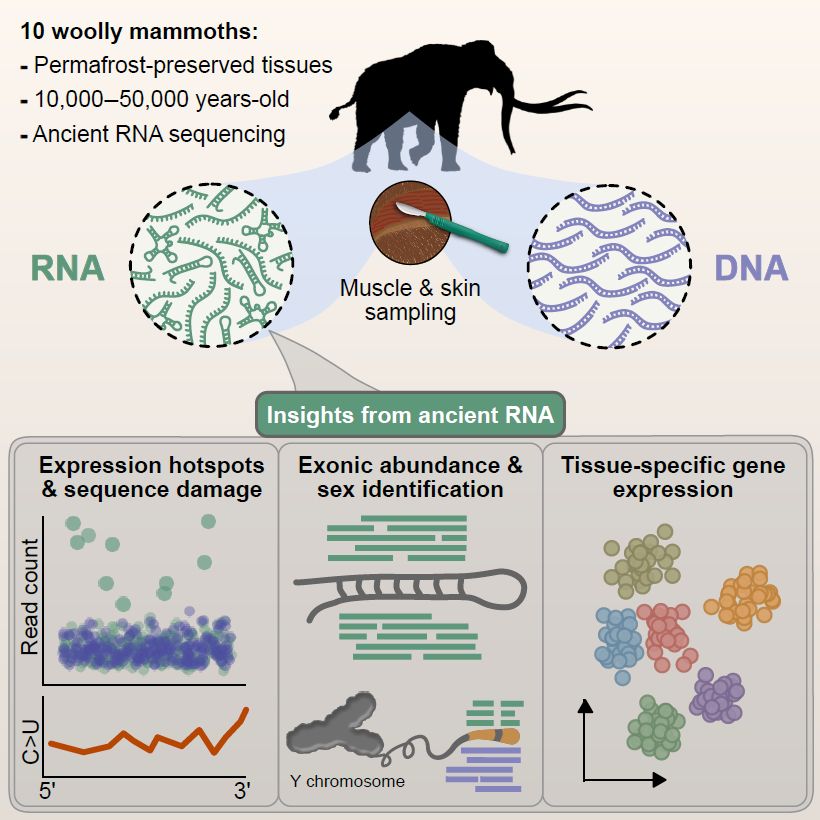
🦣🧬🦣🤯💥We are pleased to share our new paper about ancient RNA expression profiles from the Woolly Mammoth, now published in Cell @cellpress.bsky.social
www.cell.com/cell/fulltex...
If you want to know more, read the 🧵 below:
www.cell.com/cell/fulltex...
If you want to know more, read the 🧵 below:
November 14, 2025 at 4:08 PM
🦣🧬🦣🤯💥We are pleased to share our new paper about ancient RNA expression profiles from the Woolly Mammoth, now published in Cell @cellpress.bsky.social
www.cell.com/cell/fulltex...
If you want to know more, read the 🧵 below:
www.cell.com/cell/fulltex...
If you want to know more, read the 🧵 below:
Reposted by Stephen Rong
This study is WILD - some dinosaurs (reptiles) had hooves, and this is now the earliest known fossil of a hooved animal. Even crazier, mammals may have secondarily LOST their hooves through evolutionary adaptations (the origin of hooves is still kinda murky) www.science.org/doi/10.1126/...

November 16, 2025 at 3:25 PM
This study is WILD - some dinosaurs (reptiles) had hooves, and this is now the earliest known fossil of a hooved animal. Even crazier, mammals may have secondarily LOST their hooves through evolutionary adaptations (the origin of hooves is still kinda murky) www.science.org/doi/10.1126/...
Reposted by Stephen Rong

NEW pub in @science.org 🥳
Is it sponges (panels A & B) or comb jellies (C & D) that root the animal tree of life?
For over 15 years, #phylogenomic studies have been divided.
We provide new evidence suggesting that...
🔗: www.science.org/doi/10.1126/...
Is it sponges (panels A & B) or comb jellies (C & D) that root the animal tree of life?
For over 15 years, #phylogenomic studies have been divided.
We provide new evidence suggesting that...
🔗: www.science.org/doi/10.1126/...

November 13, 2025 at 8:34 PM
NEW pub in @science.org 🥳
Is it sponges (panels A & B) or comb jellies (C & D) that root the animal tree of life?
For over 15 years, #phylogenomic studies have been divided.
We provide new evidence suggesting that...
🔗: www.science.org/doi/10.1126/...
Is it sponges (panels A & B) or comb jellies (C & D) that root the animal tree of life?
For over 15 years, #phylogenomic studies have been divided.
We provide new evidence suggesting that...
🔗: www.science.org/doi/10.1126/...
Reposted by Stephen Rong

"What James Watson got wrong about DNA"
By the great Sohini Ramachandran (@sramach.bsky.social) and your boy for The Boston Globe (@bostonglobe.com).
www.bostonglobe.com/2025/11/14/o...
By the great Sohini Ramachandran (@sramach.bsky.social) and your boy for The Boston Globe (@bostonglobe.com).
www.bostonglobe.com/2025/11/14/o...
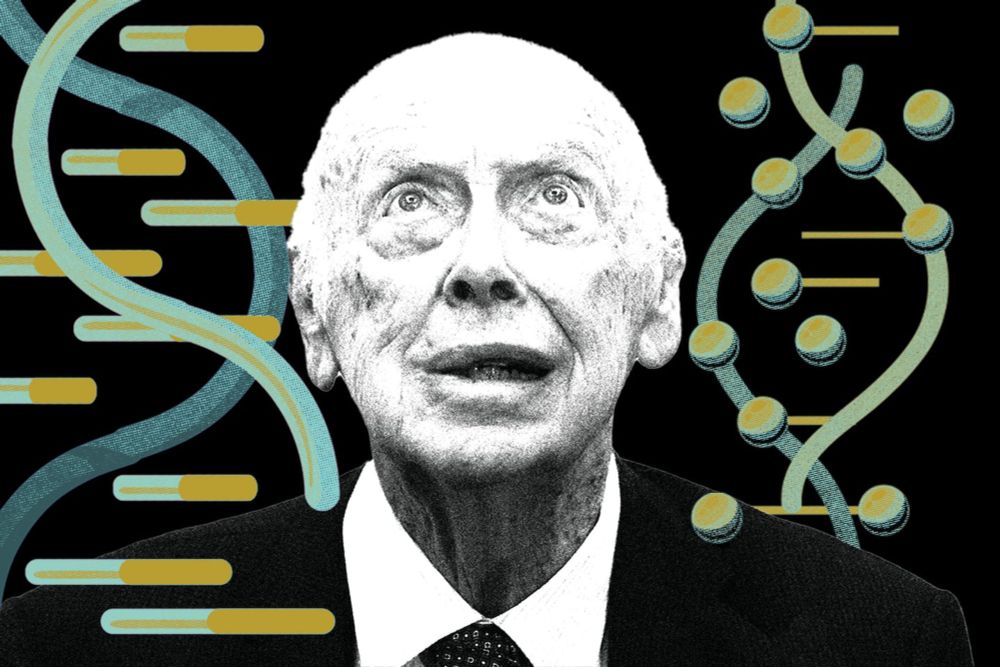
What James Watson got wrong about DNA - The Boston Globe
The science he helped pioneer consistently undermines his view that genes determine everything about us.
www.bostonglobe.com
November 14, 2025 at 4:50 PM
"What James Watson got wrong about DNA"
By the great Sohini Ramachandran (@sramach.bsky.social) and your boy for The Boston Globe (@bostonglobe.com).
www.bostonglobe.com/2025/11/14/o...
By the great Sohini Ramachandran (@sramach.bsky.social) and your boy for The Boston Globe (@bostonglobe.com).
www.bostonglobe.com/2025/11/14/o...