




Bornberglab
@bornberglab.bsky.social
Molecular evolution and bioinformatics at Uni Muenster, Germany. Protein evolution | domains | de novo genes | comparative evolutionary genomics
http://bornberglab.org/
http://bornberglab.org/
Pinned

Emergence and evolution of protein-coding de novo genes
Nature Reviews Genetics - De novo gene evolution entails the birth of new genes from previously non-coding DNA. In this Review, Bornberg-Bauer and Eicholt overview how protein-coding de novo genes...
rdcu.be
New review out in Nat Rev Genet: Emergence & evolution of protein-coding de novo genes by Erich and Lars Eicholt @lacholt.bsky.social. How non-coding DNA becomes translated, persists or is lost in populations, and can yield structured/functional proteins—plus methods & open questions! rdcu.be/e09SM
Reposted by Bornberglab
Check out our new review in Nature Reviews Genetics on de novo emerged genes and proteins. How they emerge, are lost and persist - and how de novo emerged proteins relate to randomized proteins! @bornberglab.bsky.social www.nature.com/articles/s41...
January 28, 2026 at 6:23 PM
Check out our new review in Nature Reviews Genetics on de novo emerged genes and proteins. How they emerge, are lost and persist - and how de novo emerged proteins relate to randomized proteins! @bornberglab.bsky.social www.nature.com/articles/s41...
New review out in Nat Rev Genet: Emergence & evolution of protein-coding de novo genes by Erich and Lars Eicholt @lacholt.bsky.social. How non-coding DNA becomes translated, persists or is lost in populations, and can yield structured/functional proteins—plus methods & open questions! rdcu.be/e09SM
Emergence and evolution of protein-coding de novo genes
Nature Reviews Genetics - De novo gene evolution entails the birth of new genes from previously non-coding DNA. In this Review, Bornberg-Bauer and Eicholt overview how protein-coding de novo genes...
rdcu.be
January 28, 2026 at 6:19 PM
New review out in Nat Rev Genet: Emergence & evolution of protein-coding de novo genes by Erich and Lars Eicholt @lacholt.bsky.social. How non-coding DNA becomes translated, persists or is lost in populations, and can yield structured/functional proteins—plus methods & open questions! rdcu.be/e09SM
Reposted by Bornberglab
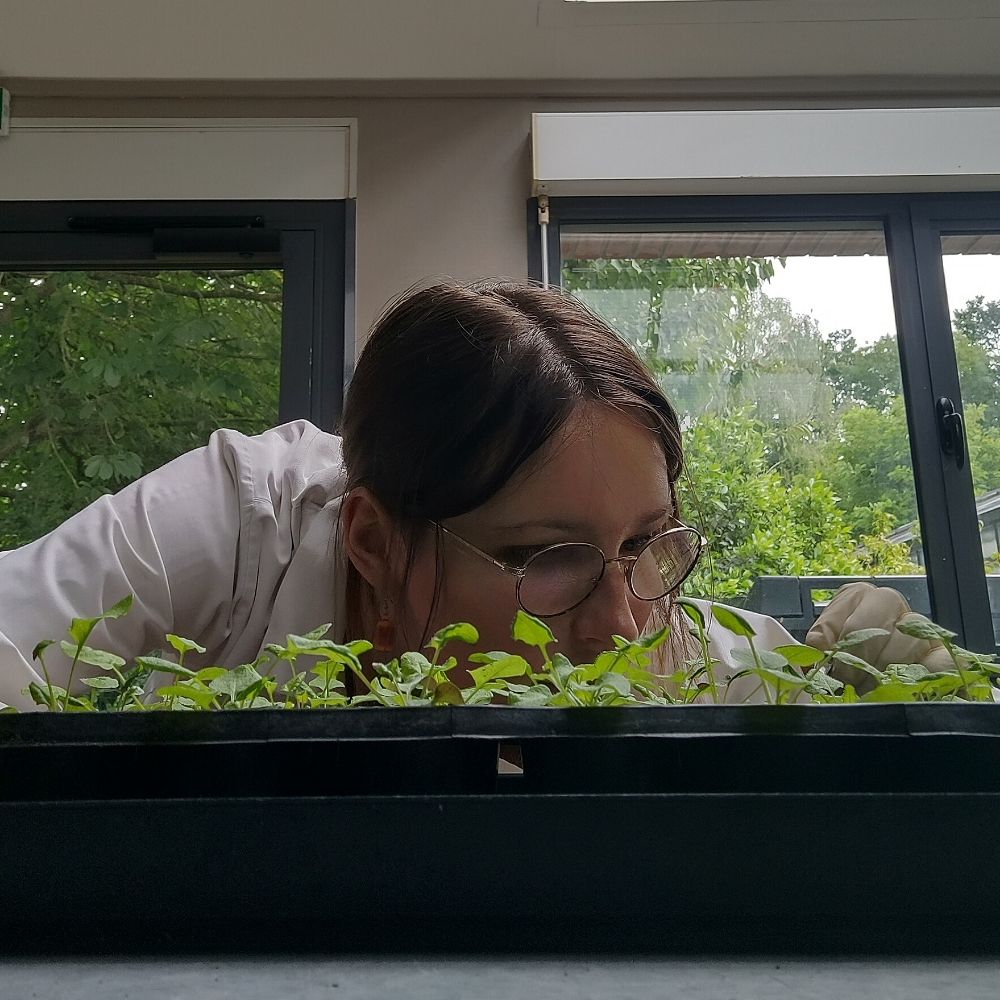
🧬 What does the starting material from which genes could emerge #denovo look like?
🌱 We used #RiboSeq to investigate the landscape of translated de novo ORFs in 3 #Arabidopsis species, and how they might be linked to gene birth!
📝 Check out our preprint here:
doi.org/10.1101/2025...
🌱 We used #RiboSeq to investigate the landscape of translated de novo ORFs in 3 #Arabidopsis species, and how they might be linked to gene birth!
📝 Check out our preprint here:
doi.org/10.1101/2025...
Pervasive translation of short open reading frames and de novo gene emergence in Arabidopsis
Ancestrally non-genic sequences are now widely recognized as potential reservoirs for the de novo emergence of new genes. Across clades, some de novo genes were proven to have substantial phenotypic effects, and to contribute to the emergence of novel biological functions. Yet, still very little is known about the starting material from which de novo genes emerge, especially in plants. To fill this gap, we generated Ribosome Profiling data from the closely related species Arabidopsis halleri, A. lyrata and A. thaliana and characterized genome-wide patterns of translation across them. Synteny analysis revealed 211 Open Reading Frames (ORFs) that have emerged de novo within the Arabidopsis genus and already exhibit signs of active translation. Most of these de novo translated ORFs were species- and even accession-specific, indicating their transient nature, with patterns of polymorphism consistent with neutral evolution in natural populations. They were also significantly shorter and less expressed than conserved Coding DNA Sequences (CDS), and their GC content increased with phylogenetic conservation. While most of them were located in intergenic regions and are thus newly discovered, 34 were previously annotated as CDS in at least one genome, and are promising putative genes. Our results demonstrate the abundance of translation events outside of conserved CDS, and their role as starting material for the emergence of novel genes in plants. ### Competing Interest Statement The authors have declared no competing interest. Université de Lille, https://ror.org/0546v5182
doi.org
January 20, 2026 at 10:58 AM
🧬 What does the starting material from which genes could emerge #denovo look like?
🌱 We used #RiboSeq to investigate the landscape of translated de novo ORFs in 3 #Arabidopsis species, and how they might be linked to gene birth!
📝 Check out our preprint here:
doi.org/10.1101/2025...
🌱 We used #RiboSeq to investigate the landscape of translated de novo ORFs in 3 #Arabidopsis species, and how they might be linked to gene birth!
📝 Check out our preprint here:
doi.org/10.1101/2025...
📢🪳 New paper alert!
Former group members Alina and Mark contributed to a new study just published in Nature Communications. The team generated 47 new high-quality genomes from termites and cockroaches, filling a major gap in available data.
Check out the paper here: www.nature.com/articles/s41...
Former group members Alina and Mark contributed to a new study just published in Nature Communications. The team generated 47 new high-quality genomes from termites and cockroaches, filling a major gap in available data.
Check out the paper here: www.nature.com/articles/s41...

Unravelling the evolution of wood-feeding in termites with 47 high-resolution genome assemblies - Nature Communications
Termites, the largest lineage of non-hymenopteran social insects, are important decomposers of plant organic matter in the tropics. Here, the authors sequence the genomes of 45 termites and two cockro...
www.nature.com
December 17, 2025 at 8:42 AM
📢🪳 New paper alert!
Former group members Alina and Mark contributed to a new study just published in Nature Communications. The team generated 47 new high-quality genomes from termites and cockroaches, filling a major gap in available data.
Check out the paper here: www.nature.com/articles/s41...
Former group members Alina and Mark contributed to a new study just published in Nature Communications. The team generated 47 new high-quality genomes from termites and cockroaches, filling a major gap in available data.
Check out the paper here: www.nature.com/articles/s41...
The IEB turned 20!🎉 We celebrated with an anniversary symposium with talks from many alumni, including several alumni from our group: @january3.github.io , Mark Harrison,
@ahuylmans.bsky.social , Bertrand Fouks, and
@sgrath.bsky.social . It was great to reconnect with many familiar faces. (1/2)😊
@ahuylmans.bsky.social , Bertrand Fouks, and
@sgrath.bsky.social . It was great to reconnect with many familiar faces. (1/2)😊

December 12, 2025 at 12:45 PM
The IEB turned 20!🎉 We celebrated with an anniversary symposium with talks from many alumni, including several alumni from our group: @january3.github.io , Mark Harrison,
@ahuylmans.bsky.social , Bertrand Fouks, and
@sgrath.bsky.social . It was great to reconnect with many familiar faces. (1/2)😊
@ahuylmans.bsky.social , Bertrand Fouks, and
@sgrath.bsky.social . It was great to reconnect with many familiar faces. (1/2)😊
Berndjan and Alina both successfully defended their PhDs this week. Berndjan worked on “Probing the evolvability of ancestral and extant sulfatases using fluorescence-activated droplet sorting (FADS)”. Alina looked at the “Genomic basis of sociality in order Blattodea”. Big congrats!🥳🎓🧫🪳


December 12, 2025 at 11:00 AM
Berndjan and Alina both successfully defended their PhDs this week. Berndjan worked on “Probing the evolvability of ancestral and extant sulfatases using fluorescence-activated droplet sorting (FADS)”. Alina looked at the “Genomic basis of sociality in order Blattodea”. Big congrats!🥳🎓🧫🪳
Last week, we wrapped up our Volkswagen Foundation–funded project with a wonderful final meeting in Uppsala, hosted by Ylva Ivarsson’s group. The photo shows members of our lab together with colleagues from the groups of @ivarssonlab.bsky.social , @hlouchova-lab.bsky.social and Florian Hollfelder.

December 12, 2025 at 10:49 AM
Last week, we wrapped up our Volkswagen Foundation–funded project with a wonderful final meeting in Uppsala, hosted by Ylva Ivarsson’s group. The photo shows members of our lab together with colleagues from the groups of @ivarssonlab.bsky.social , @hlouchova-lab.bsky.social and Florian Hollfelder.
Erich traveled to Berlin for the Schering Prize award ceremony, where he delivered the laudatio for Agnes Toth-Petroczy, this year’s recipient of the Schering Young Investigator Award. Warm congratulations to her!
Photo credits: Schering Stiftung/Michael Setzpfandt
Photo credits: Schering Stiftung/Michael Setzpfandt

December 12, 2025 at 10:43 AM
Erich traveled to Berlin for the Schering Prize award ceremony, where he delivered the laudatio for Agnes Toth-Petroczy, this year’s recipient of the Schering Young Investigator Award. Warm congratulations to her!
Photo credits: Schering Stiftung/Michael Setzpfandt
Photo credits: Schering Stiftung/Michael Setzpfandt
Reposted by Bornberglab
Postdoctoral Research Associates are sought for the GEvol project on evolutionary genomics. Candidates should have programming and data analysis skills. More info: https://g-evol.uni-muenster.de/open-positions/ #postdoc
Open Positions – GEvol – DFG SPP 2349
Open Positions – GEvol – DFG SPP 2349
g-evol.uni-muenster.de
December 3, 2025 at 3:32 PM
Postdoctoral Research Associates are sought for the GEvol project on evolutionary genomics. Candidates should have programming and data analysis skills. More info: https://g-evol.uni-muenster.de/open-positions/ #postdoc
Reposted by Bornberglab

📢 Job alert: Post-Doc Position in the project "Functional annotation of genomic🧬 innovations in a densely populated clade🪰 with deep learning 💻" Join the GEvol community in a collaborative project between @bornberglab.bsky.social and @katharinahoff.bsky.social lab.
👉 bornberglab.org/post-doc-pos...
👉 bornberglab.org/post-doc-pos...
Post-Doc – bornberglab.org
bornberglab.org
November 26, 2025 at 10:09 AM
📢 Job alert: Post-Doc Position in the project "Functional annotation of genomic🧬 innovations in a densely populated clade🪰 with deep learning 💻" Join the GEvol community in a collaborative project between @bornberglab.bsky.social and @katharinahoff.bsky.social lab.
👉 bornberglab.org/post-doc-pos...
👉 bornberglab.org/post-doc-pos...
Reposted by Bornberglab

🧩 Thrilled to share our new paper in @genomebiolevol.bsky.social !
We present a comprehensive review of de novo gene emergence — providing a classification of current detection methods and a roadmap for addressing major challenges in the field of gene birth from non-genic sequences.
We present a comprehensive review of de novo gene emergence — providing a classification of current detection methods and a roadmap for addressing major challenges in the field of gene birth from non-genic sequences.

November 12, 2025 at 3:42 PM
🧩 Thrilled to share our new paper in @genomebiolevol.bsky.social !
We present a comprehensive review of de novo gene emergence — providing a classification of current detection methods and a roadmap for addressing major challenges in the field of gene birth from non-genic sequences.
We present a comprehensive review of de novo gene emergence — providing a classification of current detection methods and a roadmap for addressing major challenges in the field of gene birth from non-genic sequences.
Reposted by Bornberglab
🚀We’re excited to share our new paper in Bioinformatics!
We introduce a user-friendly toolkit that implements our novel DeNoFo file-format for standardised annotation of de novo gene detection workflows — enabling reproducible methodology descriptions and easier dataset comparison across studies.
We introduce a user-friendly toolkit that implements our novel DeNoFo file-format for standardised annotation of de novo gene detection workflows — enabling reproducible methodology descriptions and easier dataset comparison across studies.

November 12, 2025 at 12:41 PM
🚀We’re excited to share our new paper in Bioinformatics!
We introduce a user-friendly toolkit that implements our novel DeNoFo file-format for standardised annotation of de novo gene detection workflows — enabling reproducible methodology descriptions and easier dataset comparison across studies.
We introduce a user-friendly toolkit that implements our novel DeNoFo file-format for standardised annotation of de novo gene detection workflows — enabling reproducible methodology descriptions and easier dataset comparison across studies.
Reposted by Bornberglab
🎉We are happy to announce that our wonderful GEvol SPP will be funded by @dfg.de for another 3 years. Included are 17 great projects all over Germany with amazing people. You want to be part of this fantastic community? Soon you can find new PhD/Post-Doc positions here & on our website. Stay tuned🎉
November 10, 2025 at 11:39 AM
🎉We are happy to announce that our wonderful GEvol SPP will be funded by @dfg.de for another 3 years. Included are 17 great projects all over Germany with amazing people. You want to be part of this fantastic community? Soon you can find new PhD/Post-Doc positions here & on our website. Stay tuned🎉
Reposted by Bornberglab
The DeNoFo format & toolkit for annotating, assessing and comparing the tools and tresholds used in studies of de novo evolved genes is out now in Bioinformatics! Great effort led by @drdomain.bsky.social and Anna Grandchamp!
academic.oup.com/bioinformati...
academic.oup.com/bioinformati...
November 3, 2025 at 7:47 PM
The DeNoFo format & toolkit for annotating, assessing and comparing the tools and tresholds used in studies of de novo evolved genes is out now in Bioinformatics! Great effort led by @drdomain.bsky.social and Anna Grandchamp!
academic.oup.com/bioinformati...
academic.oup.com/bioinformati...
Reposted by Bornberglab
📢 Check out our GEvol inspired Special Issue in JEZ-B:
onlinelibrary.wiley.com/toc/15525015... 🚨
onlinelibrary.wiley.com/toc/15525015... 🚨

Genomic Basis of Evolutionary Innovations in Insects: Journal of Experimental Zoology Part B: Molecular and Developmental Evolution: Vol 344, No 7
The Journal of Experimental Zoology – B (JEZ-B): Molecular and Developmental Evolution covers the structure & evolution of animal & non-animal organisms.
onlinelibrary.wiley.com
November 3, 2025 at 7:41 AM
📢 Check out our GEvol inspired Special Issue in JEZ-B:
onlinelibrary.wiley.com/toc/15525015... 🚨
onlinelibrary.wiley.com/toc/15525015... 🚨
Reposted by Bornberglab

We are in Bluesky and we are happy to share our two last consortium publications: the DrosEU expanded DEST dataset and a Continent-wide study of phenotypic differentiation among European #Drosophila melanogaster populations (1/7)


October 19, 2025 at 9:35 AM
We are in Bluesky and we are happy to share our two last consortium publications: the DrosEU expanded DEST dataset and a Continent-wide study of phenotypic differentiation among European #Drosophila melanogaster populations (1/7)
Reposted by Bornberglab
The next Protein Structure Evolution Seminar will be given by Stephen Fried (JHU):
Title: “Who Cares About Protein Refolding Anyway?: Why Some Microbes Do and Others Don’t”
Date: October 14th, 5 pm CET
Registration link: tinyurl.com/prose-seminar2
Title: “Who Cares About Protein Refolding Anyway?: Why Some Microbes Do and Others Don’t”
Date: October 14th, 5 pm CET
Registration link: tinyurl.com/prose-seminar2


October 6, 2025 at 7:22 AM
The next Protein Structure Evolution Seminar will be given by Stephen Fried (JHU):
Title: “Who Cares About Protein Refolding Anyway?: Why Some Microbes Do and Others Don’t”
Date: October 14th, 5 pm CET
Registration link: tinyurl.com/prose-seminar2
Title: “Who Cares About Protein Refolding Anyway?: Why Some Microbes Do and Others Don’t”
Date: October 14th, 5 pm CET
Registration link: tinyurl.com/prose-seminar2
New Paper Alert! Our group member Matthew Merski published a paper about new potential therapeutic leads against the parasite Trypanosoma brucei, causing the African Sleeping sickness. They used molecular docking on known, approved (FDA) drugs to find (1/2)
journals.plos.org/plosntds/art...
journals.plos.org/plosntds/art...

Molecular docking to homology models of human and Trypanosoma brucei ERK8 that identified ortholog-specific inhibitors
Author summary The discovery and production of safe and effective therapeutics for treating people suffering from neglected tropical diseases, such as sleeping sickness caused by the pathogen Trypanos...
journals.plos.org
September 16, 2025 at 12:57 PM
New Paper Alert! Our group member Matthew Merski published a paper about new potential therapeutic leads against the parasite Trypanosoma brucei, causing the African Sleeping sickness. They used molecular docking on known, approved (FDA) drugs to find (1/2)
journals.plos.org/plosntds/art...
journals.plos.org/plosntds/art...
We had a great time at the Long Night of Insects at the LWL Museum of Natural History in Münster! From watching a cockroach race to exploring and ant farm and info booths there was much to discover. Marie even joined the science slam. What a great way to wrap up our @gevol.bsky.social meeting!🐜✨🪰🪳


September 9, 2025 at 11:09 AM
We had a great time at the Long Night of Insects at the LWL Museum of Natural History in Münster! From watching a cockroach race to exploring and ant farm and info booths there was much to discover. Marie even joined the science slam. What a great way to wrap up our @gevol.bsky.social meeting!🐜✨🪰🪳
Reposted by Bornberglab
Many thanks to all GEvol members for a truly wonderful annual meeting. It was really great to catch up with you all again.

September 5, 2025 at 2:05 PM
Many thanks to all GEvol members for a truly wonderful annual meeting. It was really great to catch up with you all again.
Erich and Marie travelled to Barcelona for #ESEB2025. Erich gave two talks: one exploring de novo and random proteins, and another discussing gene family losses in slave-maker ants. Marie presented her work on neORF emergence in Drosophila at Symposium 29, organised by @gevol.bsky.social. 🧬🪰🐜


August 25, 2025 at 7:49 AM
Erich and Marie travelled to Barcelona for #ESEB2025. Erich gave two talks: one exploring de novo and random proteins, and another discussing gene family losses in slave-maker ants. Marie presented her work on neORF emergence in Drosophila at Symposium 29, organised by @gevol.bsky.social. 🧬🪰🐜
Reposted by Bornberglab
Lots of inspiring talks & posters at our GEvol symposium at #ESEB2025 yesterday!
Thanks to everyone who presented, especially our invited speakers @ahuylmans.bsky.social & @rmwaterhouse.bsky.social. From GEvol, Marie Lebherz, Elisa Israel and Barbara Feldmeyer gave talks about their work. (1/2)
Thanks to everyone who presented, especially our invited speakers @ahuylmans.bsky.social & @rmwaterhouse.bsky.social. From GEvol, Marie Lebherz, Elisa Israel and Barbara Feldmeyer gave talks about their work. (1/2)


August 20, 2025 at 12:32 PM
Lots of inspiring talks & posters at our GEvol symposium at #ESEB2025 yesterday!
Thanks to everyone who presented, especially our invited speakers @ahuylmans.bsky.social & @rmwaterhouse.bsky.social. From GEvol, Marie Lebherz, Elisa Israel and Barbara Feldmeyer gave talks about their work. (1/2)
Thanks to everyone who presented, especially our invited speakers @ahuylmans.bsky.social & @rmwaterhouse.bsky.social. From GEvol, Marie Lebherz, Elisa Israel and Barbara Feldmeyer gave talks about their work. (1/2)
Erich travelled to Marseilles this week and visited former postdocs, now PIs, Anna Grandchamp and Nicolas Terrapon. Great to catch up with both of them! ☀️

August 17, 2025 at 6:50 AM
Erich travelled to Marseilles this week and visited former postdocs, now PIs, Anna Grandchamp and Nicolas Terrapon. Great to catch up with both of them! ☀️
Reposted by Bornberglab
A night full of fun, science and insects: We invite you to join our “Lange Nacht der Insekten” on Sept. 5th, 6pm until midnight, at LWL Museum of Natural History in Münster. Bring your family and friends and explore an ant farm, watch a science slam and visit the planetarium! Entrance is free.

August 13, 2025 at 11:37 AM
A night full of fun, science and insects: We invite you to join our “Lange Nacht der Insekten” on Sept. 5th, 6pm until midnight, at LWL Museum of Natural History in Münster. Bring your family and friends and explore an ant farm, watch a science slam and visit the planetarium! Entrance is free.
We are proud of our master student Brenda who did a research module at the Earth-Life Science Institute (ELSI) in Tokyo, working on enzymatic nucleotide phosphorylation focusing on the PPK2 Class III enzyme MAN (1/2).


July 22, 2025 at 1:48 PM
We are proud of our master student Brenda who did a research module at the Earth-Life Science Institute (ELSI) in Tokyo, working on enzymatic nucleotide phosphorylation focusing on the PPK2 Class III enzyme MAN (1/2).