



Casey Breen
@caseybreen.bsky.social
Demographer. Assistant Professor @ UT-Austin.
caseybreen.com
caseybreen.com
Pinned
Casey Breen
@caseybreen.bsky.social
· Oct 15

Mapping subnational gender gaps in internet and mobile adoption using social media data | PNAS
The digital revolution has ushered in many societal and economic benefits. Yet access
to digital technologies such as mobile phones and internet re...
www.pnas.org
New @pnas.org paper constructing subnational estimates of internet and mobile adoption by gender, including gender gaps, for 117 low- and middle- income countries from 2015 through 2025.
www.pnas.org/doi/10.1073/...
www.pnas.org/doi/10.1073/...
Highly recommend blocking off some time today to read this fantastic paper!
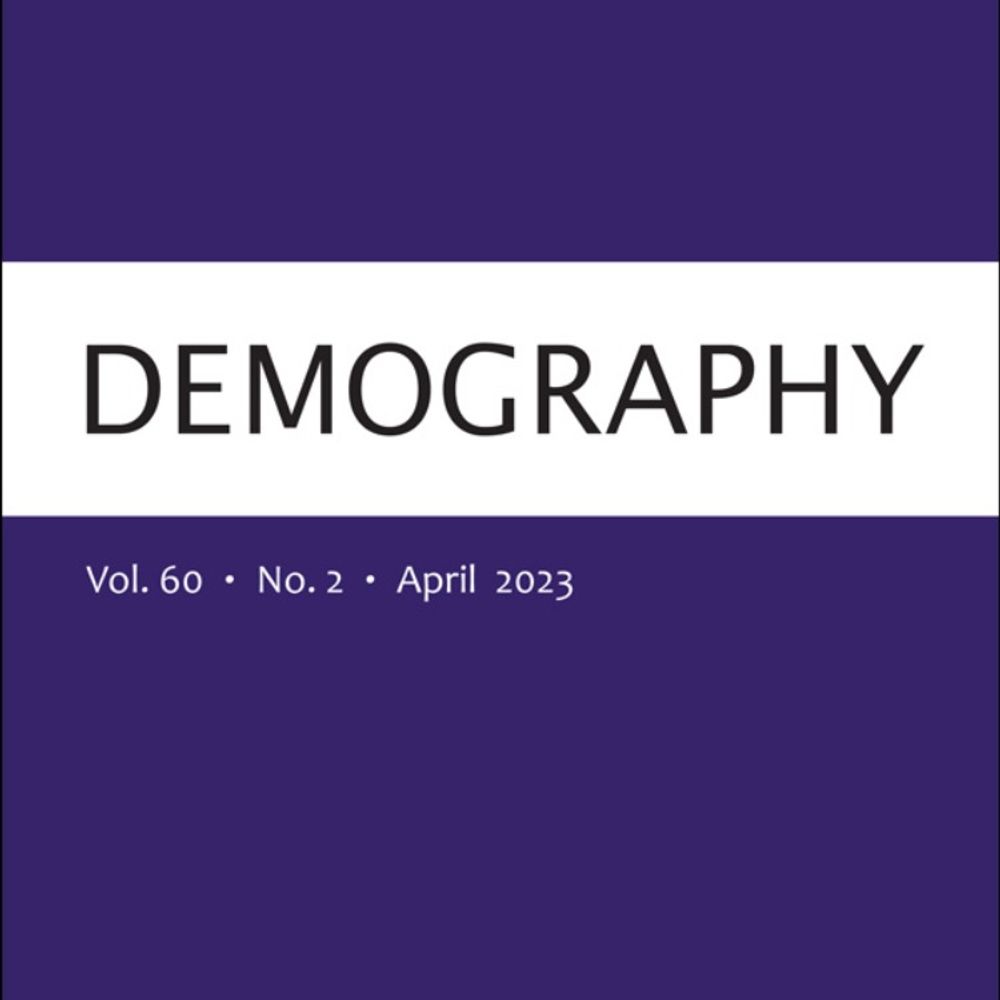
In “Bayesian Projection of Extant Refugee & Asylum Seeker Populations,” @herbps10.bsky.social & @adrianraftery.bsky.social propose a time-series model for projecting refugee & asylum seeker population statistics by country of origin. @nyumedpostdocs.bsky.social read.dukeupress.edu/demography/a...


December 5, 2025 at 4:25 PM
Highly recommend blocking off some time today to read this fantastic paper!
Reposted by Casey Breen

Our paper with Ginevra Floridi out in Sociological Science now!
We use sequence analysis, LCA & survival models to map how parental financial and co-residential support unfolds across young adulthood. We find 3 distinct pathways & a gendered relationship between marriage and independence.
🏡🧑🧑🧒🧒💸
We use sequence analysis, LCA & survival models to map how parental financial and co-residential support unfolds across young adulthood. We find 3 distinct pathways & a gendered relationship between marriage and independence.
🏡🧑🧑🧒🧒💸
November 26, 2025 at 2:59 PM
Our paper with Ginevra Floridi out in Sociological Science now!
We use sequence analysis, LCA & survival models to map how parental financial and co-residential support unfolds across young adulthood. We find 3 distinct pathways & a gendered relationship between marriage and independence.
🏡🧑🧑🧒🧒💸
We use sequence analysis, LCA & survival models to map how parental financial and co-residential support unfolds across young adulthood. We find 3 distinct pathways & a gendered relationship between marriage and independence.
🏡🧑🧑🧒🧒💸
Reposted by Casey Breen

I’m recruiting a postdoctoral associate at NYU Abu Dhabi. Position is for 3 years with excellent salary, housing and benefits. Please share widely. For more information and application, link ⬇️
apply.interfolio.com/177935
apply.interfolio.com/177935
Apply - Interfolio
{{$ctrl.$state.data.pageTitle}} - Apply - Interfolio
apply.interfolio.com
November 19, 2025 at 2:40 PM
I’m recruiting a postdoctoral associate at NYU Abu Dhabi. Position is for 3 years with excellent salary, housing and benefits. Please share widely. For more information and application, link ⬇️
apply.interfolio.com/177935
apply.interfolio.com/177935
Favorite books on *undergraduate* teaching?
November 20, 2025 at 3:55 PM
Favorite books on *undergraduate* teaching?
Reposted by Casey Breen

New working paper up on SocArxiv! osf.io/preprints/so.... I use the 1940 Census and linked mortality records in combination with an IV-design to study the causal effects of racial segregation on longevity. I show that segregation reduces both Black and White longevity.

November 13, 2025 at 2:52 PM
New working paper up on SocArxiv! osf.io/preprints/so.... I use the 1940 Census and linked mortality records in combination with an IV-design to study the causal effects of racial segregation on longevity. I show that segregation reduces both Black and White longevity.
This method would benefit from more application, validation, and refinement in real humanitarian settings ...
Special thanks to fantastic collaborators from NGO @impact-initiatives.bsky.social for supporting methods development in this space!
Special thanks to fantastic collaborators from NGO @impact-initiatives.bsky.social for supporting methods development in this space!
November 19, 2025 at 5:16 AM
This method would benefit from more application, validation, and refinement in real humanitarian settings ...
Special thanks to fantastic collaborators from NGO @impact-initiatives.bsky.social for supporting methods development in this space!
Special thanks to fantastic collaborators from NGO @impact-initiatives.bsky.social for supporting methods development in this space!
This design could be deployed remotely in settings where operational constraints prevent humanitarian groups from reaching insecure areas, meaning it could potentially be applied to estimate death rates in a wide range of humanitarian emergencies.
November 19, 2025 at 5:16 AM
This design could be deployed remotely in settings where operational constraints prevent humanitarian groups from reaching insecure areas, meaning it could potentially be applied to estimate death rates in a wide range of humanitarian emergencies.
This new method can be used to monitor trends in crude death rates over time.

November 19, 2025 at 5:16 AM
This new method can be used to monitor trends in crude death rates over time.
However, the household estimate from the *probability* sample was much higher than other estimates, which may reflect strategic over-reporting (high levels of NGO operations in the area have been hypothesized to create incentives to overreport deaths).

November 19, 2025 at 5:16 AM
However, the household estimate from the *probability* sample was much higher than other estimates, which may reflect strategic over-reporting (high levels of NGO operations in the area have been hypothesized to create incentives to overreport deaths).
From the quota sample, our estimates based on different types of respondent reports (i.e., reports on neighbors, kin, and household) produce similar and plausible crude death rate estimates.
As we reweighted to account for selection into the quota sample, the estimated death rates increased.
As we reweighted to account for selection into the quota sample, the estimated death rates increased.

November 19, 2025 at 5:16 AM
From the quota sample, our estimates based on different types of respondent reports (i.e., reports on neighbors, kin, and household) produce similar and plausible crude death rate estimates.
As we reweighted to account for selection into the quota sample, the estimated death rates increased.
As we reweighted to account for selection into the quota sample, the estimated death rates increased.
To account for selection into our quota sample, we constructed survey weights under several scenarios reflecting different hypothetical levels of auxiliary data availability for weighting targets.

November 19, 2025 at 5:16 AM
To account for selection into our quota sample, we constructed survey weights under several scenarios reflecting different hypothetical levels of auxiliary data availability for weighting targets.
An advantage of the network approach is that each interview provides mortality information on many more people than a typical mortality survey that asks respondents only about their household or siblings.

November 19, 2025 at 5:16 AM
An advantage of the network approach is that each interview provides mortality information on many more people than a typical mortality survey that asks respondents only about their household or siblings.
Qualitative fieldwork suggested testing two different types of personal networks as the basis for estimates: deaths among immediate neighbors and deaths among kin.

November 19, 2025 at 5:16 AM
Qualitative fieldwork suggested testing two different types of personal networks as the basis for estimates: deaths among immediate neighbors and deaths among kin.
We did several weeks of in-person fieldwork (cognitive interviews, focus groups, etc.) to better understand the types of social networks people could report accurately on in this setting.
November 19, 2025 at 5:16 AM
We did several weeks of in-person fieldwork (cognitive interviews, focus groups, etc.) to better understand the types of social networks people could report accurately on in this setting.
— Quota sample: sampled respondents from 3 health zones at major transit hubs (e.g., markets, taxi stops, ports, health clinics, and footpaths) who were coming into Kalemie City (N = 2,526)
— Probability sample: sampled respondents probabilistically across 3 health zones in their HH (N = 2,785)
— Probability sample: sampled respondents probabilistically across 3 health zones in their HH (N = 2,785)
November 19, 2025 at 5:16 AM
— Quota sample: sampled respondents from 3 health zones at major transit hubs (e.g., markets, taxi stops, ports, health clinics, and footpaths) who were coming into Kalemie City (N = 2,526)
— Probability sample: sampled respondents probabilistically across 3 health zones in their HH (N = 2,785)
— Probability sample: sampled respondents probabilistically across 3 health zones in their HH (N = 2,785)
We collected original data in Tanganyika Province, Democratic Republic of the Congo, a realistic setting where such emergencies have happened in the past.
Study design involved two data collection efforts: a quota sample possible in a humanitarian emergency and probability comparator sample.
Study design involved two data collection efforts: a quota sample possible in a humanitarian emergency and probability comparator sample.

November 19, 2025 at 5:16 AM
We collected original data in Tanganyika Province, Democratic Republic of the Congo, a realistic setting where such emergencies have happened in the past.
Study design involved two data collection efforts: a quota sample possible in a humanitarian emergency and probability comparator sample.
Study design involved two data collection efforts: a quota sample possible in a humanitarian emergency and probability comparator sample.
We adapt the network survival method to the unique setting of humanitarian emergencies.
The idea behind the network survival method is that respondents can report on 1) the size of their social network and 2) deaths in their social networks. This info can be aggregated to estimate death rates.
The idea behind the network survival method is that respondents can report on 1) the size of their social network and 2) deaths in their social networks. This info can be aggregated to estimate death rates.

November 19, 2025 at 5:16 AM
We adapt the network survival method to the unique setting of humanitarian emergencies.
The idea behind the network survival method is that respondents can report on 1) the size of their social network and 2) deaths in their social networks. This info can be aggregated to estimate death rates.
The idea behind the network survival method is that respondents can report on 1) the size of their social network and 2) deaths in their social networks. This info can be aggregated to estimate death rates.
Reliable estimates of death rates in complex humanitarian emergencies are critical for assessing the severity of a crisis and for allocating resources. However, in many humanitarian settings, logistical and security concerns make conventional methods for estimating death rates infeasible.
November 19, 2025 at 5:16 AM
Reliable estimates of death rates in complex humanitarian emergencies are critical for assessing the severity of a crisis and for allocating resources. However, in many humanitarian settings, logistical and security concerns make conventional methods for estimating death rates infeasible.
Our new paper develops and tests a network-based method for estimating death rates in complex humanitarian emergencies.
Joint w/ @dennisfeehan.bsky.social and team from Geneva-based NGO @impact-initiatives.bsky.social
academic.oup.com/aje/advance-...
Joint w/ @dennisfeehan.bsky.social and team from Geneva-based NGO @impact-initiatives.bsky.social
academic.oup.com/aje/advance-...

Estimating death rates in complex humanitarian emergencies using the network survival method
Abstract. Reliable estimates of death rates in complex humanitarian emergencies are critical for assessing the severity of a crisis and for effectively all
academic.oup.com
November 19, 2025 at 5:16 AM
Our new paper develops and tests a network-based method for estimating death rates in complex humanitarian emergencies.
Joint w/ @dennisfeehan.bsky.social and team from Geneva-based NGO @impact-initiatives.bsky.social
academic.oup.com/aje/advance-...
Joint w/ @dennisfeehan.bsky.social and team from Geneva-based NGO @impact-initiatives.bsky.social
academic.oup.com/aje/advance-...
Reposted by Casey Breen

Our new pub finds flooding impacts on fertility differ in Bangladesh: “We detect…flood-related increases in childbearing among less-educated and higher parity women but find flood-related fertility declines among childless women and those in urban areas.”
November 3, 2025 at 6:00 PM
Our new pub finds flooding impacts on fertility differ in Bangladesh: “We detect…flood-related increases in childbearing among less-educated and higher parity women but find flood-related fertility declines among childless women and those in urban areas.”
Reposted by Casey Breen
Pleased to be part of the history making "IPUMS USA Full Count Census Data" special issue in Historical Methods 58(4). @ipums.bsky.social @stevenruggles.bsky.social @mattanelson.bsky.social @juliariveradrew.bsky.social @evanrobertsnz.bsky.social www.tandfonline.com/toc/vhim20/5...

Historical Methods: A Journal of Quantitative and Interdisciplinary History
IPUMS USA Full Count Census Data Collection. Volume 58, Issue 4 of Historical Methods: A Journal of Quantitative and Interdisciplinary History
www.tandfonline.com
October 31, 2025 at 5:21 PM
Pleased to be part of the history making "IPUMS USA Full Count Census Data" special issue in Historical Methods 58(4). @ipums.bsky.social @stevenruggles.bsky.social @mattanelson.bsky.social @juliariveradrew.bsky.social @evanrobertsnz.bsky.social www.tandfonline.com/toc/vhim20/5...
Reposted by Casey Breen

New publication with @susanshort.bsky.social in @lancetrh-americ.bsky.social. We analyzed 2025 revisions to womenshealth[dot]gov under the Trump administration -documenting how credible health content was replaced with ideology: www.sciencedirect.com/science/arti...

Rewriting women's health: a content analysis of the Trump administration's revisions to womenshealth.gov
In 2025, the Trump administration instituted rapid changes to the data and information available on US government websites. We conducted a content ana…
www.sciencedirect.com
October 30, 2025 at 5:54 PM
New publication with @susanshort.bsky.social in @lancetrh-americ.bsky.social. We analyzed 2025 revisions to womenshealth[dot]gov under the Trump administration -documenting how credible health content was replaced with ideology: www.sciencedirect.com/science/arti...
Reposted by Casey Breen

Oh hey, little update. Indiana University Department of Sociology is hiring this fall. Keeping you on your toes deadline is 11/16. We’re looking for an assistant professor specializing in sociology of medicine, health, and/or well-being broadly defined. indiana.peopleadmin.com/postings/30984

October 26, 2025 at 3:51 PM
Oh hey, little update. Indiana University Department of Sociology is hiring this fall. Keeping you on your toes deadline is 11/16. We’re looking for an assistant professor specializing in sociology of medicine, health, and/or well-being broadly defined. indiana.peopleadmin.com/postings/30984
Reposted by Casey Breen

Women are 19% less likely to use the internet and 8% less likely to own a mobile phone than men.
That’s 320 million fewer women online and 190 million fewer with phones globally 🌍
That’s 320 million fewer women online and 190 million fewer with phones globally 🌍

October 24, 2025 at 12:26 PM
Women are 19% less likely to use the internet and 8% less likely to own a mobile phone than men.
That’s 320 million fewer women online and 190 million fewer with phones globally 🌍
That’s 320 million fewer women online and 190 million fewer with phones globally 🌍