



Uri Wolkowski
@deinocurious.bsky.social
M.Sc. student in Evolutionary and Environmental Biology | Studying hartebeest 🐐 ancient DNA 🧬 🦴 and Ecological Niche Modelling 🌍 🌧️| likes hiking, birding, and all wildlife living and extinct 🏔️ 🦅 🦤 🐆 🦣
Pinned


I'm glad to share my M.Sc thesis about the extinct Levantine #hartebeest , now published and #openaccess ! Link following 🧵
The hartebeest is a staple antelope of eastern and southern African savannahs. However, the species had a far wider past distribution 1/13
The hartebeest is a staple antelope of eastern and southern African savannahs. However, the species had a far wider past distribution 1/13
Featured today is one of the fossils that stumped Darwin: Toxodon! This beast proved challenging for young Darwin to identify, featuring rodent-like, ever growing teeth - albeit much bigger than any living rodent! Richard Owen, later Darwin's rival, formally described and named them. #FossilFriday

February 13, 2026 at 7:21 PM
Featured today is one of the fossils that stumped Darwin: Toxodon! This beast proved challenging for young Darwin to identify, featuring rodent-like, ever growing teeth - albeit much bigger than any living rodent! Richard Owen, later Darwin's rival, formally described and named them. #FossilFriday
For #FossilFriday , preserved fur and osteoderms (base for underlying armor) of Darwin's ground sloth, Mylodon darwinii

February 6, 2026 at 8:11 PM
For #FossilFriday , preserved fur and osteoderms (base for underlying armor) of Darwin's ground sloth, Mylodon darwinii
We got evidence for a porcupine dinosaur before GTA 6
Zero expectations but double the amazement!
Zero expectations but double the amazement!
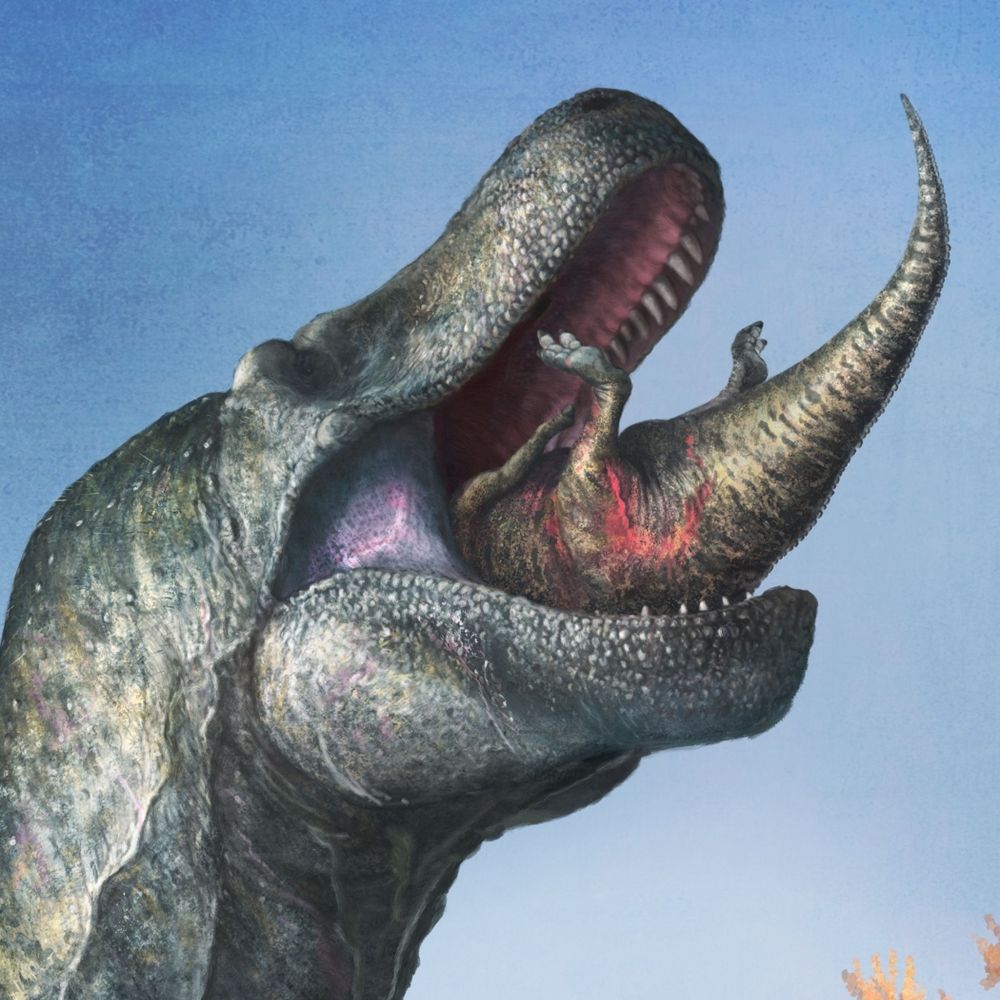
Finally, another fuzzy ornithischian: www.nature.com/articles/s41.... This is a big deal for dinosaur #paleoart, confirming some of what we've been doing for a while now, but also showing that we've probably underestimated how weird the integuments of these animals could be.

Cellular-level preservation of cutaneous spikes in an Early Cretaceous iguanodontian dinosaur - Nature Ecology & Evolution
A juvenile iguanodontian from the Lower Cretaceous of China preserves both spikes and scales in its skin that are different from integumentary structures in either non-avian dinosaurs or extant squama...
www.nature.com
February 6, 2026 at 3:15 PM
We got evidence for a porcupine dinosaur before GTA 6
Zero expectations but double the amazement!
Zero expectations but double the amazement!
Today is #Worldwetlandday !
Some memories from my favorite wetland site I've ever seen (yet!), the Ibera marshes in northeast Argentina. a biodiversity hotspot, it is currently hosting several successful species reintroduction projects, including jaguars, giant anteaters and more!
Some memories from my favorite wetland site I've ever seen (yet!), the Ibera marshes in northeast Argentina. a biodiversity hotspot, it is currently hosting several successful species reintroduction projects, including jaguars, giant anteaters and more!


February 2, 2026 at 9:34 PM
Today is #Worldwetlandday !
Some memories from my favorite wetland site I've ever seen (yet!), the Ibera marshes in northeast Argentina. a biodiversity hotspot, it is currently hosting several successful species reintroduction projects, including jaguars, giant anteaters and more!
Some memories from my favorite wetland site I've ever seen (yet!), the Ibera marshes in northeast Argentina. a biodiversity hotspot, it is currently hosting several successful species reintroduction projects, including jaguars, giant anteaters and more!
In line with the wave of Morrison formation news this week: one of the most famous dinosaur skeletons worldwide (maybe No. 1), Diplodocus Carnegii - AKA Dippy.
This cast is mounted in La Plata museum, and it fills up the room much more than the Paris or London mounts do. #FossilFriday
This cast is mounted in La Plata museum, and it fills up the room much more than the Paris or London mounts do. #FossilFriday

January 30, 2026 at 6:09 PM
In line with the wave of Morrison formation news this week: one of the most famous dinosaur skeletons worldwide (maybe No. 1), Diplodocus Carnegii - AKA Dippy.
This cast is mounted in La Plata museum, and it fills up the room much more than the Paris or London mounts do. #FossilFriday
This cast is mounted in La Plata museum, and it fills up the room much more than the Paris or London mounts do. #FossilFriday
Reposted by Uri Wolkowski

have you ever wanted to see dimetrodon vomit? no? well that's just too bad, because rebillard et al. have described a regurgitalite tentatively attributed to d. teutonis from early permian germany
www.nature.com/articles/s41...
www.nature.com/articles/s41...

January 30, 2026 at 1:03 PM
have you ever wanted to see dimetrodon vomit? no? well that's just too bad, because rebillard et al. have described a regurgitalite tentatively attributed to d. teutonis from early permian germany
www.nature.com/articles/s41...
www.nature.com/articles/s41...
January 25, 2026 at 6:32 PM
Reposted by Uri Wolkowski
breaking: xenorhinotherium patagonius files trademark infringement lawsuit against patagonia, claiming "we were here first"

January 24, 2026 at 1:53 PM
breaking: xenorhinotherium patagonius files trademark infringement lawsuit against patagonia, claiming "we were here first"
Limaysaurus tesonnei from Late Cretaceous Argentina is one of the most completely known rebbachisaurids. This dorsal vertebra is part of the holotype. #FossilFriday #sauropod #dinosaur #fossil

January 23, 2026 at 9:16 PM
Limaysaurus tesonnei from Late Cretaceous Argentina is one of the most completely known rebbachisaurids. This dorsal vertebra is part of the holotype. #FossilFriday #sauropod #dinosaur #fossil
Aucasaurus garridoi, one of the most completely known abelisaurs and a key specimen in our understanding of the group. Found among the numerous egg fossils of Auca Mahuevo #FossilFriday

January 16, 2026 at 3:26 PM
Aucasaurus garridoi, one of the most completely known abelisaurs and a key specimen in our understanding of the group. Found among the numerous egg fossils of Auca Mahuevo #FossilFriday
Reposted by Uri Wolkowski

wikipedia turns 25 today! the last unenshittified major website! backbone of online info! triumph of humanity! powered by urge of unpaid randos to correct each other! somehow mostly reliable! "good thing wikipedia works in practice, because it sure doesn't work in theory" - old wiki adage

January 15, 2026 at 1:47 PM
wikipedia turns 25 today! the last unenshittified major website! backbone of online info! triumph of humanity! powered by urge of unpaid randos to correct each other! somehow mostly reliable! "good thing wikipedia works in practice, because it sure doesn't work in theory" - old wiki adage
For this #FossilFriday and in light of the rhabdodontid news this week, a decidedly ornithopod dinosaur from Gondwana: Talenkauen, one of the more completely known members of elasmaria. No definite ceratopsians were ever recovered in Cretaceous Gondwana (yet!), but several odd fossils were (cont>)

January 9, 2026 at 2:10 PM
For this #FossilFriday and in light of the rhabdodontid news this week, a decidedly ornithopod dinosaur from Gondwana: Talenkauen, one of the more completely known members of elasmaria. No definite ceratopsians were ever recovered in Cretaceous Gondwana (yet!), but several odd fossils were (cont>)
Reposted by Uri Wolkowski

Out in @nature.com today, we shake up the ornithischian family tree. Remember those weird Late Cretaceous iguanodontians, the rhabdodontids? Well they're weird because they aren't iguanodontians. They're ceratopsians. Well, at least some of them are... www.nature.com/articles/s41...

A hidden diversity of ceratopsian dinosaurs in Late Cretaceous Europe - Nature
New results indicate that rhabdodontids and the previously described Ajkaceratops are actually distinctive European ceratopsians, a group better known from Asia and North America.
www.nature.com
January 7, 2026 at 4:57 PM
Out in @nature.com today, we shake up the ornithischian family tree. Remember those weird Late Cretaceous iguanodontians, the rhabdodontids? Well they're weird because they aren't iguanodontians. They're ceratopsians. Well, at least some of them are... www.nature.com/articles/s41...
Starting off #FossilFriday for 2026 with the catalyst of vertebrate paleontology: Megatherium, "the great beast". Among the largest sloths that ever lived, Megatherium includes several species that were once widely distributed over the plains and mountains of S. America.


January 2, 2026 at 7:01 PM
Starting off #FossilFriday for 2026 with the catalyst of vertebrate paleontology: Megatherium, "the great beast". Among the largest sloths that ever lived, Megatherium includes several species that were once widely distributed over the plains and mountains of S. America.
For the last #FossilFriday of 2025, the tail vertebra of the last diplodocid, Leinkupal laticauda. This family was very diverse in the Jurassic, and Leinkupal is the only one yet discovered from Cretaceous rocks (and Latin America)
Art ©️ Jorge Antonio Gonzalez
Art ©️ Jorge Antonio Gonzalez


December 26, 2025 at 4:27 PM
For the last #FossilFriday of 2025, the tail vertebra of the last diplodocid, Leinkupal laticauda. This family was very diverse in the Jurassic, and Leinkupal is the only one yet discovered from Cretaceous rocks (and Latin America)
Art ©️ Jorge Antonio Gonzalez
Art ©️ Jorge Antonio Gonzalez
For this #FossilFriday the giant Cenozoic boa like snake Madtsoia bai, from the Eocene Sarmiento formation of Argentina. At an estimated 9 meters or more, this was a very big snake. Species in the genus have been named before and after the K/Pg boundary.
#snakes #fossil #museum #paleo
#snakes #fossil #museum #paleo


December 19, 2025 at 2:06 PM
For this #FossilFriday the giant Cenozoic boa like snake Madtsoia bai, from the Eocene Sarmiento formation of Argentina. At an estimated 9 meters or more, this was a very big snake. Species in the genus have been named before and after the K/Pg boundary.
#snakes #fossil #museum #paleo
#snakes #fossil #museum #paleo
Today is my final day in Argentina (and South America), so for #FossilFriday - one of the most iconic dinosaurs of Argentina, Carnotaurus sastrei.
Casts of this theropod are displayed in any major museum in the country, but the real fossils are housed here at the MACN.
#dinosaur
Casts of this theropod are displayed in any major museum in the country, but the real fossils are housed here at the MACN.
#dinosaur

December 12, 2025 at 10:55 PM
Today is my final day in Argentina (and South America), so for #FossilFriday - one of the most iconic dinosaurs of Argentina, Carnotaurus sastrei.
Casts of this theropod are displayed in any major museum in the country, but the real fossils are housed here at the MACN.
#dinosaur
Casts of this theropod are displayed in any major museum in the country, but the real fossils are housed here at the MACN.
#dinosaur
Reposted by Uri Wolkowski
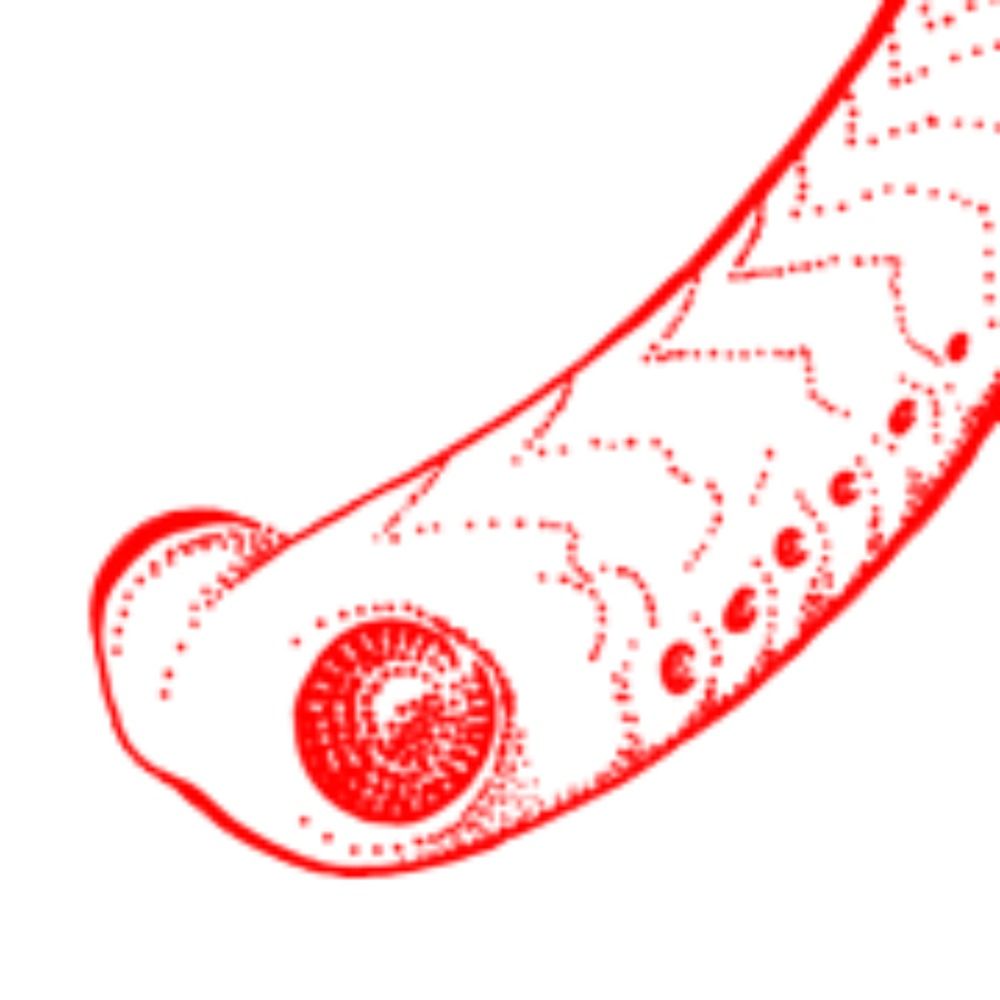
#FossilFriday and #SciArt
The maxilla of various Tyrannosaurus specimens (perhaps or not "rex") have several peculiar, and possibly diagnostic, surface features relating to their integument (skin, horn, whatnot).
We begin with, and perhaps best with, AMNH 5027, the "archetypal" T. rex skull.
The maxilla of various Tyrannosaurus specimens (perhaps or not "rex") have several peculiar, and possibly diagnostic, surface features relating to their integument (skin, horn, whatnot).
We begin with, and perhaps best with, AMNH 5027, the "archetypal" T. rex skull.

December 6, 2025 at 1:20 AM
#FossilFriday and #SciArt
The maxilla of various Tyrannosaurus specimens (perhaps or not "rex") have several peculiar, and possibly diagnostic, surface features relating to their integument (skin, horn, whatnot).
We begin with, and perhaps best with, AMNH 5027, the "archetypal" T. rex skull.
The maxilla of various Tyrannosaurus specimens (perhaps or not "rex") have several peculiar, and possibly diagnostic, surface features relating to their integument (skin, horn, whatnot).
We begin with, and perhaps best with, AMNH 5027, the "archetypal" T. rex skull.
Non-stop rain since the morning, but yesterday there were much nicer views and weather!
Iguazu falls, Argentina
Iguazu falls, Argentina
December 8, 2025 at 4:21 PM
Non-stop rain since the morning, but yesterday there were much nicer views and weather!
Iguazu falls, Argentina
Iguazu falls, Argentina
Traveling through South America, I've seen many fossils big and small - so many that I should start my own #FossilFriday posts!
Macrauchenia, one of the last and largest of the litopterns, a South American lineage that is totally extinct. Apparently, Macrauchenia had a remarkable nose ->
Macrauchenia, one of the last and largest of the litopterns, a South American lineage that is totally extinct. Apparently, Macrauchenia had a remarkable nose ->

December 5, 2025 at 11:48 PM
Traveling through South America, I've seen many fossils big and small - so many that I should start my own #FossilFriday posts!
Macrauchenia, one of the last and largest of the litopterns, a South American lineage that is totally extinct. Apparently, Macrauchenia had a remarkable nose ->
Macrauchenia, one of the last and largest of the litopterns, a South American lineage that is totally extinct. Apparently, Macrauchenia had a remarkable nose ->

And of course, many colleagues and friends have helped me in completing this project, but most of all my supervisors, Meirav Meiri and Nimrod Marom @nxmarom.bsky.social - who introduced me to this fantastic antelope, to their fields of research and supported me along the way 🙏🏼
I'm glad to share my M.Sc thesis about the extinct Levantine #hartebeest , now published and #openaccess ! Link following 🧵
The hartebeest is a staple antelope of eastern and southern African savannahs. However, the species had a far wider past distribution 1/13
The hartebeest is a staple antelope of eastern and southern African savannahs. However, the species had a far wider past distribution 1/13
December 3, 2025 at 3:09 AM
And of course, many colleagues and friends have helped me in completing this project, but most of all my supervisors, Meirav Meiri and Nimrod Marom @nxmarom.bsky.social - who introduced me to this fantastic antelope, to their fields of research and supported me along the way 🙏🏼
I'm glad to share my M.Sc thesis about the extinct Levantine #hartebeest , now published and #openaccess ! Link following 🧵
The hartebeest is a staple antelope of eastern and southern African savannahs. However, the species had a far wider past distribution 1/13
The hartebeest is a staple antelope of eastern and southern African savannahs. However, the species had a far wider past distribution 1/13
December 3, 2025 at 1:18 AM
I'm glad to share my M.Sc thesis about the extinct Levantine #hartebeest , now published and #openaccess ! Link following 🧵
The hartebeest is a staple antelope of eastern and southern African savannahs. However, the species had a far wider past distribution 1/13
The hartebeest is a staple antelope of eastern and southern African savannahs. However, the species had a far wider past distribution 1/13
Trying to get back to some activity on bluesky!
I finished my M.Sc. earlier this year and for the past 6 months I've been travelling through South America, north to south.
I've been to amazing places: the Galápagos, the Amazon river and rainforest, trekking the Peruvian Andes, and many others...
I finished my M.Sc. earlier this year and for the past 6 months I've been travelling through South America, north to south.
I've been to amazing places: the Galápagos, the Amazon river and rainforest, trekking the Peruvian Andes, and many others...


November 26, 2025 at 6:13 PM
Trying to get back to some activity on bluesky!
I finished my M.Sc. earlier this year and for the past 6 months I've been travelling through South America, north to south.
I've been to amazing places: the Galápagos, the Amazon river and rainforest, trekking the Peruvian Andes, and many others...
I finished my M.Sc. earlier this year and for the past 6 months I've been travelling through South America, north to south.
I've been to amazing places: the Galápagos, the Amazon river and rainforest, trekking the Peruvian Andes, and many others...
Reposted by Uri Wolkowski
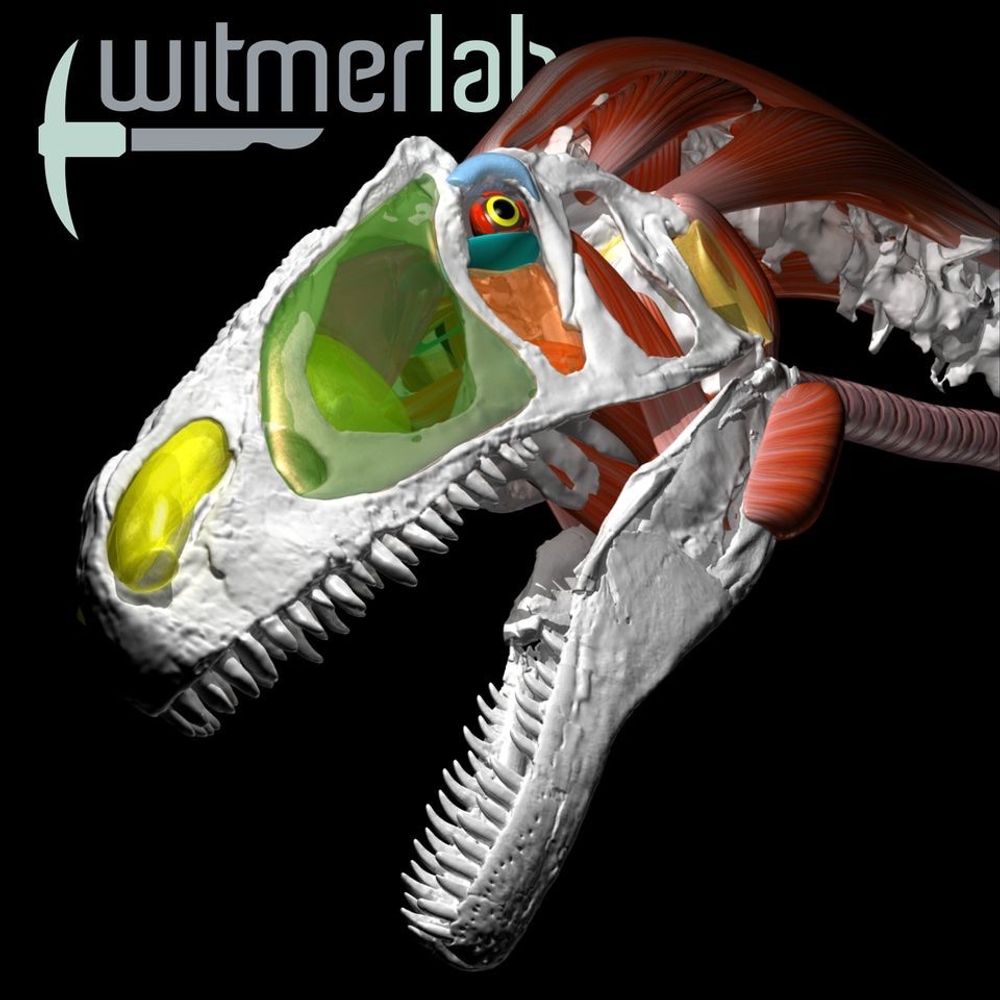
Today's bombshell in @nature.com by Lindsay Zanno & James Napoli @jgn-paleo.bsky.social (bit.ly/4qBE6ng) shows that putative juvvy T. rex fossils actually are Nanotyrannus. I reviewed the manuscript, so Nature invited me to write the News & Views commentary. Free link: rdcu.be/eNv94 🦖


October 30, 2025 at 9:43 PM
Today's bombshell in @nature.com by Lindsay Zanno & James Napoli @jgn-paleo.bsky.social (bit.ly/4qBE6ng) shows that putative juvvy T. rex fossils actually are Nanotyrannus. I reviewed the manuscript, so Nature invited me to write the News & Views commentary. Free link: rdcu.be/eNv94 🦖