




Dan Levenstein
@dlevenstein.bsky.social
Neuroscientist, in theory.
Studying sleep and navigation in 🧠s and 💻s.
Wu Tsai Investigator, Assistant Professor of Neuroscience at Yale.
An emergent property of a few billion neurons, their interactions with each other and the world over ~1 century.
Studying sleep and navigation in 🧠s and 💻s.
Wu Tsai Investigator, Assistant Professor of Neuroscience at Yale.
An emergent property of a few billion neurons, their interactions with each other and the world over ~1 century.
Pinned
Dan Levenstein
@dlevenstein.bsky.social
· Jun 23
Thrilled to announce I'll be starting my own neuro-theory lab, as an Assistant Professor at @yaleneuro.bsky.social @wutsaiyale.bsky.social this Fall!
My group will study offline learning in the sleeping brain: how neural activity self-organizes during sleep and the computations it performs. 🧵
My group will study offline learning in the sleeping brain: how neural activity self-organizes during sleep and the computations it performs. 🧵
Reposted by Dan Levenstein

Shifting to viewing formalizing a problem in mathematics as a tool for thinking has really made it a lot more appealing and fun
February 6, 2026 at 6:02 PM
Shifting to viewing formalizing a problem in mathematics as a tool for thinking has really made it a lot more appealing and fun
Reposted by Dan Levenstein
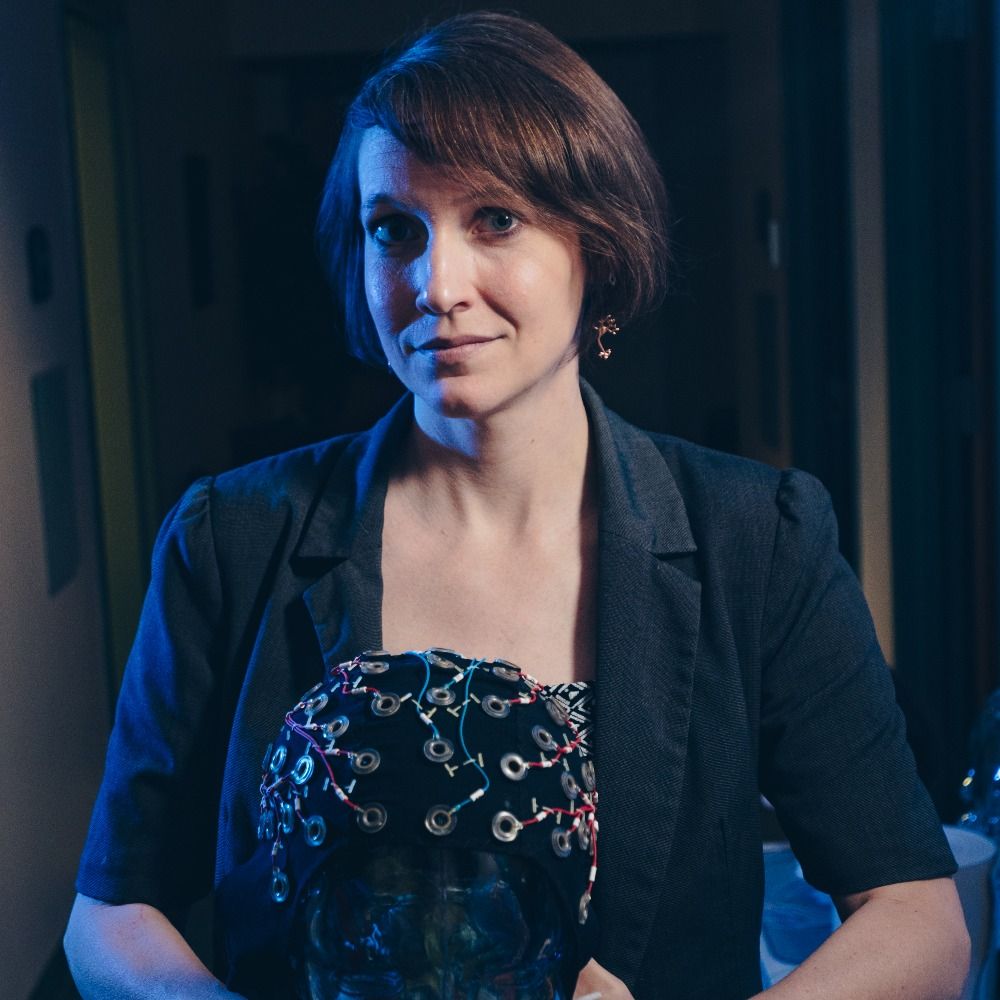
#Sleeppeeps, I've a confession:
I'm uber-skeptical about scalp EEG definitions of "memory reactivation". I've worked on this too, but proliferation of approaches is far outpacing our understanding of what any are REALLY measuring.
Let's keep working on it, but still feels very early/exploratory.
I'm uber-skeptical about scalp EEG definitions of "memory reactivation". I've worked on this too, but proliferation of approaches is far outpacing our understanding of what any are REALLY measuring.
Let's keep working on it, but still feels very early/exploratory.
February 5, 2026 at 1:37 PM
#Sleeppeeps, I've a confession:
I'm uber-skeptical about scalp EEG definitions of "memory reactivation". I've worked on this too, but proliferation of approaches is far outpacing our understanding of what any are REALLY measuring.
Let's keep working on it, but still feels very early/exploratory.
I'm uber-skeptical about scalp EEG definitions of "memory reactivation". I've worked on this too, but proliferation of approaches is far outpacing our understanding of what any are REALLY measuring.
Let's keep working on it, but still feels very early/exploratory.
Did not have "new Broken Social Scene" on my bingo card for today.
February 3, 2026 at 6:42 PM
Did not have "new Broken Social Scene" on my bingo card for today.
JEPAs all the way down 🐢🐢🐢
We think cortex might function like a JEPA. It looks like prediction errors in layer 2/3 are not computed against input (as is the idea in predictive processing), but against a representation in latent space (i.e. like in a JEPA arxiv.org/abs/2301.08243 or RPL doi.org/10.1101/2025...).
January 31, 2026 at 1:58 PM
JEPAs all the way down 🐢🐢🐢
More than you would expect from studying AI and less than you would expect from studying neurobiology.
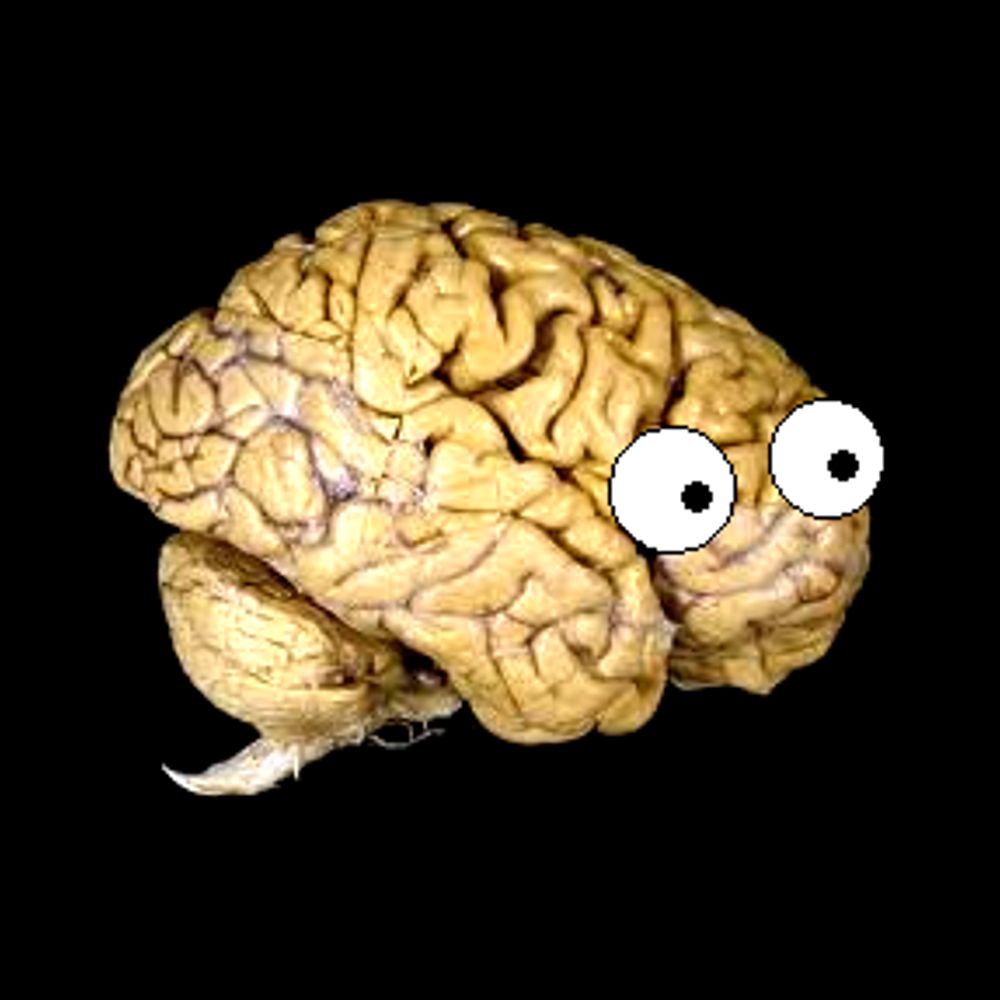
"How much of the brain's learned algorithms depend on the fact it is a brain?" arxiv.org/abs/2601.02063 The brain is a neural network, but also a biological organ (unlike artificial neural networks). How much does this matter to cognition?

January 25, 2026 at 3:17 PM
More than you would expect from studying AI and less than you would expect from studying neurobiology.
Reposted by Dan Levenstein
Wow, inspiring work.
IMO the 'jingle-jangle' fallacy is a majorly underappreciated source of confusion in many fields. In my field (sleep/memory), we have issues of a similar scale re:
-What is a "sleep spindle"?
-Correlations between "sleep stages" and "memory performance"
1/2
#sleeppeeps
IMO the 'jingle-jangle' fallacy is a majorly underappreciated source of confusion in many fields. In my field (sleep/memory), we have issues of a similar scale re:
-What is a "sleep spindle"?
-Correlations between "sleep stages" and "memory performance"
1/2
#sleeppeeps

The Iowa Gambling Task is an extreme example of Jingle Fallacy and schmeasurement.
In 100 articles we found 244 different ways of scoring it, 177 were never reused. Correlations between them range -.99 to .99.
At the same time, we show meta-analyses combine these results as if they’re equivalent.
In 100 articles we found 244 different ways of scoring it, 177 were never reused. Correlations between them range -.99 to .99.
At the same time, we show meta-analyses combine these results as if they’re equivalent.
How many versions of the Iowa Gambling Task (IGT) exist? And how much does this affect research using the IGT? More than you might think. 🧵
January 25, 2026 at 2:04 PM
Wow, inspiring work.
IMO the 'jingle-jangle' fallacy is a majorly underappreciated source of confusion in many fields. In my field (sleep/memory), we have issues of a similar scale re:
-What is a "sleep spindle"?
-Correlations between "sleep stages" and "memory performance"
1/2
#sleeppeeps
IMO the 'jingle-jangle' fallacy is a majorly underappreciated source of confusion in many fields. In my field (sleep/memory), we have issues of a similar scale re:
-What is a "sleep spindle"?
-Correlations between "sleep stages" and "memory performance"
1/2
#sleeppeeps
Reposted by Dan Levenstein

Last term I tried an experiment: I walked into my Tech and Design Ethics class, admitted that I had *no idea* what to do about ChatGPT - so I would let them figure it out.
As in: their first project was to decide and write the ChatGPT policy for the class.
Here's what happened:
As in: their first project was to decide and write the ChatGPT policy for the class.
Here's what happened:
January 22, 2026 at 11:36 PM
Last term I tried an experiment: I walked into my Tech and Design Ethics class, admitted that I had *no idea* what to do about ChatGPT - so I would let them figure it out.
As in: their first project was to decide and write the ChatGPT policy for the class.
Here's what happened:
As in: their first project was to decide and write the ChatGPT policy for the class.
Here's what happened:
How tho?
With most psychedelic drugs, you never know what you're going to get. But this mysterious mushroom from China - without fail - causes users to hallucinate tiny people: crawling up walls, popping out from under furniture and marching under doors. www.bbc.com/future/artic...

'They saw them on their dishes when eating': The mushroom making people hallucinate dozens of tiny humans
Only recently described by science, the mysterious mushrooms are found in different parts of the world, but they give people the same exact visions.
www.bbc.com
January 22, 2026 at 7:02 PM
How tho?
AI customer service responding ever so politely about lying AI images of a product 🥲

I was able to clarify this with the vendor.


January 22, 2026 at 1:02 PM
AI customer service responding ever so politely about lying AI images of a product 🥲
Not sure it needs to be said (or maybe wild that it does), but I don't think "we" should "acquire" Greenland.
January 18, 2026 at 4:15 PM
Not sure it needs to be said (or maybe wild that it does), but I don't think "we" should "acquire" Greenland.
What's the theory/modeling version of "Naturalistic Neuroscience"?
January 18, 2026 at 3:45 PM
What's the theory/modeling version of "Naturalistic Neuroscience"?
Reposted by Dan Levenstein
The biologist's view of how flight works. Courtesy of Rory Maizels. #GenerativeBiology

October 21, 2025 at 1:40 PM
The biologist's view of how flight works. Courtesy of Rory Maizels. #GenerativeBiology
Reposted by Dan Levenstein

Biology is so messy. Unlike physics where it seems like you can create a theory from which the whole fabric of the universe emerges, in biology there are infinitely many universes each with their own laws. A zygote is a universe. A brain is a universe. A cortex is a universe.
This primes cells for the 2nd fate decision, where ICM separates into epiblast and the primitive endoderm. I'll stop here for today because this was already a lot! But next Saturday we will discuss this second fate decision and how it leads to mouse anterior-posterior & dorsal-ventral axes. (12/12)
January 18, 2026 at 1:46 AM
Biology is so messy. Unlike physics where it seems like you can create a theory from which the whole fabric of the universe emerges, in biology there are infinitely many universes each with their own laws. A zygote is a universe. A brain is a universe. A cortex is a universe.
Reposted by Dan Levenstein
1. If the goal is to stop us from doing science, then doing science is more important than ever now.
2. We have radical uncertainty about the future. There is no sense in giving up in advance.
3. We have agency over the future. If you don't like what's happening, work to change what is happening.
2. We have radical uncertainty about the future. There is no sense in giving up in advance.
3. We have agency over the future. If you don't like what's happening, work to change what is happening.

Getting asked about how academics can continue to do science & inspire trainees even in the midst of a continued (escalated) assault on science, reason, truth, & human rights. I don’t have great answers.
I would love to hear from mentors about advice they’re giving to trainees/ colleagues.
I would love to hear from mentors about advice they’re giving to trainees/ colleagues.
January 18, 2026 at 1:24 AM
1. If the goal is to stop us from doing science, then doing science is more important than ever now.
2. We have radical uncertainty about the future. There is no sense in giving up in advance.
3. We have agency over the future. If you don't like what's happening, work to change what is happening.
2. We have radical uncertainty about the future. There is no sense in giving up in advance.
3. We have agency over the future. If you don't like what's happening, work to change what is happening.
🌎🐒🚀🌖
I know it’s silly but this stuff makes me very proud of our weird little monkey species and I think this kind of pride is politically important: www.theguardian.com/science/2026...

Nasa readies its most powerful rocket for round-the-moon flight
Artemis II mission could launch on 6 February, sending astronauts on a 685,000-mile journey
www.theguardian.com
January 17, 2026 at 7:58 PM
🌎🐒🚀🌖
1) this is a great idea 👀👀
2) is this allowed at NIH? 🤔
3) writing a modeling grant is always interesting because you have hypotheses that are implicit in your model, which you need to justify, and hypotheses you’re going to use the model to test, which you need to state and how and why.
2) is this allowed at NIH? 🤔
3) writing a modeling grant is always interesting because you have hypotheses that are implicit in your model, which you need to justify, and hypotheses you’re going to use the model to test, which you need to state and how and why.

Put your high-level hypotheses in a stand-alone coloured box that no reviewers can miss
January 16, 2026 at 5:54 PM
1) this is a great idea 👀👀
2) is this allowed at NIH? 🤔
3) writing a modeling grant is always interesting because you have hypotheses that are implicit in your model, which you need to justify, and hypotheses you’re going to use the model to test, which you need to state and how and why.
2) is this allowed at NIH? 🤔
3) writing a modeling grant is always interesting because you have hypotheses that are implicit in your model, which you need to justify, and hypotheses you’re going to use the model to test, which you need to state and how and why.
12 out of 10 stars. would recommend

@kordinglab.bsky.social and I ran a summer school last year to help young profs (<5 yrs) in systems/comp neuro thrive.
compneurosci.com/Neuro4Pros/i...
It was great! Now we want to know if you'd be interested in participating if we did this again this year?
Let us know!
compneurosci.com/Neuro4Pros/i...
It was great! Now we want to know if you'd be interested in participating if we did this again this year?
Let us know!
Neuro4Pros summer school
Neuroscience Leadership Training
compneurosci.com
January 15, 2026 at 6:33 PM
12 out of 10 stars. would recommend
Recently had my first round of grad school interviews, as a new PI.
The most exciting discussions came from asking: “The field has a real challenge connecting cells and circuits to cognition, behavior, and ultimately disorders. Why do you think that’s so hard and what can we do about it?”
The most exciting discussions came from asking: “The field has a real challenge connecting cells and circuits to cognition, behavior, and ultimately disorders. Why do you think that’s so hard and what can we do about it?”
THIS! This is the type of conversation I'm eager for our community to have. How many big challenges stand in the way of impactful solutions? What's our plan to tackle them? It's up to us to figure these things out (ultimately we're the ones steering the ship).
Thank you @simonwheeler.bsky.social!
Thank you @simonwheeler.bsky.social!

I just watched it and, as you say, the first part setting out the nature of the challenge and the limitations of historical and current approaches is a very convincing thesis. I doubt many would disagree. I think your analogy in Q&A of needing to bridge the void/gulf is very apt. It’s a huge gulf.
January 13, 2026 at 1:18 PM
Recently had my first round of grad school interviews, as a new PI.
The most exciting discussions came from asking: “The field has a real challenge connecting cells and circuits to cognition, behavior, and ultimately disorders. Why do you think that’s so hard and what can we do about it?”
The most exciting discussions came from asking: “The field has a real challenge connecting cells and circuits to cognition, behavior, and ultimately disorders. Why do you think that’s so hard and what can we do about it?”
Reposted by Dan Levenstein
If the purpose of analysis is to test hypotheses, then model should come first.
If the purpose is to make new observations (to inform models), then after.
But neuro tends to be pretty bad at separating the two, and stats or model fits sometimes become tautologies
If the purpose is to make new observations (to inform models), then after.
But neuro tends to be pretty bad at separating the two, and stats or model fits sometimes become tautologies
January 12, 2026 at 1:52 PM
If the purpose of analysis is to test hypotheses, then model should come first.
If the purpose is to make new observations (to inform models), then after.
But neuro tends to be pretty bad at separating the two, and stats or model fits sometimes become tautologies
If the purpose is to make new observations (to inform models), then after.
But neuro tends to be pretty bad at separating the two, and stats or model fits sometimes become tautologies
Reposted by Dan Levenstein

when doing neuroscience projects I often advocate for computational modelling, followed by data analysis to test model's predictions.
however a few times now I have had pushback from collaborators/reivewers suggesting it would be better to do the data analysis first, then the modelling.
thoughts?
however a few times now I have had pushback from collaborators/reivewers suggesting it would be better to do the data analysis first, then the modelling.
thoughts?
January 12, 2026 at 12:47 PM
when doing neuroscience projects I often advocate for computational modelling, followed by data analysis to test model's predictions.
however a few times now I have had pushback from collaborators/reivewers suggesting it would be better to do the data analysis first, then the modelling.
thoughts?
however a few times now I have had pushback from collaborators/reivewers suggesting it would be better to do the data analysis first, then the modelling.
thoughts?
The funny thing is the parallel to biology.

All interpretability research is either philosophy (affectionate) or stamp collecting (derogatory)
January 12, 2026 at 12:52 AM
The funny thing is the parallel to biology.
Reposted by Dan Levenstein
A key question in data selection is separating random unpredictable information from useful structural information. But whether or not something appears random depends on the computational resources of the observer. 4/7

January 7, 2026 at 5:28 PM
A key question in data selection is separating random unpredictable information from useful structural information. But whether or not something appears random depends on the computational resources of the observer. 4/7
Reposted by Dan Levenstein
Beautiful - recommended! Here, @sasolla.bsky.social recaps her decades-long journey from physics to neural networks (working with LeCun & Hopfield) to motor cortex, & and from industry (including Bell Labs) to academia, all driven by curiosity and awe (which flows from her voice). Inspiring!
Episode #36 in #TheoreticalNeurosciencePodcast: On low-dimensional manifolds in motor cortex – with Sara Solla @sasolla.bsky.social
theoreticalneuroscience.no/thn36
Manifold analysis has changed our thinking on how cortex works. One of the pioneers of this modelling approach explains.
theoreticalneuroscience.no/thn36
Manifold analysis has changed our thinking on how cortex works. One of the pioneers of this modelling approach explains.

January 4, 2026 at 11:03 AM
Beautiful - recommended! Here, @sasolla.bsky.social recaps her decades-long journey from physics to neural networks (working with LeCun & Hopfield) to motor cortex, & and from industry (including Bell Labs) to academia, all driven by curiosity and awe (which flows from her voice). Inspiring!
Reposted by Dan Levenstein

Tips to help a student new to modelling to think about variations to an existing model beyond trying to make it more realistic?
January 3, 2026 at 12:40 PM
Tips to help a student new to modelling to think about variations to an existing model beyond trying to make it more realistic?
Reposted by Dan Levenstein
Can’t forget this excellent follow-up post too

January 2, 2026 at 10:43 PM
Can’t forget this excellent follow-up post too