




Prof Simon Carley
@emmanchester.bsky.social
Consultant in Adult and Paed Emergency medicine.
PHEM consultant at NWAA.
Major Trauma consultant.
Dean of RCEM.
Prof at MAHSC (UoM) and Man Met.
BASICS doctor
Associate Dean NW
#foamed @stemlyns.bsky.social
PHEM consultant at NWAA.
Major Trauma consultant.
Dean of RCEM.
Prof at MAHSC (UoM) and Man Met.
BASICS doctor
Associate Dean NW
#foamed @stemlyns.bsky.social
Reposted by Prof Simon Carley
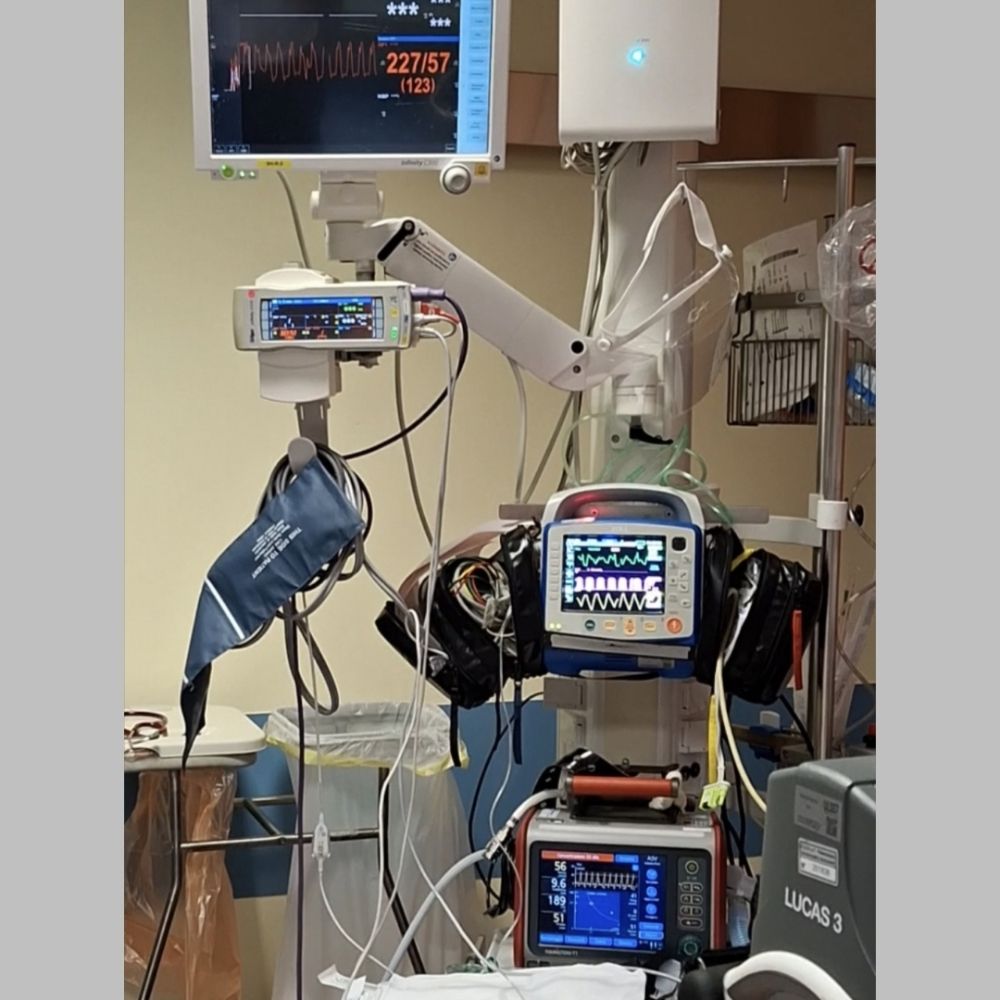
EMS / HEMS / prehospital EM Folks..Any protocol for noradrenaline infusion (without an infusion pump) in the prehospital setting? @cliffreid.bsky.social @ebmgonewild.bsky.social @sjtrem.bsky.social @stemlyns.bsky.social @emmanchester.bsky.social
March 5, 2025 at 10:00 AM
EMS / HEMS / prehospital EM Folks..Any protocol for noradrenaline infusion (without an infusion pump) in the prehospital setting? @cliffreid.bsky.social @ebmgonewild.bsky.social @sjtrem.bsky.social @stemlyns.bsky.social @emmanchester.bsky.social
Reposted by Prof Simon Carley
Dr. George Willis on DKA Myths at #IncrEMentum2025:
🪦DKA Criteria is not set in stone
🧪Check B-Hydroxy-Butyrate Levels
💉Dont assume its insulin noncompliance
🦑Consider SQuID Protocol for mild to mod DKA
#FOAMed #MedEd #MedSky @thesgem.bsky.social @cliffreid.bsky.social
@emmanchester.bsky.social
🪦DKA Criteria is not set in stone
🧪Check B-Hydroxy-Butyrate Levels
💉Dont assume its insulin noncompliance
🦑Consider SQuID Protocol for mild to mod DKA
#FOAMed #MedEd #MedSky @thesgem.bsky.social @cliffreid.bsky.social
@emmanchester.bsky.social


March 12, 2025 at 9:08 AM
Dr. George Willis on DKA Myths at #IncrEMentum2025:
🪦DKA Criteria is not set in stone
🧪Check B-Hydroxy-Butyrate Levels
💉Dont assume its insulin noncompliance
🦑Consider SQuID Protocol for mild to mod DKA
#FOAMed #MedEd #MedSky @thesgem.bsky.social @cliffreid.bsky.social
@emmanchester.bsky.social
🪦DKA Criteria is not set in stone
🧪Check B-Hydroxy-Butyrate Levels
💉Dont assume its insulin noncompliance
🦑Consider SQuID Protocol for mild to mod DKA
#FOAMed #MedEd #MedSky @thesgem.bsky.social @cliffreid.bsky.social
@emmanchester.bsky.social
Reposted by Prof Simon Carley
@thesgem.bsky.social & Salim Rezaie on Induction Agents at #IncrEMentuM2025:
🫁Asthmatic requiring intubation = Ketamine
🧠Increased ICP, consider Propofol vs Etomidate
🦠Septic Shock = Ketamine vs Etomidate. Avoid Propofol
#FOAMed #MedEd #MedSky @drfreeze.bsky.social @emmanchester.bsky.social
🫁Asthmatic requiring intubation = Ketamine
🧠Increased ICP, consider Propofol vs Etomidate
🦠Septic Shock = Ketamine vs Etomidate. Avoid Propofol
#FOAMed #MedEd #MedSky @drfreeze.bsky.social @emmanchester.bsky.social


March 12, 2025 at 10:22 AM
@thesgem.bsky.social & Salim Rezaie on Induction Agents at #IncrEMentuM2025:
🫁Asthmatic requiring intubation = Ketamine
🧠Increased ICP, consider Propofol vs Etomidate
🦠Septic Shock = Ketamine vs Etomidate. Avoid Propofol
#FOAMed #MedEd #MedSky @drfreeze.bsky.social @emmanchester.bsky.social
🫁Asthmatic requiring intubation = Ketamine
🧠Increased ICP, consider Propofol vs Etomidate
🦠Septic Shock = Ketamine vs Etomidate. Avoid Propofol
#FOAMed #MedEd #MedSky @drfreeze.bsky.social @emmanchester.bsky.social
Reposted by Prof Simon Carley
Dr.Reuben Strayer on Airway in Trauma at #Incrementum2025:
🧑🦯Dont blindly follow ATLS
🩸Yankuer suctions SUCKS badly (consider Ducanto catheter)
🔪Scalpel -Finger-Bougie = Be prepared
#FOAMed #MedEd #MedSky
@emswami.bsky.social @emmanchester.bsky.social @drfreeze.bsky.social @davidcarr333.bsky.social
🧑🦯Dont blindly follow ATLS
🩸Yankuer suctions SUCKS badly (consider Ducanto catheter)
🔪Scalpel -Finger-Bougie = Be prepared
#FOAMed #MedEd #MedSky
@emswami.bsky.social @emmanchester.bsky.social @drfreeze.bsky.social @davidcarr333.bsky.social


March 12, 2025 at 10:38 AM
Dr.Reuben Strayer on Airway in Trauma at #Incrementum2025:
🧑🦯Dont blindly follow ATLS
🩸Yankuer suctions SUCKS badly (consider Ducanto catheter)
🔪Scalpel -Finger-Bougie = Be prepared
#FOAMed #MedEd #MedSky
@emswami.bsky.social @emmanchester.bsky.social @drfreeze.bsky.social @davidcarr333.bsky.social
🧑🦯Dont blindly follow ATLS
🩸Yankuer suctions SUCKS badly (consider Ducanto catheter)
🔪Scalpel -Finger-Bougie = Be prepared
#FOAMed #MedEd #MedSky
@emswami.bsky.social @emmanchester.bsky.social @drfreeze.bsky.social @davidcarr333.bsky.social
Reposted by Prof Simon Carley

Simon Carley @emmanchester.bsky.social did a nice breakdown of the issues with how the paper was widely misinterpreted, and does in fact shows a mortality benefit from prehospital TXA.
(also, hi Simon!)
www.stemlynsblog.org/the-patch-tr...
(also, hi Simon!)
www.stemlynsblog.org/the-patch-tr...

The PATCH trial. TXA in major trauma
Is tranexamic acid (TXA) useful in traumatic bleeding? A review of the PATCXH trial published in the NEJM.
www.stemlynsblog.org
March 26, 2025 at 9:36 PM
Simon Carley @emmanchester.bsky.social did a nice breakdown of the issues with how the paper was widely misinterpreted, and does in fact shows a mortality benefit from prehospital TXA.
(also, hi Simon!)
www.stemlynsblog.org/the-patch-tr...
(also, hi Simon!)
www.stemlynsblog.org/the-patch-tr...
Reposted by Prof Simon Carley
There is increasingly evidence that diastolic blood pressure (DBP) is a crucial resuscitation target in trauma and cardiac care. Based on a great article by Dan and Rich we look at how optimizing DBP may improve survival rates in emergency medicine.
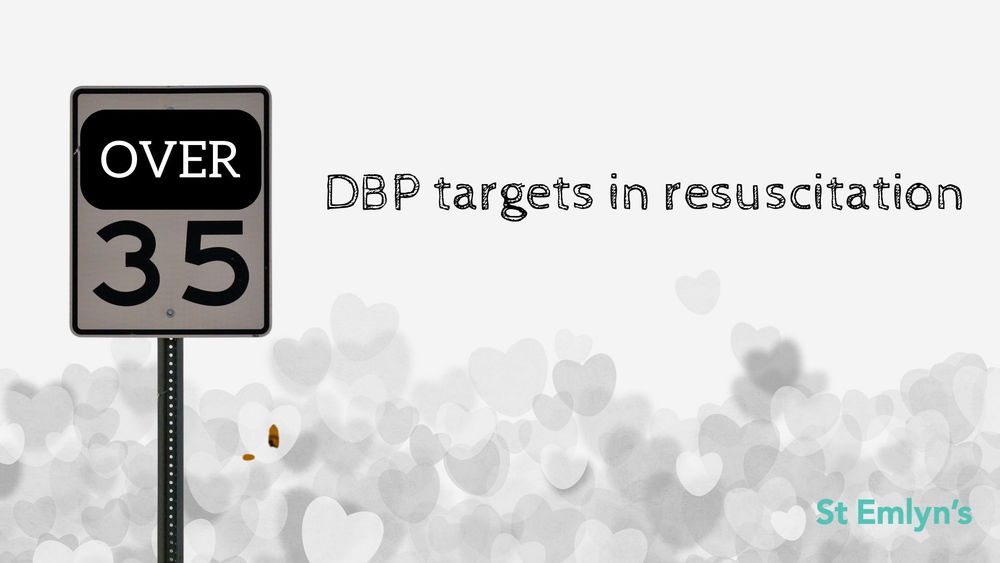
Is Diastolic Blood Pressure the New Resuscitation Target
This week I read a great article in the EMJ by Dan Horner and Rich Carden on new resuscitation targets. notably the use of diastolic blood pressure. DBP is the prime driver of coronary perfusion and thus successful resuscitation. Not only in cardiac arrest, but seemingly also in trauma. This blog (with their permission and review) outlines the main points from that article and links their thoughts on trauma to similar emerging evidence in cardiac resuscitation.
www.stemlynsblog.org
February 15, 2025 at 11:08 AM
There is increasingly evidence that diastolic blood pressure (DBP) is a crucial resuscitation target in trauma and cardiac care. Based on a great article by Dan and Rich we look at how optimizing DBP may improve survival rates in emergency medicine.
Reposted by Prof Simon Carley
Podcast – Monthly Round Up December 2024 – Chest trauma, IO access, AI and more
This month’s St Emlyn’s podcast wraps up Season 11 with a review of key emergency medicine topics. We cover new evidence on chest trauma management, intraosseous access safety, pediatric imaging updates, AI in…
This month’s St Emlyn’s podcast wraps up Season 11 with a review of key emergency medicine topics. We cover new evidence on chest trauma management, intraosseous access safety, pediatric imaging updates, AI in…

Podcast – Monthly Round Up December 2024 – Chest trauma, IO access, AI and more
This month’s St Emlyn’s podcast wraps up Season 11 with a review of key emergency medicine topics. We cover new evidence on chest trauma management, intraosseous access safety, pediatric imaging updates, AI in medicine, toxic alcohol poisoning, and airway management. Plus, insights from major conferences like EUSEM 2024.
www.stemlynsblog.org
February 12, 2025 at 3:00 AM
Podcast – Monthly Round Up December 2024 – Chest trauma, IO access, AI and more
This month’s St Emlyn’s podcast wraps up Season 11 with a review of key emergency medicine topics. We cover new evidence on chest trauma management, intraosseous access safety, pediatric imaging updates, AI in…
This month’s St Emlyn’s podcast wraps up Season 11 with a review of key emergency medicine topics. We cover new evidence on chest trauma management, intraosseous access safety, pediatric imaging updates, AI in…
Reposted by Prof Simon Carley
This blog post provides concise summaries of recent critical care trials, including HEMOTION, PREOXI, BLING III, CLASSIC, EVIDENCE, VICTOR, and PARAMEDIC-3. Each trial is examined for its key findings, strengths, limitations, and practical implications for clinical practice. The post aims to inform

More trials from TBS 2025. (part 2)
This blog post provides concise summaries of recent critical care trials, including HEMOTION, PREOXI, BLING III, CLASSIC, EVIDENCE, VICTOR, and PARAMEDIC-3. Each trial is examined for its key findings, strengths, limitations, and practical implications for clinical practice. The post aims to inform healthcare professionals about the latest evidence-based practices in critical care. #FOAMed
www.stemlynsblog.org
February 7, 2025 at 8:14 AM
This blog post provides concise summaries of recent critical care trials, including HEMOTION, PREOXI, BLING III, CLASSIC, EVIDENCE, VICTOR, and PARAMEDIC-3. Each trial is examined for its key findings, strengths, limitations, and practical implications for clinical practice. The post aims to inform
Reposted by Prof Simon Carley
London Trauma Conference 2024: Key Insights
Day 2 of the London Trauma Conference delivered impactful discussions on trauma care innovations, including advanced resuscitation strategies, rib fracture management, and prehospital interventions. Highlights
Day 2 of the London Trauma Conference delivered impactful discussions on trauma care innovations, including advanced resuscitation strategies, rib fracture management, and prehospital interventions. Highlights

Talking Trauma – London Trauma Conference 2024 Day 2
It’s a testament to Professor Lockey and the organizing committee’s efforts that Day 2 of LTC was perhaps even better attended than day one. The grand theater at the Royal Geographic Society was filled, with standing room only in the balcony area. Professor Karim Brohi is well known to anyone who has even a passing interest in trauma. His efforts through the Center for Trauma Sciences have really pushed forward our understanding of acute trauma resuscitation, in particular around bleeding and coagulation.
www.stemlynsblog.org
January 10, 2025 at 5:17 PM
London Trauma Conference 2024: Key Insights
Day 2 of the London Trauma Conference delivered impactful discussions on trauma care innovations, including advanced resuscitation strategies, rib fracture management, and prehospital interventions. Highlights
Day 2 of the London Trauma Conference delivered impactful discussions on trauma care innovations, including advanced resuscitation strategies, rib fracture management, and prehospital interventions. Highlights
Reposted by Prof Simon Carley
Explore the variability in maintaining PHEA for trauma patients. With insights into drug protocols, administration methods, and governance. #FOAMed @stemlyns

Maintenance of Prehospital Anaesthesia in Trauma Patients: Variability in Practice
Explore the variability in maintaining prehospital anaesthesia for trauma patients in this comprehensive summary of a multinational survey. With insights into drug protocols, administration methods, and governance, the article highlights challenges and opportunities for standardisation in prehospital care. Ideal for clinicians and researchers aiming to optimise anaesthesia practices and enhance patient outcomes in emergency settings.
www.stemlynsblog.org
January 13, 2025 at 2:31 PM
Explore the variability in maintaining PHEA for trauma patients. With insights into drug protocols, administration methods, and governance. #FOAMed @stemlyns
Reposted by Prof Simon Carley
The latest St Emlyn's podcast - an interview with Matt Hooper recorded at the London Trauma Conference about compassionate resuscitation and some of the lessons we can learn in Emergency Medicine from the world of palliative care.

Podcast – Compassionate Resuscitation with Matt Hooper at LTC
In this podcast, explore how Dr. Matt Hooper’s concept of "compassionate resuscitation" integrates palliative care principles into emergency medicine, focusing on quality end-of-life care for patients, families, and providers.
www.stemlynsblog.org
January 29, 2025 at 6:12 PM
The latest St Emlyn's podcast - an interview with Matt Hooper recorded at the London Trauma Conference about compassionate resuscitation and some of the lessons we can learn in Emergency Medicine from the world of palliative care.
Reposted by Prof Simon Carley
The latest St Emlyn's podcast - Emergency medicine demands constant practice, yet many clinicians experience skills fade due to lack of exposure. Nathalie Pattyn explores how this decline occurs, why it’s a systemic issue rather than an individual failure, and what changes are needed to maintain com

Podcast – Skills Fade with Nathalie Pattyn at Tactical Trauma 24
Emergency medicine demands constant practice, yet many clinicians experience skills fade due to lack of exposure. Nathalie Pattyn explores how this decline occurs, why it’s a systemic issue rather than an individual failure, and what changes are needed to maintain competency.
www.stemlynsblog.org
February 5, 2025 at 6:29 AM
The latest St Emlyn's podcast - Emergency medicine demands constant practice, yet many clinicians experience skills fade due to lack of exposure. Nathalie Pattyn explores how this decline occurs, why it’s a systemic issue rather than an individual failure, and what changes are needed to maintain com
I thought this was a good article to remind us to read more than a title, tweet or abstract:
Good work from authors, but what about the underpinning data?
Good work from authors, but what about the underpinning data?
This article explores the impact of physician-led interprofessional pre-hospital teams on survival and mortality outcomes for critically ill and injured patients. The article suggests a benefit, but how robust is that finding?

JC: Do physician led prehospital teams improve outcomes?
This article explores the impact of physician-led interprofessional pre-hospital teams on survival and mortality outcomes for critically ill and injured patients. Drawing on a systematic review and meta-analysis, it examines the evidence, evaluates key benefits, and critically appraises the limitations. The discussion highlights the potential of this model to enhance pre-hospital emergency care while addressing challenges in implementation across diverse healthcare systems. Essential reading for professionals in emergency and pre-hospital medicine.
www.stemlynsblog.org
January 28, 2025 at 12:53 PM
I thought this was a good article to remind us to read more than a title, tweet or abstract:
Good work from authors, but what about the underpinning data?
Good work from authors, but what about the underpinning data?
Reposted by Prof Simon Carley
This article explores the impact of physician-led interprofessional pre-hospital teams on survival and mortality outcomes for critically ill and injured patients. The article suggests a benefit, but how robust is that finding?
JC: Do physician led prehospital teams improve outcomes?
This article explores the impact of physician-led interprofessional pre-hospital teams on survival and mortality outcomes for critically ill and injured patients. Drawing on a systematic review and meta-analysis, it examines the evidence, evaluates key benefits, and critically appraises the limitations. The discussion highlights the potential of this model to enhance pre-hospital emergency care while addressing challenges in implementation across diverse healthcare systems. Essential reading for professionals in emergency and pre-hospital medicine.
www.stemlynsblog.org
January 27, 2025 at 12:20 PM
This article explores the impact of physician-led interprofessional pre-hospital teams on survival and mortality outcomes for critically ill and injured patients. The article suggests a benefit, but how robust is that finding?
Reposted by Prof Simon Carley
Our latest monthly update podcast from St Emlyn's blog, with lots on developing a learning culture, chest drain size in haemothorax, arterial lines in cardiac arrest, and much more. Listen whevere you get your podcasts and please like and subscribe.

Podcast – Monthly Round Up November 2024 – Learning culture, chest drains, arterial lines and more
The monthly update podcast from November 2024, including learning culture, chest drains in haemothorax, arterial lines in cardiac arrest and bad behaviour.
www.stemlynsblog.org
January 15, 2025 at 3:01 AM
Our latest monthly update podcast from St Emlyn's blog, with lots on developing a learning culture, chest drain size in haemothorax, arterial lines in cardiac arrest, and much more. Listen whevere you get your podcasts and please like and subscribe.
Reposted by Prof Simon Carley
The latest St Emlyn's podcast - an episode about the Ten Second Triage tool recorded ay Tactical Trauma 24.

Podcast – Ten Second Triage with Sean Brayford Harris at Tactical Trauma 24
Learn more about the Ten Second Triage tool in this interview recorded at Tactical Trauma 24.
www.stemlynsblog.org
January 22, 2025 at 3:00 AM
The latest St Emlyn's podcast - an episode about the Ten Second Triage tool recorded ay Tactical Trauma 24.
Reposted by Prof Simon Carley
Prehospital setting:
The weight is an estimate
The dose is somewhere between 0,25 and 1 mg/kg depending on how unwell the patient looks.
And its a personal choice.
The weight is an estimate
The dose is somewhere between 0,25 and 1 mg/kg depending on how unwell the patient looks.
And its a personal choice.
January 11, 2025 at 12:49 PM
Prehospital setting:
The weight is an estimate
The dose is somewhere between 0,25 and 1 mg/kg depending on how unwell the patient looks.
And its a personal choice.
The weight is an estimate
The dose is somewhere between 0,25 and 1 mg/kg depending on how unwell the patient looks.
And its a personal choice.
How are you dosing ketamine for RSI in critically unwell patients?
LBW
ABW
IBW
And is that personal choice or protocol?
LBW
ABW
IBW
And is that personal choice or protocol?
January 11, 2025 at 12:02 PM
How are you dosing ketamine for RSI in critically unwell patients?
LBW
ABW
IBW
And is that personal choice or protocol?
LBW
ABW
IBW
And is that personal choice or protocol?
Reposted by Prof Simon Carley
Benefits of physician-paramedic for prehospital critical care demonstrated in this neat study
www.youtube.com/watch?app=de...
In geographically vast Australia it takes time for teams to arrive to rural/remote incidents
We need rural responder networks to support ambulance in rural Oz
www.youtube.com/watch?app=de...
In geographically vast Australia it takes time for teams to arrive to rural/remote incidents
We need rural responder networks to support ambulance in rural Oz

Benefits of physician-paramedic interprofessional pre-hospital teams
YouTube video by Mike Christian
www.youtube.com
January 7, 2025 at 9:41 PM
Benefits of physician-paramedic for prehospital critical care demonstrated in this neat study
www.youtube.com/watch?app=de...
In geographically vast Australia it takes time for teams to arrive to rural/remote incidents
We need rural responder networks to support ambulance in rural Oz
www.youtube.com/watch?app=de...
In geographically vast Australia it takes time for teams to arrive to rural/remote incidents
We need rural responder networks to support ambulance in rural Oz
Reposted by Prof Simon Carley
How does pre-hospital emergency anaesthesia (PHEA) delivered by Helicopter Emergency Medical Services (HEMS) impact trauma care timelines compared to emergency department RSI (EDRSI). This retrospective study explores time efficiency, injury severity, and

Pre-Hospital Emergency Anaesthesia (PHEA) vs. Emergency Department RSI: A Comparative Study on Trauma Care Timelines and Outcomes
How does pre-hospital emergency anaesthesia (PHEA) delivered by Helicopter Emergency Medical Services (HEMS) impacts trauma care timelines compared to emergency department RSI (EDRSI). This retrospective study explores time efficiency, injury severity, and patient outcomes, highlighting the role of HEMS in delivering critical care to severely injured patients in remote locations.
www.stemlynsblog.org
January 6, 2025 at 12:31 PM
How does pre-hospital emergency anaesthesia (PHEA) delivered by Helicopter Emergency Medical Services (HEMS) impact trauma care timelines compared to emergency department RSI (EDRSI). This retrospective study explores time efficiency, injury severity, and
Reposted by Prof Simon Carley
Let’s review the Sub30 trial. The first uk study of ECPR in PHEM and lots of challenges.
Should we adopt it more widely?
www.stemlynsblog.org/sub30study/
Should we adopt it more widely?
www.stemlynsblog.org/sub30study/
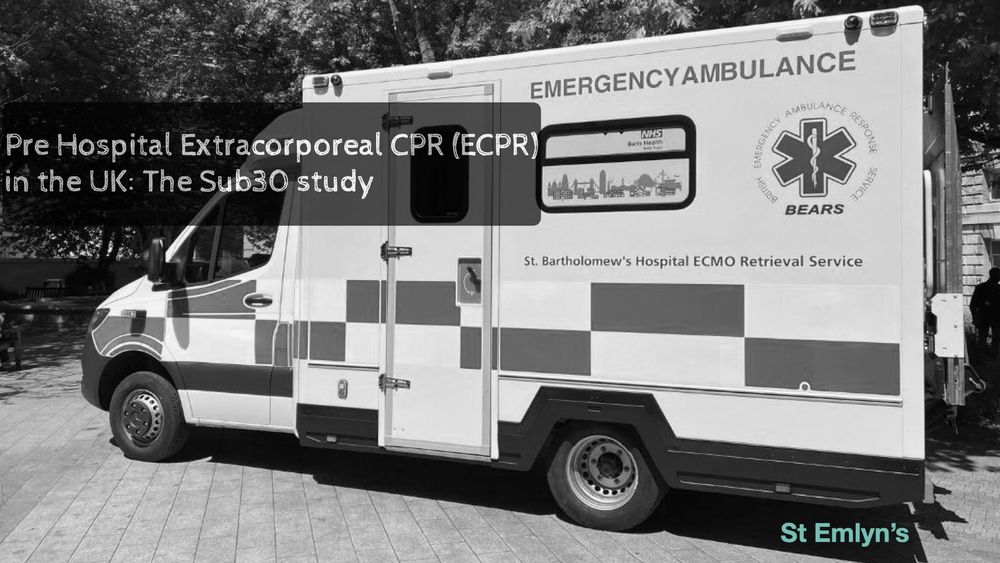
Pre Hospital Extracorporeal CPR (ECPR) in the UK: The Sub30 study
Understand the impact of the sub30 study on ECMO CPR, and compare its results with other international studies of ECPR
www.stemlynsblog.org
January 2, 2025 at 10:50 AM
Let’s review the Sub30 trial. The first uk study of ECPR in PHEM and lots of challenges.
Should we adopt it more widely?
www.stemlynsblog.org/sub30study/
Should we adopt it more widely?
www.stemlynsblog.org/sub30study/
Reposted by Prof Simon Carley
when admitting a hypothermic patient, check a TSH and random serum cortisol
don’t need a new blood draw (just add it on to the last blood draw sitting in the lab)
don’t waste a ton of neurons on this, just check it like a reflex arc.
in ~1/50 cases you’ll look like a diagnostic genius 🤣 #EMIMCC
don’t need a new blood draw (just add it on to the last blood draw sitting in the lab)
don’t waste a ton of neurons on this, just check it like a reflex arc.
in ~1/50 cases you’ll look like a diagnostic genius 🤣 #EMIMCC

a black background with a white nike swoosh on it
ALT: a black background with a white nike swoosh on it
media.tenor.com
January 1, 2025 at 2:29 PM
when admitting a hypothermic patient, check a TSH and random serum cortisol
don’t need a new blood draw (just add it on to the last blood draw sitting in the lab)
don’t waste a ton of neurons on this, just check it like a reflex arc.
in ~1/50 cases you’ll look like a diagnostic genius 🤣 #EMIMCC
don’t need a new blood draw (just add it on to the last blood draw sitting in the lab)
don’t waste a ton of neurons on this, just check it like a reflex arc.
in ~1/50 cases you’ll look like a diagnostic genius 🤣 #EMIMCC
Reposted by Prof Simon Carley
Intraosseous (IO) access is a great tool in emergency care, but what about the risks? In this Danish retrospective cohort study of over 5,000 patients they found fewer than five cases of osteomyelitis, no osteonecrosis or compartment syndrome.

What’s the long term complication rate of IO access?
Intraosseous (IO) access is essential in prehospital emergency care when intravenous access is challenging. A Danish retrospective cohort study of over 5,000 patients found fewer than five cases of osteomyelitis, no osteonecrosis or compartment syndrome, and no complications in children. Despite a high mortality rate (60% at 180 days) potentially underestimating long-term risks, the study's robust design supports IO access as a generally safe and effective procedure in critical care situations.
www.stemlynsblog.org
December 28, 2024 at 7:11 AM
Intraosseous (IO) access is a great tool in emergency care, but what about the risks? In this Danish retrospective cohort study of over 5,000 patients they found fewer than five cases of osteomyelitis, no osteonecrosis or compartment syndrome.