


Fiery Cushman
@fierycushman.bsky.social
Psychologist, but not the kind that can help you
Reposted by Fiery Cushman

Really cool new project from @urvi.bsky.social that finds that kids are much better at temporal reasoning than previously reported, if we test them with REAL passing time, rather than hypothetical past or future events and differentiate past and future at 3 years old.

New w/ @drbarner.bsky.social! We argue that children's struggle to represent the past and future in common tests of knowledge may stem from difficulties in hypothetical reasoning about imaginary timelines, rather than a lack of knowledge about time. 1/n
academic.oup.com/chidev/advan...
academic.oup.com/chidev/advan...

Back to reality: Children's early temporal reasoning applies to real but not hypothetical events
Abstract. Time words like “yesterday” and “tomorrow” are hard for children to learn, and for researchers to study, because their referents change from day
academic.oup.com
January 29, 2026 at 11:09 PM
Really cool new project from @urvi.bsky.social that finds that kids are much better at temporal reasoning than previously reported, if we test them with REAL passing time, rather than hypothetical past or future events and differentiate past and future at 3 years old.
Reposted by Fiery Cushman

"The relationship between childhood exploration and population-level innovation in cultural evolution" with @ndersen.bsky.social @sheinalew.bsky.social @felixthehauskat.bsky.social out in Proc B
royalsocietypublishing.org/rspb/article...
royalsocietypublishing.org/rspb/article...

The relationship between childhood exploration and population-level innovation in cultural evolution
Abstract. The societal effects of children’s learning in cultural evolution have been underexplored. Here, we investigate using agent-based models how a pr
royalsocietypublishing.org
January 22, 2026 at 1:01 PM
"The relationship between childhood exploration and population-level innovation in cultural evolution" with @ndersen.bsky.social @sheinalew.bsky.social @felixthehauskat.bsky.social out in Proc B
royalsocietypublishing.org/rspb/article...
royalsocietypublishing.org/rspb/article...
Reposted by Fiery Cushman

Writing is thinking
Outsourcing the entire task of writing to LLMs will deprive us of the essential creative task of interpreting our findings and generating a deeper theoretical understanding of the world.
Outsourcing the entire task of writing to LLMs will deprive us of the essential creative task of interpreting our findings and generating a deeper theoretical understanding of the world.

January 18, 2026 at 6:15 PM
Writing is thinking
Outsourcing the entire task of writing to LLMs will deprive us of the essential creative task of interpreting our findings and generating a deeper theoretical understanding of the world.
Outsourcing the entire task of writing to LLMs will deprive us of the essential creative task of interpreting our findings and generating a deeper theoretical understanding of the world.
Reposted by Fiery Cushman
The 52nd annual meeting of the SPP will be at JHU, June 17-20
📣 Submit your work by January 16! 📣
📣 Submit your work by January 16! 📣

January 9, 2026 at 2:09 PM
The 52nd annual meeting of the SPP will be at JHU, June 17-20
📣 Submit your work by January 16! 📣
📣 Submit your work by January 16! 📣
Reposted by Fiery Cushman

With some trepidation, I'm putting this out into the world:
gershmanlab.com/textbook.html
It's a textbook called Computational Foundations of Cognitive Neuroscience, which I wrote for my class.
My hope is that this will be a living document, continuously improved as I get feedback.
gershmanlab.com/textbook.html
It's a textbook called Computational Foundations of Cognitive Neuroscience, which I wrote for my class.
My hope is that this will be a living document, continuously improved as I get feedback.
January 9, 2026 at 1:27 AM
With some trepidation, I'm putting this out into the world:
gershmanlab.com/textbook.html
It's a textbook called Computational Foundations of Cognitive Neuroscience, which I wrote for my class.
My hope is that this will be a living document, continuously improved as I get feedback.
gershmanlab.com/textbook.html
It's a textbook called Computational Foundations of Cognitive Neuroscience, which I wrote for my class.
My hope is that this will be a living document, continuously improved as I get feedback.
Reposted by Fiery Cushman
New paper from the IMC lab! I am very excited about this one. For years, I have been arguing that one of the main claims of the so-called "simulation heuristic" is likely not true for episodic counterfactual thinking, namely that the harder it is to mentally simulate it, the less plausible (1/n)
January 7, 2026 at 11:11 PM
New paper from the IMC lab! I am very excited about this one. For years, I have been arguing that one of the main claims of the so-called "simulation heuristic" is likely not true for episodic counterfactual thinking, namely that the harder it is to mentally simulate it, the less plausible (1/n)
Reposted by Fiery Cushman

A revolutionary new paradigm for understanding addiction.
What Would You Do Alone in a Cage with Nothing but Cocaine? by Hanna Pickard, illustrated by Marco Venniro, is now available (3 March UK pub).
Learn more: press.princeton.edu/books/hardco...
What Would You Do Alone in a Cage with Nothing but Cocaine? by Hanna Pickard, illustrated by Marco Venniro, is now available (3 March UK pub).
Learn more: press.princeton.edu/books/hardco...

January 6, 2026 at 7:09 PM
A revolutionary new paradigm for understanding addiction.
What Would You Do Alone in a Cage with Nothing but Cocaine? by Hanna Pickard, illustrated by Marco Venniro, is now available (3 March UK pub).
Learn more: press.princeton.edu/books/hardco...
What Would You Do Alone in a Cage with Nothing but Cocaine? by Hanna Pickard, illustrated by Marco Venniro, is now available (3 March UK pub).
Learn more: press.princeton.edu/books/hardco...
Reposted by Fiery Cushman
A fascinating new paper by Amanda Royka and colleagues explores why monkeys fail false belief tasks.
A natural explanation would be that monkeys wrongly assume that other agents share their own knowledge.
Royka et al. find that this is NOT the case...
www.sciencedirect.com/science/arti...
A natural explanation would be that monkeys wrongly assume that other agents share their own knowledge.
Royka et al. find that this is NOT the case...
www.sciencedirect.com/science/arti...

Exploring the evolutionary roots of theory of mind: Primate errors on false belief tasks reveal representational limits
Human adults flexibly reason about others' unobservable mental states, a capacity known as Theory of Mind (ToM). Unfortunately, the roots of this capa…
www.sciencedirect.com
January 2, 2026 at 5:21 PM
A fascinating new paper by Amanda Royka and colleagues explores why monkeys fail false belief tasks.
A natural explanation would be that monkeys wrongly assume that other agents share their own knowledge.
Royka et al. find that this is NOT the case...
www.sciencedirect.com/science/arti...
A natural explanation would be that monkeys wrongly assume that other agents share their own knowledge.
Royka et al. find that this is NOT the case...
www.sciencedirect.com/science/arti...
Reposted by Fiery Cushman

We tend to assume that rules are mostly about maintaining order, reducing prediction errors, and generally helping people cooperate. But not all rules do that--and, as Connie Chiu and I found in our most recent paper, people will buy rules in economic games of little use osf.io/preprints/ps...

December 23, 2025 at 3:43 PM
We tend to assume that rules are mostly about maintaining order, reducing prediction errors, and generally helping people cooperate. But not all rules do that--and, as Connie Chiu and I found in our most recent paper, people will buy rules in economic games of little use osf.io/preprints/ps...
Reposted by Fiery Cushman
Goal selection through the lens of subjective functions:
arxiv.org/abs/2512.15948
I welcome any feedback on these preliminary ideas.
arxiv.org/abs/2512.15948
I welcome any feedback on these preliminary ideas.

Subjective functions
Where do objective functions come from? How do we select what goals to pursue? Human intelligence is adept at synthesizing new objective functions on the fly. How does this work, and can we endow arti...
arxiv.org
December 19, 2025 at 3:15 AM
Goal selection through the lens of subjective functions:
arxiv.org/abs/2512.15948
I welcome any feedback on these preliminary ideas.
arxiv.org/abs/2512.15948
I welcome any feedback on these preliminary ideas.
Reposted by Fiery Cushman
A common problem w/ studies testing non-WEIRD groups is they compare multiple groups using the same WEIRD measure. How can we compare groups w/ apples-apples measures w/o distorting cross-cultural differences? We explore this in this new paper! onlinelibrary.wiley.com/doi/10.1111/...

The Development of Morality and Conventionality Across Cultures: Implementing a Two‐Stage Model for Cross‐Cultural Research
Establishing a shared sense of right and wrong is an essential milestone for human cooperation, raising the question of whether a universal set of moral intuitions exists. However, tests of universa.....
onlinelibrary.wiley.com
December 16, 2025 at 6:11 AM
A common problem w/ studies testing non-WEIRD groups is they compare multiple groups using the same WEIRD measure. How can we compare groups w/ apples-apples measures w/o distorting cross-cultural differences? We explore this in this new paper! onlinelibrary.wiley.com/doi/10.1111/...
Reposted by Fiery Cushman
fun pre-print for your start of week reading:
"People Make Graded Judgments About The Inconceivable"
(by Hu, Sosa, and me)
doi.org/10.31234/osf...
"People Make Graded Judgments About The Inconceivable"
(by Hu, Sosa, and me)
doi.org/10.31234/osf...

December 8, 2025 at 2:18 PM
fun pre-print for your start of week reading:
"People Make Graded Judgments About The Inconceivable"
(by Hu, Sosa, and me)
doi.org/10.31234/osf...
"People Make Graded Judgments About The Inconceivable"
(by Hu, Sosa, and me)
doi.org/10.31234/osf...
Reposted by Fiery Cushman
Children’s judgments of possibility align with their judgments of actuality
‼️From Mo Pabla, Andrew Shtulman & Ori Friedman
‼️From Mo Pabla, Andrew Shtulman & Ori Friedman

Children's Judgments of Possibility Align With Their Judgments of Actuality
Children often say that possible events are impossible, and only gradually come to see these events as possible. For instance, they often deny that people could do unusual things, like own a pet pea.....
onlinelibrary.wiley.com
December 8, 2025 at 3:48 AM
Children’s judgments of possibility align with their judgments of actuality
‼️From Mo Pabla, Andrew Shtulman & Ori Friedman
‼️From Mo Pabla, Andrew Shtulman & Ori Friedman
Reposted by Fiery Cushman

🚨Super excited that Dartmouth's Society of Fellows is hiring a postdoc with the Program in Cognitive Science 🚨 Specialization in computational and empirical approaches to artificial and natural intelligence, including perception, representation, and complex planning: apply.interfolio.com/176946
Apply - Interfolio
{{$ctrl.$state.data.pageTitle}} - Apply - Interfolio
apply.interfolio.com
December 4, 2025 at 8:40 PM
🚨Super excited that Dartmouth's Society of Fellows is hiring a postdoc with the Program in Cognitive Science 🚨 Specialization in computational and empirical approaches to artificial and natural intelligence, including perception, representation, and complex planning: apply.interfolio.com/176946
Reposted by Fiery Cushman

🚨Job Alert plz RT!
Johns Hopkins Psych & Brain Sciences is looking for a new colleague using behavioral or computational approaches to study cognition!
We are excited about many areas of (esp higher) cognition in human adults, children, or nonhuman animals
Open-rank
apply.interfolio.com/178146
Johns Hopkins Psych & Brain Sciences is looking for a new colleague using behavioral or computational approaches to study cognition!
We are excited about many areas of (esp higher) cognition in human adults, children, or nonhuman animals
Open-rank
apply.interfolio.com/178146

December 2, 2025 at 2:54 AM
🚨Job Alert plz RT!
Johns Hopkins Psych & Brain Sciences is looking for a new colleague using behavioral or computational approaches to study cognition!
We are excited about many areas of (esp higher) cognition in human adults, children, or nonhuman animals
Open-rank
apply.interfolio.com/178146
Johns Hopkins Psych & Brain Sciences is looking for a new colleague using behavioral or computational approaches to study cognition!
We are excited about many areas of (esp higher) cognition in human adults, children, or nonhuman animals
Open-rank
apply.interfolio.com/178146
Reposted by Fiery Cushman

Excited to share our new paper in Cognitive Development! We replicate that children punish for both retributive and consequentialist reasons — and, surprisingly, intergroup context doesn’t change these effects. tinyurl.com/ycyhcn5a Check in out! ✨

Motivational context does not influence children’s third-party punishment in intergroup contexts
Children punish to reciprocate harm (retributive motives) and to prevent future wrongdoing (consequentialist motives). Building on this idea, we wante…
www.sciencedirect.com
November 30, 2025 at 4:35 PM
Excited to share our new paper in Cognitive Development! We replicate that children punish for both retributive and consequentialist reasons — and, surprisingly, intergroup context doesn’t change these effects. tinyurl.com/ycyhcn5a Check in out! ✨
Reposted by Fiery Cushman
Very happy that this is out www.nature.com/articles/s44.... Together with @stefankiebel.bsky.social we show that decision biases in context-dependent decision making, previously attributed to different forms of value normalization, are very well explained by habit-like action repetition.

Action repetition biases choice in context-dependent decision-making - Communications Psychology
This study shows that decision biases previously attributed to value normalization (e.g. relative value learning or range normalization) are better explained by action repetition. Repeating an action ...
www.nature.com
November 27, 2025 at 6:43 PM
Very happy that this is out www.nature.com/articles/s44.... Together with @stefankiebel.bsky.social we show that decision biases in context-dependent decision making, previously attributed to different forms of value normalization, are very well explained by habit-like action repetition.
Reposted by Fiery Cushman
🚨Friends, we’re happy to share that our book is available for pre-order! 🎉
We aimed to cover all the foundations of the topic in an accessible manner for a large audience.
It could help set up a bachelor-level curriculum on the topic.
Pre-orders are very key for the fate of books: shorturl.at/Dxbif
We aimed to cover all the foundations of the topic in an accessible manner for a large audience.
It could help set up a bachelor-level curriculum on the topic.
Pre-orders are very key for the fate of books: shorturl.at/Dxbif


November 26, 2025 at 11:38 AM
🚨Friends, we’re happy to share that our book is available for pre-order! 🎉
We aimed to cover all the foundations of the topic in an accessible manner for a large audience.
It could help set up a bachelor-level curriculum on the topic.
Pre-orders are very key for the fate of books: shorturl.at/Dxbif
We aimed to cover all the foundations of the topic in an accessible manner for a large audience.
It could help set up a bachelor-level curriculum on the topic.
Pre-orders are very key for the fate of books: shorturl.at/Dxbif
Reposted by Fiery Cushman

📣 New BBS preprint out now! 📣
"Models casting egalitarian societies as crucibles of equality perpetuate the factually uninformed notion that foragers are somehow more noble. Critiques portray egalitarianism as romantic fantasy. Neither characterization is wholly justified."
doi.org/10.1017/S014...
"Models casting egalitarian societies as crucibles of equality perpetuate the factually uninformed notion that foragers are somehow more noble. Critiques portray egalitarianism as romantic fantasy. Neither characterization is wholly justified."
doi.org/10.1017/S014...
Egalitarianism is not Equality: Moving from outcome to process in the study of human political organisation | Behavioral and Brain Sciences | Cambridge Core
Egalitarianism is not Equality: Moving from outcome to process in the study of human political organisation
doi.org
November 18, 2025 at 8:05 AM
📣 New BBS preprint out now! 📣
"Models casting egalitarian societies as crucibles of equality perpetuate the factually uninformed notion that foragers are somehow more noble. Critiques portray egalitarianism as romantic fantasy. Neither characterization is wholly justified."
doi.org/10.1017/S014...
"Models casting egalitarian societies as crucibles of equality perpetuate the factually uninformed notion that foragers are somehow more noble. Critiques portray egalitarianism as romantic fantasy. Neither characterization is wholly justified."
doi.org/10.1017/S014...
Reposted by Fiery Cushman
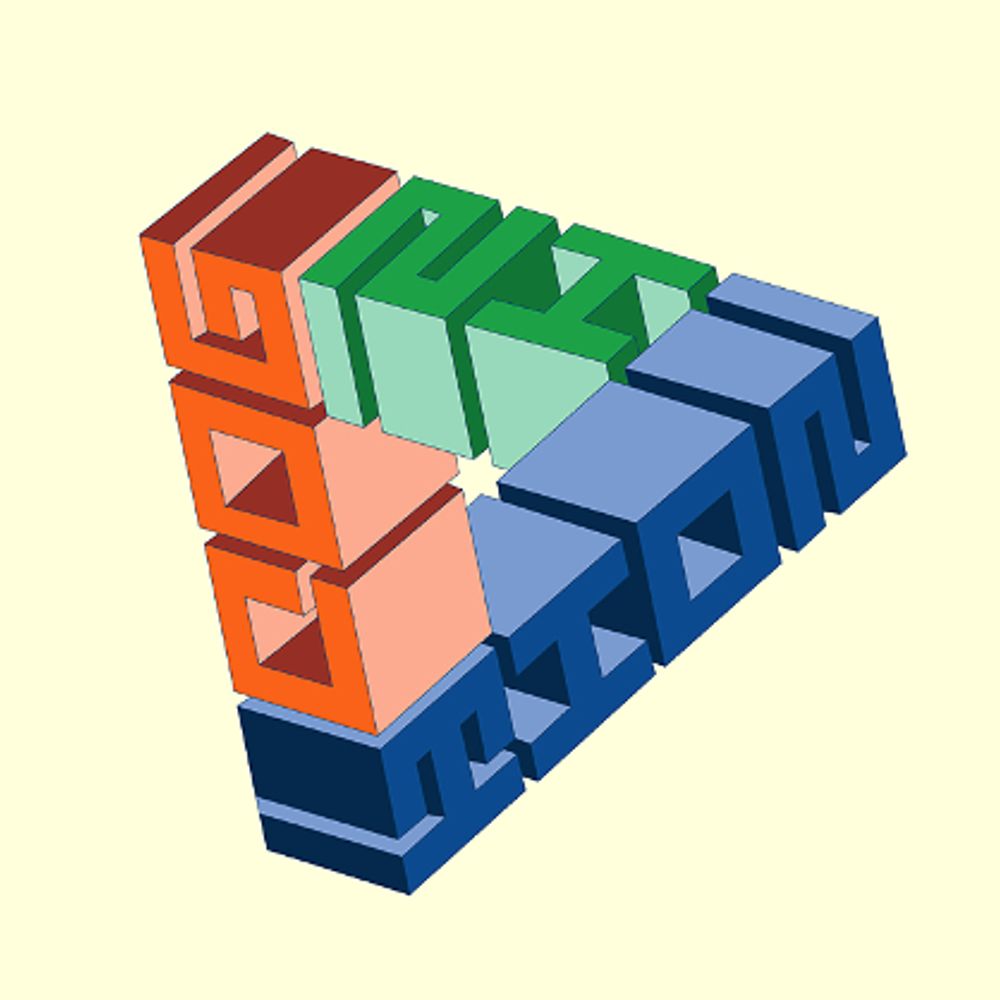
How early do children grasp mathematical patterns? In a new Cognition paper, Ciccione et al. show that 5–6-year-olds can intuitively extend lines, curves and oscillating patterns, revealing rich proto-mathematical intuitions before schooling.

November 20, 2025 at 1:55 PM
How early do children grasp mathematical patterns? In a new Cognition paper, Ciccione et al. show that 5–6-year-olds can intuitively extend lines, curves and oscillating patterns, revealing rich proto-mathematical intuitions before schooling.
Reposted by Fiery Cushman
A thread on our recent paper (w/Raihan Alam @raihanalam) in PNAS on why punishment often fails and what it means for crime, cooperation, democracy, and the rule of law. I’m super excited for it, it’s the lab’s most extensive experimental work to date. Check it out! 1/
www.pnas.org/doi/full/10....
www.pnas.org/doi/full/10....
PNAS
Proceedings of the National Academy of Sciences (PNAS), a peer reviewed journal of the National Academy of Sciences (NAS) - an authoritative source of high-impact, original research that broadly spans...
www.pnas.org
November 19, 2025 at 11:40 PM
A thread on our recent paper (w/Raihan Alam @raihanalam) in PNAS on why punishment often fails and what it means for crime, cooperation, democracy, and the rule of law. I’m super excited for it, it’s the lab’s most extensive experimental work to date. Check it out! 1/
www.pnas.org/doi/full/10....
www.pnas.org/doi/full/10....
Reposted by Fiery Cushman

Experimental participants to us

November 12, 2025 at 2:08 PM
Experimental participants to us
Reposted by Fiery Cushman

🧠 New paper alert! Can people infer others’ values not from what they choose, but simply from what comes to mind? Across four studies, we show they can—drawing on an intuitive theory of how options are generated.
doi.org/10.1016/j.cognition.2025.106238
👇
doi.org/10.1016/j.cognition.2025.106238
👇
Redirecting
doi.org
November 5, 2025 at 7:31 PM
🧠 New paper alert! Can people infer others’ values not from what they choose, but simply from what comes to mind? Across four studies, we show they can—drawing on an intuitive theory of how options are generated.
doi.org/10.1016/j.cognition.2025.106238
👇
doi.org/10.1016/j.cognition.2025.106238
👇
Reposted by Fiery Cushman
New article w/ M Pabla & @orifriedman.bsky.social
onlinelibrary.wiley.com/doi/10.1111/...
When children claim an unexpected event is impossible they also claim it's never happened, even for immoral events, suggesting their judgments reflect beliefs about what could happen & not merely what should.
onlinelibrary.wiley.com/doi/10.1111/...
When children claim an unexpected event is impossible they also claim it's never happened, even for immoral events, suggesting their judgments reflect beliefs about what could happen & not merely what should.

October 24, 2025 at 5:00 PM
New article w/ M Pabla & @orifriedman.bsky.social
onlinelibrary.wiley.com/doi/10.1111/...
When children claim an unexpected event is impossible they also claim it's never happened, even for immoral events, suggesting their judgments reflect beliefs about what could happen & not merely what should.
onlinelibrary.wiley.com/doi/10.1111/...
When children claim an unexpected event is impossible they also claim it's never happened, even for immoral events, suggesting their judgments reflect beliefs about what could happen & not merely what should.
Reposted by Fiery Cushman
We're excited to announce that Cognitive Science at Dartmouth is recruiting PhD students to work collaboratively with me, Steven Frankland, and Fred Callaway. Come study the principles and mechanisms that enable us to understand, plan, and act in the world! Info: sites.dartmouth.edu/cogscigrad/
Cognitive Science Graduate Admissions – Information about graduate admissions from the cognitive science faculty
sites.dartmouth.edu
October 23, 2025 at 5:30 PM
We're excited to announce that Cognitive Science at Dartmouth is recruiting PhD students to work collaboratively with me, Steven Frankland, and Fred Callaway. Come study the principles and mechanisms that enable us to understand, plan, and act in the world! Info: sites.dartmouth.edu/cogscigrad/