



Jay Van Bavel, PhD
@jayvanbavel.bsky.social
Professor of Psychology at NYU (jayvanbavel.com) | Author of The Power of Us Book (powerofus.online) | Director of NYU Center for Conflict & Cooperation | trying to write a new book about collective decisions
Pinned
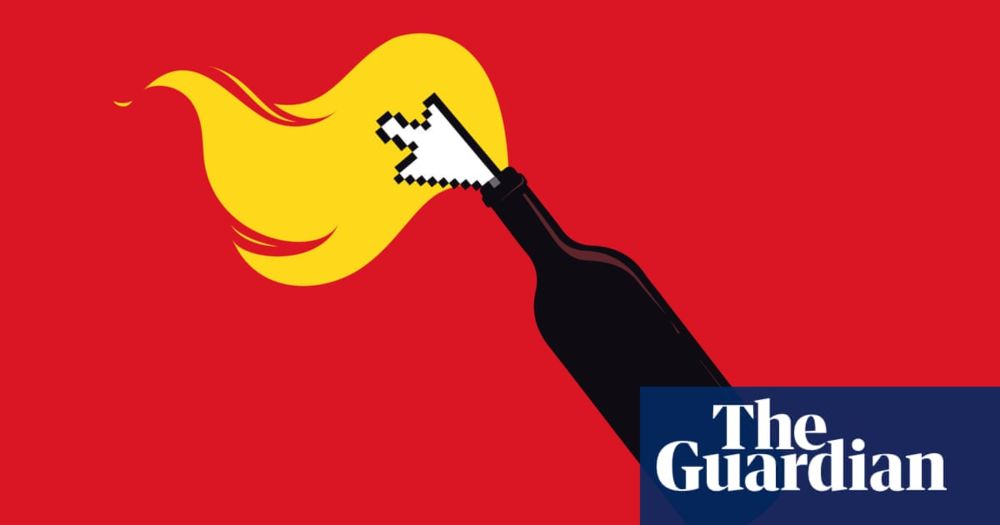
Are a few people ruining the internet for the rest of us?
Why does the online world seem so toxic compared with normal life? Our research shows that a small number of divisive accounts could be responsible – and offers a way out
www.theguardian.com
Only a small % of people engage in toxic activity online, but they’re responsible for a disproportionate share of hostile or misleading content on nearly every platform
Because super-users are so active, they dominate our collective impression of the internet www.theguardian.com/books/2025/j...
Because super-users are so active, they dominate our collective impression of the internet www.theguardian.com/books/2025/j...
Reposted by Jay Van Bavel, PhD

When given the choice, participants sought human empathy, despite rating AI responses as more empathetic and making them feel more heard.
@jdweng.bsky.social
@dcameron.bsky.social
@minzlicht.bsky.social
www.nature.com/articles/s44...
@jdweng.bsky.social
@dcameron.bsky.social
@minzlicht.bsky.social
www.nature.com/articles/s44...

People choose to receive human empathy despite rating AI empathy higher - Communications Psychology
This work explored whether people would rather choose to receive empathy from human or AI empathizers. When given the choice, participants sought human empathy, despite rating AI responses as more emp...
www.nature.com
February 12, 2026 at 5:34 PM
When given the choice, participants sought human empathy, despite rating AI responses as more empathetic and making them feel more heard.
@jdweng.bsky.social
@dcameron.bsky.social
@minzlicht.bsky.social
www.nature.com/articles/s44...
@jdweng.bsky.social
@dcameron.bsky.social
@minzlicht.bsky.social
www.nature.com/articles/s44...
Reposted by Jay Van Bavel, PhD

🎉 Excited to share our new paper on how the brain forms first impressions, now out (open access)!
In our EEG study, we tested how the brain responds to two kinds of social information: what we see (like perceived race) and what we know (like a person’s socioeconomic status).
🧵
In our EEG study, we tested how the brain responds to two kinds of social information: what we see (like perceived race) and what we know (like a person’s socioeconomic status).
🧵

February 12, 2026 at 6:10 PM
🎉 Excited to share our new paper on how the brain forms first impressions, now out (open access)!
In our EEG study, we tested how the brain responds to two kinds of social information: what we see (like perceived race) and what we know (like a person’s socioeconomic status).
🧵
In our EEG study, we tested how the brain responds to two kinds of social information: what we see (like perceived race) and what we know (like a person’s socioeconomic status).
🧵
Internal documents reveal that social media companies are creating so-called "safety" design features for minors that no one is using. In some cases, less than 2% of minors are using them.
These lawsuits are revealing how these companies avoid creating effective safety measures for kids.
These lawsuits are revealing how these companies avoid creating effective safety measures for kids.

February 12, 2026 at 4:32 PM
Internal documents reveal that social media companies are creating so-called "safety" design features for minors that no one is using. In some cases, less than 2% of minors are using them.
These lawsuits are revealing how these companies avoid creating effective safety measures for kids.
These lawsuits are revealing how these companies avoid creating effective safety measures for kids.
AI does not engage in motivated reasoning
While individuals processing information may be motivated to
reach a certain conclusion, LLMs have no such motivation and operate on purely cognitive input. As such, they do not mimic humans in motivated reasoning tasks.
arxiv.org/pdf/2601.16130
While individuals processing information may be motivated to
reach a certain conclusion, LLMs have no such motivation and operate on purely cognitive input. As such, they do not mimic humans in motivated reasoning tasks.
arxiv.org/pdf/2601.16130

February 12, 2026 at 4:16 PM
AI does not engage in motivated reasoning
While individuals processing information may be motivated to
reach a certain conclusion, LLMs have no such motivation and operate on purely cognitive input. As such, they do not mimic humans in motivated reasoning tasks.
arxiv.org/pdf/2601.16130
While individuals processing information may be motivated to
reach a certain conclusion, LLMs have no such motivation and operate on purely cognitive input. As such, they do not mimic humans in motivated reasoning tasks.
arxiv.org/pdf/2601.16130
Bureaucratic benchmarks are soul-crushing because they leave a big gap between what we care about and what can be measured.
When we forget about the things we actually care about (like making interesting discoveries) and we write worse papers to get more publications, the metric eats the value.
When we forget about the things we actually care about (like making interesting discoveries) and we write worse papers to get more publications, the metric eats the value.

Nguyen’s The Score & Nicholson Baker's A Box of Matches are a perfect set. The Score is about value capture (when metrics corrode their purpose) and Matches is about lighting a fire everyday and noticing stuff (i call it value release in the post) More here! anagantman.substack.com/p/bean-count...

Bean-counting by firelight
on C. Thi Nguyen’s The Score & Nicholson Baker's A Box of Matches
anagantman.substack.com
February 12, 2026 at 4:05 PM
Bureaucratic benchmarks are soul-crushing because they leave a big gap between what we care about and what can be measured.
When we forget about the things we actually care about (like making interesting discoveries) and we write worse papers to get more publications, the metric eats the value.
When we forget about the things we actually care about (like making interesting discoveries) and we write worse papers to get more publications, the metric eats the value.
Reposted by Jay Van Bavel, PhD
In the past, Republicans had more trust in scientists than Democrats. This is no longer the case.
In POQ, Schulam et al. identify demographic changes in political parties as a source of polarized trust in the scientific community.
Read now: doi.org/10.1093/poq/...
In POQ, Schulam et al. identify demographic changes in political parties as a source of polarized trust in the scientific community.
Read now: doi.org/10.1093/poq/...


February 11, 2026 at 6:55 PM
In the past, Republicans had more trust in scientists than Democrats. This is no longer the case.
In POQ, Schulam et al. identify demographic changes in political parties as a source of polarized trust in the scientific community.
Read now: doi.org/10.1093/poq/...
In POQ, Schulam et al. identify demographic changes in political parties as a source of polarized trust in the scientific community.
Read now: doi.org/10.1093/poq/...
A meta-analysis on reducing discrimination finds:
1) passive interventions, such as short-term education or bias reminders, are ineffective
2) targeting behavior directly to inhibit bias (eg making individuals accountable or changing social norms) is helpful
psycnet.apa.org/doiLanding?d...
1) passive interventions, such as short-term education or bias reminders, are ineffective
2) targeting behavior directly to inhibit bias (eg making individuals accountable or changing social norms) is helpful
psycnet.apa.org/doiLanding?d...

February 11, 2026 at 2:32 PM
A meta-analysis on reducing discrimination finds:
1) passive interventions, such as short-term education or bias reminders, are ineffective
2) targeting behavior directly to inhibit bias (eg making individuals accountable or changing social norms) is helpful
psycnet.apa.org/doiLanding?d...
1) passive interventions, such as short-term education or bias reminders, are ineffective
2) targeting behavior directly to inhibit bias (eg making individuals accountable or changing social norms) is helpful
psycnet.apa.org/doiLanding?d...
Trust in leadership is essential to success
A new study found that PhD students who had greater trust in their graduate advisor finished their first year more motivated, higher in well-being, and more academically successful than those with lower advisor trust.
academic.oup.com/pnasnexus/ar...
A new study found that PhD students who had greater trust in their graduate advisor finished their first year more motivated, higher in well-being, and more academically successful than those with lower advisor trust.
academic.oup.com/pnasnexus/ar...

February 11, 2026 at 1:49 PM
Trust in leadership is essential to success
A new study found that PhD students who had greater trust in their graduate advisor finished their first year more motivated, higher in well-being, and more academically successful than those with lower advisor trust.
academic.oup.com/pnasnexus/ar...
A new study found that PhD students who had greater trust in their graduate advisor finished their first year more motivated, higher in well-being, and more academically successful than those with lower advisor trust.
academic.oup.com/pnasnexus/ar...
Civil conversations reduce attitude polarization more than people anticipate.
People with opposing attitudes toward cats and dogs, cancel culture, and Joe Biden underestimated how much their own and others’ attitudes would depolarize in spoken conversations.
psycnet.apa.org/fulltext/202...
People with opposing attitudes toward cats and dogs, cancel culture, and Joe Biden underestimated how much their own and others’ attitudes would depolarize in spoken conversations.
psycnet.apa.org/fulltext/202...

February 10, 2026 at 8:31 PM
Civil conversations reduce attitude polarization more than people anticipate.
People with opposing attitudes toward cats and dogs, cancel culture, and Joe Biden underestimated how much their own and others’ attitudes would depolarize in spoken conversations.
psycnet.apa.org/fulltext/202...
People with opposing attitudes toward cats and dogs, cancel culture, and Joe Biden underestimated how much their own and others’ attitudes would depolarize in spoken conversations.
psycnet.apa.org/fulltext/202...
By age 2, toddlers understand ingroup loyalty
They realize that people have social identities and expert their social identity to take precedence in intergroup contexts even when it conflicts with their personal preferences
www.pnas.org/doi/epdf/10....
They realize that people have social identities and expert their social identity to take precedence in intergroup contexts even when it conflicts with their personal preferences
www.pnas.org/doi/epdf/10....

February 10, 2026 at 8:11 PM
By age 2, toddlers understand ingroup loyalty
They realize that people have social identities and expert their social identity to take precedence in intergroup contexts even when it conflicts with their personal preferences
www.pnas.org/doi/epdf/10....
They realize that people have social identities and expert their social identity to take precedence in intergroup contexts even when it conflicts with their personal preferences
www.pnas.org/doi/epdf/10....
Reposted by Jay Van Bavel, PhD

Effective fertility policy: Remote work. If both parents work at home at least one day/week, they'll average 0.5 more children, pushing toward the “replacement” level of 2.1. A result of opportunity and availability, less time commuting=more time parenting. www.nytimes.com/2026/02/09/o...

Opinion | Want More Babies? Abolish Commutes.
www.nytimes.com
February 10, 2026 at 1:21 AM
Effective fertility policy: Remote work. If both parents work at home at least one day/week, they'll average 0.5 more children, pushing toward the “replacement” level of 2.1. A result of opportunity and availability, less time commuting=more time parenting. www.nytimes.com/2026/02/09/o...
One study found that schools with more restrictive policies did not impact student mental health.
But the same study found that phone use/social media time was associated with worse anxiety, depression, etc.
www.thelancet.com/journals/lan...
But the same study found that phone use/social media time was associated with worse anxiety, depression, etc.
www.thelancet.com/journals/lan...

February 9, 2026 at 9:06 PM
One study found that schools with more restrictive policies did not impact student mental health.
But the same study found that phone use/social media time was associated with worse anxiety, depression, etc.
www.thelancet.com/journals/lan...
But the same study found that phone use/social media time was associated with worse anxiety, depression, etc.
www.thelancet.com/journals/lan...
The algorithmic curation of information online can exacerbate polarization and support the spread of misinformation.
This review makes the case that social media algorithms amplify content from extreme parties, especially the far right, and threatens democracy.
www.science.org/doi/full/10....
This review makes the case that social media algorithms amplify content from extreme parties, especially the far right, and threatens democracy.
www.science.org/doi/full/10....

February 9, 2026 at 7:01 PM
The algorithmic curation of information online can exacerbate polarization and support the spread of misinformation.
This review makes the case that social media algorithms amplify content from extreme parties, especially the far right, and threatens democracy.
www.science.org/doi/full/10....
This review makes the case that social media algorithms amplify content from extreme parties, especially the far right, and threatens democracy.
www.science.org/doi/full/10....
The potential harms of big social media is now going in front of a jury, who will see internal evidence, emalls, etc.
“The jury will ultimately decide whether the companies were negligent, if they contributed to mental health harms, and if they should have warned young users about the risks.”
“The jury will ultimately decide whether the companies were negligent, if they contributed to mental health harms, and if they should have warned young users about the risks.”

February 8, 2026 at 6:36 PM
The potential harms of big social media is now going in front of a jury, who will see internal evidence, emalls, etc.
“The jury will ultimately decide whether the companies were negligent, if they contributed to mental health harms, and if they should have warned young users about the risks.”
“The jury will ultimately decide whether the companies were negligent, if they contributed to mental health harms, and if they should have warned young users about the risks.”
Wow, Duke University just closed the Center for Advanced Hindsight:

February 8, 2026 at 6:27 PM
Wow, Duke University just closed the Center for Advanced Hindsight:
You should think very carefully about what groups you join, because that will shape your whole identity and how you think, behave, and what you care about.
practiceofthepractice.com/how-your-gro...
practiceofthepractice.com/how-your-gro...

How Your Group Identity Shapes Who You Become with NYU Professor Jay Van Bavel | POP 1339 - How to Start, Grow, and Scale a Private Practice | Practice of the Practice
In this podcast episode, Joe Sanok discusses why your group identity determines so much with NYU Professor Jay Van Bavel, PhD.
practiceofthepractice.com
February 8, 2026 at 5:58 PM
You should think very carefully about what groups you join, because that will shape your whole identity and how you think, behave, and what you care about.
practiceofthepractice.com/how-your-gro...
practiceofthepractice.com/how-your-gro...
Reposted by Jay Van Bavel, PhD

Important argument on need to bring back public deliberation of moral and values trade-offs to bring meaning back. Economic ideas can obscure such choices.
Here are some ideas about how to bring values back into public reasoning and policymaking.
knowledge4policy.ec.europa.eu/projects-act...
Here are some ideas about how to bring values back into public reasoning and policymaking.
knowledge4policy.ec.europa.eu/projects-act...
Values & Identities - a policymaker's guide - Knowledge for policy - European Commission
The JRC has published a report that supports policymakers in understanding and interpreting value orientations and social identities that are relevant for policymaking.
knowledge4policy.ec.europa.eu
February 8, 2026 at 2:20 PM
Important argument on need to bring back public deliberation of moral and values trade-offs to bring meaning back. Economic ideas can obscure such choices.
Here are some ideas about how to bring values back into public reasoning and policymaking.
knowledge4policy.ec.europa.eu/projects-act...
Here are some ideas about how to bring values back into public reasoning and policymaking.
knowledge4policy.ec.europa.eu/projects-act...
The Super Bowl will spawn countless new fans
Playing on the same team can bind people together in powerful ways--and winning makes everything better:
Successful teams forge a shared identity, and connections between teammates reducing discrimination
www.powerofusnewsletter.com/p/rerun-the-...
Playing on the same team can bind people together in powerful ways--and winning makes everything better:
Successful teams forge a shared identity, and connections between teammates reducing discrimination
www.powerofusnewsletter.com/p/rerun-the-...

How the Super Bowl will fundamentally change the identity of millions of kids
We explain why winning increases identity and why underdogs have a unique appeal
www.powerofusnewsletter.com
February 7, 2026 at 10:38 PM
The Super Bowl will spawn countless new fans
Playing on the same team can bind people together in powerful ways--and winning makes everything better:
Successful teams forge a shared identity, and connections between teammates reducing discrimination
www.powerofusnewsletter.com/p/rerun-the-...
Playing on the same team can bind people together in powerful ways--and winning makes everything better:
Successful teams forge a shared identity, and connections between teammates reducing discrimination
www.powerofusnewsletter.com/p/rerun-the-...
Reposted by Jay Van Bavel, PhD

Thrilled to share our latest paper, out now in Science Advances! We explored the development of cooperative behaviors — fairness, trustworthiness, forgiveness, & honesty — across five societies, culturally contextualizing them & seeing how they correlate. (1/5) www.science.org/doi/full/10....

February 7, 2026 at 3:09 PM
Thrilled to share our latest paper, out now in Science Advances! We explored the development of cooperative behaviors — fairness, trustworthiness, forgiveness, & honesty — across five societies, culturally contextualizing them & seeing how they correlate. (1/5) www.science.org/doi/full/10....
The Europian Union argues TikTok's ‘Addictive Design’ features violate online safety laws
A Pew poll found that 16% of teens were on TikTok “almost constantly.” The EU says TikTok poses potential harm to the “physical and mental well-being” of users, including minors
www.nytimes.com/2026/02/06/b...
A Pew poll found that 16% of teens were on TikTok “almost constantly.” The EU says TikTok poses potential harm to the “physical and mental well-being” of users, including minors
www.nytimes.com/2026/02/06/b...

Europe Accuses TikTok of ‘Addictive Design’ and Pushes for Change
www.nytimes.com
February 7, 2026 at 7:29 PM
The Europian Union argues TikTok's ‘Addictive Design’ features violate online safety laws
A Pew poll found that 16% of teens were on TikTok “almost constantly.” The EU says TikTok poses potential harm to the “physical and mental well-being” of users, including minors
www.nytimes.com/2026/02/06/b...
A Pew poll found that 16% of teens were on TikTok “almost constantly.” The EU says TikTok poses potential harm to the “physical and mental well-being” of users, including minors
www.nytimes.com/2026/02/06/b...
Reposted by Jay Van Bavel, PhD
Collaborative groups often outperform single individuals in complex problem solving. A new paper examined how to create the right incentives to promote this kind of collective intelligence.
www.pnas.org/doi/epdf/10....
www.pnas.org/doi/epdf/10....

January 27, 2026 at 8:31 PM
Collaborative groups often outperform single individuals in complex problem solving. A new paper examined how to create the right incentives to promote this kind of collective intelligence.
www.pnas.org/doi/epdf/10....
www.pnas.org/doi/epdf/10....
Reposted by Jay Van Bavel, PhD
Across social media platforms, political posting is linked to affective polarization--extreme users post the most.
As polarized partisans increasingly dominate the conversation, casual users disengage and the online public sphere grows smaller, sharper, and more extreme. arxiv.org/html/2510.25...
As polarized partisans increasingly dominate the conversation, casual users disengage and the online public sphere grows smaller, sharper, and more extreme. arxiv.org/html/2510.25...

February 5, 2026 at 8:02 PM
Across social media platforms, political posting is linked to affective polarization--extreme users post the most.
As polarized partisans increasingly dominate the conversation, casual users disengage and the online public sphere grows smaller, sharper, and more extreme. arxiv.org/html/2510.25...
As polarized partisans increasingly dominate the conversation, casual users disengage and the online public sphere grows smaller, sharper, and more extreme. arxiv.org/html/2510.25...
Reposted by Jay Van Bavel, PhD

After four months, the journal has not found a single reviewer for my PhD student's manuscript. The academic peer review system is broken.
I think we all should:
1. Review three papers for every one that we submit.
2. Promptly declined to review a paper when the request arrives.
#AcademicChatter
I think we all should:
1. Review three papers for every one that we submit.
2. Promptly declined to review a paper when the request arrives.
#AcademicChatter

February 5, 2026 at 6:43 PM
After four months, the journal has not found a single reviewer for my PhD student's manuscript. The academic peer review system is broken.
I think we all should:
1. Review three papers for every one that we submit.
2. Promptly declined to review a paper when the request arrives.
#AcademicChatter
I think we all should:
1. Review three papers for every one that we submit.
2. Promptly declined to review a paper when the request arrives.
#AcademicChatter
Across social media platforms, political posting is linked to affective polarization--extreme users post the most.
As polarized partisans increasingly dominate the conversation, casual users disengage and the online public sphere grows smaller, sharper, and more extreme. arxiv.org/html/2510.25...
As polarized partisans increasingly dominate the conversation, casual users disengage and the online public sphere grows smaller, sharper, and more extreme. arxiv.org/html/2510.25...
February 5, 2026 at 8:02 PM
Across social media platforms, political posting is linked to affective polarization--extreme users post the most.
As polarized partisans increasingly dominate the conversation, casual users disengage and the online public sphere grows smaller, sharper, and more extreme. arxiv.org/html/2510.25...
As polarized partisans increasingly dominate the conversation, casual users disengage and the online public sphere grows smaller, sharper, and more extreme. arxiv.org/html/2510.25...
People don't like individuals who vigilantly monitor and reprimand wrongdoings at work.
These "hall monitors" are seen as less moral and hyper competitive (the only people who like them are other vigilantes).
www.sciencedirect.com/science/arti...
These "hall monitors" are seen as less moral and hyper competitive (the only people who like them are other vigilantes).
www.sciencedirect.com/science/arti...

February 5, 2026 at 7:24 PM
People don't like individuals who vigilantly monitor and reprimand wrongdoings at work.
These "hall monitors" are seen as less moral and hyper competitive (the only people who like them are other vigilantes).
www.sciencedirect.com/science/arti...
These "hall monitors" are seen as less moral and hyper competitive (the only people who like them are other vigilantes).
www.sciencedirect.com/science/arti...