



Thomas Frölicher
@froeltho.bsky.social
Professor in Climate and Environmental Physics @unibern, Lead Author @IPCC_CH SROCC, Views are my own
Reposted by Thomas Frölicher

Hi y'all
You still have a few days to apply for our open professor position in planetary science in Bern, Switzerland. See more details below! For any questions, feel free to reach out to me.
🔭🧪⚛️#planetSci
You still have a few days to apply for our open professor position in planetary science in Bern, Switzerland. See more details below! For any questions, feel free to reach out to me.
🔭🧪⚛️#planetSci
Hi #planetaryScience folks, we have an open position for a *Professor in Planetary Sciences* at the Space Research & Planetary Sciences Division of the @unibe.ch.
Application deadline: *Jan 31, 2026*
Full ad: ohws.prospective.ch/public/v1/jo...
Reach out to me if you have any questions!
🧵 1/5
Application deadline: *Jan 31, 2026*
Full ad: ohws.prospective.ch/public/v1/jo...
Reach out to me if you have any questions!
🧵 1/5

Uni Bern: Professor in Planetary Sciences
The Division of Space Research and Planetary Sciences of the Physics Institute, University of Bern, Switzerland, invites applications for a full-time position as a Professor in Planetary Sciences.
ohws.prospective.ch
January 26, 2026 at 8:54 AM
Hi y'all
You still have a few days to apply for our open professor position in planetary science in Bern, Switzerland. See more details below! For any questions, feel free to reach out to me.
🔭🧪⚛️#planetSci
You still have a few days to apply for our open professor position in planetary science in Bern, Switzerland. See more details below! For any questions, feel free to reach out to me.
🔭🧪⚛️#planetSci
Reposted by Thomas Frölicher
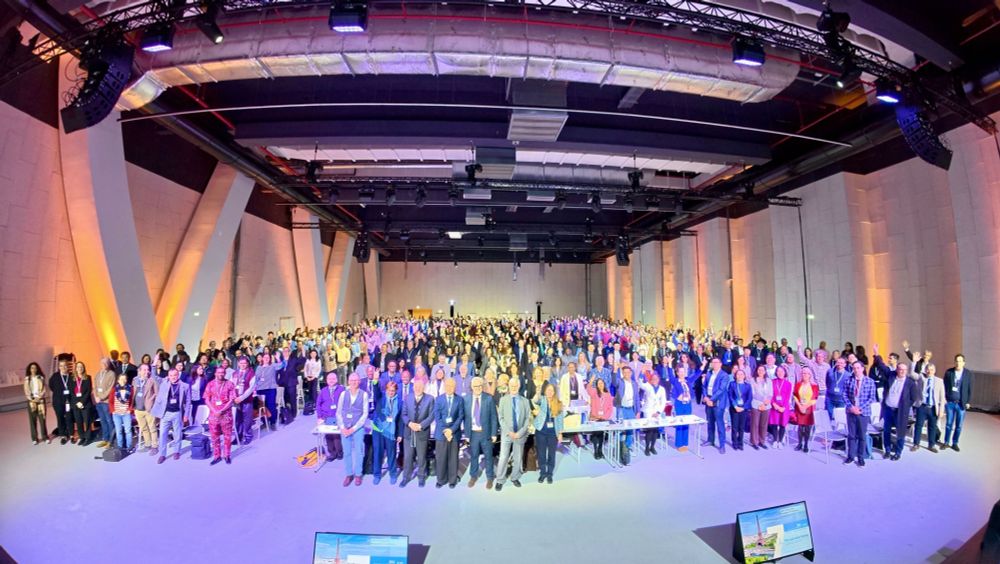
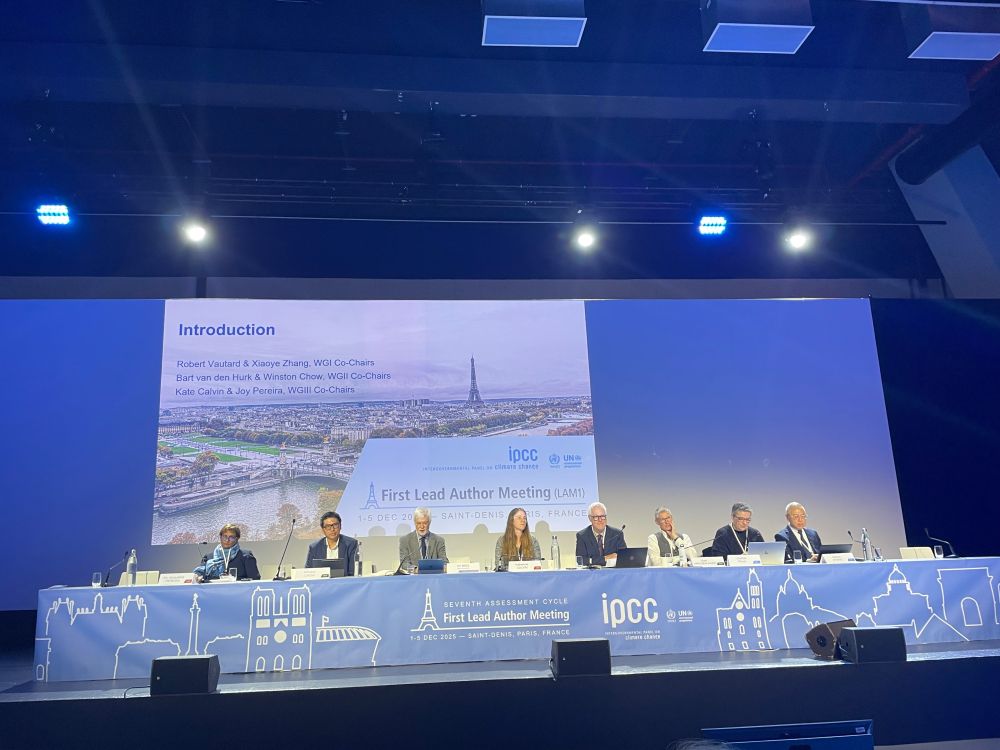
Great start of @ipcc.bsky.social #AR7 main reports with 1st ever joint first lead author meeting (#LAM1) of Working Groups I, II & III! Fantastic atmosphere! Amazing organisation of technical support units, with >600 participants! We also had a get-together of the Switzerland-based participants!


December 1, 2025 at 9:35 PM
Great start of @ipcc.bsky.social #AR7 main reports with 1st ever joint first lead author meeting (#LAM1) of Working Groups I, II & III! Fantastic atmosphere! Amazing organisation of technical support units, with >600 participants! We also had a get-together of the Switzerland-based participants!
Reposted by Thomas Frölicher
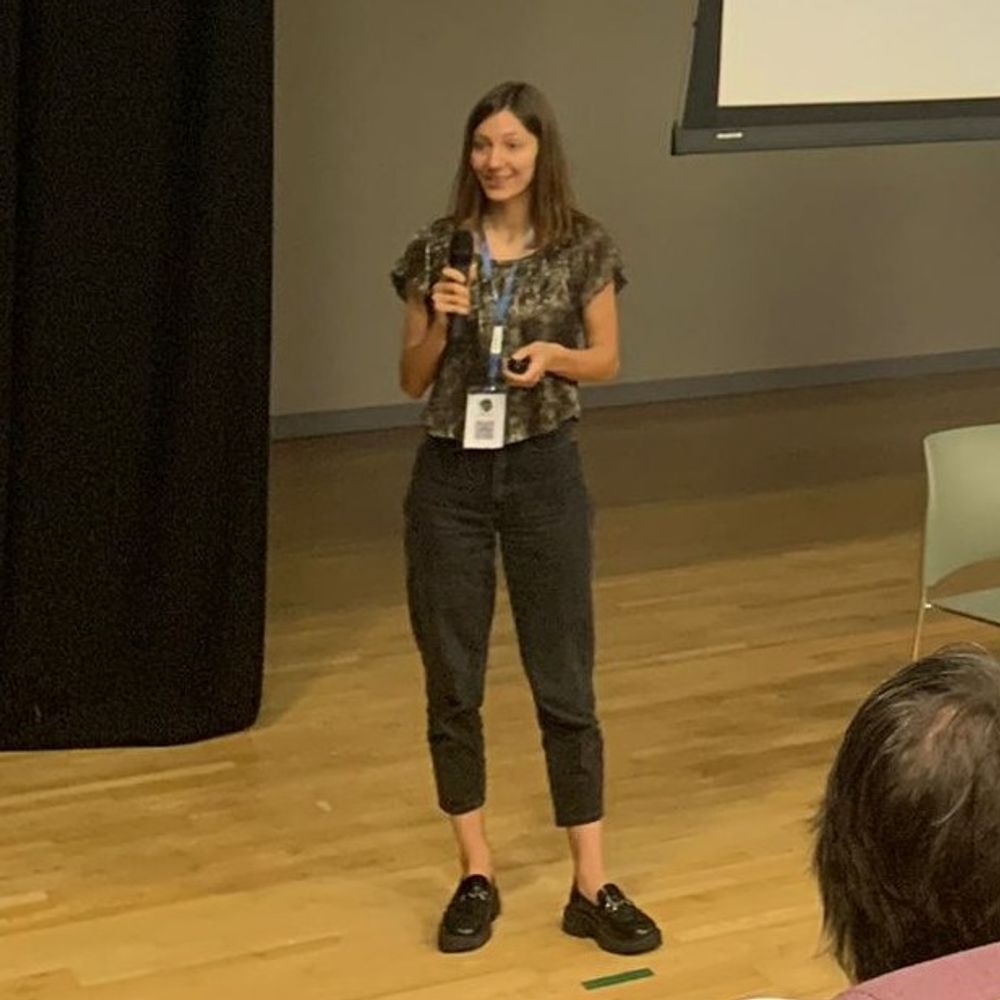
This Thursday at 10am CET, join us for Climate Coffee!
We'll talk about marine heatwaves, high acidity and low oxygen events - big threats to marine ecosystems 🔥 🐋
Findings from a study co-authored with @froeltho.bsky.social and Friedrich Burger 🙌
Link for registration below
We'll talk about marine heatwaves, high acidity and low oxygen events - big threats to marine ecosystems 🔥 🐋
Findings from a study co-authored with @froeltho.bsky.social and Friedrich Burger 🙌
Link for registration below

Make sure you register for November's Climate Coffee, on 27 November at 10 am CET!
This climate coffee is with Natacha Legrix De La Salle on Surface and Subsurface Compound MHW and Biogeochemical Extremes Under Climate Change.
Register here: www.eventbrite.dk/e/...
This climate coffee is with Natacha Legrix De La Salle on Surface and Subsurface Compound MHW and Biogeochemical Extremes Under Climate Change.
Register here: www.eventbrite.dk/e/...

November 24, 2025 at 5:55 PM
This Thursday at 10am CET, join us for Climate Coffee!
We'll talk about marine heatwaves, high acidity and low oxygen events - big threats to marine ecosystems 🔥 🐋
Findings from a study co-authored with @froeltho.bsky.social and Friedrich Burger 🙌
Link for registration below
We'll talk about marine heatwaves, high acidity and low oxygen events - big threats to marine ecosystems 🔥 🐋
Findings from a study co-authored with @froeltho.bsky.social and Friedrich Burger 🙌
Link for registration below
Netflix schauen, Tropenfrüchte essen, Billigmode tragen – die meisten Treibhausgas-Emissionen entstehen durch importierte Güter und Dienstleistungen. Eine Tagung an der Universität Bern rückt diese «grauen Emissionen» ins Zentrum. Donnerstag, 30. Oktober.
www.uniaktuell.unibe.ch/2025/klimasc...
www.uniaktuell.unibe.ch/2025/klimasc...

Klimaschutz im Graubereich
Netflix schauen, Tropenfrüchte essen, Billigmode tragen – die meisten Treibhausgas-Emissionen entstehen durch importierte Güter und Dienstleistungen. Eine Tagung an der Universität Bern rückt diese «g...
www.uniaktuell.unibe.ch
October 23, 2025 at 8:14 AM
Netflix schauen, Tropenfrüchte essen, Billigmode tragen – die meisten Treibhausgas-Emissionen entstehen durch importierte Güter und Dienstleistungen. Eine Tagung an der Universität Bern rückt diese «grauen Emissionen» ins Zentrum. Donnerstag, 30. Oktober.
www.uniaktuell.unibe.ch/2025/klimasc...
www.uniaktuell.unibe.ch/2025/klimasc...
By linking Antarctic sea ice, cloud cover, deep ocean temperatures, and global warming, our new study led by @linusvogt.bsky.social finds that ocean heat uptake and thermal sea level rise by 2100 could be 3–14% higher, and global surface warming 3–7% greater than previously thought👇

🚨🌊 New highlight paper out today in Earth System Dynamics!
We find an observational constraint implying more future global ocean heat uptake, cloud feedback, and warming than the CMIP6 mean.
This contrasts with previous estimates based on past warming trends.
🔗 esd.copernicus.org/articles/16/...
We find an observational constraint implying more future global ocean heat uptake, cloud feedback, and warming than the CMIP6 mean.
This contrasts with previous estimates based on past warming trends.
🔗 esd.copernicus.org/articles/16/...

Increased future ocean heat uptake constrained by Antarctic sea ice extent
Abstract. The ocean takes up over 90 % of the excess heat stored in the Earth system as a result of anthropogenic climate change, which has led to sea level rise and an intensification of marine extre...
esd.copernicus.org
October 2, 2025 at 12:36 PM
By linking Antarctic sea ice, cloud cover, deep ocean temperatures, and global warming, our new study led by @linusvogt.bsky.social finds that ocean heat uptake and thermal sea level rise by 2100 could be 3–14% higher, and global surface warming 3–7% greater than previously thought👇
Reposted by Thomas Frölicher

You can still apply!
If you know someone who might be interested, tell her or him about this! 🌊
If you know someone who might be interested, tell her or him about this! 🌊
Here‘s a rare and excellent career opportunity for outstanding physical oceanographers at the Potsdam Institute (PIK) and the University of Potsdam, in beautiful surroundings just outside Berlin. Tell qualified friends or colleagues! 🌊
www.nature.com/naturecareer...
www.nature.com/naturecareer...

Full Professorship (W3) for Physics of the Oceans - Potsdam-Mittelmark, Brandenburg (DE) job with Universität Potsdam | 12844582
Founded in 1991, the University of Potsdam has firmly established itself in the scientific landscape and has become an outstanding economic factor ...
www.nature.com
October 1, 2025 at 3:53 PM
You can still apply!
If you know someone who might be interested, tell her or him about this! 🌊
If you know someone who might be interested, tell her or him about this! 🌊
Reposted by Thomas Frölicher
The massive extreme marine heatwave continues to stretch across the entire northern Pacific Ocean. In fact, the magnitude of the sea surface temperature anomalies even grew in August 2025 compared to earlier in the summer. Yikes... 🫠
Data from OISSTv2.1 (psl.noaa.gov/data/gridded...). 🌊
Data from OISSTv2.1 (psl.noaa.gov/data/gridded...). 🌊

September 11, 2025 at 4:38 PM
The massive extreme marine heatwave continues to stretch across the entire northern Pacific Ocean. In fact, the magnitude of the sea surface temperature anomalies even grew in August 2025 compared to earlier in the summer. Yikes... 🫠
Data from OISSTv2.1 (psl.noaa.gov/data/gridded...). 🌊
Data from OISSTv2.1 (psl.noaa.gov/data/gridded...). 🌊
Reposted by Thomas Frölicher
Here‘s a rare and excellent career opportunity for outstanding physical oceanographers at the Potsdam Institute (PIK) and the University of Potsdam, in beautiful surroundings just outside Berlin. Tell qualified friends or colleagues! 🌊
www.nature.com/naturecareer...
www.nature.com/naturecareer...
Full Professorship (W3) for Physics of the Oceans - Potsdam-Mittelmark, Brandenburg (DE) job with Universität Potsdam | 12844582
Founded in 1991, the University of Potsdam has firmly established itself in the scientific landscape and has become an outstanding economic factor ...
www.nature.com
September 9, 2025 at 10:08 AM
Here‘s a rare and excellent career opportunity for outstanding physical oceanographers at the Potsdam Institute (PIK) and the University of Potsdam, in beautiful surroundings just outside Berlin. Tell qualified friends or colleagues! 🌊
www.nature.com/naturecareer...
www.nature.com/naturecareer...
🌊 Nacht der Forschung 2025 | University of Bern 🌊
What a fantastic evening! Thank you to the entire ocean modeling team and friends for their incredible effort. For one night, the Kuppelraum transformed into a "true" ocean, full of energy, visited by many, and filled with inspiring conversations.
What a fantastic evening! Thank you to the entire ocean modeling team and friends for their incredible effort. For one night, the Kuppelraum transformed into a "true" ocean, full of energy, visited by many, and filled with inspiring conversations.

September 10, 2025 at 10:42 PM
🌊 Nacht der Forschung 2025 | University of Bern 🌊
What a fantastic evening! Thank you to the entire ocean modeling team and friends for their incredible effort. For one night, the Kuppelraum transformed into a "true" ocean, full of energy, visited by many, and filled with inspiring conversations.
What a fantastic evening! Thank you to the entire ocean modeling team and friends for their incredible effort. For one night, the Kuppelraum transformed into a "true" ocean, full of energy, visited by many, and filled with inspiring conversations.
Reposted by Thomas Frölicher

Der Weltklimarat @ipcc.bsky.social hat Thomas Frölicher #unibern zum Koordinierenden Leitautor der Arbeitsgruppe I des nächsten Weltklimaberichts ernannt. Er leitet das Kapitel über #Kipppunkte im Erdsystem. Mehr über seine Forschung: www.uniaktuell.unibe.ch/2025/uno_oze....
@froeltho.bsky.social
@froeltho.bsky.social

August 19, 2025 at 4:17 PM
Der Weltklimarat @ipcc.bsky.social hat Thomas Frölicher #unibern zum Koordinierenden Leitautor der Arbeitsgruppe I des nächsten Weltklimaberichts ernannt. Er leitet das Kapitel über #Kipppunkte im Erdsystem. Mehr über seine Forschung: www.uniaktuell.unibe.ch/2025/uno_oze....
@froeltho.bsky.social
@froeltho.bsky.social
Reposted by Thomas Frölicher

🚨 Our latest paper on how #climatechange will affect the distribution of shared fish stocks like #tuna and #billfishes across international borders is out now! 🐟🌍
Read the #OpenAccess article & IOF story below 👇
www.science.org/doi/10.1126/...
Read the #OpenAccess article & IOF story below 👇
www.science.org/doi/10.1126/...
July 30, 2025 at 10:10 PM
🚨 Our latest paper on how #climatechange will affect the distribution of shared fish stocks like #tuna and #billfishes across international borders is out now! 🐟🌍
Read the #OpenAccess article & IOF story below 👇
www.science.org/doi/10.1126/...
Read the #OpenAccess article & IOF story below 👇
www.science.org/doi/10.1126/...
Reposted by Thomas Frölicher
8 Jahre, 8 #Hitzerekorde im #Ozean – 2025 dürfte der nächste folgen. Klimaforscher Thomas Frölicher erklärt, warum das auch die #Schweiz betrifft und wo dennoch Hoffnung besteht: www.uniaktuell.unibe.ch/2025/uno_oze....
@froeltho.bsky.social
@froeltho.bsky.social

June 23, 2025 at 9:43 AM
8 Jahre, 8 #Hitzerekorde im #Ozean – 2025 dürfte der nächste folgen. Klimaforscher Thomas Frölicher erklärt, warum das auch die #Schweiz betrifft und wo dennoch Hoffnung besteht: www.uniaktuell.unibe.ch/2025/uno_oze....
@froeltho.bsky.social
@froeltho.bsky.social
Have you ever wondered why a landlocked country like Switzerland should care about the health of the ocean? Check out our new 2-pager👇
Frölicher, T., & Jaccard, S. (2025). Why Switzerland Needs a Healthy Ocean: Global Interdependence and National Responsibility. Zenodo. lnkd.in/eMp5hN5d
Frölicher, T., & Jaccard, S. (2025). Why Switzerland Needs a Healthy Ocean: Global Interdependence and National Responsibility. Zenodo. lnkd.in/eMp5hN5d

June 9, 2025 at 11:01 PM
Have you ever wondered why a landlocked country like Switzerland should care about the health of the ocean? Check out our new 2-pager👇
Frölicher, T., & Jaccard, S. (2025). Why Switzerland Needs a Healthy Ocean: Global Interdependence and National Responsibility. Zenodo. lnkd.in/eMp5hN5d
Frölicher, T., & Jaccard, S. (2025). Why Switzerland Needs a Healthy Ocean: Global Interdependence and National Responsibility. Zenodo. lnkd.in/eMp5hN5d
Reposted by Thomas Frölicher
New work by Lester Kwiatkowski and colleagues suggests that the reduction in coral reef calcification due to climate change may end up enhancing the ocean carbon sink by up to 1.25 Gt CO2 yr-1 by mid century (by even more by 2300) 🌊
www.pnas.org/doi/full/10....
www.pnas.org/doi/full/10....
PNAS
Proceedings of the National Academy of Sciences (PNAS), a peer reviewed journal of the National Academy of Sciences (NAS) - an authoritative source of high-impact, original research that broadly spans...
www.pnas.org
June 9, 2025 at 4:26 PM
New work by Lester Kwiatkowski and colleagues suggests that the reduction in coral reef calcification due to climate change may end up enhancing the ocean carbon sink by up to 1.25 Gt CO2 yr-1 by mid century (by even more by 2300) 🌊
www.pnas.org/doi/full/10....
www.pnas.org/doi/full/10....
Reposted by Thomas Frölicher
A large number of products are available here: kdrive.infomaniak.com/app/share/20...
- Recommendations to Heads of State and Governments, summary in 6 UN languages
- Urgent call for coral reefs
- Policy brief "Knowledge for a thriving ocean"
- Manifesto
- Correspondence on US federal cuts 🌊
#OOSC
- Recommendations to Heads of State and Governments, summary in 6 UN languages
- Urgent call for coral reefs
- Policy brief "Knowledge for a thriving ocean"
- Manifesto
- Correspondence on US federal cuts 🌊
#OOSC
June 7, 2025 at 8:33 PM
A large number of products are available here: kdrive.infomaniak.com/app/share/20...
- Recommendations to Heads of State and Governments, summary in 6 UN languages
- Urgent call for coral reefs
- Policy brief "Knowledge for a thriving ocean"
- Manifesto
- Correspondence on US federal cuts 🌊
#OOSC
- Recommendations to Heads of State and Governments, summary in 6 UN languages
- Urgent call for coral reefs
- Policy brief "Knowledge for a thriving ocean"
- Manifesto
- Correspondence on US federal cuts 🌊
#OOSC
Reposted by Thomas Frölicher
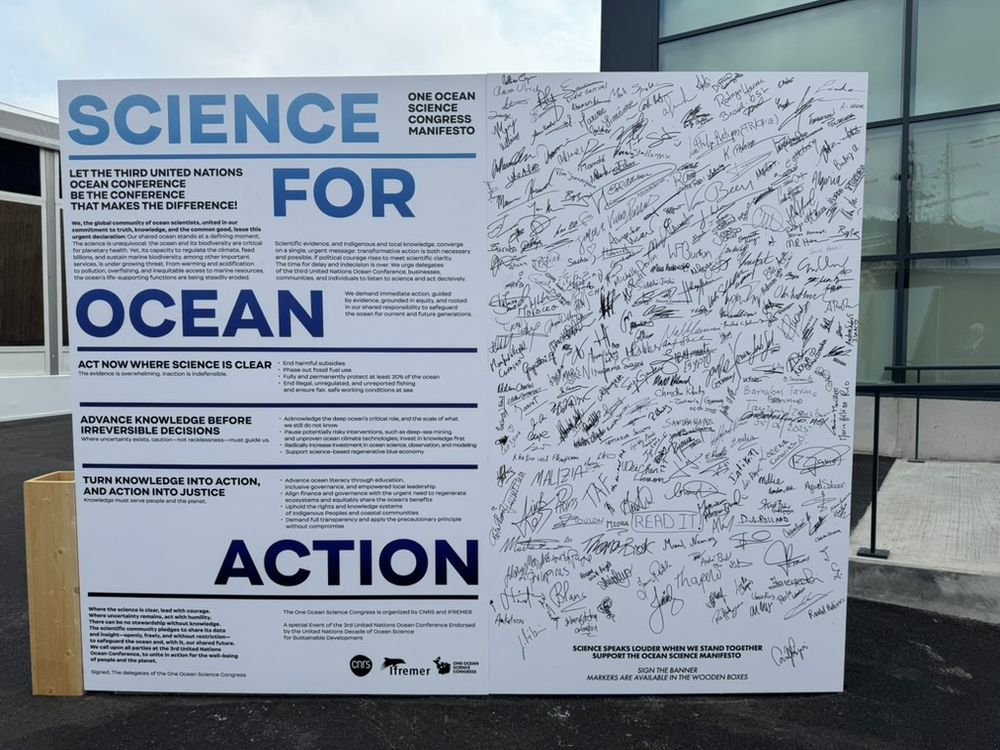
‼️ Please disseminate widely: the manifesto of the One Ocean Science Congress #OOSC is open for digital signature:
forms.ifremer.fr/pdg/oosc-man...
#ScienceForTheOcean 🌊
forms.ifremer.fr/pdg/oosc-man...
#ScienceForTheOcean 🌊
June 7, 2025 at 8:43 PM
‼️ Please disseminate widely: the manifesto of the One Ocean Science Congress #OOSC is open for digital signature:
forms.ifremer.fr/pdg/oosc-man...
#ScienceForTheOcean 🌊
forms.ifremer.fr/pdg/oosc-man...
#ScienceForTheOcean 🌊
Reposted by Thomas Frölicher
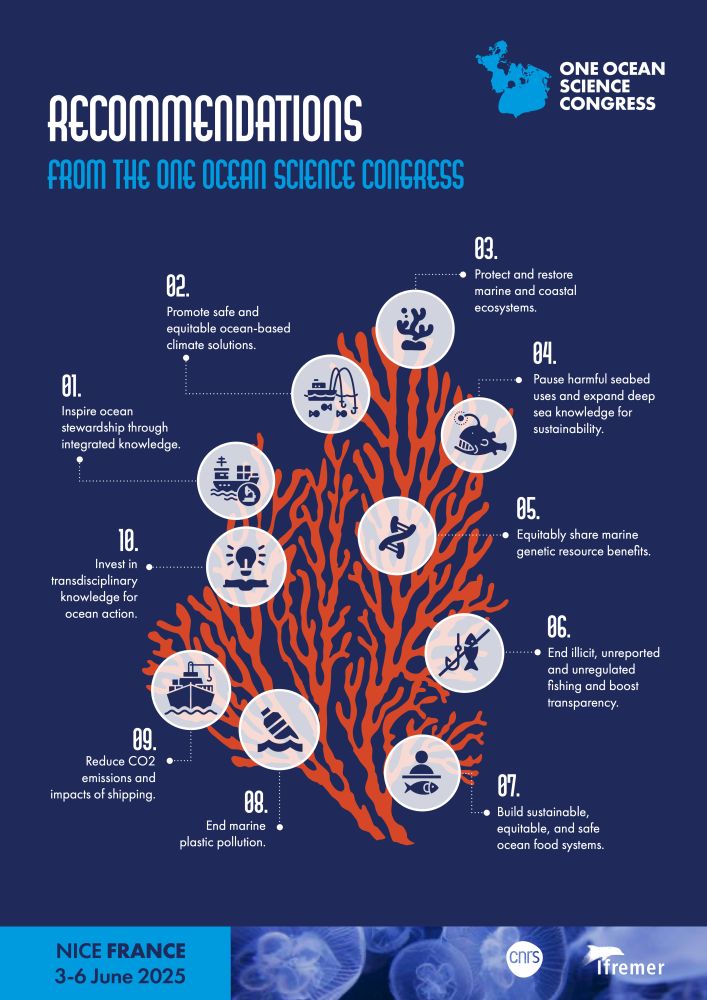
My co-chair François Houllier and I are delighted with this resounding success, after 2 years of preparation and many hurdles to overcome.
The recommendations will be presented to Heads of State and Governments tomorrow, the day before #UNOC starts.
#OOSC #ScienceForTheOcean
The recommendations will be presented to Heads of State and Governments tomorrow, the day before #UNOC starts.
#OOSC #ScienceForTheOcean
June 7, 2025 at 8:37 PM
My co-chair François Houllier and I are delighted with this resounding success, after 2 years of preparation and many hurdles to overcome.
The recommendations will be presented to Heads of State and Governments tomorrow, the day before #UNOC starts.
#OOSC #ScienceForTheOcean
The recommendations will be presented to Heads of State and Governments tomorrow, the day before #UNOC starts.
#OOSC #ScienceForTheOcean
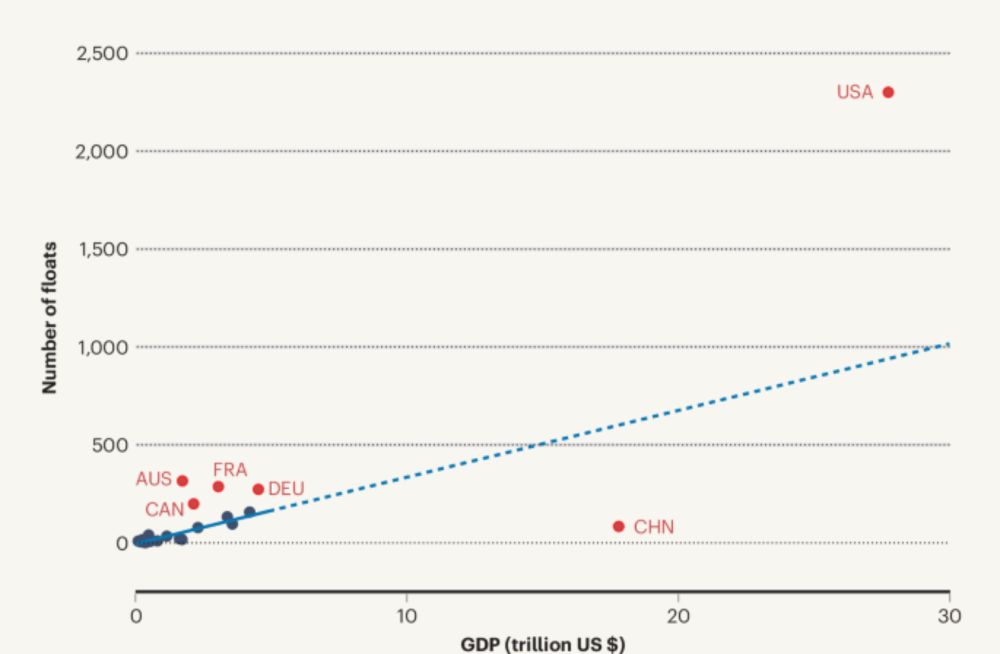
Our new paper authored by the Scientific Committee of the
#OOSC on "US federal cuts threaten international ocean science and diplomacy" has been published. www.nature.com/articles/s41...
#OOSC on "US federal cuts threaten international ocean science and diplomacy" has been published. www.nature.com/articles/s41...
US federal cuts threaten international ocean science and diplomacy - Nature Ecology & Evolution
Nature Ecology & Evolution - US federal cuts threaten international ocean science and diplomacy
www.nature.com
May 28, 2025 at 12:25 PM
Our new paper authored by the Scientific Committee of the
#OOSC on "US federal cuts threaten international ocean science and diplomacy" has been published. www.nature.com/articles/s41...
#OOSC on "US federal cuts threaten international ocean science and diplomacy" has been published. www.nature.com/articles/s41...
Reposted by Thomas Frölicher
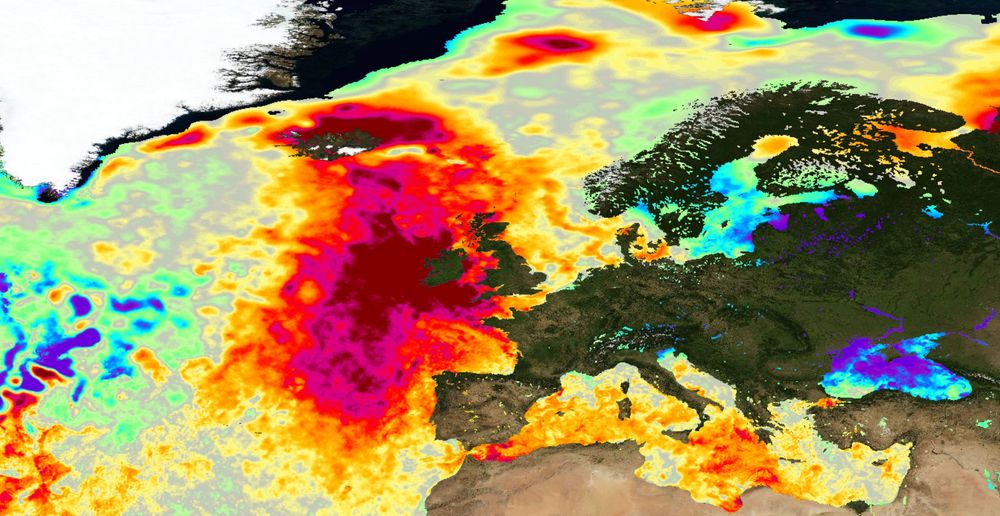
This is phenomenal.
Sea surface temperatures are >5C above average to the west of the UK and around Iceland. It's the strongest area of anomalous warmth on the planet at the moment.
It's the warmest in recorded history for northwest Europe.
Sea surface temperatures are >5C above average to the west of the UK and around Iceland. It's the strongest area of anomalous warmth on the planet at the moment.
It's the warmest in recorded history for northwest Europe.
May 25, 2025 at 10:13 AM
This is phenomenal.
Sea surface temperatures are >5C above average to the west of the UK and around Iceland. It's the strongest area of anomalous warmth on the planet at the moment.
It's the warmest in recorded history for northwest Europe.
Sea surface temperatures are >5C above average to the west of the UK and around Iceland. It's the strongest area of anomalous warmth on the planet at the moment.
It's the warmest in recorded history for northwest Europe.
Reposted by Thomas Frölicher

#standupforscience2025. The sidewalk open house and NASA GISS swag giveaway is on at 2880 Broadway NY NY til 4 pm ET. Photos from a NASA scientist. 🌎🧪 matters.


May 20, 2025 at 6:16 PM
#standupforscience2025. The sidewalk open house and NASA GISS swag giveaway is on at 2880 Broadway NY NY til 4 pm ET. Photos from a NASA scientist. 🌎🧪 matters.
I also can‘t see any indication at the moment that this would be temporary.
May 20, 2025 at 4:15 PM
I also can‘t see any indication at the moment that this would be temporary.
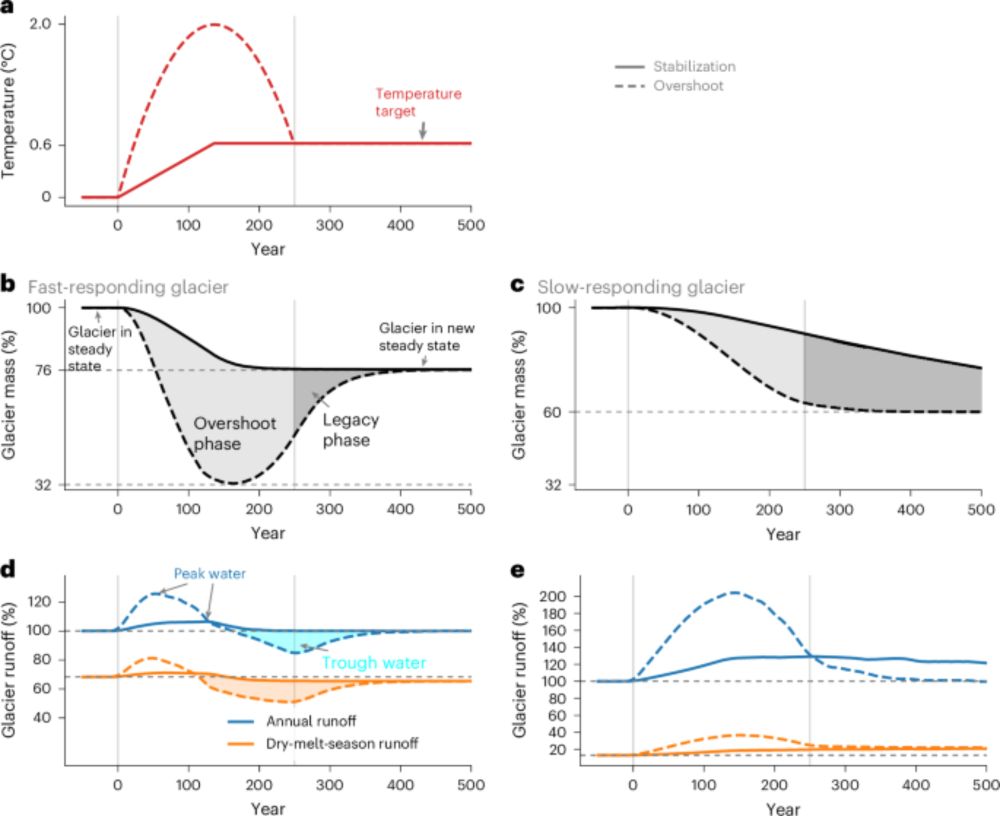
New study led by @lilianschuster.bsky.social finds that temporarily overshooting +1.5°C leads to irreversible glacier loss and long-term changes in water runoff. Some fast-responding glaciers may regrow, but this could lead to water scarcity centuries later, a phenomenon called ‘trough water’.👇
🏔️🌍🌎🌏 New study warns: Even if we only temporarily exceed 1.5 °C, mountain glaciers face irreversible losses lasting centuries. Such an overshoot reduces glacier runoff, specifically in regions where some glaciers regrow.
Further interested? Check out our new publication: doi.org/10.1038/s415...
Further interested? Check out our new publication: doi.org/10.1038/s415...
Irreversible glacier change and trough water for centuries after overshooting 1.5 °C - Nature Climate Change
How mountain glaciers will react to temporarily overshooting 1.5 °C of warming is poorly understood. Here the authors show irreversible global glacier loss for centuries after overshoot, implying long...
doi.org
May 19, 2025 at 4:52 PM
New study led by @lilianschuster.bsky.social finds that temporarily overshooting +1.5°C leads to irreversible glacier loss and long-term changes in water runoff. Some fast-responding glaciers may regrow, but this could lead to water scarcity centuries later, a phenomenon called ‘trough water’.👇
Sixty-six percent of the entire planet is deep ocean (≥200 m), and a new study shows that less than 0.001%, a total area approximately a tenth of the size of 🇨🇭 has been visualized observed. There is soooo much to be discovered! www.science.org/doi/10.1126/...

How little we’ve seen: A visual coverage estimate of the deep seafloor
In decades of deep-sea exploration, humans have observed only 0.001% of the deep seafloor, leaving 66% of planet Earth unseen.
www.science.org
May 8, 2025 at 2:44 AM
Sixty-six percent of the entire planet is deep ocean (≥200 m), and a new study shows that less than 0.001%, a total area approximately a tenth of the size of 🇨🇭 has been visualized observed. There is soooo much to be discovered! www.science.org/doi/10.1126/...