



Dr. Luke Jeffrey
@jeffrethane.bsky.social
ARC DECRA Fellow | Biogeochemist | Senior researcher investigating the role of tree stems and their microbial communities within the global climate cycles. #Treethane #Methane #Wetlands #Carbon #Forests 🌱
Reposted by Dr. Luke Jeffrey

Our new ditch GHG paper now online in final view. A great team effort led by @tksilver.bsky.social with contributions from an all-star cast of supporting authors.
iopscience.iop.org/article/10.1...
iopscience.iop.org/article/10.1...

January 14, 2026 at 9:34 AM
Our new ditch GHG paper now online in final view. A great team effort led by @tksilver.bsky.social with contributions from an all-star cast of supporting authors.
iopscience.iop.org/article/10.1...
iopscience.iop.org/article/10.1...
Reposted by Dr. Luke Jeffrey

Bark microbiota modulate climate-active gas fluxes in Australian forests | Science www.science.org/doi/10.1126/...

Bark microbiota modulate climate-active gas fluxes in Australian forests
Recent studies suggest that microbes inhabit tree bark, yet little is known about their identities, functions, and environmental roles. Here we reveal, through gene-centric and genome-resolved metagen...
www.science.org
January 8, 2026 at 9:30 PM
Bark microbiota modulate climate-active gas fluxes in Australian forests | Science www.science.org/doi/10.1126/...
Reposted by Dr. Luke Jeffrey

New research reveals that paperbarks, among other trees, host abundant, specialized, and metabolically active bark-dwelling microbial communities that modulate climatically relevant gases, including methane, hydrogen, and carbon monoxide.
Learn more this week in Science: https://scim.ag/4bp9hgl
Learn more this week in Science: https://scim.ag/4bp9hgl

January 8, 2026 at 7:05 PM
New research reveals that paperbarks, among other trees, host abundant, specialized, and metabolically active bark-dwelling microbial communities that modulate climatically relevant gases, including methane, hydrogen, and carbon monoxide.
Learn more this week in Science: https://scim.ag/4bp9hgl
Learn more this week in Science: https://scim.ag/4bp9hgl
Reposted by Dr. Luke Jeffrey

Tree bark has a total surface area similar to all of the land area on Earth. It is home to a wide range of microbial species unknown to science, and they can either take up or emit gases that have a warming effect on the climate

Tree bark microbiome has important overlooked role in climate
Tree bark has a total surface area similar to all of the land area on Earth. It is home to a wide range of microbial species unknown to science, and they can either take up or emit gases that have a warming effect on the climate
www.newscientist.com
January 11, 2026 at 9:45 PM
Tree bark has a total surface area similar to all of the land area on Earth. It is home to a wide range of microbial species unknown to science, and they can either take up or emit gases that have a warming effect on the climate
Reposted by Dr. Luke Jeffrey
Tree bark has a total surface area similar to all of the land area on Earth. It is home to a wide range of microbial species unknown to science, and they can either take up or emit gases that have a warming effect on the climate
Tree bark microbiome has important overlooked role in climate
Tree bark has a total surface area similar to all of the land area on Earth. It is home to a wide range of microbial species unknown to science, and they can either take up or emit gases that have a warming effect on the climate
www.newscientist.com
January 15, 2026 at 4:10 PM
Tree bark has a total surface area similar to all of the land area on Earth. It is home to a wide range of microbial species unknown to science, and they can either take up or emit gases that have a warming effect on the climate
(1/8) 🚨Thrilled to share our new research, now published on the cover of @science.org ! 🌳🦠
We discovered that tree #Bark — largely regarded as inert — hosts vast #Microbial communities that actively interact with the atmosphere. 🧵👇 www.science.org/doi/10.1126/...
We discovered that tree #Bark — largely regarded as inert — hosts vast #Microbial communities that actively interact with the atmosphere. 🧵👇 www.science.org/doi/10.1126/...


January 13, 2026 at 11:53 PM
(1/8) 🚨Thrilled to share our new research, now published on the cover of @science.org ! 🌳🦠
We discovered that tree #Bark — largely regarded as inert — hosts vast #Microbial communities that actively interact with the atmosphere. 🧵👇 www.science.org/doi/10.1126/...
We discovered that tree #Bark — largely regarded as inert — hosts vast #Microbial communities that actively interact with the atmosphere. 🧵👇 www.science.org/doi/10.1126/...
New #PrePrint by #PhD @jodittmann.bsky.social open for discussion on @egubg.bsky.social investigating the question: 'Are #GhostForests a substantial source of #Methane from #Reservoirs?' 👻🪵
👇
egusphere.copernicus.org/preprints/20...
👇
egusphere.copernicus.org/preprints/20...


November 19, 2025 at 9:45 PM
New #PrePrint by #PhD @jodittmann.bsky.social open for discussion on @egubg.bsky.social investigating the question: 'Are #GhostForests a substantial source of #Methane from #Reservoirs?' 👻🪵
👇
egusphere.copernicus.org/preprints/20...
👇
egusphere.copernicus.org/preprints/20...
Reposted by Dr. Luke Jeffrey

Bark-associated diazotroph communities are a cryptic source of nitrogen in forests https://www.biorxiv.org/content/10.1101/2025.11.14.688567v1
November 16, 2025 at 5:16 AM
Bark-associated diazotroph communities are a cryptic source of nitrogen in forests https://www.biorxiv.org/content/10.1101/2025.11.14.688567v1
Reposted by Dr. Luke Jeffrey

Bark-associated diazotroph communities are a cryptic source of nitrogen in forests https://www.biorxiv.org/content/10.1101/2025.11.14.688567v1
November 16, 2025 at 5:16 AM
Bark-associated diazotroph communities are a cryptic source of nitrogen in forests https://www.biorxiv.org/content/10.1101/2025.11.14.688567v1
Reposted by Dr. Luke Jeffrey

A global analysis reveals that most carbon dioxide emitted by rivers derives not from modern plant material, as was thought, but from ancient, buried carbon
https://go.nature.com/3FQOdls
https://go.nature.com/3FQOdls
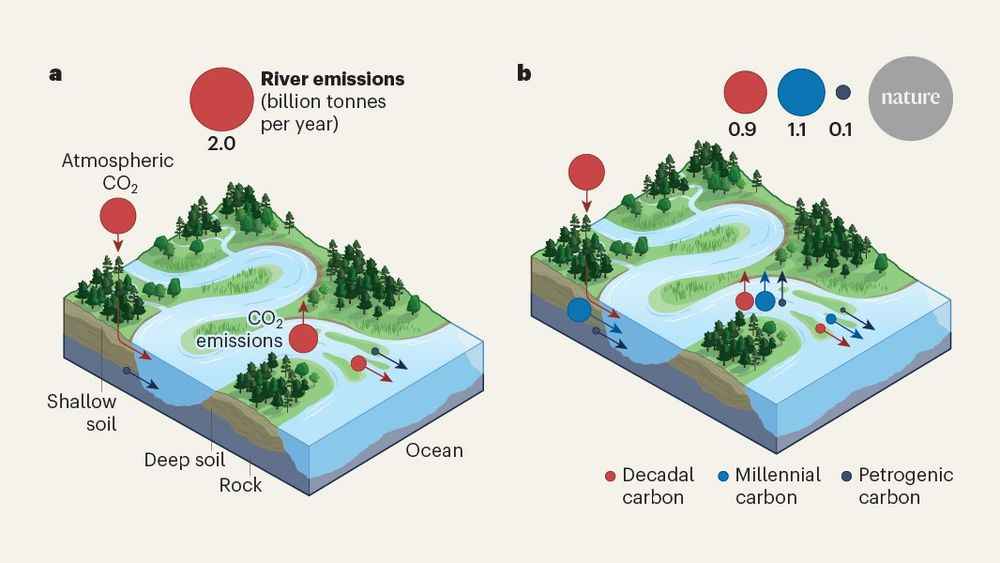
Ancient carbon released through modern rivers
A global analysis reveals that most carbon dioxide emitted by rivers derives not from modern plant material, as was thought, but from ancient, buried carbon.
go.nature.com
June 9, 2025 at 12:01 PM
A global analysis reveals that most carbon dioxide emitted by rivers derives not from modern plant material, as was thought, but from ancient, buried carbon
https://go.nature.com/3FQOdls
https://go.nature.com/3FQOdls
Reposted by Dr. Luke Jeffrey
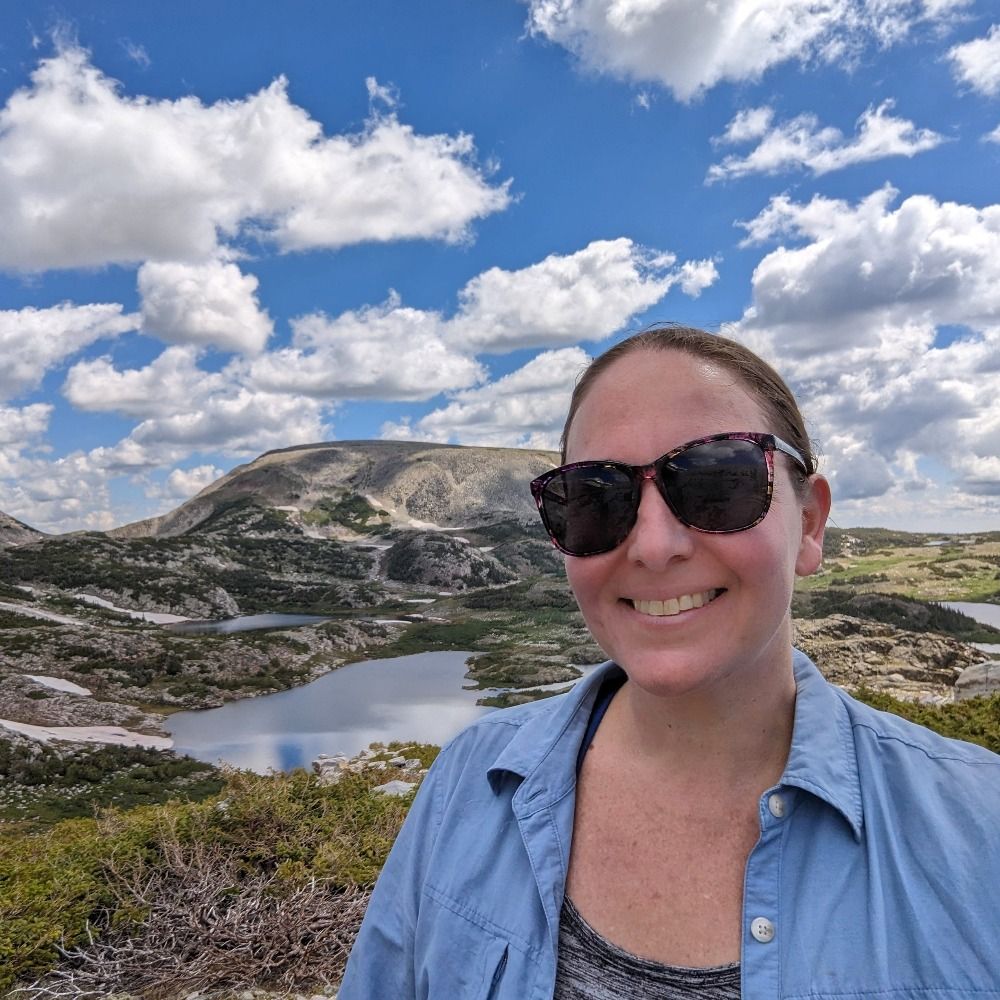
Enjoyed being back on the New River in southwest Virginia. First float of the year after full leaf out & first time floating this section (Whitehorne -> Eggleston) after hurricane Helene.


June 7, 2025 at 10:34 PM
Enjoyed being back on the New River in southwest Virginia. First float of the year after full leaf out & first time floating this section (Whitehorne -> Eggleston) after hurricane Helene.
Reposted by Dr. Luke Jeffrey
No advert out yet, but I will recruiting a 2yr postdoc, start date autumn 2025, at @livunigeog.bsky.social soon. Lowland and upland peatlands, GHGs, DOM and water chemistry. Plenty of fieldwork. Feel free to drop me a DM or email if you might be interested, and please spread the word.
June 5, 2025 at 12:32 PM
No advert out yet, but I will recruiting a 2yr postdoc, start date autumn 2025, at @livunigeog.bsky.social soon. Lowland and upland peatlands, GHGs, DOM and water chemistry. Plenty of fieldwork. Feel free to drop me a DM or email if you might be interested, and please spread the word.
Reposted by Dr. Luke Jeffrey
🌊

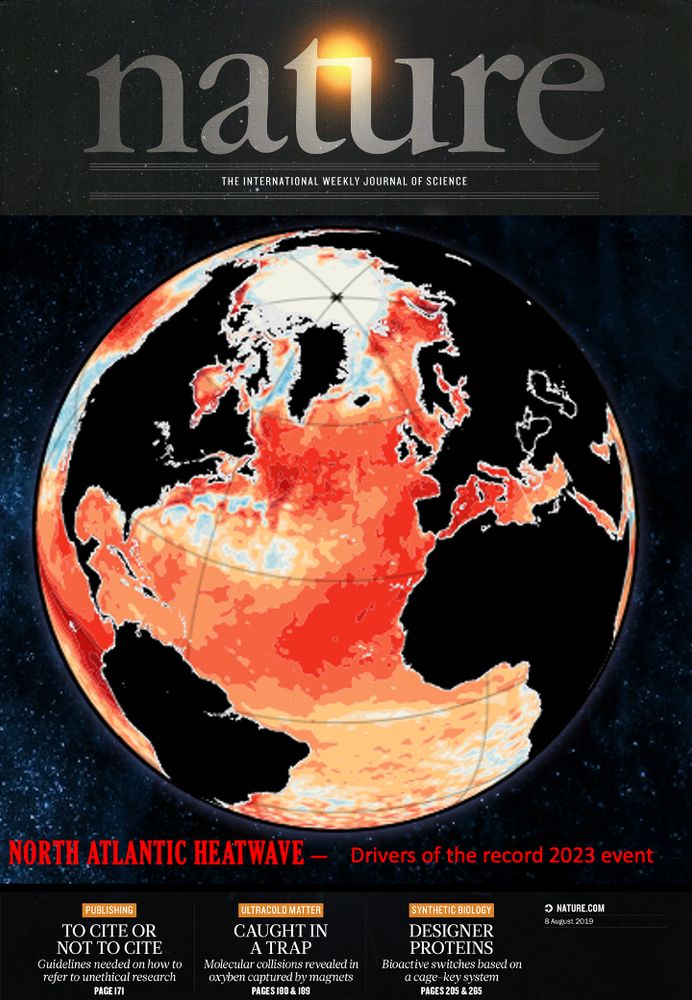
Out today in Nature, our paper on the drivers of the record 2023 summer heating of the North Atlantic. Temperatures warmed to record levels in just a few months. The impacts on climate & ecosystems were severe. A thread on how this work came about and what we found.👇👇🧵 www.nature.com/articles/s41...
June 4, 2025 at 5:07 PM
🌊
Reposted by Dr. Luke Jeffrey
It’s alive! Our Mycorrhizal Networks special issue is out in Functional Ecology.
Packed with spore-tacular science.
A collection that highlights advances, identifies unresolved questions & the future research directions.
besjournals.onlinelibrary.wiley.com/doi/10.1111/...
Packed with spore-tacular science.
A collection that highlights advances, identifies unresolved questions & the future research directions.
besjournals.onlinelibrary.wiley.com/doi/10.1111/...
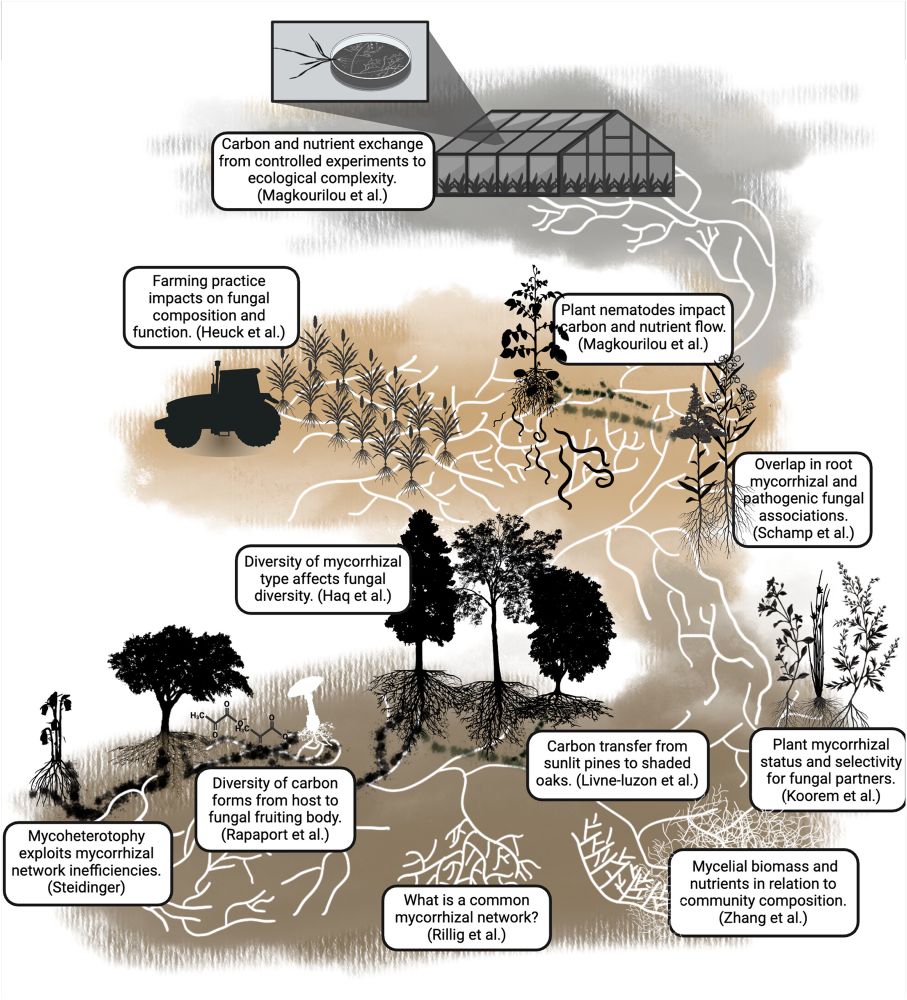
Mycorrhizal networks: Understanding hidden complexity
Read the free Plain Language Summary for this article on the Journal blog.
besjournals.onlinelibrary.wiley.com
June 4, 2025 at 5:10 PM
It’s alive! Our Mycorrhizal Networks special issue is out in Functional Ecology.
Packed with spore-tacular science.
A collection that highlights advances, identifies unresolved questions & the future research directions.
besjournals.onlinelibrary.wiley.com/doi/10.1111/...
Packed with spore-tacular science.
A collection that highlights advances, identifies unresolved questions & the future research directions.
besjournals.onlinelibrary.wiley.com/doi/10.1111/...
Reposted by Dr. Luke Jeffrey

We are seeking a Postdoctoral Researcher (PDRA) in Freshwater Ecosystem Ecology researching the role of organic matter as a nutrient resource in freshwater ecosystems. A 4.5 year role with great training opportunites in isotope ecology and mesocosm experimental science www.jobs.ac.uk/job/DLU610/p...


February 11, 2025 at 7:37 PM
We are seeking a Postdoctoral Researcher (PDRA) in Freshwater Ecosystem Ecology researching the role of organic matter as a nutrient resource in freshwater ecosystems. A 4.5 year role with great training opportunites in isotope ecology and mesocosm experimental science www.jobs.ac.uk/job/DLU610/p...
Reposted by Dr. Luke Jeffrey
There's a postdoc in peatland biogeochemistry advertised on our project by Dolly Kothawala and Gustaf Granath
at Uppsala University. I can highly recommend Uppsala as a place to live and work.
www.uu.se/en/about-uu/...
at Uppsala University. I can highly recommend Uppsala as a place to live and work.
www.uu.se/en/about-uu/...
February 3, 2025 at 5:38 PM
There's a postdoc in peatland biogeochemistry advertised on our project by Dolly Kothawala and Gustaf Granath
at Uppsala University. I can highly recommend Uppsala as a place to live and work.
www.uu.se/en/about-uu/...
at Uppsala University. I can highly recommend Uppsala as a place to live and work.
www.uu.se/en/about-uu/...
Reposted by Dr. Luke Jeffrey

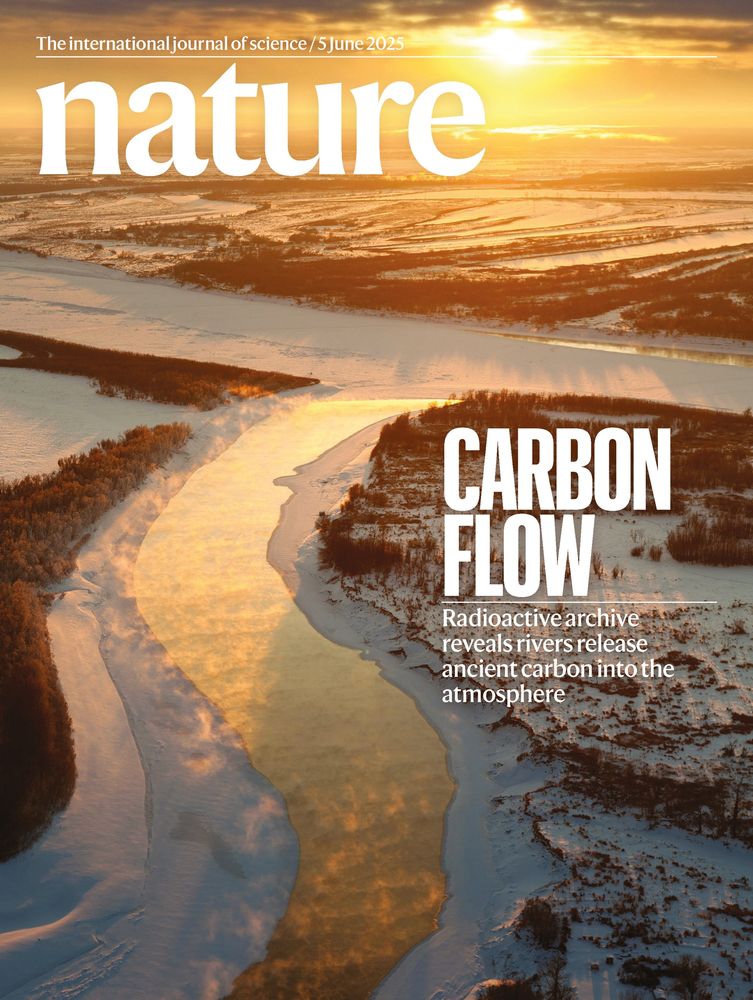
New paper! led by Josh Dean “Old carbon routed from land to the atmosphere by global river systems”
doi.org/10.1038/s415...
#radiocarbon in #rivers reveals the age of CO2 they release to the atmosphere.
An active leak of old carbon from land.
🧪⚒️
@joshfdean.bsky.social @oxuniearthsci.bsky.social
doi.org/10.1038/s415...
#radiocarbon in #rivers reveals the age of CO2 they release to the atmosphere.
An active leak of old carbon from land.
🧪⚒️
@joshfdean.bsky.social @oxuniearthsci.bsky.social
June 4, 2025 at 3:27 PM
New paper! led by Josh Dean “Old carbon routed from land to the atmosphere by global river systems”
doi.org/10.1038/s415...
#radiocarbon in #rivers reveals the age of CO2 they release to the atmosphere.
An active leak of old carbon from land.
🧪⚒️
@joshfdean.bsky.social @oxuniearthsci.bsky.social
doi.org/10.1038/s415...
#radiocarbon in #rivers reveals the age of CO2 they release to the atmosphere.
An active leak of old carbon from land.
🧪⚒️
@joshfdean.bsky.social @oxuniearthsci.bsky.social
Reposted by Dr. Luke Jeffrey
A fantastic new mapping product for the world's inland waters, a critical driver for studying GHG emissions, biodiversity, and much more.
Mapping the world's inland surface waters: an upgrade to the Global Lakes and Wetlands Database (GLWD v2)
essd.copernicus.org/articles/17/...
Mapping the world's inland surface waters: an upgrade to the Global Lakes and Wetlands Database (GLWD v2)
essd.copernicus.org/articles/17/...
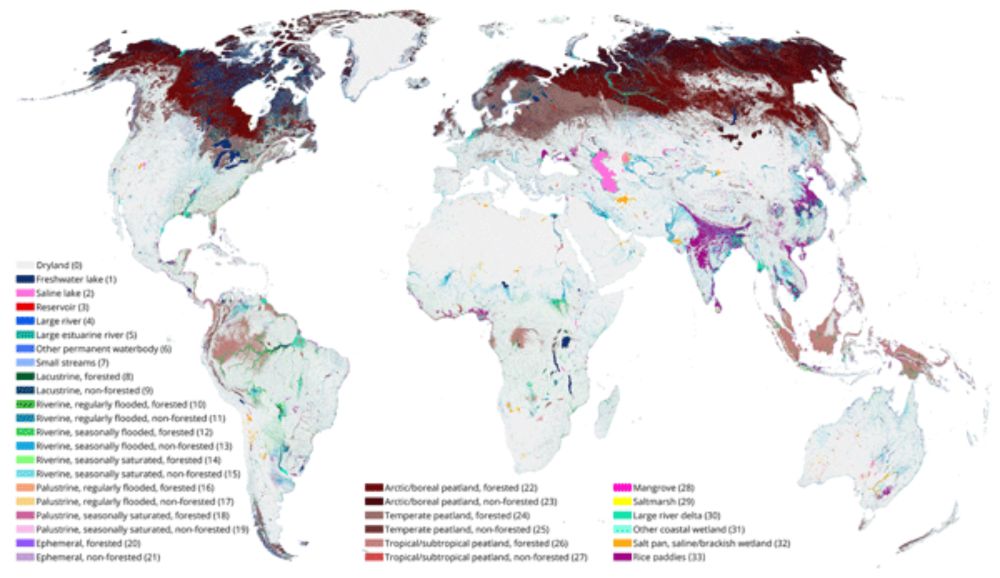
Mapping the world's inland surface waters: an upgrade to the Global Lakes and Wetlands Database (GLWD v2)
Abstract. In recognition of the importance of inland waters, numerous datasets mapping their extents, types, or changes have been created using sources ranging from historical wetland maps to real-tim...
essd.copernicus.org
June 4, 2025 at 11:14 AM
A fantastic new mapping product for the world's inland waters, a critical driver for studying GHG emissions, biodiversity, and much more.
Mapping the world's inland surface waters: an upgrade to the Global Lakes and Wetlands Database (GLWD v2)
essd.copernicus.org/articles/17/...
Mapping the world's inland surface waters: an upgrade to the Global Lakes and Wetlands Database (GLWD v2)
essd.copernicus.org/articles/17/...
One way to collect 500 mL of #methane ebullition from a #GhostForest in 8 m of standing water…
June 4, 2025 at 11:15 AM
One way to collect 500 mL of #methane ebullition from a #GhostForest in 8 m of standing water…
What a way to start the (sampling) day 👌 with @jodittmann.bsky.social
June 4, 2025 at 11:08 AM
What a way to start the (sampling) day 👌 with @jodittmann.bsky.social
Top winters day back at the Ghost Forest sampling for @jodittmann.bsky.social PhD projects. Plenty of ebullition bubbles down there!!


June 4, 2025 at 11:03 AM
Top winters day back at the Ghost Forest sampling for @jodittmann.bsky.social PhD projects. Plenty of ebullition bubbles down there!!
Reposted by Dr. Luke Jeffrey

Back in the Ghost Forest, looking #GHG from dead trees with @jeffrethane.bsky.social


June 2, 2025 at 9:02 AM
Back in the Ghost Forest, looking #GHG from dead trees with @jeffrethane.bsky.social
Reposted by Dr. Luke Jeffrey
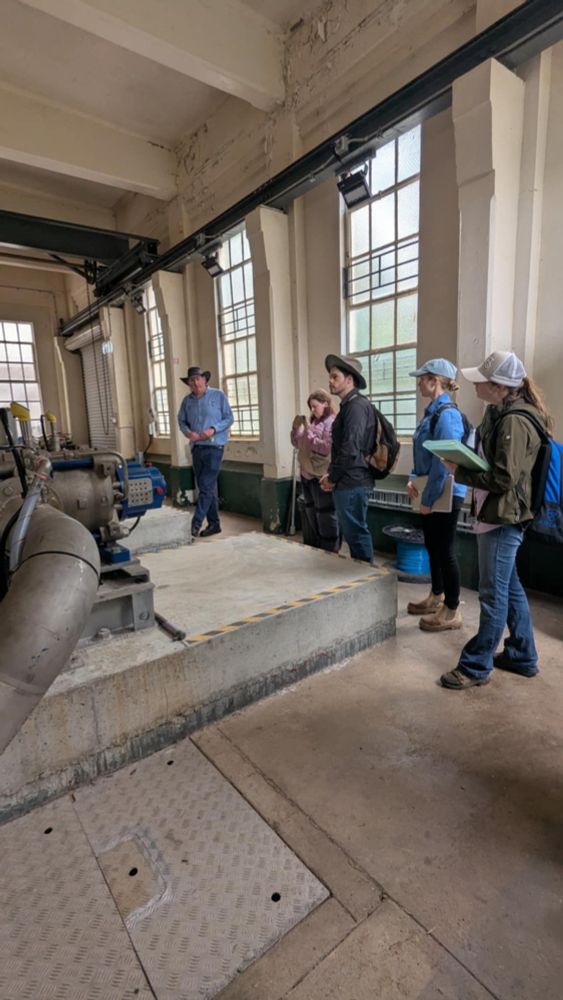
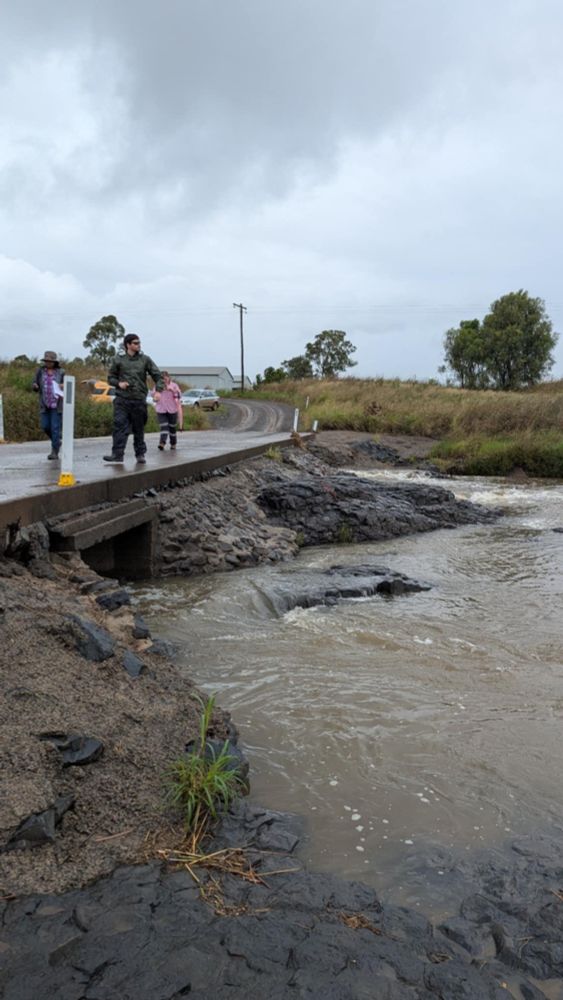
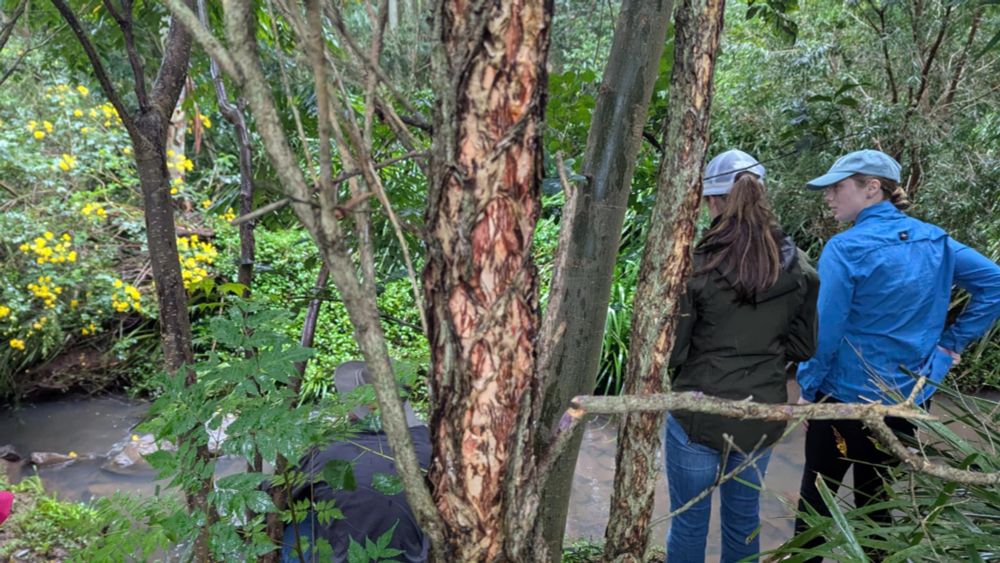
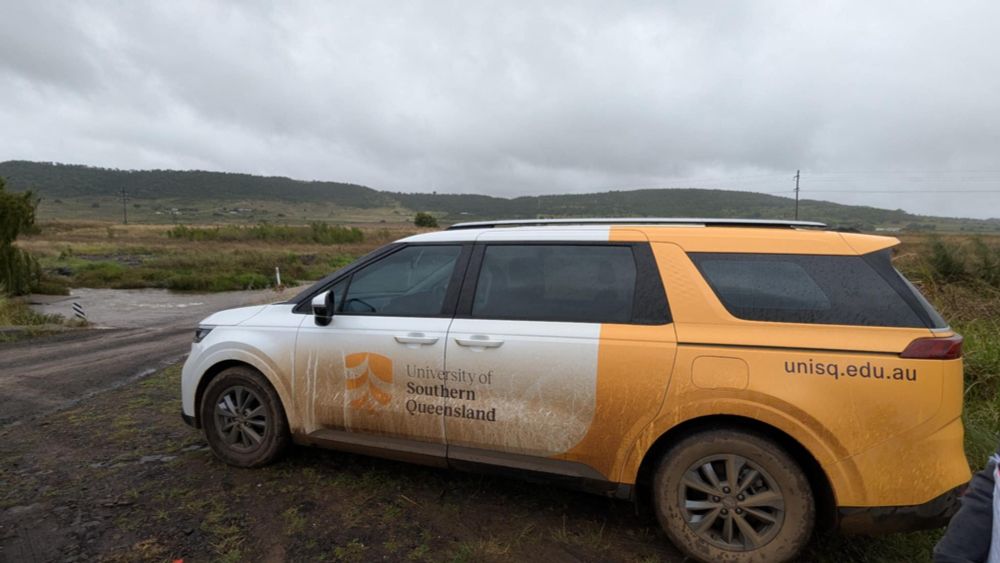
Last week I had the pleasure of hosting our @soaes-unisq.bsky.social undergrad students studying Water Science during the WAT1101 residential school. In true Toowoomba style, the students had the full immersion experience, with consistent rain during the entire 3 days of our field tour.
April 2, 2025 at 1:58 AM
Last week I had the pleasure of hosting our @soaes-unisq.bsky.social undergrad students studying Water Science during the WAT1101 residential school. In true Toowoomba style, the students had the full immersion experience, with consistent rain during the entire 3 days of our field tour.
Reposted by Dr. Luke Jeffrey

Here’s our The Conversation piece about the research.

Reducing air pollution could increase methane emissions from wetlands – here’s what needs to be done
Improved computer models shed light on how reducing sulphur emissions will inadvertently release methane from wetlands.
theconversation.com
February 6, 2025 at 12:59 PM
Here’s our The Conversation piece about the research.
Reposted by Dr. Luke Jeffrey
What if plants could pick their own fungal protectors?! ⚔️🌱
We're looking for a PhD student for a unique dual award PhD. Based at Western Sydney Uni & spend 12-18 months at University of Sheffield.
You will work with me and with Profs Katie Field, Scott Johnson, Jeff Powell, and Jurriaan Tonn.
We're looking for a PhD student for a unique dual award PhD. Based at Western Sydney Uni & spend 12-18 months at University of Sheffield.
You will work with me and with Profs Katie Field, Scott Johnson, Jeff Powell, and Jurriaan Tonn.

May 1, 2025 at 11:19 PM
What if plants could pick their own fungal protectors?! ⚔️🌱
We're looking for a PhD student for a unique dual award PhD. Based at Western Sydney Uni & spend 12-18 months at University of Sheffield.
You will work with me and with Profs Katie Field, Scott Johnson, Jeff Powell, and Jurriaan Tonn.
We're looking for a PhD student for a unique dual award PhD. Based at Western Sydney Uni & spend 12-18 months at University of Sheffield.
You will work with me and with Profs Katie Field, Scott Johnson, Jeff Powell, and Jurriaan Tonn.