




John Naylor
@johncnaylor.bsky.social
Interested in the physics of sights and sounds in nature.
Author of “Out of the Blue, A 24-hour Skywatcher’s Guide”, “Now Hear This, A Book About Sound” & "The Riddle of the Rainbow"
Author of “Out of the Blue, A 24-hour Skywatcher’s Guide”, “Now Hear This, A Book About Sound” & "The Riddle of the Rainbow"
Pinned
John Naylor
@johncnaylor.bsky.social
· Feb 11

Rainbows have fascinated people since time immemorial. They have been the subject of myth, an inspiration to poets, a challenge to painters and the object of intense scientific interest. Read all about it! tinyurl.com/2wmwr5vb
d OTD 1650, René Descartes, the natural philosopher who in 1637 published the first correct mathematical account of the angular dimensions of the primary & secondary arcs of the rainbow.
February 9, 2026 at 11:03 AM
d OTD 1650, René Descartes, the natural philosopher who in 1637 published the first correct mathematical account of the angular dimensions of the primary & secondary arcs of the rainbow.
Died OTD, French physicist, Felix Billet, published in 1868 results of an experiment in which he illuminated a thin, vertical stream of water with sunlight and managed to see 19 rainbow orders including supernumeraries. He named it “la rose des arc-en-ciel”, known in English as Billet’s Rose.

January 28, 2026 at 10:27 AM
Died OTD, French physicist, Felix Billet, published in 1868 results of an experiment in which he illuminated a thin, vertical stream of water with sunlight and managed to see 19 rainbow orders including supernumeraries. He named it “la rose des arc-en-ciel”, known in English as Billet’s Rose.
I went the the Natural History Museum (London) In June 2019 to see Luke Jerram's splendid Museum of the Moon. Although the surface of the sphere was smooth, the shading fooled one's eye into interpreting it as embossed. My tactile acuity with Braille map didn't my match visual acuity!


January 14, 2026 at 4:21 PM
I went the the Natural History Museum (London) In June 2019 to see Luke Jerram's splendid Museum of the Moon. Although the surface of the sphere was smooth, the shading fooled one's eye into interpreting it as embossed. My tactile acuity with Braille map didn't my match visual acuity!
Moire patterns are often noticed as one's view of the elements that create them changes. Here is a short film of a moire formed by Venetian blinds and a garden fence with open horizontal slats.
January 2, 2026 at 4:26 PM
Moire patterns are often noticed as one's view of the elements that create them changes. Here is a short film of a moire formed by Venetian blinds and a garden fence with open horizontal slats.
If ever you need proof that a rainbow is centred on the ye of the beholder…

January 2, 2026 at 3:33 PM
If ever you need proof that a rainbow is centred on the ye of the beholder…
This morning frost on a plastic manhole cover reveals the embedded metal grid that strengthens it.

December 31, 2025 at 12:20 PM
This morning frost on a plastic manhole cover reveals the embedded metal grid that strengthens it.
The first systematic measurements of the speed of sound in water were made in Lake Geneva in November 1826, by Daniel Colladon a Swiss physicist, with the help of his father, some two centuries after the earliest measurements of the speed of sound in air.

December 13, 2025 at 12:43 PM
The first systematic measurements of the speed of sound in water were made in Lake Geneva in November 1826, by Daniel Colladon a Swiss physicist, with the help of his father, some two centuries after the earliest measurements of the speed of sound in air.
L. Galvani d OTD, became interested in animal electricity when a student dissected a frog’s leg while another operated a static electricity generator, noticed that when it sparked the frog’s leg contracted involuntarily. Is it possible to claim a frog, martyr to science, had picked up a radio wave?


December 4, 2025 at 3:14 PM
L. Galvani d OTD, became interested in animal electricity when a student dissected a frog’s leg while another operated a static electricity generator, noticed that when it sparked the frog’s leg contracted involuntarily. Is it possible to claim a frog, martyr to science, had picked up a radio wave?
E.Chladni b OTD 1756, known for the patterns formed on a glass plate sprinkled with fine sand & exited with a bow, was also the first person to measure the speed of sound in gases other than air by comparing the pitch of an organ pipe filled with a gas with that filled with air.

November 30, 2025 at 12:49 PM
E.Chladni b OTD 1756, known for the patterns formed on a glass plate sprinkled with fine sand & exited with a bow, was also the first person to measure the speed of sound in gases other than air by comparing the pitch of an organ pipe filled with a gas with that filled with air.
Among his many interests, Athanasius Kircher d OTD 1680, Jesuit scholar was fascinated by architectural acoustics & unusual echoes. He found many examples of buildings that combine these things, among which was Villa Simonetta which had a remarkable flutter echo. Bombed during WW2


November 28, 2025 at 11:54 AM
Among his many interests, Athanasius Kircher d OTD 1680, Jesuit scholar was fascinated by architectural acoustics & unusual echoes. He found many examples of buildings that combine these things, among which was Villa Simonetta which had a remarkable flutter echo. Bombed during WW2
Now what's going on here? Why don't the primary & secondary arcs reach all the way to the ground? The short answer is that the horizontal extent of the rain cloud is not broad enough, i.e. no rainfall either to the right or left of the truncated arcs.
November 26, 2025 at 4:56 PM
Now what's going on here? Why don't the primary & secondary arcs reach all the way to the ground? The short answer is that the horizontal extent of the rain cloud is not broad enough, i.e. no rainfall either to the right or left of the truncated arcs.
In 1972 astronauts in a hyperbaric chamber training for Skylab discovered they were unable to lip whistle. The atmosphere within the chamber was mixture of 70% O2 and 30% N at 1/3 atmospheric pressure. Low air density may have prevented the necessary vortices from forming.

Acoustics Lay Language Paper
When was the last time you tried to whistle and wondered how do we make music with our mouth? Learn more at https://acoustics.org/how-do-humans-whistle/
#ASA189 #ASA_ASJ2025
@prashanth-t.bsky.social
When was the last time you tried to whistle and wondered how do we make music with our mouth? Learn more at https://acoustics.org/how-do-humans-whistle/
#ASA189 #ASA_ASJ2025
@prashanth-t.bsky.social

November 26, 2025 at 4:03 PM
In 1972 astronauts in a hyperbaric chamber training for Skylab discovered they were unable to lip whistle. The atmosphere within the chamber was mixture of 70% O2 and 30% N at 1/3 atmospheric pressure. Low air density may have prevented the necessary vortices from forming.
Reflections from window panes illuminated by low sun. If air pressure within the space between glass double glazing is below atmospheric pressure the panes become concave and reflect light as shown in diagram. Red rays create bright cross due to surface distortion because glass held in square frame


November 22, 2025 at 3:18 PM
Reflections from window panes illuminated by low sun. If air pressure within the space between glass double glazing is below atmospheric pressure the panes become concave and reflect light as shown in diagram. Red rays create bright cross due to surface distortion because glass held in square frame
We can only see a single colour emerging from any given drop which is why a #rainbow requires a multitude of drops. This is evident in sunlit drops that twinkle as one moves one's gaze across a dew laden lawn.
November 19, 2025 at 4:39 PM
We can only see a single colour emerging from any given drop which is why a #rainbow requires a multitude of drops. This is evident in sunlit drops that twinkle as one moves one's gaze across a dew laden lawn.
Whether you see a full arc or only a segment of a #rainbow depends on the height of the sun, horizontal extent of the rain shower and, as here, how close you are to it. And, of course, as you approach the shower, the position of the arc relative to the background changes.

November 19, 2025 at 4:07 PM
Whether you see a full arc or only a segment of a #rainbow depends on the height of the sun, horizontal extent of the rain shower and, as here, how close you are to it. And, of course, as you approach the shower, the position of the arc relative to the background changes.
Not every coloured arc is a rainbow! This is a very good example of a circumzenithal bow that is formed by hexagonal ice crystals. The sun is just out of view bottom right.

November 18, 2025 at 4:28 PM
Not every coloured arc is a rainbow! This is a very good example of a circumzenithal bow that is formed by hexagonal ice crystals. The sun is just out of view bottom right.
This photo shows a feature of #rainbows that is always present but seldom noticed, namely that the sky enclosed by the primary arc is bright. The rainbow arc is formed by light that is deviated least by its passage through a drop, and which forms a caustic, aka rainbow ray.

November 17, 2025 at 5:00 PM
This photo shows a feature of #rainbows that is always present but seldom noticed, namely that the sky enclosed by the primary arc is bright. The rainbow arc is formed by light that is deviated least by its passage through a drop, and which forms a caustic, aka rainbow ray.
Great example of how a rainbow formed by the reddened sunset light is deficient in light from the blue end of sunlight.

Just managed to dash outside to catch this gorgeous rainbow 🌈 over West Milton, Dorset
#stormhour #photohour #rainbow
#stormhour #photohour #rainbow

November 12, 2025 at 11:25 PM
Great example of how a rainbow formed by the reddened sunset light is deficient in light from the blue end of sunlight.
This is the sort of rainbow that every aficionado of the phenomenon hopes to encounter, but seldom does! Note the dark band between arcs & brightness within the primary. The coloured arc is always centred on the observer's eyes, so the head's shadow marks the anti solar point & centre of the arc.
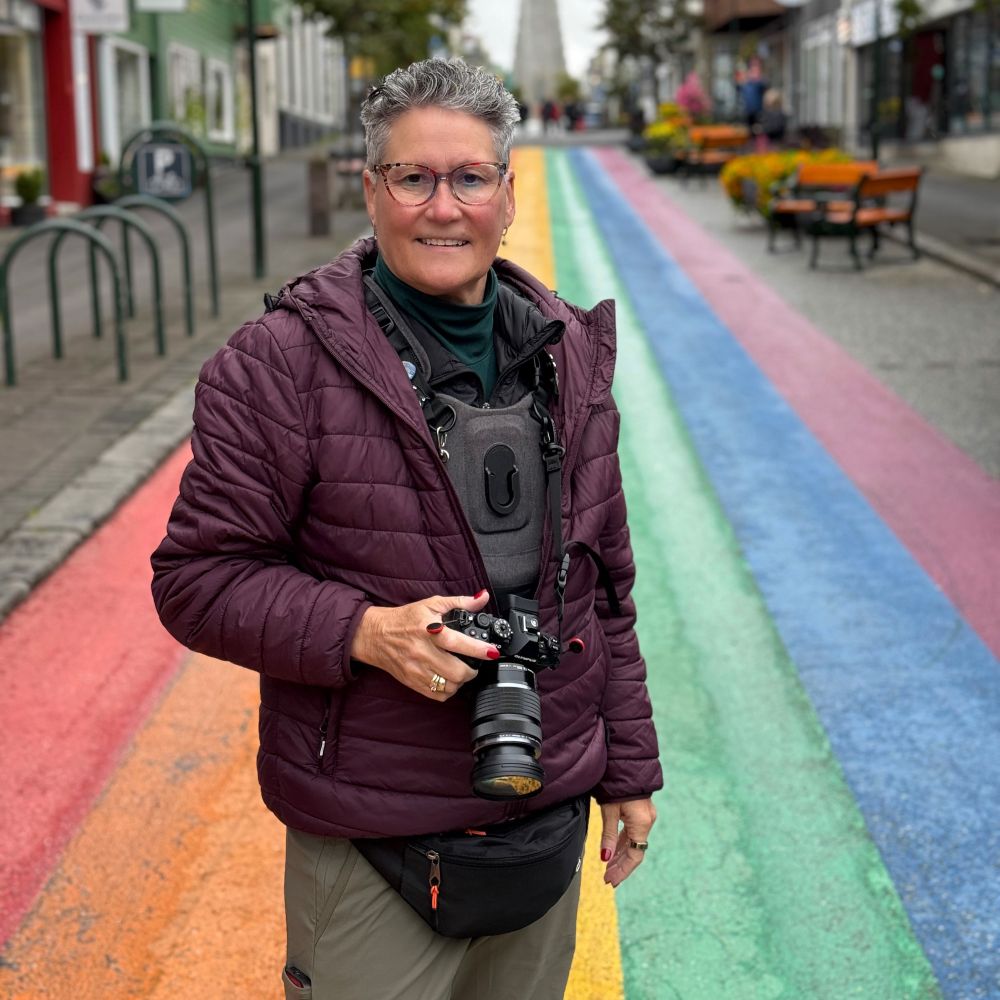
Good Morning! I took this photo in the Faroe Islands. It works for the #AlphabetChallenge #WeekSForShadows #EastCoastKin #Photography #Rainbow
With me in the center! Because...the rainbow's geometric center is precisely opposite the sun relative to my position, which is where the shadow falls.
With me in the center! Because...the rainbow's geometric center is precisely opposite the sun relative to my position, which is where the shadow falls.

November 10, 2025 at 4:24 PM
This is the sort of rainbow that every aficionado of the phenomenon hopes to encounter, but seldom does! Note the dark band between arcs & brightness within the primary. The coloured arc is always centred on the observer's eyes, so the head's shadow marks the anti solar point & centre of the arc.
A good illustration of the progression of sun's rosy hue during a sunset. Clouds in the upper right are uncoloured because they are now within the earth's show and so no longer directly illuminated by the sun. As the sun drops further below horizon, the rosy moves west (towards right of image)

September 29, 2025 at 2:29 PM
A good illustration of the progression of sun's rosy hue during a sunset. Clouds in the upper right are uncoloured because they are now within the earth's show and so no longer directly illuminated by the sun. As the sun drops further below horizon, the rosy moves west (towards right of image)
Fog bows are, as the name implies, formed in very small droplets of water such as those of which clouds and fog are composed. This one is a particularly good example of the phenomenon. For an explanation see www.atoptics.org.uk/droplets/fog...
September 28, 2025 at 1:25 PM
Fog bows are, as the name implies, formed in very small droplets of water such as those of which clouds and fog are composed. This one is a particularly good example of the phenomenon. For an explanation see www.atoptics.org.uk/droplets/fog...
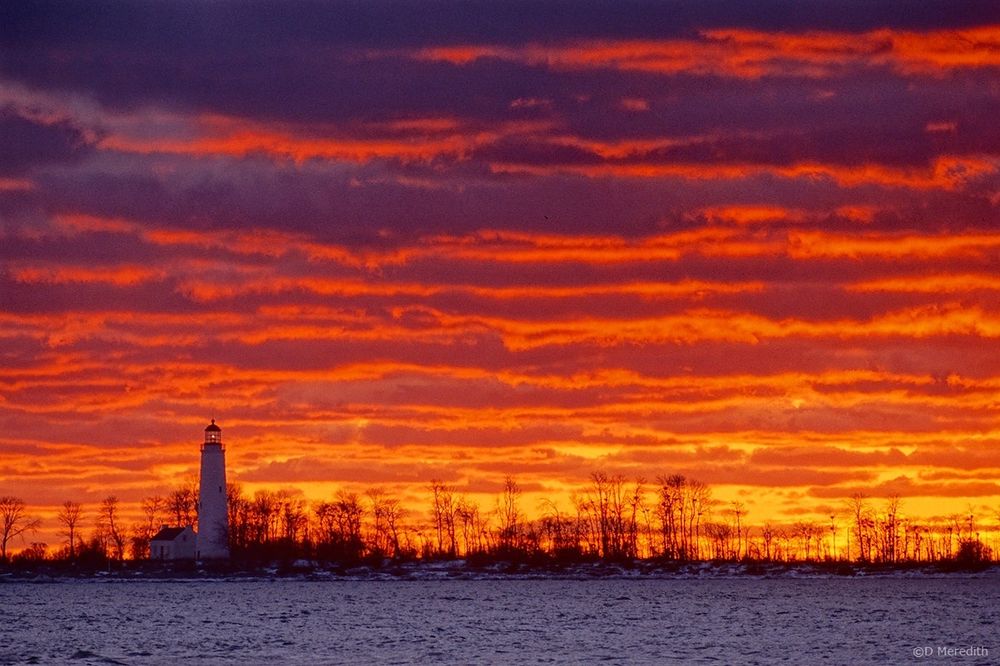
High altitude clouds are the sine qua non of memorable sunsets. Without clouds to reflect the reddened sunlight coming from just below the horizon that light is only visible as a strip along the horizon.
#Lines of cloud over Chantry Island and its lighthouse shortly after sunset for the #AlphabetChallenge #WeekLforLines
#EastCoastKin #PhotoHour #StormHour #photography #landscape #clouds
#EastCoastKin #PhotoHour #StormHour #photography #landscape #clouds
September 21, 2025 at 2:37 PM
High altitude clouds are the sine qua non of memorable sunsets. Without clouds to reflect the reddened sunlight coming from just below the horizon that light is only visible as a strip along the horizon.
When the sun is just below the horizon, the distribution of colours in sunlight reaching the ground is skewed in favour of the red end of the spectrum due to Rayleigh scattering. Rain illuminated by this light results in a rainbow in which the red arc is very prominent.

September 21, 2025 at 2:28 PM
When the sun is just below the horizon, the distribution of colours in sunlight reaching the ground is skewed in favour of the red end of the spectrum due to Rayleigh scattering. Rain illuminated by this light results in a rainbow in which the red arc is very prominent.
This huge spraybow shows that these eye catching arcs are not confined to rain showers.

September 18, 2025 at 10:18 AM
This huge spraybow shows that these eye catching arcs are not confined to rain showers.
Sunshine & showers are the sine qua non of rainbows. But always bear in mind, a rainbow only exists if it is seen. This bright rainbow exhibiting many of the classic features was visible for several minutes from a street near my home a couple of days ago. An endlessly fascinating phenomenon!


September 15, 2025 at 11:06 AM
Sunshine & showers are the sine qua non of rainbows. But always bear in mind, a rainbow only exists if it is seen. This bright rainbow exhibiting many of the classic features was visible for several minutes from a street near my home a couple of days ago. An endlessly fascinating phenomenon!