



Jonathan A. Michaels
@jonathanamichaels.bsky.social
How do we move? I study brains and machines at York University (Assistant Professor). Full-time human.
Neural Control & Computation Lab
www.ncclab.ca
Neural Control & Computation Lab
www.ncclab.ca
Pinned

Sensory expectations shape neural population dynamics in motor circuits
Nature - Experiments with human volunteers and macaques show that expectations produced by probabilistic cueing of future sensory inputs shape motor circuit dynamics in order to increase the...
www.nature.com
Thrilled that our paper is out today in Nature!
www.nature.com/articles/s4...
www.nature.com/articles/s4...
Reposted by Jonathan A. Michaels

Thrilled to finally share this work! 🧠🔊
Using a new reinforcement-free task we show mice (like humans) extract abstract structure from sound (unsupervised) & dCA1 is causally required by building factorised, orthogonal subspaces of abstract rules.
Led by Dammy Onih!
www.biorxiv.org/content/10.6...
Using a new reinforcement-free task we show mice (like humans) extract abstract structure from sound (unsupervised) & dCA1 is causally required by building factorised, orthogonal subspaces of abstract rules.
Led by Dammy Onih!
www.biorxiv.org/content/10.6...
www.biorxiv.org
February 16, 2026 at 1:01 PM
Thrilled to finally share this work! 🧠🔊
Using a new reinforcement-free task we show mice (like humans) extract abstract structure from sound (unsupervised) & dCA1 is causally required by building factorised, orthogonal subspaces of abstract rules.
Led by Dammy Onih!
www.biorxiv.org/content/10.6...
Using a new reinforcement-free task we show mice (like humans) extract abstract structure from sound (unsupervised) & dCA1 is causally required by building factorised, orthogonal subspaces of abstract rules.
Led by Dammy Onih!
www.biorxiv.org/content/10.6...
Toronto supports the people of Iran.

Toronto police estimate that 350,000 people joined Saturday's march in support of anti-regime protesters in Iran

Massive crowd marches in North York to support anti-government protests in Iran
“The young generations (in Iran), they risked their life and they wrote with their blood that they want the king, they want the shah,” said one demonstrator at Saturday’s march.
www.thestar.com
February 15, 2026 at 1:35 PM
Toronto supports the people of Iran.
Reposted by Jonathan A. Michaels
CIHR funding rate: 13.6%.
Early 2000s: 30%+.
Canada’s new $1.7B Impact+ program recruits talent — but without increased Tri-Council base funding, we risk further strain on an already stretched system.
We’re calling for $1B over 5 years.
Support here: tinyurl.com/33c5av46
Early 2000s: 30%+.
Canada’s new $1.7B Impact+ program recruits talent — but without increased Tri-Council base funding, we risk further strain on an already stretched system.
We’re calling for $1B over 5 years.
Support here: tinyurl.com/33c5av46
February 13, 2026 at 6:55 PM
CIHR funding rate: 13.6%.
Early 2000s: 30%+.
Canada’s new $1.7B Impact+ program recruits talent — but without increased Tri-Council base funding, we risk further strain on an already stretched system.
We’re calling for $1B over 5 years.
Support here: tinyurl.com/33c5av46
Early 2000s: 30%+.
Canada’s new $1.7B Impact+ program recruits talent — but without increased Tri-Council base funding, we risk further strain on an already stretched system.
We’re calling for $1B over 5 years.
Support here: tinyurl.com/33c5av46
Eglinton Crosstown is live!


February 13, 2026 at 7:44 PM
Eglinton Crosstown is live!
Everyone deserves an obituary, but this woman especially.

No joke: I got angry hate mail today for writing an obituary of a Black woman scientist—because the person felt she did didn’t deserve the recognition.
Which just makes me want to share it again: www.nature.com/articles/d41...
Which just makes me want to share it again: www.nature.com/articles/d41...

Gladys Mae West obituary: mathematician who pioneered GPS technology
She made key contributions to US cold-war science despite facing huge barriers as a Black woman.
www.nature.com
February 6, 2026 at 1:32 PM
Everyone deserves an obituary, but this woman especially.
Reposted by Jonathan A. Michaels

Discover @thetransmitter.bsky.social's Mentorship Directory, connecting mentors and mentees at all stages of their careers.
#neuroskyence
www.thetransmitter.org/mentorship-d...
#neuroskyence
www.thetransmitter.org/mentorship-d...
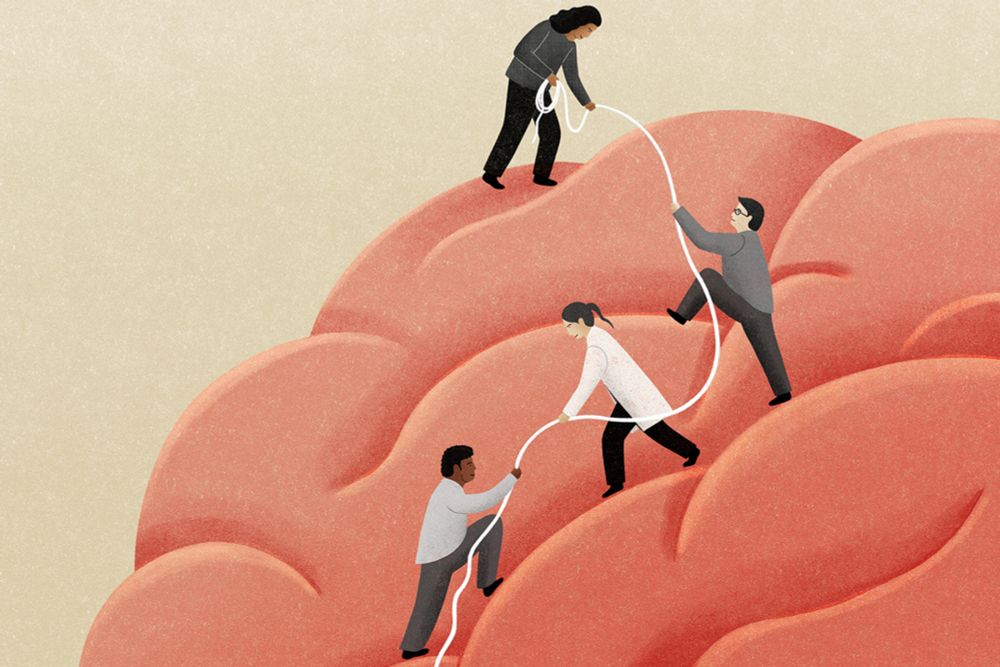
Neuroscience Mentorship Program Directory
Discover neuroscience mentorship opportunities through this living directory, connecting mentors and mentees at all stages of their careers.
www.thetransmitter.org
February 5, 2026 at 8:07 PM
Discover @thetransmitter.bsky.social's Mentorship Directory, connecting mentors and mentees at all stages of their careers.
#neuroskyence
www.thetransmitter.org/mentorship-d...
#neuroskyence
www.thetransmitter.org/mentorship-d...
Reposted by Jonathan A. Michaels


Why are we spending hundreds of millions of dollars on bringing in new people when we can't fund the ones we have?

February 4, 2026 at 3:25 AM
Why are we spending hundreds of millions of dollars on bringing in new people when we can't fund the ones we have?
Reposted by Jonathan A. Michaels

#OTD in 1995, astronaut Eileen Collins became the first female pilot of a NASA space shuttle.
She piloted the Space Shuttle Discovery during mission STS-63, a mission that included the first-ever rendezvous between a US space shuttle & the Russian space station Mir. #WomenInSTEM #AstronautEnvy 🚀
She piloted the Space Shuttle Discovery during mission STS-63, a mission that included the first-ever rendezvous between a US space shuttle & the Russian space station Mir. #WomenInSTEM #AstronautEnvy 🚀

February 3, 2026 at 2:11 PM
#OTD in 1995, astronaut Eileen Collins became the first female pilot of a NASA space shuttle.
She piloted the Space Shuttle Discovery during mission STS-63, a mission that included the first-ever rendezvous between a US space shuttle & the Russian space station Mir. #WomenInSTEM #AstronautEnvy 🚀
She piloted the Space Shuttle Discovery during mission STS-63, a mission that included the first-ever rendezvous between a US space shuttle & the Russian space station Mir. #WomenInSTEM #AstronautEnvy 🚀
Reposted by Jonathan A. Michaels


Reposted by Jonathan A. Michaels

Great collboration from @mnlmrc.bsky.social: Multivoxel fMRI and neuropixel recordings show sensorimotor prediction errors in M1 / S1 in the input, but not in the spiking of output neurons!
www.biorxiv.org/content/10.6...
With @andpru.bsky.social @jonathanamichaels.bsky.social @gribblelab.org
www.biorxiv.org/content/10.6...
With @andpru.bsky.social @jonathanamichaels.bsky.social @gribblelab.org
www.biorxiv.org
January 31, 2026 at 2:48 PM
Great collboration from @mnlmrc.bsky.social: Multivoxel fMRI and neuropixel recordings show sensorimotor prediction errors in M1 / S1 in the input, but not in the spiking of output neurons!
www.biorxiv.org/content/10.6...
With @andpru.bsky.social @jonathanamichaels.bsky.social @gribblelab.org
www.biorxiv.org/content/10.6...
With @andpru.bsky.social @jonathanamichaels.bsky.social @gribblelab.org
While humans spontaneously dance to a beat, the evolutionary origins of this ability remain debated. Behavioral work has shown that primates can move to auditory rhythms after training.
Our question was: How does this association emerge in the brain?
www.biorxiv.org/content/10....
Our question was: How does this association emerge in the brain?
www.biorxiv.org/content/10....

Reward-driven emergence of auditory pattern encoding in the primate motor system
The ability to anticipate rhythmic patterns is fundamental to human experience, enabling music appreciation, speech comprehension, and dancing in sync to music. How the brain learns to use acoustic information to guide motor behavior remains a key question whose neural underpinnings and evolutionary origins are debated, especially in non-human primates. To understand how brain areas involved in motor control naively respond to predictable tone patterns, we recorded large single neuron populations across primary somatosensory (S1), primary motor (M1), dorsal premotor (PMd), supplementary motor (SMA), pre-supplementary motor (preSMA) cortices, globus pallidus interna (GPi), and medial geniculate body (MGB) of a rhesus monkey. During passive listening (Experiment 1) with a reward only at the end of each trial, primarily the MGB, not motor areas, responded to the auditory tone patterns, ruling out the spontaneous entrainment of motor activity to auditory patterns. Almost all areas robustly
www.biorxiv.org
January 30, 2026 at 7:41 PM
While humans spontaneously dance to a beat, the evolutionary origins of this ability remain debated. Behavioral work has shown that primates can move to auditory rhythms after training.
Our question was: How does this association emerge in the brain?
www.biorxiv.org/content/10....
Our question was: How does this association emerge in the brain?
www.biorxiv.org/content/10....
Reposted by Jonathan A. Michaels
January 29, 2026 at 1:08 PM
Wonderful to be a part of THREE Connected Minds Seed Grants that were just funded!
www.yorku.ca/research/con...
www.yorku.ca/research/con...

Supporting Research That Moves Us Forward: 2026 Connected Minds Seed Grant Recipients - Connected Minds
Understanding how technology shapes our lives requires collaboration across disciplines and communities. Connected Minds Seed Grants play a critical role in cultivating this environment by enabling ne...
www.yorku.ca
January 28, 2026 at 2:57 AM
Wonderful to be a part of THREE Connected Minds Seed Grants that were just funded!
www.yorku.ca/research/con...
www.yorku.ca/research/con...
If you're a member of the Society for the Neural Control of Movement, please vote in the upcoming Board Elections. I was nominated this year, but would honestly be very happy to see any of these people on the board!
ncm-society.org/ncm-elections/
ncm-society.org/ncm-elections/

NCM Elections - NCM Society
ncm-society.org
January 28, 2026 at 12:01 AM
If you're a member of the Society for the Neural Control of Movement, please vote in the upcoming Board Elections. I was nominated this year, but would honestly be very happy to see any of these people on the board!
ncm-society.org/ncm-elections/
ncm-society.org/ncm-elections/
A wonderful person.
‘A life defined by kindness and service’ — Former Liberal cabinet minister Kirsty Duncan dies at 59 after battle with cancer www.theglobeandmail.com/canada/artic... via @theglobeandmail.com

Former Liberal cabinet minister Kirsty Duncan dies at 59 after battle with cancer
Duncan was elected as the Liberal MP for the Toronto riding of Etobicoke North five times between 2008 and 2025
www.theglobeandmail.com
January 27, 2026 at 4:55 AM
A wonderful person.
It snowed a lot.

January 26, 2026 at 3:37 AM
It snowed a lot.
Reposted by Jonathan A. Michaels

The same can be true for AI companies.
Making students reliant on LLM tools to think and write makes them a customer for life.
www.nbcnews.com/tech/social-...
Making students reliant on LLM tools to think and write makes them a customer for life.
www.nbcnews.com/tech/social-...

Google’s work in schools aims to create a ‘pipeline of future users,’ internal documents say
A major lawsuit revealed details of Google's business motivations to get its products into schools. A Google spokesperson said the documents "mischaracterize our work."
www.nbcnews.com
January 25, 2026 at 4:51 PM
The same can be true for AI companies.
Making students reliant on LLM tools to think and write makes them a customer for life.
www.nbcnews.com/tech/social-...
Making students reliant on LLM tools to think and write makes them a customer for life.
www.nbcnews.com/tech/social-...
Reposted by Jonathan A. Michaels

Really just the absolute floor of demands that ICE must be abolished, dismantled, and everyone involved with its creation held accountable.
January 24, 2026 at 4:56 PM
Really just the absolute floor of demands that ICE must be abolished, dismantled, and everyone involved with its creation held accountable.
Reposted by Jonathan A. Michaels

This is Alex Pretti.
This morning he was murdered by ICE. Six ICE agents held him down and shot him at point blank range. Alex was a nurse and researcher at the VA.
Our thoughts are with his loved ones and we stand united in action calling for the abolishment of ICE.
#ScientistsAgainstICE
This morning he was murdered by ICE. Six ICE agents held him down and shot him at point blank range. Alex was a nurse and researcher at the VA.
Our thoughts are with his loved ones and we stand united in action calling for the abolishment of ICE.
#ScientistsAgainstICE

January 24, 2026 at 8:03 PM
This is Alex Pretti.
This morning he was murdered by ICE. Six ICE agents held him down and shot him at point blank range. Alex was a nurse and researcher at the VA.
Our thoughts are with his loved ones and we stand united in action calling for the abolishment of ICE.
#ScientistsAgainstICE
This morning he was murdered by ICE. Six ICE agents held him down and shot him at point blank range. Alex was a nurse and researcher at the VA.
Our thoughts are with his loved ones and we stand united in action calling for the abolishment of ICE.
#ScientistsAgainstICE
Reposted by Jonathan A. Michaels
🚨🧵 Happy to share my new preprint “Sensory expectations and prediction error during feedback control in the human brain” with @gribblelab.org , @andpru.bsky.social , @jonathanamichaels.bsky.social and @diedrichsenjorn.bsky.social.
www.biorxiv.org/content/10.6...
www.biorxiv.org/content/10.6...
www.biorxiv.org
January 21, 2026 at 3:49 PM
🚨🧵 Happy to share my new preprint “Sensory expectations and prediction error during feedback control in the human brain” with @gribblelab.org , @andpru.bsky.social , @jonathanamichaels.bsky.social and @diedrichsenjorn.bsky.social.
www.biorxiv.org/content/10.6...
www.biorxiv.org/content/10.6...
Remembering Krishna Shenoy, who died 3 years ago today.
www.nature.com/articles/s41...
www.nature.com/articles/s41...

Krishna V. Shenoy (1968–2023) - Nature Neuroscience
Nature Neuroscience - Krishna V. Shenoy (1968–2023)
www.nature.com
January 21, 2026 at 2:34 PM
Remembering Krishna Shenoy, who died 3 years ago today.
www.nature.com/articles/s41...
www.nature.com/articles/s41...
My copy of The Hobbit has a physical Thrór's map with moon letters (as Tolkien intended) that you can only see when held to the light.

January 19, 2026 at 3:53 AM
My copy of The Hobbit has a physical Thrór's map with moon letters (as Tolkien intended) that you can only see when held to the light.
Reposted by Jonathan A. Michaels

This kind of messaging is intended to drown moms in research, risk, and responsibility.
The goal is to keep them so anxious and so busy that they can't work for pay--especially not in high-powered "mens" jobs--or get involved in any kind of efforts to push for progressive change.
The goal is to keep them so anxious and so busy that they can't work for pay--especially not in high-powered "mens" jobs--or get involved in any kind of efforts to push for progressive change.

HHS Secretary RFK Jr: "This idea that you should trust the experts, a good mother doesn't do that"
January 16, 2026 at 12:00 AM
This kind of messaging is intended to drown moms in research, risk, and responsibility.
The goal is to keep them so anxious and so busy that they can't work for pay--especially not in high-powered "mens" jobs--or get involved in any kind of efforts to push for progressive change.
The goal is to keep them so anxious and so busy that they can't work for pay--especially not in high-powered "mens" jobs--or get involved in any kind of efforts to push for progressive change.
The Neural Control and Computation Lab is seeking a skilled part-time software engineer in Toronto to lead the development of ATHENA (Automatically Tracking Hands Expertly with No Annotations), our open-source, Python-based toolbox for 3D markerless tracking!
www.yorku.ca/health/resea...
www.yorku.ca/health/resea...
www.yorku.ca
January 13, 2026 at 2:52 PM
The Neural Control and Computation Lab is seeking a skilled part-time software engineer in Toronto to lead the development of ATHENA (Automatically Tracking Hands Expertly with No Annotations), our open-source, Python-based toolbox for 3D markerless tracking!
www.yorku.ca/health/resea...
www.yorku.ca/health/resea...