


@knoblich-lab.bsky.social
Come join us for an exciting opportunity in brain organoid research and human neurodevelopment!
Applications close January 2026.
More details below ⬇️
#organoids #neuroscience
Applications close January 2026.
More details below ⬇️
#organoids #neuroscience
December 18, 2025 at 2:42 PM
Come join us for an exciting opportunity in brain organoid research and human neurodevelopment!
Applications close January 2026.
More details below ⬇️
#organoids #neuroscience
Applications close January 2026.
More details below ⬇️
#organoids #neuroscience
Thank you to the Austrian Science Fund (FWF) for this tremendous opportunity.
More information below 👇🏼
More information below 👇🏼
🎉 Congratulations to Jürgen Knoblich and Nicolas Rivron! Both scientists got awarded Austrian Science Fund (FWF) grants for research projects using stem cell-based models to advance our knowledge of cell transplantation therapies and human implantation, respectively. More:

December 18, 2025 at 2:34 PM
Thank you to the Austrian Science Fund (FWF) for this tremendous opportunity.
More information below 👇🏼
More information below 👇🏼
🎉 Congratulations to the newest PhD from the lab, Balint Doleschall!
His work on combining scRNA sequencing and transsynaptic viral tracing techniques with barcoding will pave the way for dissecting neural circuits in human circuit development.
An excellent achievement!
#neuroscience #organoids
His work on combining scRNA sequencing and transsynaptic viral tracing techniques with barcoding will pave the way for dissecting neural circuits in human circuit development.
An excellent achievement!
#neuroscience #organoids

November 16, 2025 at 6:50 PM
🎉 Congratulations to the newest PhD from the lab, Balint Doleschall!
His work on combining scRNA sequencing and transsynaptic viral tracing techniques with barcoding will pave the way for dissecting neural circuits in human circuit development.
An excellent achievement!
#neuroscience #organoids
His work on combining scRNA sequencing and transsynaptic viral tracing techniques with barcoding will pave the way for dissecting neural circuits in human circuit development.
An excellent achievement!
#neuroscience #organoids
Reposted

🎉 Congratulations to Nina Corsini and Oliver Eichmüller, researchers in Jürgen Knoblich’s lab at IMBA, who were recognized with the German Tuberous Sclerosis Foundation’s Award for their research on tuberous sclerosis using cerebral organoids. More: https://imba.science/3Jej5hy

October 16, 2025 at 1:00 PM
🎉 Congratulations to Nina Corsini and Oliver Eichmüller, researchers in Jürgen Knoblich’s lab at IMBA, who were recognized with the German Tuberous Sclerosis Foundation’s Award for their research on tuberous sclerosis using cerebral organoids. More: https://imba.science/3Jej5hy
Appreciate the article from @imbavienna.bsky.social and @impvienna.bsky.social for featuring our journey studying asymmetric cell division to cerebral #organoids 🙌 ⬇️
www.imp.ac.at/achievements...
www.imp.ac.at/achievements...
Jürgen Knoblich | Research Institute of Molecular Pathology
Jürgen Knoblich may be best known for his work on cerebral organoids at IMBA, but his nearly 30-year career in Vienna began at the IMP, where his group deciphered the molecular mechanisms of asymmetri...
www.imp.ac.at
October 8, 2025 at 12:36 PM
Appreciate the article from @imbavienna.bsky.social and @impvienna.bsky.social for featuring our journey studying asymmetric cell division to cerebral #organoids 🙌 ⬇️
www.imp.ac.at/achievements...
www.imp.ac.at/achievements...
Congratulations to postdoctorate Oguzhan Kaya! What a fantastic achievement 🎉🧠
#neuroscience #organoids
#neuroscience #organoids
Oguzhan Kaya, postdoc in the Knoblich lab, has a research a project that was recently funded with a Marie Skłodowska-Curie Postdoctoral Fellowship. Find out more: https://youtu.be/_WEhll-cirI
- YouTube
youtu.be
October 7, 2025 at 8:14 PM
Congratulations to postdoctorate Oguzhan Kaya! What a fantastic achievement 🎉🧠
#neuroscience #organoids
#neuroscience #organoids
A huge congratulations to @saku-wong.bsky.social on this fantastic achievement! 🎉
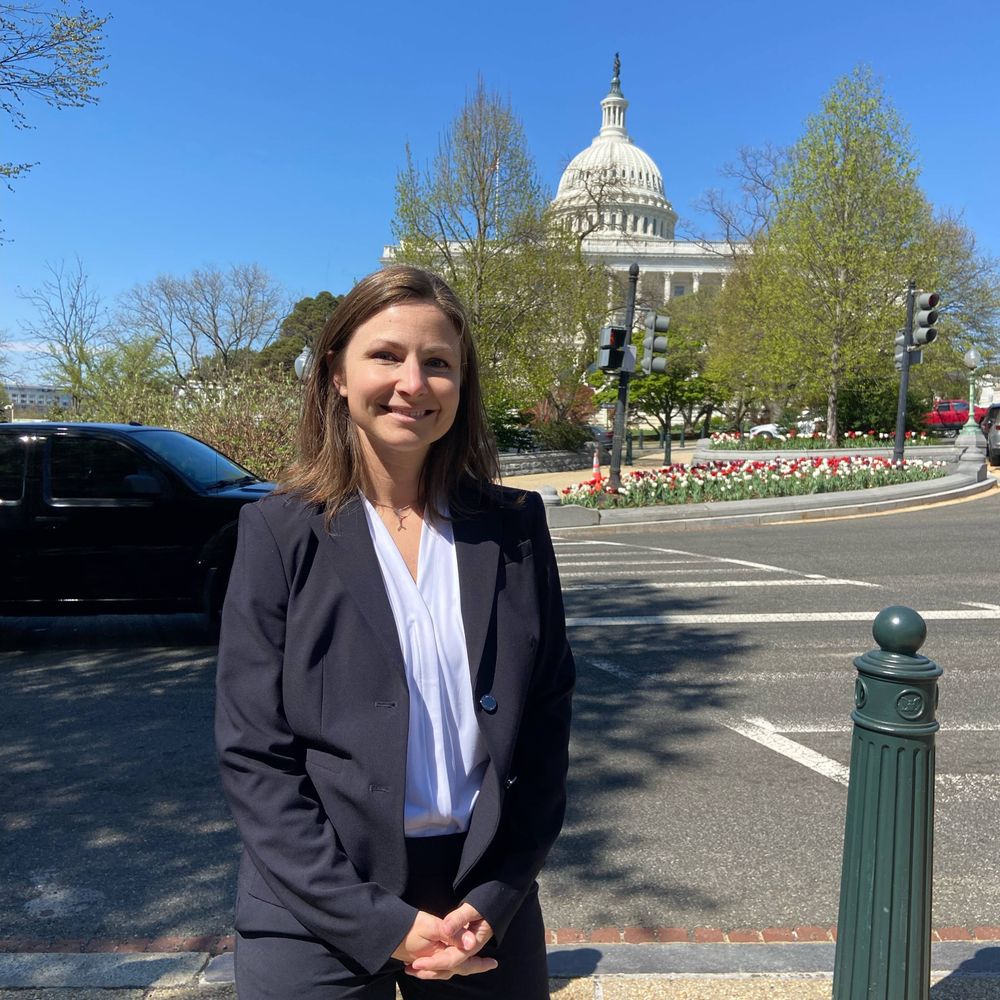
Congratulations to Sakurako Nagumo Wong, former PhD student in the @knoblich-lab.bsky.social at @imbavienna.bsky.social, who was awarded the 2025 Rabitsch Award for her remarkable contributions to the study of human cortical development and neurodevelopmental disorders. Read more: bit.ly/4ntgI9r

October 3, 2025 at 12:25 PM
A huge congratulations to @saku-wong.bsky.social on this fantastic achievement! 🎉
Reposted
"[W]e are more surprised by what organoids can do than what organoids can’t do." - @knoblich-lab.bsky.social
Elie Dolgin explores the world of brain #organoids & #assembloids for @nature.com 🧪
www.nature.com/articles/d41...
Elie Dolgin explores the world of brain #organoids & #assembloids for @nature.com 🧪
www.nature.com/articles/d41...

Brain tissues, assemble! Inside the push to build better brain models
With organoids, assembloids and a growing toolkit of bioengineering tricks, scientists are stitching together models of the developing human brain — and pushing the limits of realism and control.
www.nature.com
June 2, 2025 at 1:28 PM
"[W]e are more surprised by what organoids can do than what organoids can’t do." - @knoblich-lab.bsky.social
Elie Dolgin explores the world of brain #organoids & #assembloids for @nature.com 🧪
www.nature.com/articles/d41...
Elie Dolgin explores the world of brain #organoids & #assembloids for @nature.com 🧪
www.nature.com/articles/d41...
Congrats to Hyosang Kim on receiving an EMBO Fellowship! 🧠 What an excellent achievement.
Hyosang Kim, postdoc in Jürgen Knoblich’s Lab (@knoblich-lab.bsky.social), was awarded an EMBO Fellowship for his research on the origins of autism spectrum disorder.
Read more: https://imba.science/40b6gtH
Read more: https://imba.science/40b6gtH

August 29, 2025 at 12:47 PM
Congrats to Hyosang Kim on receiving an EMBO Fellowship! 🧠 What an excellent achievement.
Reposted
#NCB2024
In May, @knoblich-lab.bsky.social & co performed whole-tissue lineage tracing in human #cerebral #organoids to reveal that a subpopulation of symmetrically dividing cells can adjust its lineage size depending on tissue demands. #CellBio2024
www.nature.com/articles/s41...
In May, @knoblich-lab.bsky.social & co performed whole-tissue lineage tracing in human #cerebral #organoids to reveal that a subpopulation of symmetrically dividing cells can adjust its lineage size depending on tissue demands. #CellBio2024
www.nature.com/articles/s41...

Cerebral organoids display dynamic clonal growth and tunable tissue replenishment - Nature Cell Biology
Lindenhofer, Haendeler, Esk, Littleboy et al. perform whole-tissue lineage tracing in human cerebral organoids to reveal that a subpopulation of symmetrically dividing cells can adjust its lineage siz...
www.nature.com
December 15, 2024 at 11:46 PM
#NCB2024
In May, @knoblich-lab.bsky.social & co performed whole-tissue lineage tracing in human #cerebral #organoids to reveal that a subpopulation of symmetrically dividing cells can adjust its lineage size depending on tissue demands. #CellBio2024
www.nature.com/articles/s41...
In May, @knoblich-lab.bsky.social & co performed whole-tissue lineage tracing in human #cerebral #organoids to reveal that a subpopulation of symmetrically dividing cells can adjust its lineage size depending on tissue demands. #CellBio2024
www.nature.com/articles/s41...
All data is easily accessible in our Vienna brain organoid data explorer. You can look for your favorite gene or search for entire biological processes based on GO Terms. Check it out: vienna-brain-organoid-explorer.vbc.ac.at

November 19, 2024 at 12:49 PM
All data is easily accessible in our Vienna brain organoid data explorer. You can look for your favorite gene or search for entire biological processes based on GO Terms. Check it out: vienna-brain-organoid-explorer.vbc.ac.at
We also provide RNA-seq data for cell lines in all protocols across organoid development. We quantify sources of variability (1. organoid developmental stage, 2. protocol, 3. cell line) and provide early signatures consistent with protocol-driven organoid derivation.

November 19, 2024 at 12:49 PM
We also provide RNA-seq data for cell lines in all protocols across organoid development. We quantify sources of variability (1. organoid developmental stage, 2. protocol, 3. cell line) and provide early signatures consistent with protocol-driven organoid derivation.
By comparison with fetal reference data, we can show that protocol-driven cells largely match cell types found in vivo while cell line-driven cells contribute to in vitro specific cell types.

November 19, 2024 at 12:49 PM
By comparison with fetal reference data, we can show that protocol-driven cells largely match cell types found in vivo while cell line-driven cells contribute to in vitro specific cell types.
Using scRNA-seq and a new measure for comparing scRNA-seq datasets from various sources, the NEST-score, we find protocol-driven cells (generated from many cell lines) as well as outlier, cell line-driven cells (generated from a single cell line only) for each protocol.

November 19, 2024 at 12:49 PM
Using scRNA-seq and a new measure for comparing scRNA-seq datasets from various sources, the NEST-score, we find protocol-driven cells (generated from many cell lines) as well as outlier, cell line-driven cells (generated from a single cell line only) for each protocol.
We characterized four regional brain organoid protocols across several cell lines using scRNA-seq on mature organoids and RNA-seq over time to generate a large fraction of human brain cells in vitro.

November 19, 2024 at 12:49 PM
We characterized four regional brain organoid protocols across several cell lines using scRNA-seq on mature organoids and RNA-seq over time to generate a large fraction of human brain cells in vitro.
Find the article here: www.biorxiv.org/content/10.1...
November 19, 2024 at 12:49 PM
Find the article here: www.biorxiv.org/content/10.1...
Excited to share our latest preprint (@biorxivpreprint) on brain organoid development. Lead by Julia Naas and Meritxell Balmaña (@txellbalmana) with Arndt von Haeseler, Christopher Esk (@christopher-esk.bsky.social) and colleagues across Vienna. @maxperutzlabs.bsky.social, @IMBA_Vienna, @CeMM_News.

Reconstitution of Human Brain Cell Diversity in Organoids via Four Protocols
Human brain organoids are powerful in vitro models for brain development and disease. However, their variability can complicate use in biomedical research and drug discovery. Both the specific protoco...
www.biorxiv.org
November 19, 2024 at 12:49 PM
Excited to share our latest preprint (@biorxivpreprint) on brain organoid development. Lead by Julia Naas and Meritxell Balmaña (@txellbalmana) with Arndt von Haeseler, Christopher Esk (@christopher-esk.bsky.social) and colleagues across Vienna. @maxperutzlabs.bsky.social, @IMBA_Vienna, @CeMM_News.
We characterized four regional brain organoid protocols across several cell lines using scRNA-seq on mature organoids and RNA-seq over time to generate a large fraction of human brain cells in vitro.

November 19, 2024 at 12:43 PM
We characterized four regional brain organoid protocols across several cell lines using scRNA-seq on mature organoids and RNA-seq over time to generate a large fraction of human brain cells in vitro.