



Martin Kuhlwilm
@kuhlwilm.bsky.social
Reposted by Martin Kuhlwilm

How did DNA changes that alter protein structures impact evolution on the branch that led to modern humans? As we demonstrate today in Science Advances, biobanking initiatives offer ways to directly assess biological effects of rare archaic variants in living people, & (re)evaluate their roles. 🧬🧪

Evaluating the effects of archaic protein-altering variants in living human adults
Promise and pitfalls of using large biobanks to study impacts of archaic protein-coding variants in living humans.
www.science.org
December 10, 2025 at 7:09 PM
How did DNA changes that alter protein structures impact evolution on the branch that led to modern humans? As we demonstrate today in Science Advances, biobanking initiatives offer ways to directly assess biological effects of rare archaic variants in living people, & (re)evaluate their roles. 🧬🧪
Reposted by Martin Kuhlwilm

Preprint online right before the holidays! Excited to share the first piece of work from the Zhang Lab, led by my absolutely stellar postdoc Michelle Kim! In this work, we ask how admixture, selection and demography shape complex trait genetics and GWAS performance www.biorxiv.org/content/10.6...

Determining the driving factors shaping genetic architecture of complex traits in recently admixed populations
Understanding the genetic architecture of complex traits in admixed populations remains challenging due to heterogeneous genetic backgrounds and demographic histories. Mischaracterizing admixture can ...
www.biorxiv.org
December 16, 2025 at 1:47 PM
Preprint online right before the holidays! Excited to share the first piece of work from the Zhang Lab, led by my absolutely stellar postdoc Michelle Kim! In this work, we ask how admixture, selection and demography shape complex trait genetics and GWAS performance www.biorxiv.org/content/10.6...
Reposted by Martin Kuhlwilm
Reminder: you dont have to be "morally perfect" to defend that women must have the same rights and opportunities than men.

December 16, 2025 at 8:19 AM
Reminder: you dont have to be "morally perfect" to defend that women must have the same rights and opportunities than men.
Reposted by Martin Kuhlwilm

@kuhlwilm.bsky.social from #HEASVienna introducing Irene Gallego Romero @ee-reh-neh.bsky.social for the #HEASSeminar in #AncientGenomics taking place now online and in-person at @univie.ac.at

December 15, 2025 at 9:12 AM
@kuhlwilm.bsky.social from #HEASVienna introducing Irene Gallego Romero @ee-reh-neh.bsky.social for the #HEASSeminar in #AncientGenomics taking place now online and in-person at @univie.ac.at
Reposted by Martin Kuhlwilm
Lab meetings in Max Planck institutes

December 10, 2025 at 8:35 PM
Lab meetings in Max Planck institutes
Reposted by Martin Kuhlwilm
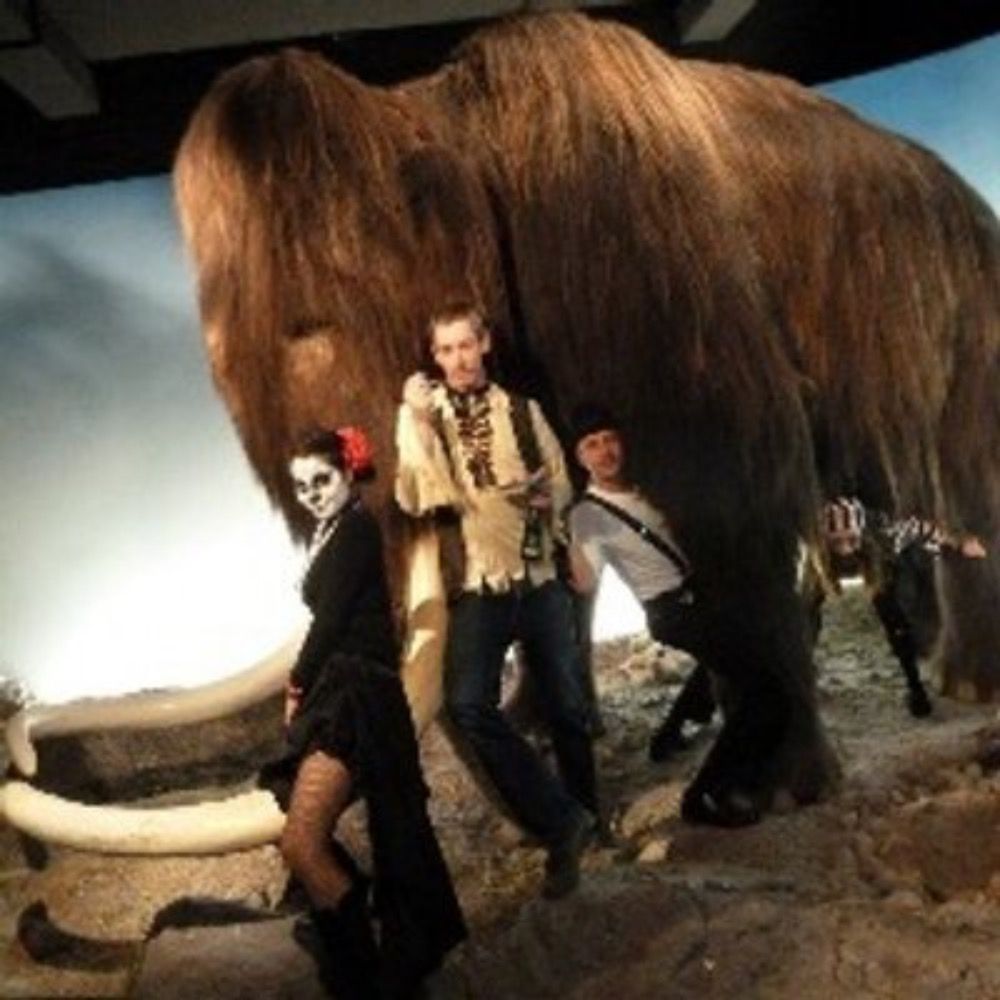
Lovely is the right adjective. Writing this was so enjoyable in the company of @acstone.bsky.social @blevinske.bsky.social and Verena Schuenemann. Hope you enjoy.

Lovely to work with @blevinske.bsky.social, @paleogenomics.bsky.social & Verena Schuenemann on " Ancient DNA insights into diverse pathogens and their hosts"! Read it at rdcu.be/eSVPN

Ancient DNA insights into diverse pathogens and their hosts
Nature Reviews Genetics - Ancient DNA techniques are being applied to study increasingly diverse pathogens of the past. The authors review the latest insights into pathogen–host coevolution,...
rdcu.be
December 3, 2025 at 7:42 PM
Lovely is the right adjective. Writing this was so enjoyable in the company of @acstone.bsky.social @blevinske.bsky.social and Verena Schuenemann. Hope you enjoy.
Reposted by Martin Kuhlwilm

Our new ancient DNA paper has just been published!
We present 28 new genomes from southern Africa - several of them high-coverage whole genomes.
Exciting to be moving towards population-level representation of ancient southern African genetic diversity!
www.nature.com/articles/s41...
We present 28 new genomes from southern Africa - several of them high-coverage whole genomes.
Exciting to be moving towards population-level representation of ancient southern African genetic diversity!
www.nature.com/articles/s41...

Homo sapiens-specific evolution unveiled by ancient southern African genomes - Nature
The genomes of 28 ancient southern African individuals dated to between 10,200 and 150 years before present offer insights into the evolution of Homo sapiens.
www.nature.com
December 3, 2025 at 4:42 PM
Our new ancient DNA paper has just been published!
We present 28 new genomes from southern Africa - several of them high-coverage whole genomes.
Exciting to be moving towards population-level representation of ancient southern African genetic diversity!
www.nature.com/articles/s41...
We present 28 new genomes from southern Africa - several of them high-coverage whole genomes.
Exciting to be moving towards population-level representation of ancient southern African genetic diversity!
www.nature.com/articles/s41...
Reposted by Martin Kuhlwilm

Huang, @kuhlwilm.bsky.social et al. present SAI, a Python package for computing introgression statistics, and demonstrate its application in two datasets.
🔗 doi.org/10.1093/molbev/msaf295
#evobio #molbio #compbio
🔗 doi.org/10.1093/molbev/msaf295
#evobio #molbio #compbio

SAI: A Python Package for Statistics for Adaptive Introgression
Abstract. Adaptive introgression is an important evolutionary process, which can be identified with widely used summary statistics, such as the number of u
doi.org
December 2, 2025 at 10:52 AM
Huang, @kuhlwilm.bsky.social et al. present SAI, a Python package for computing introgression statistics, and demonstrate its application in two datasets.
🔗 doi.org/10.1093/molbev/msaf295
#evobio #molbio #compbio
🔗 doi.org/10.1093/molbev/msaf295
#evobio #molbio #compbio
And another paper from the admixlab: SAI - statistics for adaptive introgression!
doi.org/10.1093/molb...
doi.org/10.1093/molb...

SAI: A Python Package for Statistics for Adaptive Introgression
Abstract. Adaptive introgression is an important evolutionary process, which can be identified with widely used summary statistics, such as the number of u
doi.org
November 20, 2025 at 12:51 PM
And another paper from the admixlab: SAI - statistics for adaptive introgression!
doi.org/10.1093/molb...
doi.org/10.1093/molb...
Paper out now: A curated dataset of the great ape genome diversity!
rdcu.be/eQLCi
rdcu.be/eQLCi

A curated dataset of great ape genome diversity
Scientific Data - A curated dataset of great ape genome diversity
rdcu.be
November 19, 2025 at 2:27 PM
Paper out now: A curated dataset of the great ape genome diversity!
rdcu.be/eQLCi
rdcu.be/eQLCi
Reposted by Martin Kuhlwilm

Next paper published in the @hpgg-pivot.bsky.social special issue on popgen methods and software!
Coll Macià & Skov "Best practices and pitfalls in using hmmix for reference-free detection of introgressed sequences"
doi.org/10.47248/hpg...
Submission for contributions still open to 15 January!
Coll Macià & Skov "Best practices and pitfalls in using hmmix for reference-free detection of introgressed sequences"
doi.org/10.47248/hpg...
Submission for contributions still open to 15 January!
Best practices and pitfalls in using <monospace>hmmix</monospace> for reference-free detection of introgressed sequences
Best practices and pitfalls in using <monospace>hmmix</monospace> for reference-free detection of introgressed sequences
doi.org
November 19, 2025 at 11:18 AM
Next paper published in the @hpgg-pivot.bsky.social special issue on popgen methods and software!
Coll Macià & Skov "Best practices and pitfalls in using hmmix for reference-free detection of introgressed sequences"
doi.org/10.47248/hpg...
Submission for contributions still open to 15 January!
Coll Macià & Skov "Best practices and pitfalls in using hmmix for reference-free detection of introgressed sequences"
doi.org/10.47248/hpg...
Submission for contributions still open to 15 January!
Reposted by Martin Kuhlwilm

🚨Join us tomorrow, on 18th of November 2025 from 15:00 – 16:00 h in the Seminar Room 3.1 at UBB for an impromptu RMS!🚨
& stay tuned for more End-of-the-Year events! 🎄
& stay tuned for more End-of-the-Year events! 🎄

November 17, 2025 at 7:27 AM
🚨Join us tomorrow, on 18th of November 2025 from 15:00 – 16:00 h in the Seminar Room 3.1 at UBB for an impromptu RMS!🚨
& stay tuned for more End-of-the-Year events! 🎄
& stay tuned for more End-of-the-Year events! 🎄
Reposted by Martin Kuhlwilm
There is still time to register for this event, taking place online and in-person in the #UBB at @univie.ac.at
We are looking forward to welcoming Maria Avila Arcos @paleogenomics.bsky.social to #HEASVienna for a #HEASSeminar in #AncientGenomics next Monday at the later than normal time of 11:45 CET.
@peregx9.bsky.social
Registration for online and in-person participation in on our website 👇🔗
@peregx9.bsky.social
Registration for online and in-person participation in on our website 👇🔗

HEAS Seminar Series - Ancient Genomics - HEAS
As part of the HEAS Seminar Series in Ancient Genomics Maria C Avila-Arcos from National Autonomous University of Mexico will give a talk on Paleogenomic evidence of patogen introductions to Mexico fo...
www.heas.at
November 17, 2025 at 9:15 AM
There is still time to register for this event, taking place online and in-person in the #UBB at @univie.ac.at
Reposted by Martin Kuhlwilm
You and the text you need to trim in order to meet the word limit
November 10, 2025 at 7:27 AM
You and the text you need to trim in order to meet the word limit
Reposted by Martin Kuhlwilm
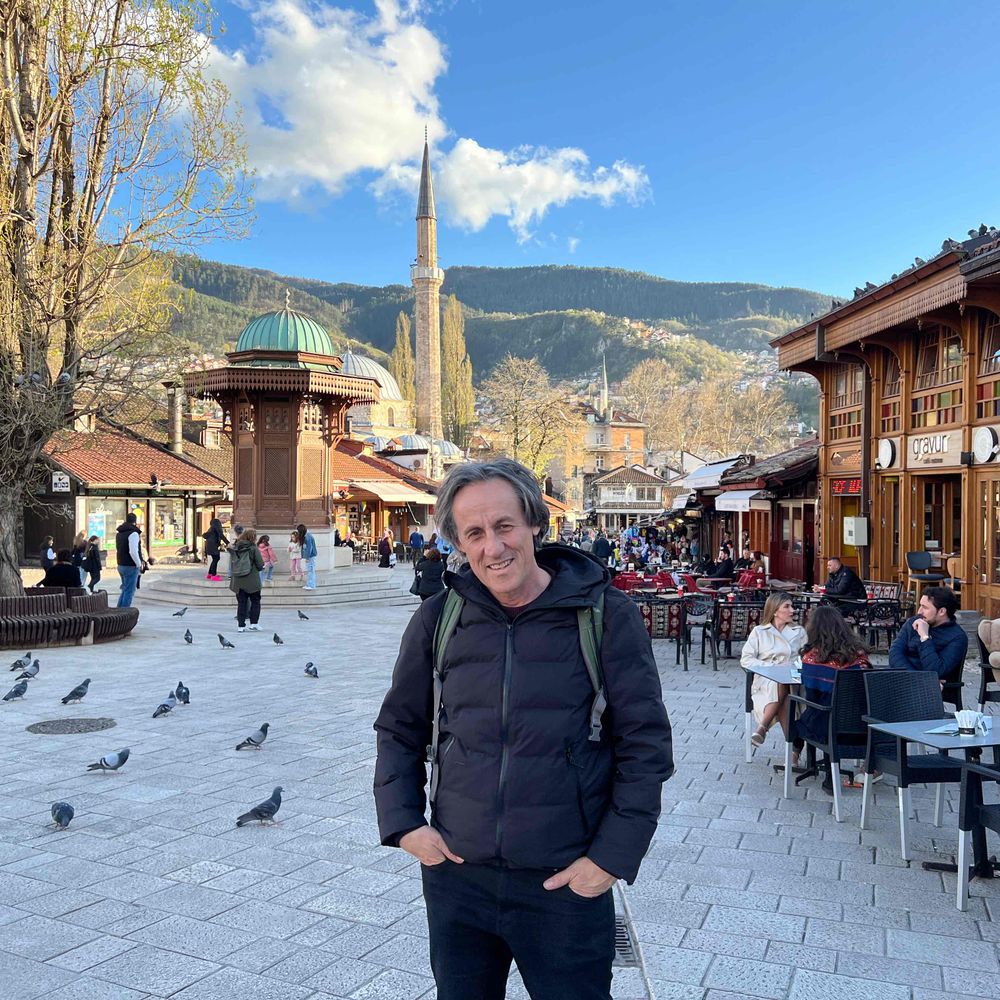
So proud to see our new paper out in PNAS spearheaded by @emilypigott.bsky.social She found a tiny 46,000 yr old Neanderthal bone at Starosele (Crimea). DNA work revealed long-distance connections across Eurasia, supported by stone tool evidence @heasvienna.bsky.social
www.pnas.org/doi/10.1073/...
www.pnas.org/doi/10.1073/...

October 29, 2025 at 9:17 AM
So proud to see our new paper out in PNAS spearheaded by @emilypigott.bsky.social She found a tiny 46,000 yr old Neanderthal bone at Starosele (Crimea). DNA work revealed long-distance connections across Eurasia, supported by stone tool evidence @heasvienna.bsky.social
www.pnas.org/doi/10.1073/...
www.pnas.org/doi/10.1073/...
New paper on a late Neanderthal, with contribution from the lab:
dx.doi.org/10.1073/pnas...
dx.doi.org/10.1073/pnas...
PNAS
Proceedings of the National Academy of Sciences (PNAS), a peer reviewed journal of the National Academy of Sciences (NAS) - an authoritative source of high-impact, original research that broadly spans...
dx.doi.org
October 27, 2025 at 7:29 PM
New paper on a late Neanderthal, with contribution from the lab:
dx.doi.org/10.1073/pnas...
dx.doi.org/10.1073/pnas...
Reposted by Martin Kuhlwilm

If you like genomics, speciation, and primates, this PhD position is for you! Unraveling the genomic architecture of speciation and gene flow in guenons, a diverse group of African monkeys. Funding through DTP. Do reach out with questions! #genomics #genome_assembly
evol.mcmaster.ca/brian/evoldi...
evol.mcmaster.ca/brian/evoldi...

October 23, 2025 at 3:11 PM
If you like genomics, speciation, and primates, this PhD position is for you! Unraveling the genomic architecture of speciation and gene flow in guenons, a diverse group of African monkeys. Funding through DTP. Do reach out with questions! #genomics #genome_assembly
evol.mcmaster.ca/brian/evoldi...
evol.mcmaster.ca/brian/evoldi...
Reposted by Martin Kuhlwilm

Monty Python understood p-hacking
October 23, 2025 at 8:43 AM
Monty Python understood p-hacking
Reposted by Martin Kuhlwilm

In a new paper led by Jiaqi Yang we trace the distribution of Denisovan introgressed DNA in ancient modern human genomes over time.
www.cell.com/current-biol...
www.cell.com/current-biol...

An early East Asian lineage with unexpectedly low Denisovan ancestry
Yang et al. study Denisovan ancestry in ancient and present-day humans. In contrast
to other East Asians, genomic comparisons suggest that the Jomon derived most of their
ancestry from a deep lineage ...
www.cell.com
October 20, 2025 at 7:39 PM
In a new paper led by Jiaqi Yang we trace the distribution of Denisovan introgressed DNA in ancient modern human genomes over time.
www.cell.com/current-biol...
www.cell.com/current-biol...
Reposted by Martin Kuhlwilm

A new high-coverage #Denisovan genome, chock-full of fascinating new information. Must-read study by @stephanepeyregne.bsky.social @janetk.bsky.social and colleagues
On @biorxivpreprint.bsky.social: 🧪🧬
www.biorxiv.org/content/10.1...
On @biorxivpreprint.bsky.social: 🧪🧬
www.biorxiv.org/content/10.1...

A high-coverage genome from a 200,000-year-old Denisovan
Denisovans, an extinct sister group of Neandertals who lived in Eastern Eurasia during the Middle and Late Pleistocene, are known only from a handful of skeletal remains and limited genetic data, incl...
www.biorxiv.org
October 21, 2025 at 4:58 AM
A new high-coverage #Denisovan genome, chock-full of fascinating new information. Must-read study by @stephanepeyregne.bsky.social @janetk.bsky.social and colleagues
On @biorxivpreprint.bsky.social: 🧪🧬
www.biorxiv.org/content/10.1...
On @biorxivpreprint.bsky.social: 🧪🧬
www.biorxiv.org/content/10.1...
Reposted by Martin Kuhlwilm
@kuhlwilm.bsky.social from #HEASVienna introducing @rokofler.bsky.social for the #HEASSeminar in #AncientGenomics taking place now online and in-person at the #UBB @univie.ac.at

October 13, 2025 at 8:06 AM
@kuhlwilm.bsky.social from #HEASVienna introducing @rokofler.bsky.social for the #HEASSeminar in #AncientGenomics taking place now online and in-person at the #UBB @univie.ac.at
Reposted by Martin Kuhlwilm

We have a few remaining seats left in the “Programming for Evolutionary Biologists” course - 10th edition, Berlin, Feb 17 to Mar 6
evop.bioinf.uni-leipzig.de
A highly motivated and experienced team is waiting for you with an updated curriculum!
evop.bioinf.uni-leipzig.de
A highly motivated and experienced team is waiting for you with an updated curriculum!
Programming for Evolutionary Biology School (EVOP) | February 18th – March 5th 2026
evop.bioinf.uni-leipzig.de
October 7, 2025 at 9:55 AM
We have a few remaining seats left in the “Programming for Evolutionary Biologists” course - 10th edition, Berlin, Feb 17 to Mar 6
evop.bioinf.uni-leipzig.de
A highly motivated and experienced team is waiting for you with an updated curriculum!
evop.bioinf.uni-leipzig.de
A highly motivated and experienced team is waiting for you with an updated curriculum!
Reposted by Martin Kuhlwilm

Jane Goodall was my first childhood hero, as I loved animals as a kid and was inspired by her story. I still remember the National Geographic specials about her. RIP.

October 1, 2025 at 8:05 PM
Jane Goodall was my first childhood hero, as I loved animals as a kid and was inspired by her story. I still remember the National Geographic specials about her. RIP.
Reposted by Martin Kuhlwilm

A big reason it's challenging to work out relationships of early hominins: We know today that the populations of living great apes like gorillas and bonobos have deep ancestry from diverged “ghost” lineages. Our ancestors were surely the same.
www.johnhawks.net/p/genetic-hi...
www.johnhawks.net/p/genetic-hi...

Tracing the genetic histories of ghost apes
The footprints of extinct lineages are the closest we have to a fossil record of the African apes.
www.johnhawks.net
September 23, 2025 at 1:01 PM
A big reason it's challenging to work out relationships of early hominins: We know today that the populations of living great apes like gorillas and bonobos have deep ancestry from diverged “ghost” lineages. Our ancestors were surely the same.
www.johnhawks.net/p/genetic-hi...
www.johnhawks.net/p/genetic-hi...
Reposted by Martin Kuhlwilm
CRISPR is amazing

September 21, 2025 at 12:56 PM
CRISPR is amazing