



Regina Lapate
@lapate.bsky.social
Asst. Prof of Psych & Brain Sciences at UC Santa Barbara || affective & cognitive neuroscience || formerly at UC Berkeley & UW-Madison
https://lapatelab.psych.ucsb.edu
https://lapatelab.psych.ucsb.edu
Pinned
Regina Lapate
@lapate.bsky.social
· Nov 10

LAPATE LAB
lapatelab.psych.ucsb.edu
Hello new followers: Time for an introduction! My affective & cognitive neuroscience lab at UCSB studies emotion-cognition interactions, including affect & cognitive control, temporal memory, & metacognition using fMRI, TMS, EEG, & psychophyz. 🧠 Check out our work here: lapatelab.psych.ucsb.edu
Reposted by Regina Lapate
It won't actually exist for another month or so, but because it now 'exists' on amazon, I'll humbly observe that, after working through this book, your student/trainee would be able to read and understand all but two or three papers in this week's J. Neurosci. Check it out:

January 16, 2026 at 10:38 PM
It won't actually exist for another month or so, but because it now 'exists' on amazon, I'll humbly observe that, after working through this book, your student/trainee would be able to read and understand all but two or three papers in this week's J. Neurosci. Check it out:
📣 Our lab is hiring a full-time RA/lab manager! Join us in beautiful Santa Barbara to study the neural bases of affect-cognition interactions using fMRI and brain stimulation. Great stepping stone to a PhD in cognitive/affective neuro 🧠🐬🏖️ Apply by Jan 22: recruit.ap.ucsb.edu/JPF03048

Junior Specialist - Lapate Laboratory, Department of Psychological & Brain Sciences
University of California Santa Barbara is hiring. Apply now!
recruit.ap.ucsb.edu
January 13, 2026 at 10:23 PM
📣 Our lab is hiring a full-time RA/lab manager! Join us in beautiful Santa Barbara to study the neural bases of affect-cognition interactions using fMRI and brain stimulation. Great stepping stone to a PhD in cognitive/affective neuro 🧠🐬🏖️ Apply by Jan 22: recruit.ap.ucsb.edu/JPF03048
📣 We’re currently reviewing applications for this postdoctoral position. Next review date: Jan 26. Feel free to reach out with any questions! recruit.ap.ucsb.edu/JPF03027
January 13, 2026 at 6:23 PM
📣 We’re currently reviewing applications for this postdoctoral position. Next review date: Jan 26. Feel free to reach out with any questions! recruit.ap.ucsb.edu/JPF03027
Reposted by Regina Lapate

With some trepidation, I'm putting this out into the world:
gershmanlab.com/textbook.html
It's a textbook called Computational Foundations of Cognitive Neuroscience, which I wrote for my class.
My hope is that this will be a living document, continuously improved as I get feedback.
gershmanlab.com/textbook.html
It's a textbook called Computational Foundations of Cognitive Neuroscience, which I wrote for my class.
My hope is that this will be a living document, continuously improved as I get feedback.
January 9, 2026 at 1:27 AM
With some trepidation, I'm putting this out into the world:
gershmanlab.com/textbook.html
It's a textbook called Computational Foundations of Cognitive Neuroscience, which I wrote for my class.
My hope is that this will be a living document, continuously improved as I get feedback.
gershmanlab.com/textbook.html
It's a textbook called Computational Foundations of Cognitive Neuroscience, which I wrote for my class.
My hope is that this will be a living document, continuously improved as I get feedback.
Reposted by Regina Lapate
Fresh off the press from all-star post-doc Blake Elliott: www.pnas.org/doi/10.1073/...
We show that the HPC supports coincidence detection across VTA and lPFC in service of novelty-evoked invigoration. Stay-tuned for how these circuits are altered in psychosis risk.
We show that the HPC supports coincidence detection across VTA and lPFC in service of novelty-evoked invigoration. Stay-tuned for how these circuits are altered in psychosis risk.
PNAS
Proceedings of the National Academy of Sciences (PNAS), a peer reviewed journal of the National Academy of Sciences (NAS) - an authoritative source of high-impact, original research that broadly spans...
www.pnas.org
January 7, 2026 at 2:00 AM
Fresh off the press from all-star post-doc Blake Elliott: www.pnas.org/doi/10.1073/...
We show that the HPC supports coincidence detection across VTA and lPFC in service of novelty-evoked invigoration. Stay-tuned for how these circuits are altered in psychosis risk.
We show that the HPC supports coincidence detection across VTA and lPFC in service of novelty-evoked invigoration. Stay-tuned for how these circuits are altered in psychosis risk.
Reposted by Regina Lapate
Agency reorganizes memory around relevant decisions. This was collaboration the deeply missed Sarah DuBrow and steer-headed by our grad students @lindsayrait.bsky.social and Elizabeth Horwath.
p.s. the task design involves curating gift baskets.
pubmed.ncbi.nlm.nih.gov/41436249/
p.s. the task design involves curating gift baskets.
pubmed.ncbi.nlm.nih.gov/41436249/

Agency alters memory organization during free recall - PubMed
This study examined how agentic decisions in the absence of explicit rewards influence memory organization. Participants studied lists of items to assign as gifts to two characters-either choosing freely (Choice group) or following instructions (Fixed group). During free recall, participants in the …
pubmed.ncbi.nlm.nih.gov
January 7, 2026 at 2:05 AM
Agency reorganizes memory around relevant decisions. This was collaboration the deeply missed Sarah DuBrow and steer-headed by our grad students @lindsayrait.bsky.social and Elizabeth Horwath.
p.s. the task design involves curating gift baskets.
pubmed.ncbi.nlm.nih.gov/41436249/
p.s. the task design involves curating gift baskets.
pubmed.ncbi.nlm.nih.gov/41436249/
Reposted by Regina Lapate
Calling all Affective Neurosci, basic, clinical, animal, mineral & otherwise: SFN's accepting proposals for symposia @ the 2026 DC meeting. Please consider reaching out to your pals &, maybe even dropping a line to someone you admire from afar, & organizing a submission. www.sfn.org/meetings/neu...
Call for Proposals
www.sfn.org
December 12, 2025 at 4:10 PM
Calling all Affective Neurosci, basic, clinical, animal, mineral & otherwise: SFN's accepting proposals for symposia @ the 2026 DC meeting. Please consider reaching out to your pals &, maybe even dropping a line to someone you admire from afar, & organizing a submission. www.sfn.org/meetings/neu...
Reposted by Regina Lapate

New paper from Steph. Watch out, she has many more coming.
www.jneurosci.org/content/45/4...
www.jneurosci.org/content/45/4...

Frontoparietal Hubs Leverage Probabilistic Representations and Integrated Uncertainty to Guide Cognitive Flexibility
Adaptive behavior requires integrating information from multiple sources. These sources can originate from distinct channels, such as internally maintained latent cognitive representations or external...
www.jneurosci.org
December 10, 2025 at 10:34 PM
New paper from Steph. Watch out, she has many more coming.
www.jneurosci.org/content/45/4...
www.jneurosci.org/content/45/4...
Reposted by Regina Lapate
New lab paper: "Emotional learning selectively distorts the temporal organization of memory: A quantitative synthesis." Across 17 different studies, fear conditioning consistently distorted temporal source memory for information encoded before and after. www.sciencedirect.com/science/arti...

Emotional learning selectively distorts the temporal organization of memory: A quantitative synthesis
Episodic memory allows us to remember when an event occurred by situating it within a coherent temporal context. Pavlovian fear conditioning, a widely…
www.sciencedirect.com
December 1, 2025 at 4:05 PM
New lab paper: "Emotional learning selectively distorts the temporal organization of memory: A quantitative synthesis." Across 17 different studies, fear conditioning consistently distorted temporal source memory for information encoded before and after. www.sciencedirect.com/science/arti...
Reposted by Regina Lapate

#SfN25 Mini-symposium: Today at 9:30 am PST | Representation of Time in the Brain
Read the accompanying article by Kwok et al. in #JNeurosci
https://doi.org/10.1523/JNEUROSCI.1397-25.2025
Read the accompanying article by Kwok et al. in #JNeurosci
https://doi.org/10.1523/JNEUROSCI.1397-25.2025

November 19, 2025 at 3:45 PM
Reposted by Regina Lapate
For those coming to SfN, I’ll be giving a talk showing evidence of hippocampal neuronal replay 🎞️🔁 in HUMANS as part of the “Representation of Time in the Brain” minisymposium (Wednesday morning)
Our stellar group of speakers also wrote a preview of the session in @sfnjournals.bsky.social #sfn2025
🧠
Our stellar group of speakers also wrote a preview of the session in @sfnjournals.bsky.social #sfn2025
🧠

Neural Representation of Episodic Time
Inspired by recent discoveries of neural populations that track time for specific moments (time cells) and elapsed durations (temporal context and periodic time cells), this review, based on a minisym...
www.jneurosci.org
November 15, 2025 at 7:15 PM
For those coming to SfN, I’ll be giving a talk showing evidence of hippocampal neuronal replay 🎞️🔁 in HUMANS as part of the “Representation of Time in the Brain” minisymposium (Wednesday morning)
Our stellar group of speakers also wrote a preview of the session in @sfnjournals.bsky.social #sfn2025
🧠
Our stellar group of speakers also wrote a preview of the session in @sfnjournals.bsky.social #sfn2025
🧠
Reposted by Regina Lapate
🧠 The LEAP Neuro Lab is headed to #SfN25! Check out our new work on intrinsic temporal tracking in the brain, emotion-temporal memory interactions, and the neural correlates of sympathetic activity during threat using a new MRI-compatible measure w/ high temporal resolution. Hope to see you there!

November 13, 2025 at 7:50 PM
🧠 The LEAP Neuro Lab is headed to #SfN25! Check out our new work on intrinsic temporal tracking in the brain, emotion-temporal memory interactions, and the neural correlates of sympathetic activity during threat using a new MRI-compatible measure w/ high temporal resolution. Hope to see you there!
🧠 The LEAP Neuro Lab is headed to #SfN25! Check out our new work on intrinsic temporal tracking in the brain, emotion-temporal memory interactions, and the neural correlates of sympathetic activity during threat using a new MRI-compatible measure w/ high temporal resolution. Hope to see you there!
November 13, 2025 at 7:50 PM
🧠 The LEAP Neuro Lab is headed to #SfN25! Check out our new work on intrinsic temporal tracking in the brain, emotion-temporal memory interactions, and the neural correlates of sympathetic activity during threat using a new MRI-compatible measure w/ high temporal resolution. Hope to see you there!
Reposted by Regina Lapate

New work from the lab published in @cp-neuron.bsky.social by @jonasterlau.bsky.social and Jan Martini. We describe that trial-by-trial variability indexes recurrent connectivity across the cortical hierarchy, which supports reliable and flexible coding www.cell.com/neuron/abstr... (1/4)

Structure in noise: Recurrent connectivity shapes neural variability to balance perceptual and cognitive demands in the human brain
Does neural variability reflect random noise or a feature that benefits adaptive behavior?
Using intracranial recordings in humans, Terlau et al. demonstrate that neural variability
results from the r...
www.cell.com
November 10, 2025 at 5:06 PM
New work from the lab published in @cp-neuron.bsky.social by @jonasterlau.bsky.social and Jan Martini. We describe that trial-by-trial variability indexes recurrent connectivity across the cortical hierarchy, which supports reliable and flexible coding www.cell.com/neuron/abstr... (1/4)
Reposted by Regina Lapate
The Computational and Cognitive Neural Sciences lab (ballardlab.org) at UC Riverside is recruiting psychology PhD students to join our team! Check out the flyer to learn about the lab and our stellar research community at UCR. Apply by 12/1!
drive.google.com/file/d/19m8i...
drive.google.com/file/d/19m8i...

November 5, 2025 at 9:29 PM
The Computational and Cognitive Neural Sciences lab (ballardlab.org) at UC Riverside is recruiting psychology PhD students to join our team! Check out the flyer to learn about the lab and our stellar research community at UCR. Apply by 12/1!
drive.google.com/file/d/19m8i...
drive.google.com/file/d/19m8i...
Reposted by Regina Lapate

The more I think about this, the more frustrated I get with our leadership. It is hard to see this decision as anything but preemptive compliance.
The President’s Postdoctoral Fellowship Program, PPFP, has been a jewel in the crown for faculty development and recruitment at the University of California for years and the results have been an expanded faculty with almost 100% tenure rates — unprecedented success.
November 5, 2025 at 8:12 PM
The more I think about this, the more frustrated I get with our leadership. It is hard to see this decision as anything but preemptive compliance.
I am recruiting a postdoc at UC Santa Barbara for an NIH-funded project on the organization of lateral PFC function--across emotion and cognition--using representational fMRI & TMS. I’d love to find someone w/ a background in cognitive control & computational modeling to complement our team! 🏝️ 🧠 🧲

October 29, 2025 at 6:20 PM
I am recruiting a postdoc at UC Santa Barbara for an NIH-funded project on the organization of lateral PFC function--across emotion and cognition--using representational fMRI & TMS. I’d love to find someone w/ a background in cognitive control & computational modeling to complement our team! 🏝️ 🧠 🧲
Reposted by Regina Lapate
I will be recruiting 🌟PhD students🌟 for my newish lab! If you're interested in learning & memory mechanisms applied to individual, interactive & collective behavior using computational modeling, real-world experiments and fMRI, email me! RTs much appreciated 🙏 rouhanilab.com
Interactive Cognition Lab | USC
Interactive Cognition Lab at USC, led by principal investigator, Dr. Nina Rouhani.
rouhanilab.com
October 24, 2025 at 4:57 PM
I will be recruiting 🌟PhD students🌟 for my newish lab! If you're interested in learning & memory mechanisms applied to individual, interactive & collective behavior using computational modeling, real-world experiments and fMRI, email me! RTs much appreciated 🙏 rouhanilab.com
Reposted by Regina Lapate
Ever slam on the brakes after seeing a speed trap? Or better yet, slow down ahead in anticipation?
In our new paper w/ @anask07.bsky.social in @cp-iscience.bsky.social, we use #iEEG to study the neural basis of reactive and proactive control in medial and lateral PFC.
tinyurl.com/4bbwbffv
In our new paper w/ @anask07.bsky.social in @cp-iscience.bsky.social, we use #iEEG to study the neural basis of reactive and proactive control in medial and lateral PFC.
tinyurl.com/4bbwbffv

October 8, 2025 at 9:00 PM
Ever slam on the brakes after seeing a speed trap? Or better yet, slow down ahead in anticipation?
In our new paper w/ @anask07.bsky.social in @cp-iscience.bsky.social, we use #iEEG to study the neural basis of reactive and proactive control in medial and lateral PFC.
tinyurl.com/4bbwbffv
In our new paper w/ @anask07.bsky.social in @cp-iscience.bsky.social, we use #iEEG to study the neural basis of reactive and proactive control in medial and lateral PFC.
tinyurl.com/4bbwbffv
Reposted by Regina Lapate
New position, new social media account. After 5 fantastic years in Tuebingen, I moved to @yale.edu and the @wutsaiyale.bsky.social this summer - which means that I’ll be recruiting PhD students and postdocs. Please help me to spread the word and see current opportunities below 👇
October 6, 2025 at 6:46 PM
New position, new social media account. After 5 fantastic years in Tuebingen, I moved to @yale.edu and the @wutsaiyale.bsky.social this summer - which means that I’ll be recruiting PhD students and postdocs. Please help me to spread the word and see current opportunities below 👇
Reposted by Regina Lapate
This week two new #28andMe babies joined the extended family:
⏳ @lapate.bsky.social’s lab uncovered a resting-state connectivity signature that reflects the passage of time. www.nature.com/articles/s41... (2/x)
⏳ @lapate.bsky.social’s lab uncovered a resting-state connectivity signature that reflects the passage of time. www.nature.com/articles/s41... (2/x)

The intrinsic time tracker: temporal context is embedded in entorhinal and hippocampal functional connectivity patterns - Nature Communications
This study shows that hippocampal and entorhinal connectivity patterns drift over time in humans, providing a spontaneous neural signature of elapsed time that follows functional gradients and reveals network-specific contributions to temporal coding.
www.nature.com
October 3, 2025 at 8:00 PM
This week two new #28andMe babies joined the extended family:
⏳ @lapate.bsky.social’s lab uncovered a resting-state connectivity signature that reflects the passage of time. www.nature.com/articles/s41... (2/x)
⏳ @lapate.bsky.social’s lab uncovered a resting-state connectivity signature that reflects the passage of time. www.nature.com/articles/s41... (2/x)
Reposted by Regina Lapate
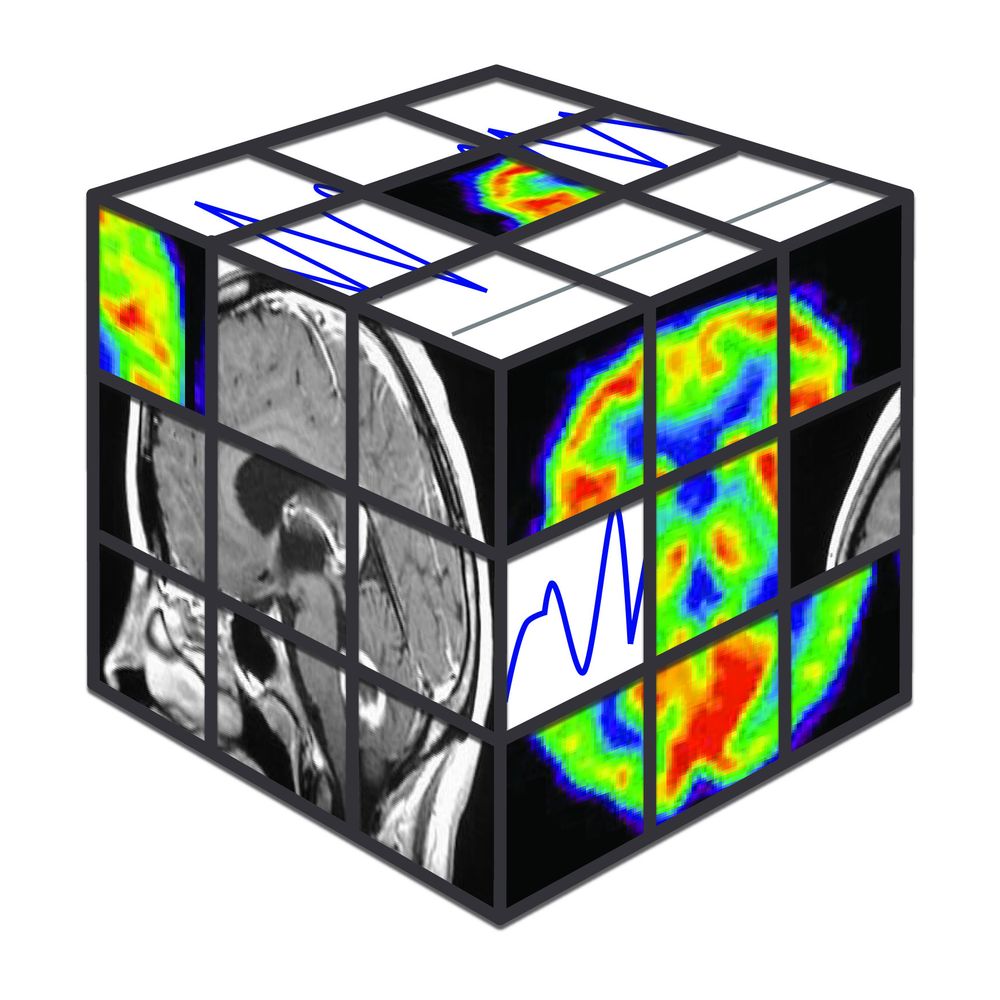
VOTE FOR YOUR FAVORITE SYMPOSIUM!
Vote for the Symposium you'd most like to see at #CNS2026 in Vancouver, B.C. Voting deadline, October 1, 2025 You must be a current CNS member to vote.
TO VOTE: Log in to your CNS Account & click the 'Symposia Voting' button: www.cogneurosociety.org/account-login/
Vote for the Symposium you'd most like to see at #CNS2026 in Vancouver, B.C. Voting deadline, October 1, 2025 You must be a current CNS member to vote.
TO VOTE: Log in to your CNS Account & click the 'Symposia Voting' button: www.cogneurosociety.org/account-login/
September 29, 2025 at 2:59 PM
VOTE FOR YOUR FAVORITE SYMPOSIUM!
Vote for the Symposium you'd most like to see at #CNS2026 in Vancouver, B.C. Voting deadline, October 1, 2025 You must be a current CNS member to vote.
TO VOTE: Log in to your CNS Account & click the 'Symposia Voting' button: www.cogneurosociety.org/account-login/
Vote for the Symposium you'd most like to see at #CNS2026 in Vancouver, B.C. Voting deadline, October 1, 2025 You must be a current CNS member to vote.
TO VOTE: Log in to your CNS Account & click the 'Symposia Voting' button: www.cogneurosociety.org/account-login/
Reposted by Regina Lapate
Make your voice impossible to ignore. If you support the Menopause Care Equity Act let @gavinnewsom.bsky.social know in the link below 👇🏼 #AB432
September 26, 2025 at 2:33 PM
Make your voice impossible to ignore. If you support the Menopause Care Equity Act let @gavinnewsom.bsky.social know in the link below 👇🏼 #AB432
Reposted by Regina Lapate
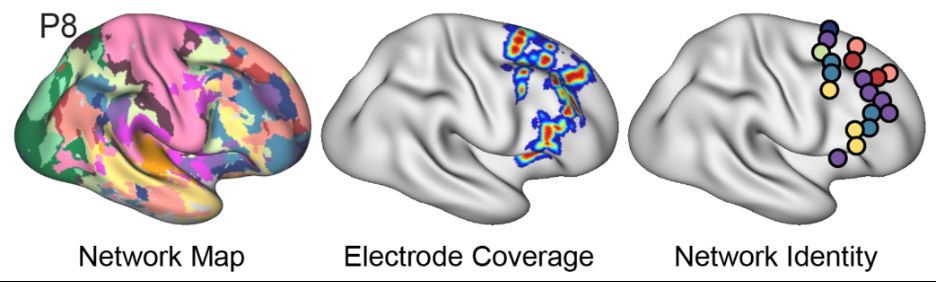
🚨 New Preprint 🚨
Targeting intracranial electrical stimulation (ES) to network regions defined within individuals causes network-level effects
By Cyr et al.
***
Q: Can we use individualized network maps from precision fMRI to modulate a targeted network via intracranial ES?
A: Yes!
🧵:
Targeting intracranial electrical stimulation (ES) to network regions defined within individuals causes network-level effects
By Cyr et al.
***
Q: Can we use individualized network maps from precision fMRI to modulate a targeted network via intracranial ES?
A: Yes!
🧵:
August 5, 2025 at 3:31 PM
🚨 New Preprint 🚨
Targeting intracranial electrical stimulation (ES) to network regions defined within individuals causes network-level effects
By Cyr et al.
***
Q: Can we use individualized network maps from precision fMRI to modulate a targeted network via intracranial ES?
A: Yes!
🧵:
Targeting intracranial electrical stimulation (ES) to network regions defined within individuals causes network-level effects
By Cyr et al.
***
Q: Can we use individualized network maps from precision fMRI to modulate a targeted network via intracranial ES?
A: Yes!
🧵:
Reposted by Regina Lapate
Our new paper out now in Science explores how neural activity in the lateral entorhinal cortex (LEC) *drifts* over time - and *jumps* at key boundaries - to help organize events in memory.
🔗 www.science.org/doi/10.1126/...
Here's a quick summary of what we found 🧵👇
🔗 www.science.org/doi/10.1126/...
Here's a quick summary of what we found 🧵👇
June 26, 2025 at 6:15 PM
Our new paper out now in Science explores how neural activity in the lateral entorhinal cortex (LEC) *drifts* over time - and *jumps* at key boundaries - to help organize events in memory.
🔗 www.science.org/doi/10.1126/...
Here's a quick summary of what we found 🧵👇
🔗 www.science.org/doi/10.1126/...
Here's a quick summary of what we found 🧵👇