



Leo
@leogdlima.bsky.social
Mais um salvo do inferno da rede do passarinho
Reposted by Leo

Targeted editing of pericentromeric satellite DNA alters sensitivity to meiotic drive https://www.biorxiv.org/content/10.64898/2026.01.18.700156v1
January 22, 2026 at 3:33 AM
Targeted editing of pericentromeric satellite DNA alters sensitivity to meiotic drive https://www.biorxiv.org/content/10.64898/2026.01.18.700156v1
Reposted by Leo
📢 Three new #bioRxiv preprints from our team on holocentric chromosomes.
Together, they connect centromere repeat evolution, karyotype dynamics, and meiotic recombination outcomes, revealing how holocentric genomes evolve and function. 🧬👇
Together, they connect centromere repeat evolution, karyotype dynamics, and meiotic recombination outcomes, revealing how holocentric genomes evolve and function. 🧬👇

January 21, 2026 at 2:45 PM
📢 Three new #bioRxiv preprints from our team on holocentric chromosomes.
Together, they connect centromere repeat evolution, karyotype dynamics, and meiotic recombination outcomes, revealing how holocentric genomes evolve and function. 🧬👇
Together, they connect centromere repeat evolution, karyotype dynamics, and meiotic recombination outcomes, revealing how holocentric genomes evolve and function. 🧬👇
Reposted by Leo

If you need a little distraction from the world @prakashnarayanan.bsky.social first paper is out investigating the evolution of piRNA clusters in Drosophila simulans! Also with @kerogens101.bsky.social www.biorxiv.org/content/10.6...
Rapid evolution and comparative analysis of piRNA clusters in D.simulans
Eukaryotic genomes are ubiquitously occupied by mobile genetic elements termed transposons, which are silenced via a specialized class of small RNA called piRNA. The small RNA is produced from the transposons themselves when they occupy specialized regions of the genome termed piRNA clusters. The formation of these specialized regions, or their evolution over time, is not well understood. Recent work has suggested that they are extremely variable even within a single species such as Drosophila melanogaster. We were interested in taking a comparative approach to piRNA cluster evolution to ask the question - what processes are unique to D.melanogaster and which are shared? Shared phenomena are more likely to be fundamental aspects of piRNA formation and evolution compared to those that are more labile. Using five high-quality long-read genome assemblies and five genotype-specific piRNA libraries, we approach this question from a population genetics standpoint. We annotate piRNA clusters, transposons, and structural variants in each of these five genomes. We found extensive variation in piRNA clusters across strains, with smaller piRNA clusters more likely to be limited to a single genotype. By and large, our results are consistent with a model of piRNA cluster evolution in which piRNA clusters are rapidly formed and lost, with a small subset increasing in frequency and length over time. However, we find that the TEs which nucleate the formation of small piRNA clusters are entirely distinct in D.simulans compared to D.melanogaster, and likely reflect its invasion history rather than any inherent property of the transposon to nucleate clusters. Therefore, while large common clusters can act as 'traps' as has been posited for piRNA clusters, there are also numerous small clusters that are born and lost rapidly within a species. ### Competing Interest Statement The authors have declared no competing interest. National Science Foundation, NSF-EPSCoR-1826834, NSF-EPSCoR-2032756 National Institutes of Health, R35GM155272
www.biorxiv.org
January 20, 2026 at 4:36 PM
If you need a little distraction from the world @prakashnarayanan.bsky.social first paper is out investigating the evolution of piRNA clusters in Drosophila simulans! Also with @kerogens101.bsky.social www.biorxiv.org/content/10.6...
Reposted by Leo

Pangenome analysis reveals the evolutionary dynamics of repeat-based holocentromeres https://www.biorxiv.org/content/10.64898/2026.01.17.700053v1
January 19, 2026 at 2:32 AM
Pangenome analysis reveals the evolutionary dynamics of repeat-based holocentromeres https://www.biorxiv.org/content/10.64898/2026.01.17.700053v1
Reposted by Leo
A transposase-derived gene required for human brain development | Science Advances www.science.org/doi/10.1126/...

A transposase-derived gene required for human brain development
PGBD5 is required for brain development in humans and mice through genetic and nongenetic mechanisms.
www.science.org
January 15, 2026 at 3:00 AM
A transposase-derived gene required for human brain development | Science Advances www.science.org/doi/10.1126/...
Reposted by Leo

“If you dressed up a Homo habilis individual in clothes and you saw her walking in the distance, would you do a double take? … This study shows us that the answer is YES!” https://scim.ag/4aSsPJT

The earliest Homo species did not look human, partial skeleton shows
Homo habilis, 2 million years old, was known mainly from teeth and jaw bones
scim.ag
January 15, 2026 at 2:30 PM
“If you dressed up a Homo habilis individual in clothes and you saw her walking in the distance, would you do a double take? … This study shows us that the answer is YES!” https://scim.ag/4aSsPJT
@viktorwerk.bsky.social este é o seu maior feito internético. Todo mês alguém reposta isso

January 14, 2026 at 5:59 PM
@viktorwerk.bsky.social este é o seu maior feito internético. Todo mês alguém reposta isso
Reposted by Leo

Same-sex sexual behaviour in non-human primates is associated with ecological factors, life history and social structure, according to research published in @natecoevo.nature.com: spklr.io/633248d15a
#Ecology #EcoSky 🌍
#Ecology #EcoSky 🌍

Ecological and social pressures drive same-sex sexual behaviour in non-human primates - Nature Ecology & Evolution
Phylogenetic regression and structural equation modelling of environmental, social and life history traits across the primate clade indicates correlates for same-sex sexual behaviour (SSB), and suggests that while environmental and life history traits tend to influence SSB indirectly, social complexity directly promotes its occurrence.
spklr.io
January 12, 2026 at 7:12 PM
Same-sex sexual behaviour in non-human primates is associated with ecological factors, life history and social structure, according to research published in @natecoevo.nature.com: spklr.io/633248d15a
#Ecology #EcoSky 🌍
#Ecology #EcoSky 🌍
Reposted by Leo

Nada acontece, feijoada
Quem tem coragem, não tem força
Quem tem força, não tem vontade
E assim os EUA continuam fazendo o que querem enquanto não somem de vez do planeta... mas nesse processo muita gente ainda vai pagar pela queda do titã
Quem tem coragem, não tem força
Quem tem força, não tem vontade
E assim os EUA continuam fazendo o que querem enquanto não somem de vez do planeta... mas nesse processo muita gente ainda vai pagar pela queda do titã
January 3, 2026 at 5:56 PM
Nada acontece, feijoada
Quem tem coragem, não tem força
Quem tem força, não tem vontade
E assim os EUA continuam fazendo o que querem enquanto não somem de vez do planeta... mas nesse processo muita gente ainda vai pagar pela queda do titã
Quem tem coragem, não tem força
Quem tem força, não tem vontade
E assim os EUA continuam fazendo o que querem enquanto não somem de vez do planeta... mas nesse processo muita gente ainda vai pagar pela queda do titã
Reposted by Leo

We will either end fossil fuel dependency and the predatory extractivist basis of global production, or they will end us through wars and ecological collapse - all at the same time.
January 3, 2026 at 3:34 PM
We will either end fossil fuel dependency and the predatory extractivist basis of global production, or they will end us through wars and ecological collapse - all at the same time.
Reposted by Leo
Origin and evolution of acrocentric chromosomes in human and great apes https://www.biorxiv.org/content/10.64898/2025.12.22.696095v1
December 24, 2025 at 2:32 AM
Origin and evolution of acrocentric chromosomes in human and great apes https://www.biorxiv.org/content/10.64898/2025.12.22.696095v1
Reposted by Leo

If you’ve heard me talk in the past ~5 years, you will know I have developed an obsession with acrocentric chromosomes. This is all of that, condensed into one paper. I will do a full thread in the new year, but for those that want something to read over the holidays, have at it. Such a cool story!
Origin and evolution of acrocentric chromosomes in human and great apes https://www.biorxiv.org/content/10.64898/2025.12.22.696095v1
December 24, 2025 at 3:59 AM
If you’ve heard me talk in the past ~5 years, you will know I have developed an obsession with acrocentric chromosomes. This is all of that, condensed into one paper. I will do a full thread in the new year, but for those that want something to read over the holidays, have at it. Such a cool story!
Reposted by Leo

Academics and technologists are sounding the alarm about a growing crisis in scholarship as we know it: AI-generated citations of nonexistent papers that have infested real journals. Despite being fake, the sources are widely assumed to be authentic the more they appear in published literature.

AI Is Inventing Academic Papers That Don't Exist -- And They're Being Cited in Real Journals
Academic articles from authors using large language model are creating an ecosystem of fake research that threatens human knowledge itself.
www.rollingstone.com
December 17, 2025 at 7:45 PM
Academics and technologists are sounding the alarm about a growing crisis in scholarship as we know it: AI-generated citations of nonexistent papers that have infested real journals. Despite being fake, the sources are widely assumed to be authentic the more they appear in published literature.
Reposted by Leo

já vi essa notícia em vários formatos e ela me emociona sempre
não tem mais bebê nascendo com HIV no Brasil. o tamanho disso, sabe.
não tem mais bebê nascendo com HIV no Brasil. o tamanho disso, sabe.

Recebi ontem das mãos da OPAS/OMS, ao lado de Alexandre Padilha, Jarbas Barbosa e do Dr. Drauzio Varella, o certificado de eliminação da transmissão vertical do HIV, da mãe para o bebê, como problema de saúde pública.
Cuidar da vida é compromisso do nosso governo. Viva o SUS!
🎥 Ricardo Stuckert
Cuidar da vida é compromisso do nosso governo. Viva o SUS!
🎥 Ricardo Stuckert
December 19, 2025 at 4:53 PM
já vi essa notícia em vários formatos e ela me emociona sempre
não tem mais bebê nascendo com HIV no Brasil. o tamanho disso, sabe.
não tem mais bebê nascendo com HIV no Brasil. o tamanho disso, sabe.
Reposted by Leo
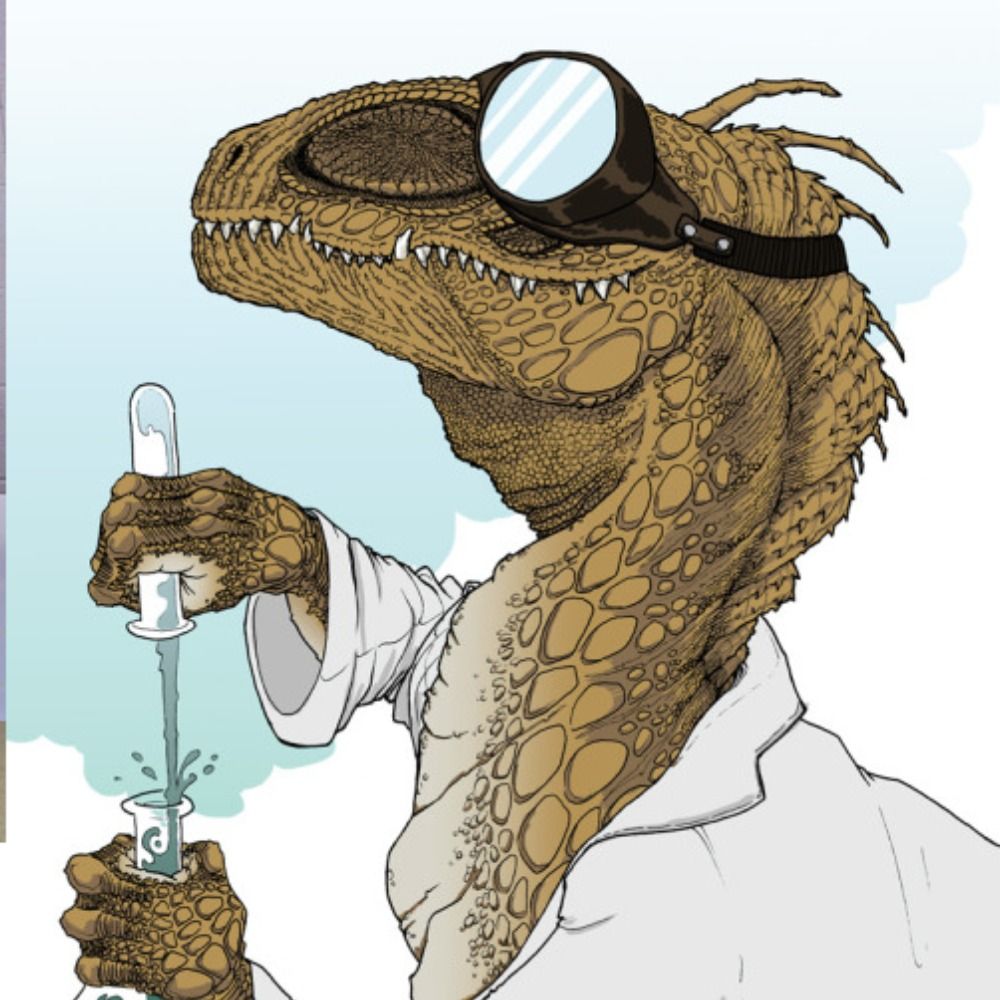
“A process which led from the amoeba to man appeared to the philosophers to be obviously a progress - though whether the amoeba would agree with this opinion is not known"
- Bertrand Russell, 1976.
Time-lapse video of Vampyrella lateritia eating Spirogyra algae from Science Source/Oliver Skibbe. 🦠
- Bertrand Russell, 1976.
Time-lapse video of Vampyrella lateritia eating Spirogyra algae from Science Source/Oliver Skibbe. 🦠
December 17, 2025 at 4:53 PM
“A process which led from the amoeba to man appeared to the philosophers to be obviously a progress - though whether the amoeba would agree with this opinion is not known"
- Bertrand Russell, 1976.
Time-lapse video of Vampyrella lateritia eating Spirogyra algae from Science Source/Oliver Skibbe. 🦠
- Bertrand Russell, 1976.
Time-lapse video of Vampyrella lateritia eating Spirogyra algae from Science Source/Oliver Skibbe. 🦠
Reposted by Leo

The world's richest 0.001% now control 3x as much wealth as the entire bottom half of humanity combined.
56,000 wealthy individuals have more than roughly 4 billion people.
Read that back.
56,000 wealthy individuals have more than roughly 4 billion people.
Read that back.

Just 0.001% hold three times the wealth of poorest half of humanity, report finds
Data from World Inequality Report also showed top 10% of income-earners earn more than the other 90%
www.theguardian.com
December 12, 2025 at 7:15 PM
The world's richest 0.001% now control 3x as much wealth as the entire bottom half of humanity combined.
56,000 wealthy individuals have more than roughly 4 billion people.
Read that back.
56,000 wealthy individuals have more than roughly 4 billion people.
Read that back.
Reposted by Leo
A global view of human centromere variation and evolution https://www.biorxiv.org/content/10.64898/2025.12.09.693231v1
December 12, 2025 at 3:36 AM
A global view of human centromere variation and evolution https://www.biorxiv.org/content/10.64898/2025.12.09.693231v1
Reposted by Leo

A study in Nature analyzes 154 genomes from 21 animal phyla and reconstructs ancestral adaptations to life on land across 11 distinct events, providing strong evidence of convergent genomic evolution and repeated terrestrial colonization in the animal kingdom. go.nature.com/4pHIwYF 🧪 #evolution

December 6, 2025 at 2:25 AM
A study in Nature analyzes 154 genomes from 21 animal phyla and reconstructs ancestral adaptations to life on land across 11 distinct events, providing strong evidence of convergent genomic evolution and repeated terrestrial colonization in the animal kingdom. go.nature.com/4pHIwYF 🧪 #evolution
Reposted by Leo

Researchers studied 28 new genomes from Africa and found that southern Africans were basically isolated for a long period of time. 🧪🏺

'An extreme end of human genetic variation': Ancient humans were isolated in southern Africa for nearly 100,000 years, and their genetics are stunningly different
Ancient genomes from southern Africa show that people evolved in isolation for upward of 100,000 years.
www.livescience.com
December 3, 2025 at 4:04 PM
Researchers studied 28 new genomes from Africa and found that southern Africans were basically isolated for a long period of time. 🧪🏺
Isso aqui é gigante. Um nível de ação governamental sensacional. Um processo longo de atuação do ministério da saúde que deveria servir modelo para muita coisa

Brasil elimina transmissão do HIV da mãe para o bebê

Brasil elimina transmissão do HIV da mãe para o bebê e reduz taxa de mortalidade, diz ministério
Índice de contaminação vertical ficou abaixo de 2%, interrompendo a infecção de bebês
www1.folha.uol.com.br
December 2, 2025 at 6:16 PM
Isso aqui é gigante. Um nível de ação governamental sensacional. Um processo longo de atuação do ministério da saúde que deveria servir modelo para muita coisa
Reposted by Leo
A paper in Nature shows that a 3.4-million-year-old partial foot found in Ethiopia in 2009 belongs to an ancient human relative named Australopithecus deyiremeda, a more primitive species of Australopithecus than the famous ‘Lucy’ (A. afarensis). go.nature.com/49BkCZY 🏺 🧪

November 26, 2025 at 8:47 PM
A paper in Nature shows that a 3.4-million-year-old partial foot found in Ethiopia in 2009 belongs to an ancient human relative named Australopithecus deyiremeda, a more primitive species of Australopithecus than the famous ‘Lucy’ (A. afarensis). go.nature.com/49BkCZY 🏺 🧪
Reposted by Leo


Reposted by Leo

CRISPR-Cas–mediated heritable chromosome fusions in Arabidopsis | Science www.science.org/doi/10.1126/...
Very nice work from Holger Puchta & colleagues
Very nice work from Holger Puchta & colleagues

CRISPR-Cas–mediated heritable chromosome fusions in Arabidopsis
The genome of Arabidopsis thaliana consists of 10 chromosomes. By inducing CRISPR-Cas–mediated breaks at subcentromeric and subtelomeric sequences, we fused entire chromosome arms, obtaining two eight...
www.science.org
November 20, 2025 at 8:47 PM
CRISPR-Cas–mediated heritable chromosome fusions in Arabidopsis | Science www.science.org/doi/10.1126/...
Very nice work from Holger Puchta & colleagues
Very nice work from Holger Puchta & colleagues