


Manlio De Domenico
@manlius.bsky.social
Emergence, Networks & Complexity | Collective Behavior(s) from Cells to Societies 🧬🦠🧠🌇
Prof. @UniPadova, Galileo's University | Lab: @comunelab.bsky.social | Web: https://linktr.ee/manlius
Thoughts at manlius.substack.com
Prof. @UniPadova, Galileo's University | Lab: @comunelab.bsky.social | Web: https://linktr.ee/manlius
Thoughts at manlius.substack.com
Pinned
Manlio De Domenico
@manlius.bsky.social
· Nov 18
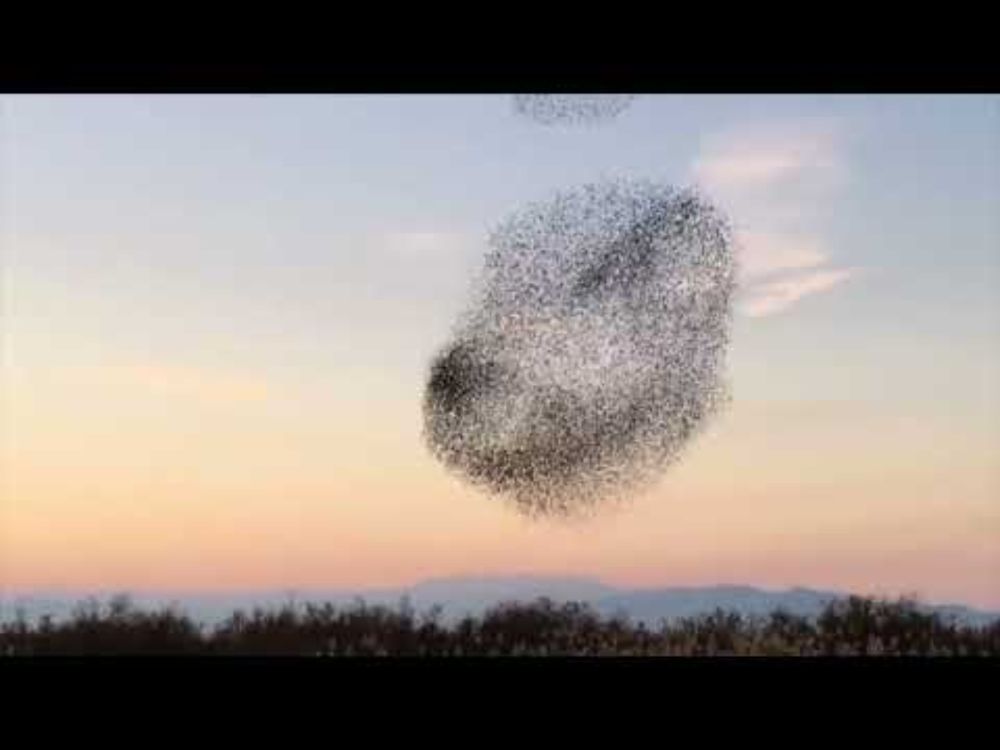
Complexity Thoughts
YouTube video by Manlio De Domenico
www.youtube.com
Why #ComplexitySci is fascinating?
#ComplexSystems are ubiquitous!🧬🦠🧫🔬🐠🦜🧠🌪️🧪
And provide an analytical framework to study the behavior of phys, bio, eco, human & artificial systems #AcademicSky
Curious? I write about them 👉 #ComplexityThoughts: manlius.substack.com
www.youtube.com/watch?v=G8Sv...
#ComplexSystems are ubiquitous!🧬🦠🧫🔬🐠🦜🧠🌪️🧪
And provide an analytical framework to study the behavior of phys, bio, eco, human & artificial systems #AcademicSky
Curious? I write about them 👉 #ComplexityThoughts: manlius.substack.com
www.youtube.com/watch?v=G8Sv...
yeast Candida albicans and the bacterium Enterococcus faecalis can form a dangerous alliance under certain conditions: Instead of fighting each other, they can amplify their impact and cause significantly more severe cell damage together than alone 🧪🌐🦠
www.pnas.org/doi/10.1073/...
www.pnas.org/doi/10.1073/...

Synergistic interactions between Candida albicans and Enterococcus faecalis promote toxin-dependent host cell damage | PNAS
The fungus Candida albicans and the Gram-positive bacterium Enterococcus faecalis
share mucosal niches in the human body. As opportunistic pathogen...
www.pnas.org
February 9, 2026 at 6:34 AM
yeast Candida albicans and the bacterium Enterococcus faecalis can form a dangerous alliance under certain conditions: Instead of fighting each other, they can amplify their impact and cause significantly more severe cell damage together than alone 🧪🌐🦠
www.pnas.org/doi/10.1073/...
www.pnas.org/doi/10.1073/...
Glad you liked it, Ricard!
A lot of this work was inspired by your decades-long work and our amazing informal discussions.
Thank you 🙏
A lot of this work was inspired by your decades-long work and our amazing informal discussions.
Thank you 🙏
February 7, 2026 at 1:33 PM
Glad you liked it, Ricard!
A lot of this work was inspired by your decades-long work and our amazing informal discussions.
Thank you 🙏
A lot of this work was inspired by your decades-long work and our amazing informal discussions.
Thank you 🙏
Reposted by Manlio De Domenico
“The Doomsday Clock is a design that warns the public about how close we are to destroying our world with dangerous technologies of our own making. It is a metaphor, a reminder of the perils we must address if we are to survive on the planet.”
thebulletin.org/doomsday-clo...
2/2
thebulletin.org/doomsday-clo...
2/2

2026 Doomsday Clock Statement - Bulletin of the Atomic Scientists
It is 85 seconds to midnight.
thebulletin.org
February 6, 2026 at 9:56 PM
“The Doomsday Clock is a design that warns the public about how close we are to destroying our world with dangerous technologies of our own making. It is a metaphor, a reminder of the perils we must address if we are to survive on the planet.”
thebulletin.org/doomsday-clo...
2/2
thebulletin.org/doomsday-clo...
2/2
“The Doomsday Clock is a design that warns the public about how close we are to destroying our world with dangerous technologies of our own making. It is a metaphor, a reminder of the perils we must address if we are to survive on the planet.”
thebulletin.org/doomsday-clo...
2/2
thebulletin.org/doomsday-clo...
2/2
2026 Doomsday Clock Statement - Bulletin of the Atomic Scientists
It is 85 seconds to midnight.
thebulletin.org
February 6, 2026 at 9:56 PM
“The Doomsday Clock is a design that warns the public about how close we are to destroying our world with dangerous technologies of our own making. It is a metaphor, a reminder of the perils we must address if we are to survive on the planet.”
thebulletin.org/doomsday-clo...
2/2
thebulletin.org/doomsday-clo...
2/2
In 1953 the doomsday clock reached 2 minutes to “midnight”, the closest ever in the 20th century.
One week ago, because of the worldwide spread nonsense, it reached 85s, the closest ever.
1/2
One week ago, because of the worldwide spread nonsense, it reached 85s, the closest ever.
1/2

February 6, 2026 at 9:56 PM
In 1953 the doomsday clock reached 2 minutes to “midnight”, the closest ever in the 20th century.
One week ago, because of the worldwide spread nonsense, it reached 85s, the closest ever.
1/2
One week ago, because of the worldwide spread nonsense, it reached 85s, the closest ever.
1/2
Reposted by Manlio De Domenico

👀 Global maps of 37 plant #FunctionalTraits as defined in the TRY Plant Trait Database with a resolution of 1 km and a global extent 🌐🧪 📏🧮🌮 global-traits.projects.earthengine.app/view/global-...
Citizen science-powered global trait maps
global-traits.projects.earthengine.app
February 6, 2026 at 6:24 PM
👀 Global maps of 37 plant #FunctionalTraits as defined in the TRY Plant Trait Database with a resolution of 1 km and a global extent 🌐🧪 📏🧮🌮 global-traits.projects.earthengine.app/view/global-...
We should keep trying, though. It's worth the effort.
February 4, 2026 at 8:05 PM
We should keep trying, though. It's worth the effort.
As per the other answer, the point of our paper was to quantify the impact of some biases. Not claiming who did that first: you are the mobility guy!
February 4, 2026 at 7:39 PM
As per the other answer, the point of our paper was to quantify the impact of some biases. Not claiming who did that first: you are the mobility guy!
What a nice and fruitful discussion with @pessoabrain.bsky.social and many other colleagues about one of his latest papers: www.sciencedirect.com/science/arti...
I think that we need more interdisciplinary discussions, w/ the same positive and open mind I have seen in the last 2h.
#ComplexSystems
I think that we need more interdisciplinary discussions, w/ the same positive and open mind I have seen in the last 2h.
#ComplexSystems
February 4, 2026 at 6:49 PM
What a nice and fruitful discussion with @pessoabrain.bsky.social and many other colleagues about one of his latest papers: www.sciencedirect.com/science/arti...
I think that we need more interdisciplinary discussions, w/ the same positive and open mind I have seen in the last 2h.
#ComplexSystems
I think that we need more interdisciplinary discussions, w/ the same positive and open mind I have seen in the last 2h.
#ComplexSystems
Hi Esteban! We made a similar work (concerning the biases) with @ricgallotti.bsky.social and Marc Barthélemy not much time ago: www.nature.com/articles/s42...

Distorted insights from human mobility data - Communications Physics
Human mobility data is crucial for many applications, but researchers often rely on single datasets assuming universal validity. Comparing 7 diverse sources across 145 countries, we find significant d...
www.nature.com
February 4, 2026 at 4:57 PM
Hi Esteban! We made a similar work (concerning the biases) with @ricgallotti.bsky.social and Marc Barthélemy not much time ago: www.nature.com/articles/s42...
Reposted by Manlio De Domenico

You didn't know you needed quantum chess until you discovered its existence.
It can't be played in the physical world, but computers can make it possible.
youtu.be/PNyrnKIywZg?...
It can't be played in the physical world, but computers can make it possible.
youtu.be/PNyrnKIywZg?...

Quantum Chess Demo 2
YouTube video by N
youtu.be
February 2, 2026 at 7:54 PM
You didn't know you needed quantum chess until you discovered its existence.
It can't be played in the physical world, but computers can make it possible.
youtu.be/PNyrnKIywZg?...
It can't be played in the physical world, but computers can make it possible.
youtu.be/PNyrnKIywZg?...
Beautiful landscapes.

February 1, 2026 at 5:09 PM
Beautiful landscapes.
Yesterday, 3,000+ people got #ComplexityThoughts Issue 75 in their inbox.
Want the next one? Subscribe: open.substack.com/pub/manlius/...
#ComplexSystems 🧪🧬🦠🌐
As usual, also on:
🎧 Spotify: creators.spotify.com/pod/show/com...
🎧 Apple: podcasts.apple.com/us/podcast/c...
Want the next one? Subscribe: open.substack.com/pub/manlius/...
#ComplexSystems 🧪🧬🦠🌐
As usual, also on:
🎧 Spotify: creators.spotify.com/pod/show/com...
🎧 Apple: podcasts.apple.com/us/podcast/c...

January 31, 2026 at 4:19 PM
Yesterday, 3,000+ people got #ComplexityThoughts Issue 75 in their inbox.
Want the next one? Subscribe: open.substack.com/pub/manlius/...
#ComplexSystems 🧪🧬🦠🌐
As usual, also on:
🎧 Spotify: creators.spotify.com/pod/show/com...
🎧 Apple: podcasts.apple.com/us/podcast/c...
Want the next one? Subscribe: open.substack.com/pub/manlius/...
#ComplexSystems 🧪🧬🦠🌐
As usual, also on:
🎧 Spotify: creators.spotify.com/pod/show/com...
🎧 Apple: podcasts.apple.com/us/podcast/c...
Why is this relevant?
Well, if we spend X to fund a project and (as "the scientific ecosystem") we spend Y>X to assign it, then we are losing at least an amount X of money that could fund more/other projects.
This is inefficiency at its best and as scientist we should not tolerate it.
Well, if we spend X to fund a project and (as "the scientific ecosystem") we spend Y>X to assign it, then we are losing at least an amount X of money that could fund more/other projects.
This is inefficiency at its best and as scientist we should not tolerate it.
January 28, 2026 at 1:03 PM
Why is this relevant?
Well, if we spend X to fund a project and (as "the scientific ecosystem") we spend Y>X to assign it, then we are losing at least an amount X of money that could fund more/other projects.
This is inefficiency at its best and as scientist we should not tolerate it.
Well, if we spend X to fund a project and (as "the scientific ecosystem") we spend Y>X to assign it, then we are losing at least an amount X of money that could fund more/other projects.
This is inefficiency at its best and as scientist we should not tolerate it.
"In other words, European taxpayers will have spent more on the funding process than on the funding itself, and the scientific ecosystem has been drained"
The situation is rapidly becoming unsustainable: the current research funding scheme does not work.
www.nature.com/articles/d41...
The situation is rapidly becoming unsustainable: the current research funding scheme does not work.
www.nature.com/articles/d41...

Point of no returns: researchers are crossing a threshold in the fight for funding
With so little money to go round, the costs of competing for grants can exceed what the grants are worth. When that happens, nobody wins.
www.nature.com
January 28, 2026 at 12:59 PM
"In other words, European taxpayers will have spent more on the funding process than on the funding itself, and the scientific ecosystem has been drained"
The situation is rapidly becoming unsustainable: the current research funding scheme does not work.
www.nature.com/articles/d41...
The situation is rapidly becoming unsustainable: the current research funding scheme does not work.
www.nature.com/articles/d41...
The green circles are known astronomical objects recognized inside my photo (just 340s exposure; ISO 320) by the software.
Orange circles are detected “stars” (broadly speaking) @siril.org
Orange circles are detected “stars” (broadly speaking) @siril.org
January 27, 2026 at 9:29 PM
The green circles are known astronomical objects recognized inside my photo (just 340s exposure; ISO 320) by the software.
Orange circles are detected “stars” (broadly speaking) @siril.org
Orange circles are detected “stars” (broadly speaking) @siril.org
After weeks w/ cloudy/rainy nights, finally I got a clean sky. But.. with neighbors' lights and half 🌗
I could not 📷 that much: pointed my Nikon D750 + 300mm lens to the Markarian's chain anyway. And got dozens of galaxies 50M lights years far away & a black hole 😜!
@siril.org #Astrophotography
I could not 📷 that much: pointed my Nikon D750 + 300mm lens to the Markarian's chain anyway. And got dozens of galaxies 50M lights years far away & a black hole 😜!
@siril.org #Astrophotography

January 27, 2026 at 9:29 PM
After weeks w/ cloudy/rainy nights, finally I got a clean sky. But.. with neighbors' lights and half 🌗
I could not 📷 that much: pointed my Nikon D750 + 300mm lens to the Markarian's chain anyway. And got dozens of galaxies 50M lights years far away & a black hole 😜!
@siril.org #Astrophotography
I could not 📷 that much: pointed my Nikon D750 + 300mm lens to the Markarian's chain anyway. And got dozens of galaxies 50M lights years far away & a black hole 😜!
@siril.org #Astrophotography

Questa foto di un mese fa è un test del mio nuovo astrografo (un piccolo telescopio per fare fotografie). Sono 20 minuti di posa su un gruppo di tre galassie che ha il nomignolo di Tripletto del Leone. L'ingrandimento è poco, ci sono foto infinitamente migliori, ma il punto non è questo...
⬇️
⬇️

January 24, 2026 at 6:58 PM
Reposted by Manlio De Domenico
🚨 New paper from @comunelab.bsky.social ! 🧪🧠
If you do connectome analysis from correlations, you’re probably averaging at some point (and you probably don't give it much thought).
But when is it OK?
👉 www.nature.com/articles/s42...
🧵 1/
If you do connectome analysis from correlations, you’re probably averaging at some point (and you probably don't give it much thought).
But when is it OK?
👉 www.nature.com/articles/s42...
🧵 1/

January 22, 2026 at 7:52 AM
🚨 New paper from @comunelab.bsky.social ! 🧪🧠
If you do connectome analysis from correlations, you’re probably averaging at some point (and you probably don't give it much thought).
But when is it OK?
👉 www.nature.com/articles/s42...
🧵 1/
If you do connectome analysis from correlations, you’re probably averaging at some point (and you probably don't give it much thought).
But when is it OK?
👉 www.nature.com/articles/s42...
🧵 1/
New paper led by Alessandra Corso and @valedand.bsky.social at @comunelab.bsky.social just out: www.nature.com/articles/s42...
#ComplexSystems #HumanBrain #NetworkScience #CoMuNeLab
/fin
#ComplexSystems #HumanBrain #NetworkScience #CoMuNeLab
/fin
January 22, 2026 at 7:52 AM
New paper led by Alessandra Corso and @valedand.bsky.social at @comunelab.bsky.social just out: www.nature.com/articles/s42...
#ComplexSystems #HumanBrain #NetworkScience #CoMuNeLab
/fin
#ComplexSystems #HumanBrain #NetworkScience #CoMuNeLab
/fin
Using generative models and inference, we tested this on hundreds of reconstructed brain networks (structural + functional), across densities and measures (modularity, clustering, “small-world index“, “efficiency“): some “clean” group-level conclusions can be pipeline artifacts.
4/
4/
January 22, 2026 at 7:52 AM
Using generative models and inference, we tested this on hundreds of reconstructed brain networks (structural + functional), across densities and measures (modularity, clustering, “small-world index“, “efficiency“): some “clean” group-level conclusions can be pipeline artifacts.
4/
4/
These are often not equivalent and once you add thresholding / density choices, the bias can become large enough to change what you think you’re seeing, especially for functional connectomes.
We propose a practical way to monitor and control for this bias.
3/
We propose a practical way to monitor and control for this bias.
3/
January 22, 2026 at 7:52 AM
These are often not equivalent and once you add thresholding / density choices, the bias can become large enough to change what you think you’re seeing, especially for functional connectomes.
We propose a practical way to monitor and control for this bias.
3/
We propose a practical way to monitor and control for this bias.
3/
There are (at least) two very different “averages” people mix all the time:
- Average first: average correlation matrices across subjects → threshold/binarize → compute modularity/clustering/etc.
- Average last: compute the metric on each subject's network → then average the metric.
2/
- Average first: average correlation matrices across subjects → threshold/binarize → compute modularity/clustering/etc.
- Average last: compute the metric on each subject's network → then average the metric.
2/

January 22, 2026 at 7:52 AM
There are (at least) two very different “averages” people mix all the time:
- Average first: average correlation matrices across subjects → threshold/binarize → compute modularity/clustering/etc.
- Average last: compute the metric on each subject's network → then average the metric.
2/
- Average first: average correlation matrices across subjects → threshold/binarize → compute modularity/clustering/etc.
- Average last: compute the metric on each subject's network → then average the metric.
2/