



Melissa Kutner
@melissannbee.bsky.social
Ancient Studies professor at UMBC. Mostly Roman things. Views my own.
Pinned
Melissa Kutner
@melissannbee.bsky.social
· Dec 19
PEETERS ONLINE JOURNALS
poj.peeters-leuven.be
My paper, "Public Granaries and Private Transactions: Infrastructure and Standardization," is now out in Ancient Society! Standard measures were never imposed by the Romans across Egypt. But I argue that taxation infrastructure, especially public granaries... poj.peeters-leuven.be/content.php?...
Devouring Edith Wharton‘s “The Custom of the Country” as though it’s a thriller
December 22, 2025 at 3:09 AM
Devouring Edith Wharton‘s “The Custom of the Country” as though it’s a thriller

Reposted by Melissa Kutner

These depictions and their "abbreviations" seem to follow some kind of convention, or even standardisation. This could imho indeed speak in favour of a #communication system for storing and transmitting specific content and #knowledge.
December 21, 2025 at 1:35 PM
These depictions and their "abbreviations" seem to follow some kind of convention, or even standardisation. This could imho indeed speak in favour of a #communication system for storing and transmitting specific content and #knowledge.
Reposted by Melissa Kutner
And sometimes there are even #symbolic substitutes for larger, more complex depictions. Like, for example, the #bucranium ("ox head") instead of an aurochs in its entirety, arrow-like zigzag lines instead of snakes, or large birds reduced to a few lines.

December 21, 2025 at 1:34 PM
And sometimes there are even #symbolic substitutes for larger, more complex depictions. Like, for example, the #bucranium ("ox head") instead of an aurochs in its entirety, arrow-like zigzag lines instead of snakes, or large birds reduced to a few lines.
Reposted by Melissa Kutner
These depictions are well fitting into PPN #iconography known from a variety of typical find groups - apparently shared over a wider region and forming a common set of symbols within what seems a large-scale communication respectively exchange network.
www.dainst.blog/the-tepe-tel...
www.dainst.blog/the-tepe-tel...

December 21, 2025 at 1:32 PM
These depictions are well fitting into PPN #iconography known from a variety of typical find groups - apparently shared over a wider region and forming a common set of symbols within what seems a large-scale communication respectively exchange network.
www.dainst.blog/the-tepe-tel...
www.dainst.blog/the-tepe-tel...
Reposted by Melissa Kutner
These so-called stone #plaquettes (the type originally named at (and after) the site of #JerfElAhmar in modern day Syria) are a very fascinating find group in particular since they seem to serve no other purpose than indeed carrying these symbols (see e.g. 5-7 in the figure here).

December 21, 2025 at 1:27 PM
These so-called stone #plaquettes (the type originally named at (and after) the site of #JerfElAhmar in modern day Syria) are a very fascinating find group in particular since they seem to serve no other purpose than indeed carrying these symbols (see e.g. 5-7 in the figure here).
Reposted by Melissa Kutner
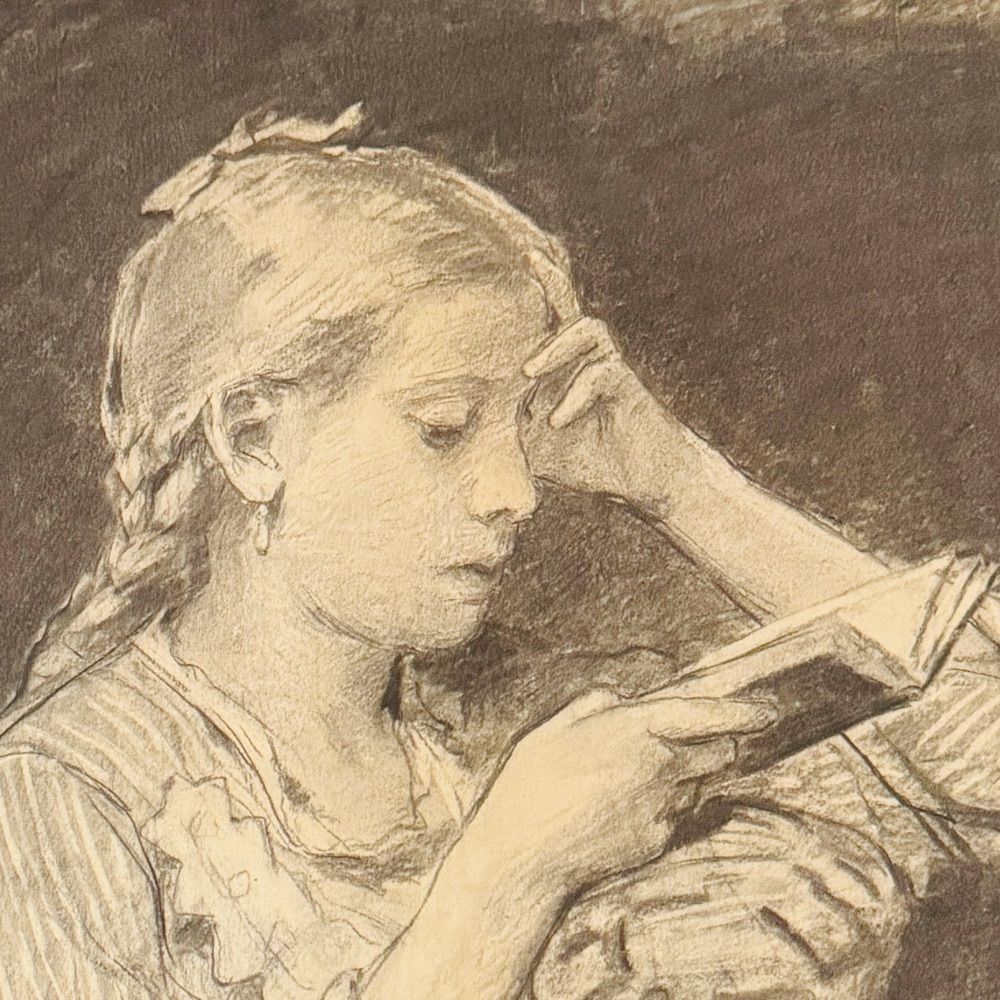
“They study not only the artifacts, but also the hands that forged them, the minds that conceived them and the hearts that loved them. Behind every object there is a person, a soul and a community…it gives a voice to the silence of history, restoring dignity to the forgotten”
December 21, 2025 at 10:20 AM
“They study not only the artifacts, but also the hands that forged them, the minds that conceived them and the hearts that loved them. Behind every object there is a person, a soul and a community…it gives a voice to the silence of history, restoring dignity to the forgotten”
Reposted by Melissa Kutner

I believe this in my soul; there is no such thing as "deserve" in academia and if you are lucky enough to have a TT academic job all you can do is to try to live up to it - this is not to take anything away from the terrific people working hard who have those jobs, but we're all on a knife's edge

Anyone who thinks anyone "deserves" an academic job is a rube and a mark, also.
December 19, 2025 at 2:36 PM
I believe this in my soul; there is no such thing as "deserve" in academia and if you are lucky enough to have a TT academic job all you can do is to try to live up to it - this is not to take anything away from the terrific people working hard who have those jobs, but we're all on a knife's edge
Reposted by Melissa Kutner

"But the correlation between school AI adoption and personal AI relationships is clear across multiple behaviors."
Ummm...this also seems bad.
Ummm...this also seems bad.

December 18, 2025 at 2:18 PM
"But the correlation between school AI adoption and personal AI relationships is clear across multiple behaviors."
Ummm...this also seems bad.
Ummm...this also seems bad.
Reposted by Melissa Kutner

Area Studies Centers at UNC shuttered due to insufficient "return on investment," unclear "metrics of success," and non-alignment with the chancellor's "priorities."
One day (soon), we will look back on the miracle of the public research university and will scarcely believe that it ever existed.
One day (soon), we will look back on the miracle of the public research university and will scarcely believe that it ever existed.


December 18, 2025 at 3:55 AM
Area Studies Centers at UNC shuttered due to insufficient "return on investment," unclear "metrics of success," and non-alignment with the chancellor's "priorities."
One day (soon), we will look back on the miracle of the public research university and will scarcely believe that it ever existed.
One day (soon), we will look back on the miracle of the public research university and will scarcely believe that it ever existed.
Reposted by Melissa Kutner

My latest for @hyperallergic.com looks at a new article in JRA on Berenike, Indo-Roman trade, and of course some pet monkeys which may have had pet piglets or kittens? 🐵 Really this is just amazing research showing us the extensive connections between the Mediterranean and India. #GlobalAntiquity

Pet Monkeys Were Popular in Ancient Rome, Burials Reveal
The recent archaeological discovery also deepens our understanding of trade networks between India and the Roman Empire.
hyperallergic.com
December 17, 2025 at 10:01 PM
My latest for @hyperallergic.com looks at a new article in JRA on Berenike, Indo-Roman trade, and of course some pet monkeys which may have had pet piglets or kittens? 🐵 Really this is just amazing research showing us the extensive connections between the Mediterranean and India. #GlobalAntiquity
A response to the problem of fake academic papers— and of course! But are you going to then check every citation in all of those papers? And every citation in THOSE cited papers? Once this slop spreads enough, it will get very hard to weed out.

Call me old fashioned, but can't folks just stop citing papers they have not personally read?
December 18, 2025 at 2:43 AM
A response to the problem of fake academic papers— and of course! But are you going to then check every citation in all of those papers? And every citation in THOSE cited papers? Once this slop spreads enough, it will get very hard to weed out.
Reposted by Melissa Kutner

the car! and that advert!!! i just think this is incredibly, perfectly funny bsky.app/profile/over...

December 16, 2025 at 9:25 AM
the car! and that advert!!! i just think this is incredibly, perfectly funny bsky.app/profile/over...
Bringing this back in honor of Hanukkah

Cute ugly depictions of elephants in manuscripts were brought up in conversation with a colleague yesterday, so here are some of my favorites of Eleazar Avaran, the younger brother of Judas Maccabeus, as he alone took down Legolas-style a Seleukid elephant in the Battle of Beth Zechariah (162 BCE).


December 16, 2025 at 2:48 AM
Bringing this back in honor of Hanukkah
Reposted by Melissa Kutner

In Google Scholar's defense it's not listing these fake journals/articles as real, but it does list them in the full text results so you can see which real articles are citing things from them
So real(?) things are picking up fake things so real people & LLMs take that as a signal that they're real
So real(?) things are picking up fake things so real people & LLMs take that as a signal that they're real
Grading and googling hallucinated citations, as one does nowadays, and now that LLMs have been around for a while, I've discovered new horrors: hallucinated journals are now appearing in Google Scholar with dozens of citations bc so many people are citing these fake things
December 15, 2025 at 9:45 PM
In Google Scholar's defense it's not listing these fake journals/articles as real, but it does list them in the full text results so you can see which real articles are citing things from them
So real(?) things are picking up fake things so real people & LLMs take that as a signal that they're real
So real(?) things are picking up fake things so real people & LLMs take that as a signal that they're real
The Roman city was an unhealthy place to be

NEW Did the #Romans harm our health? Analysis of skeletal remains from England before and during Roman occupation confirms theories that the population’s health declined under Roman occupation, but only in the urban centres.
#AntiquityThread 1/13 🧵
TW: human remains
🏺 #Archaeology
#AntiquityThread 1/13 🧵
TW: human remains
🏺 #Archaeology

December 11, 2025 at 10:04 PM
The Roman city was an unhealthy place to be
Reposted by Melissa Kutner
I went in to work today, just to visit and meet with my longterm sub. I was told that my whole 7th grade English team has been using AI this semester to grade written assignments. My sub, a retired teacher, said it's been pretty bad and she's gone back and graded them herself afterwards
December 9, 2025 at 5:23 PM
I went in to work today, just to visit and meet with my longterm sub. I was told that my whole 7th grade English team has been using AI this semester to grade written assignments. My sub, a retired teacher, said it's been pretty bad and she's gone back and graded them herself afterwards
Reposted by Melissa Kutner
She says kids ask if it's AI or her grading their stuff, and they don't like when the AI does it.
On one assignment, it counting them as not using evidence from the text if they paraphrased the text instead of using direct quotes.
On one assignment, it counting them as not using evidence from the text if they paraphrased the text instead of using direct quotes.
December 9, 2025 at 5:24 PM
She says kids ask if it's AI or her grading their stuff, and they don't like when the AI does it.
On one assignment, it counting them as not using evidence from the text if they paraphrased the text instead of using direct quotes.
On one assignment, it counting them as not using evidence from the text if they paraphrased the text instead of using direct quotes.
Reposted by Melissa Kutner
Reviewing this book got me thinking about how quantitative and archeological methods can be used to advance the history of sexuality. Not a light read, but a recommended one. Thanks to book review editor @cethompson.bsky.social for the opportunity. #histsex #histmed academic.oup.com/jhmas/advanc...

The Hidden Affliction: Sexually Transmitted Infections and Infertility in History, Simon Szreter
Simon Szreter and the other authors in the edited collection The Hidden Affliction set themselves an “extremely difficult task”: “uncovering and exploring
academic.oup.com
December 9, 2025 at 8:00 PM
Reviewing this book got me thinking about how quantitative and archeological methods can be used to advance the history of sexuality. Not a light read, but a recommended one. Thanks to book review editor @cethompson.bsky.social for the opportunity. #histsex #histmed academic.oup.com/jhmas/advanc...
Reposted by Melissa Kutner
“AI models not only point some users to false sources but also cause problems for researchers and librarians, who end up wasting their time looking for requested nonexistent records…”

AI Slop Is Spurring Record Requests for Imaginary Journals
The International Committee of the Red Cross warned that artificial intelligence models are making up research papers, journals and archives
www.scientificamerican.com
December 8, 2025 at 10:30 PM
“AI models not only point some users to false sources but also cause problems for researchers and librarians, who end up wasting their time looking for requested nonexistent records…”
Reposted by Melissa Kutner
Once again, we see that it is expensive to be poor
For example, a shock to food generates inflation 126% higher for the poorest than the richest decile; for petroleum and coal products, inflation is 54% higher for the poorest, revealing sectors where price increases have systemic distributional effects. 8/16

December 8, 2025 at 8:58 PM
Once again, we see that it is expensive to be poor
Reposted by Melissa Kutner

One argument I used to make to my students about why it was important to learn history (and historical thinking) is that someone was always going to be trying to tell you things were natural or had always been this way and that you needed to be able to see that as an exercise of power.
December 7, 2025 at 10:09 PM
One argument I used to make to my students about why it was important to learn history (and historical thinking) is that someone was always going to be trying to tell you things were natural or had always been this way and that you needed to be able to see that as an exercise of power.
The actual publication is unsurprisingly much more nuanced-- notes that the beans and fruit were being preserved, that beans were fundamental to Pompeian diet in general, and that access to the food was likely restricted. That is, food used for control of enslaved? pompeiisites.org/e-journal-de...
December 8, 2025 at 8:21 PM
The actual publication is unsurprisingly much more nuanced-- notes that the beans and fruit were being preserved, that beans were fundamental to Pompeian diet in general, and that access to the food was likely restricted. That is, food used for control of enslaved? pompeiisites.org/e-journal-de...