



Borjan (Boki) Milinković
@neuromorphicboki.bsky.social
Mathematical Neuroscientist. Biologically Inclined
Postdoc Researcher @ Destexhe Lab, CNRS, Paris-Saclay
Exploring brains and minds, in humans and machines.
consciousness . synthetic systems . emergence . computation . information . autonomy . causality
Postdoc Researcher @ Destexhe Lab, CNRS, Paris-Saclay
Exploring brains and minds, in humans and machines.
consciousness . synthetic systems . emergence . computation . information . autonomy . causality
Pinned

On biological and artificial consciousness: A case for biological computationalism
The rapid advances in the capabilities of Large Language Models (LLMs) have galvanised public and scientific debates over whether artificial systems m…
sciencedirect.com
🎊📜 NEW PAPER 📜🎊
Can we seriously build synthetic consciousness?
And if so, where do we start?
I’m super excited to present recent publication in Neuroscience & Biobehavioral Reviews where @jaanaru.bsky.social and I confront this challenge head on.
1/n
Can we seriously build synthetic consciousness?
And if so, where do we start?
I’m super excited to present recent publication in Neuroscience & Biobehavioral Reviews where @jaanaru.bsky.social and I confront this challenge head on.
1/n
Reposted by Borjan (Boki) Milinković
Our latest preprint on how regional cellular, molecular, and other forms of heterogeneity shape macroscopic wave dynamics is now out:
www.biorxiv.org/content/10.6...
For a full thread, see:
x.com/_victorbarne...
www.biorxiv.org/content/10.6...
For a full thread, see:
x.com/_victorbarne...

January 26, 2026 at 8:22 AM
Our latest preprint on how regional cellular, molecular, and other forms of heterogeneity shape macroscopic wave dynamics is now out:
www.biorxiv.org/content/10.6...
For a full thread, see:
x.com/_victorbarne...
www.biorxiv.org/content/10.6...
For a full thread, see:
x.com/_victorbarne...
Reposted by Borjan (Boki) Milinković

New preprint! with @niccolonegro.bsky.social and @liadmudrik.bsky.social
doi.org/10.31234/osf.io/ve6c5_v1
Consciousness seems central to moral status debates, from AI to animal welfare.
But is consciousness necessary for moral status? Is it sufficient?
We surveyed >1000 people to find out. 🧵 1/n
doi.org/10.31234/osf.io/ve6c5_v1
Consciousness seems central to moral status debates, from AI to animal welfare.
But is consciousness necessary for moral status? Is it sufficient?
We surveyed >1000 people to find out. 🧵 1/n


January 23, 2026 at 9:56 AM
New preprint! with @niccolonegro.bsky.social and @liadmudrik.bsky.social
doi.org/10.31234/osf.io/ve6c5_v1
Consciousness seems central to moral status debates, from AI to animal welfare.
But is consciousness necessary for moral status? Is it sufficient?
We surveyed >1000 people to find out. 🧵 1/n
doi.org/10.31234/osf.io/ve6c5_v1
Consciousness seems central to moral status debates, from AI to animal welfare.
But is consciousness necessary for moral status? Is it sufficient?
We surveyed >1000 people to find out. 🧵 1/n
Reposted by Borjan (Boki) Milinković
New preprint: arxiv.org/abs/2601.14096
@chrisfields38.bsky.social
@bhartl.bsky.social
Leo Pio-Lopez
"Remapping and navigation of an embedding space via error minimization: a fundamental organizational principle of cognition in natural and artificial systems"
🧪
@chrisfields38.bsky.social
@bhartl.bsky.social
Leo Pio-Lopez
"Remapping and navigation of an embedding space via error minimization: a fundamental organizational principle of cognition in natural and artificial systems"
🧪

Remapping and navigation of an embedding space via error minimization: a fundamental organizational principle of cognition in natural and artificial systems
The emerging field of diverse intelligence seeks an integrated view of problem-solving in agents of very different provenance, composition, and substrates. From subcellular chemical networks to swarms...
arxiv.org
January 22, 2026 at 12:59 AM
New preprint: arxiv.org/abs/2601.14096
@chrisfields38.bsky.social
@bhartl.bsky.social
Leo Pio-Lopez
"Remapping and navigation of an embedding space via error minimization: a fundamental organizational principle of cognition in natural and artificial systems"
🧪
@chrisfields38.bsky.social
@bhartl.bsky.social
Leo Pio-Lopez
"Remapping and navigation of an embedding space via error minimization: a fundamental organizational principle of cognition in natural and artificial systems"
🧪
Reposted by Borjan (Boki) Milinković

📄Very happy to share our new pre-print!! 🧠
We introduce a homeostatic inhibitory plasticity rule into the Dynamic Mean Field (DMF) model which stabilizes firing rates and expands the model’s dynamical repertoire—for example, enabling slow-wave activity.
www.biorxiv.org/content/10.6...
⬇️⬇️⬇️
1/5
We introduce a homeostatic inhibitory plasticity rule into the Dynamic Mean Field (DMF) model which stabilizes firing rates and expands the model’s dynamical repertoire—for example, enabling slow-wave activity.
www.biorxiv.org/content/10.6...
⬇️⬇️⬇️
1/5

The impact of homeostatic inhibitory plasticity in a generative biophysical model
A main characteristic of biological systems is their capacity to dynamically adapt to environmental changes. In the brain, synaptic plasticity enables the strengthening or weakening of connections bet...
www.biorxiv.org
January 14, 2026 at 7:03 PM
📄Very happy to share our new pre-print!! 🧠
We introduce a homeostatic inhibitory plasticity rule into the Dynamic Mean Field (DMF) model which stabilizes firing rates and expands the model’s dynamical repertoire—for example, enabling slow-wave activity.
www.biorxiv.org/content/10.6...
⬇️⬇️⬇️
1/5
We introduce a homeostatic inhibitory plasticity rule into the Dynamic Mean Field (DMF) model which stabilizes firing rates and expands the model’s dynamical repertoire—for example, enabling slow-wave activity.
www.biorxiv.org/content/10.6...
⬇️⬇️⬇️
1/5
What is the difference between autonomy and agency?
December 23, 2025 at 1:55 PM
What is the difference between autonomy and agency?
Thanks @pessoabrain.bsky.social !!
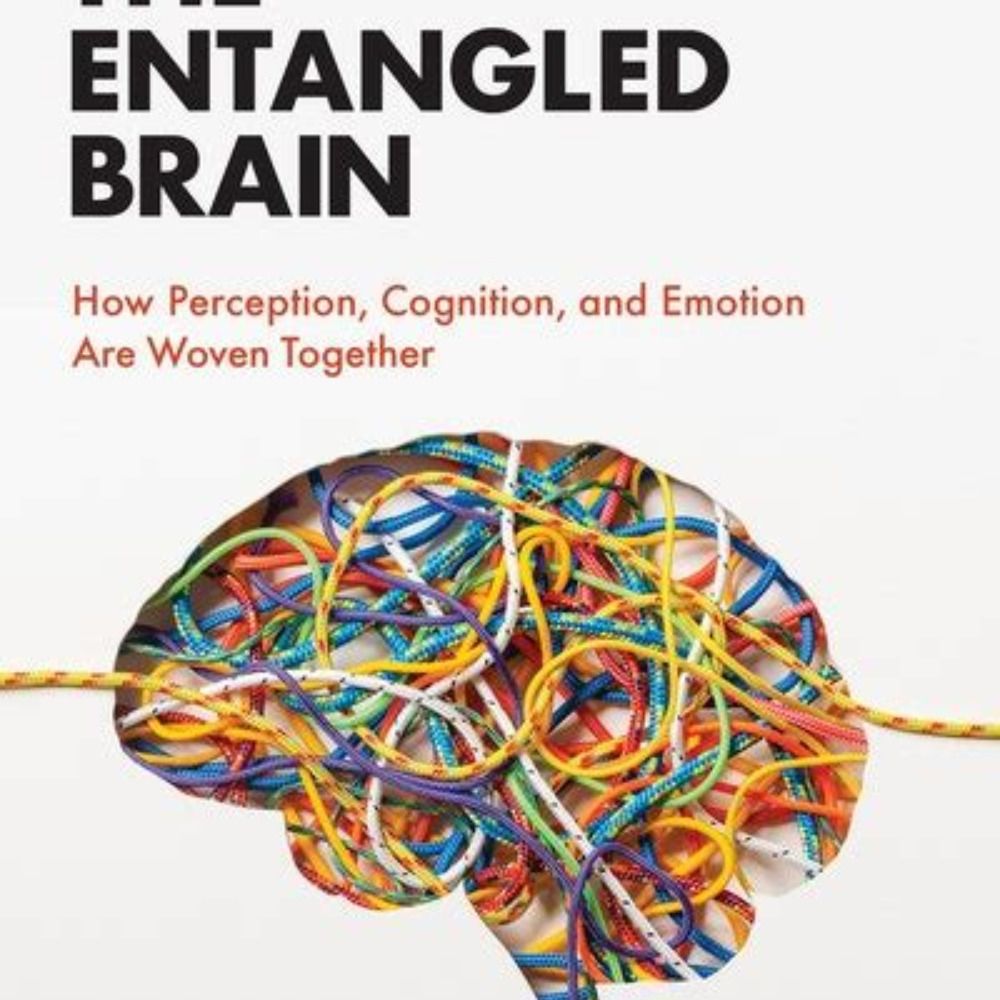
𝗢𝗻 𝗯𝗶𝗼𝗹𝗼𝗴𝗶𝗰𝗮𝗹 𝗮𝗻𝗱 𝗮𝗿𝘁𝗶𝗳𝗶𝗰𝗶𝗮𝗹 𝗰𝗼𝗻𝘀𝗰𝗶𝗼𝘂𝘀𝗻𝗲𝘀𝘀: 𝗔 𝗰𝗮𝘀𝗲 𝗳𝗼𝗿 𝗯𝗶𝗼𝗹𝗼𝗴𝗶𝗰𝗮𝗹 𝗰𝗼𝗺𝗽𝘂𝘁𝗮𝘁𝗶𝗼𝗻𝗮𝗹𝗶𝘀𝗺
Excellent paper discussing how considering biology is important to understand consciousness.
Really enjoyed this one.
doi.org/10.1016/j.ne...
#neuroskyence
Excellent paper discussing how considering biology is important to understand consciousness.
Really enjoyed this one.
doi.org/10.1016/j.ne...
#neuroskyence

December 21, 2025 at 5:55 PM
Thanks @pessoabrain.bsky.social !!
Reposted by Borjan (Boki) Milinković
🎊📜 NEW PAPER 📜🎊
Can we seriously build synthetic consciousness?
And if so, where do we start?
I’m super excited to present recent publication in Neuroscience & Biobehavioral Reviews where @jaanaru.bsky.social and I confront this challenge head on.
1/n
Can we seriously build synthetic consciousness?
And if so, where do we start?
I’m super excited to present recent publication in Neuroscience & Biobehavioral Reviews where @jaanaru.bsky.social and I confront this challenge head on.
1/n
On biological and artificial consciousness: A case for biological computationalism
The rapid advances in the capabilities of Large Language Models (LLMs) have galvanised public and scientific debates over whether artificial systems m…
sciencedirect.com
December 18, 2025 at 5:26 PM
🎊📜 NEW PAPER 📜🎊
Can we seriously build synthetic consciousness?
And if so, where do we start?
I’m super excited to present recent publication in Neuroscience & Biobehavioral Reviews where @jaanaru.bsky.social and I confront this challenge head on.
1/n
Can we seriously build synthetic consciousness?
And if so, where do we start?
I’m super excited to present recent publication in Neuroscience & Biobehavioral Reviews where @jaanaru.bsky.social and I confront this challenge head on.
1/n
🎊📜 NEW PAPER 📜🎊
Can we seriously build synthetic consciousness?
And if so, where do we start?
I’m super excited to present recent publication in Neuroscience & Biobehavioral Reviews where @jaanaru.bsky.social and I confront this challenge head on.
1/n
Can we seriously build synthetic consciousness?
And if so, where do we start?
I’m super excited to present recent publication in Neuroscience & Biobehavioral Reviews where @jaanaru.bsky.social and I confront this challenge head on.
1/n
On biological and artificial consciousness: A case for biological computationalism
The rapid advances in the capabilities of Large Language Models (LLMs) have galvanised public and scientific debates over whether artificial systems m…
sciencedirect.com
December 18, 2025 at 5:26 PM
🎊📜 NEW PAPER 📜🎊
Can we seriously build synthetic consciousness?
And if so, where do we start?
I’m super excited to present recent publication in Neuroscience & Biobehavioral Reviews where @jaanaru.bsky.social and I confront this challenge head on.
1/n
Can we seriously build synthetic consciousness?
And if so, where do we start?
I’m super excited to present recent publication in Neuroscience & Biobehavioral Reviews where @jaanaru.bsky.social and I confront this challenge head on.
1/n
Reposted by Borjan (Boki) Milinković

Under challenging conditions, human vision turns into iterative problem solving. Typical deep learning algorithms don't do this.
Our paper out now in Plos Computational Biology journals.plos.org/ploscompbiol...
work led by @tarunkhajuria.bsky.social
#visionscience #neuroAI
Our paper out now in Plos Computational Biology journals.plos.org/ploscompbiol...
work led by @tarunkhajuria.bsky.social
#visionscience #neuroAI

Comparing a computational model of visual problem solving with human vision on a difficult vision task
Author summary Human vision is not just about passively receiving information from the environment. Rather, it also involves actively making sense of what we see. When faced with unclear or incomplete...
journals.plos.org
December 10, 2025 at 6:48 PM
Under challenging conditions, human vision turns into iterative problem solving. Typical deep learning algorithms don't do this.
Our paper out now in Plos Computational Biology journals.plos.org/ploscompbiol...
work led by @tarunkhajuria.bsky.social
#visionscience #neuroAI
Our paper out now in Plos Computational Biology journals.plos.org/ploscompbiol...
work led by @tarunkhajuria.bsky.social
#visionscience #neuroAI
Reposted by Borjan (Boki) Milinković

Preprint time:
“Symmetries at the origin of hierarchical emergence”
arxiv.org/abs/2512.00984
On how symmetries generate hierarchical macroscales and shape the structure of our beliefs, making high-dimensional inference tractable
“Symmetries at the origin of hierarchical emergence”
arxiv.org/abs/2512.00984
On how symmetries generate hierarchical macroscales and shape the structure of our beliefs, making high-dimensional inference tractable

Symmetries at the origin of hierarchical emergence
Many systems of interest exhibit nested emergent layers with their own rules and regularities, and our knowledge about them seems naturally organised around these levels. This paper proposes that this...
arxiv.org
December 2, 2025 at 12:59 PM
Preprint time:
“Symmetries at the origin of hierarchical emergence”
arxiv.org/abs/2512.00984
On how symmetries generate hierarchical macroscales and shape the structure of our beliefs, making high-dimensional inference tractable
“Symmetries at the origin of hierarchical emergence”
arxiv.org/abs/2512.00984
On how symmetries generate hierarchical macroscales and shape the structure of our beliefs, making high-dimensional inference tractable
Reposted by Borjan (Boki) Milinković

🚨 New preprint on cortical slowing, stroke, and attention
**Sleep-like slow waves in wakefulness index post-stroke behavioural alterations**
Link:
www.biorxiv.org/content/10.1...
@dreamteamicm.bsky.social @institutducerveau.bsky.social
🧠🧪💤
**Sleep-like slow waves in wakefulness index post-stroke behavioural alterations**
Link:
www.biorxiv.org/content/10.1...
@dreamteamicm.bsky.social @institutducerveau.bsky.social
🧠🧪💤

Sleep-like slow waves in wakefulness index post-stroke behavioural alterations
Increases in high-amplitude, low-frequency EEG oscillations during non-rapid eye movement (NREM) sleep serve as markers of neuronal silencing, which disrupts functional connectivity and is associated ...
www.biorxiv.org
December 2, 2025 at 3:34 PM
🚨 New preprint on cortical slowing, stroke, and attention
**Sleep-like slow waves in wakefulness index post-stroke behavioural alterations**
Link:
www.biorxiv.org/content/10.1...
@dreamteamicm.bsky.social @institutducerveau.bsky.social
🧠🧪💤
**Sleep-like slow waves in wakefulness index post-stroke behavioural alterations**
Link:
www.biorxiv.org/content/10.1...
@dreamteamicm.bsky.social @institutducerveau.bsky.social
🧠🧪💤
This place..
November 25, 2025 at 1:30 PM
This place..
The process of writing feels like a never-ending process of not being able to deliver. A constant regurgitation of ideas that one is never satisfied with once vomited out.
It is not satisfaction that deems the work complete, but the inability to stomach the bile any longer.
It is not satisfaction that deems the work complete, but the inability to stomach the bile any longer.
November 23, 2025 at 12:13 PM
The process of writing feels like a never-ending process of not being able to deliver. A constant regurgitation of ideas that one is never satisfied with once vomited out.
It is not satisfaction that deems the work complete, but the inability to stomach the bile any longer.
It is not satisfaction that deems the work complete, but the inability to stomach the bile any longer.
Beeping the hive-mind: Has there been anything published as an exposition of, *if* and *how* GNWT aligns with functional computationalism? ..Or is it primarily based on unofficially assumed relations?
November 22, 2025 at 8:36 PM
Beeping the hive-mind: Has there been anything published as an exposition of, *if* and *how* GNWT aligns with functional computationalism? ..Or is it primarily based on unofficially assumed relations?
Doom scrolling BlueSky recently, I love that @earlkmiller.bsky.social single-handedly stirred you all.
..On whichever side of the argument you sit on. ;-)
Keeping it Punk whilst retaining rigour. Solid move, if you ask me.
..On whichever side of the argument you sit on. ;-)
Keeping it Punk whilst retaining rigour. Solid move, if you ask me.
November 20, 2025 at 6:05 PM
Doom scrolling BlueSky recently, I love that @earlkmiller.bsky.social single-handedly stirred you all.
..On whichever side of the argument you sit on. ;-)
Keeping it Punk whilst retaining rigour. Solid move, if you ask me.
..On whichever side of the argument you sit on. ;-)
Keeping it Punk whilst retaining rigour. Solid move, if you ask me.
Reposted by Borjan (Boki) Milinković

If we continue like this, a degree will soon be nothing more than a driving licence for AI.
November 20, 2025 at 1:03 PM
If we continue like this, a degree will soon be nothing more than a driving licence for AI.
This looks really nice!

1. New preprint resolving a conundrum in systems neuroscience with an AI scientist, and humans Reilly Tilbury, Dabin Kwon, @haydari.bsky.social, @jacobmratliff.bsky.social, @bio-emergent.bsky.social, @carandinilab.net, @kevinjmiller.bsky.social, @neurokim.bsky.social
www.biorxiv.org/content/10.1...
www.biorxiv.org/content/10.1...

Characterizing neuronal population geometry with AI equation discovery
The visual cortex contains millions of neurons, whose combined activity forms a population code representing visual stimuli. There is, however, a discrepancy between our understanding of this code at ...
www.biorxiv.org
November 16, 2025 at 4:55 PM
This looks really nice!
Reposted by Borjan (Boki) Milinković

I am super happy to share that our project on training biophysical models with Jaxley is now published in Nature Methods: www.nature.com/articles/s41...

Jaxley: differentiable simulation enables large-scale training of detailed biophysical models of neural dynamics - Nature Methods
Jaxley is a versatile platform for biophysical modeling in neuroscience. It allows efficiently simulating large-scale biophysical models on CPUs, GPUs and TPUs. Model parameters can be optimized with ...
www.nature.com
November 13, 2025 at 12:38 PM
I am super happy to share that our project on training biophysical models with Jaxley is now published in Nature Methods: www.nature.com/articles/s41...
Wow

What is the most profitable industry in the world, this side of the law? Not oil, not IT, not pharma.
It's *scientific publishing*.
We call this the Drain of Scientific Publishing.
Paper: arxiv.org/abs/2511.04820
Background: doi.org/10.1162/qss_...
Thread @markhanson.fediscience.org.ap.brid.gy 👇
It's *scientific publishing*.
We call this the Drain of Scientific Publishing.
Paper: arxiv.org/abs/2511.04820
Background: doi.org/10.1162/qss_...
Thread @markhanson.fediscience.org.ap.brid.gy 👇
November 12, 2025 at 12:06 PM
Wow
Reposted by Borjan (Boki) Milinković

Our new preprint on the FOODEEG open dataset is out! EEG recordings and behavioural responses on food cognition tasks for 117 participants will be made publicly available 🧠 @danfeuerriegel.bsky.social @tgro.bsky.social
www.biorxiv.org/content/10.1...
www.biorxiv.org/content/10.1...

FOODEEG: An open dataset of human electroencephalographic and behavioural responses to food images
Investigating the neurocognitive mechanisms underlying food choices has the potential to advance our understanding of eating behaviour and inform health-targeted interventions and policy. Large, publi...
www.biorxiv.org
November 10, 2025 at 11:34 PM
Our new preprint on the FOODEEG open dataset is out! EEG recordings and behavioural responses on food cognition tasks for 117 participants will be made publicly available 🧠 @danfeuerriegel.bsky.social @tgro.bsky.social
www.biorxiv.org/content/10.1...
www.biorxiv.org/content/10.1...
Reposted by Borjan (Boki) Milinković
Our School is recruiting! Come and join a great team
@MonashUni
careers.pageuppeople.com/513/cw/en/jo...
careers.pageuppeople.com/513/cw/en/jo...
careers.pageuppeople.com/513/cw/en/jo...
@MonashUni
careers.pageuppeople.com/513/cw/en/jo...
careers.pageuppeople.com/513/cw/en/jo...
careers.pageuppeople.com/513/cw/en/jo...
Job Search
careers.pageuppeople.com
November 4, 2025 at 12:08 AM
Our School is recruiting! Come and join a great team
@MonashUni
careers.pageuppeople.com/513/cw/en/jo...
careers.pageuppeople.com/513/cw/en/jo...
careers.pageuppeople.com/513/cw/en/jo...
@MonashUni
careers.pageuppeople.com/513/cw/en/jo...
careers.pageuppeople.com/513/cw/en/jo...
careers.pageuppeople.com/513/cw/en/jo...
Reposted by Borjan (Boki) Milinković

🚨New spotlight paper at Neurips 2025🚨
We show that in sign-diverse networks, inherent non-gradient “curl” terms arise, and can, depending on network architecture, destabilize gradient-descent solutions or paradoxically accelerate learning beyond pure gradient flow.
🧵⬇️
www.arxiv.org/abs/2510.02765
We show that in sign-diverse networks, inherent non-gradient “curl” terms arise, and can, depending on network architecture, destabilize gradient-descent solutions or paradoxically accelerate learning beyond pure gradient flow.
🧵⬇️
www.arxiv.org/abs/2510.02765

Curl Descent: Non-Gradient Learning Dynamics with Sign-Diverse Plasticity
Gradient-based algorithms are a cornerstone of artificial neural network training, yet it remains unclear whether biological neural networks use similar gradient-based strategies during learning. Expe...
www.arxiv.org
October 10, 2025 at 5:53 PM
🚨New spotlight paper at Neurips 2025🚨
We show that in sign-diverse networks, inherent non-gradient “curl” terms arise, and can, depending on network architecture, destabilize gradient-descent solutions or paradoxically accelerate learning beyond pure gradient flow.
🧵⬇️
www.arxiv.org/abs/2510.02765
We show that in sign-diverse networks, inherent non-gradient “curl” terms arise, and can, depending on network architecture, destabilize gradient-descent solutions or paradoxically accelerate learning beyond pure gradient flow.
🧵⬇️
www.arxiv.org/abs/2510.02765
Reposted by Borjan (Boki) Milinković

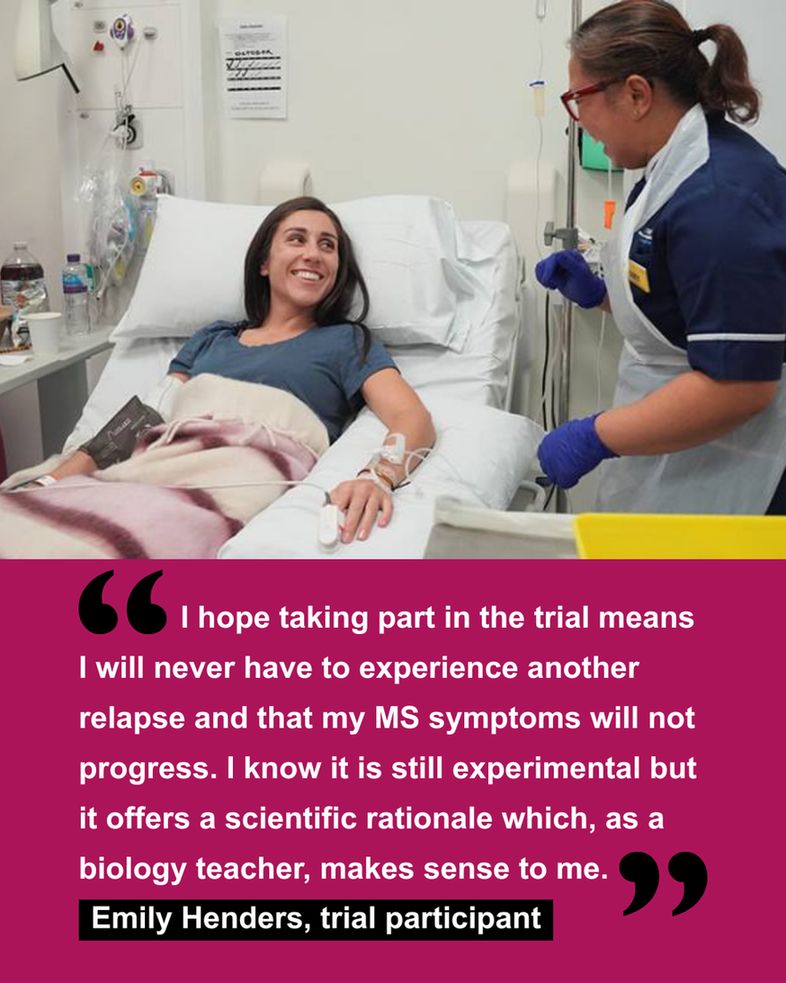
A multiple sclerosis patient in the UK was the first to receive CAR T cell therapy, invented by UCL researchers, in a clinical trial testing whether this personalised treatment can slow or even halt the progression of the disease. @uclqsion.bsky.social
www.ucl.ac.uk/news/2025/oc...
www.ucl.ac.uk/news/2025/oc...
October 28, 2025 at 3:43 PM
A multiple sclerosis patient in the UK was the first to receive CAR T cell therapy, invented by UCL researchers, in a clinical trial testing whether this personalised treatment can slow or even halt the progression of the disease. @uclqsion.bsky.social
www.ucl.ac.uk/news/2025/oc...
www.ucl.ac.uk/news/2025/oc...
Reposted by Borjan (Boki) Milinković
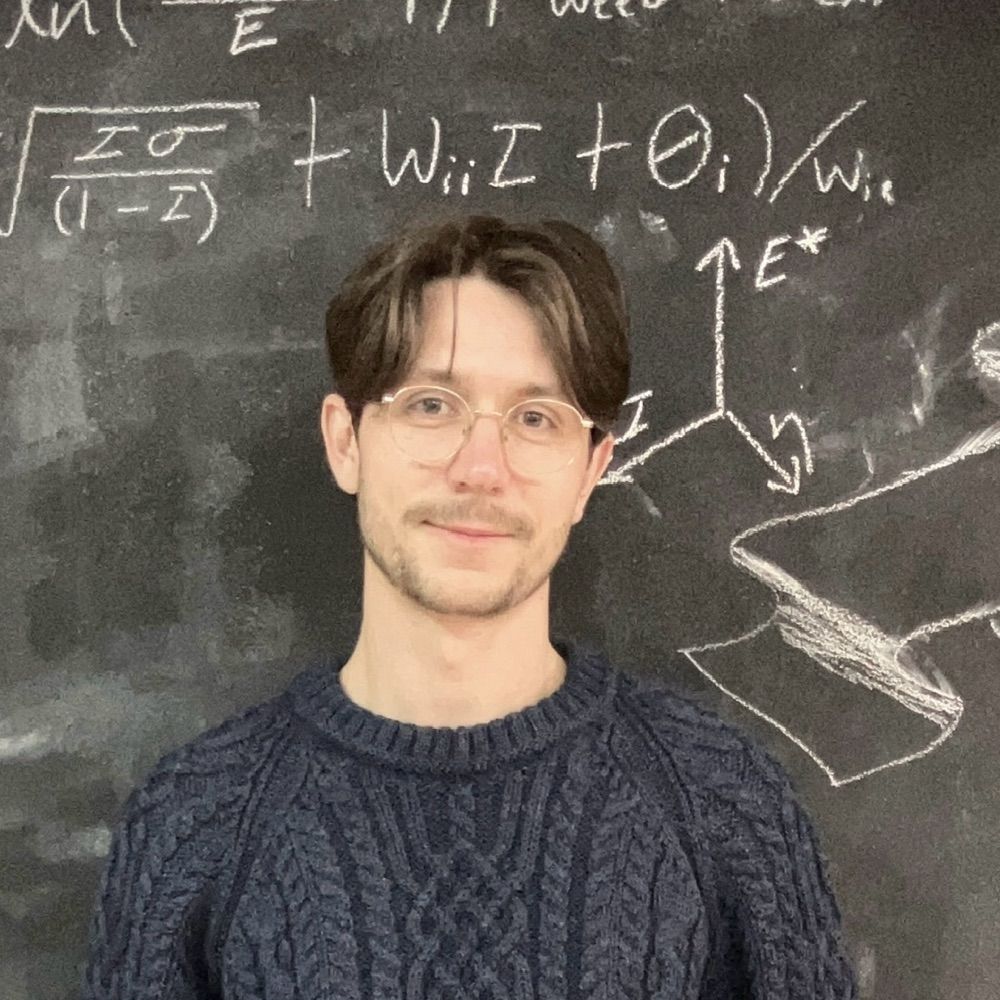
The final paper of my PhD is now out as a preprint. This is a follow-up piece in series of two companion papers modelling awareness and suppression in a new variant of continuous flash suppression.
arxiv.org/abs/2510.17154
🧵 1/3
arxiv.org/abs/2510.17154
🧵 1/3

A Minimal Quantitative Model of Perceptual Suppression and Breakthrough in Visual Rivalry
When conflicting images are presented to either eye, binocular fusion is disrupted. Rather than experiencing a blend of both percepts, often only one eye's image is experienced, whilst the other is su...
arxiv.org
October 21, 2025 at 6:10 AM
The final paper of my PhD is now out as a preprint. This is a follow-up piece in series of two companion papers modelling awareness and suppression in a new variant of continuous flash suppression.
arxiv.org/abs/2510.17154
🧵 1/3
arxiv.org/abs/2510.17154
🧵 1/3
Reposted by Borjan (Boki) Milinković

It is an enormous pleasure—and a dream, really—to share that the University of Bamberg has approved an initiative dedicated to mathematical approaches in #ConSci. The initiative is called Bamberg Mathematical Consciousness Science Initiative, or BAMΞ for short.
bamxi.org #BAMΞ @uni-bamberg.de
bamxi.org #BAMΞ @uni-bamberg.de

October 17, 2025 at 12:34 PM
It is an enormous pleasure—and a dream, really—to share that the University of Bamberg has approved an initiative dedicated to mathematical approaches in #ConSci. The initiative is called Bamberg Mathematical Consciousness Science Initiative, or BAMΞ for short.
bamxi.org #BAMΞ @uni-bamberg.de
bamxi.org #BAMΞ @uni-bamberg.de