




Nicola Sambuco
@nicolasambuco.bsky.social
Assistant Professor, University of Bari.
https://nsambuco.github.io/
Former CSEA trainee at UF
Curating reward processing research → RewardSignals feed (#RewardSignals).
https://nsambuco.github.io/
Former CSEA trainee at UF
Curating reward processing research → RewardSignals feed (#RewardSignals).
Pinned
Nicola Sambuco
@nicolasambuco.bsky.social
· Nov 15
🧠💸 Launching the RewardSignals feed
RewardSignals is a custom feed collecting posts about reward processing and decision making.
To appear in the feed, tag your post with #RewardSignals.
You can find and pin the feed from the Feeds tab as “RewardSignals”.
#RewardSignals
RewardSignals is a custom feed collecting posts about reward processing and decision making.
To appear in the feed, tag your post with #RewardSignals.
You can find and pin the feed from the Feeds tab as “RewardSignals”.
#RewardSignals
Reposted by Nicola Sambuco

🧵 New paper in @NatureComms
Feedback-induced attitudinal changes in risk preferences
Nasioulas, Potier, Cerrotti, Lebreton & me (2026)
Does feedback really improve risky decision-making? Short answer: no! it changes attitudes, not learning. 👇
rdcu.be/e0VcO
Feedback-induced attitudinal changes in risk preferences
Nasioulas, Potier, Cerrotti, Lebreton & me (2026)
Does feedback really improve risky decision-making? Short answer: no! it changes attitudes, not learning. 👇
rdcu.be/e0VcO

Feedback-induced attitudinal changes in risk preferences
Nature Communications - Normative theory predicts that feedback should not affect decisions under risk, but past findings disagree. Here, the authors show that feedback shifts risk-taking by...
rdcu.be
January 27, 2026 at 12:12 PM
🧵 New paper in @NatureComms
Feedback-induced attitudinal changes in risk preferences
Nasioulas, Potier, Cerrotti, Lebreton & me (2026)
Does feedback really improve risky decision-making? Short answer: no! it changes attitudes, not learning. 👇
rdcu.be/e0VcO
Feedback-induced attitudinal changes in risk preferences
Nasioulas, Potier, Cerrotti, Lebreton & me (2026)
Does feedback really improve risky decision-making? Short answer: no! it changes attitudes, not learning. 👇
rdcu.be/e0VcO
Reposted by Nicola Sambuco
So excited to see our latest paper out today in @natcomms.nature.com! Studies led by the amazing @margestelzner.bsky.social www.nature.com/articles/s41.... VTA GABA neurons have a unique role in economic decision making - they integrate reward seeking motivation and the current cost of seeking

Ventral tegmental area GABA neurons integrate positive and negative valence - Nature Communications
The role of ventral tegmental area GABA neurons in behavior is unclear. Here, authors show that VTA GABA but not dopamine neurons integrate positive and negative valence to encode motivational conflic...
www.nature.com
November 24, 2025 at 4:18 PM
So excited to see our latest paper out today in @natcomms.nature.com! Studies led by the amazing @margestelzner.bsky.social www.nature.com/articles/s41.... VTA GABA neurons have a unique role in economic decision making - they integrate reward seeking motivation and the current cost of seeking
Reposted by Nicola Sambuco

Very excited to share the first empirical paper from LEVANTE: we describe the LEVANTE core tasks, a set of nine open source tasks for measuring learning and development in kids ages 5-12 years.
osf.io/preprints/ps...
🧵
osf.io/preprints/ps...
🧵


December 18, 2025 at 10:20 PM
Very excited to share the first empirical paper from LEVANTE: we describe the LEVANTE core tasks, a set of nine open source tasks for measuring learning and development in kids ages 5-12 years.
osf.io/preprints/ps...
🧵
osf.io/preprints/ps...
🧵
Reposted by Nicola Sambuco
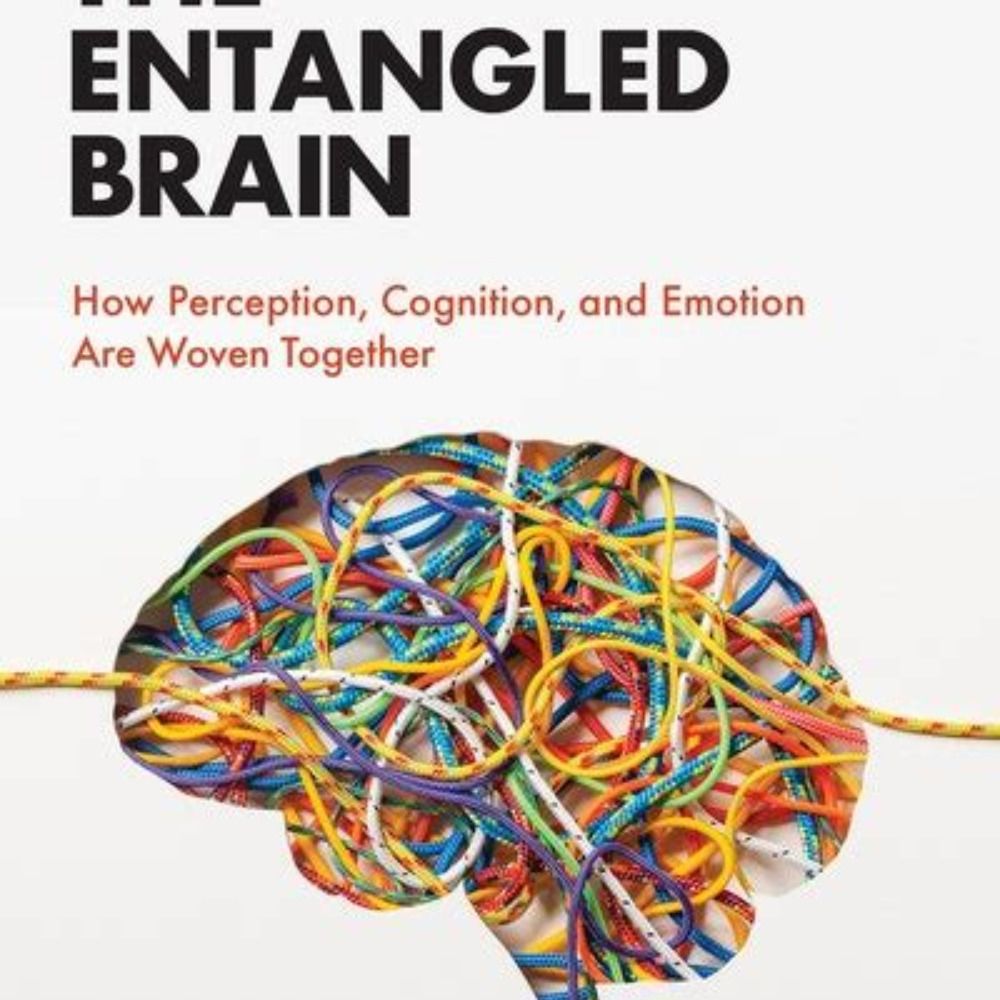
𝗛𝗼𝘄 𝗱𝗼 𝗯𝗿𝗮𝗶𝗻 𝗮𝗿𝗲𝗮𝘀 𝗿𝗲𝗹𝗮𝘁𝗲𝗱 𝘁𝗼 𝗳𝘂𝗻𝗰𝘁𝗶𝗼𝗻?
"High-resolution activity maps of PFC did NOT align with cytoarchitecturally defined subregions."
Key tenet in neuroscience is that cytoarchitectonic boundaries correspond to functional ones.
NB: study in the mouse
#neuroskyence
doi.org/10.1038/s415...
"High-resolution activity maps of PFC did NOT align with cytoarchitecturally defined subregions."
Key tenet in neuroscience is that cytoarchitectonic boundaries correspond to functional ones.
NB: study in the mouse
#neuroskyence
doi.org/10.1038/s415...

January 22, 2026 at 5:35 PM
𝗛𝗼𝘄 𝗱𝗼 𝗯𝗿𝗮𝗶𝗻 𝗮𝗿𝗲𝗮𝘀 𝗿𝗲𝗹𝗮𝘁𝗲𝗱 𝘁𝗼 𝗳𝘂𝗻𝗰𝘁𝗶𝗼𝗻?
"High-resolution activity maps of PFC did NOT align with cytoarchitecturally defined subregions."
Key tenet in neuroscience is that cytoarchitectonic boundaries correspond to functional ones.
NB: study in the mouse
#neuroskyence
doi.org/10.1038/s415...
"High-resolution activity maps of PFC did NOT align with cytoarchitecturally defined subregions."
Key tenet in neuroscience is that cytoarchitectonic boundaries correspond to functional ones.
NB: study in the mouse
#neuroskyence
doi.org/10.1038/s415...
Reposted by Nicola Sambuco

Where does learning through imitation happen in the brain?
In juvenile zebra finches, we pinpoint a synaptic locus of song learning in a cortico-basal ganglia circuit and leverage this localization to measure the timescale of consolidation and make birds learn faster! #neuroskyence (1/14)
In juvenile zebra finches, we pinpoint a synaptic locus of song learning in a cortico-basal ganglia circuit and leverage this localization to measure the timescale of consolidation and make birds learn faster! #neuroskyence (1/14)
A synaptic locus of song learning
Learning by imitation is the foundation for verbal and musical expression, but its underlying neural basis remains obscure. A juvenile male zebra finch imitates the multisyllabic song of an adult tutor in a process that depends on a song-specialized cortico-basal ganglia circuit, affording a powerful system to identify the synaptic substrates of imitative motor learning. Plasticity at a particular set of cortico-basal ganglia synapses is hypothesized to drive rapid learning-related changes in song before these changes are subsequently consolidated in downstream circuits. Nevertheless, this hypothesis is untested and the synaptic locus where learning initially occurs is unknown. By combining a computational framework to quantify song learning with synapse-specific optogenetic and chemogenetic manipulations within and directly downstream of the cortico-basal ganglia circuit, we identified the specific cortico-basal ganglia synapses that drive the acquisition and expression of rapid vocal changes during juvenile song learning and characterized the hours-long timescale over which these changes consolidate. Furthermore, transiently augmenting postsynaptic activity in the basal ganglia briefly accelerates learning rates and persistently alters song, demonstrating a direct link between basal ganglia activity and rapid learning. These results localize the specific cortico-basal ganglia synapses that enable a juvenile songbird to learn to sing and reveal the circuit logic and behavioral timescales of this imitative learning paradigm. ### Competing Interest Statement The authors have declared no competing interest. National Institutes of Health, K99 NS144525 (DCS), F32 MH132152 (DCS), F31 HD098772 (SB), R01 NS099288 (RM), RF1 NS118424 (RM and JP)
www.biorxiv.org
January 21, 2026 at 4:39 PM
Where does learning through imitation happen in the brain?
In juvenile zebra finches, we pinpoint a synaptic locus of song learning in a cortico-basal ganglia circuit and leverage this localization to measure the timescale of consolidation and make birds learn faster! #neuroskyence (1/14)
In juvenile zebra finches, we pinpoint a synaptic locus of song learning in a cortico-basal ganglia circuit and leverage this localization to measure the timescale of consolidation and make birds learn faster! #neuroskyence (1/14)
Reposted by Nicola Sambuco

Neuroscience is moving away from a modular view of the brain because the brain is not modular. It is network of murmuring neurons. Great metaphor by @pessoabrain.bsky.social
www.nytimes.com/2026/01/16/o...
#neuroscience
www.nytimes.com/2026/01/16/o...
#neuroscience

Opinion | What Are We Thinking?
www.nytimes.com
January 17, 2026 at 2:54 PM
Neuroscience is moving away from a modular view of the brain because the brain is not modular. It is network of murmuring neurons. Great metaphor by @pessoabrain.bsky.social
www.nytimes.com/2026/01/16/o...
#neuroscience
www.nytimes.com/2026/01/16/o...
#neuroscience
Reposted by Nicola Sambuco

Oh, oh my. I need to go through this closely, and as noted earlier NN has a history. But my first read is wow www.nature.com/articles/s41...

Investigating the methodological foundation of lesion network mapping - Nature Neuroscience
The lesion network mapping method links diverse brain lesions to similar functional brain networks, reflecting general brain organization rather than disorder-specific circuits.
www.nature.com
January 16, 2026 at 3:08 AM
Oh, oh my. I need to go through this closely, and as noted earlier NN has a history. But my first read is wow www.nature.com/articles/s41...
Reposted by Nicola Sambuco

Excited to share our NEWEST PREPRINT led by @rochellekaper.bsky.social!!
osf.io/preprints/ps...
We ask: How do people learn multiple layers of environmental structure – w/o feedback – & how well do they *know* they’ve learned? Turns out, stimulus familiarity matters more than we thought! 🧵👇
osf.io/preprints/ps...
We ask: How do people learn multiple layers of environmental structure – w/o feedback – & how well do they *know* they’ve learned? Turns out, stimulus familiarity matters more than we thought! 🧵👇
OSF
osf.io
January 15, 2026 at 2:48 AM
Excited to share our NEWEST PREPRINT led by @rochellekaper.bsky.social!!
osf.io/preprints/ps...
We ask: How do people learn multiple layers of environmental structure – w/o feedback – & how well do they *know* they’ve learned? Turns out, stimulus familiarity matters more than we thought! 🧵👇
osf.io/preprints/ps...
We ask: How do people learn multiple layers of environmental structure – w/o feedback – & how well do they *know* they’ve learned? Turns out, stimulus familiarity matters more than we thought! 🧵👇

At #ACNP2026? Come see my poster (W45, 5–7 pm)! We @erika-forbes.bsky.social find that immune activation and basal ganglia dopamine availability interact and relate to anhedonia among youth w/ depression, with evidence for anticipatory and not consummatory anhedonia.
Preprint is now available!
Preprint is now available!

Basal Ganglia Dopamine Availability and Immune Activation Interact and Relate to Anhedonia Severity among Youth with Depression
Anhedonia emerges in adolescence, has putative substrates in neural reward and dopamine systems, and is a hallmark of poor course in depression. Psychoneuroimmunology models suggest altered immune and...
www.biorxiv.org
January 14, 2026 at 8:36 PM
Reposted by Nicola Sambuco
THIS! This is the type of conversation I'm eager for our community to have. How many big challenges stand in the way of impactful solutions? What's our plan to tackle them? It's up to us to figure these things out (ultimately we're the ones steering the ship).
Thank you @simonwheeler.bsky.social!
Thank you @simonwheeler.bsky.social!

I just watched it and, as you say, the first part setting out the nature of the challenge and the limitations of historical and current approaches is a very convincing thesis. I doubt many would disagree. I think your analogy in Q&A of needing to bridge the void/gulf is very apt. It’s a huge gulf.
January 13, 2026 at 12:15 PM
THIS! This is the type of conversation I'm eager for our community to have. How many big challenges stand in the way of impactful solutions? What's our plan to tackle them? It's up to us to figure these things out (ultimately we're the ones steering the ship).
Thank you @simonwheeler.bsky.social!
Thank you @simonwheeler.bsky.social!
Reposted by Nicola Sambuco

With some trepidation, I'm putting this out into the world:
gershmanlab.com/textbook.html
It's a textbook called Computational Foundations of Cognitive Neuroscience, which I wrote for my class.
My hope is that this will be a living document, continuously improved as I get feedback.
gershmanlab.com/textbook.html
It's a textbook called Computational Foundations of Cognitive Neuroscience, which I wrote for my class.
My hope is that this will be a living document, continuously improved as I get feedback.
January 9, 2026 at 1:27 AM
With some trepidation, I'm putting this out into the world:
gershmanlab.com/textbook.html
It's a textbook called Computational Foundations of Cognitive Neuroscience, which I wrote for my class.
My hope is that this will be a living document, continuously improved as I get feedback.
gershmanlab.com/textbook.html
It's a textbook called Computational Foundations of Cognitive Neuroscience, which I wrote for my class.
My hope is that this will be a living document, continuously improved as I get feedback.
Reposted by Nicola Sambuco

New paper & a thread on the results 👇
‘Reward-specific learning parameters change across normative adolescent development and are blunted in youth with high risk for depression’
acamh-onlinelibrary-wiley-com.ezp3.lib.umn.edu/doi/full/10....
‘Reward-specific learning parameters change across normative adolescent development and are blunted in youth with high risk for depression’
acamh-onlinelibrary-wiley-com.ezp3.lib.umn.edu/doi/full/10....

January 7, 2026 at 7:50 PM
New paper & a thread on the results 👇
‘Reward-specific learning parameters change across normative adolescent development and are blunted in youth with high risk for depression’
acamh-onlinelibrary-wiley-com.ezp3.lib.umn.edu/doi/full/10....
‘Reward-specific learning parameters change across normative adolescent development and are blunted in youth with high risk for depression’
acamh-onlinelibrary-wiley-com.ezp3.lib.umn.edu/doi/full/10....
Reposted by Nicola Sambuco

Very happy to see this last thesis paper in press @natcomms.nature.com! We combine intracranial EEG with multimodal MRI to study how interregional similarity in neurophysiology relates to different network scales ⚡ 🧠
Full story 👇
www.nature.com/articles/s41...
Full story 👇
www.nature.com/articles/s41...

January 5, 2026 at 1:55 PM
Very happy to see this last thesis paper in press @natcomms.nature.com! We combine intracranial EEG with multimodal MRI to study how interregional similarity in neurophysiology relates to different network scales ⚡ 🧠
Full story 👇
www.nature.com/articles/s41...
Full story 👇
www.nature.com/articles/s41...
Reposted by Nicola Sambuco

Would love to hear expert views on this paper. It appears to show that the operationalization of brain activity the field has relied on for 3 decades—the BOLD response—is not actually a sensible measure of brain activity.
www.nature.com/articles/s41...
www.nature.com/articles/s41...

BOLD signal changes can oppose oxygen metabolism across the human cortex - Nature Neuroscience
Using quantitative brain imaging, the authors show opposite fMRI BOLD signal to metabolic activity due to variable oxygen extraction across the human cortex. This questions the canonical interpretatio...
www.nature.com
January 5, 2026 at 11:55 AM
Would love to hear expert views on this paper. It appears to show that the operationalization of brain activity the field has relied on for 3 decades—the BOLD response—is not actually a sensible measure of brain activity.
www.nature.com/articles/s41...
www.nature.com/articles/s41...
Reposted by Nicola Sambuco

Postdoctoral research position in #ComputationalPsychiatry and #EEG as part of relmed.ac.uk trial testing reinforcement learning as biomarker for antidepressant treatment response. www.ucl.ac.uk/work-at-ucl/... @uclbrainscience.bsky.social @mikebrowning.bsky.social @relmed.bsky.social

Antidepressant treatment shouldn't be a guessing game. RELMED is working towards using advanced research to predict which medication is most likely to help each person along their individual path to recovery.
relmed.ac.uk
December 21, 2025 at 9:40 PM
Postdoctoral research position in #ComputationalPsychiatry and #EEG as part of relmed.ac.uk trial testing reinforcement learning as biomarker for antidepressant treatment response. www.ucl.ac.uk/work-at-ucl/... @uclbrainscience.bsky.social @mikebrowning.bsky.social @relmed.bsky.social
Reposted by Nicola Sambuco

Well, my New Year's resolution is to read less (seriously). But made it through lots of great books this year, including several from fields I'm less familiar with. Here are 10 books I gave 5 stars to this year along with an excerpt (usually belief-related; I have a type) from each

December 31, 2025 at 10:41 PM
Well, my New Year's resolution is to read less (seriously). But made it through lots of great books this year, including several from fields I'm less familiar with. Here are 10 books I gave 5 stars to this year along with an excerpt (usually belief-related; I have a type) from each
This made me realize that I’ve been heavily biased lately. I commit to at least 10% of citations in every relevant paper on the topic.
For 2026, I dare the human & rodent behavioral & cognitive neuroscience communities to find one NHP paper relevant to your research & cite it regularly next year when writing up your manuscripts. If you already cite one, find another one and double up. #Neuroskyence bsky.app/profile/vinc...
I definitely didn’t just scrape the web to get the h-index and total citation count as of 12/30/2025 for 319 living and dead nonhuman primate researchers to get a sense of publication metrics by rank on tenure-track.
December 31, 2025 at 4:48 AM
This made me realize that I’ve been heavily biased lately. I commit to at least 10% of citations in every relevant paper on the topic.
Reposted by Nicola Sambuco

I definitely didn’t just scrape the web to get the h-index and total citation count as of 12/30/2025 for 319 living and dead nonhuman primate researchers to get a sense of publication metrics by rank on tenure-track.


December 30, 2025 at 8:15 PM
I definitely didn’t just scrape the web to get the h-index and total citation count as of 12/30/2025 for 319 living and dead nonhuman primate researchers to get a sense of publication metrics by rank on tenure-track.
Reposted by Nicola Sambuco

Now published in Biological Reviews!
Continual decision‐making dynamics across biological organisms onlinelibrary.wiley.com/doi/10.1002/...
Continual decision‐making dynamics across biological organisms onlinelibrary.wiley.com/doi/10.1002/...

Continual decision‐making dynamics across biological organisms
Decision-making is a central function of adaptive behaviour in biological agents. However, strategies for adaptive decision-making can vary substantially across species. Here, we aim to extend the co...
onlinelibrary.wiley.com
December 27, 2025 at 10:34 PM
Now published in Biological Reviews!
Continual decision‐making dynamics across biological organisms onlinelibrary.wiley.com/doi/10.1002/...
Continual decision‐making dynamics across biological organisms onlinelibrary.wiley.com/doi/10.1002/...
Reminds me of the network taxonomy challenges discussed by @lucinauddin.bsky.social. The field is moving toward anatomical labels (e.g. dorsal frontoparietal) over functional ones. Using functional names risks baking the reverse inference fallacy into the study design.
Valid critiques on reverse inference here. The friction often stems from rigid functional labels for resting-state networks. What if, instead of seeing these as definitive behavioral proxies, we treated them as circuit-level hypothesis generation for future task-based testing?

Bottom line is that this is all reverse inference of intrinsic functional connectivity. No task. No behavior. The take-home headline inferences (behavioral, cognitive, and psychological) are misaligned with the approach. You don't need imaging at all for drawing strong psych inferences.
December 28, 2025 at 9:35 PM
Reminds me of the network taxonomy challenges discussed by @lucinauddin.bsky.social. The field is moving toward anatomical labels (e.g. dorsal frontoparietal) over functional ones. Using functional names risks baking the reverse inference fallacy into the study design.
Valid critiques on reverse inference here. The friction often stems from rigid functional labels for resting-state networks. What if, instead of seeing these as definitive behavioral proxies, we treated them as circuit-level hypothesis generation for future task-based testing?
Bottom line is that this is all reverse inference of intrinsic functional connectivity. No task. No behavior. The take-home headline inferences (behavioral, cognitive, and psychological) are misaligned with the approach. You don't need imaging at all for drawing strong psych inferences.
December 28, 2025 at 9:30 PM
Valid critiques on reverse inference here. The friction often stems from rigid functional labels for resting-state networks. What if, instead of seeing these as definitive behavioral proxies, we treated them as circuit-level hypothesis generation for future task-based testing?
Reposted by Nicola Sambuco

I’ve mostly kept this space professional, but today I need to share something and ask for your help 🙏🏻
I’ve dedicated my entire career to neuroscience research in Russia. Through challenging times, my colleagues and I have done our best to continue the work we love and believe in...(1/4)
I’ve dedicated my entire career to neuroscience research in Russia. Through challenging times, my colleagues and I have done our best to continue the work we love and believe in...(1/4)
December 15, 2025 at 7:42 AM
I’ve mostly kept this space professional, but today I need to share something and ask for your help 🙏🏻
I’ve dedicated my entire career to neuroscience research in Russia. Through challenging times, my colleagues and I have done our best to continue the work we love and believe in...(1/4)
I’ve dedicated my entire career to neuroscience research in Russia. Through challenging times, my colleagues and I have done our best to continue the work we love and believe in...(1/4)
1/2 New in eNeuro: STs exhibit lowest intrinsic excitability in NAc Core compared to GTs and Intermediate Responders. This provides the first evidence linking low Core excitability directly to incentive salience attribution.
doi.org/10.1523/ENEU...
#RewardSignals #neuroskyence
doi.org/10.1523/ENEU...
#RewardSignals #neuroskyence

Individual Variation in Intrinsic Neuronal Properties of Nucleus Accumbens Core and Shell Medium Spiny Neurons in Male Rats Prone to Sign- or Goal-Track
The “sign-tracking” and “goal-tracking” model of individual variation in associative learning permits the identification of rats with different cue reactivity and predisposition to addiction-like beha...
doi.org
December 26, 2025 at 12:25 PM
1/2 New in eNeuro: STs exhibit lowest intrinsic excitability in NAc Core compared to GTs and Intermediate Responders. This provides the first evidence linking low Core excitability directly to incentive salience attribution.
doi.org/10.1523/ENEU...
#RewardSignals #neuroskyence
doi.org/10.1523/ENEU...
#RewardSignals #neuroskyence
Reposted by Nicola Sambuco
A must-read review. It argues that brain areas are only one of several organizing principles and are not especially central, given their weak correspondence to function. Cytoarchitecture and connectivity are a starting point, not the endpoint.
www.nature.com/articles/s41...
#neuroscience
www.nature.com/articles/s41...
#neuroscience

Rethinking the centrality of brain areas in understanding functional organization - Nature Neuroscience
Parcellation of the cortex into functionally modular brain areas is foundational to neuroscience. Here, Hayden, Heilbronner and Yoo question the central status of brain areas in neuroscience from the ...
www.nature.com
December 23, 2025 at 5:21 PM
A must-read review. It argues that brain areas are only one of several organizing principles and are not especially central, given their weak correspondence to function. Cytoarchitecture and connectivity are a starting point, not the endpoint.
www.nature.com/articles/s41...
#neuroscience
www.nature.com/articles/s41...
#neuroscience
Reposted by Nicola Sambuco
