



Tom Peacock
@peacockflu.bsky.social
Virologist - Influenza and Coronaviruses
Reposted by Tom Peacock

First evidence in Europe of highly pathogenic avian influenza virus H5N1 infection in a dairy cow. Antibodies against H5N1 detected in a cow with mastitis and respiratory signs on a Dutch dairy farm at the end of December. A cat on that farm had died from H5N1. www.tweedekamer.nl/downloads/do...

January 23, 2026 at 9:26 PM
First evidence in Europe of highly pathogenic avian influenza virus H5N1 infection in a dairy cow. Antibodies against H5N1 detected in a cow with mastitis and respiratory signs on a Dutch dairy farm at the end of December. A cat on that farm had died from H5N1. www.tweedekamer.nl/downloads/do...
Interested in high containment work on viruses?
We have an opening at the Pirbright Institute, working on high consequence viruses of livestock and humans in the core CL3 team.
isw.changeworknow.co.uk/pirbright/vm...
We have an opening at the Pirbright Institute, working on high consequence viruses of livestock and humans in the core CL3 team.
isw.changeworknow.co.uk/pirbright/vm...

CL3- Research Assistant
The Pirbright Institute
The Pirbright Institute delivers world-leading research to understand, predict, detect and respond to viral disease outbreaks. We study viruses of livestock that are endemic a...
isw.changeworknow.co.uk
January 20, 2026 at 2:12 PM
Interested in high containment work on viruses?
We have an opening at the Pirbright Institute, working on high consequence viruses of livestock and humans in the core CL3 team.
isw.changeworknow.co.uk/pirbright/vm...
We have an opening at the Pirbright Institute, working on high consequence viruses of livestock and humans in the core CL3 team.
isw.changeworknow.co.uk/pirbright/vm...
Really excited our paper about how H5N1 rapidly adapted to cattle (and how these adaptations also increased its ability to infect cells from the human respiratory tract) is now published! www.nature.com/articles/s41...
Polymerase mutations underlie early adaptation of H5N1 influenza virus to dairy cattle and other mammals - Nature Communications
Avian influenza jumped from wild birds into dairy cattle. Here, the authors report that two mutations in the viral polymerase helped the virus to quickly adapt to cattle. Mutations increased the polym...
www.nature.com
January 20, 2026 at 2:10 PM
Really excited our paper about how H5N1 rapidly adapted to cattle (and how these adaptations also increased its ability to infect cells from the human respiratory tract) is now published! www.nature.com/articles/s41...
Reposted by Tom Peacock

We find that subclade K viruses are antigenically advanced; however, this year's flu vaccine surprisingly elicited antibodies in many individuals that efficiently recognized these viruses. The implications are clear: go get this year’s vaccine if you haven’t already!
www.medrxiv.org/content/10.6...
www.medrxiv.org/content/10.6...

Antibodies elicited by the 2025-2026 influenza vaccine in humans
A new H3N2 variant (named subclade K) possesses several key hemagglutinin substitutions and is circulating widely during the 2025-2026 influenza season. In this report, we completed experiments to det...
www.medrxiv.org
January 7, 2026 at 1:34 PM
We find that subclade K viruses are antigenically advanced; however, this year's flu vaccine surprisingly elicited antibodies in many individuals that efficiently recognized these viruses. The implications are clear: go get this year’s vaccine if you haven’t already!
www.medrxiv.org/content/10.6...
www.medrxiv.org/content/10.6...
Reposted by Tom Peacock

#H5N1 : An infected herd was recently detected in Wisconsin, and genome sequencing indicates that this is yet another spillover event, making it the fourth detected one.
How do these spillovers happen and why are they restricted, so far, to the US?
www.aphis.usda.gov/news/agency-...
How do these spillovers happen and why are they restricted, so far, to the US?
www.aphis.usda.gov/news/agency-...

December 20, 2025 at 7:11 AM
#H5N1 : An infected herd was recently detected in Wisconsin, and genome sequencing indicates that this is yet another spillover event, making it the fourth detected one.
How do these spillovers happen and why are they restricted, so far, to the US?
www.aphis.usda.gov/news/agency-...
How do these spillovers happen and why are they restricted, so far, to the US?
www.aphis.usda.gov/news/agency-...
Reposted by Tom Peacock

If you'd like to celebrate the biology of viruses - or the fight against viral diseases - this winter, try out our free and updated #VirusSnowflake designs.
Please share, and if you have any photos of Virus Snowflakes in your area it would be lovely to see them!
cvr-engagement.co.uk/virus-snowfl...
Please share, and if you have any photos of Virus Snowflakes in your area it would be lovely to see them!
cvr-engagement.co.uk/virus-snowfl...

November 17, 2025 at 5:39 PM
If you'd like to celebrate the biology of viruses - or the fight against viral diseases - this winter, try out our free and updated #VirusSnowflake designs.
Please share, and if you have any photos of Virus Snowflakes in your area it would be lovely to see them!
cvr-engagement.co.uk/virus-snowfl...
Please share, and if you have any photos of Virus Snowflakes in your area it would be lovely to see them!
cvr-engagement.co.uk/virus-snowfl...
Reposted by Tom Peacock

Finished a virology PhD or finishing soon? Check out this job - www.healthjobsuk.com/job/UK/Londo...
Job vacancy: Healthcare Scientist, UK Health Security Agency, London | trac.jobs
www.healthjobsuk.com
November 14, 2025 at 12:16 PM
Finished a virology PhD or finishing soon? Check out this job - www.healthjobsuk.com/job/UK/Londo...
Reposted by Tom Peacock

Our lab's paper describing the North American H5N1 epizootic is out now in Nature! So thrilled to have this out, and congratulations to @lambod50.bsky.social for all the fantastic work on this: www.nature.com/articles/s41...

Ecology and spread of the North American H5N1 epizootic - Nature
The panzootic of highly pathogenic H5N1 since 2021 was driven by around nine introductions into the Atlantic and Pacific flyways, followed by rapid dissemination through wild migratory birds, primaril...
www.nature.com
November 12, 2025 at 7:33 PM
Our lab's paper describing the North American H5N1 epizootic is out now in Nature! So thrilled to have this out, and congratulations to @lambod50.bsky.social for all the fantastic work on this: www.nature.com/articles/s41...
Reposted by Tom Peacock

I want to spell this out in case the implications aren't clear:
This means all public tools/webapps of GISAID data (all the ones you've been used to seeing thru the pandemic, as far as we can tell) are prohibited.
The file allowed this. Cut that - cut off all tools the public & others were using.
This means all public tools/webapps of GISAID data (all the ones you've been used to seeing thru the pandemic, as far as we can tell) are prohibited.
The file allowed this. Cut that - cut off all tools the public & others were using.

On Oct 1, 2025, GISAID informed us that they had ended updates to the flat file of SARS-CoV-2 genomic sequences and associated metadata that we had used to update Nextstrain analyses since Feb 2020. GISAID's stated rationale was that their "resources are limited". 1/5

November 7, 2025 at 2:41 PM
I want to spell this out in case the implications aren't clear:
This means all public tools/webapps of GISAID data (all the ones you've been used to seeing thru the pandemic, as far as we can tell) are prohibited.
The file allowed this. Cut that - cut off all tools the public & others were using.
This means all public tools/webapps of GISAID data (all the ones you've been used to seeing thru the pandemic, as far as we can tell) are prohibited.
The file allowed this. Cut that - cut off all tools the public & others were using.
Reposted by Tom Peacock

🚨 NEW: The majority holder of the world's genetic sequence data is a bad actor who can cut off access to critics and competing services. We've tolerated this for years, and now it threatens the pandemic treaty. Time for WHO to step in. With @ctrlalttim.com: www.thinkglobalhealth.org/article/to-f...

To Finish the Pandemic Agreement, WHO Needs a Trustworthy Viral Database | Think Global Health
Online platforms for sharing virus sequences are in disarray. The World Health Organization has a chance to build something new
www.thinkglobalhealth.org
November 5, 2025 at 3:31 PM
🚨 NEW: The majority holder of the world's genetic sequence data is a bad actor who can cut off access to critics and competing services. We've tolerated this for years, and now it threatens the pandemic treaty. Time for WHO to step in. With @ctrlalttim.com: www.thinkglobalhealth.org/article/to-f...
Reposted by Tom Peacock
If you are looking for a PhD in the UK, please check out the LIDo program - www.lido-dtp.ac.uk/apply.
If you are interested in viruses and making genetically edited salmon, please look up my icase project.
International students are welcome to apply!
Please reach out if you have questions.
If you are interested in viruses and making genetically edited salmon, please look up my icase project.
International students are welcome to apply!
Please reach out if you have questions.

November 4, 2025 at 11:14 AM
If you are looking for a PhD in the UK, please check out the LIDo program - www.lido-dtp.ac.uk/apply.
If you are interested in viruses and making genetically edited salmon, please look up my icase project.
International students are welcome to apply!
Please reach out if you have questions.
If you are interested in viruses and making genetically edited salmon, please look up my icase project.
International students are welcome to apply!
Please reach out if you have questions.
Reposted by Tom Peacock
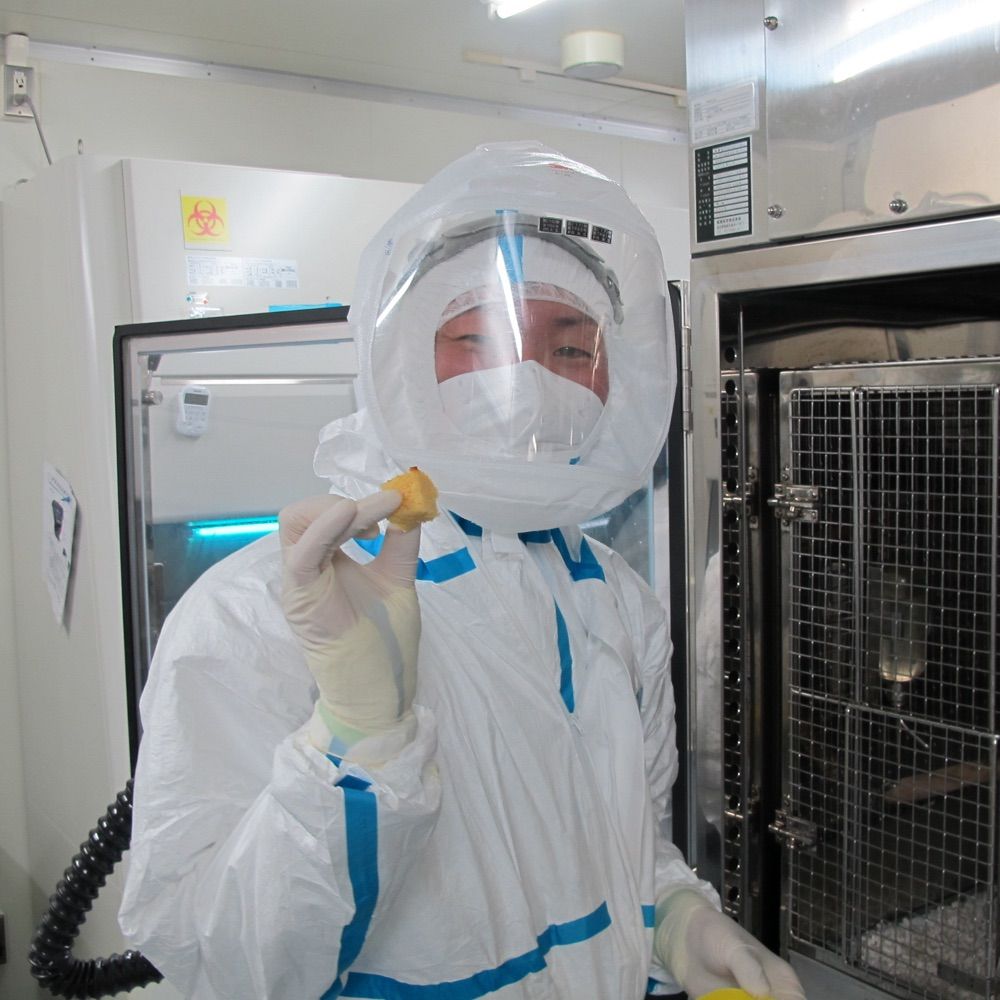
We’ve identified a highly divergent betacoronavirus from South American bat that encodes a functional furin cleavage site.
Another fascinating reminder of how diverse coronavirus evolution is in wildlife reservoirs.
#Virology #VirusEvolution #Bats #Coronavirus
www.biorxiv.org/content/10.1...
Another fascinating reminder of how diverse coronavirus evolution is in wildlife reservoirs.
#Virology #VirusEvolution #Bats #Coronavirus
www.biorxiv.org/content/10.1...

A divergent betacoronavirus with a functional furin cleavage site in South American bats
Bats are natural reservoirs for a wide range of RNA viruses. Members of the genus Betacoronavirus, including Severe Acute Respiratory Syndrome virus 2 (SARS-CoV-2) and Middle East Respiratory Syndrome...
www.biorxiv.org
October 27, 2025 at 9:32 PM
We’ve identified a highly divergent betacoronavirus from South American bat that encodes a functional furin cleavage site.
Another fascinating reminder of how diverse coronavirus evolution is in wildlife reservoirs.
#Virology #VirusEvolution #Bats #Coronavirus
www.biorxiv.org/content/10.1...
Another fascinating reminder of how diverse coronavirus evolution is in wildlife reservoirs.
#Virology #VirusEvolution #Bats #Coronavirus
www.biorxiv.org/content/10.1...
Reposted by Tom Peacock

REGISTRATION NOW OPEN
Influenza Update 2025
University of Warwick, 15th - 16th December
warwick.ac.uk/fac/sci/med/...
Registration from £50 - £120
DEADLINE: 7th November
We hope you can join us there!
Influenza Update 2025
University of Warwick, 15th - 16th December
warwick.ac.uk/fac/sci/med/...
Registration from £50 - £120
DEADLINE: 7th November
We hope you can join us there!

October 11, 2025 at 2:47 PM
REGISTRATION NOW OPEN
Influenza Update 2025
University of Warwick, 15th - 16th December
warwick.ac.uk/fac/sci/med/...
Registration from £50 - £120
DEADLINE: 7th November
We hope you can join us there!
Influenza Update 2025
University of Warwick, 15th - 16th December
warwick.ac.uk/fac/sci/med/...
Registration from £50 - £120
DEADLINE: 7th November
We hope you can join us there!
Reposted by Tom Peacock

After years in the making, Joe McKellar @viroscope.bsky.social’s final PhD paper is finally out today in PNAS! 🎉 🎉🎉
www.pnas.org/doi/10.1073/...
www.pnas.org/doi/10.1073/...

Human MX1 orchestrates the cytoplasmic sequestration of neosynthesized influenza A virus vRNPs | PNAS
Interferon-inducible Myxovirus resistance 1 (MX1) proteins are known to restrict influenza
A virus (IAV) transcription/replication process. Herein,...
www.pnas.org
October 7, 2025 at 6:26 PM
After years in the making, Joe McKellar @viroscope.bsky.social’s final PhD paper is finally out today in PNAS! 🎉 🎉🎉
www.pnas.org/doi/10.1073/...
www.pnas.org/doi/10.1073/...
Reposted by Tom Peacock

And the sister paper from collaborator and good friend Katie Doores ... A deeper dive into how some of these broadly neutralising #sarbecovirus #coronavirus #sars2 #covid antibodies actually work www.biorxiv.org/content/10.1...

Mechanisms for cross–neutralisation of diverse bat sarbecoviruses
The continuing evolution of SARS–CoV–2 variants of concern, and the increasing spillover potential of sarbecoviruses into the human population presents an important and urgent need to discover cross-r...
www.biorxiv.org
September 18, 2025 at 8:25 AM
And the sister paper from collaborator and good friend Katie Doores ... A deeper dive into how some of these broadly neutralising #sarbecovirus #coronavirus #sars2 #covid antibodies actually work www.biorxiv.org/content/10.1...
Reposted by Tom Peacock
Our first post on here and it's a doozy 😍🤩. Our epic piece on #sarbecovirus host range. #virology #sars2 #covid #vaccines. Enjoy and please repost. www.biorxiv.org/content/10.1...
Understanding the future risk of bat coronavirus spillover into humans: correlating sarbecovirus receptor usage, host range, and antigenicity.
Sarbecoviruses interact with their receptor, angiotensin converting enzyme 2 (ACE2), via the receptor binding domain (RBD) of Spike, the immunodominant target for neutralising antibodies. Understandin...
www.biorxiv.org
September 9, 2025 at 3:02 PM
Our first post on here and it's a doozy 😍🤩. Our epic piece on #sarbecovirus host range. #virology #sars2 #covid #vaccines. Enjoy and please repost. www.biorxiv.org/content/10.1...
Really excited to have been a small part of this work investigating sarbecovirus host range, receptor usage and antigenicity!
www.biorxiv.org/content/10.1101/2025.09.03.673949v1
www.biorxiv.org/content/10.1101/2025.09.03.673949v1

Understanding the future risk of bat coronavirus spillover into humans: correlating sarbecovirus receptor usage, host range, and antigenicity.
Sarbecoviruses interact with their receptor, angiotensin converting enzyme 2 (ACE2), via the receptor binding domain (RBD) of Spike, the immunodominant target for neutralising antibodies. Understandin...
www.biorxiv.org
September 9, 2025 at 1:46 PM
Really excited to have been a small part of this work investigating sarbecovirus host range, receptor usage and antigenicity!
www.biorxiv.org/content/10.1101/2025.09.03.673949v1
www.biorxiv.org/content/10.1101/2025.09.03.673949v1
Reposted by Tom Peacock

In new study led by @ckikawa.bsky.social, we provide near real-time data on human neutralizing antibody landscape to influenza by measuring ~26,000 titers to >100 recent viral strains
Data can inform vaccine selection & evolutionary/epidemiological modeling
www.biorxiv.org/content/10.1...
Data can inform vaccine selection & evolutionary/epidemiological modeling
www.biorxiv.org/content/10.1...

Near real-time data on the human neutralizing antibody landscape to influenza virus to inform vaccine-strain selection in September 2025
The hemagglutinin of human influenza virus evolves rapidly to erode neutralizing antibody immunity. Twice per year, new vaccine strains are selected with the goal of providing maximum protection again...
www.biorxiv.org
September 8, 2025 at 9:48 PM
In new study led by @ckikawa.bsky.social, we provide near real-time data on human neutralizing antibody landscape to influenza by measuring ~26,000 titers to >100 recent viral strains
Data can inform vaccine selection & evolutionary/epidemiological modeling
www.biorxiv.org/content/10.1...
Data can inform vaccine selection & evolutionary/epidemiological modeling
www.biorxiv.org/content/10.1...
Reposted by Tom Peacock

New preprint! If some merbecoviruses use DPP4 and others use ACE2, what do those hedgehog merbecoviruses use?! As it turns out, neither! In our latest study, we uncover the "missing" receptor for the MERS-related viruses in hedgehogs. [These findings were first shared at ASV this year] (1/6)

Aminopeptidase N is a receptor for hedgehog merbecoviruses
Merbecoviruses, closely related to the highly pathogenetic Middle East Respiratory Syndrome Coronavirus (MERS-CoV), circulate in hedgehogs throughout Europe and Asia, raising concerns about zoonotic t...
tinyurl.com
September 4, 2025 at 4:48 AM
New preprint! If some merbecoviruses use DPP4 and others use ACE2, what do those hedgehog merbecoviruses use?! As it turns out, neither! In our latest study, we uncover the "missing" receptor for the MERS-related viruses in hedgehogs. [These findings were first shared at ASV this year] (1/6)
Reposted by Tom Peacock

The cow udder may be a mixing vessel where different strains of influenza can recombine--"underscoring its potential role in generating novel influenza viruses with pandemic risk." [Preprint] www.biorxiv.org/content/10.1...

The cow udder is a potential mixing vessel for influenza A viruses
The incursion of high pathogenicity avian influenza A virus (IAV) into US dairy cows is unprecedented in the era of molecular diagnosis and pathogen sequencing. This raises questions over the likeliho...
www.biorxiv.org
September 2, 2025 at 12:47 PM
The cow udder may be a mixing vessel where different strains of influenza can recombine--"underscoring its potential role in generating novel influenza viruses with pandemic risk." [Preprint] www.biorxiv.org/content/10.1...
Reposted by Tom Peacock


Really excited to have been a part of this study, lead by @willharv.bsky.social on how reassortment of H5N1 in birds has lead to a 'specialist' genotype that thrives in seabirds and drives summer/spring (rather than winter) waves of poultry outbreaks www.biorxiv.org/content/10.1...
Genetic reassortment and diversification of host specificity have driven evolutionary trajectories of lineages of panzootic H5N1 influenza
Since 2021, subclade 2.3.4.4b A(H5N1) high pathogenicity avian influenza (HPAI) viruses have undergone changes in ecology and epidemiology, causing a panzootic of unprecedented scale in wild and domes...
www.biorxiv.org
August 21, 2025 at 8:00 AM
Really excited to have been a part of this study, lead by @willharv.bsky.social on how reassortment of H5N1 in birds has lead to a 'specialist' genotype that thrives in seabirds and drives summer/spring (rather than winter) waves of poultry outbreaks www.biorxiv.org/content/10.1...
Reposted by Tom Peacock
Come work with us👇

📢 VACANCY | Computational Biologist/Bioinformatician 🦠
Join our brilliant team and contribute to the analysis of antiviral host-mechanisms and comparative virology datasets.
📆 Deadline: 25 August
Info: bit.ly/CVR-WorkWithUs Ref 178592
Apply: gla.ac.uk/explore/jobs/
Join our brilliant team and contribute to the analysis of antiviral host-mechanisms and comparative virology datasets.
📆 Deadline: 25 August
Info: bit.ly/CVR-WorkWithUs Ref 178592
Apply: gla.ac.uk/explore/jobs/
University of Glasgow - Research - Research units A-Z - MRC-University of Glasgow Centre for Virus Research - About Us - Work with us
bit.ly
August 16, 2025 at 9:37 PM
Come work with us👇
Reposted by Tom Peacock

Very pleased to have our new work out where we perform a structure/function study on the bornavirus polymerase complex with fantastic coauthors. Have a read www.nature.com/articles/s41... @warwicklifesci.bsky.social @loiccarrique.bsky.social @franziskaguenl.bsky.social
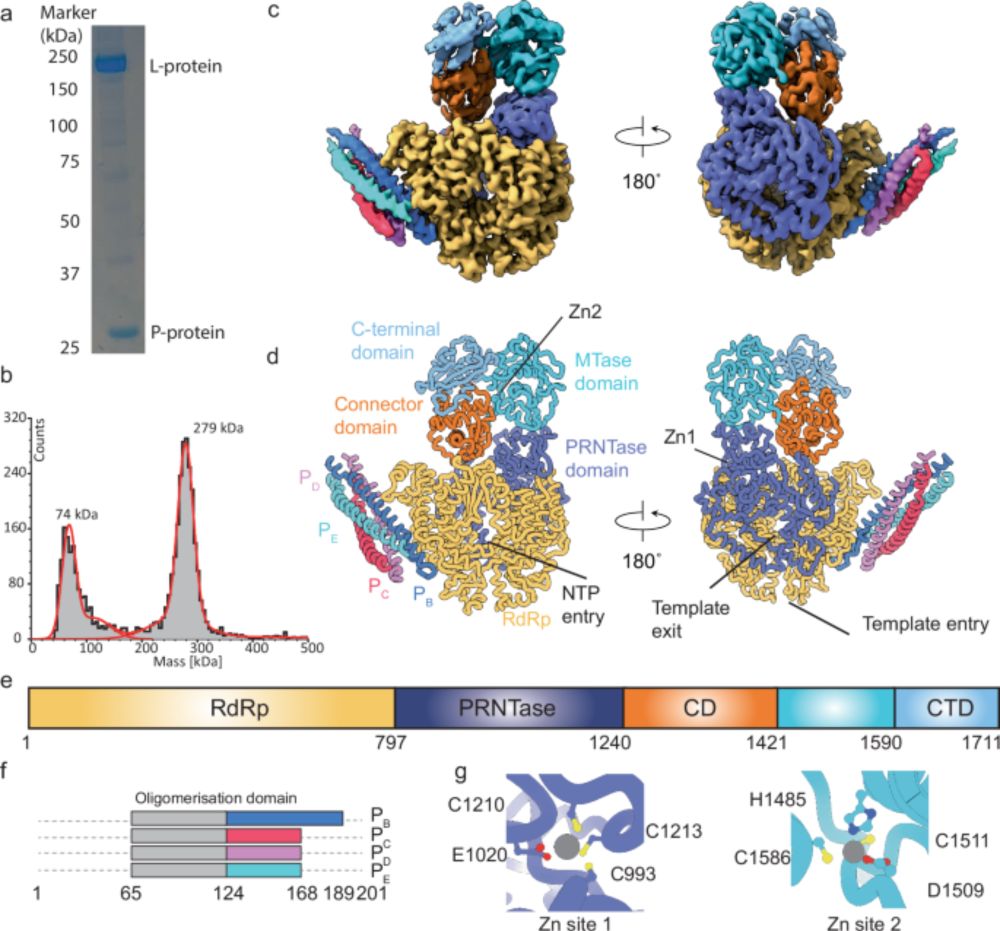
The structure of the mammalian bornavirus polymerase complex - Nature Communications
Borna disease virus 1 replicates and transcribes its negative sense RNA genome in the nucleus of infected cells. Here, the authors present the cryoEM structures of the large polymerase protein in comp...
www.nature.com
August 13, 2025 at 12:13 PM
Very pleased to have our new work out where we perform a structure/function study on the bornavirus polymerase complex with fantastic coauthors. Have a read www.nature.com/articles/s41... @warwicklifesci.bsky.social @loiccarrique.bsky.social @franziskaguenl.bsky.social
Reposted by Tom Peacock
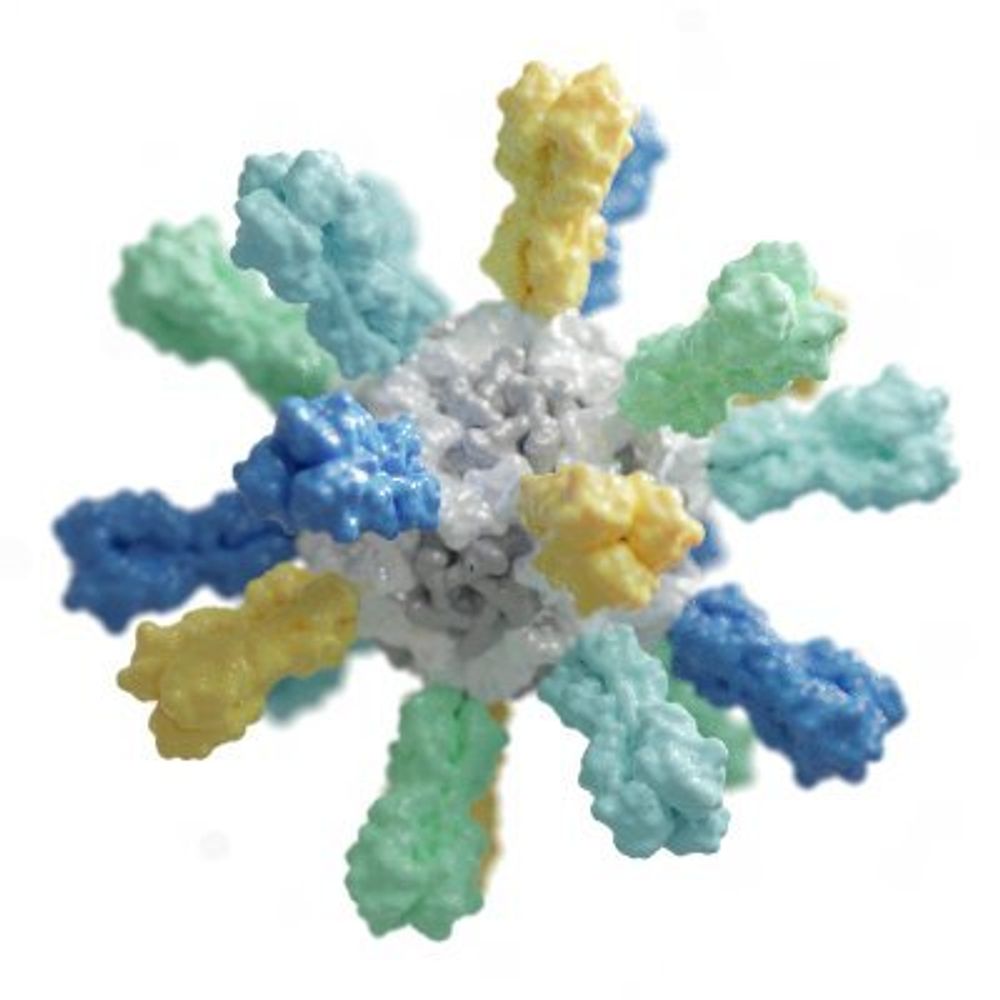
🚨 New paper alert! 🚨
Here we show that stabilized influenza hemagglutinin HPAI H5 immunogens improve the quality of elicited antibody responses. Thank you to @open_phil for funding this work! bit.ly/4lgr0rM
Here we show that stabilized influenza hemagglutinin HPAI H5 immunogens improve the quality of elicited antibody responses. Thank you to @open_phil for funding this work! bit.ly/4lgr0rM

Stabilization of H5 highly pathogenic avian influenza hemagglutinin improves vaccine-elicited neutralizing antibody responses
Transmission of highly pathogenic avian influenza from H5 clade 2.3.4.4b has expanded in recent years to infect large populations of birds and mammals, heightening the risk of a human pandemic. Influe...
bit.ly
August 4, 2025 at 5:48 PM
🚨 New paper alert! 🚨
Here we show that stabilized influenza hemagglutinin HPAI H5 immunogens improve the quality of elicited antibody responses. Thank you to @open_phil for funding this work! bit.ly/4lgr0rM
Here we show that stabilized influenza hemagglutinin HPAI H5 immunogens improve the quality of elicited antibody responses. Thank you to @open_phil for funding this work! bit.ly/4lgr0rM