


Seth Blackshaw
@sethblackshaw.bsky.social
Professor of Neuroscience. Studying neural development, regeneration, and control of innate behaviors at Johns Hopkins.
Reposted by Seth Blackshaw

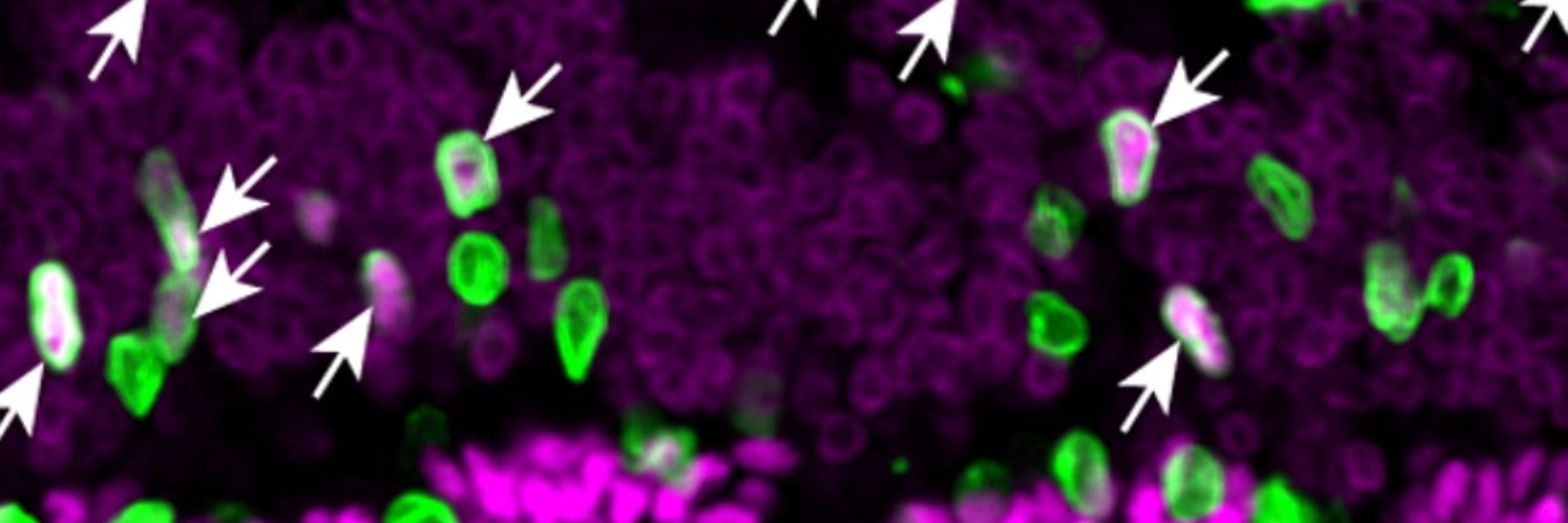
Happy to announce that our latest paper is now out! Have you ever wondered how neural tissues control their size? In this paper, we show that cell division orientation is critical in both the cortex and retina. www.science.org/doi/10.1126/...

Oriented cell divisions induce basal progenitors and regulate neural expansion across tissues and species
A fundamental role for division orientation in progenitor output driving cortical and retinal growth is revealed.
www.science.org
February 4, 2026 at 7:16 PM
Happy to announce that our latest paper is now out! Have you ever wondered how neural tissues control their size? In this paper, we show that cell division orientation is critical in both the cortex and retina. www.science.org/doi/10.1126/...
Indeed.

"Choose your training environment carefully. Lab culture and institutional culture will significantly impact your happiness and success, so choose carefully." - OneNeuro Profile: Seth Blackshaw, PhD @sethblackshaw.bsky.social www.oneneurojhu.org/2026/01/29/o...

January 30, 2026 at 3:38 PM
Indeed.
Reposted by Seth Blackshaw
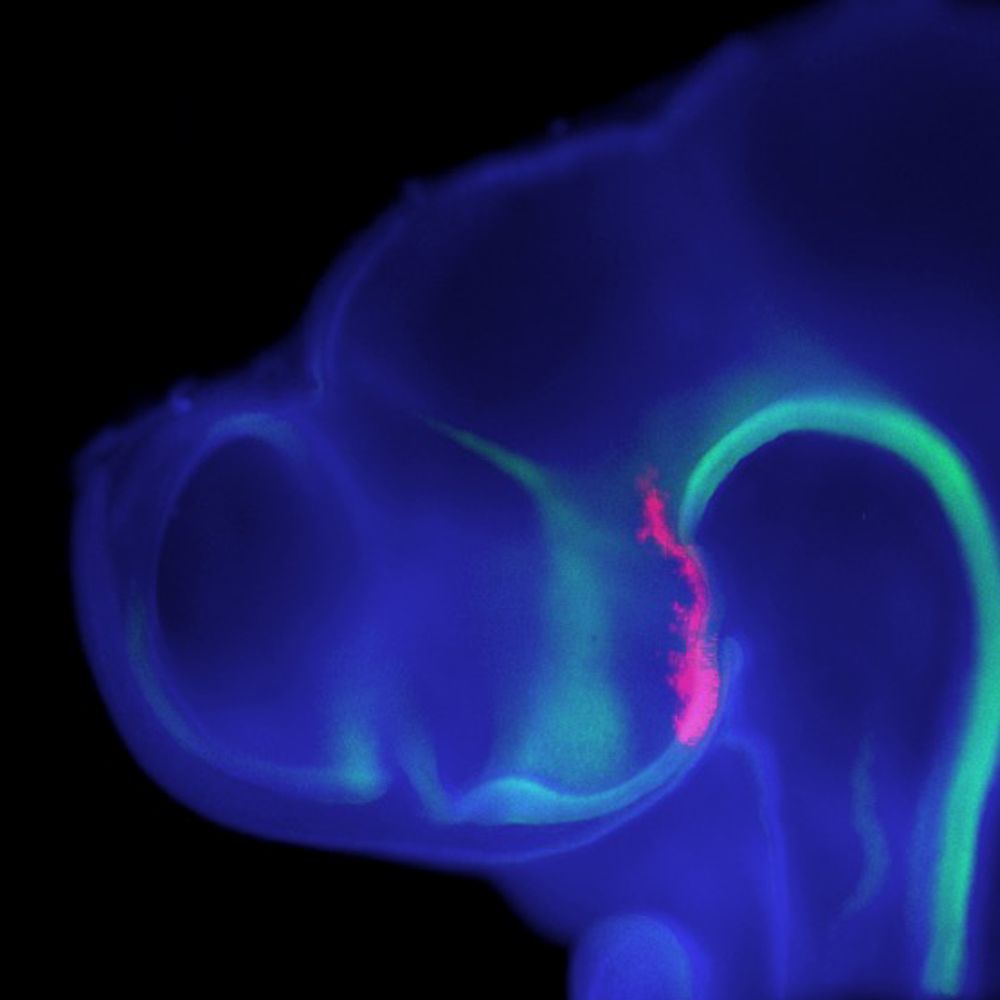
Excited to finally share the final/final.doc version of our paper. It's been a journey, but very proud of the result. Well done to all involved, especially @elsieplace.bsky.social
@kchinnaiya.bsky.social , @thomasdwkim.bsky.social, @sethblackshaw.bsky.social 👏👏
www.nature.com/articles/s41...
@kchinnaiya.bsky.social , @thomasdwkim.bsky.social, @sethblackshaw.bsky.social 👏👏
www.nature.com/articles/s41...

Resolving forebrain developmental organisation by analysis of differential growth patterns - Nature Communications
Experiments on the embryonic chick brain reveal distinct directional growth patterns and a tripartite hypothalamus, challenging the classic segmented prosomere model and offering an updated view of ho...
www.nature.com
January 26, 2026 at 10:23 AM
Excited to finally share the final/final.doc version of our paper. It's been a journey, but very proud of the result. Well done to all involved, especially @elsieplace.bsky.social
@kchinnaiya.bsky.social , @thomasdwkim.bsky.social, @sethblackshaw.bsky.social 👏👏
www.nature.com/articles/s41...
@kchinnaiya.bsky.social , @thomasdwkim.bsky.social, @sethblackshaw.bsky.social 👏👏
www.nature.com/articles/s41...
Second paper is a collaboration with Jim Handa's lab at Hopkins. Cigarette smoke exposure induces aging-related molecular changes in both mouse and human retinal pigment epithelium.
www.pnas.org/doi/10.1073/...
www.pnas.org/doi/10.1073/...
PNAS
Proceedings of the National Academy of Sciences (PNAS), a peer reviewed journal of the National Academy of Sciences (NAS) - an authoritative source of high-impact, original research that broadly spans...
www.pnas.org
January 16, 2026 at 9:11 PM
Second paper is a collaboration with Jim Handa's lab at Hopkins. Cigarette smoke exposure induces aging-related molecular changes in both mouse and human retinal pigment epithelium.
www.pnas.org/doi/10.1073/...
www.pnas.org/doi/10.1073/...
The lab's first paper of the new year is out. In it, we investigate the role of the late stage retinal progenitor-enriched SoxE family factors Sox8 and Sox9 in controlling retinal development./1
www.biorxiv.org/content/10.6...
www.biorxiv.org/content/10.6...
Sox8 and Sox9 regulate differentiation and nuclear positioning of retinal Müller glia
Temporal patterning of retinal progenitor cells governs the sequential generation of retinal cell types, with gliogenesis occurring late in development. Sox8 and Sox9, members of the SoxE transcription factor family, are highly expressed in late-stage retinal progenitor cells and mature Müller glia, yet their functional roles remain incompletely defined. Here we employed gain- and loss-of-function approaches, single-cell multiomic profiling, and injury models to investigate Sox8/9 function. Overexpression of SOX8 and/or SOX9 in early-stage retinal progenitor cells suppressed early-born cell fates and promoted photoreceptor generation, consistent with a role in late-stage temporal identity. Conversely, conditional deletion of Sox8 and/or Sox9 in late-stage progenitors did not impair Müller glia specification, but caused radial displacement of Müller glia nuclei into the outer retina and modest changes in glial gene expression. Loss of Sox8/9 in mature Müller glia modestly increased proliferation post-injury without inducing neurogenic competence. These findings suggest that Sox8/9 are dispensable for gliogenesis and repression of neurogenic competence, but are essential for proper laminar positioning and maturation of retinal Müller glia. ### Competing Interest Statement S.B. is a cofounder, shareholder, and scientific advisory board member of CDI Labs LLC, and receives research support from Genentech. National Eye Institute, https://ror.org/03wkg3b53, R01EY036173
www.biorxiv.org
January 16, 2026 at 8:17 PM
The lab's first paper of the new year is out. In it, we investigate the role of the late stage retinal progenitor-enriched SoxE family factors Sox8 and Sox9 in controlling retinal development./1
www.biorxiv.org/content/10.6...
www.biorxiv.org/content/10.6...
Reposted by Seth Blackshaw

We’re thrilled to share that CSHL Associate Professor Jeremy Borniger (@jborniger.bsky.social) has received the 2026 Bakewell Emerging Leader Award from The Mark Foundation. His lab is exploring synthetic torpor—a hibernation-like state—as a novel way to slow cancer growth. #ScienceMakesLifeBetter

January 13, 2026 at 7:49 PM
We’re thrilled to share that CSHL Associate Professor Jeremy Borniger (@jborniger.bsky.social) has received the 2026 Bakewell Emerging Leader Award from The Mark Foundation. His lab is exploring synthetic torpor—a hibernation-like state—as a novel way to slow cancer growth. #ScienceMakesLifeBetter
Reposted by Seth Blackshaw

New featured article!
Resolving forebrain developmental organisation by analysis of differential growth patterns
@emmanning.bsky.social @elsieplace.bsky.social @kchinnaiya.bsky.social @sethblackshaw.bsky.social @thomasdwkim.bsky.social
http://dlvr.it/TQLWh5
Resolving forebrain developmental organisation by analysis of differential growth patterns
@emmanning.bsky.social @elsieplace.bsky.social @kchinnaiya.bsky.social @sethblackshaw.bsky.social @thomasdwkim.bsky.social
http://dlvr.it/TQLWh5

January 14, 2026 at 4:01 PM
New featured article!
Resolving forebrain developmental organisation by analysis of differential growth patterns
@emmanning.bsky.social @elsieplace.bsky.social @kchinnaiya.bsky.social @sethblackshaw.bsky.social @thomasdwkim.bsky.social
http://dlvr.it/TQLWh5
Resolving forebrain developmental organisation by analysis of differential growth patterns
@emmanning.bsky.social @elsieplace.bsky.social @kchinnaiya.bsky.social @sethblackshaw.bsky.social @thomasdwkim.bsky.social
http://dlvr.it/TQLWh5
Nice summary on our paper on mechanisms controlling development and evolution of the cone-dominant ground squirrel retina, which is now in final form at eLife.
www.lifescienceeditors.com/2026/01/06/h...
www.lifescienceeditors.com/2026/01/06/h...

How ground squirrels enhanced their retinas - Scientific editing and writing experts - Life Science Editors
Scientific editing and writing experts for manuscripts and grants
www.lifescienceeditors.com
January 8, 2026 at 2:02 PM
Nice summary on our paper on mechanisms controlling development and evolution of the cone-dominant ground squirrel retina, which is now in final form at eLife.
www.lifescienceeditors.com/2026/01/06/h...
www.lifescienceeditors.com/2026/01/06/h...
Reposted by Seth Blackshaw
rdcu.be/eX8JD
DRN new publication alert:
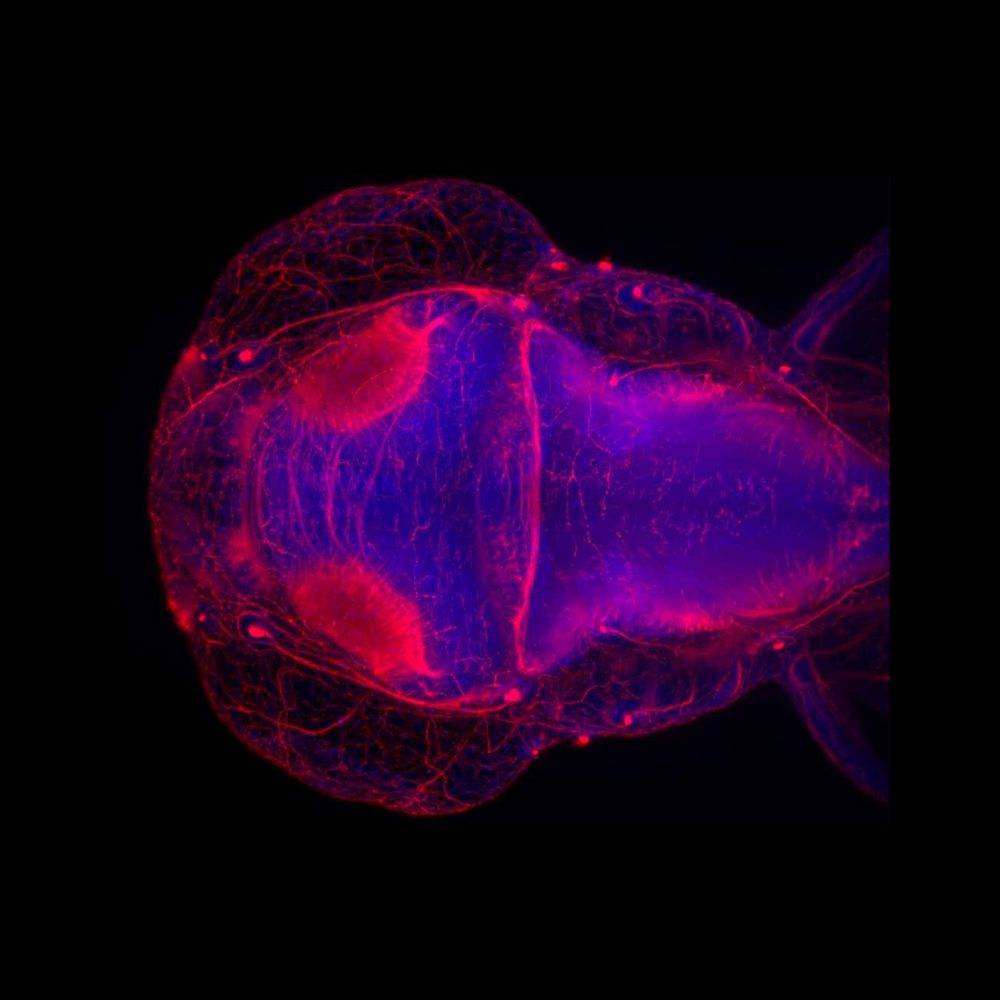
Manning et al., 2025, @emmanning.bsky.social, co-led by Marysia Placzek and Elsie Place @elsieplace.bsky.social, in collaboration with Seth Blackshaw @sethblackshaw.bsky.social
DRN new publication alert:
Manning et al., 2025, @emmanning.bsky.social, co-led by Marysia Placzek and Elsie Place @elsieplace.bsky.social, in collaboration with Seth Blackshaw @sethblackshaw.bsky.social
Resolving forebrain developmental organisation by analysis of differential growth patterns
Nature Communications - Experiments on the embryonic chick brain reveal distinct directional growth patterns and a tripartite hypothalamus, challenging the classic segmented prosomere model and...
rdcu.be
January 8, 2026 at 11:04 AM
rdcu.be/eX8JD
DRN new publication alert:
Manning et al., 2025, @emmanning.bsky.social, co-led by Marysia Placzek and Elsie Place @elsieplace.bsky.social, in collaboration with Seth Blackshaw @sethblackshaw.bsky.social
DRN new publication alert:
Manning et al., 2025, @emmanning.bsky.social, co-led by Marysia Placzek and Elsie Place @elsieplace.bsky.social, in collaboration with Seth Blackshaw @sethblackshaw.bsky.social
Reposted by Seth Blackshaw

A new paper from my lab. I will have a full description soon. rdcu.be/eX1Ld

ipRGC properties prevent light from shifting the SCN clock during daytime
Nature - The inability of intrinsically photosensitive retinal ganglion cells to shift the circadian clock in the suprachiasmatic nucleus during daytime is caused by light-dependent depolarization...
rdcu.be
January 7, 2026 at 5:17 PM
A new paper from my lab. I will have a full description soon. rdcu.be/eX1Ld
It's been quite a year for hypothalamic development. With this heroic analysis of developmental cell lineage, coupled with earlier multimode-based gene regulatory network analysis, the prosomere model looks like it has passed into history.
www.nature.com/articles/s41...
www.nature.com/articles/s41...
Resolving forebrain developmental organisation by analysis of differential growth patterns - Nature Communications
Experiments on the embryonic chick brain reveal distinct directional growth patterns and a tripartite hypothalamus, challenging the classic segmented prosomere model and offering an updated view of ho...
www.nature.com
December 22, 2025 at 5:08 PM
It's been quite a year for hypothalamic development. With this heroic analysis of developmental cell lineage, coupled with earlier multimode-based gene regulatory network analysis, the prosomere model looks like it has passed into history.
www.nature.com/articles/s41...
www.nature.com/articles/s41...
Reposted by Seth Blackshaw

On our evolutionary branch, a few genes got an update unique to humans.
Some used to think those variants might have been difference that made all the difference: the key to becoming human.
This month's Q&A with Barbara Molz @mpi-nl.bsky.social gets into new results that tell a different story. 🧪
Some used to think those variants might have been difference that made all the difference: the key to becoming human.
This month's Q&A with Barbara Molz @mpi-nl.bsky.social gets into new results that tell a different story. 🧪
December 11, 2025 at 6:19 PM
On our evolutionary branch, a few genes got an update unique to humans.
Some used to think those variants might have been difference that made all the difference: the key to becoming human.
This month's Q&A with Barbara Molz @mpi-nl.bsky.social gets into new results that tell a different story. 🧪
Some used to think those variants might have been difference that made all the difference: the key to becoming human.
This month's Q&A with Barbara Molz @mpi-nl.bsky.social gets into new results that tell a different story. 🧪
Second, not only does Ptpb1 not repress neurogenesis in adult glia, it doesn't do much in the developing CNS either. Scratch another master regulator off the list.
doi.org/10.7554/eLif...
doi.org/10.7554/eLif...

Ptbp1 is not required for retinal neurogenesis and cell fate specification
Loss of function of Ptbp1 in retinal progenitors leads to changes in RNA splicing but does not affect neurogenesis and cell fate specification.
doi.org
December 12, 2025 at 1:59 PM
Second, not only does Ptpb1 not repress neurogenesis in adult glia, it doesn't do much in the developing CNS either. Scratch another master regulator off the list.
doi.org/10.7554/eLif...
doi.org/10.7554/eLif...
A couple of papers are finally out too. First, Meis factors are (unfortunately) not sufficient to respecify temporal identity in retinal progenitor cells.
www.nature.com/articles/s41...
www.nature.com/articles/s41...
Overexpression of Meis factors in late-stage retinal progenitors yields complex effects on temporal patterning and neurogenesis - Scientific Reports
The vertebrate retina serves as a model for studying neurogenesis and cell fate specification, with retinal progenitor cells following a tightly regulated temporal sequence to generate distinct cell t...
www.nature.com
December 12, 2025 at 1:57 PM
A couple of papers are finally out too. First, Meis factors are (unfortunately) not sufficient to respecify temporal identity in retinal progenitor cells.
www.nature.com/articles/s41...
www.nature.com/articles/s41...
Recent Hopkins Hub article highlighting our work on optic nerve regeneration in axolotl. Congratulations to Ted!
hub.jhu.edu/2025/12/11/s...
hub.jhu.edu/2025/12/11/s...

Could axolotls hold the key to restoring human vision?
Axolotls can regenerate optic nerves, retinas, and parts of their brain. Provost's Undergraduate Research Award-winner Ted Chor wants to understand how.
hub.jhu.edu
December 12, 2025 at 1:53 PM
Recent Hopkins Hub article highlighting our work on optic nerve regeneration in axolotl. Congratulations to Ted!
hub.jhu.edu/2025/12/11/s...
hub.jhu.edu/2025/12/11/s...
Very proud to have Leah working with us.
Leah Elias, Ph.D., is our Featured Fellow! Elias' postdoctoral research in @sethblackshaw.bsky.social's lab is dissecting how the need for restorative sleep is encoded into our brains at the level of cellular circuits and molecular signals. Her findings may reveal novel therapeutic targets ...
1/
1/

October 7, 2025 at 4:35 PM
Very proud to have Leah working with us.
Reposted by Seth Blackshaw

Leah Elias, Ph.D., is our Featured Fellow! Elias' postdoctoral research in @sethblackshaw.bsky.social's lab is dissecting how the need for restorative sleep is encoded into our brains at the level of cellular circuits and molecular signals. Her findings may reveal novel therapeutic targets ...
1/
1/
October 7, 2025 at 12:40 PM
Leah Elias, Ph.D., is our Featured Fellow! Elias' postdoctoral research in @sethblackshaw.bsky.social's lab is dissecting how the need for restorative sleep is encoded into our brains at the level of cellular circuits and molecular signals. Her findings may reveal novel therapeutic targets ...
1/
1/
Exciting new study shows that organoid-derived human retinal ganglion cells survive when apoptosis is genetically inhibited.

Excited to share my PhD work! We characterize waves of cell death during human retinal development, and show how blocking apoptosis promotes RGC long-term survival and alters their developmental dynamics in organoids. These findings will improve future organoid design for retinal disease modeling‼️
Check this paper from @simonomisz.bsky.social in our lab!
www.biorxiv.org/cgi/content/...
Human retinas/organoids go through 2 apoptotic waves. Organoids also have a necrotic wave. Blocking apoptosis promotes RGC survival to day 200 (usually die!). Apoptosis promotes normal neurogenesis/maturation.
www.biorxiv.org/cgi/content/...
Human retinas/organoids go through 2 apoptotic waves. Organoids also have a necrotic wave. Blocking apoptosis promotes RGC survival to day 200 (usually die!). Apoptosis promotes normal neurogenesis/maturation.
September 30, 2025 at 1:59 PM
Exciting new study shows that organoid-derived human retinal ganglion cells survive when apoptosis is genetically inhibited.
Our latest manuscript is out, and this one tackles the problem of cellular aging in the retina, using comparative multiomic analysis of zebrafish, mouse, and humans. What led us to work on aging after studying development and regeneration? Explainer follows./1
www.biorxiv.org/content/10.1...
www.biorxiv.org/content/10.1...

Comparative single-cell multiomic analysis reveals evolutionarily conserved and species-specific cellular mechanisms mediating natural retinal aging.
Biological age is a major risk factor in the development of common degenerative retinal diseases such as age-related macular degeneration and glaucoma. To systematically characterize molecular mechani...
www.biorxiv.org
September 12, 2025 at 7:04 PM
Our latest manuscript is out, and this one tackles the problem of cellular aging in the retina, using comparative multiomic analysis of zebrafish, mouse, and humans. What led us to work on aging after studying development and regeneration? Explainer follows./1
www.biorxiv.org/content/10.1...
www.biorxiv.org/content/10.1...
Reposted by Seth Blackshaw

👁️The retina — strikingly conserved across vertebrates, but an oddity among bilaterians!
So how did it evolve?
With @mikebok.bsky.social, @neurofishh.bsky.social and @denilsson.bsky.social, we argue that retinal complexity may 𝑝𝑟𝑒𝑑𝑎𝑡𝑒 𝑡ℎ𝑒 𝑒𝑦𝑒 𝑖𝑡𝑠𝑒𝑙𝑓.
www.biorxiv.org/content/10.1...
1/n
So how did it evolve?
With @mikebok.bsky.social, @neurofishh.bsky.social and @denilsson.bsky.social, we argue that retinal complexity may 𝑝𝑟𝑒𝑑𝑎𝑡𝑒 𝑡ℎ𝑒 𝑒𝑦𝑒 𝑖𝑡𝑠𝑒𝑙𝑓.
www.biorxiv.org/content/10.1...
1/n

a black and white dog is sitting on a couch with its tongue sticking out .
ALT: a black and white dog is sitting on a couch with its tongue sticking out .
media.tenor.com
September 12, 2025 at 12:58 PM
👁️The retina — strikingly conserved across vertebrates, but an oddity among bilaterians!
So how did it evolve?
With @mikebok.bsky.social, @neurofishh.bsky.social and @denilsson.bsky.social, we argue that retinal complexity may 𝑝𝑟𝑒𝑑𝑎𝑡𝑒 𝑡ℎ𝑒 𝑒𝑦𝑒 𝑖𝑡𝑠𝑒𝑙𝑓.
www.biorxiv.org/content/10.1...
1/n
So how did it evolve?
With @mikebok.bsky.social, @neurofishh.bsky.social and @denilsson.bsky.social, we argue that retinal complexity may 𝑝𝑟𝑒𝑑𝑎𝑡𝑒 𝑡ℎ𝑒 𝑒𝑦𝑒 𝑖𝑡𝑠𝑒𝑙𝑓.
www.biorxiv.org/content/10.1...
1/n
Reposted by Seth Blackshaw

Fantastic workshop !!!! Thank you again Seth and Michel !!!
September 6, 2025 at 8:12 AM
Fantastic workshop !!!! Thank you again Seth and Michel !!!
Our latest preprint is out, focusing on characterizing the response of Lhx6-positive neurons of the zona incerta (ZI) to naturally-occurring and experimentally-induced changes in the need to sleep, also known as sleep pressure.
www.biorxiv.org/content/10.1...
www.biorxiv.org/content/10.1...
Sleep pressure is differentially regulated by molecularly distinct subtypes of Lhx6-positive and Lhx6-negative neurons of the zona incerta
Sleep pressure, the accumulating drive towards sleep during wakefulness, is shaped by Lhx6-positive GABAergic neurons in the zona incerta (ZI). Here, we show that these neurons are broadly activated b...
www.biorxiv.org
August 5, 2025 at 2:04 PM
Our latest preprint is out, focusing on characterizing the response of Lhx6-positive neurons of the zona incerta (ZI) to naturally-occurring and experimentally-induced changes in the need to sleep, also known as sleep pressure.
www.biorxiv.org/content/10.1...
www.biorxiv.org/content/10.1...
Now up, positively our lab's last word on Ptbp1. Developmental loss of function Ptbp1 turns out not to regulate neurogenesis or cell fate specification at all, but does alter splicing patterns and slightly accelerates expression of photoreceptor-specific genes./1
www.biorxiv.org/content/10.1...
www.biorxiv.org/content/10.1...
Ptbp1 is not required for retinal neurogenesis and cell fate specification.
The RNA-binding protein Ptbp1 has been proposed as a master regulator of neuronal fate, repressing neurogenesis through its effects on alternative splicing and miRNA maturation. While prior studies us...
www.biorxiv.org
July 4, 2025 at 3:03 PM
Now up, positively our lab's last word on Ptbp1. Developmental loss of function Ptbp1 turns out not to regulate neurogenesis or cell fate specification at all, but does alter splicing patterns and slightly accelerates expression of photoreceptor-specific genes./1
www.biorxiv.org/content/10.1...
www.biorxiv.org/content/10.1...
Reposted by Seth Blackshaw

Job alert ‼️ @thomasdwkim.bsky.social and I are recruiting a postdoc in single-cell genomics via the NORPOD program of the @nordicembl.bsky.social. Collaboration between @fimm-uh.bsky.social and @dandrite.bsky.social on multimodal data integration in neurodevelopment.
jobs.helsinki.fi/job/Helsinki...
jobs.helsinki.fi/job/Helsinki...
Postdoctoral Researcher in Single-Cell Genomics through the NORPOD program
Postdoctoral Researcher in Single-Cell Genomics through the NORPOD program
jobs.helsinki.fi
June 25, 2025 at 8:36 AM
Job alert ‼️ @thomasdwkim.bsky.social and I are recruiting a postdoc in single-cell genomics via the NORPOD program of the @nordicembl.bsky.social. Collaboration between @fimm-uh.bsky.social and @dandrite.bsky.social on multimodal data integration in neurodevelopment.
jobs.helsinki.fi/job/Helsinki...
jobs.helsinki.fi/job/Helsinki...
New collaborative study out with Mark Wu’s group identifies a thalamic reuniens-zona incerta circuit as both responsive to induced sleep deprivation and essential for mediating recovery sleep. Further perspective on this work follows./1
www.science.org/doi/epdf/10....
www.science.org/doi/epdf/10....
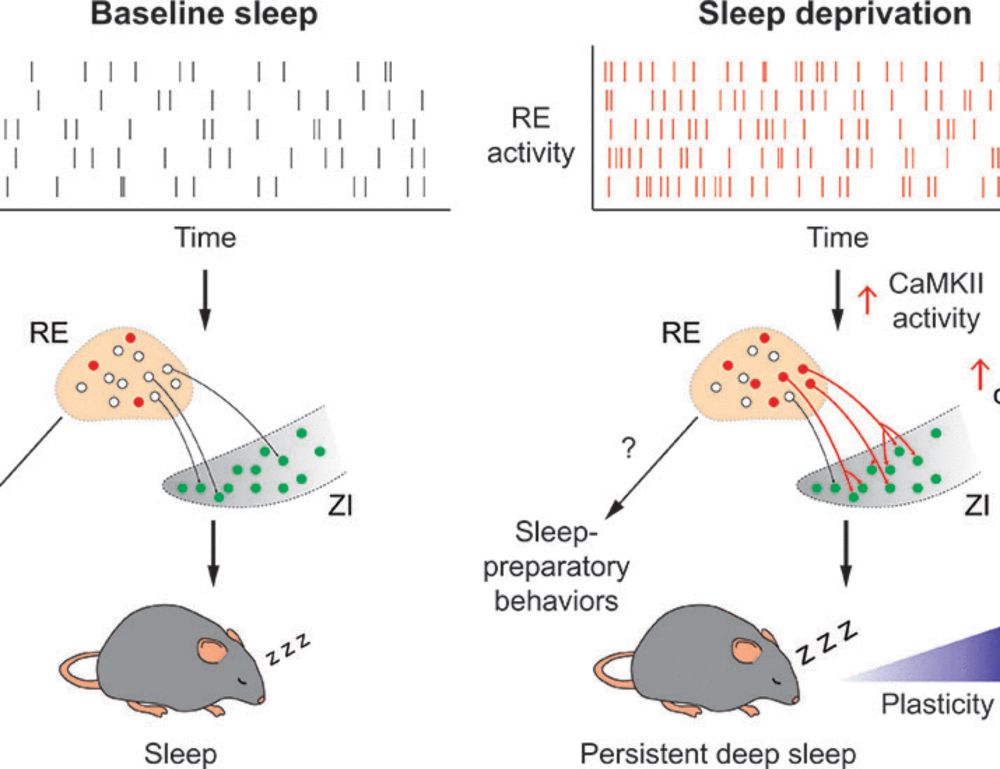
Sleep need–dependent plasticity of a thalamic circuit promotes homeostatic recovery sleep
Prolonged wakefulness leads to persistent, deep recovery sleep (RS). However, the neuronal circuits that mediate this process remain elusive. From a circuit screen in mice, we identified a group of th...
www.science.org
June 19, 2025 at 6:45 PM
New collaborative study out with Mark Wu’s group identifies a thalamic reuniens-zona incerta circuit as both responsive to induced sleep deprivation and essential for mediating recovery sleep. Further perspective on this work follows./1
www.science.org/doi/epdf/10....
www.science.org/doi/epdf/10....