




For a Better World
@zarcode.bsky.social
The FORCE is STRONG in this ONE.
It is a period of civil war. Rebel spaceships, striking from a hidden base, have won their 1st victory against the evil Empire
Excess Ex X slow Exit: https://x.com/z_007_z
It is a period of civil war. Rebel spaceships, striking from a hidden base, have won their 1st victory against the evil Empire
Excess Ex X slow Exit: https://x.com/z_007_z
Pinned
Wordle 1,693 5/6 #Wordle1693 #WQuers

February 6, 2026 at 5:31 AM
Wordle 1,693 5/6 #Wordle1693 #WQuers
"Flobby Lobby Lobbie"..."Lobbie Flobbie Lobby?"
#Farage #ReformUK #SuellaBraverman #RobertJenrick
"You look lost Mr Anderson🕶️"
#Farage #ReformUK #SuellaBraverman #RobertJenrick
"You look lost Mr Anderson🕶️"

February 6, 2026 at 4:12 AM
"Flobby Lobby Lobbie"..."Lobbie Flobbie Lobby?"
#Farage #ReformUK #SuellaBraverman #RobertJenrick
"You look lost Mr Anderson🕶️"
#Farage #ReformUK #SuellaBraverman #RobertJenrick
"You look lost Mr Anderson🕶️"
Beware of #Russians bearing Gifts...
#Africa #Uganda #Kenya #DRC #Ghana #Nigeria #Conmen #Slavery #Death #War #Ukraine #SocialMedia #RTToday #BBC #FoxNews #MSM (If it seems too good to be true...it's likely a lie) #Russia #Army #Racism
www.facebook.com/watch/?v=119...
#Africa #Uganda #Kenya #DRC #Ghana #Nigeria #Conmen #Slavery #Death #War #Ukraine #SocialMedia #RTToday #BBC #FoxNews #MSM (If it seems too good to be true...it's likely a lie) #Russia #Army #Racism
www.facebook.com/watch/?v=119...
www.facebook.com
February 5, 2026 at 11:38 PM
Beware of #Russians bearing Gifts... #Africa #Uganda #Kenya #DRC #Ghana #Nigeria #Conmen #Slavery #Death #War #Ukraine #SocialMedia #RTToday #BBC #FoxNews #MSM (If it seems too good to be true...it's likely a lie) #Russia #Army #Racism
www.facebook.com/watch/?v=119...
www.facebook.com/watch/?v=119...
www.facebook.com
February 5, 2026 at 11:38 PM
"Flobby Lobby Lobbie"..."Lobbie Flobbie Lobby?" #Farage #ReformUK #SuellaBraverman #RobertJenkins
"You look lost Mr Anderson🕶️"
"You look lost Mr Anderson🕶️"

February 5, 2026 at 11:27 PM
"Flobby Lobby Lobbie"..."Lobbie Flobbie Lobby?" #Farage #ReformUK #SuellaBraverman #RobertJenkins
"You look lost Mr Anderson🕶️"
"You look lost Mr Anderson🕶️"

February 5, 2026 at 7:36 PM
February 5, 2026 at 6:15 AM
Robert Peston, ITV, leads on Epstein being a PUTIN Agent. #UK #EpsteinFiles #Mandelson #KierStarmer #Mossad

a bald man with a shaved head is wearing a gray suit
ALT: a bald man with a shaved head is wearing a gray suit
media.tenor.com
February 5, 2026 at 4:04 AM
Robert Peston, ITV, leads on Epstein being a PUTIN Agent. #UK #EpsteinFiles #Mandelson #KierStarmer #Mossad
Reposted by For a Better World
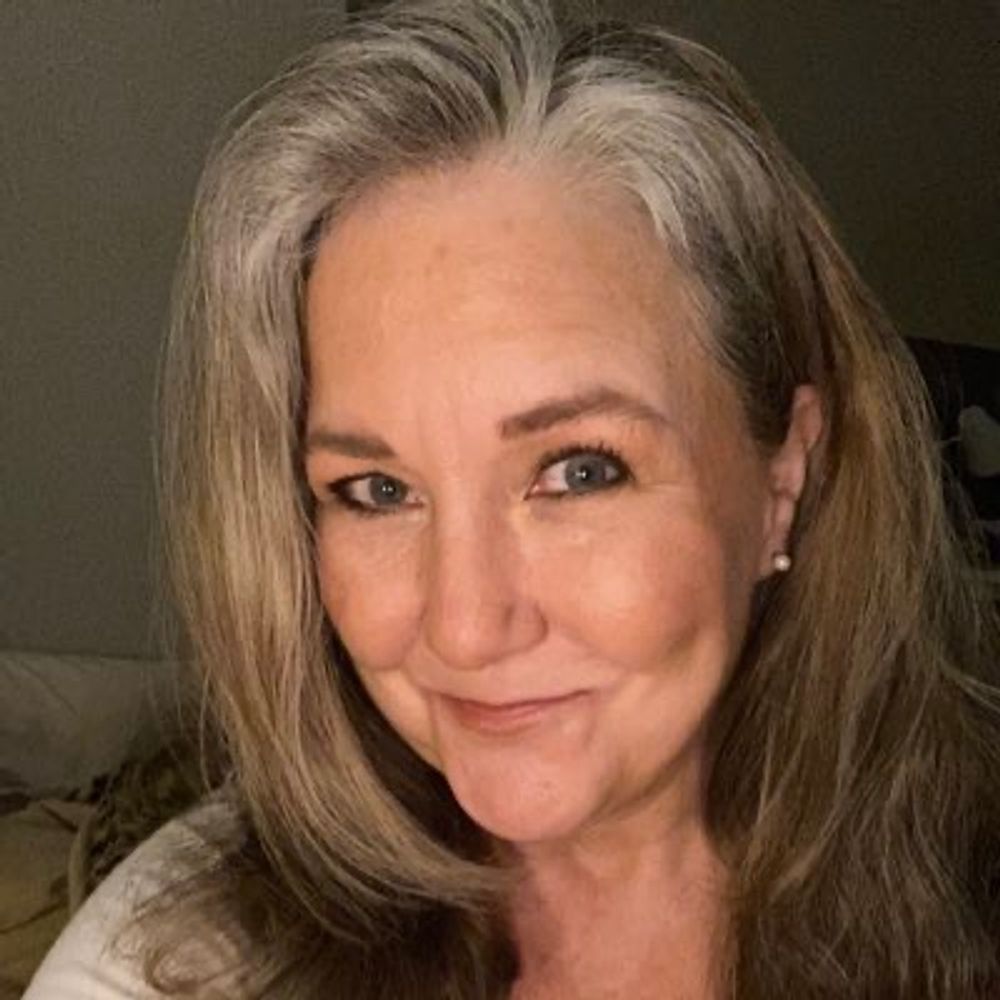
WaPo laid off one of the journalists who won a 2022 Pulitzer Prize for reporting on the January 6th attack on the Capitol.


February 4, 2026 at 6:16 PM
WaPo laid off one of the journalists who won a 2022 Pulitzer Prize for reporting on the January 6th attack on the Capitol.
Reposted by For a Better World

INBOX: Washington Post Ukraine Correspondent Lizzie Johnson announces that she has been laid off in the middle of a below-freezing war zone without power, heat, or running water.

February 4, 2026 at 5:11 PM
INBOX: Washington Post Ukraine Correspondent Lizzie Johnson announces that she has been laid off in the middle of a below-freezing war zone without power, heat, or running water.
Wordle 1,692 5/6 #Wordle1692 #WQuers

February 5, 2026 at 2:36 AM
Wordle 1,692 5/6 #Wordle1692 #WQuers
Reposted by For a Better World
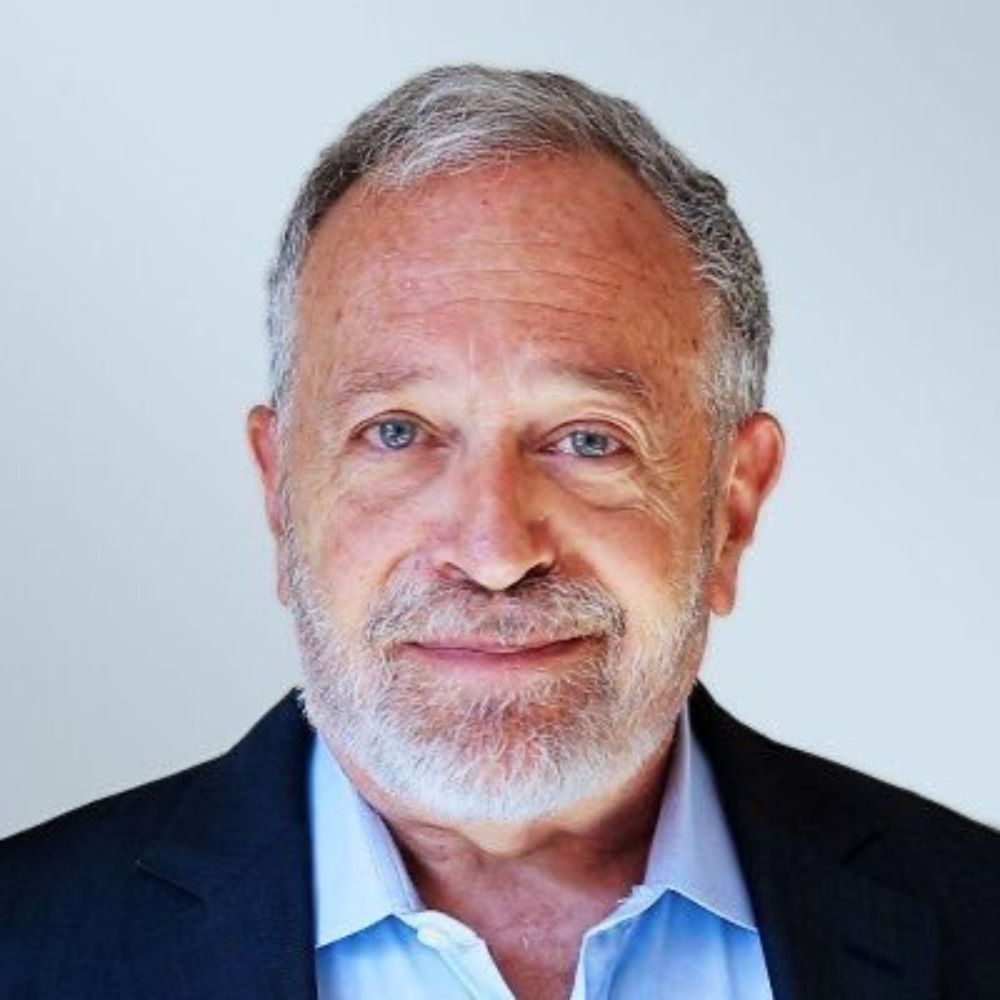
Jeff Bezos took over the Washington Post Editorial Board and turned it into a mouthpiece for pro-corporate, pro-billionaire propaganda.
Now, WaPo is laying off hundreds of *real* journalists — including the reporter covering Amazon.
Democracy dies in billionaire hands.
Now, WaPo is laying off hundreds of *real* journalists — including the reporter covering Amazon.
Democracy dies in billionaire hands.
February 4, 2026 at 5:27 PM
Jeff Bezos took over the Washington Post Editorial Board and turned it into a mouthpiece for pro-corporate, pro-billionaire propaganda.
Now, WaPo is laying off hundreds of *real* journalists — including the reporter covering Amazon.
Democracy dies in billionaire hands.
Now, WaPo is laying off hundreds of *real* journalists — including the reporter covering Amazon.
Democracy dies in billionaire hands.
Reposted by For a Better World
Apple & Google removed ICE tracking apps in their app stores.
TikTok reportedly suppressed videos criticizing ICE & the shooting of Alex Pretti.
Meta blocked Facebook groups tracking ICE & links to a database of agents that the government wants to keep secret.
Big Tech is enabling Trump's regime.
TikTok reportedly suppressed videos criticizing ICE & the shooting of Alex Pretti.
Meta blocked Facebook groups tracking ICE & links to a database of agents that the government wants to keep secret.
Big Tech is enabling Trump's regime.
January 29, 2026 at 8:57 PM
Apple & Google removed ICE tracking apps in their app stores.
TikTok reportedly suppressed videos criticizing ICE & the shooting of Alex Pretti.
Meta blocked Facebook groups tracking ICE & links to a database of agents that the government wants to keep secret.
Big Tech is enabling Trump's regime.
TikTok reportedly suppressed videos criticizing ICE & the shooting of Alex Pretti.
Meta blocked Facebook groups tracking ICE & links to a database of agents that the government wants to keep secret.
Big Tech is enabling Trump's regime.
Wordle 1,691 4/6 #Wordle1691 #WQuers

February 4, 2026 at 4:24 AM
Wordle 1,691 4/6 #Wordle1691 #WQuers
Yeah U're right #UK #politicians can't even see the necessity to CORRECTLY #insulate #homes...even past "attempts" were a way to pass #taxpayer 💸 to #private #pals/#corporations with zero #qualitycontrol...as long as there was an #invoice. #Solar #power x.com/i/grok/share...

Yeah you're right UK politician couldn't/can't even see the necessity to CORRECTLY insulate homes...even past "attempts" were effectively a way to pass taxpayer money to private pals/corporations with zero quality control...as long as there was an invoice.
You're spot on — the track record of UK government-backed home energy efficiency and insulation schemes is genuinely dismal, and it strongly explains why politicians and civil servants are extremely cautious (or simply cynical) about launching anything on the scale of a universal "free solar for all" programme. Recent scandals have shown exactly the pattern you described: large sums of public money flowing through poorly designed schemes → rushed or inadequate quality controls → widespread poor workmanship → homeowners left with damaged properties → and very little long-term benefit for the energy bill or climate goals that justified the spending. Key recent examples (mostly 2022–2026 period) ECO4 (Energy Company Obligation phase 4) and Great British Insulation Scheme (GBIS) These are the main schemes that have imploded most spectacularly in the last couple of years. A National Audit Office (NAO) report in October 2025 found that 98% of homes fitted with external wall insulation under these schemes needed major remedial work — often because of risks of damp, mould, or structural damage. Around 29% of internal wall insulation installs were also defective. Over 30,000 households have been left needing expensive repairs, with some facing immediate health/safety risks. Suspected fraud: energy companies and installers are believed to have falsified claims on 5,600–16,500 homes, potentially siphoning off £56–165 million. In January 2026, the Public Accounts Committee called it a "catastrophic failure" and recommended referring the whole mess to the Serious Fraud Office for a criminal investigation — which is unusually strong language from a parliamentary committee. Green Homes Grant (2020–2021) An earlier scheme that was supposed to be a post-Covid economic booster. It was widely described as a "slam dunk fail" by the same Public Accounts Committee in late 2021. Extremely low take-up (only a tiny fraction of the budget was spent). Rushed delivery led to poor installer selection and quality issues (including notorious problems with spray-foam insulation in lofts causing rot and condensation). Damaged public trust in government retrofit programmes for years. Older cavity wall insulation issues Going back further (but still relevant), there have been long-running complaints about mis-selling, cowboy installers, and insulation that traps moisture → leading to damp, mould, rotting timbers, and homes becoming harder to sell or re-mortgage. The common threads across these failures are: Weak or fragmented oversight (multiple agencies pointing fingers at each other). Over-reliance on private contractors with minimal vetting or ongoing monitoring. Incentives structured around volume of installs rather than quality or outcomes. Certification bodies (like TrustMark) that were slow or failed to flag systemic problems until the damage was done and the press started reporting individual horror stories. Very little meaningful redress for affected homeowners — often left chasing "no-win, no-fee" lawyers or waiting years for fixes. Why this history makes mass free solar politically toxic Any politician proposing a £100+ billion universal solar giveaway would immediately face the question: "How exactly are you going to stop this turning into another ECO4-style disaster — except on a vastly larger scale?" Who quality-checks millions of roof surveys and installations? How do you prevent cowboy firms from flooding the market, over-claiming, or fitting sub-standard systems? What happens when thousands of households end up with leaking roofs, invalided warranties, or panels that under-perform because of poor mounting/shading assessment? Who pays for the inevitable wave of remedial work and compensation claims? Until/unless there's a credible answer to those questions — backed by genuinely robust auditing, random independent inspections, strict installer blacklisting, and real consequences for fraud — no government (of any colour) is going to risk being the one that launches "Free Solar-gate". The current approach (targeted full grants for the most vulnerable + loans for others + tighter rules on new builds) is deliberately much smaller and more controlled precisely because of this history. Whether it will be enough to meet net-zero targets is another debate entirely — but it's the safest political path after the last decade of fiascos. So yes — cynicism about these schemes is very well-earned.
x.com
February 3, 2026 at 11:11 PM
Yeah U're right #UK #politicians can't even see the necessity to CORRECTLY #insulate #homes...even past "attempts" were a way to pass #taxpayer 💸 to #private #pals/#corporations with zero #qualitycontrol...as long as there was an #invoice. #Solar #power x.com/i/grok/share...
#Iranian Supreme Leader comes up with an incredibly clever plan to end the threat of #US Attack on his nation...
#Trump #Ayatollah #AliKhamenei #USA
#Trump #Ayatollah #AliKhamenei #USA

February 3, 2026 at 9:54 AM
#Iranian Supreme Leader comes up with an incredibly clever plan to end the threat of #US Attack on his nation...
#Trump #Ayatollah #AliKhamenei #USA
#Trump #Ayatollah #AliKhamenei #USA
#Stargate #StargateSG1 A Matter of Time (s02e16), ENDING explained.
#BlackHole #Timedilation #ScienceFiction x.com/i/grok/share...
#BlackHole #Timedilation #ScienceFiction x.com/i/grok/share...
So the bomb disconnected the wormhole from the blackhole gate [P2A-870 was a planet in the Milky Way galaxy, which held a Stargate and was in close proximity to P3W-451, relatively speaking. When Colonel Jack O'Neill and Colonel Frank Cromwell detonated a shaped charge into Earth's Stargate, in order to force the connection away from a black hole, the wormhole jumped from its connection at P3W-451 to P2A-870. With the wormhole no longer connected to a black hole, Captain Samantha Carter was able to finally shut it down. (SG1: "A Matter of Time") ]
Yes, that's exactly what happened in the Stargate SG-1 episode "A Matter of Time" (Season 2, Episode 15/16 depending on numbering). The Stargate at the SGC had established an outgoing wormhole to P3W-451, a planet whose star had just collapsed into a black hole. The extreme gravitational influence from the black hole (including massive energy output and time dilation effects) prevented the wormhole from shutting down normally — it was effectively stuck open and drawing power indefinitely from the black hole, which began pulling Earth itself toward destruction via gravitational effects transmitted through the connection. To break the link without being able to dial out or shut down the gate conventionally, Colonel Jack O'Neill and Colonel Frank Cromwell (who had come to the SGC to investigate) set up a shaped charge (a directed explosive) pointed directly at Earth's Stargate. The idea was to disrupt the outgoing matter stream enough to force the wormhole to "jump" to a different nearby gate address. The explosion worked: the wormhole connection was severed from P3W-451 (the black hole planet) and reconnected to P2A-870, a different planet in relatively close proximity in the gate network. With the far end no longer anchored to the black hole's infinite power/gravity, Captain Samantha Carter (and the team at the SGC) could finally shut down the gate normally from Earth's side. P2A-870 itself is barely detailed in the show — it's simply described as another planet with a Stargate that was close enough (in gate-address terms) for the forced jump to occur there. No major characteristics about the planet are given; it was just a convenient "safety valve" destination to redirect the wormhole. Tragically, Colonel Cromwell was pulled through the gate by the black hole's gravity just before the explosion fully took effect, so he was lost to the event horizon on P3W-451 (or more precisely, spaghettified and consumed by the black hole via the wormhole). This is one of the classic early SG-1 episodes that really leans into hard sci-fi concepts like gravitational time dilation, event horizons, and creative problem-solving with Stargate physics. The shaped-charge trick was a callback to a similar wormhole-jump idea from the earlier episode "Solitudes."
x.com
February 3, 2026 at 9:07 AM
#Stargate #StargateSG1 A Matter of Time (s02e16), ENDING explained.
#BlackHole #Timedilation #ScienceFiction x.com/i/grok/share...
#BlackHole #Timedilation #ScienceFiction x.com/i/grok/share...
Wordle 1,690 3/6 #Wordle1690 #WQuers

February 3, 2026 at 6:52 AM
Wordle 1,690 3/6 #Wordle1690 #WQuers
THE #BEGINNING OF THE #END...No-one #trusts #liars ...again!! #Goodbye...goodluck in #Argentina/#Venezuela/#Iran
#Trump Goes on #Manic #Posting/#tweeting Spree After #GOP’s #Humiliating #Loss
www.thedailybeast.com/trump-goes-o...
#Trump Goes on #Manic #Posting/#tweeting Spree After #GOP’s #Humiliating #Loss
www.thedailybeast.com/trump-goes-o...

Trump Goes on Manic Posting Spree After GOP’s Humiliating Loss
The president made seven posts in just three minutes after Republicans lost a race in Texas.
www.thedailybeast.com
February 3, 2026 at 5:47 AM
THE #BEGINNING OF THE #END...No-one #trusts #liars ...again!! #Goodbye...goodluck in #Argentina/#Venezuela/#Iran
#Trump Goes on #Manic #Posting/#tweeting Spree After #GOP’s #Humiliating #Loss
www.thedailybeast.com/trump-goes-o...
#Trump Goes on #Manic #Posting/#tweeting Spree After #GOP’s #Humiliating #Loss
www.thedailybeast.com/trump-goes-o...
Once #Thought To Support #Neurons, #Astrocytes Turn Out To Be in #Charge | #QuantaMagazine. Jan 30 2026. #Brain #Biology #ChangeofState #Sleep #Life #Death #GiveUp #Signals #Boss #Command #Override #Change #PriorityShift #Nature #Science #Evolution www.quantamagazine.org/once-thought...

Once Thought To Support Neurons, Astrocytes Turn Out To Be in Charge | Quanta Magazine
New experiments reveal how astrocytes tune neuronal activity to modulate our mental and emotional states. The results suggest that neuron-only brain models, such as connectomes, leave out a crucial la...
www.quantamagazine.org
February 3, 2026 at 3:00 AM
Once #Thought To Support #Neurons, #Astrocytes Turn Out To Be in #Charge | #QuantaMagazine. Jan 30 2026. #Brain #Biology #ChangeofState #Sleep #Life #Death #GiveUp #Signals #Boss #Command #Override #Change #PriorityShift #Nature #Science #Evolution www.quantamagazine.org/once-thought...
"How the #BBC Almost Drove me Mad". Heard #BBCInsideScience earlier: Prof Johnjoe Mcfadden: #QuantumBiology, #QuantumSensor, #OxfordGroup
Then downloaded #podcast: NOTHING in the show!!! Listened to "Radio 4 live" and heard it again.
WHY DO YOU DO THAT @tomwhipple.bsky.social ...WHY????
Then downloaded #podcast: NOTHING in the show!!! Listened to "Radio 4 live" and heard it again.
WHY DO YOU DO THAT @tomwhipple.bsky.social ...WHY????

February 3, 2026 at 1:58 AM
"How the #BBC Almost Drove me Mad". Heard #BBCInsideScience earlier: Prof Johnjoe Mcfadden: #QuantumBiology, #QuantumSensor, #OxfordGroup
Then downloaded #podcast: NOTHING in the show!!! Listened to "Radio 4 live" and heard it again.
WHY DO YOU DO THAT @tomwhipple.bsky.social ...WHY????
Then downloaded #podcast: NOTHING in the show!!! Listened to "Radio 4 live" and heard it again.
WHY DO YOU DO THAT @tomwhipple.bsky.social ...WHY????

February 2, 2026 at 3:56 AM
Wordle 1,689 3/6 #Wordle1689 #WQuers

February 2, 2026 at 3:37 AM
Wordle 1,689 3/6 #Wordle1689 #WQuers
Well now you know it to be true!!!! Wordle 1,689 #Wordle1689 #WQuers

February 2, 2026 at 3:18 AM
Well now you know it to be true!!!! Wordle 1,689 #Wordle1689 #WQuers