



Biological Psychiatry
@biologicalpsych.bsky.social
Official account for the Biological Psychiatry family of journals.
Publishing cutting-edge research in psychiatric neuroscience, cognitive neuroimaging, and global open science.
Publishing cutting-edge research in psychiatric neuroscience, cognitive neuroimaging, and global open science.
Thanks to the editors and authors for their contributions!
December 1, 2025 at 11:30 AM
Thanks to the editors and authors for their contributions!
Specific genes and pathways are responsible for sleep and the functional outcomes of sleep Greene examines how these genes overlap with those linked to autism spectrum disorder, identifying a genetic mechanism that may connect sleep to psychiatric illness.

Biological Mechanisms of Sleep/Wake-Related Function
Animals oscillate between sleep and wake periods characterized by foraging for food and avoiding danger, with a relatively high level of arousal during waking and by a relative absence of movement…
www.biologicalpsychiatryjournal.com
December 1, 2025 at 11:30 AM
Specific genes and pathways are responsible for sleep and the functional outcomes of sleep Greene examines how these genes overlap with those linked to autism spectrum disorder, identifying a genetic mechanism that may connect sleep to psychiatric illness.
The causal relationships between sleep and mental health are unclear. Kozhemiako et al. summarize human genetic studies linking the two, acknowledging challenges such as small effects and biased cohorts, and proposing future directions for advancement.

The Interplay Between Sleep and Mental Health: A Genetic Perspective
Although many facets of sleep, including subjective, behavioral, and neurophysiological features, are closely linked with psychiatric disorders, the natures of these relationships are generally…
www.biologicalpsychiatryjournal.com
December 1, 2025 at 11:30 AM
The causal relationships between sleep and mental health are unclear. Kozhemiako et al. summarize human genetic studies linking the two, acknowledging challenges such as small effects and biased cohorts, and proposing future directions for advancement.
Sleep is important for brain maturation and mental health in adolescents. Tarokh and Guiterrez Herrera review the genetic, environmental, and neurophysiological mechanisms linking poor sleep to mental disorders, advocating for sleep as a diagnostic marker and a therapeutic target.

Adolescent Sleep Disruption: Implications for Psychiatric Morbidity
Adolescence marks a critical developmental period characterized by rapid brain maturation and heightened vulnerability to psychiatric disorders. This review underscores the pivotal role of sleep in…
www.biologicalpsychiatryjournal.com
December 1, 2025 at 11:30 AM
Sleep is important for brain maturation and mental health in adolescents. Tarokh and Guiterrez Herrera review the genetic, environmental, and neurophysiological mechanisms linking poor sleep to mental disorders, advocating for sleep as a diagnostic marker and a therapeutic target.
Sleep alterations are both a symptom of and a risk factor for depression. Rosenblum et al. review the role of sleep alterations in the pathophysiology of depression and implications for existing and novel sleep-based therapeutic interventions.

Sleep Neurophysiology in Depression
Sleep disturbances are both a primary symptom of and risk factor for major depressive disorder (MDD). Sleep alterations in MDD include the presence of insomnia or hypersomnia and aberrations in sleep…
www.biologicalpsychiatryjournal.com
December 1, 2025 at 11:30 AM
Sleep alterations are both a symptom of and a risk factor for depression. Rosenblum et al. review the role of sleep alterations in the pathophysiology of depression and implications for existing and novel sleep-based therapeutic interventions.
Circadian disruptions are linked to mood episodes. Geoffroy and Maruani introduce the concept of the "Chronos syndrome", which predicts onset, progression, relapse, and treatment response of mood disorders in response to disturbances in biological rhythms.

Chronobiology of Mood Disorders: The Role of the Biological Clock in Depression and Bipolar Disorder
Mood disorders, including major depressive disorder, bipolar disorder, and seasonal affective disorder, exhibit significant heterogeneity, with disturbances in biological rhythms playing a central…
www.biologicalpsychiatryjournal.com
December 1, 2025 at 11:30 AM
Circadian disruptions are linked to mood episodes. Geoffroy and Maruani introduce the concept of the "Chronos syndrome", which predicts onset, progression, relapse, and treatment response of mood disorders in response to disturbances in biological rhythms.
Insomnia triggers inflammation and disrupts affective mechanisms, worsening depressive symptoms and risk. Irwin reviews this two-hit model, highlighting the potential for behavioral interventions to refine treatment and prevention strategies.

Insomnia and Inflammation Conspire to Heighten Depression Risk: Implications for Treatment and Prevention of Mood Disorders
Insomnia is ubiquitous, is comorbid with all major mental disorders, increases the risk of depression, and contributes to inflammatory morbidity and all-cause mortality. This review examines the…
www.biologicalpsychiatryjournal.com
December 1, 2025 at 11:30 AM
Insomnia triggers inflammation and disrupts affective mechanisms, worsening depressive symptoms and risk. Irwin reviews this two-hit model, highlighting the potential for behavioral interventions to refine treatment and prevention strategies.
Sleep disturbances are common in schizophrenia, but aren’t considered in diagnostic criteria. Castelnovo et al. review disruptions in sleep spindles, brain waves essential for sleep stability and memory, often seen in individuals with schizophrenia.
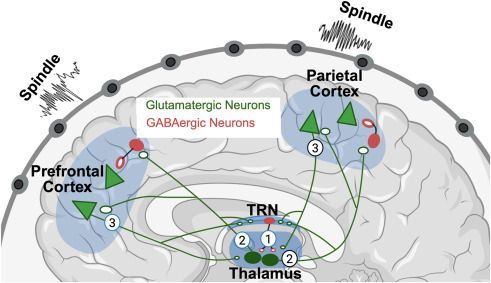
Sleep Spindle Abnormalities as Neurophysiological Biomarkers of Schizophrenia Spectrum Disorders: From Cellular Mechanisms and Neural Circuits to Clinical Implications
Although not included in current diagnostic criteria, sleep disturbances are common in patients with schizophrenia (SCZ) and significantly impact their cognitive function and clinical outcomes. Among…
www.biologicalpsychiatryjournal.com
December 1, 2025 at 11:30 AM
Sleep disturbances are common in schizophrenia, but aren’t considered in diagnostic criteria. Castelnovo et al. review disruptions in sleep spindles, brain waves essential for sleep stability and memory, often seen in individuals with schizophrenia.