
Chung Hyun Cho
@chc-evobio.bsky.social
Postdoc in the Berger Group at the Gregor Mendel Institute - Vienna BioCenter @gmivienna.bsky.social @viennabiocenter.bsky.social | MSCA Fellow | Interest in evolutionary biology and currently studying chromatin
Reposted by Chung Hyun Cho

End-of-year preprint dump! A collaboration with @messorensen.bsky.social and German and Korean colleagues: "The phylogenetic context for the origin of a unique purple-green photosymbiosis "
doi.org/10.64898/202...
doi.org/10.64898/202...

December 23, 2025 at 2:51 PM
End-of-year preprint dump! A collaboration with @messorensen.bsky.social and German and Korean colleagues: "The phylogenetic context for the origin of a unique purple-green photosymbiosis "
doi.org/10.64898/202...
doi.org/10.64898/202...
Reposted by Chung Hyun Cho
Intrigued by a long-standing conundrum in small RNA biology—how nuclear Argonaute proteins silence transposons when they *need* target transcription for their own recruitment—we studied the piRNA pathway.
And found a hidden RNA-decay axis from Piwi to the RNA exosome.
And found a hidden RNA-decay axis from Piwi to the RNA exosome.

RNA decay via the nuclear exosome is essential for piwi-mediated transposon silencing https://www.biorxiv.org/content/10.64898/2025.12.16.694471v1
December 22, 2025 at 6:14 PM
Intrigued by a long-standing conundrum in small RNA biology—how nuclear Argonaute proteins silence transposons when they *need* target transcription for their own recruitment—we studied the piRNA pathway.
And found a hidden RNA-decay axis from Piwi to the RNA exosome.
And found a hidden RNA-decay axis from Piwi to the RNA exosome.
Reposted by Chung Hyun Cho

Excited to share the final version of our study on Nematostella cell type regulatory programs. Part of our @erc.europa.eu StG project, this was a challenging 5-year effort extraodinarily led by @aelek.bsky.social and @martaig.bsky.social.
www.nature.com/articles/s41...
www.nature.com/articles/s41...

Decoding cnidarian cell type gene regulation - Nature Ecology & Evolution
This study reconstructs the gene regulatory networks that define cell types in the sea anemone Nematostella vectensis, providing a valuable resource for comparative regulatory genomics and the evoluti...
www.nature.com
December 22, 2025 at 10:12 AM
Excited to share the final version of our study on Nematostella cell type regulatory programs. Part of our @erc.europa.eu StG project, this was a challenging 5-year effort extraodinarily led by @aelek.bsky.social and @martaig.bsky.social.
www.nature.com/articles/s41...
www.nature.com/articles/s41...
Reposted by Chung Hyun Cho

We’re excited to announce the opening of the Geneva Expansion Microscopy Facility (GenExM)!
GenExM is a full-service U-ExM platform (U-ExM, Cryo-ExM, iU-ExM), delivering nanoscale imaging.
Led by Dr. Olivier Mercey, GenExM welcomes academic & industrial collaborations.
👉 www.unige.ch/genexm/
GenExM is a full-service U-ExM platform (U-ExM, Cryo-ExM, iU-ExM), delivering nanoscale imaging.
Led by Dr. Olivier Mercey, GenExM welcomes academic & industrial collaborations.
👉 www.unige.ch/genexm/

December 10, 2025 at 8:43 PM
We’re excited to announce the opening of the Geneva Expansion Microscopy Facility (GenExM)!
GenExM is a full-service U-ExM platform (U-ExM, Cryo-ExM, iU-ExM), delivering nanoscale imaging.
Led by Dr. Olivier Mercey, GenExM welcomes academic & industrial collaborations.
👉 www.unige.ch/genexm/
GenExM is a full-service U-ExM platform (U-ExM, Cryo-ExM, iU-ExM), delivering nanoscale imaging.
Led by Dr. Olivier Mercey, GenExM welcomes academic & industrial collaborations.
👉 www.unige.ch/genexm/
Reposted by Chung Hyun Cho

1. As we recently joined BlueSky, we want to repost this story for all newcomers!
We sat down with @radler92.bsky.social to get more insight into the unique videos from his recent preprint on Promethearchaeota (formerly Asgard archaea).
doi.org/10.1101/2025...
(Videos and info below)
We sat down with @radler92.bsky.social to get more insight into the unique videos from his recent preprint on Promethearchaeota (formerly Asgard archaea).
doi.org/10.1101/2025...
(Videos and info below)

Dynamic protrusions mediate unique crawling motility in Asgard Archaea (Promethearchaeota)
Crawling motility is a hallmark of eukaryotic cells and requires a dynamic actin cytoskeleton, regulated adhesion, and spatially organized signalling pathways1–3. Asgard archaea (phylum Promethearchae...
doi.org
December 18, 2025 at 2:08 PM
1. As we recently joined BlueSky, we want to repost this story for all newcomers!
We sat down with @radler92.bsky.social to get more insight into the unique videos from his recent preprint on Promethearchaeota (formerly Asgard archaea).
doi.org/10.1101/2025...
(Videos and info below)
We sat down with @radler92.bsky.social to get more insight into the unique videos from his recent preprint on Promethearchaeota (formerly Asgard archaea).
doi.org/10.1101/2025...
(Videos and info below)
Reposted by Chung Hyun Cho
Calling all archaeal enthusiasts! 🔬🔥 From molecular machines to microbial communities, Archaea never fail to surprise us!
We are excited to announce the 2026 EMBO Workshop on the Molecular Biology of Archaea, 6–10 July in Cambridge, UK!
Sign up here: meetings.embo.org/event/26-arc...
#ArchaeaSky
We are excited to announce the 2026 EMBO Workshop on the Molecular Biology of Archaea, 6–10 July in Cambridge, UK!
Sign up here: meetings.embo.org/event/26-arc...
#ArchaeaSky

December 16, 2025 at 2:18 PM
Calling all archaeal enthusiasts! 🔬🔥 From molecular machines to microbial communities, Archaea never fail to surprise us!
We are excited to announce the 2026 EMBO Workshop on the Molecular Biology of Archaea, 6–10 July in Cambridge, UK!
Sign up here: meetings.embo.org/event/26-arc...
#ArchaeaSky
We are excited to announce the 2026 EMBO Workshop on the Molecular Biology of Archaea, 6–10 July in Cambridge, UK!
Sign up here: meetings.embo.org/event/26-arc...
#ArchaeaSky
Reposted by Chung Hyun Cho

Microbial eukaryotes keep challenging assumptions about eukaryotic cell and genome biology.
Our upcoming workshop explores the frontier of protist genomics and how it shapes cell biology, ecology and evolution.
Please save the date! Talks, posters and ECR events
Websites and details coming soon
Our upcoming workshop explores the frontier of protist genomics and how it shapes cell biology, ecology and evolution.
Please save the date! Talks, posters and ECR events
Websites and details coming soon

December 13, 2025 at 10:19 AM
Microbial eukaryotes keep challenging assumptions about eukaryotic cell and genome biology.
Our upcoming workshop explores the frontier of protist genomics and how it shapes cell biology, ecology and evolution.
Please save the date! Talks, posters and ECR events
Websites and details coming soon
Our upcoming workshop explores the frontier of protist genomics and how it shapes cell biology, ecology and evolution.
Please save the date! Talks, posters and ECR events
Websites and details coming soon
Reposted by Chung Hyun Cho

Delighted to share our new preprint: www.biorxiv.org/content/10.6...
We address a longstanding question about the role of the topoisomerase reverse gyrase in hyperthermophiles. Great collaboration with Baranello and @tobiaswarnecke.bsky.social groups. #Archaeasky #Microsky
We address a longstanding question about the role of the topoisomerase reverse gyrase in hyperthermophiles. Great collaboration with Baranello and @tobiaswarnecke.bsky.social groups. #Archaeasky #Microsky

Localised activity of reverse gyrase at gene regulatory elements
DNA topoisomerases are essential enzymes found in all cells, where they regulate DNA supercoiling. Reverse gyrase (RG) is a unique type of topoisomerase that introduces positive supercoils into DNA an...
www.biorxiv.org
December 11, 2025 at 1:15 PM
Delighted to share our new preprint: www.biorxiv.org/content/10.6...
We address a longstanding question about the role of the topoisomerase reverse gyrase in hyperthermophiles. Great collaboration with Baranello and @tobiaswarnecke.bsky.social groups. #Archaeasky #Microsky
We address a longstanding question about the role of the topoisomerase reverse gyrase in hyperthermophiles. Great collaboration with Baranello and @tobiaswarnecke.bsky.social groups. #Archaeasky #Microsky
Reposted by Chung Hyun Cho
Ending my PhD with a bang:
Face-to-face histones are important organizers of archaeal chromatin alongside classical histones.
www.biorxiv.org/content/10.6...
Face-to-face histones are important organizers of archaeal chromatin alongside classical histones.
www.biorxiv.org/content/10.6...

December 8, 2025 at 8:01 AM
Ending my PhD with a bang:
Face-to-face histones are important organizers of archaeal chromatin alongside classical histones.
www.biorxiv.org/content/10.6...
Face-to-face histones are important organizers of archaeal chromatin alongside classical histones.
www.biorxiv.org/content/10.6...
Reposted by Chung Hyun Cho
A light-induced apical auxin signalling minimum marks the site of organogenesis and de novo meristem formation in Marchantia sporelings (now peer-reviewed): authors.elsevier.com/a/1mDc83QW8S...
authors.elsevier.com
December 5, 2025 at 6:25 PM
A light-induced apical auxin signalling minimum marks the site of organogenesis and de novo meristem formation in Marchantia sporelings (now peer-reviewed): authors.elsevier.com/a/1mDc83QW8S...
Reposted by Chung Hyun Cho

I am happy to share that my postdoctoral work in the @gerlichlab.bsky.social at @imbavienna.bsky.social is finally out 🎉!
Our study reveals how cohesin guides focused and accurate homology search.
Read more 👉 www.science.org/doi/10.1126/...
Follow along for key insights and updates! 🧵
Our study reveals how cohesin guides focused and accurate homology search.
Read more 👉 www.science.org/doi/10.1126/...
Follow along for key insights and updates! 🧵

Cohesin guides homology search during DNA repair using loops and sister chromatid linkages
Accurate repair of DNA double-strand breaks (DSBs) is essential for genome stability, and defective repair underlies diseases such as cancer. Homologous recombination uses an intact homologous sequenc...
www.science.org
December 4, 2025 at 8:18 PM
I am happy to share that my postdoctoral work in the @gerlichlab.bsky.social at @imbavienna.bsky.social is finally out 🎉!
Our study reveals how cohesin guides focused and accurate homology search.
Read more 👉 www.science.org/doi/10.1126/...
Follow along for key insights and updates! 🧵
Our study reveals how cohesin guides focused and accurate homology search.
Read more 👉 www.science.org/doi/10.1126/...
Follow along for key insights and updates! 🧵
Reposted by Chung Hyun Cho
Asgard on the move ! Watch our videos!
Biorxiv.org/content/10.1101/2025.11.30.690169v1
Biorxiv.org/content/10.1101/2025.11.30.690169v1

Dynamic protrusions mediate unique crawling motility in Asgard Archaea (Promethearchaeota)
Crawling motility is a hallmark of eukaryotic cells and requires a dynamic actin cytoskeleton, regulated adhesion, and spatially organized signalling pathways1–3. Asgard archaea (phylum Promethearchae...
Biorxiv.org
December 3, 2025 at 8:22 PM
Asgard on the move ! Watch our videos!
Biorxiv.org/content/10.1101/2025.11.30.690169v1
Biorxiv.org/content/10.1101/2025.11.30.690169v1
Reposted by Chung Hyun Cho

Glad to have this finally published: www.sciencedirect.com/science/arti... lots of new data since the #preprint. If you are into selective #autophagy, #evolution, #proteostasis Please have a look!

December 1, 2025 at 5:44 PM
Glad to have this finally published: www.sciencedirect.com/science/arti... lots of new data since the #preprint. If you are into selective #autophagy, #evolution, #proteostasis Please have a look!
Reposted by Chung Hyun Cho

How to keep in step when your (protein) partner speeds up…
Here we investigated the adaptive remodeling of a protein-protein interaction surface essential for telomere protection.
Congrats to whole team!
www.science.org/doi/10.1126/...
Here we investigated the adaptive remodeling of a protein-protein interaction surface essential for telomere protection.
Congrats to whole team!
www.science.org/doi/10.1126/...

Rapid compensatory evolution within a multiprotein complex preserves telomere integrity
Intragenomic conflict with selfish genetic elements spurs adaptive changes in subunits of essential multiprotein complexes. Whether and how these adaptive changes disrupt interactions within such comp...
www.science.org
November 28, 2025 at 5:22 PM
How to keep in step when your (protein) partner speeds up…
Here we investigated the adaptive remodeling of a protein-protein interaction surface essential for telomere protection.
Congrats to whole team!
www.science.org/doi/10.1126/...
Here we investigated the adaptive remodeling of a protein-protein interaction surface essential for telomere protection.
Congrats to whole team!
www.science.org/doi/10.1126/...
Reposted by Chung Hyun Cho

Natural and artificial variations of the standard genetic code
Great new review by Julius Lukes & colleagues 👇
www.cell.com/current-biol...
Great new review by Julius Lukes & colleagues 👇
www.cell.com/current-biol...

November 26, 2025 at 11:54 PM
Natural and artificial variations of the standard genetic code
Great new review by Julius Lukes & colleagues 👇
www.cell.com/current-biol...
Great new review by Julius Lukes & colleagues 👇
www.cell.com/current-biol...
Reposted by Chung Hyun Cho
How do new centromeres evolve while staying compatible with the division machinery?
Discover it in our new Nature paper! We show centromeres transition gradually via a mix of drift, selection, and sex, reaching new states that still work with the kinetochore.
👉 doi.org/10.1038/s41586-025-09779-1
Discover it in our new Nature paper! We show centromeres transition gradually via a mix of drift, selection, and sex, reaching new states that still work with the kinetochore.
👉 doi.org/10.1038/s41586-025-09779-1

November 26, 2025 at 4:21 PM
How do new centromeres evolve while staying compatible with the division machinery?
Discover it in our new Nature paper! We show centromeres transition gradually via a mix of drift, selection, and sex, reaching new states that still work with the kinetochore.
👉 doi.org/10.1038/s41586-025-09779-1
Discover it in our new Nature paper! We show centromeres transition gradually via a mix of drift, selection, and sex, reaching new states that still work with the kinetochore.
👉 doi.org/10.1038/s41586-025-09779-1
Reposted by Chung Hyun Cho
So happy to announce our new preprint, “A geothermal amoeba sets a new upper temperature limit for eukaryotes.” We cultured a novel amoeba from Lassen Volcanic NP (CA, USA) that divides at 63°C (145°F) 🔥 - a new record for euk growth!
#protistsonsky 🧵
#protistsonsky 🧵
November 25, 2025 at 8:41 PM
So happy to announce our new preprint, “A geothermal amoeba sets a new upper temperature limit for eukaryotes.” We cultured a novel amoeba from Lassen Volcanic NP (CA, USA) that divides at 63°C (145°F) 🔥 - a new record for euk growth!
#protistsonsky 🧵
#protistsonsky 🧵
Reposted by Chung Hyun Cho
Happy to share that my PhD project is finally published!🪱✨
Selfish genes are found across the tree of life. They can disrupt inheritance patterns and at the same time act as units for molecular innovation. Here we tried to answer one big question: how do selfish genes emerge in the first place?
Selfish genes are found across the tree of life. They can disrupt inheritance patterns and at the same time act as units for molecular innovation. Here we tried to answer one big question: how do selfish genes emerge in the first place?

Recurrent evolution of selfishness from an essential tRNA synthetase in Caenorhabditis tropicalis 🧪
www.nature.com/articles/s41...
www.nature.com/articles/s41...

Recurrent evolution of selfishness from an essential tRNA synthetase in Caenorhabditis tropicalis - Nature Ecology & Evolution
In Caenorhabditis tropicalis, three toxin–antidote elements arose via gene duplication from the essential tRNA-synthetase subunit FARS-3. The ancestral antidote probably acquired affinity for FARS-3, ...
www.nature.com
November 24, 2025 at 9:10 PM
Happy to share that my PhD project is finally published!🪱✨
Selfish genes are found across the tree of life. They can disrupt inheritance patterns and at the same time act as units for molecular innovation. Here we tried to answer one big question: how do selfish genes emerge in the first place?
Selfish genes are found across the tree of life. They can disrupt inheritance patterns and at the same time act as units for molecular innovation. Here we tried to answer one big question: how do selfish genes emerge in the first place?
Reposted by Chung Hyun Cho

Turn your Science into Visual Impact!
I'm doing a little giveaway for Black Friday.
Winner gets:
-A high-impact visual redesign (publication or investor standards)
-A strategic audit of your visual assets: highlighting gaps, opportunities, and wins.
sign up --> forms.gle/6zxe3Pa7qotZ...
I'm doing a little giveaway for Black Friday.
Winner gets:
-A high-impact visual redesign (publication or investor standards)
-A strategic audit of your visual assets: highlighting gaps, opportunities, and wins.
sign up --> forms.gle/6zxe3Pa7qotZ...

November 24, 2025 at 8:25 PM
Turn your Science into Visual Impact!
I'm doing a little giveaway for Black Friday.
Winner gets:
-A high-impact visual redesign (publication or investor standards)
-A strategic audit of your visual assets: highlighting gaps, opportunities, and wins.
sign up --> forms.gle/6zxe3Pa7qotZ...
I'm doing a little giveaway for Black Friday.
Winner gets:
-A high-impact visual redesign (publication or investor standards)
-A strategic audit of your visual assets: highlighting gaps, opportunities, and wins.
sign up --> forms.gle/6zxe3Pa7qotZ...
Reposted by Chung Hyun Cho

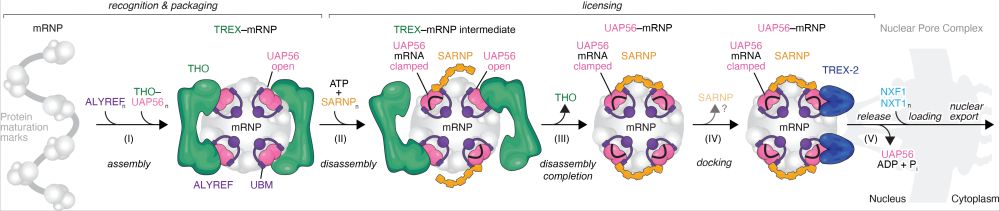
Finally out in @nature.com! We uncovered a mechanistic framework for a general and conserved mRNA nuclear export pathway. www.nature.com/articles/s41.... 1/
November 19, 2025 at 11:22 PM
Finally out in @nature.com! We uncovered a mechanistic framework for a general and conserved mRNA nuclear export pathway. www.nature.com/articles/s41.... 1/
Reposted by Chung Hyun Cho
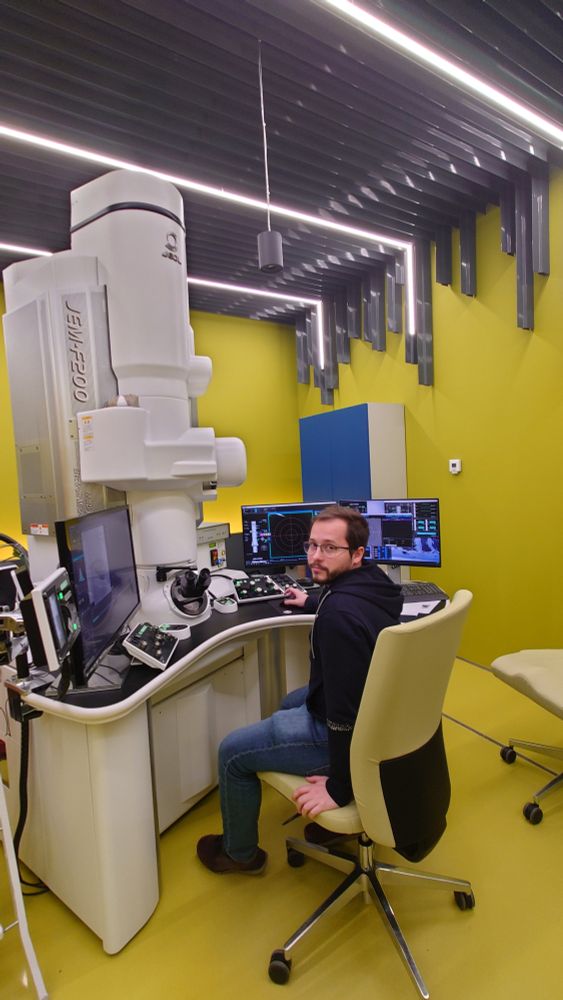
✨ A study in nature.com from our Faculty at @unikarlova.cuni.cz reveals Solarion arienae, a rare #protist forming a newly identified eukaryotic supersroup Disparia. A unique window into early #eukaryotic cell #evolution. 🌍🔬👏
www.nature.com/articles/s41...
www.nature.com/articles/s41...


November 19, 2025 at 4:03 PM
✨ A study in nature.com from our Faculty at @unikarlova.cuni.cz reveals Solarion arienae, a rare #protist forming a newly identified eukaryotic supersroup Disparia. A unique window into early #eukaryotic cell #evolution. 🌍🔬👏
www.nature.com/articles/s41...
www.nature.com/articles/s41...
Reposted by Chung Hyun Cho

Ever since publishing our observations of the predatory behaviour of Ca. Nha. antarcticus people have asked me why it would want to kill its host. My perspective discussing the ecological factors that I believe led to this behaviour is out now in mSystems:
doi.org/10.1128/msystems.01475-25
doi.org/10.1128/msystems.01475-25

Nutrient availability affects optimal growth strategy in predatory DPANN | mSystems
The bacterial and archaeal domains each possess a major clade that appears to be predominantly
host-associated (1–3). These two lineages, Patescibacteriota and DPANN archaea (named for the Diapherotri...
doi.org
November 18, 2025 at 5:30 PM
Ever since publishing our observations of the predatory behaviour of Ca. Nha. antarcticus people have asked me why it would want to kill its host. My perspective discussing the ecological factors that I believe led to this behaviour is out now in mSystems:
doi.org/10.1128/msystems.01475-25
doi.org/10.1128/msystems.01475-25
Reposted by Chung Hyun Cho

Out today, our take on 6-methyladenine #6mA evolution in Eukaryotes @natgenet.nature.com. We asked a simple question, is really DNA 6mA common across the eukaryotes? The answer is "yes" if you're a unicellular eukaryote 🦠, not so if you're multicellular 🐝🌱🍄. www.nature.com/articles/s41... 1/9

Adenine DNA methylation associated with transcriptionally permissive chromatin is widespread across eukaryotes - Nature Genetics
Long-read sequencing in 18 unicellular eukaryotes reveals that 6mA is widespread across eukaryotes and is enriched at transcriptionally permissive regions, which are also marked by H3K4me3.
www.nature.com
November 18, 2025 at 12:00 PM
Out today, our take on 6-methyladenine #6mA evolution in Eukaryotes @natgenet.nature.com. We asked a simple question, is really DNA 6mA common across the eukaryotes? The answer is "yes" if you're a unicellular eukaryote 🦠, not so if you're multicellular 🐝🌱🍄. www.nature.com/articles/s41... 1/9
Reposted by Chung Hyun Cho