


Crystal Shackleford
@crystalshackleford.bsky.social
Postdoc at Yale researching the psychology of intergroup conflict & cooperation
Reposted by Crystal Shackleford
As wildfires burn at home in 🇵🇹 and here in CA, we have a new paper that finds: exposure to fires doesn’t necessarily predict greater support for climate change mitigation. But people closest to the 2021-2022 fires do prioritize personal adaptive action. link.springer.com/article/10.1...

Paying attention and paying the costs: wildfires in the American West - Climatic Change
Preliminary estimates suggest that the January 2025 Los Angeles wildfires could be the costliest disaster in U.S. history to date when accounting for both direct and indirect losses. As personal exper...
link.springer.com
August 30, 2025 at 4:39 PM
As wildfires burn at home in 🇵🇹 and here in CA, we have a new paper that finds: exposure to fires doesn’t necessarily predict greater support for climate change mitigation. But people closest to the 2021-2022 fires do prioritize personal adaptive action. link.springer.com/article/10.1...
Reposted by Crystal Shackleford

“A new review of 50 recent studies finds that protests tend to sway media coverage and public opinion toward the climate cause, without appearing to backfire, even when disruptive tactics are used”.
climatecommunication.yale.edu/publications...
climatecommunication.yale.edu/publications...
April 17, 2025 at 6:31 AM
“A new review of 50 recent studies finds that protests tend to sway media coverage and public opinion toward the climate cause, without appearing to backfire, even when disruptive tactics are used”.
climatecommunication.yale.edu/publications...
climatecommunication.yale.edu/publications...
Reposted by Crystal Shackleford

🚨 Boy, does this look like an important new paper on climate inequality!
"We find that two-thirds (one-fifth) of warming is attributable to the wealthiest 10% (1%), meaning that individual contributions are 6.5 (20) times the average per capita contribution." 🔥
www.nature.com/articles/s41...
"We find that two-thirds (one-fifth) of warming is attributable to the wealthiest 10% (1%), meaning that individual contributions are 6.5 (20) times the average per capita contribution." 🔥
www.nature.com/articles/s41...

High-income groups disproportionately contribute to climate extremes worldwide - Nature Climate Change
While climate injustice is widely recognized, a quantification of how emissions inequality translates into unequal accountability is still lacking. Here researchers examine how affluent groups disprop...
www.nature.com
May 7, 2025 at 6:05 PM
🚨 Boy, does this look like an important new paper on climate inequality!
"We find that two-thirds (one-fifth) of warming is attributable to the wealthiest 10% (1%), meaning that individual contributions are 6.5 (20) times the average per capita contribution." 🔥
www.nature.com/articles/s41...
"We find that two-thirds (one-fifth) of warming is attributable to the wealthiest 10% (1%), meaning that individual contributions are 6.5 (20) times the average per capita contribution." 🔥
www.nature.com/articles/s41...
Reposted by Crystal Shackleford
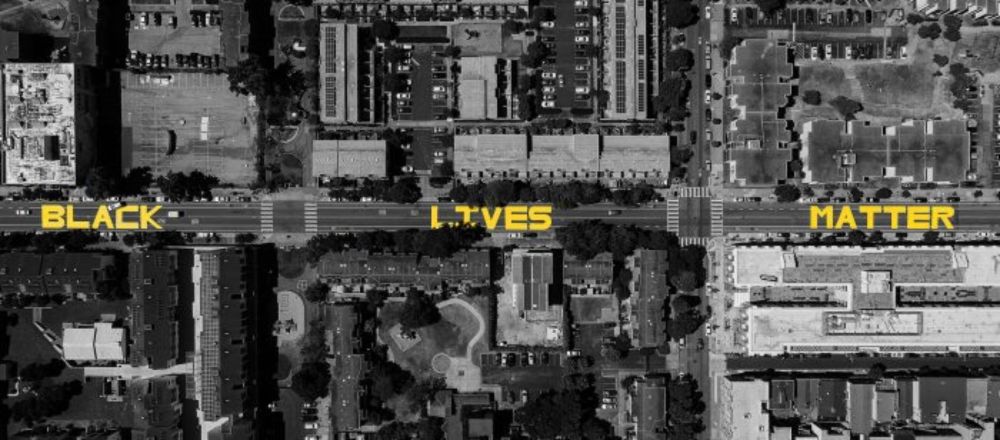
“A 2010 study that analyzed 40 years of protest coverage in five major newspapers, including The New York Times and The Washington Post, found that the papers depicted protests — even peaceful ones — as nuisances rather than as necessary functions of democracy.”

June 8, 2025 at 11:52 AM
“A 2010 study that analyzed 40 years of protest coverage in five major newspapers, including The New York Times and The Washington Post, found that the papers depicted protests — even peaceful ones — as nuisances rather than as necessary functions of democracy.”
Reposted by Crystal Shackleford

@prisonculture.bsky.social and I have been encouraging people to read chapter six of our book, Let This Radicalize You, which deals with the question of "violence" in social movements. We have decided to share the chapter publicly, to offer some context and grounding for the current conversation.
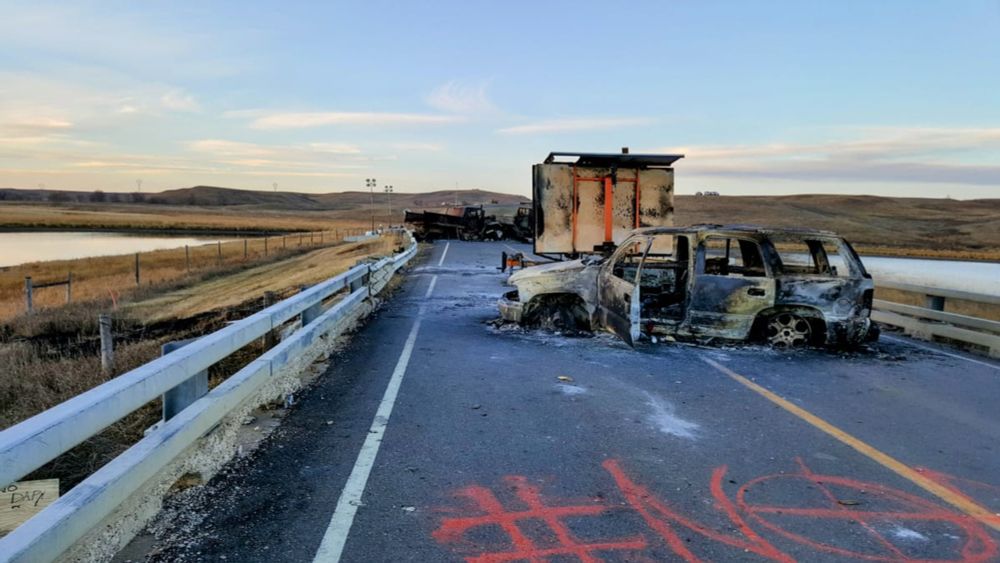
Protest, Power, and the Violence Debate
"We are told we are experiencing peace, so long as everyone is cooperating."
organizingmythoughts.org
June 13, 2025 at 1:49 PM
@prisonculture.bsky.social and I have been encouraging people to read chapter six of our book, Let This Radicalize You, which deals with the question of "violence" in social movements. We have decided to share the chapter publicly, to offer some context and grounding for the current conversation.
Reposted by Crystal Shackleford
In this commentary in Nat. Rev. Psych, I reflect on the need to bring sociopolitical/historical contexts more centrally into soc. psych research on conflict. Reflections draw on tensions I've faced in my work, and critical feedback from participants, practitioners, and colleagues: rdcu.be/etk1f
June 25, 2025 at 3:55 PM
In this commentary in Nat. Rev. Psych, I reflect on the need to bring sociopolitical/historical contexts more centrally into soc. psych research on conflict. Reflections draw on tensions I've faced in my work, and critical feedback from participants, practitioners, and colleagues: rdcu.be/etk1f
Reposted by Crystal Shackleford

🧵1/
🚨 New article out!
How robust is the psychology of social class?
Together with Nicolas Sommet and @frederiqueautin.bsky.social, we conducted large-scale replications of 35 hypotheses across four countries.
Published in Nature Human Behaviour:
www.nature.com/articles/s41...
🚨 New article out!
How robust is the psychology of social class?
Together with Nicolas Sommet and @frederiqueautin.bsky.social, we conducted large-scale replications of 35 hypotheses across four countries.
Published in Nature Human Behaviour:
www.nature.com/articles/s41...
July 16, 2025 at 1:10 PM
🧵1/
🚨 New article out!
How robust is the psychology of social class?
Together with Nicolas Sommet and @frederiqueautin.bsky.social, we conducted large-scale replications of 35 hypotheses across four countries.
Published in Nature Human Behaviour:
www.nature.com/articles/s41...
🚨 New article out!
How robust is the psychology of social class?
Together with Nicolas Sommet and @frederiqueautin.bsky.social, we conducted large-scale replications of 35 hypotheses across four countries.
Published in Nature Human Behaviour:
www.nature.com/articles/s41...
Reposted by Crystal Shackleford

🥳🥳 New paper in @nathumbehav.nature.com: “When development constricts our moral circle." Contrary to popular belief, younger kids may start out with broader moral circles than older ones. Check it out here 👉 rdcu.be/eoaSe
w/ @mattiwilks.bsky.social @karrineldner.bsky.social & Lucius Caviola
w/ @mattiwilks.bsky.social @karrineldner.bsky.social & Lucius Caviola
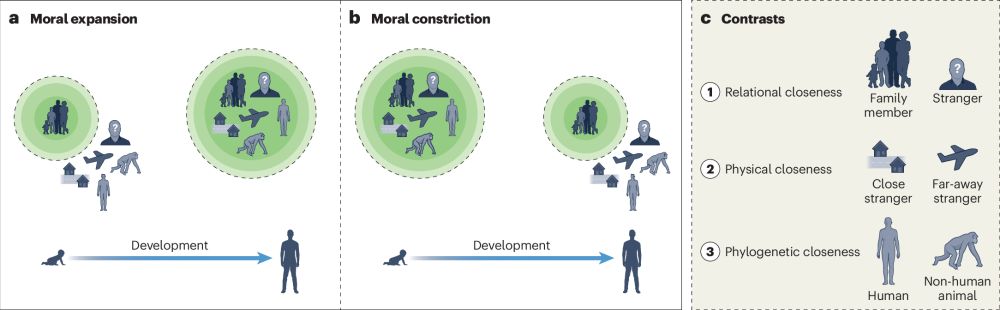
When development constricts our moral circle
Nature Human Behaviour - Although many believe our moral circles expand with age, this Perspective discusses an early-emerging tendency to care for others.
rdcu.be
May 28, 2025 at 5:49 PM
🥳🥳 New paper in @nathumbehav.nature.com: “When development constricts our moral circle." Contrary to popular belief, younger kids may start out with broader moral circles than older ones. Check it out here 👉 rdcu.be/eoaSe
w/ @mattiwilks.bsky.social @karrineldner.bsky.social & Lucius Caviola
w/ @mattiwilks.bsky.social @karrineldner.bsky.social & Lucius Caviola
Reposted by Crystal Shackleford
New in JSPP, on the often ignored difference b/w leftists & liberals: "Understanding Committed Leftists in the U.S. Right Before the 2020 U.S. Presidential Election"(Flores-Robles @gfloresrob.bsky.social, Alto, Anderson, Wylie @jowylie.bsky.social, Satter, & Gantman @anagantman.bsky.social. Link in🧵

February 25, 2025 at 4:00 PM
New in JSPP, on the often ignored difference b/w leftists & liberals: "Understanding Committed Leftists in the U.S. Right Before the 2020 U.S. Presidential Election"(Flores-Robles @gfloresrob.bsky.social, Alto, Anderson, Wylie @jowylie.bsky.social, Satter, & Gantman @anagantman.bsky.social. Link in🧵
Reposted by Crystal Shackleford

Pleased to share our latest research, "Addressing Policy Support Through Intergroup Helping and Similarity-Based Contact in Türkiye", co-authored with my dear friend and colleague Sami Çoksan (@samicoksan.bsky.social):
📌 Now published in Current Psychology
🔗 doi.org/10.1007/s121...
📌 Now published in Current Psychology
🔗 doi.org/10.1007/s121...
June 15, 2025 at 2:26 PM
Pleased to share our latest research, "Addressing Policy Support Through Intergroup Helping and Similarity-Based Contact in Türkiye", co-authored with my dear friend and colleague Sami Çoksan (@samicoksan.bsky.social):
📌 Now published in Current Psychology
🔗 doi.org/10.1007/s121...
📌 Now published in Current Psychology
🔗 doi.org/10.1007/s121...
Reposted by Crystal Shackleford
New by Glasford & Brown in JSPP, on the inequalities in academia & imagining ways out of them: "Systemic Hierarchy Within Academic Disciplines: How Resource Capital and Social Capital Stratify Academics and Form the Basis of Disciplinary Group-Based Inequality" OA: jspp.psychopen.eu/index.php/js...

June 17, 2025 at 5:26 PM
New by Glasford & Brown in JSPP, on the inequalities in academia & imagining ways out of them: "Systemic Hierarchy Within Academic Disciplines: How Resource Capital and Social Capital Stratify Academics and Form the Basis of Disciplinary Group-Based Inequality" OA: jspp.psychopen.eu/index.php/js...
Reposted by Crystal Shackleford

NEW -
Political Activists are Not Driven by Instrumental Motives: Evidence from Two Natural Field Experiments - cup.org/4kfEt2h
- @anselmhager.bsky.social, @lukashenselecon.bsky.social, Johannes Hermle & Christopher Roth
#OpenAccess
Political Activists are Not Driven by Instrumental Motives: Evidence from Two Natural Field Experiments - cup.org/4kfEt2h
- @anselmhager.bsky.social, @lukashenselecon.bsky.social, Johannes Hermle & Christopher Roth
#OpenAccess

June 27, 2025 at 11:05 AM
NEW -
Political Activists are Not Driven by Instrumental Motives: Evidence from Two Natural Field Experiments - cup.org/4kfEt2h
- @anselmhager.bsky.social, @lukashenselecon.bsky.social, Johannes Hermle & Christopher Roth
#OpenAccess
Political Activists are Not Driven by Instrumental Motives: Evidence from Two Natural Field Experiments - cup.org/4kfEt2h
- @anselmhager.bsky.social, @lukashenselecon.bsky.social, Johannes Hermle & Christopher Roth
#OpenAccess
Reposted by Crystal Shackleford
Great piece by Maja Kutlaca, Helena Radke & Melis Uluğ on moving psychology beyond selective allyship toward consistent global action. Well worth a read. www.nature.com/articles/s44...
Psychology should move from selective allyship to empowered actions to tackle global crises - Communications Psychology
Psychology is committed to the principle of nonmaleficence. This Comment argues that psychology as a discipline and psychological associations as its representatives should uphold their ethical respon...
www.nature.com
August 29, 2025 at 11:23 AM
Great piece by Maja Kutlaca, Helena Radke & Melis Uluğ on moving psychology beyond selective allyship toward consistent global action. Well worth a read. www.nature.com/articles/s44...
Reposted by Crystal Shackleford

New pub! 📝
Solidarity with refugees depends on refugee‘s origin and gender. Partly explained through a similarity->threat link. We discuss this as a psychological expression of neocolonial geopolitics.
spssi.onlinelibrary.wiley.com/doi/10.1111/...
@tijana-et-al.bsky.social
@arothers.bsky.social
Solidarity with refugees depends on refugee‘s origin and gender. Partly explained through a similarity->threat link. We discuss this as a psychological expression of neocolonial geopolitics.
spssi.onlinelibrary.wiley.com/doi/10.1111/...
@tijana-et-al.bsky.social
@arothers.bsky.social

SPSSI Journals
This paper investigates social psychological mechanisms underlying selective solidarity with refugees in two experimental studies conducted in Germany. We hypothesized, in line with the geopolitics o...
spssi.onlinelibrary.wiley.com
August 20, 2025 at 2:34 PM
New pub! 📝
Solidarity with refugees depends on refugee‘s origin and gender. Partly explained through a similarity->threat link. We discuss this as a psychological expression of neocolonial geopolitics.
spssi.onlinelibrary.wiley.com/doi/10.1111/...
@tijana-et-al.bsky.social
@arothers.bsky.social
Solidarity with refugees depends on refugee‘s origin and gender. Partly explained through a similarity->threat link. We discuss this as a psychological expression of neocolonial geopolitics.
spssi.onlinelibrary.wiley.com/doi/10.1111/...
@tijana-et-al.bsky.social
@arothers.bsky.social
Reposted by Crystal Shackleford
What a week for this to be published, though never not "timely": On "Collective Action Under Repressive Conditions: Integration of Individual, Group, and Structural Level Research, Recommendations, and Reflections" -led by Arin Ayanian, open access here: spssi.onlinelibrary.wiley.com/doi/10.1111/...

SPSSI Journals
Social scientific research from different traditions on collective action under repressive conditions is fragmented across different levels of analysis. The current paper takes a first step toward re...
spssi.onlinelibrary.wiley.com
March 28, 2025 at 1:28 PM
What a week for this to be published, though never not "timely": On "Collective Action Under Repressive Conditions: Integration of Individual, Group, and Structural Level Research, Recommendations, and Reflections" -led by Arin Ayanian, open access here: spssi.onlinelibrary.wiley.com/doi/10.1111/...
Reposted by Crystal Shackleford

Do conservatives oppose all environmentalist initiatives, or does the compatibility of conservatism with environmentalism vary by sociocultural context? (more below!)
www.sciencedirect.com/science/arti...
www.sciencedirect.com/science/arti...

Conserving nature, resisting change: Political conservatism and evasion of anti-systemic environmentalisms
Conventional wisdom and scientific research suggest that political conservatism is at odds with support for environmentalism. Across two survey studie…
www.sciencedirect.com
August 20, 2025 at 9:22 PM
Do conservatives oppose all environmentalist initiatives, or does the compatibility of conservatism with environmentalism vary by sociocultural context? (more below!)
www.sciencedirect.com/science/arti...
www.sciencedirect.com/science/arti...
Reposted by Crystal Shackleford
🚔Did George Floyd’s murder change Americans' racial attitudes?
➡️ @amengel.bsky.social & C. D. Kam find attitudes shifted, but unevenly: largest and most lasting for Black Americans and White Democrats, weaker or countervailing for others www.cambridge.org/core/journal... #FirstView
➡️ @amengel.bsky.social & C. D. Kam find attitudes shifted, but unevenly: largest and most lasting for Black Americans and White Democrats, weaker or countervailing for others www.cambridge.org/core/journal... #FirstView


August 29, 2025 at 6:57 AM
🚔Did George Floyd’s murder change Americans' racial attitudes?
➡️ @amengel.bsky.social & C. D. Kam find attitudes shifted, but unevenly: largest and most lasting for Black Americans and White Democrats, weaker or countervailing for others www.cambridge.org/core/journal... #FirstView
➡️ @amengel.bsky.social & C. D. Kam find attitudes shifted, but unevenly: largest and most lasting for Black Americans and White Democrats, weaker or countervailing for others www.cambridge.org/core/journal... #FirstView
Reposted by Crystal Shackleford
Delighted that the symposia I organized with Crystal Shackelford (and featuring @ajuaduker.bsky.social and @sakierahudson.bsky.social ) was accepted at the Society for Experimental Social Psychology's annual Conference. Emotions and politics will be the theme of our session! See you in Lisbon!
June 17, 2025 at 7:15 PM
Delighted that the symposia I organized with Crystal Shackelford (and featuring @ajuaduker.bsky.social and @sakierahudson.bsky.social ) was accepted at the Society for Experimental Social Psychology's annual Conference. Emotions and politics will be the theme of our session! See you in Lisbon!
Reposted by Crystal Shackleford

💥New postdoc position! 💥
Join us to explore how people learn from each other—and how that drives cultural evolution.
Run experiments, build computational models & collaborate across Europe w. @lucasmolleman.bsky.social
📍 Stockholm
More info: shorturl.at/CY4wk
Join us to explore how people learn from each other—and how that drives cultural evolution.
Run experiments, build computational models & collaborate across Europe w. @lucasmolleman.bsky.social
📍 Stockholm
More info: shorturl.at/CY4wk

Postdoctoral Researcher in psychology/cognitive science with focus on social learning and cultural evolution
Do you want to contribute to top quality medical research? The Mechanisms of Social Behavior lab at the Karolinska Institutet (PI: Björn Lindström) in Stockholm, Sweden is seeking a highly qualified
shorturl.at
June 26, 2025 at 11:22 AM
💥New postdoc position! 💥
Join us to explore how people learn from each other—and how that drives cultural evolution.
Run experiments, build computational models & collaborate across Europe w. @lucasmolleman.bsky.social
📍 Stockholm
More info: shorturl.at/CY4wk
Join us to explore how people learn from each other—and how that drives cultural evolution.
Run experiments, build computational models & collaborate across Europe w. @lucasmolleman.bsky.social
📍 Stockholm
More info: shorturl.at/CY4wk
Reposted by Crystal Shackleford

My new op-ed in the @nytimes.
I argue that Iranians are caught in a state of “moral paralysis,” a psychological trap set by the Islamic Republic itself. It pits two of our most sacred values against each other: liberation vs. self-determination. (1/2) www.nytimes.com/2025/06/28/o...
I argue that Iranians are caught in a state of “moral paralysis,” a psychological trap set by the Islamic Republic itself. It pits two of our most sacred values against each other: liberation vs. self-determination. (1/2) www.nytimes.com/2025/06/28/o...
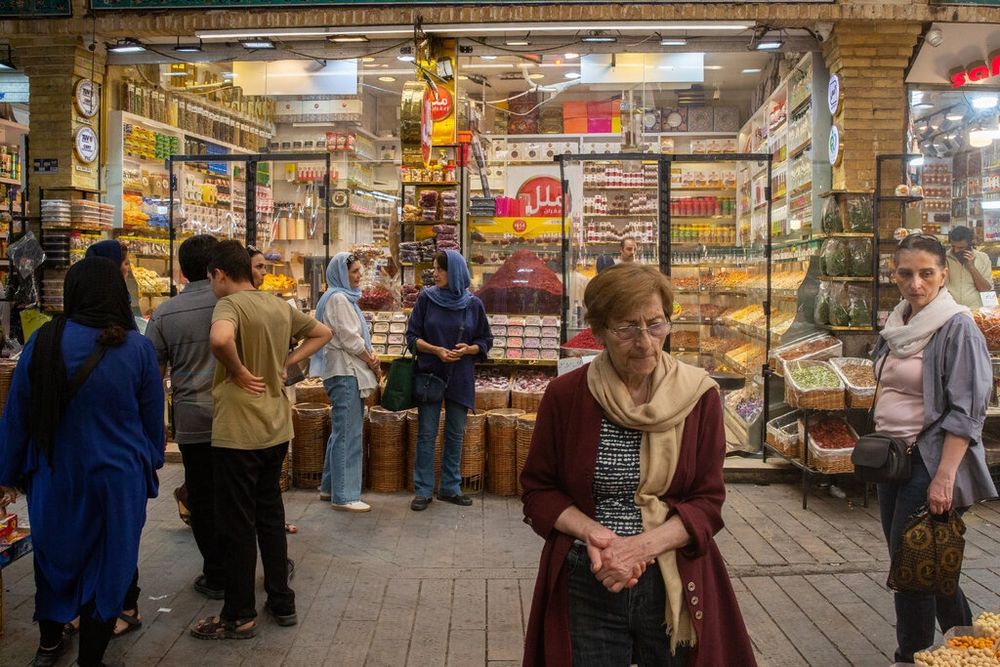
Opinion | The Moral Paralysis Facing Iranians Right Now
www.nytimes.com
June 28, 2025 at 2:42 PM
My new op-ed in the @nytimes.
I argue that Iranians are caught in a state of “moral paralysis,” a psychological trap set by the Islamic Republic itself. It pits two of our most sacred values against each other: liberation vs. self-determination. (1/2) www.nytimes.com/2025/06/28/o...
I argue that Iranians are caught in a state of “moral paralysis,” a psychological trap set by the Islamic Republic itself. It pits two of our most sacred values against each other: liberation vs. self-determination. (1/2) www.nytimes.com/2025/06/28/o...
Reposted by Crystal Shackleford
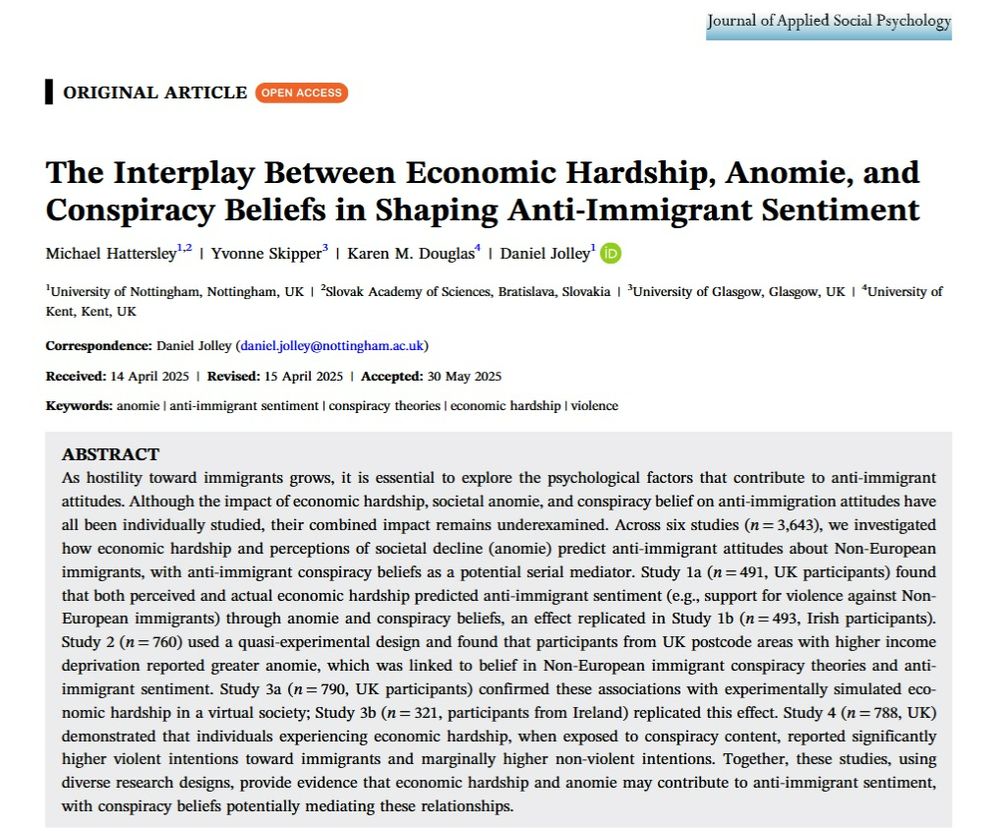
New paper out:
Across 6 studies with diverse methods (correlation, quasi-experimental and experimental), we find that economic hardship and anomie may fuel anti-immigrant sentiment, and conspiracy beliefs may be a key piece of the puzzle.
Full paper here onlinelibrary.wiley.com/doi/10.1111/...
Across 6 studies with diverse methods (correlation, quasi-experimental and experimental), we find that economic hardship and anomie may fuel anti-immigrant sentiment, and conspiracy beliefs may be a key piece of the puzzle.
Full paper here onlinelibrary.wiley.com/doi/10.1111/...
June 19, 2025 at 12:49 PM
New paper out:
Across 6 studies with diverse methods (correlation, quasi-experimental and experimental), we find that economic hardship and anomie may fuel anti-immigrant sentiment, and conspiracy beliefs may be a key piece of the puzzle.
Full paper here onlinelibrary.wiley.com/doi/10.1111/...
Across 6 studies with diverse methods (correlation, quasi-experimental and experimental), we find that economic hardship and anomie may fuel anti-immigrant sentiment, and conspiracy beliefs may be a key piece of the puzzle.
Full paper here onlinelibrary.wiley.com/doi/10.1111/...