




De-Zhi Jin
@dezhijin.bsky.social
Focus on Brain & AI
A Ph.D. candidate at Beijing University of Posts and Telecommunications
A big fan of history, Chinese calligraphy, and marathon
A Ph.D. candidate at Beijing University of Posts and Telecommunications
A big fan of history, Chinese calligraphy, and marathon
Reposted by De-Zhi Jin

This is your brain on Ritalin. Got your attention? Stimulant medications like Ritalin (methylphenidate) do, but not in the way you might think. They don't act directly on the brain’s attention systems! Find out what's really happening in @cellpress.bsky.social. doi.org/10.1016/j.ce...
December 24, 2025 at 4:46 PM
This is your brain on Ritalin. Got your attention? Stimulant medications like Ritalin (methylphenidate) do, but not in the way you might think. They don't act directly on the brain’s attention systems! Find out what's really happening in @cellpress.bsky.social. doi.org/10.1016/j.ce...
Reposted by De-Zhi Jin

Why doesn't neuroimaging work in psychiatry?

December 24, 2025 at 5:28 AM
Why doesn't neuroimaging work in psychiatry?
Reposted by De-Zhi Jin

December 24, 2025 at 5:30 AM
**Rethinking the centrality of brain areas in understanding functional organization**
New paper I anticipate will become a classic in neuroscience and a must-read for students at all levels.
Understanding brain function beyond brain areas.
#neuroskyence
www.nature.com/articles/s41...
New paper I anticipate will become a classic in neuroscience and a must-read for students at all levels.
Understanding brain function beyond brain areas.
#neuroskyence
www.nature.com/articles/s41...

December 23, 2025 at 3:51 PM
Reposted by De-Zhi Jin

netneurotools: a trainee-oriented approach to network neuroscience | doi.org/10.1101/2025...
Our lab’s internal toolkit for accomplishing everyday tasks in brain imaging ⤵️
Our lab’s internal toolkit for accomplishing everyday tasks in brain imaging ⤵️

December 18, 2025 at 3:00 PM
netneurotools: a trainee-oriented approach to network neuroscience | doi.org/10.1101/2025...
Our lab’s internal toolkit for accomplishing everyday tasks in brain imaging ⤵️
Our lab’s internal toolkit for accomplishing everyday tasks in brain imaging ⤵️
Reposted by De-Zhi Jin

Our paper on the ☀️ "summer slide" 🛝 is out now @pnas.org!
www.pnas.org/doi/10.1073/...
Summer slide is a replicable phenomenon across diverse datasets that's more than "forgetting" school material in vacation months, but effects of socioeconomic inequality are ➡️ 7x bigger! ⬅️
#PsychSciSky #DevPsy
🧵👇
www.pnas.org/doi/10.1073/...
Summer slide is a replicable phenomenon across diverse datasets that's more than "forgetting" school material in vacation months, but effects of socioeconomic inequality are ➡️ 7x bigger! ⬅️
#PsychSciSky #DevPsy
🧵👇
December 16, 2025 at 5:56 PM
Our paper on the ☀️ "summer slide" 🛝 is out now @pnas.org!
www.pnas.org/doi/10.1073/...
Summer slide is a replicable phenomenon across diverse datasets that's more than "forgetting" school material in vacation months, but effects of socioeconomic inequality are ➡️ 7x bigger! ⬅️
#PsychSciSky #DevPsy
🧵👇
www.pnas.org/doi/10.1073/...
Summer slide is a replicable phenomenon across diverse datasets that's more than "forgetting" school material in vacation months, but effects of socioeconomic inequality are ➡️ 7x bigger! ⬅️
#PsychSciSky #DevPsy
🧵👇
very impressive work !!!

🧠New preprint!
What if cortical geometry alone already encodes much of white-matter organization?
We introduce a subject-specific, reversible cortical folding model that unfolds and refolds the brain from a single T1w MRI; no diffusion, no ML.
www.biorxiv.org/content/10.6...
What if cortical geometry alone already encodes much of white-matter organization?
We introduce a subject-specific, reversible cortical folding model that unfolds and refolds the brain from a single T1w MRI; no diffusion, no ML.
www.biorxiv.org/content/10.6...

December 17, 2025 at 6:39 AM
very impressive work !!!
Reposted by De-Zhi Jin
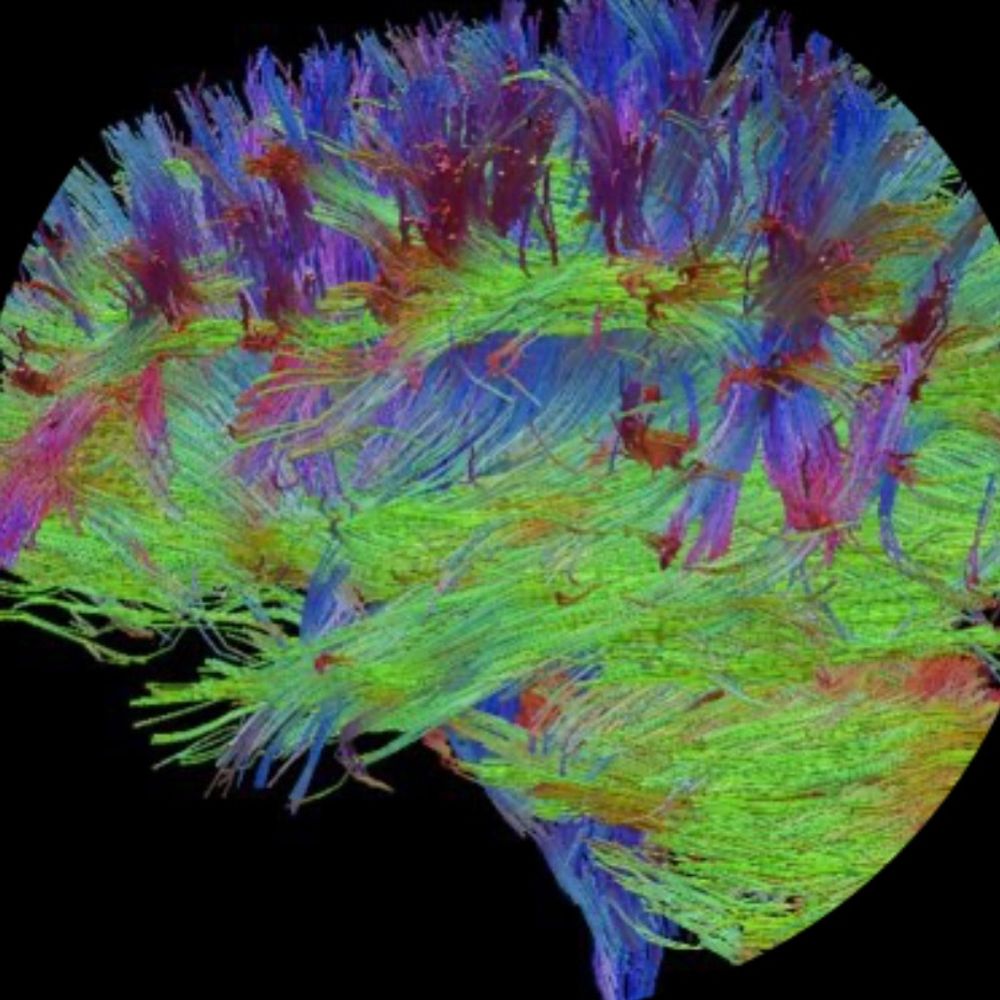
Patterns of brain-wide associations reflect socioeconomics | bioRxiv www.biorxiv.org/content/10.6...

December 14, 2025 at 10:56 PM
Patterns of brain-wide associations reflect socioeconomics | bioRxiv www.biorxiv.org/content/10.6...
Reposted by De-Zhi Jin
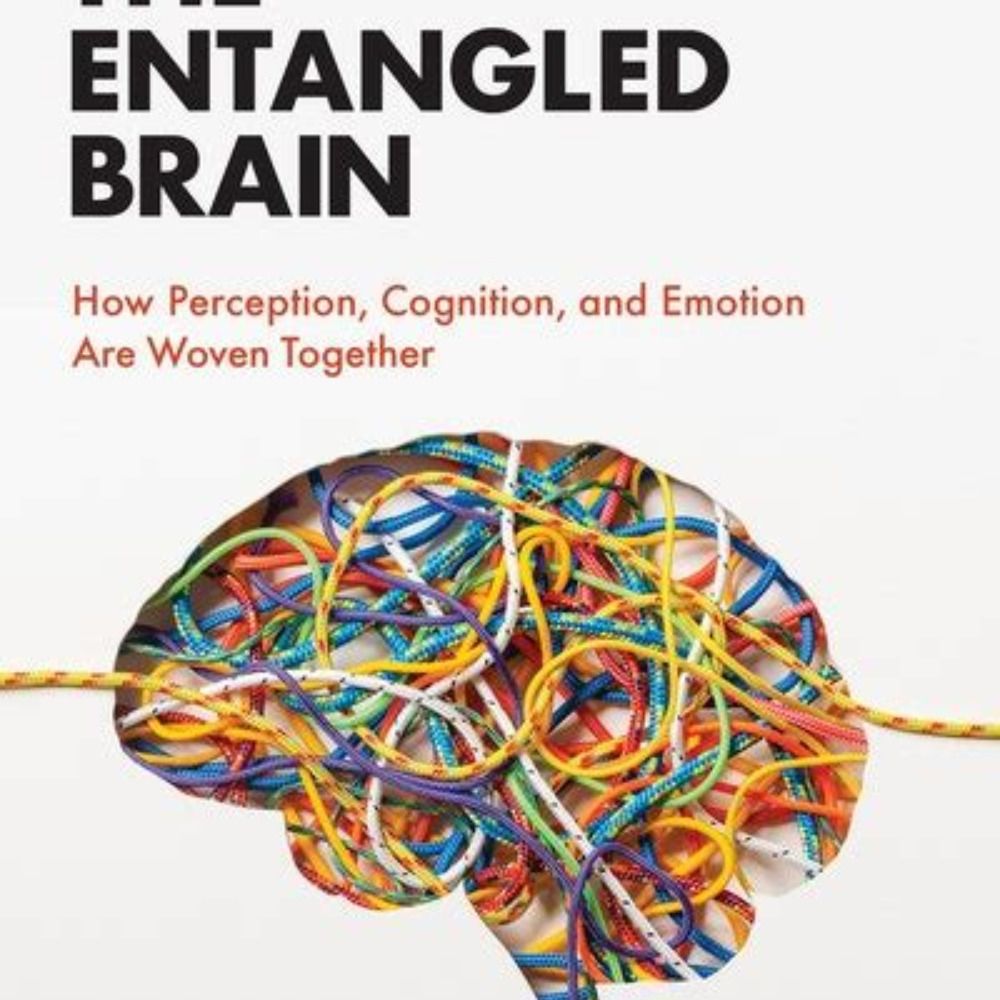
𝗕𝗿𝗮𝗶𝗻 𝗻𝗲𝘁𝘄𝗼𝗿𝗸𝘀, 𝘄𝗵𝗮𝘁 𝗮𝗿𝗲 𝘁𝗵𝗲𝘆?
@lucinauddin.bsky.social explains many of the challenges and controversies! Great discussion too.
Check out the latest Neuroscience & Philosophy Salon.
youtu.be/pP5swFPR0Ns
@lucinauddin.bsky.social explains many of the challenges and controversies! Great discussion too.
Check out the latest Neuroscience & Philosophy Salon.
youtu.be/pP5swFPR0Ns

Prof. Lucina Uddin from UCLA discusses her views on brain networks as studied with functional MRI
YouTube video by Neuroscience & Philosophy Salon
youtu.be
December 10, 2025 at 5:18 PM
𝗕𝗿𝗮𝗶𝗻 𝗻𝗲𝘁𝘄𝗼𝗿𝗸𝘀, 𝘄𝗵𝗮𝘁 𝗮𝗿𝗲 𝘁𝗵𝗲𝘆?
@lucinauddin.bsky.social explains many of the challenges and controversies! Great discussion too.
Check out the latest Neuroscience & Philosophy Salon.
youtu.be/pP5swFPR0Ns
@lucinauddin.bsky.social explains many of the challenges and controversies! Great discussion too.
Check out the latest Neuroscience & Philosophy Salon.
youtu.be/pP5swFPR0Ns
👍

New today in @Nature: your visual cortex contains touch-based body maps. bit.ly/VisualBodyMaps
Your brain transforms what you see into first-person, body-referenced codes: A previously unknown bridge between vision and touch.
Your brain transforms what you see into first-person, body-referenced codes: A previously unknown bridge between vision and touch.

November 27, 2025 at 6:16 AM
👍
Reposted by De-Zhi Jin

How do dissociative states affect brain state dynamics 🧠, and do these effects vary if pharmacologically induced 💊 or due to a clinical condition 🏥?
Learn more here ⬇️
Learn more here ⬇️

Brain State Dynamics in Ketamine-Induced Dissociation Resemble Those in PTSD
Dissociation, an altered state of consciousness in which individuals feel detached from their body, environment, and sense of self, is a common feature of Post-Traumatic Stress Disorder (PTSD).…
www.bpsgos.org
November 16, 2025 at 1:00 PM
How do dissociative states affect brain state dynamics 🧠, and do these effects vary if pharmacologically induced 💊 or due to a clinical condition 🏥?
Learn more here ⬇️
Learn more here ⬇️
Reposted by De-Zhi Jin
👏 👏 👏
An Open, Fully-processed, Longitudinal Data Resource to Study Brain Development and Transdiagnostic Executive Function | bioRxiv www.biorxiv.org/content/10.1...
An Open, Fully-processed, Longitudinal Data Resource to Study Brain Development and Transdiagnostic Executive Function | bioRxiv www.biorxiv.org/content/10.1...

November 13, 2025 at 1:12 AM
👏 👏 👏
An Open, Fully-processed, Longitudinal Data Resource to Study Brain Development and Transdiagnostic Executive Function | bioRxiv www.biorxiv.org/content/10.1...
An Open, Fully-processed, Longitudinal Data Resource to Study Brain Development and Transdiagnostic Executive Function | bioRxiv www.biorxiv.org/content/10.1...
Reposted by De-Zhi Jin
Westlin and colleagues found that patients with functional neurological disorder exhibit atypical macroscale cortical organization, characterised by altered functional gradients that are linked to symptom severity.

Functional Connectivity Gradients Reveal Altered Hierarchical Cortical Organization in Functional Neurological Disorder
Neuroimaging studies of functional neurological disorder (FND), a core neuropsychiatric
condition, often rely on discrete connections or parcellations that may obscure the
brain’s functional network a...
www.biologicalpsychiatrycnni.org
October 28, 2025 at 4:35 PM
Westlin and colleagues found that patients with functional neurological disorder exhibit atypical macroscale cortical organization, characterised by altered functional gradients that are linked to symptom severity.
Reposted by De-Zhi Jin

Such a nice collection of brain-body interaction articles in the special issue of @currentbiology.bsky.social. Love the beautiful vagus nerve on the cover by Andreas Vesalius www.cell.com/current-biol...

October 22, 2025 at 6:44 PM
Such a nice collection of brain-body interaction articles in the special issue of @currentbiology.bsky.social. Love the beautiful vagus nerve on the cover by Andreas Vesalius www.cell.com/current-biol...
Reposted by De-Zhi Jin

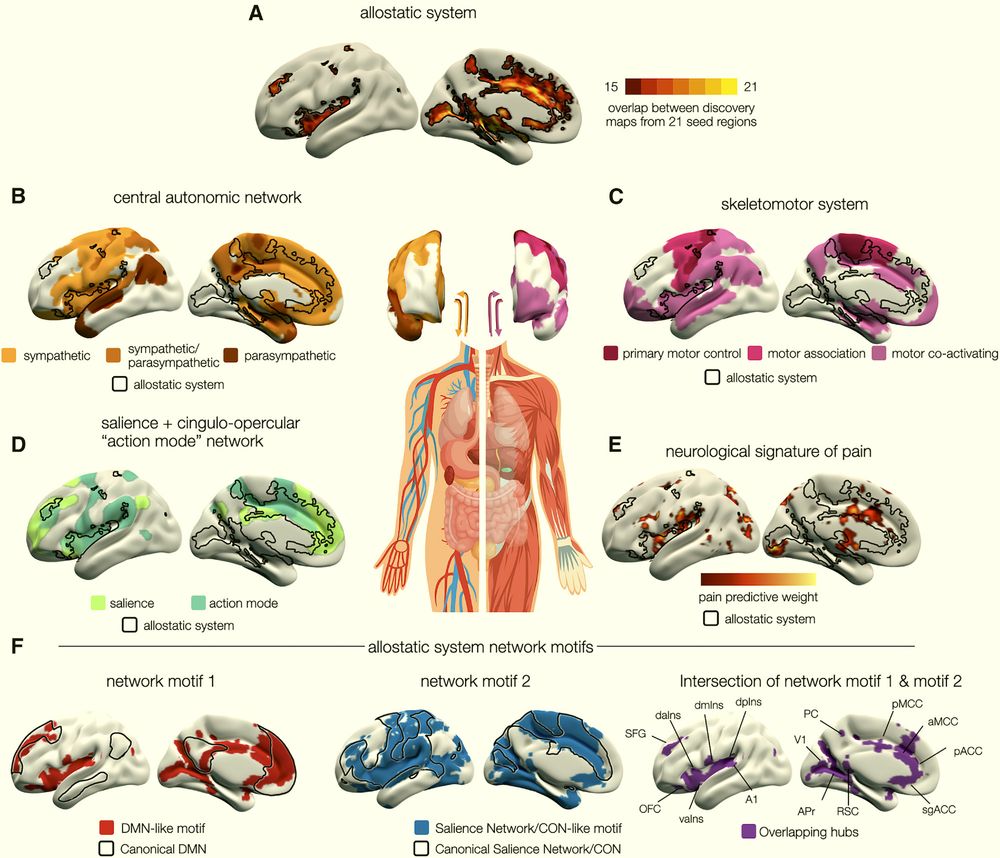
Excited to share our work making an "allostasis-first" case that brain function is most productively framed in terms of its core regulatory function. We also introduce some new ideas in the context of metabolism and cognitive function in Alzheimer's.
www.cell.com/neuron/fullt...
www.cell.com/neuron/fullt...



October 14, 2025 at 7:56 PM
Excited to share our work making an "allostasis-first" case that brain function is most productively framed in terms of its core regulatory function. We also introduce some new ideas in the context of metabolism and cognitive function in Alzheimer's.
www.cell.com/neuron/fullt...
www.cell.com/neuron/fullt...
Reposted by De-Zhi Jin
Zhang et al. leveraged a digital twin brain model with multiscale data to demonstrate that metabolic activities in reward circuits are more prominent during early methamphetamine abstinence, while neuroplasticity is essential throughout both early and later abstinence.

Stage-Dependent Neural Mechanisms in Human Methamphetamine Abstinence: Insights From the Digital Twin Brain Model
Reward circuits are crucial in treating human methamphetamine (MA) addiction, while
the underlying mechanisms of action may vary throughout the intervention process.
This gap limits the identification...
www.biologicalpsychiatryjournal.com
October 16, 2025 at 2:22 PM
Zhang et al. leveraged a digital twin brain model with multiscale data to demonstrate that metabolic activities in reward circuits are more prominent during early methamphetamine abstinence, while neuroplasticity is essential throughout both early and later abstinence.
Reposted by De-Zhi Jin

A bit belated, but here are some new papers! first, a conceptual framework for modelling extremes in neuroimaging data
onlinelibrary.wiley.com/doi/full/10....
Great work from the inimitable Charlotte Fraza!
onlinelibrary.wiley.com/doi/full/10....
Great work from the inimitable Charlotte Fraza!

Using Extreme Value Statistics to Reconceptualize Psychopathology as Extreme Deviations From a Normative Reference Model
Overview of our approach for extreme value statistics. First, we fit a normative model to imaging phenotypes, before employing a ‘peaks-over-threshold’ approach widely used in meteorology and finance...
onlinelibrary.wiley.com
October 16, 2025 at 3:00 PM
A bit belated, but here are some new papers! first, a conceptual framework for modelling extremes in neuroimaging data
onlinelibrary.wiley.com/doi/full/10....
Great work from the inimitable Charlotte Fraza!
onlinelibrary.wiley.com/doi/full/10....
Great work from the inimitable Charlotte Fraza!
Reposted by De-Zhi Jin

Thanks for the figure @bttyeo.bsky.social 🙂🧠🙏🏽!
In this review, @lucinauddin.bsky.social and Hugh Garavan examine how task and resting-state fMRI can reveal brain-behavior relationships in youth, highlighting current controversies and challenges, outlining solutions, and proposing future directions in developmental neuroscience research.

Task and resting state fMRI modelling of brain-behavior relationships in developmental cohorts
Functional magnetic resonance imaging (fMRI) data are often used to inform individual
differences in cognitive, behavioral, and psychiatric phenotypes. These so-called
“brain-behavior” association stu...
www.biologicalpsychiatryjournal.com
October 1, 2025 at 11:09 PM
Thanks for the figure @bttyeo.bsky.social 🙂🧠🙏🏽!
Turn off Zotero. It's time to play a game.🥰
Creative experiences and brain clocks
"The higher the level of expertise and performance, the greater the delay in brain age."
Open Access
www.nature.com/articles/s41...
"The higher the level of expertise and performance, the greater the delay in brain age."
Open Access
www.nature.com/articles/s41...

Creative experiences and brain clocks - Nature Communications
Creative experiences such as dance, music, drawing, and strategy video games might preserve brain health. The authors show that regular practice or short training in these activities is linked to brains that look younger and work more efficiently.
www.nature.com
October 4, 2025 at 3:17 AM
Turn off Zotero. It's time to play a game.🥰
Reposted by De-Zhi Jin

Excited to share that our work introducing the Reproducible Brain Charts (RBC) data resource is now published in Neuron!! 🎉
📚 Read the paper: authors.elsevier.com/c/1lpaF3BtfH...
🧠 Explore the RBC dataset: reprobrainchart.github.io
📚 Read the paper: authors.elsevier.com/c/1lpaF3BtfH...
🧠 Explore the RBC dataset: reprobrainchart.github.io
(1/18) Now out on BioRxiv‼️ Reproducible Brain Charts: An open data resource for mapping brain development and its associations with mental health | doi.org/10.1101/2025...
Funded by National Institute of Mental Health (NIMH)
Funded by National Institute of Mental Health (NIMH)

Reproducible Brain Charts: An open data resource for mapping brain development and its associations with mental health
Major mental disorders are increasingly understood as disorders of brain development. Large and heterogeneous samples are required to define generalizable links between brain development and psychopat...
doi.org
September 22, 2025 at 9:51 PM
Excited to share that our work introducing the Reproducible Brain Charts (RBC) data resource is now published in Neuron!! 🎉
📚 Read the paper: authors.elsevier.com/c/1lpaF3BtfH...
🧠 Explore the RBC dataset: reprobrainchart.github.io
📚 Read the paper: authors.elsevier.com/c/1lpaF3BtfH...
🧠 Explore the RBC dataset: reprobrainchart.github.io

Reposted by De-Zhi Jin
Precision Functional Neuroimaging Reveals Individually Specific Auditory Responses in Infants | bioRxiv www.biorxiv.org/content/10.1...

August 6, 2025 at 12:24 AM
Precision Functional Neuroimaging Reveals Individually Specific Auditory Responses in Infants | bioRxiv www.biorxiv.org/content/10.1...
Reposted by De-Zhi Jin

News from ENIGMA-Epilepsy! 🧠
Our latest study links polygenic risk for TLE-HS to cortical thinning in kids—mirroring patterns in adult patients.
Early imaging-genetics insights could reveal interplay of epilepsy risk and phenotypes before symptoms emerge.
Read more 👉 doi.org/10.1093/brai...
Our latest study links polygenic risk for TLE-HS to cortical thinning in kids—mirroring patterns in adult patients.
Early imaging-genetics insights could reveal interplay of epilepsy risk and phenotypes before symptoms emerge.
Read more 👉 doi.org/10.1093/brai...

August 18, 2025 at 11:42 AM
News from ENIGMA-Epilepsy! 🧠
Our latest study links polygenic risk for TLE-HS to cortical thinning in kids—mirroring patterns in adult patients.
Early imaging-genetics insights could reveal interplay of epilepsy risk and phenotypes before symptoms emerge.
Read more 👉 doi.org/10.1093/brai...
Our latest study links polygenic risk for TLE-HS to cortical thinning in kids—mirroring patterns in adult patients.
Early imaging-genetics insights could reveal interplay of epilepsy risk and phenotypes before symptoms emerge.
Read more 👉 doi.org/10.1093/brai...
Reposted by De-Zhi Jin

Interested in Network hubs, cortical hierarchies, and gradients? Ever wonder where they come from? Check our latest review, where we cover different approaches to mapping hubs, models for their evolution, and mechanisms for how they develop:
osf.io/preprints/os...
osf.io/preprints/os...

August 17, 2025 at 4:27 AM
Interested in Network hubs, cortical hierarchies, and gradients? Ever wonder where they come from? Check our latest review, where we cover different approaches to mapping hubs, models for their evolution, and mechanisms for how they develop:
osf.io/preprints/os...
osf.io/preprints/os...
Reposted by De-Zhi Jin
Functional connectivity heterogeneity and consequences for clinical and cognitive prediction: Stage 2 registered report | Imaging Neuroscience | MIT Press direct.mit.edu/imag/article...

Functional connectivity heterogeneity and consequences for clinical and cognitive prediction: Stage 2 registered report
Abstract. Functional connectivity is frequently used to assess dynamic brain functioning and predict individual differences in behavioral outcomes, such as psychopathology. Inferences from functional ...
direct.mit.edu
August 14, 2025 at 6:16 AM
Functional connectivity heterogeneity and consequences for clinical and cognitive prediction: Stage 2 registered report | Imaging Neuroscience | MIT Press direct.mit.edu/imag/article...