



@edenchang.bsky.social
RA Kuo lab https://www.hsia-laboratory.com/
PhD Coyle lab https://www.coylelab.org/
Postdoc Rosen lab
PhD Coyle lab https://www.coylelab.org/
Postdoc Rosen lab
Reposted
An early Christmas present for those interested in chromatin and transcription! Fantastic work from @au-ho-yu.bsky.social and @aleksszczurek.bsky.social . Thanks to Inge and Michiel for their help. Please repost!
www.biorxiv.org/content/10.6...
www.biorxiv.org/content/10.6...

SET1/MLL complexes control transcription independently of H3K4me3
Histone H3 lysine 4 trimethylation (H3K4me3) at gene promoters is thought to play a central role in gene transcription. H3K4 methylation is deposited by the SET1 (A/B) and MLL (1-4) multi-protein comp...
www.biorxiv.org
December 11, 2025 at 6:09 AM
An early Christmas present for those interested in chromatin and transcription! Fantastic work from @au-ho-yu.bsky.social and @aleksszczurek.bsky.social . Thanks to Inge and Michiel for their help. Please repost!
www.biorxiv.org/content/10.6...
www.biorxiv.org/content/10.6...
Reposted
Talk about efficient packing! Those little black dots are nucleosomes in the most detailed look yet at how chromatin condenses. That and more of the best in @science.org and science in this edition of #ScienceAdviser: www.science.org/content/arti... 🧪
December 9, 2025 at 10:19 PM
Talk about efficient packing! Those little black dots are nucleosomes in the most detailed look yet at how chromatin condenses. That and more of the best in @science.org and science in this edition of #ScienceAdviser: www.science.org/content/arti... 🧪
Reposted
Congratulations former postdoc @jfhevler.bsky.social (in transit to Roche) and the team on their work using thermal proteome profiling along with glycosylation perturbagens to discover glycan-dependent protein functions at the proteome scale 👏
www.biorxiv.org/content/10.6...
www.biorxiv.org/content/10.6...

Discovering Glycosylation-Dependent Protein Function by Thermal Proteome Profiling
Protein glycosylation regulates essential cellular processes including protein folding, stability, and cell-cell interactions; however, how aberrant glycosylation impacts protein function and interact...
www.biorxiv.org
December 8, 2025 at 2:32 AM
Congratulations former postdoc @jfhevler.bsky.social (in transit to Roche) and the team on their work using thermal proteome profiling along with glycosylation perturbagens to discover glycan-dependent protein functions at the proteome scale 👏
www.biorxiv.org/content/10.6...
www.biorxiv.org/content/10.6...
Reposted

I am happy to share that my postdoctoral work in the @gerlichlab.bsky.social at @imbavienna.bsky.social is finally out 🎉!
Our study reveals how cohesin guides focused and accurate homology search.
Read more 👉 www.science.org/doi/10.1126/...
Follow along for key insights and updates! 🧵
Our study reveals how cohesin guides focused and accurate homology search.
Read more 👉 www.science.org/doi/10.1126/...
Follow along for key insights and updates! 🧵

Cohesin guides homology search during DNA repair using loops and sister chromatid linkages
Accurate repair of DNA double-strand breaks (DSBs) is essential for genome stability, and defective repair underlies diseases such as cancer. Homologous recombination uses an intact homologous sequenc...
www.science.org
December 4, 2025 at 8:18 PM
I am happy to share that my postdoctoral work in the @gerlichlab.bsky.social at @imbavienna.bsky.social is finally out 🎉!
Our study reveals how cohesin guides focused and accurate homology search.
Read more 👉 www.science.org/doi/10.1126/...
Follow along for key insights and updates! 🧵
Our study reveals how cohesin guides focused and accurate homology search.
Read more 👉 www.science.org/doi/10.1126/...
Follow along for key insights and updates! 🧵
Reposted
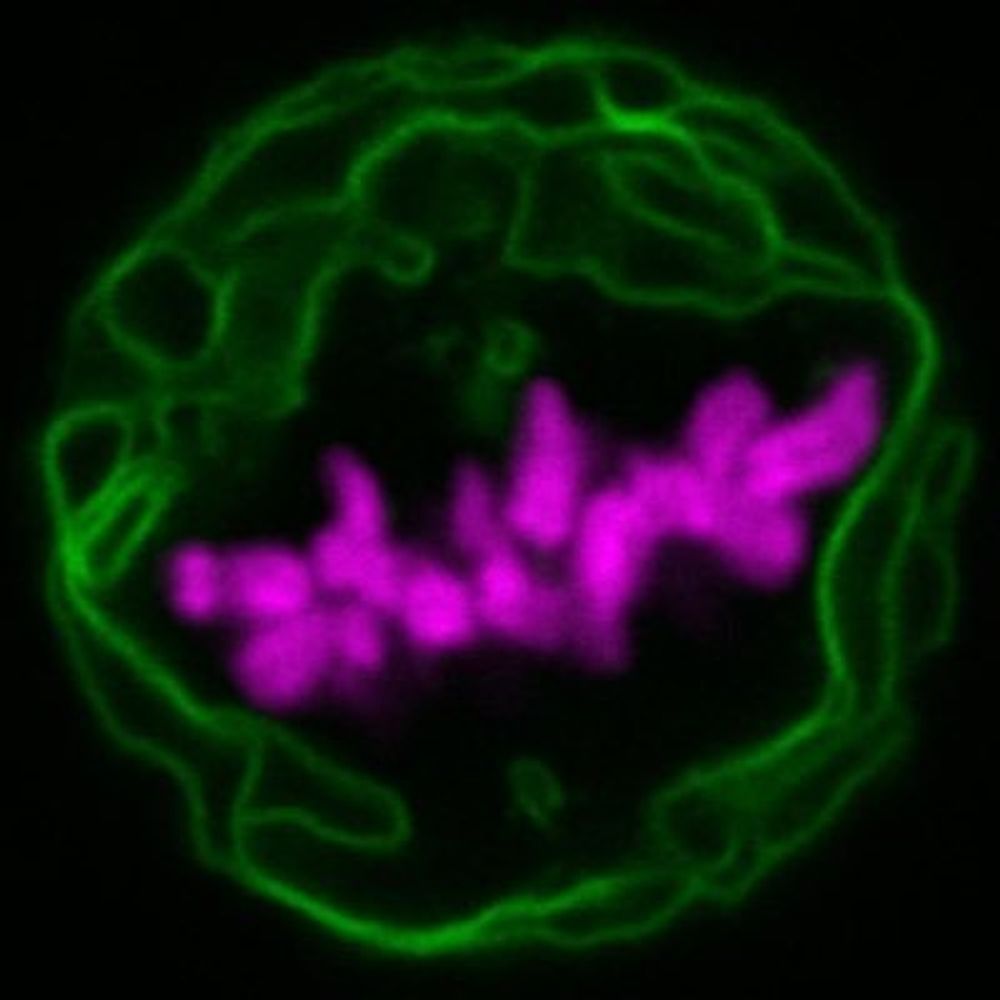
Excited to share our latest fully in-house paper! 🎉
We show how cohesin integrates loop extrusion with sister tethering to guide the homology search during DNA repair.
Huge congratulations to all authors, and to @fedeteloni.bsky.social for leading this work 👏
We’re excited to see his next steps!
We show how cohesin integrates loop extrusion with sister tethering to guide the homology search during DNA repair.
Huge congratulations to all authors, and to @fedeteloni.bsky.social for leading this work 👏
We’re excited to see his next steps!
I am happy to share that my postdoctoral work in the @gerlichlab.bsky.social at @imbavienna.bsky.social is finally out 🎉!
Our study reveals how cohesin guides focused and accurate homology search.
Read more 👉 www.science.org/doi/10.1126/...
Follow along for key insights and updates! 🧵
Our study reveals how cohesin guides focused and accurate homology search.
Read more 👉 www.science.org/doi/10.1126/...
Follow along for key insights and updates! 🧵
Cohesin guides homology search during DNA repair using loops and sister chromatid linkages
Accurate repair of DNA double-strand breaks (DSBs) is essential for genome stability, and defective repair underlies diseases such as cancer. Homologous recombination uses an intact homologous sequenc...
www.science.org
December 5, 2025 at 7:46 AM
Excited to share our latest fully in-house paper! 🎉
We show how cohesin integrates loop extrusion with sister tethering to guide the homology search during DNA repair.
Huge congratulations to all authors, and to @fedeteloni.bsky.social for leading this work 👏
We’re excited to see his next steps!
We show how cohesin integrates loop extrusion with sister tethering to guide the homology search during DNA repair.
Huge congratulations to all authors, and to @fedeteloni.bsky.social for leading this work 👏
We’re excited to see his next steps!
Reposted
Our Science paper is out!
Huge congratulations to @huabin-zhou.bsky.social, Mike Rosen, and the brilliant @janhuemar.bsky.social @juliamaristany.bsky.social and @kieran-russell.bsky.social from our group
News: bit.ly/4avnkAr and bit.ly/3XBGVHS
Great perspective by @vram142.bsky.social +K Zhang
Huge congratulations to @huabin-zhou.bsky.social, Mike Rosen, and the brilliant @janhuemar.bsky.social @juliamaristany.bsky.social and @kieran-russell.bsky.social from our group
News: bit.ly/4avnkAr and bit.ly/3XBGVHS
Great perspective by @vram142.bsky.social +K Zhang
December 5, 2025 at 9:47 AM
Our Science paper is out!
Huge congratulations to @huabin-zhou.bsky.social, Mike Rosen, and the brilliant @janhuemar.bsky.social @juliamaristany.bsky.social and @kieran-russell.bsky.social from our group
News: bit.ly/4avnkAr and bit.ly/3XBGVHS
Great perspective by @vram142.bsky.social +K Zhang
Huge congratulations to @huabin-zhou.bsky.social, Mike Rosen, and the brilliant @janhuemar.bsky.social @juliamaristany.bsky.social and @kieran-russell.bsky.social from our group
News: bit.ly/4avnkAr and bit.ly/3XBGVHS
Great perspective by @vram142.bsky.social +K Zhang
Reposted
@science.org 🧬🔬 A vision of #chromosome organization | Science www.science.org/doi/10.1126/...
@vram142.bsky.social et al.
@vram142.bsky.social et al.

A vision of chromosome organization
Cryogenic electron tomography of condensed chromatin enables multiscale analysis of its structure
www.science.org
December 5, 2025 at 5:24 AM
@science.org 🧬🔬 A vision of #chromosome organization | Science www.science.org/doi/10.1126/...
@vram142.bsky.social et al.
@vram142.bsky.social et al.
Reposted
@science.org 🧬🔬 Multiscale structure of #chromatin condensates explains phase separation and material properties | Science www.science.org/doi/10.1126/... @janhuemar.bsky.social et al.

Multiscale structure of chromatin condensates explains phase separation and material properties
The structure and interaction networks of molecules within biomolecular condensates are poorly understood. Using cryo–electron tomography and molecular dynamics simulations, we elucidated the structur...
www.science.org
December 5, 2025 at 5:24 AM
@science.org 🧬🔬 Multiscale structure of #chromatin condensates explains phase separation and material properties | Science www.science.org/doi/10.1126/... @janhuemar.bsky.social et al.
Reposted

Super excited to share that our paper is now out in @science.org. Lots of work, but also lots of fun getting this out.
Be sure to check it out!
www.science.org/doi/10.1126/...
Also, follow:
@huabin-zhou.bsky.social @juliamaristany.bsky.social @kieran-russell.bsky.social @rcollepardo.bsky.social
Be sure to check it out!
www.science.org/doi/10.1126/...
Also, follow:
@huabin-zhou.bsky.social @juliamaristany.bsky.social @kieran-russell.bsky.social @rcollepardo.bsky.social
December 4, 2025 at 10:15 PM
Super excited to share that our paper is now out in @science.org. Lots of work, but also lots of fun getting this out.
Be sure to check it out!
www.science.org/doi/10.1126/...
Also, follow:
@huabin-zhou.bsky.social @juliamaristany.bsky.social @kieran-russell.bsky.social @rcollepardo.bsky.social
Be sure to check it out!
www.science.org/doi/10.1126/...
Also, follow:
@huabin-zhou.bsky.social @juliamaristany.bsky.social @kieran-russell.bsky.social @rcollepardo.bsky.social
Reposted

Anthony A. Hyman will become EMBL’s next Director General.
He joins EMBL from @mpi-cbg.de in Dresden. He is also Professor of Molecular Biology @tudresden.bsky.social, and was a group leader at EMBL Heidelberg from 1993 to 1999.
www.embl.org/news/people-...
He joins EMBL from @mpi-cbg.de in Dresden. He is also Professor of Molecular Biology @tudresden.bsky.social, and was a group leader at EMBL Heidelberg from 1993 to 1999.
www.embl.org/news/people-...

November 27, 2025 at 1:02 PM
Anthony A. Hyman will become EMBL’s next Director General.
He joins EMBL from @mpi-cbg.de in Dresden. He is also Professor of Molecular Biology @tudresden.bsky.social, and was a group leader at EMBL Heidelberg from 1993 to 1999.
www.embl.org/news/people-...
He joins EMBL from @mpi-cbg.de in Dresden. He is also Professor of Molecular Biology @tudresden.bsky.social, and was a group leader at EMBL Heidelberg from 1993 to 1999.
www.embl.org/news/people-...
Reposted

Our new paper is out now in Nature Communications! We uncovered the function of XBP1 in beta cells of a preclinical model of T1D and identified unique and shared gene regulatory networks driven by IRE1 and XBP1.
www.nature.com/articles/s41...
www.nature.com/articles/s41...

Defining the role of β-cell IRE1α/XBP1 pathway and its gene regulatory network components in non-obese diabetic mice - Nature Communications
Modulating the unfolded protein response (UPR) can induce protective dedifferentiation of β-cells in non-obese diabetic mice. Here, the authors show that β-cell deletion of UPR transcription factor XB...
www.nature.com
November 26, 2025 at 2:28 PM
Our new paper is out now in Nature Communications! We uncovered the function of XBP1 in beta cells of a preclinical model of T1D and identified unique and shared gene regulatory networks driven by IRE1 and XBP1.
www.nature.com/articles/s41...
www.nature.com/articles/s41...
Reposted
Still posting cytoskeleton videos, it seems. Actin this time.
Sample: Lifeact-eGFP in HeLa cells.
Modality: Airyscan confocal
Timestamp is mm:ss and the scale bar is 5 µm.
Sample: Lifeact-eGFP in HeLa cells.
Modality: Airyscan confocal
Timestamp is mm:ss and the scale bar is 5 µm.
November 23, 2025 at 3:21 AM
Still posting cytoskeleton videos, it seems. Actin this time.
Sample: Lifeact-eGFP in HeLa cells.
Modality: Airyscan confocal
Timestamp is mm:ss and the scale bar is 5 µm.
Sample: Lifeact-eGFP in HeLa cells.
Modality: Airyscan confocal
Timestamp is mm:ss and the scale bar is 5 µm.
Reposted
Key transcripts encoded centrin-like proteins, a frequent component of sensory/contractile structures in protists. We visualized tentacle ultrastructure by U-ExM with @dudinlab.bsky.social lab, discovering stunning tip and collar structures 🤯that add structural complexity to new tentacle formation.
November 18, 2025 at 4:15 PM
Key transcripts encoded centrin-like proteins, a frequent component of sensory/contractile structures in protists. We visualized tentacle ultrastructure by U-ExM with @dudinlab.bsky.social lab, discovering stunning tip and collar structures 🤯that add structural complexity to new tentacle formation.
Reposted
Cellular structure self-organizes through an interplay between internal mechanisms and external cues. The single-celled suctorian P. collini builds a trap structure to capture large prey using microtubule feeding tentacles, creating feedback between cell morphology and prey availability.
November 18, 2025 at 4:15 PM
Cellular structure self-organizes through an interplay between internal mechanisms and external cues. The single-celled suctorian P. collini builds a trap structure to capture large prey using microtubule feeding tentacles, creating feedback between cell morphology and prey availability.
Reposted
Finally – there are many mysteries to still resolve for these cells. From dramatic metamorphic capabilities🤯 to prey preference and detection mechanisms 🕵️. For anyone interested in collaborating or getting their hands on these cells, these fantastic beasts culture well and we’re happy to share!
November 18, 2025 at 4:15 PM
Finally – there are many mysteries to still resolve for these cells. From dramatic metamorphic capabilities🤯 to prey preference and detection mechanisms 🕵️. For anyone interested in collaborating or getting their hands on these cells, these fantastic beasts culture well and we’re happy to share!
Reposted
How do cells adapt morphology to function? In a 🔥 preprint by @zjmaggiexu.bsky.social , with @dudinlab.bsky.social and @amyweeks.bsky.social , we identify a self-organizing single-cell morphology circuit that optimizes the feeding trap structure of the suctorian P. collini. 🧵 tinyurl.com/4k8nv926
November 18, 2025 at 4:15 PM
How do cells adapt morphology to function? In a 🔥 preprint by @zjmaggiexu.bsky.social , with @dudinlab.bsky.social and @amyweeks.bsky.social , we identify a self-organizing single-cell morphology circuit that optimizes the feeding trap structure of the suctorian P. collini. 🧵 tinyurl.com/4k8nv926
Reposted
Thrilled to share our work on the 🔥 single-celled predator Podophrya collini, which rewires its cell morphology to hunt more efficiently. Huge thanks to our amazing team—Amy, Lauren, Omaya, Marine, Mari, and especially Scott—for making this shine! ✨
How do cells adapt morphology to function? In a 🔥 preprint by @zjmaggiexu.bsky.social , with @dudinlab.bsky.social and @amyweeks.bsky.social , we identify a self-organizing single-cell morphology circuit that optimizes the feeding trap structure of the suctorian P. collini. 🧵 tinyurl.com/4k8nv926
November 18, 2025 at 5:12 PM
Thrilled to share our work on the 🔥 single-celled predator Podophrya collini, which rewires its cell morphology to hunt more efficiently. Huge thanks to our amazing team—Amy, Lauren, Omaya, Marine, Mari, and especially Scott—for making this shine! ✨
Reposted
Very excited to present OpenCGChromatin🔥🔥🔥
A new coarse-grained model that probes full chromatin condensates at near-atomistic resolution to reveal the molecular regulation of chromatin structure and phase separation
Brilliantly led by @kieran-russell.bsky.social, with the Rosen and Orozco groups
A new coarse-grained model that probes full chromatin condensates at near-atomistic resolution to reveal the molecular regulation of chromatin structure and phase separation
Brilliantly led by @kieran-russell.bsky.social, with the Rosen and Orozco groups

November 18, 2025 at 3:07 PM
Very excited to present OpenCGChromatin🔥🔥🔥
A new coarse-grained model that probes full chromatin condensates at near-atomistic resolution to reveal the molecular regulation of chromatin structure and phase separation
Brilliantly led by @kieran-russell.bsky.social, with the Rosen and Orozco groups
A new coarse-grained model that probes full chromatin condensates at near-atomistic resolution to reveal the molecular regulation of chromatin structure and phase separation
Brilliantly led by @kieran-russell.bsky.social, with the Rosen and Orozco groups
Reposted

Congratulations to all authors! Happy to have contributed to the cryo-EM side. It was a lot of fun learning more about the herpesvirus DNA replication process and how clinical drugs inhibit it 🦠💊. Big thanks to @cijilim.bsky.social and Tahir for the support!
New work from Tahirov x Lim collaboration! @qixianghe.bsky.social from my lab contributed the cryo-EM structures for this work. We are excited to help explain how anti-HSV drugs work and to guide their future development.
www.science.org/doi/10.1126/...
@unmc.bsky.social @uwbiochem.bsky.social
www.science.org/doi/10.1126/...
@unmc.bsky.social @uwbiochem.bsky.social

Structural basis of herpesvirus helicase-primase inhibition by pritelivir and amenamevir
Structural studies of HSV-1 helicase-primase revealed how pritelivir and amenamevir bind and block its helicase activity.
www.science.org
November 10, 2025 at 2:49 AM
Congratulations to all authors! Happy to have contributed to the cryo-EM side. It was a lot of fun learning more about the herpesvirus DNA replication process and how clinical drugs inhibit it 🦠💊. Big thanks to @cijilim.bsky.social and Tahir for the support!
Reposted

Our paper in Science is out! @souravagrawal.bsky.social, @rlynn.bsky.social, @susvirkar.bsky.social, and the rest of the team show human RPA is a telomerase processivity factor essential for telomere maintenance. This reshapes our thinking about telomerase regulation. www.science.org/doi/10.1126/...

Human RPA is an essential telomerase processivity factor for maintaining telomeres
Telomerase counteracts telomere shortening by repeatedly adding DNA repeats to chromosome ends. We identified the replication protein A (RPA) heterotrimer as a telomerase processivity factor critical ...
www.science.org
October 30, 2025 at 10:07 PM
Our paper in Science is out! @souravagrawal.bsky.social, @rlynn.bsky.social, @susvirkar.bsky.social, and the rest of the team show human RPA is a telomerase processivity factor essential for telomere maintenance. This reshapes our thinking about telomerase regulation. www.science.org/doi/10.1126/...
Reposted
Lab’s first paper is out!! We show the first structures of #Asgard #chromatin by #cryo-EM 🧬❄️
Asgard histones form closed and open hypernucleosomes. Closed are conserved across #Archaea, while open resemble eukaryotic H3–H4 octasomes and are Asgard-specific. More here: www.cell.com/molecular-ce...
Asgard histones form closed and open hypernucleosomes. Closed are conserved across #Archaea, while open resemble eukaryotic H3–H4 octasomes and are Asgard-specific. More here: www.cell.com/molecular-ce...

October 28, 2025 at 3:07 PM
Lab’s first paper is out!! We show the first structures of #Asgard #chromatin by #cryo-EM 🧬❄️
Asgard histones form closed and open hypernucleosomes. Closed are conserved across #Archaea, while open resemble eukaryotic H3–H4 octasomes and are Asgard-specific. More here: www.cell.com/molecular-ce...
Asgard histones form closed and open hypernucleosomes. Closed are conserved across #Archaea, while open resemble eukaryotic H3–H4 octasomes and are Asgard-specific. More here: www.cell.com/molecular-ce...
Reposted
Check out our new work, led by talented @janhuemar.bsky.social, where we uncover that pioneer factor Oct4 remodels chromatin for DNA access not by opening it but by exploiting nucleosome breathing and forming clusters 🔥🔥🔥
🚨 🚨 🚨 New preprint alert!!! 🚨 🚨 🚨
In the past, we have learnt that Oct4 can induce nucleosome breathing on the mono-nucleosome level.
But what happens when you have a fibre of multiple nucleosomes?
www.biorxiv.org/content/10.1...
@rcollepardo.bsky.social @juliamaristany.bsky.social
In the past, we have learnt that Oct4 can induce nucleosome breathing on the mono-nucleosome level.
But what happens when you have a fibre of multiple nucleosomes?
www.biorxiv.org/content/10.1...
@rcollepardo.bsky.social @juliamaristany.bsky.social

October 22, 2025 at 5:10 AM
Check out our new work, led by talented @janhuemar.bsky.social, where we uncover that pioneer factor Oct4 remodels chromatin for DNA access not by opening it but by exploiting nucleosome breathing and forming clusters 🔥🔥🔥
Reposted
We propose that the reshaping of chromatin and the binding in a cluster-like manner can be one of the solutions to the so-called search problem. We hypothesize that this binding in high concentrations of Oct4 might be key to explaining how silenced genes are activated in cellular reprogramming.

October 21, 2025 at 9:59 AM
We propose that the reshaping of chromatin and the binding in a cluster-like manner can be one of the solutions to the so-called search problem. We hypothesize that this binding in high concentrations of Oct4 might be key to explaining how silenced genes are activated in cellular reprogramming.
Reposted
🚨 🚨 🚨 New preprint alert!!! 🚨 🚨 🚨
In the past, we have learnt that Oct4 can induce nucleosome breathing on the mono-nucleosome level.
But what happens when you have a fibre of multiple nucleosomes?
www.biorxiv.org/content/10.1...
@rcollepardo.bsky.social @juliamaristany.bsky.social
In the past, we have learnt that Oct4 can induce nucleosome breathing on the mono-nucleosome level.
But what happens when you have a fibre of multiple nucleosomes?
www.biorxiv.org/content/10.1...
@rcollepardo.bsky.social @juliamaristany.bsky.social
October 21, 2025 at 9:59 AM
🚨 🚨 🚨 New preprint alert!!! 🚨 🚨 🚨
In the past, we have learnt that Oct4 can induce nucleosome breathing on the mono-nucleosome level.
But what happens when you have a fibre of multiple nucleosomes?
www.biorxiv.org/content/10.1...
@rcollepardo.bsky.social @juliamaristany.bsky.social
In the past, we have learnt that Oct4 can induce nucleosome breathing on the mono-nucleosome level.
But what happens when you have a fibre of multiple nucleosomes?
www.biorxiv.org/content/10.1...
@rcollepardo.bsky.social @juliamaristany.bsky.social
Reposted
1/ New preprint alert!
In collaboration between the Rosen, Redding, Collepardo-Guevara & Gerlich labs, we uncover a surprising principle of chromosome organisation: electrostatic repulsion positions centromeres at the chromosome surface during mitosis.
🔗 doi.org/10.1101/2025...
In collaboration between the Rosen, Redding, Collepardo-Guevara & Gerlich labs, we uncover a surprising principle of chromosome organisation: electrostatic repulsion positions centromeres at the chromosome surface during mitosis.
🔗 doi.org/10.1101/2025...

An electrostatic repulsion model of centromere organisation
During cell division, chromosomes reorganise into compact bodies in which centromeres localise precisely at the chromatin surface to enable kinetochore-microtubule interactions essential for genome se...
doi.org
September 3, 2025 at 8:12 AM
1/ New preprint alert!
In collaboration between the Rosen, Redding, Collepardo-Guevara & Gerlich labs, we uncover a surprising principle of chromosome organisation: electrostatic repulsion positions centromeres at the chromosome surface during mitosis.
🔗 doi.org/10.1101/2025...
In collaboration between the Rosen, Redding, Collepardo-Guevara & Gerlich labs, we uncover a surprising principle of chromosome organisation: electrostatic repulsion positions centromeres at the chromosome surface during mitosis.
🔗 doi.org/10.1101/2025...