



Jane
@fossilyarns.bsky.social
Palaeontologist. Post-Doc @OfficialUoM Poking about with burrowing worms 🔍🪱
Early Vertebrate fan girl. 🐟
She/Her #BLM @fossilyarns pretty much everywhere
Early Vertebrate fan girl. 🐟
She/Her #BLM @fossilyarns pretty much everywhere
Found a paper with a great explanation and r code for a method I’ve been fumbling at for ages

a man with his eyes closed in a blurry picture
ALT: a man with his eyes closed in a blurry picture
media.tenor.com
December 11, 2025 at 10:53 AM
Found a paper with a great explanation and r code for a method I’ve been fumbling at for ages
Reposted by Jane

For reasons that are too complicated to explain, I am reminded of Adam Stuart Smith’s 2005 paper “Are Jaffa Cakes Really Biscuits?”. Here’s his cladogram (it says they aren’t): Full paper here: plesiosauria.com/pdf/smith_20...

December 10, 2025 at 10:14 PM
For reasons that are too complicated to explain, I am reminded of Adam Stuart Smith’s 2005 paper “Are Jaffa Cakes Really Biscuits?”. Here’s his cladogram (it says they aren’t): Full paper here: plesiosauria.com/pdf/smith_20...
Reposted by Jane

We'll be hosting a joint Crossing the Palaeontological–Ecological Gap (CPEG) meeting & Conservation Paleobiology Symposium @ucl.ac.uk in London in August 2027, which aims to bridge spatial and temporal gradients between palaeontology, ecology, and conservation: www.ucl.ac.uk/mathematical...

December 8, 2025 at 3:42 PM
We'll be hosting a joint Crossing the Palaeontological–Ecological Gap (CPEG) meeting & Conservation Paleobiology Symposium @ucl.ac.uk in London in August 2027, which aims to bridge spatial and temporal gradients between palaeontology, ecology, and conservation: www.ucl.ac.uk/mathematical...
Reposted by Jane
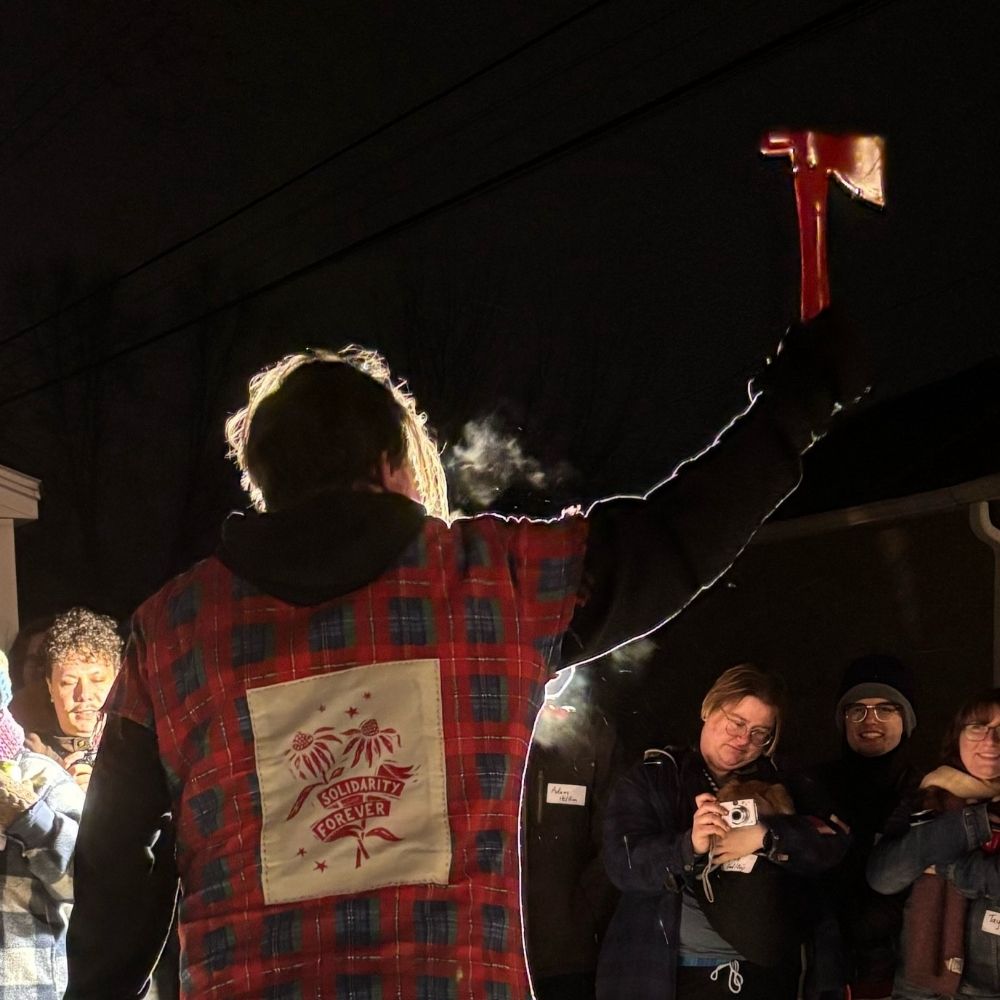
The Thing (1982, John Carpenter)

December 9, 2025 at 2:27 AM
The Thing (1982, John Carpenter)
I bought my mum one little panettone one year, and now I’m in the trap of shopping for boutique versions at an Italian deli because she deserves a treat and I can’t bring myself back to just regular shop bought for her.
I got pistachio this year, it sounds amazing (and I’ll defo get a slice)👌
I got pistachio this year, it sounds amazing (and I’ll defo get a slice)👌

December 8, 2025 at 6:13 PM
I bought my mum one little panettone one year, and now I’m in the trap of shopping for boutique versions at an Italian deli because she deserves a treat and I can’t bring myself back to just regular shop bought for her.
I got pistachio this year, it sounds amazing (and I’ll defo get a slice)👌
I got pistachio this year, it sounds amazing (and I’ll defo get a slice)👌
Reposted by Jane

The Nobel Prize committee should announce the World Cup winner tomorrow
December 6, 2025 at 4:29 AM
The Nobel Prize committee should announce the World Cup winner tomorrow
Just grim, the whole thing.
A fucking peace prize for Trump and a trophy bigger than the World Cup (literally so Trump doesn’t steal the real cup like he did with the World Clubs one)
A fucking peace prize for Trump and a trophy bigger than the World Cup (literally so Trump doesn’t steal the real cup like he did with the World Clubs one)

December 5, 2025 at 6:51 PM
Just grim, the whole thing.
A fucking peace prize for Trump and a trophy bigger than the World Cup (literally so Trump doesn’t steal the real cup like he did with the World Clubs one)
A fucking peace prize for Trump and a trophy bigger than the World Cup (literally so Trump doesn’t steal the real cup like he did with the World Clubs one)
Reposted by Jane

Guy Fawkes signature before and after watching this World Cup Draw

December 5, 2025 at 6:25 PM
Guy Fawkes signature before and after watching this World Cup Draw
Idk, I just didn’t need new shoes?
Not wild about this weird post-sale reflection activity. At least offer me a voucher for my thoughts.
Not wild about this weird post-sale reflection activity. At least offer me a voucher for my thoughts.

December 5, 2025 at 11:37 AM
Idk, I just didn’t need new shoes?
Not wild about this weird post-sale reflection activity. At least offer me a voucher for my thoughts.
Not wild about this weird post-sale reflection activity. At least offer me a voucher for my thoughts.
Reposted by Jane

Related, my Tidal vibe this year was pretty on point :)


December 4, 2025 at 8:36 PM
Related, my Tidal vibe this year was pretty on point :)
Reposted by Jane
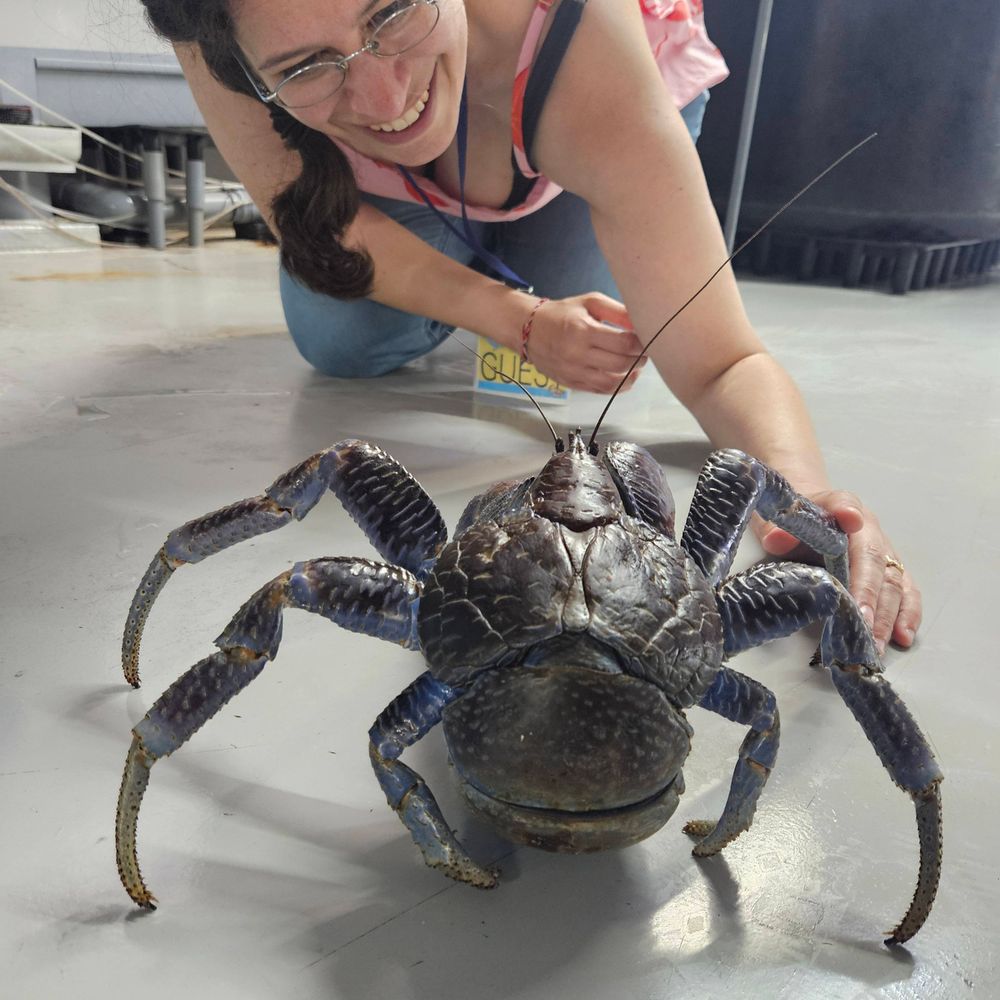
New this year: a fossil crustacean preserved in this manner that displays the sternum (underbelly) complete with food groove, and possible labrum in part I! These animals may have been up to 10 mm long and may resemble modern fairy shrimp #Crustmas 🧪
www.science.org/doi/10.1126/...
www.science.org/doi/10.1126/...

December 4, 2025 at 5:11 PM
New this year: a fossil crustacean preserved in this manner that displays the sternum (underbelly) complete with food groove, and possible labrum in part I! These animals may have been up to 10 mm long and may resemble modern fairy shrimp #Crustmas 🧪
www.science.org/doi/10.1126/...
www.science.org/doi/10.1126/...
Reposted by Jane
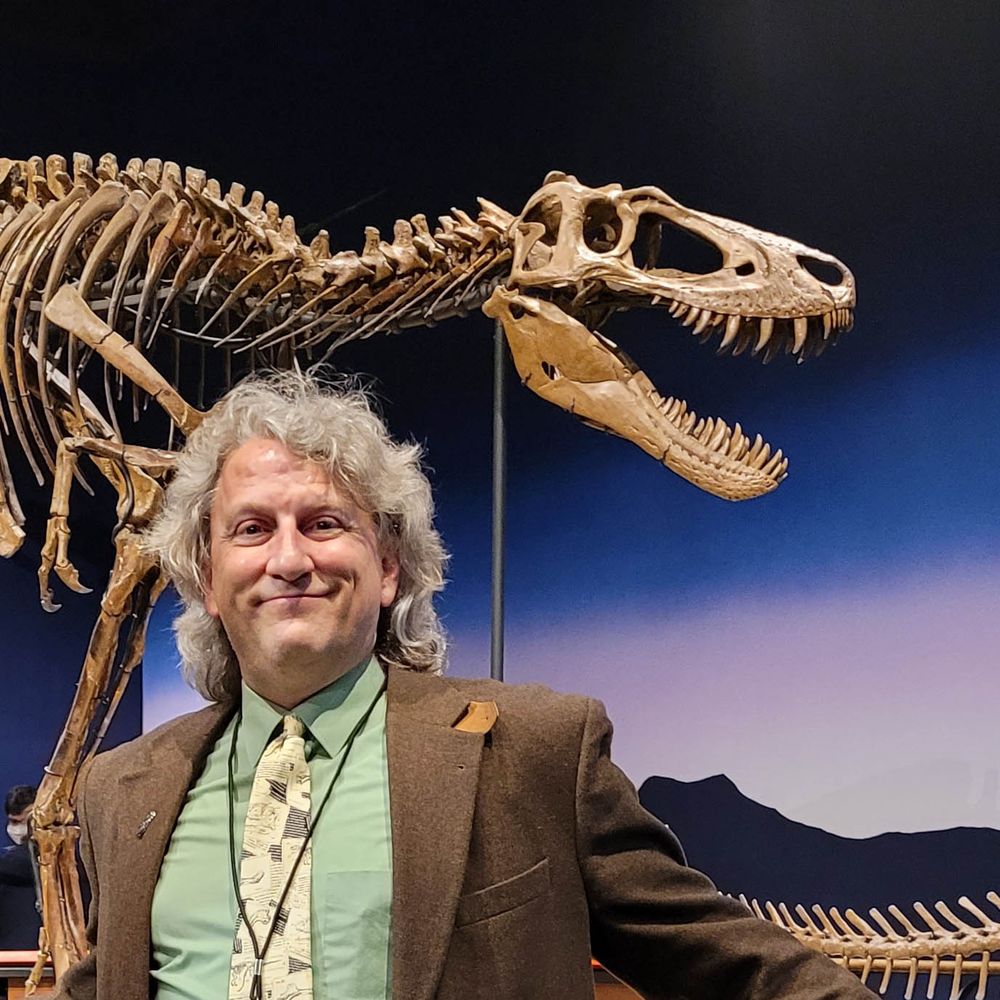
A diminutive tyrannosaur lived alongside Tyrannosaurus rex | Science www.science.org/doi/10.1126/...

A diminutive tyrannosaur lived alongside Tyrannosaurus rex
Whether Nanotyrannus lancensis represents a distinct taxon or an immature Tyrannosaurus rex is a decades-long controversy. The N. lancesis holotype is an isolated skull and ceratobranchials, but limb ...
www.science.org
December 4, 2025 at 7:07 PM
A diminutive tyrannosaur lived alongside Tyrannosaurus rex | Science www.science.org/doi/10.1126/...
Reposted by Jane

Very excited to share that our latest paper is out in Science! We show that the type specimen of Nanotyrannus—an isolated skull—is fully grown, showing that it is not a juvenile Tyrannosaurus rex but a distinct species (1/12)
www.science.org/doi/10.1126/...
www.science.org/doi/10.1126/...
www.science.org
December 4, 2025 at 7:02 PM
Very excited to share that our latest paper is out in Science! We show that the type specimen of Nanotyrannus—an isolated skull—is fully grown, showing that it is not a juvenile Tyrannosaurus rex but a distinct species (1/12)
www.science.org/doi/10.1126/...
www.science.org/doi/10.1126/...
Reposted by Jane
It was a pleasure to handle and recommend: A #database of #conodont occurrences between the Changhsingian (Late #Permian) and the Spathian (Olenekian, Early #Triassic) by Pauline Guenser, Marc Leu, Axelle Zacaï, Nicolas Goudemand, Gilles Escarguel (2025) for #PCI #Paleontology
A database of conodont occurrences between the Changhsingian (Late Permian) and the Spathian (Olenekian, Early Triassic)
We introduce here a database of global occurrences of conodont species around the Permian/Triassic boundary (PTB, ca. 251.9 Ma). The PTB is known for its biotic crisis, i.e. the most important mass extinction event of the whole Phanerozoic, which profoundly impacted the marine biosphere and was followed by a complex biotic recovery during the whole Early Triassic Epoch (ca. 5 myrs). The PTB crisis has been extensively studied and conodonts survived to it but their evolution around the PTB was barely studied quantitatively. We provide here the most complete database of conodont occurrences in the latest Permian and the Early Triassic. It is a data compilation from the available literature, a csv file of about 12,000 entries, gathering a total of 260 publications dated from 1967 to 2022. The database includes taxonomic, sampling, sedimentological, temporal, (paleo)geographical and bibliographical information. The minimum unit, i.e. a row in the table, corresponds to a conodont species in a sample. The temporal resolution is the stage and substage, ranging from the Changhsingian (Late Permian) to the end of the Spathian (Olenekian, Early Triassic). The database allows a large range of investigations such as diversity, biogeographic, macroecological and biochronological studies that can be investigated at different geographic scale thanks to the GPS coordinates associated to each occurrence. The database can be downloaded and used freely as far as this associated datapaper is cited in any resulting publication. It will be updated once a year with new publications and taxonomic updates.
hal.science
December 2, 2025 at 2:20 PM
Reposted by Jane
I switched to this and @bookshop.org for every book, ebook, and audiobook purchase where they have what I want - which is 99% of them -- and the apps are great, and I get to support a local bookstore. It's all win here, folks.

If you happen to be looking for an alternative audiobook listening platform, there are many out there, including us at Libro.fm 👋
We aim to build community in many ways, including by supporting independent bookshops with every purchase you make—versus tearing communities apart.
We aim to build community in many ways, including by supporting independent bookshops with every purchase you make—versus tearing communities apart.
December 3, 2025 at 6:05 PM
I switched to this and @bookshop.org for every book, ebook, and audiobook purchase where they have what I want - which is 99% of them -- and the apps are great, and I get to support a local bookstore. It's all win here, folks.
Oooooo. I have been looking for a nice audiobook platform to switch to
If you happen to be looking for an alternative audiobook listening platform, there are many out there, including us at Libro.fm 👋
We aim to build community in many ways, including by supporting independent bookshops with every purchase you make—versus tearing communities apart.
We aim to build community in many ways, including by supporting independent bookshops with every purchase you make—versus tearing communities apart.
December 3, 2025 at 8:25 PM
Oooooo. I have been looking for a nice audiobook platform to switch to
Rude.
It’s fair but also might delete my subscription.
It’s fair but also might delete my subscription.

December 3, 2025 at 6:18 PM
Rude.
It’s fair but also might delete my subscription.
It’s fair but also might delete my subscription.
Reposted by Jane
Our latest, led by the inimitable Chris Kay "Dated gene duplications elucidate the evolutionary assembly of eukaryotes" in which we used gene duplications to test hypotheses of eukaryogenesis. TLDR? They're all wrong. With @tweethinking.bsky.social @anya1.bsky.social @ssolo.bsky.social Davide Pisani

Dated gene duplications elucidate the evolutionary assembly of eukaryotes - Nature
Analysis of eukaryotic gene sequences using a relaxed molecular clock methodology indicate that eukaryotes emerged 3.0–2.25 billion years ago as a result of mitochondrial endosymbiosis with complex ar...
www.nature.com
December 3, 2025 at 5:05 PM
Our latest, led by the inimitable Chris Kay "Dated gene duplications elucidate the evolutionary assembly of eukaryotes" in which we used gene duplications to test hypotheses of eukaryogenesis. TLDR? They're all wrong. With @tweethinking.bsky.social @anya1.bsky.social @ssolo.bsky.social Davide Pisani
Reposted by Jane
Curatorial job with significant geological and palaeontological collections at Warwick Museums.
www.wmjobs.co.uk/job/250490/c...
www.wmjobs.co.uk/job/250490/c...

Curator of Natural Sciences - Warwick,Warwickshire job with Warwickshire County Council | 250490
About Heritage and Culture Warwickshire Heritage and Culture Warwickshire (HCW) provide a wide range of services that help local communities and ...
www.wmjobs.co.uk
December 3, 2025 at 2:01 PM
Curatorial job with significant geological and palaeontological collections at Warwick Museums.
www.wmjobs.co.uk/job/250490/c...
www.wmjobs.co.uk/job/250490/c...
Reposted by Jane

'Tis the season for graduate school applications, so here's a reminder that I'm recruiting! My lab uses a combination of fossils, statistical phylogenetics, fieldwork, & computational methods to study macroevolutionary dynamics in the marine biosphere. Check the link below & feel free to reach out
Link to website for info regarding the opportunity, requirements, and how to apply

News
PhD and MSc positions in Phylogenetic, Computational, and/or Evolutionary Paleobiology [Posted September 2025. Deadline is January 15, 2026. See below for information about the lab, student opportu…
daveyfwright.wordpress.com
December 2, 2025 at 8:11 PM
'Tis the season for graduate school applications, so here's a reminder that I'm recruiting! My lab uses a combination of fossils, statistical phylogenetics, fieldwork, & computational methods to study macroevolutionary dynamics in the marine biosphere. Check the link below & feel free to reach out
Kinda sad I can't claim a T rex name-friend anymore but N. lethaeus is a great taxon name.
The final, formatted version of the Zanno & @jgn-paleo.bsky.social Nanotyrannus paper is out:
Zanno, L.E., Napoli, J.G. Nanotyrannus and Tyrannosaurus coexisted at the close of the Cretaceous. Nature (2025). doi.org/10.1038/s415...
Zanno, L.E., Napoli, J.G. Nanotyrannus and Tyrannosaurus coexisted at the close of the Cretaceous. Nature (2025). doi.org/10.1038/s415...

Nanotyrannus and Tyrannosaurus coexisted at the close of the Cretaceous - Nature
A well-preserved skeleton of a nearly mature tyrannosaur from the Hell Creek Formation in Montana, USA supports the existence of a second Nanotyrannus species, Nanotyrannus lethaeus sp. nov., and vali...
doi.org
December 3, 2025 at 3:13 PM
Kinda sad I can't claim a T rex name-friend anymore but N. lethaeus is a great taxon name.
Reposted by Jane
The final, formatted version of the Zanno & @jgn-paleo.bsky.social Nanotyrannus paper is out:
Zanno, L.E., Napoli, J.G. Nanotyrannus and Tyrannosaurus coexisted at the close of the Cretaceous. Nature (2025). doi.org/10.1038/s415...
Zanno, L.E., Napoli, J.G. Nanotyrannus and Tyrannosaurus coexisted at the close of the Cretaceous. Nature (2025). doi.org/10.1038/s415...
Nanotyrannus and Tyrannosaurus coexisted at the close of the Cretaceous - Nature
A well-preserved skeleton of a nearly mature tyrannosaur from the Hell Creek Formation in Montana, USA supports the existence of a second Nanotyrannus species, Nanotyrannus lethaeus sp. nov., and vali...
doi.org
December 3, 2025 at 1:33 PM
The final, formatted version of the Zanno & @jgn-paleo.bsky.social Nanotyrannus paper is out:
Zanno, L.E., Napoli, J.G. Nanotyrannus and Tyrannosaurus coexisted at the close of the Cretaceous. Nature (2025). doi.org/10.1038/s415...
Zanno, L.E., Napoli, J.G. Nanotyrannus and Tyrannosaurus coexisted at the close of the Cretaceous. Nature (2025). doi.org/10.1038/s415...
Reposted by Jane

Today in my 1-week Scientific Writing course we tackle two hard bits of a paper: the Introduction and the Discussion. So it's fitting that this week's blog post is "Three Things Your Introduction Section Isn't"! scientistseessquirre...
(yes, still with the link card apparently not working...)
(yes, still with the link card apparently not working...)

What your Introduction section isn’t
Today, the fourth and final instalment in a short series inspired by bad papers I’ve read (some of them, I’ll admit once again, my own). I’ve let myself rant about what a Methods sections shouldn’t…
scientistseessquirrel.wordpress.com
December 3, 2025 at 2:48 PM
Today in my 1-week Scientific Writing course we tackle two hard bits of a paper: the Introduction and the Discussion. So it's fitting that this week's blog post is "Three Things Your Introduction Section Isn't"! scientistseessquirre...
(yes, still with the link card apparently not working...)
(yes, still with the link card apparently not working...)
Reposted by Jane
New PhD advertised! Please distribute. Come work with a fine group of folks. www.findaphd.com/phds/project...

Plant-microbe interaction reshuffling and its contributions to plant stress toleration and biogeochemical cycling at The University of Manchester on FindAPhD.com
PhD Project - Plant-microbe interaction reshuffling and its contributions to plant stress toleration and biogeochemical cycling at The University of Manchester, listed on FindAPhD.com
www.findaphd.com
December 3, 2025 at 12:52 PM
New PhD advertised! Please distribute. Come work with a fine group of folks. www.findaphd.com/phds/project...
Love this came with a fold out anatomical diagram (and that they hadn’t been ripped out to sell as framed prints)
I cannot explain how GOOD this book smells btw.
I cannot explain how GOOD this book smells btw.

December 3, 2025 at 11:31 AM
Love this came with a fold out anatomical diagram (and that they hadn’t been ripped out to sell as framed prints)
I cannot explain how GOOD this book smells btw.
I cannot explain how GOOD this book smells btw.