



Gil Henkin
@gilh.bsky.social
Postdoc @ MPI for Infection Biology, Berlin
Reposted by Gil Henkin
🚨New paper out @pnas.org!
Do you want to know how do mitotic motors organize the spindle? Wei Xiang's simulations show that just a plus & a minus motor are enough to drive bipolar spindle assembly. Could this explain why kinesin-5 & dynein evolved their unique properties? 🤔
doi.org/10.1073/pnas...
Do you want to know how do mitotic motors organize the spindle? Wei Xiang's simulations show that just a plus & a minus motor are enough to drive bipolar spindle assembly. Could this explain why kinesin-5 & dynein evolved their unique properties? 🤔
doi.org/10.1073/pnas...
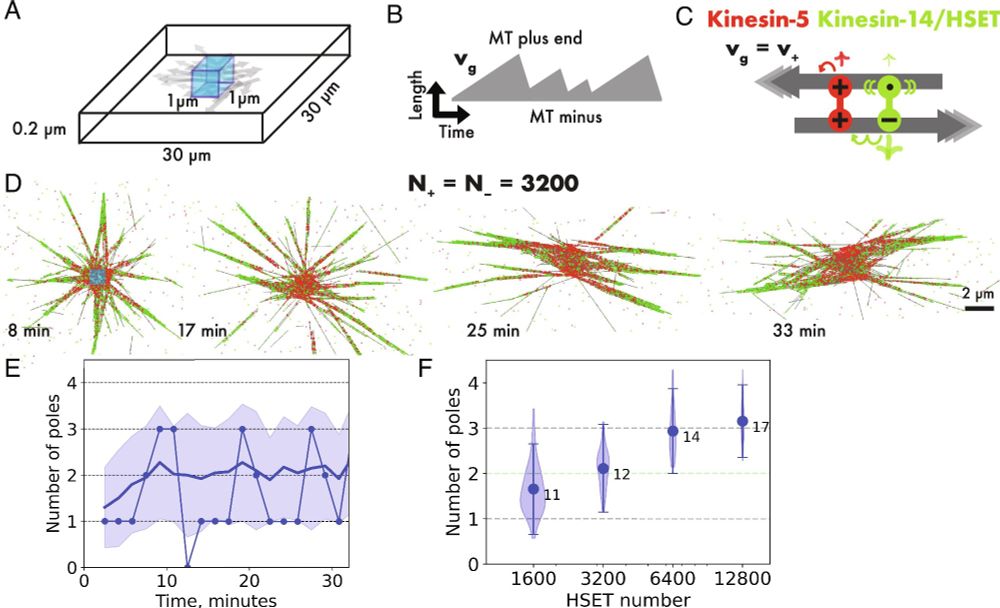
Molecular design principles for bipolar spindle organization by two opposing motors | PNAS
During cell division in animal cells, a bipolar spindle assembles to segregate the
chromosomes. Various motor proteins with different properties ar...
www.pnas.org
March 26, 2025 at 12:10 PM
🚨New paper out @pnas.org!
Do you want to know how do mitotic motors organize the spindle? Wei Xiang's simulations show that just a plus & a minus motor are enough to drive bipolar spindle assembly. Could this explain why kinesin-5 & dynein evolved their unique properties? 🤔
doi.org/10.1073/pnas...
Do you want to know how do mitotic motors organize the spindle? Wei Xiang's simulations show that just a plus & a minus motor are enough to drive bipolar spindle assembly. Could this explain why kinesin-5 & dynein evolved their unique properties? 🤔
doi.org/10.1073/pnas...
that's hot!
Preprint alert! I’m publishing my last paper from my postdoc work on archaeal cell biology, with @mullinslab.bsky.social, @archaellum.bsky.social, @samjlord.bsky.social, @marleenvw.bsky.social, @arghya93.bsky.social, and more great folks (thread below with more details)
April 22, 2025 at 9:12 AM
that's hot!
Reposted by Gil Henkin
We're on a roll!🚀
Check our latest research @naturecomms.bsky.social: rdcu.be/ecXzr
We reveal how mosaic MTs faithfully mimic the GTP cap, highlighting lattice expansion (not pf twist) as the structural cornerstone of MT stability and dynamic instability.
Congrats to Juan and everybody involved! 🎉
Check our latest research @naturecomms.bsky.social: rdcu.be/ecXzr
We reveal how mosaic MTs faithfully mimic the GTP cap, highlighting lattice expansion (not pf twist) as the structural cornerstone of MT stability and dynamic instability.
Congrats to Juan and everybody involved! 🎉
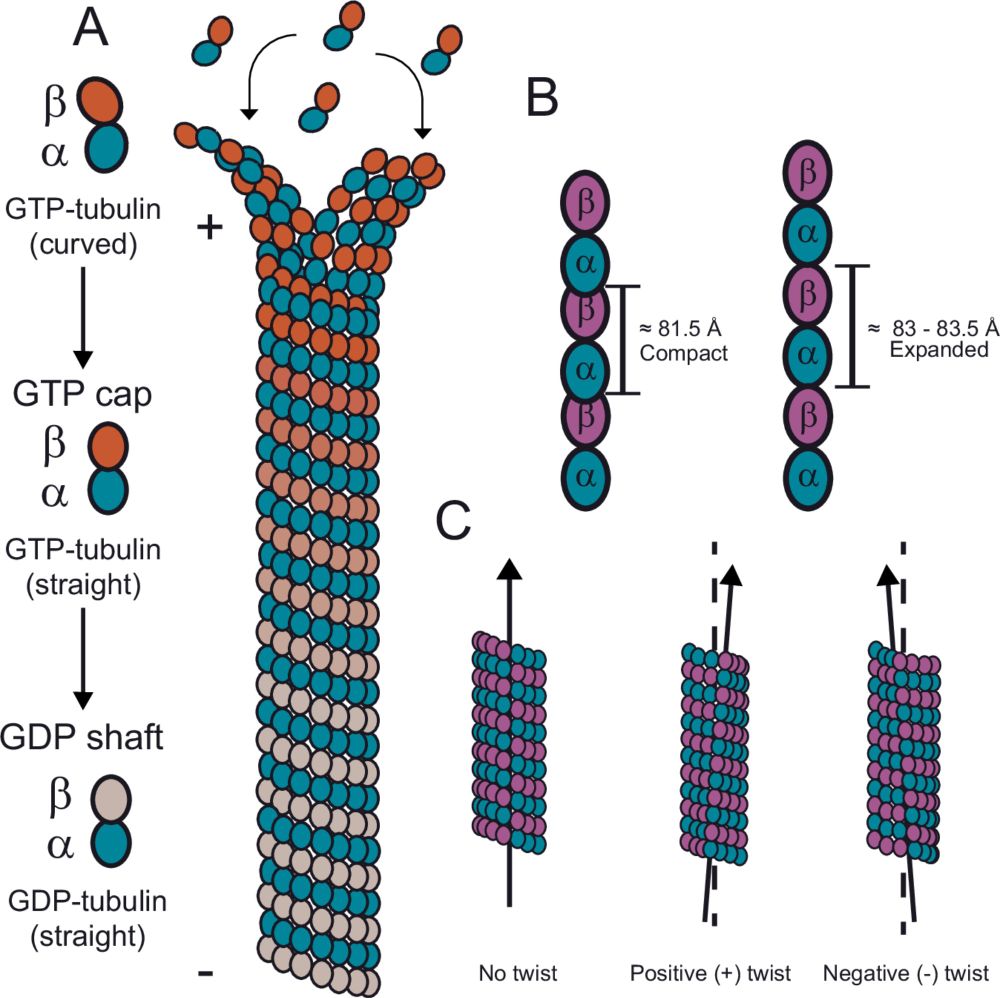
Hydrolysis-deficient mosaic microtubules as faithful mimics of the GTP cap
Nature Communications - Estévez Gallego et al. present a study demonstrating that mosaic microtubules consisting of a mix of GTP hydrolysis-deficient tubulin mutants are faithful microtubule...
rdcu.be
March 11, 2025 at 11:56 AM
We're on a roll!🚀
Check our latest research @naturecomms.bsky.social: rdcu.be/ecXzr
We reveal how mosaic MTs faithfully mimic the GTP cap, highlighting lattice expansion (not pf twist) as the structural cornerstone of MT stability and dynamic instability.
Congrats to Juan and everybody involved! 🎉
Check our latest research @naturecomms.bsky.social: rdcu.be/ecXzr
We reveal how mosaic MTs faithfully mimic the GTP cap, highlighting lattice expansion (not pf twist) as the structural cornerstone of MT stability and dynamic instability.
Congrats to Juan and everybody involved! 🎉
Reposted by Gil Henkin
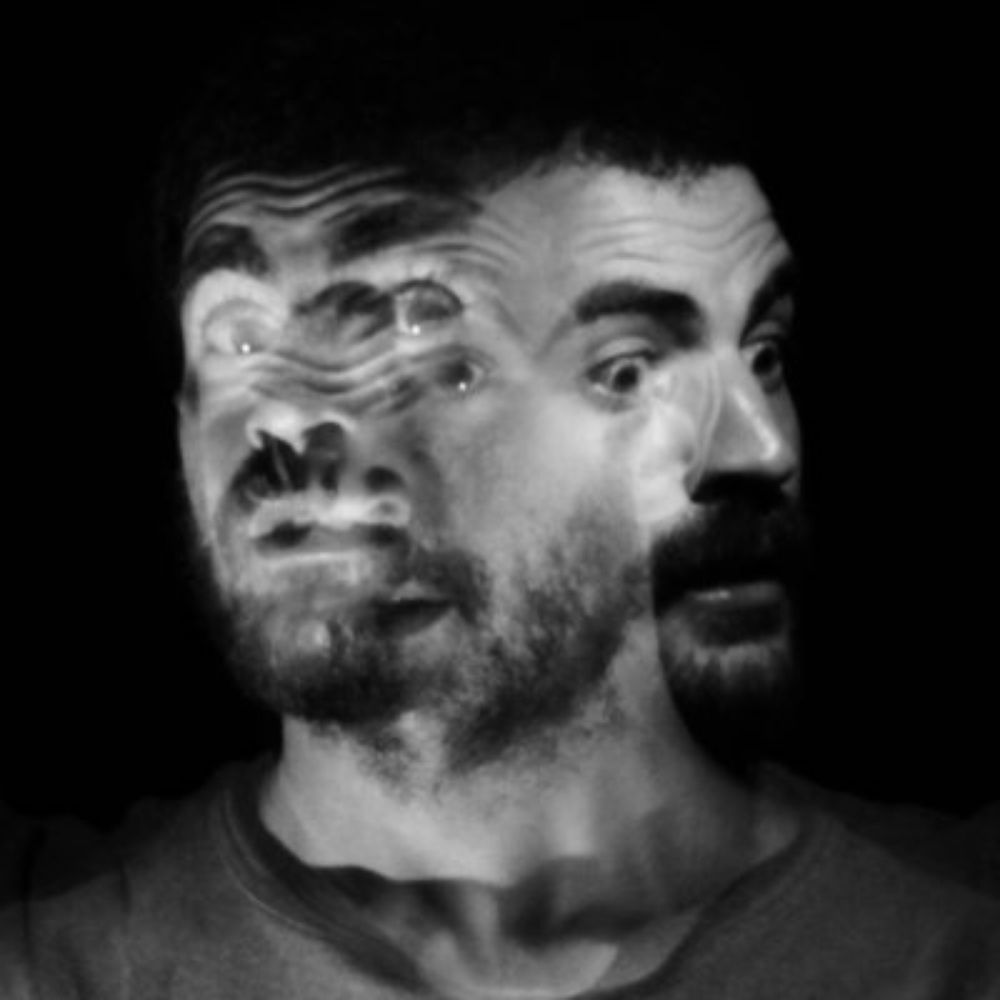
New preprint out 🔥🔥 on my postdoc work with @manuelthery.bsky.social and @lblanchoin.bsky.social about how we can create sustained dynamic steady states of actin network inside microscopic wells that contract "forever" without collapsing! A thread 🧵
www.biorxiv.org/content/10.1...
www.biorxiv.org/content/10.1...
February 26, 2025 at 9:13 AM
New preprint out 🔥🔥 on my postdoc work with @manuelthery.bsky.social and @lblanchoin.bsky.social about how we can create sustained dynamic steady states of actin network inside microscopic wells that contract "forever" without collapsing! A thread 🧵
www.biorxiv.org/content/10.1...
www.biorxiv.org/content/10.1...
Reposted by Gil Henkin

NuMA is a mitotic adaptor protein that activates dynein and connects it to microtubule minus ends. New study from Sabina Colombo, Thomas Surrey @surreylab.bsky.social and colleagues @crg.eu: https://buff.ly/41aj9F9
February 18, 2025 at 3:32 PM
NuMA is a mitotic adaptor protein that activates dynein and connects it to microtubule minus ends. New study from Sabina Colombo, Thomas Surrey @surreylab.bsky.social and colleagues @crg.eu: https://buff.ly/41aj9F9
Reposted by Gil Henkin

The Stonewall Inn released a response to the National Parks Service removing the word transgender from the park outside of the Inn. A great reminder that we have to look after each other




February 14, 2025 at 3:29 AM
The Stonewall Inn released a response to the National Parks Service removing the word transgender from the park outside of the Inn. A great reminder that we have to look after each other
Reposted by Gil Henkin

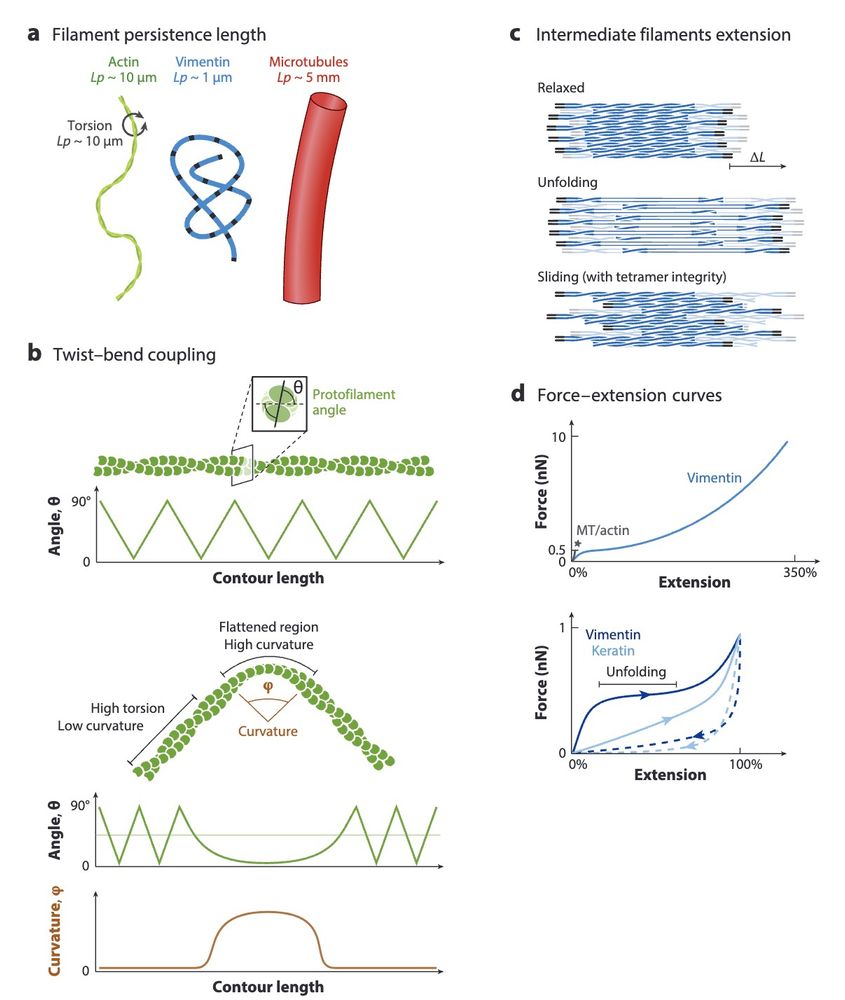
Mechanics of Single Cytoskeletal Filaments - Annual Reviews just out from @romet-jegou-lab.bsky.social @cecileleduc.bsky.social @hugowioland.bsky.social:
www.annualreviews.org/content/jour...
www.annualreviews.org/content/jour...
February 13, 2025 at 9:51 AM
Mechanics of Single Cytoskeletal Filaments - Annual Reviews just out from @romet-jegou-lab.bsky.social @cecileleduc.bsky.social @hugowioland.bsky.social:
www.annualreviews.org/content/jour...
www.annualreviews.org/content/jour...
Reposted by Gil Henkin

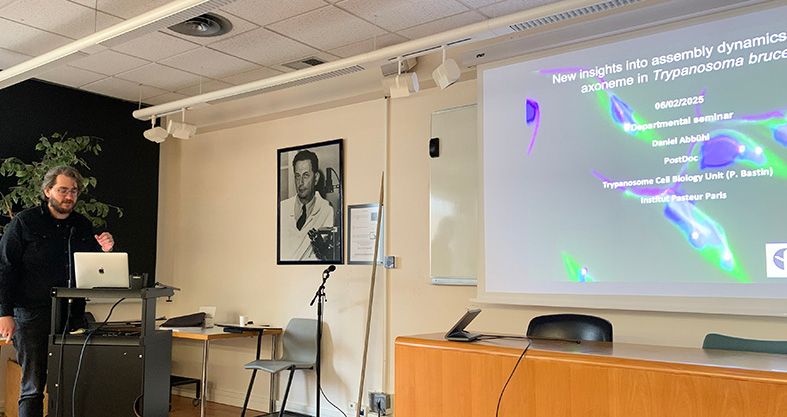
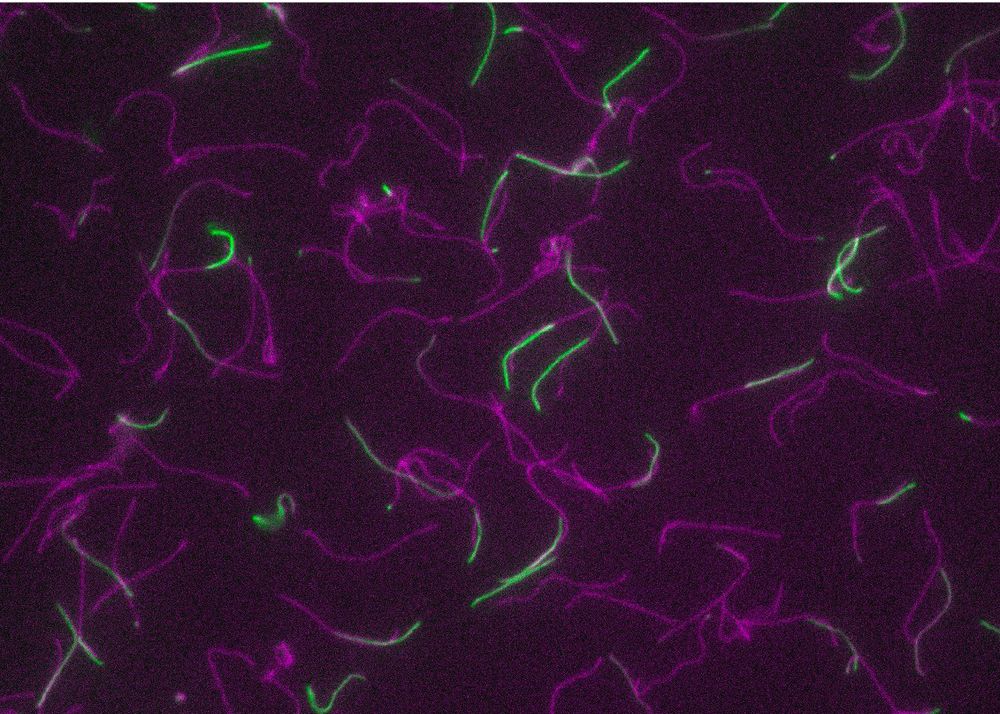
Solving 25 years of frustration, Daniel Abbühl managed to tag trypanosome tubulin and to express it in an inducible manner, hence revealing flagellum assembly! A tour-de-force!
Preprint here:
www.biorxiv.org/content/10.1...
Preprint here:
www.biorxiv.org/content/10.1...
February 11, 2025 at 8:54 AM
Solving 25 years of frustration, Daniel Abbühl managed to tag trypanosome tubulin and to express it in an inducible manner, hence revealing flagellum assembly! A tour-de-force!
Preprint here:
www.biorxiv.org/content/10.1...
Preprint here:
www.biorxiv.org/content/10.1...
Microtubule minus ends are dynein/dynactin cargo via direct interaction with NuMA!
So thrilled to share my first paper as a first author. In these in vitro reconstitutions we observe how purified #spindle #proteins interact with #microtubules using #TIRF #microscopy 🔬👩🏻🔬
Grateful to those magic brains of the @surreylab.bsky.social for all the support along the way! 🫂
Grateful to those magic brains of the @surreylab.bsky.social for all the support along the way! 🫂
New: Colombo et al. @surreylab.bsky.social show that NuMA is a mitotic dynein adaptor that binds and caps microtubule minus ends, explaining how dynein, NuMA, dynactin, and Lis1 focus microtubule minus ends at mitotic spindle poles https://buff.ly/41aj9F9
February 13, 2025 at 10:34 AM
Microtubule minus ends are dynein/dynactin cargo via direct interaction with NuMA!
Reposted by Gil Henkin

So thrilled to share my first paper as a first author. In these in vitro reconstitutions we observe how purified #spindle #proteins interact with #microtubules using #TIRF #microscopy 🔬👩🏻🔬
Grateful to those magic brains of the @surreylab.bsky.social for all the support along the way! 🫂
Grateful to those magic brains of the @surreylab.bsky.social for all the support along the way! 🫂
New: Colombo et al. @surreylab.bsky.social show that NuMA is a mitotic dynein adaptor that binds and caps microtubule minus ends, explaining how dynein, NuMA, dynactin, and Lis1 focus microtubule minus ends at mitotic spindle poles https://buff.ly/41aj9F9
February 11, 2025 at 8:30 PM
So thrilled to share my first paper as a first author. In these in vitro reconstitutions we observe how purified #spindle #proteins interact with #microtubules using #TIRF #microscopy 🔬👩🏻🔬
Grateful to those magic brains of the @surreylab.bsky.social for all the support along the way! 🫂
Grateful to those magic brains of the @surreylab.bsky.social for all the support along the way! 🫂
Reposted by Gil Henkin
Change your life! Physiology course application deadline is extended to February 3rd! Apply now for a summer of discovery at MBL!

🗣️ Physiologists, rejoice! Thought you missed the deadline for the 2025 Physiology course at MBL? Don't toss out that application draft—you can now apply through February 3.
Read more: bit.ly/3BZSj9c
#ScienceStartsHere
Read more: bit.ly/3BZSj9c
#ScienceStartsHere

January 29, 2025 at 2:27 PM
Change your life! Physiology course application deadline is extended to February 3rd! Apply now for a summer of discovery at MBL!
Reposted by Gil Henkin

The FDA has scrubbed from its website guidance on conducting medical trials with representative numbers of men/women and racial/ethnic minorities. these aren't symbolic issues. Drugs affect men/men, people with different genetic backgrounds differently. talkingpointsmemo.com/edblog/medic...
Medical Trial Guidance Scrubbed
Another detail out of FDA. The agency has removed pages which provide...
talkingpointsmemo.com
January 24, 2025 at 6:43 PM
The FDA has scrubbed from its website guidance on conducting medical trials with representative numbers of men/women and racial/ethnic minorities. these aren't symbolic issues. Drugs affect men/men, people with different genetic backgrounds differently. talkingpointsmemo.com/edblog/medic...
We got to write a dispatch on @askennard.bsky.social 's cool new paper on the evolution of tubulins and their interactomes, using Naegleria gruberi as a model.
🌟@askennard.bsky.social @katrinavelle.bsky.social @fritzlaylin.bsky.social et al. published a beautiful paper in
@currentbiology.bsky.social 🌟
@gilh.bsky.social & I 👯♂️ highlighted this exciting work!
Article: www.sciencedirect.com/science/arti...
Dispatch: www.sciencedirect.com/science/arti...
@currentbiology.bsky.social 🌟
@gilh.bsky.social & I 👯♂️ highlighted this exciting work!
Article: www.sciencedirect.com/science/arti...
Dispatch: www.sciencedirect.com/science/arti...

Tubulin sequence divergence is associated with the use of distinct microtubule regulators
Diverse eukaryotic cells assemble microtubule networks that vary in structure and composition. While we understand how cells build microtubule network…
www.sciencedirect.com
January 20, 2025 at 6:17 PM
We got to write a dispatch on @askennard.bsky.social 's cool new paper on the evolution of tubulins and their interactomes, using Naegleria gruberi as a model.
Reposted by Gil Henkin
Centromere evolution isn't a sudden switch!
Our study shows centromere transitions are a step-by-step process driven by a combination of drift and selection. Discover how the kinetochore interface shapes this gradual change in our new preprint 🥳 doi.org/10.1101/2025.01.16.633479 🧵(1/8)
Our study shows centromere transitions are a step-by-step process driven by a combination of drift and selection. Discover how the kinetochore interface shapes this gradual change in our new preprint 🥳 doi.org/10.1101/2025.01.16.633479 🧵(1/8)
January 17, 2025 at 11:17 AM
Centromere evolution isn't a sudden switch!
Our study shows centromere transitions are a step-by-step process driven by a combination of drift and selection. Discover how the kinetochore interface shapes this gradual change in our new preprint 🥳 doi.org/10.1101/2025.01.16.633479 🧵(1/8)
Our study shows centromere transitions are a step-by-step process driven by a combination of drift and selection. Discover how the kinetochore interface shapes this gradual change in our new preprint 🥳 doi.org/10.1101/2025.01.16.633479 🧵(1/8)
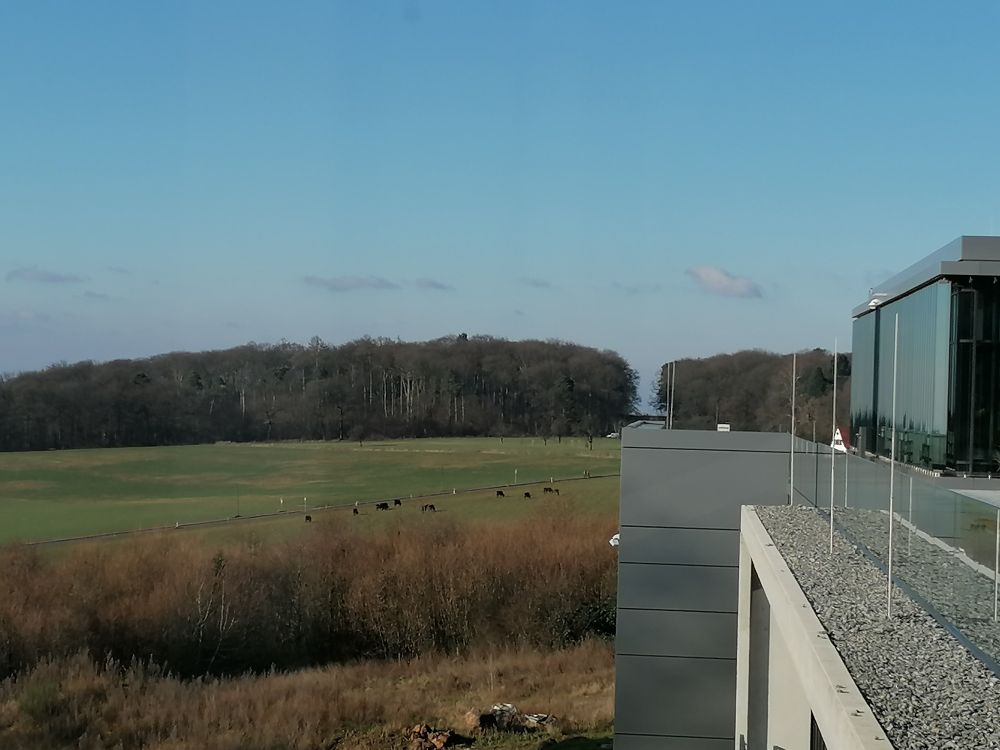
imaging some important biology @ EMBL imaging centre
January 16, 2025 at 12:57 PM
imaging some important biology @ EMBL imaging centre
Reposted by Gil Henkin

📰 For a quick summary, read our website article: www.mpiib-berlin.mpg.de/2176621/news...
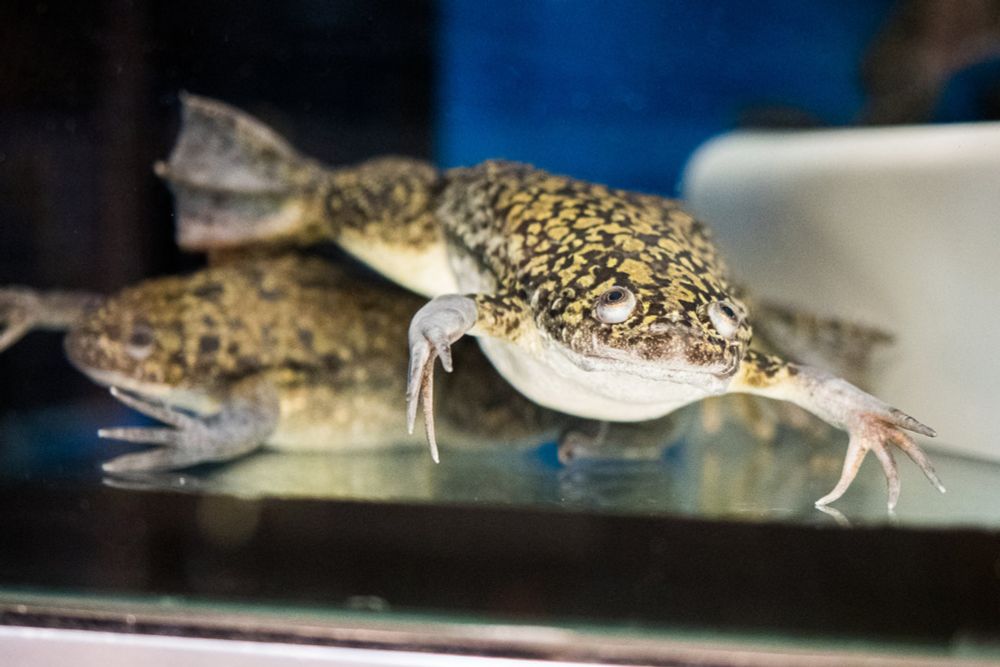
Some frogs like it hot, others like it cold
Researchers from the Max Planck Institute for Infection Biology show, how clawed frog species inhabit different climate zones thanks to small molecular adaptations
www.mpiib-berlin.mpg.de
January 10, 2025 at 4:20 PM
📰 For a quick summary, read our website article: www.mpiib-berlin.mpg.de/2176621/news...
Reposted by Gil Henkin

How did microtubules adapt to support life across 🐸 species at divergent thermal niches?
Now online & OA @currentbiology.bsky.social
Thanks to Ella, Luca, @biswashere.bsky.social & Carolyn @mpiib-berlin.mpg.de @BirkbeckUoL 🙌
Enjoy reading! 👉 www.cell.com/current-biol...
Now online & OA @currentbiology.bsky.social
Thanks to Ella, Luca, @biswashere.bsky.social & Carolyn @mpiib-berlin.mpg.de @BirkbeckUoL 🙌
Enjoy reading! 👉 www.cell.com/current-biol...
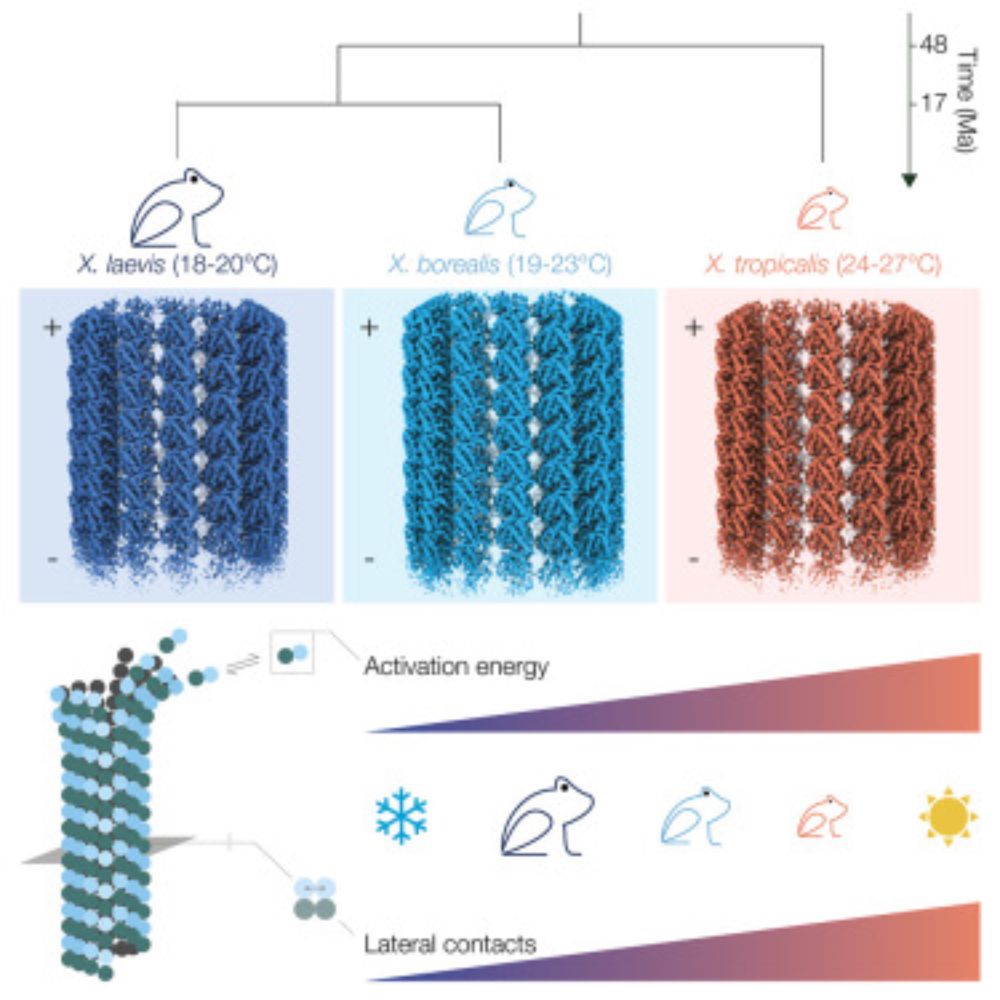
Mechanistic basis of temperature adaptation in microtubule dynamics across frog species
Despite tubulin’s evolutionary conservation, microtubule dynamics are highly temperature sensitive. Troman et al. use natural tubulin variants from closely related Xenopus species to show that a decrease in tubulin’s apparent activation energy and weakening of lateral lattice contacts stabilize microtubules in cold-adapted frogs.
www.cell.com
January 10, 2025 at 4:40 PM
How did microtubules adapt to support life across 🐸 species at divergent thermal niches?
Now online & OA @currentbiology.bsky.social
Thanks to Ella, Luca, @biswashere.bsky.social & Carolyn @mpiib-berlin.mpg.de @BirkbeckUoL 🙌
Enjoy reading! 👉 www.cell.com/current-biol...
Now online & OA @currentbiology.bsky.social
Thanks to Ella, Luca, @biswashere.bsky.social & Carolyn @mpiib-berlin.mpg.de @BirkbeckUoL 🙌
Enjoy reading! 👉 www.cell.com/current-biol...