



Jochen Garcke
@jochenge.bsky.social
Machine Learning and Numerical Mathematics
Professor @University of Bonn joint with Fraunhofer SCAI
Recent textbook Algorithmic Mathematics in Machine Learning @SIAM
Personal interest in comics database
Professor @University of Bonn joint with Fraunhofer SCAI
Recent textbook Algorithmic Mathematics in Machine Learning @SIAM
Personal interest in comics database
Reposted by Jochen Garcke
I wrote an op-ed on the world-class STEM research ecosystem in the United States, and how this ecosystem is now under attack on multiple fronts by the current administration: newsletter.ofthebrave.org/p/im-an-awar...
I’m an award-winning mathematician. Trump just cut my funding.
The “Mozart of Math” tried to stay out of politics. Then it came for his research.
newsletter.ofthebrave.org
August 18, 2025 at 3:45 PM
I wrote an op-ed on the world-class STEM research ecosystem in the United States, and how this ecosystem is now under attack on multiple fronts by the current administration: newsletter.ofthebrave.org/p/im-an-awar...
Reposted by Jochen Garcke

Terence Tao (@teorth.bsky.social) has written a thread on Mastodon about the impact of the federal grant freeze to UCLA, particularly to his own field of Mathematics. UCLA's IPAM (Institute of Pure and Applied Mathematics) could shut down entirely
mathstodon.xyz/@tao/1149568...
mathstodon.xyz/@tao/1149568...
Terence Tao (@[email protected])
The current administration in the US has, through various funding agencies such as the NSF and NIH, has recently suspended virtually all federal grants to my home university, UCLA (including my own p...
mathstodon.xyz
August 2, 2025 at 6:27 PM
Terence Tao (@teorth.bsky.social) has written a thread on Mastodon about the impact of the federal grant freeze to UCLA, particularly to his own field of Mathematics. UCLA's IPAM (Institute of Pure and Applied Mathematics) could shut down entirely
mathstodon.xyz/@tao/1149568...
mathstodon.xyz/@tao/1149568...
Reposted by Jochen Garcke

Reposted by Jochen Garcke
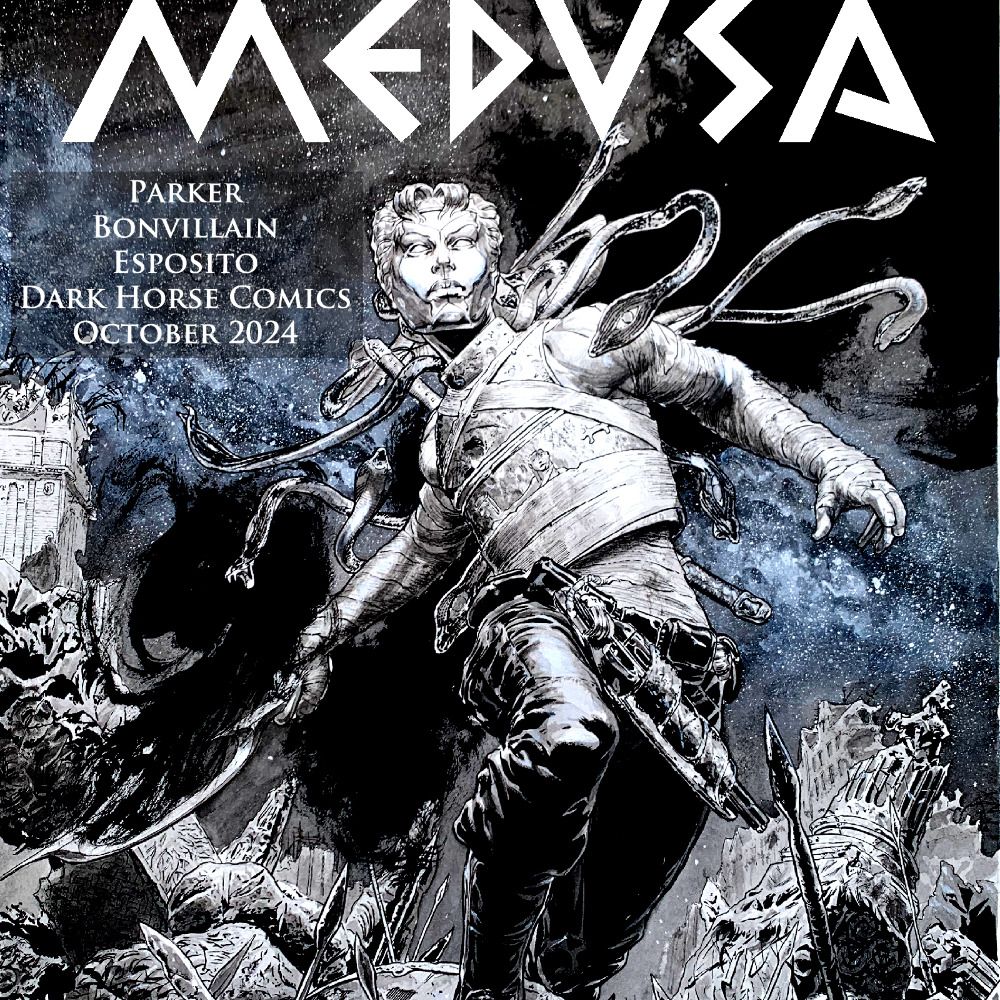
THIS
(Credit to original poster.)
(Credit to original poster.)

March 29, 2025 at 4:49 PM
THIS
(Credit to original poster.)
(Credit to original poster.)
Reposted by Jochen Garcke

Holy cow. Great ending. Must read by Maria & @davidlapham.bsky.social and Hilary Jenkins.

January 6, 2025 at 5:59 AM
Holy cow. Great ending. Must read by Maria & @davidlapham.bsky.social and Hilary Jenkins.
Reposted by Jochen Garcke

My former student @msalbergo.bsky.social has beautiful papers describing the approach on the right. “Flow matching” and “stochastic interpolants” were concurrent developments of the same core idea.
arxiv.org/abs/2209.15571
arxiv.org/abs/2303.08797
arxiv.org/abs/2209.15571
arxiv.org/abs/2303.08797
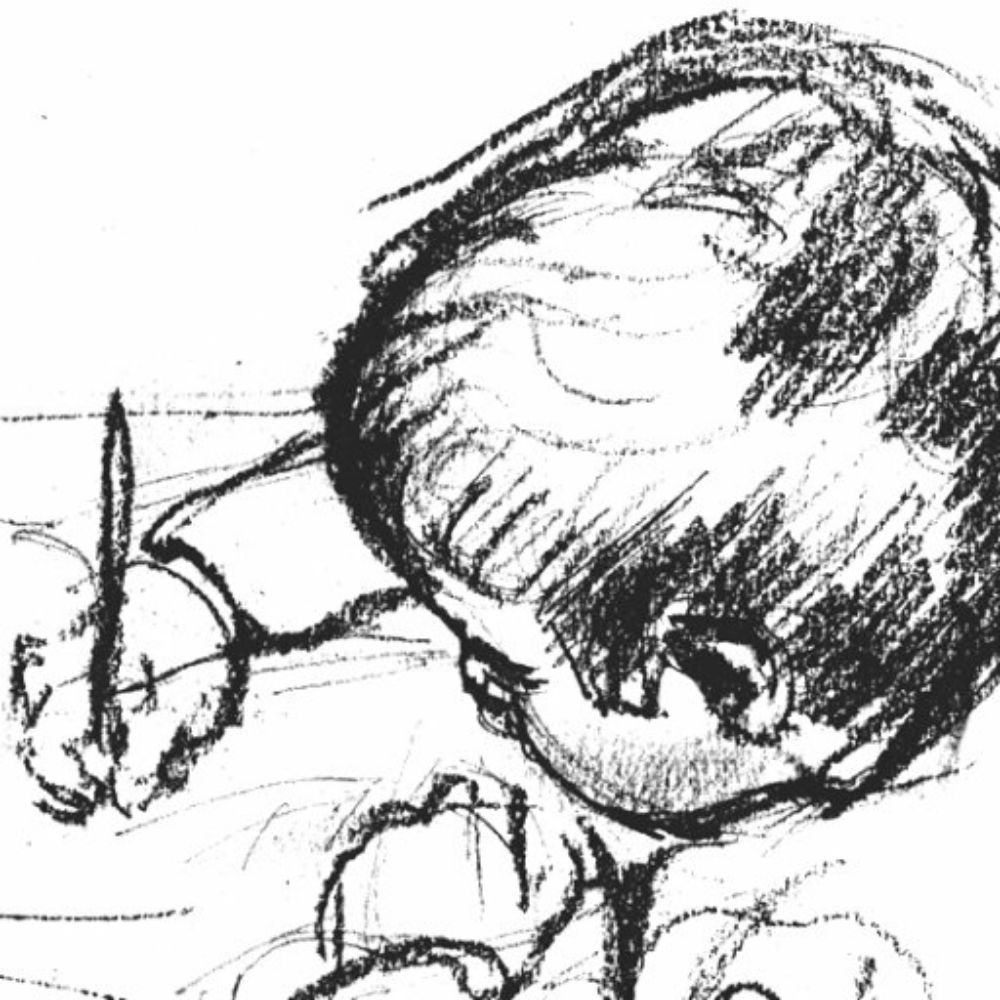
Optimal transport computes an interpolation between two distributions using an optimal coupling. Flow matching, on the other hand, uses a simpler “independent” coupling, which is the product of the marginals.
December 2, 2024 at 4:09 PM
My former student @msalbergo.bsky.social has beautiful papers describing the approach on the right. “Flow matching” and “stochastic interpolants” were concurrent developments of the same core idea.
arxiv.org/abs/2209.15571
arxiv.org/abs/2303.08797
arxiv.org/abs/2209.15571
arxiv.org/abs/2303.08797
Reposted by Jochen Garcke
I am collecting examples of the most thoughtful writing about generative AI published in 2024. What’s yours? They can be insightful for commentary, smart critique, or just because it shifted the conversation. I’ll post some of mine below as I go through them. #criticalAI
December 2, 2024 at 4:09 AM
I am collecting examples of the most thoughtful writing about generative AI published in 2024. What’s yours? They can be insightful for commentary, smart critique, or just because it shifted the conversation. I’ll post some of mine below as I go through them. #criticalAI
Reposted by Jochen Garcke

Hi, so I've spent the past almost-decade studying research uses of public social media data, like e.g. ML researchers using content from Twitter, Reddit, and Mastodon.
Anyway, buckle up this is about to be a VERY long thread with lots of thoughts and links to papers. 🧵
Anyway, buckle up this is about to be a VERY long thread with lots of thoughts and links to papers. 🧵

First dataset for the new @huggingface.bsky.social @bsky.app community organisation: one-million-bluesky-posts 🦋
📊 1M public posts from Bluesky's firehose API
🔍 Includes text, metadata, and language predictions
🔬 Perfect to experiment with using ML for Bluesky 🤗
huggingface.co/datasets/blu...
📊 1M public posts from Bluesky's firehose API
🔍 Includes text, metadata, and language predictions
🔬 Perfect to experiment with using ML for Bluesky 🤗
huggingface.co/datasets/blu...

bluesky-community/one-million-bluesky-posts · Datasets at Hugging Face
We’re on a journey to advance and democratize artificial intelligence through open source and open science.
huggingface.co
November 27, 2024 at 3:31 PM
Hi, so I've spent the past almost-decade studying research uses of public social media data, like e.g. ML researchers using content from Twitter, Reddit, and Mastodon.
Anyway, buckle up this is about to be a VERY long thread with lots of thoughts and links to papers. 🧵
Anyway, buckle up this is about to be a VERY long thread with lots of thoughts and links to papers. 🧵
Reposted by Jochen Garcke

Why is Tokyo so fashionable? Some theories. 🧵

November 27, 2024 at 6:43 AM
Why is Tokyo so fashionable? Some theories. 🧵
Reposted by Jochen Garcke

Ever since I was a little girl I knew I wanted to provide more value for shareholders
November 26, 2024 at 3:25 PM
Ever since I was a little girl I knew I wanted to provide more value for shareholders
Reposted by Jochen Garcke
„Reinhard Kleists „Low. David Bowie’s Berlin Years“ zeichnet eine gut dokumentierte Periode aus dem Leben des Musikers nach. Umso erstaunlicher, dass der Band trotzdem fesselt und überrascht“: Meine Kollegin @nadinelange.bsky.social im @tagesspiegel.de:
www.tagesspiegel.de/kultur/reinh...
www.tagesspiegel.de/kultur/reinh...

Reinhard Kleist zeichnet David Bowie: Mit dem Rad durch West-Berlin
Im zweiten Teil seiner Bowie-Biografie zeigt der Berliner Zeichner, wie der Superstar sich in der Mauerstadt von seinen amerikanischen Eskapaden erholt und einen neuen Sound findet.
www.tagesspiegel.de
November 26, 2024 at 6:00 PM
„Reinhard Kleists „Low. David Bowie’s Berlin Years“ zeichnet eine gut dokumentierte Periode aus dem Leben des Musikers nach. Umso erstaunlicher, dass der Band trotzdem fesselt und überrascht“: Meine Kollegin @nadinelange.bsky.social im @tagesspiegel.de:
www.tagesspiegel.de/kultur/reinh...
www.tagesspiegel.de/kultur/reinh...
Reposted by Jochen Garcke

In response to my own prompt, here's what I've been thinking about - but really curious what concepts other people are engaging with and putting into practice.
As prelude I've been struggling with the common "exploratory vs explanatory" conceit...
As prelude I've been struggling with the common "exploratory vs explanatory" conceit...
Hey #datavis - I'm interested in a conversation around what makes for good, audience-faced, *exploratory* data visualization.
A lot of data vis focuses on techniques to add meaning and tell a story - using explanatory methods to improve on what exploratory modes can offer.
But...
A lot of data vis focuses on techniques to add meaning and tell a story - using explanatory methods to improve on what exploratory modes can offer.
But...
November 13, 2024 at 2:37 PM
In response to my own prompt, here's what I've been thinking about - but really curious what concepts other people are engaging with and putting into practice.
As prelude I've been struggling with the common "exploratory vs explanatory" conceit...
As prelude I've been struggling with the common "exploratory vs explanatory" conceit...