



@lukas8044.bsky.social
Reposted

How do you deal with missing values and "unique" proteins that were only identified in one condition in proteomics data?
Mengchun Li, an amazing PhD student in my lab, developed this great Bayesian approach. Please try it and give feedback!
www.biorxiv.org/content/10.6...
Mengchun Li, an amazing PhD student in my lab, developed this great Bayesian approach. Please try it and give feedback!
www.biorxiv.org/content/10.6...

Empirical-Bayes and Bayesian Hierarchical Modelling for Missingness and Differential Expression in Proteomics
Mass spectrometry-based label-free proteomics data often suffer from missing values, especially for low-abundance proteins or when a protein is completely absent in one condition. This makes it challe...
www.biorxiv.org
January 15, 2026 at 7:24 PM
How do you deal with missing values and "unique" proteins that were only identified in one condition in proteomics data?
Mengchun Li, an amazing PhD student in my lab, developed this great Bayesian approach. Please try it and give feedback!
www.biorxiv.org/content/10.6...
Mengchun Li, an amazing PhD student in my lab, developed this great Bayesian approach. Please try it and give feedback!
www.biorxiv.org/content/10.6...
Reposted

From Discovery to Process Control: Positioning DIA Proteomics in Biomanufacturing Pipelines www.biorxiv.org/cont...
---
#proteomics #prot-preprint
---
#proteomics #prot-preprint

December 23, 2025 at 3:20 PM
From Discovery to Process Control: Positioning DIA Proteomics in Biomanufacturing Pipelines www.biorxiv.org/cont...
---
#proteomics #prot-preprint
---
#proteomics #prot-preprint
Reposted

After 2 years in peer review, this paper is finally published and it features figures from a completely unrelated paper rather than crappy ones I made! www.nature.com/articles/s42...

Simultaneous single-cell proteomics and epigenetic analysis of histone deacetylase inhibition in human cells - Communications Biology
A focused analysis of the histone proteins and post-translational modifications in single cell proteomics provides insight into the heterogeneity of histone deacetylase inhibition.
www.nature.com
December 30, 2025 at 8:17 PM
After 2 years in peer review, this paper is finally published and it features figures from a completely unrelated paper rather than crappy ones I made! www.nature.com/articles/s42...
Reposted

2026 is bringing #FragPipe to pmultiqc github.com/bigbio/pmult.... We are starting big this year.

FragPipe first implementation by ypriverol · Pull Request #495 · bigbio/pmultiqc
User description
Pull Request
Description
Brief description of the changes made in this PR.
Type of Change
Bug fix (non-breaking change which fixes an issue)
New feature (non-breaking change whi...
github.com
January 4, 2026 at 8:47 PM
2026 is bringing #FragPipe to pmultiqc github.com/bigbio/pmult.... We are starting big this year.
Reposted

We acquired a large-scale mixed-species benchmark, with variable background, to comprehensively assess quantitative accuracy of proteomics.
Our insights based on the data: www.biorxiv.org/content/10.6...
PRIDE repo will be made public in the next days.
Our insights based on the data: www.biorxiv.org/content/10.6...
PRIDE repo will be made public in the next days.

December 9, 2025 at 9:33 AM
We acquired a large-scale mixed-species benchmark, with variable background, to comprehensively assess quantitative accuracy of proteomics.
Our insights based on the data: www.biorxiv.org/content/10.6...
PRIDE repo will be made public in the next days.
Our insights based on the data: www.biorxiv.org/content/10.6...
PRIDE repo will be made public in the next days.
Reposted
We are delighted to release 𝐃𝐈𝐀-𝐍𝐍 𝟐.𝟑.𝟏, with a groundbreaking 𝐈𝐧𝐟𝐢𝐧𝐃𝐈𝐀 module for fast searches against huge databases and support for 𝐃𝐃𝐀 data.
Release notes: github.com/vdemichev/Di...
Release notes: github.com/vdemichev/Di...

December 5, 2025 at 11:51 AM
We are delighted to release 𝐃𝐈𝐀-𝐍𝐍 𝟐.𝟑.𝟏, with a groundbreaking 𝐈𝐧𝐟𝐢𝐧𝐃𝐈𝐀 module for fast searches against huge databases and support for 𝐃𝐃𝐀 data.
Release notes: github.com/vdemichev/Di...
Release notes: github.com/vdemichev/Di...
Reposted
A genome-wide association study of mass spectrometry proteomics using a nanoparticle enrichment platform www.nature.com/artic...
---
#proteomics #prot-paper
---
#proteomics #prot-paper

November 27, 2025 at 6:00 PM
A genome-wide association study of mass spectrometry proteomics using a nanoparticle enrichment platform www.nature.com/artic...
---
#proteomics #prot-paper
---
#proteomics #prot-paper
Reposted
Solving the computational challenge of phosphoproteomics with 𝐏𝐡𝐨-𝐓𝐢𝐩: dephosphorylation on-tip identifies the sequences of phosphorylated peptides.
This serves as a basis for predicted spectral libraries, reducing the search space 10x-20x. www.biorxiv.org/content/10.1...
This serves as a basis for predicted spectral libraries, reducing the search space 10x-20x. www.biorxiv.org/content/10.1...

November 19, 2025 at 10:07 AM
Solving the computational challenge of phosphoproteomics with 𝐏𝐡𝐨-𝐓𝐢𝐩: dephosphorylation on-tip identifies the sequences of phosphorylated peptides.
This serves as a basis for predicted spectral libraries, reducing the search space 10x-20x. www.biorxiv.org/content/10.1...
This serves as a basis for predicted spectral libraries, reducing the search space 10x-20x. www.biorxiv.org/content/10.1...
Reposted

Happy to see our HT-PELSA paper now published in @natsmb.nature.com 🎊 Big thanks for the constructive review process! 📖Read the manuscript here (www.nature.com/articles/s41...) & check the thread for additional information ⬇️
November 5, 2025 at 10:15 AM
Happy to see our HT-PELSA paper now published in @natsmb.nature.com 🎊 Big thanks for the constructive review process! 📖Read the manuscript here (www.nature.com/articles/s41...) & check the thread for additional information ⬇️
Reposted

New Slice-PASEF method by @lrsinn.bsky.social et al. boosts proteomics sensitivity by 84% using Aurora Ultimate 25x75 CSI columns + MS incl. timsTOF SCP. Achieves 100% MS/MS duty cycle vs 12.5% conventional. Enables single-cell proteomics at 135 cells/day throughput.
Learn more: bit.ly/4oz7Oaz
Learn more: bit.ly/4oz7Oaz

Slice-PASEF: Maximising Ion Utilisation in LC-MS Proteomics - IonOpticks
This study into maximising ion utilisation by Sinn et al., was conducted using a 25 cm x 75 um IonOpticks Aurora Ultimate 25x75 UHPLC column.
bit.ly
November 2, 2025 at 10:44 PM
New Slice-PASEF method by @lrsinn.bsky.social et al. boosts proteomics sensitivity by 84% using Aurora Ultimate 25x75 CSI columns + MS incl. timsTOF SCP. Achieves 100% MS/MS duty cycle vs 12.5% conventional. Enables single-cell proteomics at 135 cells/day throughput.
Learn more: bit.ly/4oz7Oaz
Learn more: bit.ly/4oz7Oaz
Reposted

Excited to see this published in JPR. For years I've wanted a simple way to standardize the signal between instruments. We use the precision of an intraspectrum ratio to assess the relationship between the reported signal and the number of ions. pubs.acs.org/doi/10.1021/...

Evaluation of a Prototype Orbitrap Astral Zoom Mass Spectrometer for Quantitative Proteomics─Beyond Identification Lists
Mass spectrometry instrumentation continues to evolve rapidly, yet quantifying these advances beyond conventional peptide and protein detections remains challenging. Here, we evaluate a modified Orbit...
pubs.acs.org
October 22, 2025 at 3:32 PM
Excited to see this published in JPR. For years I've wanted a simple way to standardize the signal between instruments. We use the precision of an intraspectrum ratio to assess the relationship between the reported signal and the number of ions. pubs.acs.org/doi/10.1021/...
Reposted
We are #hiring! 🚀
#PRIDE team is looking for a developer to build its future infrastructure. Our focus in a nutshell: #bigdata, single cell proteomics #SCP, & an #AI-oriented platform. Join us to shape the future of open proteomics data!
embl.wd103.myworkdayjobs.com/EMBL/job/Hin...
#PRIDE team is looking for a developer to build its future infrastructure. Our focus in a nutshell: #bigdata, single cell proteomics #SCP, & an #AI-oriented platform. Join us to shape the future of open proteomics data!
embl.wd103.myworkdayjobs.com/EMBL/job/Hin...

Software Developer
You will contribute to the development of core database applications, web services, data ingestion workflows, and the PRIDE Web platform as part of the PRIDE ecosystem. Working closely with the team, ...
embl.wd103.myworkdayjobs.com
October 23, 2025 at 1:38 PM
We are #hiring! 🚀
#PRIDE team is looking for a developer to build its future infrastructure. Our focus in a nutshell: #bigdata, single cell proteomics #SCP, & an #AI-oriented platform. Join us to shape the future of open proteomics data!
embl.wd103.myworkdayjobs.com/EMBL/job/Hin...
#PRIDE team is looking for a developer to build its future infrastructure. Our focus in a nutshell: #bigdata, single cell proteomics #SCP, & an #AI-oriented platform. Join us to shape the future of open proteomics data!
embl.wd103.myworkdayjobs.com/EMBL/job/Hin...
Reposted
GO FAST with InfinDIA!! proteomicsnews.blogspot.com/2025/10/tire...

Tired of slow DIA search times? Try DIA-NN 2.3 with InfinDIA!
Is your awesome new instrument generating so much data that you can't process it fast anymore? My data density has jumped about 5x from my...
proteomicsnews.blogspot.com
October 2, 2025 at 11:01 AM
GO FAST with InfinDIA!! proteomicsnews.blogspot.com/2025/10/tire...
Reposted

Reposted
We have updated our Slice-PASEF preprint! It's a result of a large collaboration where we highlight its advantages for single cell proteomics. Or any other applications benefiting from sensitivity. For example, major gains for ubiquitinomics:

September 2, 2025 at 5:58 PM
We have updated our Slice-PASEF preprint! It's a result of a large collaboration where we highlight its advantages for single cell proteomics. Or any other applications benefiting from sensitivity. For example, major gains for ubiquitinomics:
Reposted
Chemoproteomics: can we trust the search engine? Since inception of DIA-NN, we always prioritised data quality. A nice benchmark by @anamdv.bsky.social and colleagues:
www.linkedin.com/posts/vadim-...
www.linkedin.com/posts/vadim-...

𝐖𝐡𝐲 𝐃𝐈𝐀-𝐍𝐍 𝐢𝐬 𝐠𝐫𝐞𝐚𝐭 𝐟𝐨𝐫 𝐜𝐡𝐞𝐦𝐨𝐩𝐫𝐨𝐭𝐞𝐨𝐦𝐢𝐜𝐬?
You can analyse almost anything with it, and with high data quality:
Below is an excellent benchmark by Ana Martínez del Val… | Vadim Demichev
𝐖𝐡𝐲 𝐃𝐈𝐀-𝐍𝐍 𝐢𝐬 𝐠𝐫𝐞𝐚𝐭 𝐟𝐨𝐫 𝐜𝐡𝐞𝐦𝐨𝐩𝐫𝐨𝐭𝐞𝐨𝐦𝐢𝐜𝐬?
You can analyse almost anything with it, and with high data quality:
Below is an excellent benchmark by Ana Martínez del Val and colleagues. Bottom panel (c):...
www.linkedin.com
September 9, 2025 at 7:15 AM
Chemoproteomics: can we trust the search engine? Since inception of DIA-NN, we always prioritised data quality. A nice benchmark by @anamdv.bsky.social and colleagues:
www.linkedin.com/posts/vadim-...
www.linkedin.com/posts/vadim-...
Reposted
New release of pmultiqc v0.0.34 🚀🎉. github.com/bigbio/pmult..., highlights:
- A new contributor, Chris Bielow
- MaxDIA support, thanks @maxquant.bsky.social pmultiqc.quantms.org/MaxDIA/multi...
- DIANN reports way deeper thanks @vadim-demichev.bsky.social pmultiqc.quantms.org/DIANN/multiq...
- A new contributor, Chris Bielow
- MaxDIA support, thanks @maxquant.bsky.social pmultiqc.quantms.org/MaxDIA/multi...
- DIANN reports way deeper thanks @vadim-demichev.bsky.social pmultiqc.quantms.org/DIANN/multiq...

Release v0.0.34 - DIANN and MaxDIA support · bigbio/pmultiqc
What's Changed
fix bugs and add plots for mzid by @yueqixuan in #295
Multiple fix in mzidentml by @ypriverol in #296
MaxQuant: Fix NaN intensity errors by @cbielow in #304
Fix bug in proteobench_u...
github.com
September 12, 2025 at 12:47 PM
New release of pmultiqc v0.0.34 🚀🎉. github.com/bigbio/pmult..., highlights:
- A new contributor, Chris Bielow
- MaxDIA support, thanks @maxquant.bsky.social pmultiqc.quantms.org/MaxDIA/multi...
- DIANN reports way deeper thanks @vadim-demichev.bsky.social pmultiqc.quantms.org/DIANN/multiq...
- A new contributor, Chris Bielow
- MaxDIA support, thanks @maxquant.bsky.social pmultiqc.quantms.org/MaxDIA/multi...
- DIANN reports way deeper thanks @vadim-demichev.bsky.social pmultiqc.quantms.org/DIANN/multiq...
Reposted
In DIA-NN 2.3.0, we have added Deamidation (NQ) as an option in the GUI. There are good reasons for it :) You can try InfinDIA with any number of modifications selected, and check the RT differences between modified vs respective stripped peptides, for each mod - a way to validate peptidoform FDR.
September 29, 2025 at 11:46 AM
In DIA-NN 2.3.0, we have added Deamidation (NQ) as an option in the GUI. There are good reasons for it :) You can try InfinDIA with any number of modifications selected, and check the RT differences between modified vs respective stripped peptides, for each mod - a way to validate peptidoform FDR.
Reposted
Precisely mapping proteases specificity and predicting cleavage rates - with peptide libraries: doi.org/10.1101/2025.... This is a powerful application that is uniquely enabled by the peptidoform confidence and QuantUMS modules in DIA-NN 2.0.

October 7, 2025 at 12:33 PM
Precisely mapping proteases specificity and predicting cleavage rates - with peptide libraries: doi.org/10.1101/2025.... This is a powerful application that is uniquely enabled by the peptidoform confidence and QuantUMS modules in DIA-NN 2.0.
Reposted
Wrote a short perspective: Pre-trained DIA models can 'covertly' inflate FDR - and this will not show up in entrapment validation
www.linkedin.com/pulse/pre-tr...
www.linkedin.com/pulse/pre-tr...

Pre-trained DIA models can 'covertly' inflate FDR - and this will not show up in entrapment validation
Transformer models are great? For several years, there has been this idea that one can pre-train advanced deep learning models, e.g.
www.linkedin.com
October 9, 2025 at 11:41 AM
Wrote a short perspective: Pre-trained DIA models can 'covertly' inflate FDR - and this will not show up in entrapment validation
www.linkedin.com/pulse/pre-tr...
www.linkedin.com/pulse/pre-tr...
Reposted
With 𝗗𝗜𝗔-𝗡𝗡 𝟮.𝟯.𝟬 Preview (Academia-only for now), we showcase the transformative new capabilities that have been developed in the past months. Download: github.com/vdemichev/Di...

September 26, 2025 at 9:52 AM
With 𝗗𝗜𝗔-𝗡𝗡 𝟮.𝟯.𝟬 Preview (Academia-only for now), we showcase the transformative new capabilities that have been developed in the past months. Download: github.com/vdemichev/Di...
Reposted

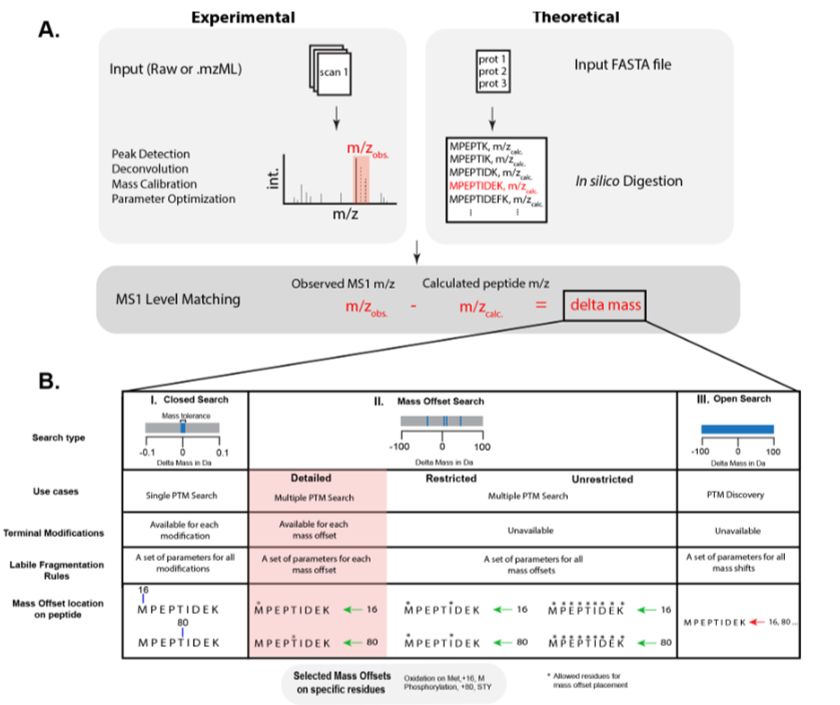
Conventional proteomics searches struggle with many modifications and fully open searches may be difficult to interpret. We introduce a "detailed" mass offset search in #MSFragger boosting interpretability and localization especially in complex cases (e.g. FPOP data): www.biorxiv.org/content/10.1...
August 1, 2025 at 9:33 PM
Conventional proteomics searches struggle with many modifications and fully open searches may be difficult to interpret. We introduce a "detailed" mass offset search in #MSFragger boosting interpretability and localization especially in complex cases (e.g. FPOP data): www.biorxiv.org/content/10.1...
Reposted
Further, there are significant improvements for phosphoproteomics. We will release a note in the next months describing how we benchmark phosphosite localisation and show the leading performance by the new DIA-NN on state-of-the-art Orbitrap Astral and timsTOF data.
May 30, 2025 at 8:39 AM
Further, there are significant improvements for phosphoproteomics. We will release a note in the next months describing how we benchmark phosphosite localisation and show the leading performance by the new DIA-NN on state-of-the-art Orbitrap Astral and timsTOF data.
Reposted
DIA-NN 2.2.0 is released! The new DIA-NN 2.2.0 Enterprise achieves up to ~1.6x median speedup on 64-cores under Windows (please see benchmark below). Release notes: github.com/vdemichev/Di..., download (Academia): github.com/vdemichev/Di...

May 30, 2025 at 8:36 AM
DIA-NN 2.2.0 is released! The new DIA-NN 2.2.0 Enterprise achieves up to ~1.6x median speedup on 64-cores under Windows (please see benchmark below). Release notes: github.com/vdemichev/Di..., download (Academia): github.com/vdemichev/Di...
Reposted

🚨 New preprint! 🚨
Presenting diaPASEF immunopeptidomics for bacterial epitope discovery.
💥 Showcasing DIA-NN immunopeptidomics using proteome-wide predicted HLA class I libraries!
🧬 Read more: biorxiv.org/cgi/content/...
#Immunopeptidomics #MassSpec #DIA #HLA
Presenting diaPASEF immunopeptidomics for bacterial epitope discovery.
💥 Showcasing DIA-NN immunopeptidomics using proteome-wide predicted HLA class I libraries!
🧬 Read more: biorxiv.org/cgi/content/...
#Immunopeptidomics #MassSpec #DIA #HLA
Data-independent immunopeptidomics discovery of low-abundant bacterial epitopes
Mass spectrometry-based immunopeptidomics is a powerful approach to uncover peptides presented by human leukocyte antigen (HLA) molecules that can guide vaccine design and immunotherapies. While data-...
biorxiv.org
May 16, 2025 at 7:50 AM
🚨 New preprint! 🚨
Presenting diaPASEF immunopeptidomics for bacterial epitope discovery.
💥 Showcasing DIA-NN immunopeptidomics using proteome-wide predicted HLA class I libraries!
🧬 Read more: biorxiv.org/cgi/content/...
#Immunopeptidomics #MassSpec #DIA #HLA
Presenting diaPASEF immunopeptidomics for bacterial epitope discovery.
💥 Showcasing DIA-NN immunopeptidomics using proteome-wide predicted HLA class I libraries!
🧬 Read more: biorxiv.org/cgi/content/...
#Immunopeptidomics #MassSpec #DIA #HLA