


Roux Lab, Geneva
@rouxlab.bsky.social
A mix of physics and biology, understanding shapes in biology, from molecules to tissues.
http://www.orelrouxlab.org
http://www.orelrouxlab.org
Reposted by Roux Lab, Geneva
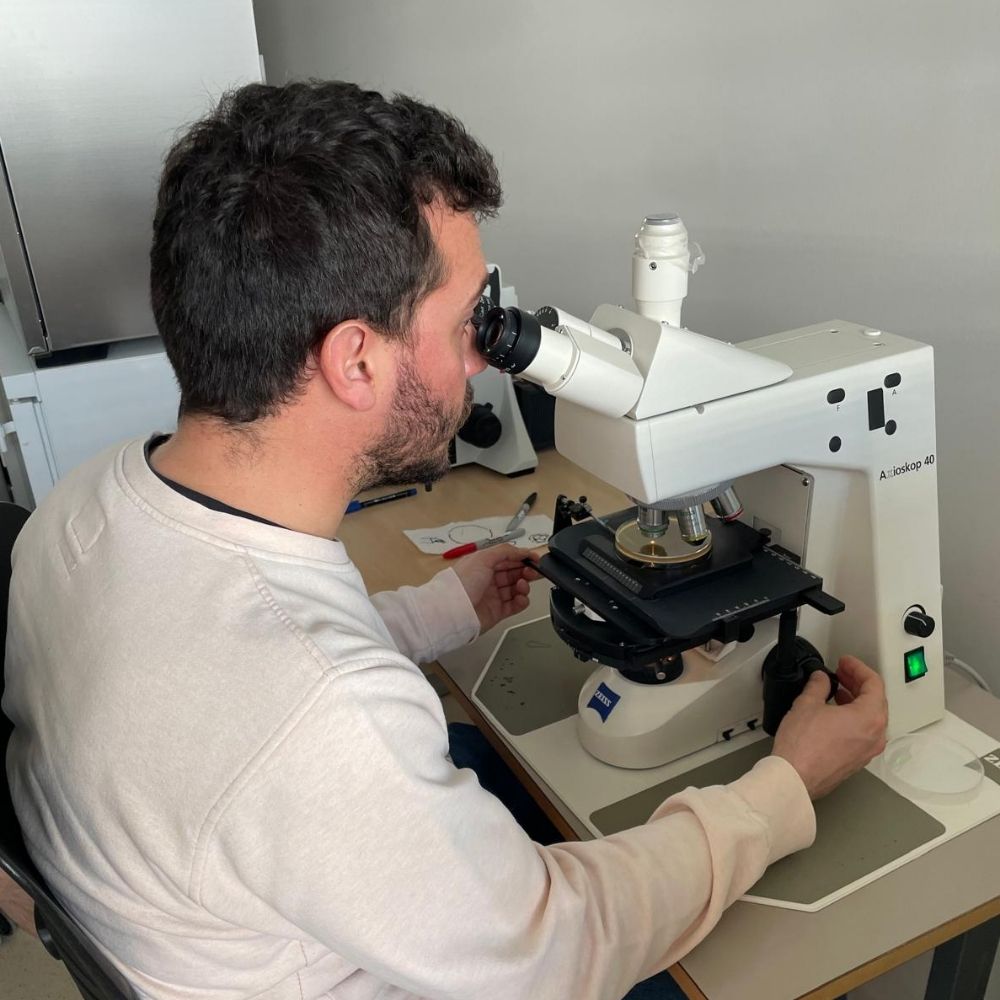
All credits to the dreamteam that made this possible! what a pleasure and honor working with these people! 🥰
@diorgeps.bsky.social @mhakala.bsky.social @juanmagararc.bsky.social @joshuatran.bsky.social @mudgal17.bsky.social @Carlos Marcuello @Andrea Merino
@diorgeps.bsky.social @mhakala.bsky.social @juanmagararc.bsky.social @joshuatran.bsky.social @mudgal17.bsky.social @Carlos Marcuello @Andrea Merino
December 1, 2025 at 9:27 AM
All credits to the dreamteam that made this possible! what a pleasure and honor working with these people! 🥰
@diorgeps.bsky.social @mhakala.bsky.social @juanmagararc.bsky.social @joshuatran.bsky.social @mudgal17.bsky.social @Carlos Marcuello @Andrea Merino
@diorgeps.bsky.social @mhakala.bsky.social @juanmagararc.bsky.social @joshuatran.bsky.social @mudgal17.bsky.social @Carlos Marcuello @Andrea Merino
Reposted by Roux Lab, Geneva
The crucial test: We fused Heimdall Hofund to a fission-defective yeast ESCRT-III protein (Did2). This chimera restored Mup1 trafficking to vacuoles back to wt! A short amphipathic helix, present in Asgard and retained as fragments in eukaryotes, acts as a minimal membrane fission trigger!

December 1, 2025 at 9:24 AM
The crucial test: We fused Heimdall Hofund to a fission-defective yeast ESCRT-III protein (Did2). This chimera restored Mup1 trafficking to vacuoles back to wt! A short amphipathic helix, present in Asgard and retained as fragments in eukaryotes, acts as a minimal membrane fission trigger!
Reposted by Roux Lab, Geneva
Eukaryotic ESCRT-IIIA paralogs, known to form heteropolymers, retain Hofund elements at their N-termini.
In yeast, mutating these elements blocks ESCRT-III-dependent Mup1 transport to vacuoles.
So these elements matter in eukaryotes too.
In yeast, mutating these elements blocks ESCRT-III-dependent Mup1 transport to vacuoles.
So these elements matter in eukaryotes too.

December 1, 2025 at 9:21 AM
Eukaryotic ESCRT-IIIA paralogs, known to form heteropolymers, retain Hofund elements at their N-termini.
In yeast, mutating these elements blocks ESCRT-III-dependent Mup1 transport to vacuoles.
So these elements matter in eukaryotes too.
In yeast, mutating these elements blocks ESCRT-III-dependent Mup1 transport to vacuoles.
So these elements matter in eukaryotes too.
Reposted by Roux Lab, Geneva
Is this Asgard-specific, or conserved with their eukaryotic paralogs?
Hard to tell, since the exact molecular mechanism of fission by eukaryotic ESCRT-III remains blurry, probably due to its complexity.
Let’s figure it out!
Hard to tell, since the exact molecular mechanism of fission by eukaryotic ESCRT-III remains blurry, probably due to its complexity.
Let’s figure it out!
December 1, 2025 at 9:20 AM
Is this Asgard-specific, or conserved with their eukaryotic paralogs?
Hard to tell, since the exact molecular mechanism of fission by eukaryotic ESCRT-III remains blurry, probably due to its complexity.
Let’s figure it out!
Hard to tell, since the exact molecular mechanism of fission by eukaryotic ESCRT-III remains blurry, probably due to its complexity.
Let’s figure it out!
Reposted by Roux Lab, Geneva
Meet Hofund, the N-terminal amphipathic helix of 15 aa in Heimdall ESCRT-IIIA (named after Heimdall’s sword).
How do we know Hofund is the molecular trigger for fission?
Remove Hofund → ESCRT-IIIA loses fission activity.
Add Hofund alone → uncontrolled fission.
How do we know Hofund is the molecular trigger for fission?
Remove Hofund → ESCRT-IIIA loses fission activity.
Add Hofund alone → uncontrolled fission.

December 1, 2025 at 9:16 AM
Meet Hofund, the N-terminal amphipathic helix of 15 aa in Heimdall ESCRT-IIIA (named after Heimdall’s sword).
How do we know Hofund is the molecular trigger for fission?
Remove Hofund → ESCRT-IIIA loses fission activity.
Add Hofund alone → uncontrolled fission.
How do we know Hofund is the molecular trigger for fission?
Remove Hofund → ESCRT-IIIA loses fission activity.
Add Hofund alone → uncontrolled fission.
Reposted by Roux Lab, Geneva
Through membrane fission! We show in vitro that the Asgard Heimdallarchaeota (Heimdall) ESCRT-IIIA subunit is inherently capable of triggering fission upon subunit turnover driven by ATP hydrolysis by Vps4.
And the key question: what actually destabilizes the membrane when ESCRT-IIIA turns over?
And the key question: what actually destabilizes the membrane when ESCRT-IIIA turns over?

December 1, 2025 at 9:15 AM
Through membrane fission! We show in vitro that the Asgard Heimdallarchaeota (Heimdall) ESCRT-IIIA subunit is inherently capable of triggering fission upon subunit turnover driven by ATP hydrolysis by Vps4.
And the key question: what actually destabilizes the membrane when ESCRT-IIIA turns over?
And the key question: what actually destabilizes the membrane when ESCRT-IIIA turns over?
Reposted by Roux Lab, Geneva
In a recent work, @buzzbaum.bsky.social and colleagues showed an Asgard archaeon with internal vesicles.
www.biorxiv.org/content/10.1...
How might Asgard ESCRT-III have contributed to compartmentalization?
www.biorxiv.org/content/10.1...
How might Asgard ESCRT-III have contributed to compartmentalization?

An Asgard archaeon with internal membrane compartments
The emergence of eukaryotes from a merger between an archaeon and a bacterial cell ∼two billion years ago involved a profound change in cellular organisation. While the order in which different featur...
www.biorxiv.org
December 1, 2025 at 9:11 AM
In a recent work, @buzzbaum.bsky.social and colleagues showed an Asgard archaeon with internal vesicles.
www.biorxiv.org/content/10.1...
How might Asgard ESCRT-III have contributed to compartmentalization?
www.biorxiv.org/content/10.1...
How might Asgard ESCRT-III have contributed to compartmentalization?
Reposted by Roux Lab, Geneva

Thanks to all the team at @rouxlab.bsky.social and abroad: @pauguillamat.bsky.social @caterinatomba.bsky.social @giodang.bsky.social @colomlab.bsky.social @lizhinde.bsky.social @javierespadas.bsky.social and many more
November 27, 2025 at 2:14 PM
Thanks to all the team at @rouxlab.bsky.social and abroad: @pauguillamat.bsky.social @caterinatomba.bsky.social @giodang.bsky.social @colomlab.bsky.social @lizhinde.bsky.social @javierespadas.bsky.social and many more
Reposted by Roux Lab, Geneva
Overall, the work shows that tension gradients arise from the combination of actin dynamics and strong cell–substrate adhesion, rather than from migration itself.
Link: rdcu.be/eRTQA
Link: rdcu.be/eRTQA
Adherent cells sustain membrane tension gradients independently of migration
Nature Communications - This study shows that adherent cells maintain membrane tension gradients even without moving. Using a fluorescent probe, the authors reveal that actin and adhesion forces...
rdcu.be
November 27, 2025 at 2:14 PM
Overall, the work shows that tension gradients arise from the combination of actin dynamics and strong cell–substrate adhesion, rather than from migration itself.
Link: rdcu.be/eRTQA
Link: rdcu.be/eRTQA
Reposted by Roux Lab, Geneva
We accompanied this dynamic live Flipper-TR FLIM imaging with lipid diffusion analysis, spatial lipidomics (shown below), and cool in vitro reconstitutions of tension gradients using supported lipid bilayers that are expanding

November 27, 2025 at 2:14 PM
We accompanied this dynamic live Flipper-TR FLIM imaging with lipid diffusion analysis, spatial lipidomics (shown below), and cool in vitro reconstitutions of tension gradients using supported lipid bilayers that are expanding
Reposted by Roux Lab, Geneva
A key result: adherent cells maintain long-range membrane tension gradients even when they are not migrating! (micropatterned cells below)
In contrast, non-adherent migrating cells *do not* show these gradients.
In contrast, non-adherent migrating cells *do not* show these gradients.

November 27, 2025 at 2:14 PM
A key result: adherent cells maintain long-range membrane tension gradients even when they are not migrating! (micropatterned cells below)
In contrast, non-adherent migrating cells *do not* show these gradients.
In contrast, non-adherent migrating cells *do not* show these gradients.
Congrats Juanma! Thanks to all for your contributions in the long journey!
November 27, 2025 at 2:16 PM
Congrats Juanma! Thanks to all for your contributions in the long journey!