




starscape
@starscapee.bsky.social
Reposted by starscape
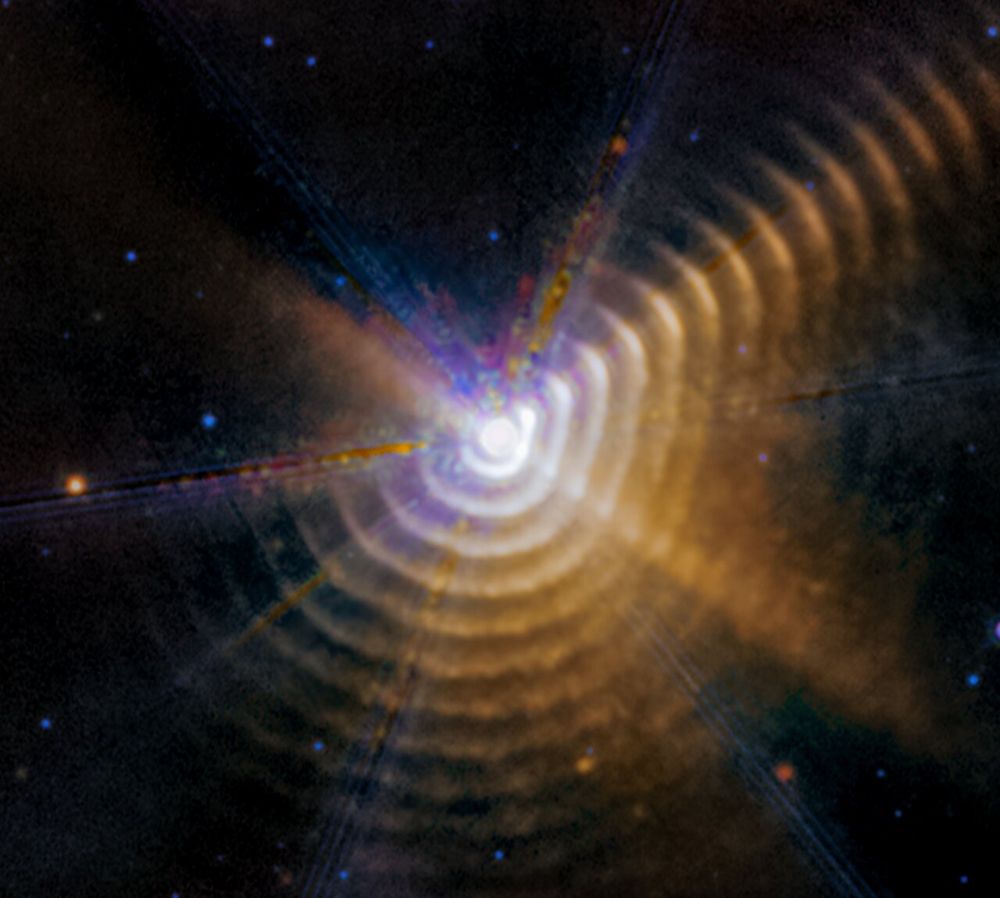
First JWST image of 2025.
Wolf-Rayet star WR 140.
🔭 🧪
Wolf-Rayet star WR 140.
🔭 🧪
January 13, 2025 at 7:25 PM
First JWST image of 2025.
Wolf-Rayet star WR 140.
🔭 🧪
Wolf-Rayet star WR 140.
🔭 🧪
Reposted by starscape

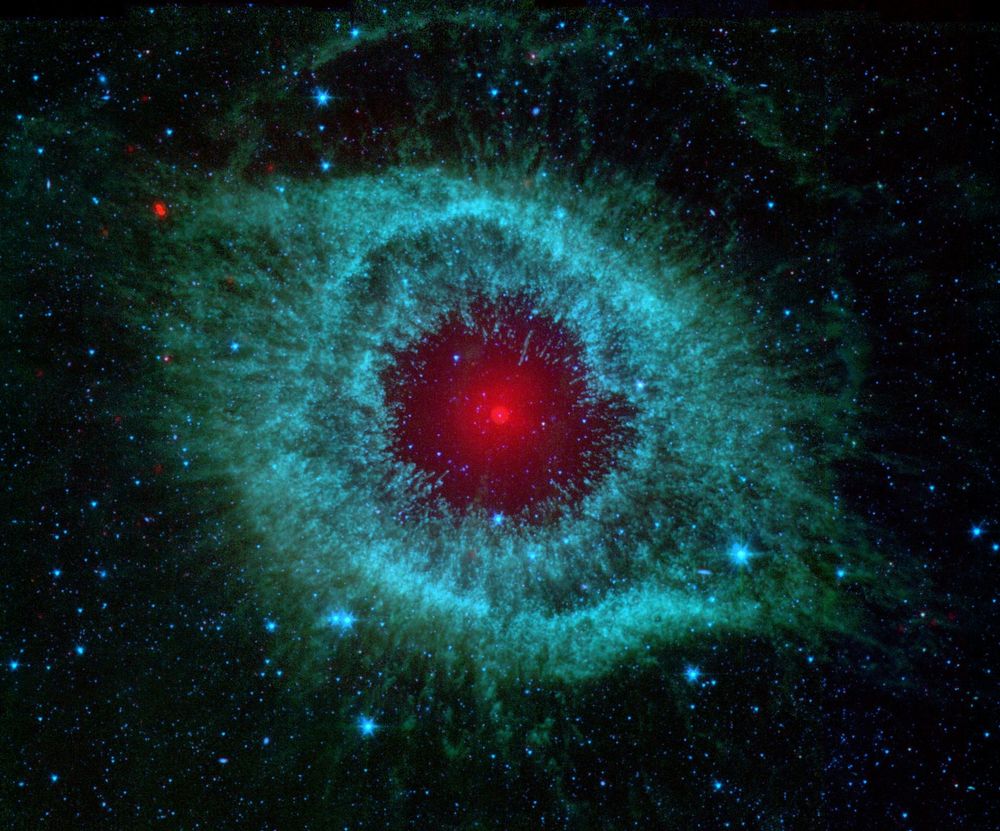
This infrared image from NASA Spitzer Space Telescope shows the Helix nebula, a cosmic starlet often photographed by amateur astronomers for its vivid colors and eerie resemblance to a giant eye.
Credit: NASA/JPL-Caltech/Univ.of Ariz.
Credit: NASA/JPL-Caltech/Univ.of Ariz.
January 13, 2025 at 6:17 PM
This infrared image from NASA Spitzer Space Telescope shows the Helix nebula, a cosmic starlet often photographed by amateur astronomers for its vivid colors and eerie resemblance to a giant eye.
Credit: NASA/JPL-Caltech/Univ.of Ariz.
Credit: NASA/JPL-Caltech/Univ.of Ariz.
Reposted by starscape

Here are some nice mushrooms

January 13, 2025 at 3:56 PM
Here are some nice mushrooms


Reposted by starscape

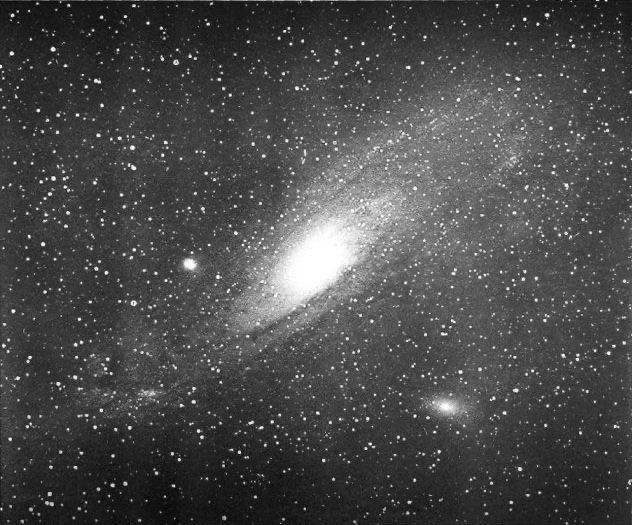
The first photo of the Andromeda galaxy was taken by astronomer Isaac Roberts #OTD in 1888.
The image, captured with his 20" reflector, revealed a clear spiral structure. But scientists at the time thought M31 was a nebula, a gas cloud in our galaxy. 🧪 🔭
Image: Isaac Roberts
The image, captured with his 20" reflector, revealed a clear spiral structure. But scientists at the time thought M31 was a nebula, a gas cloud in our galaxy. 🧪 🔭
Image: Isaac Roberts
December 29, 2024 at 5:15 PM
The first photo of the Andromeda galaxy was taken by astronomer Isaac Roberts #OTD in 1888.
The image, captured with his 20" reflector, revealed a clear spiral structure. But scientists at the time thought M31 was a nebula, a gas cloud in our galaxy. 🧪 🔭
Image: Isaac Roberts
The image, captured with his 20" reflector, revealed a clear spiral structure. But scientists at the time thought M31 was a nebula, a gas cloud in our galaxy. 🧪 🔭
Image: Isaac Roberts
Reposted by starscape

Dennis Overbye, the longtime cosmic affairs correspondent (what a beat!) for the Times, published a farewell essay last week; so many candidates for a #sundaysentence in that piece, but I'll go with this one: "What angels are those, tapping a fandango across the darkness?"

December 29, 2024 at 1:08 PM
Dennis Overbye, the longtime cosmic affairs correspondent (what a beat!) for the Times, published a farewell essay last week; so many candidates for a #sundaysentence in that piece, but I'll go with this one: "What angels are those, tapping a fandango across the darkness?"
Reposted by starscape
This is my image of SH2-101 the Tulip Nebula, 6,000 light years away, imaged with Atik 383L+ and 190MN over 3 nights, 12 hours total exposure. A really colourful nebula that works well as a narrowband target #astrophotography #space #nebula

December 29, 2024 at 8:56 AM
This is my image of SH2-101 the Tulip Nebula, 6,000 light years away, imaged with Atik 383L+ and 190MN over 3 nights, 12 hours total exposure. A really colourful nebula that works well as a narrowband target #astrophotography #space #nebula
Reposted by starscape

Reposted by starscape

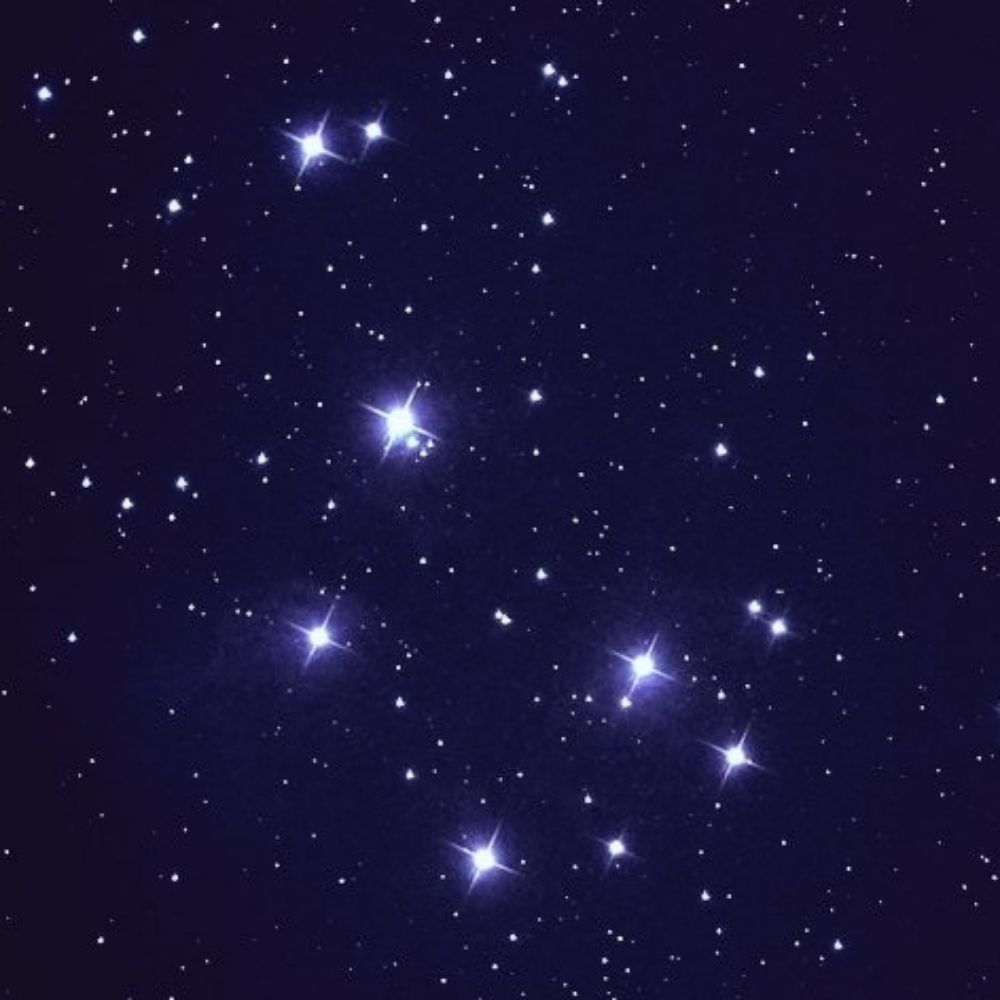
NGC 5643 by NIRCam.
🔭 🧪
🔭 🧪

December 29, 2024 at 6:18 AM
NGC 5643 by NIRCam.
🔭 🧪
🔭 🧪
Reposted by starscape

40 million light-years away lies this wonderful spiral galaxy, NGC-5643! 🔭
Here are two images I processed thanks to Hubble and JWST/NIRCam data. So many star forming regions can be seen in both wavelengths! ✨
HD Hubble: flic.kr/p/2qCcgx7
HD JWST: flic.kr/p/2qCdkDZ
Here are two images I processed thanks to Hubble and JWST/NIRCam data. So many star forming regions can be seen in both wavelengths! ✨
HD Hubble: flic.kr/p/2qCcgx7
HD JWST: flic.kr/p/2qCdkDZ


December 28, 2024 at 12:13 PM
40 million light-years away lies this wonderful spiral galaxy, NGC-5643! 🔭
Here are two images I processed thanks to Hubble and JWST/NIRCam data. So many star forming regions can be seen in both wavelengths! ✨
HD Hubble: flic.kr/p/2qCcgx7
HD JWST: flic.kr/p/2qCdkDZ
Here are two images I processed thanks to Hubble and JWST/NIRCam data. So many star forming regions can be seen in both wavelengths! ✨
HD Hubble: flic.kr/p/2qCcgx7
HD JWST: flic.kr/p/2qCdkDZ
Reposted by starscape

1/6 🔭 🧪 #milkyway 🧵
This fantastic image features the California Nebula, an emission nebula also known as NGC 1499.
Located in the Orion Arm of the Milky Way, the nebula is about 1,000 light-years away from Earth.
Image source➡️ apod.nasa.gov/apod/ap16011...
Image Credit: Farmakopoulos Antonis ⤵️
This fantastic image features the California Nebula, an emission nebula also known as NGC 1499.
Located in the Orion Arm of the Milky Way, the nebula is about 1,000 light-years away from Earth.
Image source➡️ apod.nasa.gov/apod/ap16011...
Image Credit: Farmakopoulos Antonis ⤵️

December 28, 2024 at 11:00 PM
1/6 🔭 🧪 #milkyway 🧵
This fantastic image features the California Nebula, an emission nebula also known as NGC 1499.
Located in the Orion Arm of the Milky Way, the nebula is about 1,000 light-years away from Earth.
Image source➡️ apod.nasa.gov/apod/ap16011...
Image Credit: Farmakopoulos Antonis ⤵️
This fantastic image features the California Nebula, an emission nebula also known as NGC 1499.
Located in the Orion Arm of the Milky Way, the nebula is about 1,000 light-years away from Earth.
Image source➡️ apod.nasa.gov/apod/ap16011...
Image Credit: Farmakopoulos Antonis ⤵️
space
December 29, 2024 at 5:49 AM
space
Reposted by starscape

i admire the people trying to preserve the night sky


December 29, 2024 at 3:24 AM
i admire the people trying to preserve the night sky
Reposted by starscape
Positively spectacular sight….Globular cluster Liller 1 behind piercingly blue stars 💫😲💫💙💫✨💫

December 29, 2024 at 3:01 AM
Positively spectacular sight….Globular cluster Liller 1 behind piercingly blue stars 💫😲💫💙💫✨💫
Reposted by starscape

In this X-ray image, the giant elliptical galaxy M87 shows evidence of outbursts from the central supermassive black hole.
The loops and bubbles in the hot, X-ray emitting gas are relics of small outbursts close to the black hole
(Credit: NASA/CXC/CfA/W. Forman et al.)
The loops and bubbles in the hot, X-ray emitting gas are relics of small outbursts close to the black hole
(Credit: NASA/CXC/CfA/W. Forman et al.)

December 28, 2024 at 7:12 PM
In this X-ray image, the giant elliptical galaxy M87 shows evidence of outbursts from the central supermassive black hole.
The loops and bubbles in the hot, X-ray emitting gas are relics of small outbursts close to the black hole
(Credit: NASA/CXC/CfA/W. Forman et al.)
The loops and bubbles in the hot, X-ray emitting gas are relics of small outbursts close to the black hole
(Credit: NASA/CXC/CfA/W. Forman et al.)
Reposted by starscape
Behold the cosmic ballet of galaxies IC 2163 and NGC 2207, gracefully overlapping in a diagonal embrace to form a luminous mask in the depths of space. 💫🤍💫😲💫🤍💫
(Credit: NASA, ESA, CSA, STScI)
(Credit: NASA, ESA, CSA, STScI)

December 28, 2024 at 11:43 PM
Behold the cosmic ballet of galaxies IC 2163 and NGC 2207, gracefully overlapping in a diagonal embrace to form a luminous mask in the depths of space. 💫🤍💫😲💫🤍💫
(Credit: NASA, ESA, CSA, STScI)
(Credit: NASA, ESA, CSA, STScI)
Reposted by starscape

Two nights ago, I continued a longer program, collecting more and more light on the Triangulum galaxy M33 with my little #Seestar S50. Here is the current result. A nice, fluffy little galaxy. And my eye was drawn to that little red blob that is visible there on the left. 1/ 🧪🔭

December 28, 2024 at 5:00 PM
Two nights ago, I continued a longer program, collecting more and more light on the Triangulum galaxy M33 with my little #Seestar S50. Here is the current result. A nice, fluffy little galaxy. And my eye was drawn to that little red blob that is visible there on the left. 1/ 🧪🔭
Reposted by starscape
𝐍𝐆𝐂 𝟏𝟎𝟓𝟓
Big, beautiful spiral galaxy NGC 1055 is a dominant member of a small galaxy group a mere 60 million light-years away toward the aquatically intimidating constellation Cetus. Seen edge-on, the island universe spans over 100,000 light-years, a little larger than our own Milky Way galaxy.
Big, beautiful spiral galaxy NGC 1055 is a dominant member of a small galaxy group a mere 60 million light-years away toward the aquatically intimidating constellation Cetus. Seen edge-on, the island universe spans over 100,000 light-years, a little larger than our own Milky Way galaxy.

December 28, 2024 at 8:23 PM
𝐍𝐆𝐂 𝟏𝟎𝟓𝟓
Big, beautiful spiral galaxy NGC 1055 is a dominant member of a small galaxy group a mere 60 million light-years away toward the aquatically intimidating constellation Cetus. Seen edge-on, the island universe spans over 100,000 light-years, a little larger than our own Milky Way galaxy.
Big, beautiful spiral galaxy NGC 1055 is a dominant member of a small galaxy group a mere 60 million light-years away toward the aquatically intimidating constellation Cetus. Seen edge-on, the island universe spans over 100,000 light-years, a little larger than our own Milky Way galaxy.
Reposted by starscape

A Rare Pink Star - Nova Centauri 2013 - From Rolf Wahl Olsen - https://flic.kr/p/iDuhtn

December 29, 2024 at 3:00 AM
A Rare Pink Star - Nova Centauri 2013 - From Rolf Wahl Olsen - https://flic.kr/p/iDuhtn
Reposted by starscape
Absolutely breathtaking ….A pan across the stunning star cluster Westerlund 2... 💫👏💫👏💫👏💫👏💫
(Credit: NASA, ESA, the Hubble Heritage Team (STScIAURA), A. Nota (ESASTScI), and the Westerlund 2 Science Team)
(Credit: NASA, ESA, the Hubble Heritage Team (STScIAURA), A. Nota (ESASTScI), and the Westerlund 2 Science Team)
December 28, 2024 at 9:16 AM
Absolutely breathtaking ….A pan across the stunning star cluster Westerlund 2... 💫👏💫👏💫👏💫👏💫
(Credit: NASA, ESA, the Hubble Heritage Team (STScIAURA), A. Nota (ESASTScI), and the Westerlund 2 Science Team)
(Credit: NASA, ESA, the Hubble Heritage Team (STScIAURA), A. Nota (ESASTScI), and the Westerlund 2 Science Team)
Reposted by starscape

7,500 light years away from us...

December 28, 2024 at 9:30 AM
7,500 light years away from us...
