



Our DU Psychology PhD students had a great time at the Psychonomic Society’s 2025 meeting in downtown Denver, where researchers shared cutting-edge work in cognitive and behavioral science. #psynom25 #Psychonomic2025 #CognitivePsychology #BehavioralScience #AcademicConference

December 2, 2025 at 6:04 PM
Our DU Psychology PhD students had a great time at the Psychonomic Society’s 2025 meeting in downtown Denver, where researchers shared cutting-edge work in cognitive and behavioral science. #psynom25 #Psychonomic2025 #CognitivePsychology #BehavioralScience #AcademicConference

Yesterday I earned my PhD in Health Science, Technology, and Management at Scuola Sant’Anna. My dissertation explored vaccine hesitancy, clinical guidelines, health innovation, and digital health through the lens of applied behavioral science.
🧪🛟 #PhD #BehavioralScience #HealthScience
🧪🛟 #PhD #BehavioralScience #HealthScience


November 29, 2025 at 9:39 AM
Yesterday I earned my PhD in Health Science, Technology, and Management at Scuola Sant’Anna. My dissertation explored vaccine hesitancy, clinical guidelines, health innovation, and digital health through the lens of applied behavioral science.
🧪🛟 #PhD #BehavioralScience #HealthScience
🧪🛟 #PhD #BehavioralScience #HealthScience

🚀 BlueSky trending hashtags (15m):
#booksky #art #gamedev #birds #indiedev #photography #nature #furryart #digitalart #furry #behavioralscience #phd #plantscience #writingcommunity #healthscience
#booksky #art #gamedev #birds #indiedev #photography #nature #furryart #digitalart #furry #behavioralscience #phd #plantscience #writingcommunity #healthscience
November 29, 2025 at 10:15 AM
🚀 BlueSky trending hashtags (15m):
#booksky #art #gamedev #birds #indiedev #photography #nature #furryart #digitalart #furry #behavioralscience #phd #plantscience #writingcommunity #healthscience
#booksky #art #gamedev #birds #indiedev #photography #nature #furryart #digitalart #furry #behavioralscience #phd #plantscience #writingcommunity #healthscience
🌟 BlueSky trending hashtags (1h):
#booksky #art #birds #gamedev #photography #indiedev #furryart #digitalart #filmsky #furry #birdoftheday #nature #caturday #phd #behavioralscience
#booksky #art #birds #gamedev #photography #indiedev #furryart #digitalart #filmsky #furry #birdoftheday #nature #caturday #phd #behavioralscience
November 29, 2025 at 10:00 AM
🌟 BlueSky trending hashtags (1h):
#booksky #art #birds #gamedev #photography #indiedev #furryart #digitalart #filmsky #furry #birdoftheday #nature #caturday #phd #behavioralscience
#booksky #art #birds #gamedev #photography #indiedev #furryart #digitalart #filmsky #furry #birdoftheday #nature #caturday #phd #behavioralscience
🚀 BlueSky trending hashtags (15m):
#booksky #art #gamedev #birds #photography #indiedev #furryart #digitalart #nature #phd #behavioralscience #healthscience #furry #filmsky #caturday
#booksky #art #gamedev #birds #photography #indiedev #furryart #digitalart #nature #phd #behavioralscience #healthscience #furry #filmsky #caturday
November 29, 2025 at 10:00 AM
🚀 BlueSky trending hashtags (15m):
#booksky #art #gamedev #birds #photography #indiedev #furryart #digitalart #nature #phd #behavioralscience #healthscience #furry #filmsky #caturday
#booksky #art #gamedev #birds #photography #indiedev #furryart #digitalart #nature #phd #behavioralscience #healthscience #furry #filmsky #caturday
🚀 BlueSky trending hashtags (15m):
#booksky #birds #art #photography #gamedev #digitalart #birdoftheday #indiedev #filmsky #furryart #furry #nature #behavioralscience #healthscience #phd
#booksky #birds #art #photography #gamedev #digitalart #birdoftheday #indiedev #filmsky #furryart #furry #nature #behavioralscience #healthscience #phd
November 29, 2025 at 9:45 AM
🚀 BlueSky trending hashtags (15m):
#booksky #birds #art #photography #gamedev #digitalart #birdoftheday #indiedev #filmsky #furryart #furry #nature #behavioralscience #healthscience #phd
#booksky #birds #art #photography #gamedev #digitalart #birdoftheday #indiedev #filmsky #furryart #furry #nature #behavioralscience #healthscience #phd

JMIR Formative Res: Initial Development of a Multidimensional Computerized Adaptive Test for Intensive Longitudinal Assessment of Suicide Risk: Development and #usability Study #MentalHealth #SuicidePrevention #Research #BehavioralScience #HealthTechnology

Initial Development of a Multidimensional Computerized Adaptive Test for Intensive Longitudinal Assessment of Suicide Risk: Development and #usability Study
Background: Intensive longitudinal designs support temporally granular study of processes making methods like ecological momentary assessment (EMA) increasingly common in medical and behavioral science. However, the repetitive and intensive measurement strategies associated with these designs increase participant burden which limits the breadth and precision of EMA surveys. This is particularly problematic for complex clinical phenomena, such as suicide risk, which research has shown is multidimensional and fluctuates over narrow time intervals (e.g., hours). To overcome this limitation, we proposed the Computerized Adaptive Test for Suicide Risk Pathways (CAT-SRP) which supports the simultaneous assessment of multiple empirically informed risk domains and facilitate personalized survey content. Objective: The objective of this study is to develop, calibrate, and pilot the first multidimensional computerized adaptive test for suicidal thoughts and related psychosocial risk factors in intensive longitudinal designs like EMA. Methods: A web-based assessment platform was developed to adaptively administer the CAT-SRP. CAT-SRP items were modified from existing validated instruments to support administration in intensive longitudinal designs. The item bank was developed in line with major ideation-to-action theories of suicide and consultation with experts outside the study team. Exploratory item factor analysis was used to identify dimensionality of the item bank. Item parameters were calibrated using a multidimensional graded response model in a large cross-sectional community sample (N = 1759, 36.33% with a history of suicidal thoughts). Following calibration, the CAT-SRP was evaluated in an EMA study of participants with a past month history of suicidal thoughts (N = 29 across 2,134 observations). Adaptive testing utilized D-optimal item selection, a dual variable-length stopping criterion, and MAP scoring. Descriptive statistics and mixed effects models were used to examine CAT-SRP performance (e.g., efficiency, survey overlap) and relationships among CAT-SRP domain scores. Results: The calibration study identified two suicidal thought domains (active and passive thoughts) and twelve risk factor domains: humiliation, loneliness, anger, pain, defeat, impulsivity/negative urgency, entrapment, distress tolerance, perceived burdensomeness, thwarted belongingness, aggression, and a hope/method factor. Domain information was highest between average to high levels of domain scores. Study 2 results suggested that the CAT-SRP 1) administered surveys with low to moderate item overlap, 2) incurred low participant burden, and 3) may improve near-term prediction of suicidal thoughts relative to traditional EMA measurement. Most EMA surveys reached the maximum length, 50 questions, highlighting a need to refine selection and stopping rules. Conclusions: The CAT-SRP effectively personalized EMA survey content to respondents which reduces the repetitiveness and perceived burden of intensive longitudinal research designs. Continuous domain scores from MCAT also provided more nuanced measurement, compared to traditional approaches that struggle with zero-inflation in EMA, and appeared to produce stronger predictive relationships. Overall, the CAT-SRP demonstrates strong methodological advantages to utilizing CAT for intensive longitudinal data collection.
dlvr.it
November 26, 2025 at 9:37 PM
JMIR Formative Res: Initial Development of a Multidimensional Computerized Adaptive Test for Intensive Longitudinal Assessment of Suicide Risk: Development and #usability Study #MentalHealth #SuicidePrevention #Research #BehavioralScience #HealthTechnology

How the Handshake Went Extinct
shorturl.at/PiqEp
#HumanBehavior #Culture #ModernLife #WritingCommunity #SocialCommentary #Psychology #BehavioralScience #Society #Communication #Etiquette #ModernManners#Essay #Writer #LinkedInWriters #ThoughtLeadership #observeid
shorturl.at/PiqEp
#HumanBehavior #Culture #ModernLife #WritingCommunity #SocialCommentary #Psychology #BehavioralScience #Society #Communication #Etiquette #ModernManners#Essay #Writer #LinkedInWriters #ThoughtLeadership #observeid

The Handshake: Five Fingers, Two Pumps
The Handshake in ICU
open.substack.com
November 24, 2025 at 11:57 AM
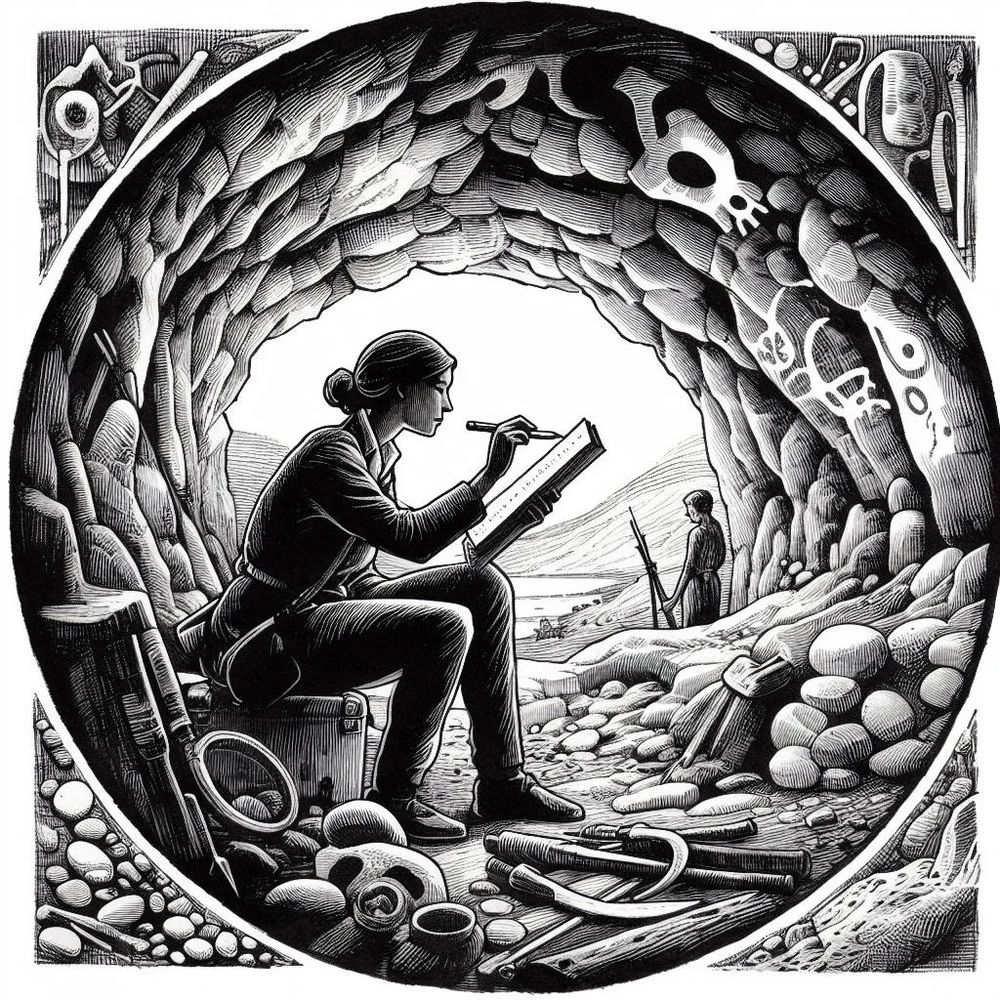
New comparative research suggests kissing evolved in the great apes and likely occurred in Neanderthals. What seems like a cultural habit may be an ancient primate social tool. #Anthropology #Primatology #HumanEvolution #BehavioralScience www.anthropology.net/p/the-ape-ki...

The Ape Kiss: What a New Comparative Study Reveals About the Ancient Roots of Mouth-to-Mouth Affection
A sweeping look at how kissing emerged in large apes, why Homo neanderthalensis probably kissed too, and what primate behavior can teach us about the evolution of intimacy.
www.anthropology.net
November 20, 2025 at 12:40 AM
New comparative research suggests kissing evolved in the great apes and likely occurred in Neanderthals. What seems like a cultural habit may be an ancient primate social tool. #Anthropology #Primatology #HumanEvolution #BehavioralScience www.anthropology.net/p/the-ape-ki...

🎙️ Catch Jonathan Stahl on Episode 26 of An N of 1, with Matt Wallaert! 🗓️ Coming out on Mon, November 10 at 8 am PT!
#podcast #AnNof1 #behavioralscience
#podcast #AnNof1 #behavioralscience
November 6, 2025 at 4:28 PM
🎙️ Catch Jonathan Stahl on Episode 26 of An N of 1, with Matt Wallaert! 🗓️ Coming out on Mon, November 10 at 8 am PT!
#podcast #AnNof1 #behavioralscience
#podcast #AnNof1 #behavioralscience

Edited by Jennifer Urbano Blackford and Mohammed R. Milad
— a must-read for anyone studying or treating anxiety.
#Neuroscience #AnxietyResearch #FearCircuits #CBT #TMS #BehavioralScience
link.springer.com/book/10.1007...
— a must-read for anyone studying or treating anxiety.
#Neuroscience #AnxietyResearch #FearCircuits #CBT #TMS #BehavioralScience
link.springer.com/book/10.1007...

New Discoveries in the Brain Sciences of Fear and Anxiety - From Basic to Clinical Neuroscience
This book focuses on the latest discoveries in the brain sciences of fear and anxiety - from basic to clinical neuroscience.
link.springer.com
October 21, 2025 at 2:38 PM
Edited by Jennifer Urbano Blackford and Mohammed R. Milad
— a must-read for anyone studying or treating anxiety.
#Neuroscience #AnxietyResearch #FearCircuits #CBT #TMS #BehavioralScience
link.springer.com/book/10.1007...
— a must-read for anyone studying or treating anxiety.
#Neuroscience #AnxietyResearch #FearCircuits #CBT #TMS #BehavioralScience
link.springer.com/book/10.1007...

✅ Another successful short course at @jacksonlab.bsky.social!
Participants gained experience applying #MachineLearning to behavior quantification, refining their ability to use data analysis and advanced modeling integrations in their #Neuroscience and #BehavioralScience research. 🧠 🤖
Participants gained experience applying #MachineLearning to behavior quantification, refining their ability to use data analysis and advanced modeling integrations in their #Neuroscience and #BehavioralScience research. 🧠 🤖

October 17, 2025 at 12:06 PM
✅ Another successful short course at @jacksonlab.bsky.social!
Participants gained experience applying #MachineLearning to behavior quantification, refining their ability to use data analysis and advanced modeling integrations in their #Neuroscience and #BehavioralScience research. 🧠 🤖
Participants gained experience applying #MachineLearning to behavior quantification, refining their ability to use data analysis and advanced modeling integrations in their #Neuroscience and #BehavioralScience research. 🧠 🤖

How can #ACT & #CBS empower individuals and communities worldwide? Explore cultural & global #mentalhealth perspectives, equity frameworks, & participatory research methods to make interventions more relevant, inclusive, & sustainable.
buff.ly/Cc1gQUt
#ACBS #behavioralscience #WorldMentalHealthDay
buff.ly/Cc1gQUt
#ACBS #behavioralscience #WorldMentalHealthDay

October 9, 2025 at 3:04 PM
How can #ACT & #CBS empower individuals and communities worldwide? Explore cultural & global #mentalhealth perspectives, equity frameworks, & participatory research methods to make interventions more relevant, inclusive, & sustainable.
buff.ly/Cc1gQUt
#ACBS #behavioralscience #WorldMentalHealthDay
buff.ly/Cc1gQUt
#ACBS #behavioralscience #WorldMentalHealthDay
Why is #MAGA so angry? It's the wave of anger as they move toward inevitable extinction burst of the behavior. Hope is still out there, long term, hang in there friends ❣️
#behavioralscience
#democracy
#progressmatters
www.instagram.com/reel/DFxePdX...
#behavioralscience
#democracy
#progressmatters
www.instagram.com/reel/DFxePdX...
Login • Instagram
Welcome back to Instagram. Sign in to check out what your friends, family & interests have been capturing & sharing around the world.
www.instagram.com
February 7, 2025 at 3:27 PM
Why is #MAGA so angry? It's the wave of anger as they move toward inevitable extinction burst of the behavior. Hope is still out there, long term, hang in there friends ❣️
#behavioralscience
#democracy
#progressmatters
www.instagram.com/reel/DFxePdX...
#behavioralscience
#democracy
#progressmatters
www.instagram.com/reel/DFxePdX...

Could you please add me to the #BehavioralScience starter pack, @susanmichie.bsky.social ? waterslab.wustl.edu
Home | Waters Lab Website | Washington University in St. LouisWashington University School of Medicine in St. Louis
Welcome to the lab of Dr. Erika A. Waters! We see...
waterslab.wustl.edu
November 24, 2024 at 3:16 AM
Could you please add me to the #BehavioralScience starter pack, @susanmichie.bsky.social ? waterslab.wustl.edu

#BehavioralScience
Here is a database of 100 nudge case studies and research papers, for those who are interested:
Here is a database of 100 nudge case studies and research papers, for those who are interested:
Notion – The all-in-one workspace for your notes, tasks, wikis, and databases.
A new tool that blends your everyday work apps into one. It's the all-in-one workspace for you and your team
mountain-puck-548.notion.site
December 1, 2024 at 1:36 PM
#BehavioralScience
Here is a database of 100 nudge case studies and research papers, for those who are interested:
Here is a database of 100 nudge case studies and research papers, for those who are interested:
#ACBSWC25 has officially begun! Attendees are touching down in New Orleans and the energy is electric! We’re so excited to reunite with familiar faces and welcome new ones. Kicking things off tonight for vibrant socials and inspiring poster sessions!
zurl.co/O6Soe
#ACBS #ACT #CBS #BehavioralScience
zurl.co/O6Soe
#ACBS #ACT #CBS #BehavioralScience



July 16, 2025 at 8:18 PM
#ACBSWC25 has officially begun! Attendees are touching down in New Orleans and the energy is electric! We’re so excited to reunite with familiar faces and welcome new ones. Kicking things off tonight for vibrant socials and inspiring poster sessions!
zurl.co/O6Soe
#ACBS #ACT #CBS #BehavioralScience
zurl.co/O6Soe
#ACBS #ACT #CBS #BehavioralScience
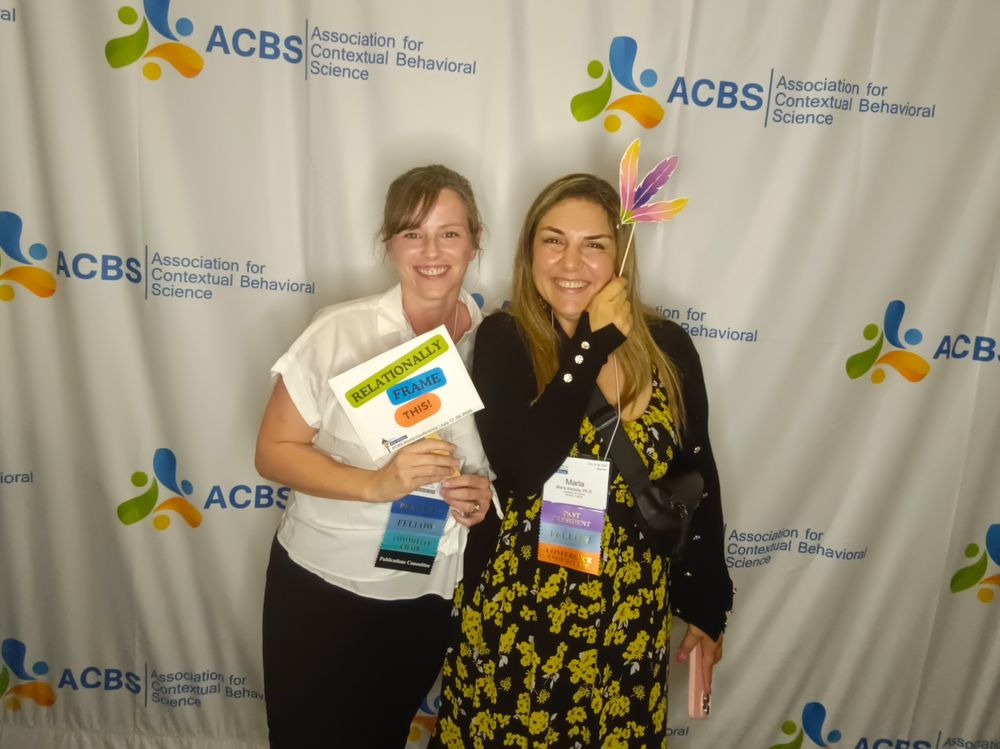
What a fantastic first day at #ACBSWC25 followed by an evening of live music and networking New Orleans style! Get ready to kick off tomorrow with our exceptional lineup of speakers including Michael Tomasello, Russ Harris, and Maysa Akbar.
zurl.co/ZirvD
#ACBS #ACT #CBS #BehavioralScience
zurl.co/ZirvD
#ACBS #ACT #CBS #BehavioralScience


July 18, 2025 at 1:00 AM
What a fantastic first day at #ACBSWC25 followed by an evening of live music and networking New Orleans style! Get ready to kick off tomorrow with our exceptional lineup of speakers including Michael Tomasello, Russ Harris, and Maysa Akbar.
zurl.co/ZirvD
#ACBS #ACT #CBS #BehavioralScience
zurl.co/ZirvD
#ACBS #ACT #CBS #BehavioralScience
#News: 🧠 #Research reveals that thinking about the future and writing a letter to a child in the future motivates #climateaction and boosts engagement with environment. #BehavioralScience #Campaigns #SciComms #Comms 🌴🩸🚜🔥⛔️ #Boycott4Wildlife
www.sciencedaily.com/releases/202...
www.sciencedaily.com/releases/202...


June 13, 2025 at 3:22 PM
#News: 🧠 #Research reveals that thinking about the future and writing a letter to a child in the future motivates #climateaction and boosts engagement with environment. #BehavioralScience #Campaigns #SciComms #Comms 🌴🩸🚜🔥⛔️ #Boycott4Wildlife
www.sciencedaily.com/releases/202...
www.sciencedaily.com/releases/202...

Change Rider 3/10
📖 Inspired by Switch by Dan & Chip Heath: change isn’t about pushing harder—it’s about guiding the interplay between Rider (mind) and Elephant (heart).
#BehavioralScience #ReadingList #Psychology
August 31, 2025 at 11:38 AM
Change Rider 3/10
📖 Inspired by Switch by Dan & Chip Heath: change isn’t about pushing harder—it’s about guiding the interplay between Rider (mind) and Elephant (heart).
#BehavioralScience #ReadingList #Psychology
🎙️ Episode 22 of An N of 1 with Matt Wallaert and Heather Watson is out now! ✨
Listen to the full episode at the link below👇🏻
www.buzzsprout.com/2369863/epis...
Watch the full episode at the link below👇🏻
youtu.be/0GIEFpEnLL0
#behavioralscience #AnNof1 #podcast
Listen to the full episode at the link below👇🏻
www.buzzsprout.com/2369863/epis...
Watch the full episode at the link below👇🏻
youtu.be/0GIEFpEnLL0
#behavioralscience #AnNof1 #podcast
September 15, 2025 at 4:25 PM
🎙️ Episode 22 of An N of 1 with Matt Wallaert and Heather Watson is out now! ✨
Listen to the full episode at the link below👇🏻
www.buzzsprout.com/2369863/epis...
Watch the full episode at the link below👇🏻
youtu.be/0GIEFpEnLL0
#behavioralscience #AnNof1 #podcast
Listen to the full episode at the link below👇🏻
www.buzzsprout.com/2369863/epis...
Watch the full episode at the link below👇🏻
youtu.be/0GIEFpEnLL0
#behavioralscience #AnNof1 #podcast
How can we better predict and understand mental health dynamics? Go on a deep dive into ecological momentary assessment (EMA)—a cutting-edge approach to collecting real-time data.
buff.ly/Cc1gQUt
#ACBS #CBS #ACT #mentalheath #behavioralscience #WorldMentalHealthDay
buff.ly/Cc1gQUt
#ACBS #CBS #ACT #mentalheath #behavioralscience #WorldMentalHealthDay

October 3, 2025 at 5:05 PM
How can we better predict and understand mental health dynamics? Go on a deep dive into ecological momentary assessment (EMA)—a cutting-edge approach to collecting real-time data.
buff.ly/Cc1gQUt
#ACBS #CBS #ACT #mentalheath #behavioralscience #WorldMentalHealthDay
buff.ly/Cc1gQUt
#ACBS #CBS #ACT #mentalheath #behavioralscience #WorldMentalHealthDay
🎙️ Catch Chandra Osborn on Episode 27 of An N of 1, with Matt Wallaert! 🗓️ Coming out on Monday, November 24 at 8 am PT! #podcast #AnNof1 #behavioralscience
November 21, 2025 at 6:21 PM
🎙️ Catch Chandra Osborn on Episode 27 of An N of 1, with Matt Wallaert! 🗓️ Coming out on Monday, November 24 at 8 am PT! #podcast #AnNof1 #behavioralscience

Young Ants Beg For Death When Sick, New Study Reveals #Science #Biology #Zoology #Ants #BehavioralScience #Sickness

Young Ants Beg For Death When Sick, New Study Reveals
Nature: the ultimate horror show.
purescience.news
December 3, 2025 at 6:45 AM