



#ResearchHighlight from Yewei Xie & Mo Yin @moru-mip.bsky.social
One health perspective of antibiotic resistance in enterobacterales from Southeast Asia: a systematic review and meta-analysis
Read more 👉 www.ndm.ac/tropmed.res-hi
Full publication 👉 www.nature.com/articles/s41...
One health perspective of antibiotic resistance in enterobacterales from Southeast Asia: a systematic review and meta-analysis
Read more 👉 www.ndm.ac/tropmed.res-hi
Full publication 👉 www.nature.com/articles/s41...

January 21, 2026 at 11:13 AM
#ResearchHighlight from Yewei Xie & Mo Yin @moru-mip.bsky.social
One health perspective of antibiotic resistance in enterobacterales from Southeast Asia: a systematic review and meta-analysis
Read more 👉 www.ndm.ac/tropmed.res-hi
Full publication 👉 www.nature.com/articles/s41...
One health perspective of antibiotic resistance in enterobacterales from Southeast Asia: a systematic review and meta-analysis
Read more 👉 www.ndm.ac/tropmed.res-hi
Full publication 👉 www.nature.com/articles/s41...

Longitudinal Trends in Pediatric Non-Salmonella Gram-negative Enterobacterales Infections at a Tertiary Care Center in West Africa, 2005-2023
✅ Just Accepted
🔗 https://bit.ly/45OlCHj
✅ Just Accepted
🔗 https://bit.ly/45OlCHj

January 18, 2026 at 12:12 AM
Longitudinal Trends in Pediatric Non-Salmonella Gram-negative Enterobacterales Infections at a Tertiary Care Center in West Africa, 2005-2023
✅ Just Accepted
🔗 https://bit.ly/45OlCHj
✅ Just Accepted
🔗 https://bit.ly/45OlCHj

This week, read articles from our recent issue on topics including invasive fungal disease in transplantation, lenacapavir's role in PrEP, antimicrobial treatment around non–carbapenemase-producing carbapenem-resistant enterobacterales, and more. #IDsky #Medsky

Top Infectious Disease News Stories Week of January 10 - January 16 | Contagion Live
This week, read articles from our recent issue on topics including invasive fungal disease in transplantation, lenacapavir's role in PrEP, antimicrobial treatment around non–carbapenemase-producing ca...
www.contagionlive.com
January 17, 2026 at 3:52 PM

Delafloxacin CSF penetration in mice was 49%🧠. Cmax/MIC ratios hit targets for Staph/Strep but missed Enterobacterales. Dose: 40 mg/kg i.p., 4h samples.##idsky
Evaluation of cerebrospinal fluid penetration of delafloxacin in a murine model
ABSTRACTCerebrospinal fluid (CSF) penetration of delafloxacin was evaluated in a murine model. Mice received a single 40 mg/kg intraperitoneal dose. Plasma and CSF samples were collected at five time points over 4 h and analyzed by ultra high-performance liquid chromatography/tandem mass spectrometry (UPLC-MS/MS). Pharmacokinetic parameters, including CSF penetration ratio (AUC0–4h CSF/AUC0–4h plasma), were determined using a non-compartmental model. The CSF penetration ratio of delafloxacin was 49%. Cmax/MIC ratios met pharmacokinetic/pharmacodynamic targets for Staphylococcus and Streptococcus spp., but not Enterobacterales.
journals.asm.org
January 15, 2026 at 3:30 AM
Delafloxacin CSF penetration in mice was 49%🧠. Cmax/MIC ratios hit targets for Staph/Strep but missed Enterobacterales. Dose: 40 mg/kg i.p., 4h samples.##idsky

Love that they called this a ‘no-carb’ diet when it’s really Enterobacterales cutting carbs and stacking resistance gains in the gym.
January 14, 2026 at 7:50 PM
Love that they called this a ‘no-carb’ diet when it’s really Enterobacterales cutting carbs and stacking resistance gains in the gym.
From our issue: Dr. Sunish Shah discusses non–carbapenemase-producing carbapenem-resistant Enterobacterales including its epidemiology, treatment guideline recommendations, and clinical studies around therapies.
#IDsky #Medsky
#IDsky #Medsky

A No-Carb Diet: An Overview of Non–Carbapenemase-Producing Carbapenem-Resistant Enterobacterales | Contagion Live
Non–carbapenemase-producing carbapenem-resistant Enterobacterales (CRE) isolates are the most common mechanism of CRE in the United States,
but the optimal antimicrobial treatment remains to be elucid...
www.contagionlive.com
January 14, 2026 at 4:52 PM

Open Access UCL Research: Nanopore long-read only genome assembly of clinical Enterobacterales isolates is complete and accurate
discovery.ucl.ac.uk/id/eprint/10...
discovery.ucl.ac.uk/id/eprint/10...
Nanopore long-read only genome assembly of clinical Enterobacterales isolates is complete and accurate
-
UCL Discovery
UCL Discovery is UCL's open access repository, showcasing and providing access to UCL research outputs from all UCL disciplines.
discovery.ucl.ac.uk
January 14, 2026 at 9:38 AM
Open Access UCL Research: Nanopore long-read only genome assembly of clinical Enterobacterales isolates is complete and accurate
discovery.ucl.ac.uk/id/eprint/10...
discovery.ucl.ac.uk/id/eprint/10...
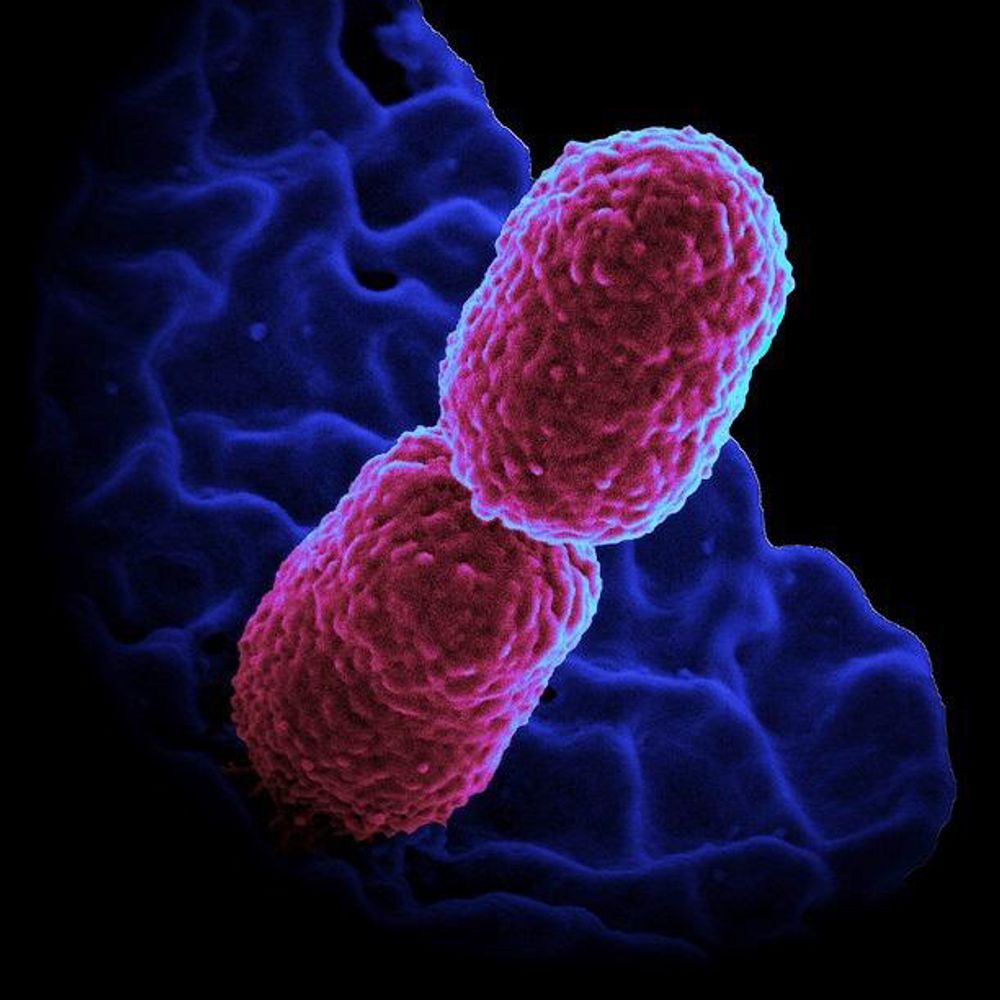
Community-onset symptomatic urinary tract infections (SUTI) caused by extended-spectrum beta-lactamase (ESBL)-producing Enterobacterales: independent predictors and comparative effectiveness of oral agents
https://doi.org/10.1017/ash.2025.10267
https://doi.org/10.1017/ash.2025.10267
January 12, 2026 at 5:41 PM
Community-onset symptomatic urinary tract infections (SUTI) caused by extended-spectrum beta-lactamase (ESBL)-producing Enterobacterales: independent predictors and comparative effectiveness of oral agents
https://doi.org/10.1017/ash.2025.10267
https://doi.org/10.1017/ash.2025.10267
BCID2 detected CRO-R in 22% (95/432) isolates; 1.6% were CRO-R w/o resistance genes. Only 0.5% risk for wrong de-escalation from FEP to CRO in key Enterobacterales. 🔬💉##idsky
P-818. Third-Generation Cephalosporin Resistant Enterobacterales Without Genetic Detection on the BIOFIRE Blood Culture Identification 2 Panel: A De-escalation Tool
The BIOFIRE Blood Culture Identification 2 Panel (BCID2) is a sensitive ( >99%) in vitro diagnostic tool that rapidly identifies select organisms and resistance genes (RGs) via nucleic acid amplification. It detects the predominant ESBL gene, CTX-M, along with other types of RGs. However, less common resistance mechanisms, not detected by the BCID2, may confer ceftriaxone-resistant (CRO-R) and cefepime (FEP) susceptible isolates. Ceftriaxone and FEP are commonly used for empiric treatment of Enterobacterales with similar susceptibility profiles exhibited by select species institutionally and globally. Determining the incidence of CRO-R Enterobacterales blood isolates without RGs detection via BCID2 may support early de-escalation.MethodsThis was a retrospective review of all blood isolates in adult patients cultured at our institution from January 2023 to December 2024 with growth of either E. coli, K. pneumoniae, K. oxytoca, or P. mirabilis. Isolates were included if they were CRO-R and the organism was detected on the BCID2 panel. Isolates were excluded if the BCID2 did not detect the organism, if the BCID2 was not performed, if the same organism was cultured within 48 hours of a previous culture or if there were polymicrobial findings with > 1 ESBL organism. We sought to describe the incidence of CRO-R Enterobacterales with RGs negative BCID2 results.ResultsA total of 432 blood isolates were obtained. Of these, 95 (22%) were identified as CRO-R and reviewed in our study. The overall incidence of any CRO-R isolate without RGs detected via BCID2 was 1.6%. Five isolates (1.2%) were flagged as ESBL without RGs detected. Two isolates (0.5%) were CRO-R without an ESBL flag via MicroScan and without any RGs detected; these 2 isolates were both E. coli (Table 1), and both remained FEP susceptible.ConclusionThese findings suggest that early de-escalation from FEP to CRO using the BCID2 panel in the setting of RG-negative results with E. coli, K. pneumoniae, K. oxytoca, or P. mirabilis may be clinically appropriate, with only a 0.5% risk of inappropriate de-escalation at our institution. Further studies are needed to confirm this due to varying institution-specific susceptibility patterns.DisclosuresAll Authors: No reported disclosures
academic.oup.com
January 12, 2026 at 4:30 PM
BCID2 detected CRO-R in 22% (95/432) isolates; 1.6% were CRO-R w/o resistance genes. Only 0.5% risk for wrong de-escalation from FEP to CRO in key Enterobacterales. 🔬💉##idsky
Management of infections caused by carbapenemase-producing Enterobacterales in France: a real-world study
https://doi.org/10.1093/jacamr/dlaf260
https://doi.org/10.1093/jacamr/dlaf260
January 12, 2026 at 3:01 PM
Management of infections caused by carbapenemase-producing Enterobacterales in France: a real-world study
https://doi.org/10.1093/jacamr/dlaf260
https://doi.org/10.1093/jacamr/dlaf260
Third-Generation Cephalosporin-Resistant Enterobacterales and Methicillin-Resistant Staphylococcus aureus (MRSA) in Pigs in Rwanda
https://doi.org/10.3390/ani16010122
https://doi.org/10.3390/ani16010122
January 10, 2026 at 2:31 PM
Third-Generation Cephalosporin-Resistant Enterobacterales and Methicillin-Resistant Staphylococcus aureus (MRSA) in Pigs in Rwanda
https://doi.org/10.3390/ani16010122
https://doi.org/10.3390/ani16010122
From our latest issue: Here are the highlights from the CLSI Subcommittee's work including the removal of doxycycline and tetracycline breakpoints, the revision of aminoglycoside breakpoints for Acinetobacter spp, and addition of aztreonam-avibactam breakpoints for Enterobacterales. #Idsky

What's New in 2025: From the CLSI Subcommittee on Antimicrobial Susceptibility Testing | Contagion Live
The subcommittee approved the removal of doxycycline and tetracycline breakpoints and revised aminoglycoside breakpoints for Acinetobacter spp, and added aztreonam-avibactam breakpoints for Enterobact...
www.contagionlive.com
January 9, 2026 at 4:19 PM
From our latest issue: Here are the highlights from the CLSI Subcommittee's work including the removal of doxycycline and tetracycline breakpoints, the revision of aminoglycoside breakpoints for Acinetobacter spp, and addition of aztreonam-avibactam breakpoints for Enterobacterales. #Idsky

Please check out this interesting paper:
CarbaDetector: a machine learning model for detecting carbapenemase-producing Enterobacterales from disk diffusion tests
out now in @natcomms.nature.com by the highly talented @lineamuhsal.bsky.social et al.
Link:
www.nature.com/articles/s41...
CarbaDetector: a machine learning model for detecting carbapenemase-producing Enterobacterales from disk diffusion tests
out now in @natcomms.nature.com by the highly talented @lineamuhsal.bsky.social et al.
Link:
www.nature.com/articles/s41...
Client Challenge
www.nature.com
January 9, 2026 at 3:50 PM
Please check out this interesting paper:
CarbaDetector: a machine learning model for detecting carbapenemase-producing Enterobacterales from disk diffusion tests
out now in @natcomms.nature.com by the highly talented @lineamuhsal.bsky.social et al.
Link:
www.nature.com/articles/s41...
CarbaDetector: a machine learning model for detecting carbapenemase-producing Enterobacterales from disk diffusion tests
out now in @natcomms.nature.com by the highly talented @lineamuhsal.bsky.social et al.
Link:
www.nature.com/articles/s41...
IncL plasmid-mediated dissemination of OXA-48 β-lactamase and bla CTX-M-15 gene amplification identified via long-read sequencing in carbapenem-resistant Enterobacterales
https://doi.org/10.1093/jacamr/dlaf254
https://doi.org/10.1093/jacamr/dlaf254
January 9, 2026 at 12:59 PM
IncL plasmid-mediated dissemination of OXA-48 β-lactamase and bla CTX-M-15 gene amplification identified via long-read sequencing in carbapenem-resistant Enterobacterales
https://doi.org/10.1093/jacamr/dlaf254
https://doi.org/10.1093/jacamr/dlaf254

Large-scale phylogenomics reveals convergent genome evolution across repeated transitions to endosymbiosis in Enterobacterales https://pubmed.ncbi.nlm.nih.gov/41500269/
January 9, 2026 at 8:56 AM
Large-scale phylogenomics reveals convergent genome evolution across repeated transitions to endosymbiosis in Enterobacterales https://pubmed.ncbi.nlm.nih.gov/41500269/
Large-scale phylogenomics reveals convergent genome evolution across repeated transitions to endosymbiosis in Enterobacterales https://pubmed.ncbi.nlm.nih.gov/41500269/
January 9, 2026 at 7:04 AM
Large-scale phylogenomics reveals convergent genome evolution across repeated transitions to endosymbiosis in Enterobacterales https://pubmed.ncbi.nlm.nih.gov/41500269/
Large-scale phylogenomics reveals convergent genome evolution across repeated transitions to endosymbiosis in Enterobacterales https://pubmed.ncbi.nlm.nih.gov/41500269/
January 9, 2026 at 2:23 AM
Large-scale phylogenomics reveals convergent genome evolution across repeated transitions to endosymbiosis in Enterobacterales https://pubmed.ncbi.nlm.nih.gov/41500269/

🦠 Most SSIs are caused by Gram-positive cocci (~54%), while Gram-negative Enterobacterales (~31%) dominate in abdominal and colorectal procedures
January 4, 2026 at 9:00 AM
🦠 Most SSIs are caused by Gram-positive cocci (~54%), while Gram-negative Enterobacterales (~31%) dominate in abdominal and colorectal procedures

CarbaDetector: a machine learning model for detecting carbapenemase-producing Enterobacterales from disk diffusion tests
www.nature.com/articles/s41...
www.nature.com/articles/s41...

CarbaDetector: a machine learning model for detecting carbapenemase-producing Enterobacterales from disk diffusion tests - Nature Communications
Carbapenems are last-resort antibiotics, but resistance is rising due to hydrolyzing enzymes called carbapenemases. The authors present a machine learning algorithm and web-app to rapidly predict carb...
www.nature.com
January 2, 2026 at 4:38 PM
CarbaDetector: a machine learning model for detecting carbapenemase-producing Enterobacterales from disk diffusion tests
www.nature.com/articles/s41...
www.nature.com/articles/s41...

Maternal Colonization, Perinatal Exposure, and Neonatal Acquisition of Resistant Enterobacterales
✅ Just Accepted
🔗 https://bit.ly/4q1FXRM
✅ Just Accepted
🔗 https://bit.ly/4q1FXRM

December 30, 2025 at 8:20 PM
Maternal Colonization, Perinatal Exposure, and Neonatal Acquisition of Resistant Enterobacterales
✅ Just Accepted
🔗 https://bit.ly/4q1FXRM
✅ Just Accepted
🔗 https://bit.ly/4q1FXRM

Epidemiological, microbiological, and genomic risk factors for healthcare-associated Carbapenemase producing Enterobacterales (CPE) outbreaks: A systematic review https://www.medrxiv.org/content/10.64898/2025.12.23.25342705v1
December 27, 2025 at 11:55 AM
Epidemiological, microbiological, and genomic risk factors for healthcare-associated Carbapenemase producing Enterobacterales (CPE) outbreaks: A systematic review https://www.medrxiv.org/content/10.64898/2025.12.23.25342705v1

Maternal Colonization, Perinatal Exposure, and Neonatal Acquisition of Resistant Enterobacterales
Leena B Mithal, et al.
Open Forum Infectious Diseases, ofaf769,
doi.org/10.1093/ofid...
Leena B Mithal, et al.
Open Forum Infectious Diseases, ofaf769,
doi.org/10.1093/ofid...
December 23, 2025 at 3:23 PM
Maternal Colonization, Perinatal Exposure, and Neonatal Acquisition of Resistant Enterobacterales
Leena B Mithal, et al.
Open Forum Infectious Diseases, ofaf769,
doi.org/10.1093/ofid...
Leena B Mithal, et al.
Open Forum Infectious Diseases, ofaf769,
doi.org/10.1093/ofid...
#ICYMI: The Fall/Winter issue is out! Read further about lenacapavir's role in PrEP, the 2025 CLSI Subcommittee recommendations for antimicrobial susceptibility testing, an update on non–carbapenemase-producing carbapenem-resistant Enterobacterales, and more.
www.contagionlive.com/view/contagi...
www.contagionlive.com/view/contagi...

Contagion Fall/Winter 2025-2026 Digital Edition | Contagion Live
View our interactive Fall/Winter 2025-2026 digital edition.
www.contagionlive.com
December 22, 2025 at 1:25 PM
#ICYMI: The Fall/Winter issue is out! Read further about lenacapavir's role in PrEP, the 2025 CLSI Subcommittee recommendations for antimicrobial susceptibility testing, an update on non–carbapenemase-producing carbapenem-resistant Enterobacterales, and more.
www.contagionlive.com/view/contagi...
www.contagionlive.com/view/contagi...

This study characterizes carbapenemase genes in Enterobacterales, A. baumannii & P. aeruginosa isolates collected via the National Surveillance of AMR Program
Novel carbapenemase genes and their combinations emerged in Peru during the #COVID19 pandemic
doi.org/10.1093/jaca...
#IDSky
Novel carbapenemase genes and their combinations emerged in Peru during the #COVID19 pandemic
doi.org/10.1093/jaca...
#IDSky
doi.org
December 22, 2025 at 11:01 AM
This study characterizes carbapenemase genes in Enterobacterales, A. baumannii & P. aeruginosa isolates collected via the National Surveillance of AMR Program
Novel carbapenemase genes and their combinations emerged in Peru during the #COVID19 pandemic
doi.org/10.1093/jaca...
#IDSky
Novel carbapenemase genes and their combinations emerged in Peru during the #COVID19 pandemic
doi.org/10.1093/jaca...
#IDSky

Time matters! 🕒 Our data shows TTP varies significantly by species
1️⃣ TTP < 12h: Strongly suggests S. aureus (Sp 0.95) or Enterobacterales (Sp 0.93). 2️⃣ TTP > 15h: Effectively excludes dangerous Streptococci (S. pneumoniae, pyogenes, agalactiae).
TTP is a free biomarker available 24/7. Use it!
1️⃣ TTP < 12h: Strongly suggests S. aureus (Sp 0.95) or Enterobacterales (Sp 0.93). 2️⃣ TTP > 15h: Effectively excludes dangerous Streptococci (S. pneumoniae, pyogenes, agalactiae).
TTP is a free biomarker available 24/7. Use it!

December 20, 2025 at 8:31 AM
Time matters! 🕒 Our data shows TTP varies significantly by species
1️⃣ TTP < 12h: Strongly suggests S. aureus (Sp 0.95) or Enterobacterales (Sp 0.93). 2️⃣ TTP > 15h: Effectively excludes dangerous Streptococci (S. pneumoniae, pyogenes, agalactiae).
TTP is a free biomarker available 24/7. Use it!
1️⃣ TTP < 12h: Strongly suggests S. aureus (Sp 0.95) or Enterobacterales (Sp 0.93). 2️⃣ TTP > 15h: Effectively excludes dangerous Streptococci (S. pneumoniae, pyogenes, agalactiae).
TTP is a free biomarker available 24/7. Use it!