



#FireVegetation #KingsthorpeQld #QG52 #qldfire #bushfirewarning. See https://www.fire.qld.gov.au/Current-Incidents for official warnings from the QFD. DO NOT RELY ON THIS SERVICE FOR TIMELY EMERGENCY WARNINGS.
Information - KINGSTHORPE […]
[Original post on mastodon.longlandclan.id.au]
Information - KINGSTHORPE […]
[Original post on mastodon.longlandclan.id.au]


January 16, 2026 at 3:13 AM
#FireVegetation #KingsthorpeQld #QG52 #qldfire #bushfirewarning. See https://www.fire.qld.gov.au/Current-Incidents for official warnings from the QFD. DO NOT RELY ON THIS SERVICE FOR TIMELY EMERGENCY WARNINGS.
Information - KINGSTHORPE […]
[Original post on mastodon.longlandclan.id.au]
Information - KINGSTHORPE […]
[Original post on mastodon.longlandclan.id.au]
#FireVegetation #KingsthorpeQld #QG52 #qldfire #bushfirewarning. See https://www.fire.qld.gov.au/Current-Incidents for official warnings from the QFD. DO NOT RELY ON THIS SERVICE FOR TIMELY EMERGENCY WARNINGS.
Information - KINGSTHORPE […]
[Original post on mastodon.longlandclan.id.au]
Information - KINGSTHORPE […]
[Original post on mastodon.longlandclan.id.au]


January 16, 2026 at 1:49 AM
#FireVegetation #KingsthorpeQld #QG52 #qldfire #bushfirewarning. See https://www.fire.qld.gov.au/Current-Incidents for official warnings from the QFD. DO NOT RELY ON THIS SERVICE FOR TIMELY EMERGENCY WARNINGS.
Information - KINGSTHORPE […]
[Original post on mastodon.longlandclan.id.au]
Information - KINGSTHORPE […]
[Original post on mastodon.longlandclan.id.au]
Ambush at Wallbank https://edintone.com/ambush-at-wallbank/ On a dark Wednesday night in September 1769, the quiet road between Northampton and Kingst

Ambush at Wallbank
**A Brutal Highway Robbery in Georgian Northamptonshire**
The attack upon William Walker by Anthony Horner and William Craddock [Image by OpenAI]
On a dark Wednesday night in September 1769, the quiet road between Northampton and Kingsthorpe became the scene of a shocking act of violence that would end on the gallows.
Between nine and ten o’clock, William Walker the Younger, a farmer of Kingsthorpe, was walking home from Northampton when he reached a place known as Wallbank, or Welbeck1,
the place where the Kingsthorpe Road crosses the Welbeck stream in Kingsthorpe Hollow, about one mile north of the town. There, in what contemporary reports described as a “little three-cornered close in the footway,” his journey was suddenly and violently interrupted.
Without a word spoken, a footpad2 emerged and fired a large horse regimental pistol at Walker at point-blank range. The shot missed. Acting instinctively, Walker struck his attacker in the head or face, knocking him down and attempting to seize him. But the struggle was far from over.
Believing himself overpowered, the assailant cried out for help. Almost immediately, one—possibly two—other men rushed from nearby concealment. They fell upon Walker with pistols and other weapons, beating him about the head and face “in a very inhuman manner.” After robbing him of a canvas purse containing three or four shillings, the attackers fled, leaving Walker unconscious on the ground, bleeding heavily.
Somehow, after a time, Walker regained enough strength to make his way—only with great difficulty—to the Cock Inn at Kingsthorpe. A surgeon was sent for at once to dress his wounds. Though he lay dangerously ill, early reports held out hope for his recovery.3
A section of Thomas Eyre and Thomas Jeffreys, engraved by William Faden, map, 1780. Showing the location of Wallbank and the Gallows.
**Suspects and Suspicion**
The attack caused immediate alarm. By Thursday morning, two men had been committed to Northampton Gaol on strong suspicion of carrying out the robbery and assault: William Craddock, a weaver of Northampton, and Anthony Harwood, a dragoon quartered in the town.4
Their names appeared among those listed to be tried at the forthcoming Lent Assizes of 1770. Craddock stood accused of most cruelly wounding William Walker the Younger. Harwood was charged with being concerned in the same attack—firing a pistol at Walker and robbing him of his purse. These were serious offences compared with some of the other cases scheduled for trial: theft, burglary, and killing a deer.5
**Trial and Sentence**
Both men appeared at the Lent Assizes before senior judges.6 The outcome was decisive. At the close of the proceedings in March 1770, William Craddock and Anthony Harwood were sentenced to death for cruelly wounding and robbing William Walker.
Less than a month later, their sentences were carried out. On Saturday in April 1770, the two men were executed at Northampton.
At the place of execution, both acknowledged their involvement in the wounding but denied the robbery itself. Craddock declared that he had been the man who so inhumanely attacked Walker, stating that Harwood stood ready to assist him if he were overpowered. By their own confession, they admitted that they intended to continue in such desperate acts and even to murder anyone who opposed them.
Harwood, aged 26, had spent ten years in the army and was born at Barnard Castle, County Durham. Craddock, only about 21 years old, was a native of Wellingborough and worked as a weaver.
**Gallows and Landscape**
At the time of their execution, Northampton’s gallows had already moved through several locations over the centuries. Earlier sites included the Abington Gallows and later the “new gallows” near Abington Grove. By the late 18th century, executions took place on publicly owned land near the Racecourse, a site that remained in use until 1818.
Sites of the gallows near the meeting point of the parish boundaries of Abington, Kingsthorpe and Northampton
At the time of their execution, the gallows were located at the “new” site near the junction of Abington Grove and Holly Road.
The history of Northampton’s executions is literally built into the modern town:
* 1612–1651: The Abington Gallows stood north of Abington Avenue in “Gallows Close”.
* 1651–1779: The site shifted to Abington Grove. When the Crescent Medical Centre was being extended, human bones were discovered at this very location.
* 1780–1818: The gallows moved one last time to the corner of the Racecourse, near where the White Elephant stands today.
The physical landscape of the crime also left echoes in later years. In the late 19th century, part of Semilong Road near its junction with Kingsthorpe Road became known as ‘Cut Throat Lane’78, a name that chillingly recalls the violence of earlier generations. It is possible that this junction corresponded with the ‘little three-cornered close’ mentioned in the original report of the ambush.9
**The Weaver Behind the Crime**
The story of William Craddock is particularly striking. Though the Craddock family had long-standing roots in Northamptonshire as millers and farmers across multiple villages, this William followed a different path. Born in Wellingborough in 1749 and working as a weaver, he appears in records as a young man living in Cow Lane, Northampton, in 1768.10 William would only have been 20 years of age and therefore ineligible to vote. At the time, this was a closely fought contest and significant numbers of votes were classed as invalid on grounds of age, or boarders and lodgers claiming to be householders.11
It was this same William Craddock who would, within a year, become the central figure in one of the most brutal highway robberies recorded in the county’s Georgian press.
**A Crime Remembered**
The ambush at Wallbank was more than a robbery gone wrong. It was a calculated and violent attack that shocked contemporaries, filled newspaper columns, and ended in public execution. The place, the people, and even the road itself carried the memory forward—long after the blood had been washed from the footway and the gallows dismantled.
It remains a stark reminder of the dangers of 18th-century travel, and of how swiftly a single night’s violence could seal a young man’s fate.
1. For more on the area known as Wallbank or Welbeck see https://edintone.com/semilong/#welbeck
2. A highwayman or robber on foot
3. Northampton Mercury of Monday 18 September 1769
4. Coventry Standard – Monday 18 September 1769 | p 3 col 3
5. Northampton Mercury – Monday 19 March 1770 | p 3 col 4
6. Either Mr Chief Baron Parker or Mr Justice Aston. Craddock
7. Northampton Mercury – Saturday 11 May 1889, page 6
8. For more on Cut Throat Lane see https://edintone.com/semilong/#cut-throat-lane
9. Northampton Mercury of Monday 18 September 1769
10. A state of the poll for Members of Parliament to represent the town and borough of Northampton; as it was taken … March, and … April, 1768; … addressed to the free and independent electors … in the interest of the Hon. Thomas Howe. 1795
11. Grenby, M.O. and Chalus, E. (2024), Elections in 18th-Century England: Polling, Politics and Participation. Parliamentary History, 43: 5-19. https://doi.org/10.1111/1750-0206.12719
© Copyright : Graham Ward. All rights reserved.
edintone.com
January 9, 2026 at 10:16 PM
Ambush at Wallbank https://edintone.com/ambush-at-wallbank/ On a dark Wednesday night in September 1769, the quiet road between Northampton and Kingst
William Craddock and his family https://edintone.com/william-craddock-family/ Three generations of the Craddock family of Kingsthorpe, Northamptonshire. (c1680-1770)

William Craddock and his family
This post provides some additional background on William Craddock, the main subject of Ambush at Wallbank
## A personal note and the Craddock family
William Craddock’s grandfather was this author’s 7xGreat Grandfather. In theory, everyone has 256 7xGreat Grandfathers, although this number can be slightly less as a consequence of intermarriage. Sadly, it would not be unusual to find some miscreants among their descendants.
William Craddock (1749-1770), his parents and grandparents
For over 200 years, members of the Craddock family were millers in several villages in central Northamptonshire: Maidwell, Tichmarsh, Earls Barton, Hardingstone, Harlestone, Overstone and Kingsthorpe. Notably in Kingsthorpe, the family operated two mills: the upper watermill, later known as Walker’s Mill and a windmill that stood opposite the Windmill public house on the Welford Road, Northampton. Our interest focuses on the Kingsthorpe branch descended from William Craddock and Christian Bailey. It is not certain where William was born but he may have been the son of Francis Craddock and Ann Wilson a husbandman (farmer) in Overstone.
William and Christian were married at St Giles, Northampton but lived in Kingsthorpe, where they had nine children who were all christened and St John the Baptist, Kingsthorpe. William was one of the Kingsthorpe millers and was succeeded by his eldest son also William. It was from William and Christian’s second son John that this author’s family is descended. John seems to have been a farmer and married Mary Dickenson, from another established Kingsthorpe family. The youngest son, Francis, moved to Wellingborough, where he married Susanna Chapman, the daughter of a baker. They had at least one son, William, born in 1749. He later worked as a weaver. His father may have died when he was young in 1755 at Wellingborough and subsequently moved to Northampton with his mother, Susanna, as she was the subject of a settlement examination initiated by St Peter’s Overseers of the Poor in 1795 against the Wellingborough parish overseers1. It appears she remained in Northampton as she was buried at St Peter’s, Northampton in 1801.
1. Examination of Susanna Craddock, 240P/073/41, Settlement papers; Northampton, St Peter, Overseers of the Poor, Northamptonshire Archives.
© Copyright : Graham Ward. All rights reserved.
edintone.com
January 9, 2026 at 9:39 PM
William Craddock and his family https://edintone.com/william-craddock-family/ Three generations of the Craddock family of Kingsthorpe, Northamptonshire. (c1680-1770)
Ambush at Wallbank https://edintone.com/ambush-at-wallbank/ On a dark Wednesday night in September 1769, the quiet road between Northampton and Kingst
Ambush at Wallbank
**A Brutal Highway Robbery in Georgian Northamptonshire**
The attack upon William Walker by Anthony Horner and William Craddock [Image by OpenAI]
On a dark Wednesday night in September 1769, the quiet road between Northampton and Kingsthorpe became the scene of a shocking act of violence that would end on the gallows.
Between nine and ten o’clock, William Walker the Younger, a farmer of Kingsthorpe, was walking home from Northampton when he reached a place known as Wallbank, or Welbeck1,
the place where the Kingsthorpe Road crosses the Welbeck stream in Kingsthorpe Hollow, about one mile north of the town. There, in what contemporary reports described as a “little three-cornered close in the footway,” his journey was suddenly and violently interrupted.
Without a word spoken, a footpad2 emerged and fired a large horse regimental pistol at Walker at point-blank range. The shot missed. Acting instinctively, Walker struck his attacker in the head or face, knocking him down and attempting to seize him. But the struggle was far from over.
Believing himself overpowered, the assailant cried out for help. Almost immediately, one—possibly two—other men rushed from nearby concealment. They fell upon Walker with pistols and other weapons, beating him about the head and face “in a very inhuman manner.” After robbing him of a canvas purse containing three or four shillings, the attackers fled, leaving Walker unconscious on the ground, bleeding heavily.
Somehow, after a time, Walker regained enough strength to make his way—only with great difficulty—to the Cock Inn at Kingsthorpe. A surgeon was sent for at once to dress his wounds. Though he lay dangerously ill, early reports held out hope for his recovery.3
A section of Thomas Eyre and Thomas Jeffreys, engraved by William Faden, map, 1780. Showing the location of Wallbank and the Gallows.
**Suspects and Suspicion**
The attack caused immediate alarm. By Thursday morning, two men had been committed to Northampton Gaol on strong suspicion of carrying out the robbery and assault: William Craddock, a weaver of Northampton, and Anthony Harwood, a dragoon quartered in the town.4
Their names appeared among those listed to be tried at the forthcoming Lent Assizes of 1770. Craddock stood accused of most cruelly wounding William Walker the Younger. Harwood was charged with being concerned in the same attack—firing a pistol at Walker and robbing him of his purse. These were serious offences compared with some of the other cases scheduled for trial: theft, burglary, and killing a deer.5
**Trial and Sentence**
Both men appeared at the Lent Assizes before senior judges.6 The outcome was decisive. At the close of the proceedings in March 1770, William Craddock and Anthony Harwood were sentenced to death for cruelly wounding and robbing William Walker.
Less than a month later, their sentences were carried out. On Saturday in April 1770, the two men were executed at Northampton.
At the place of execution, both acknowledged their involvement in the wounding but denied the robbery itself. Craddock declared that he had been the man who so inhumanely attacked Walker, stating that Harwood stood ready to assist him if he were overpowered. By their own confession, they admitted that they intended to continue in such desperate acts and even to murder anyone who opposed them.
Harwood, aged 26, had spent ten years in the army and was born at Barnard Castle, County Durham. Craddock, only about 21 years old, was a native of Wellingborough and worked as a weaver.
**Gallows and Landscape**
At the time of their execution, Northampton’s gallows had already moved through several locations over the centuries. Earlier sites included the Abington Gallows and later the “new gallows” near Abington Grove. By the late 18th century, executions took place on publicly owned land near the Racecourse, a site that remained in use until 1818.
Sites of the gallows near the meeting point of the parish boundaries of Abington, Kingsthorpe and Northampton
At the time of their execution, the gallows were located at the “new” site near the junction of Abington Grove and Holly Road.
The history of Northampton’s executions is literally built into the modern town:
* 1612–1651: The Abington Gallows stood north of Abington Avenue in “Gallows Close”.
* 1651–1779: The site shifted to Abington Grove. When the Crescent Medical Centre was being extended, human bones were discovered at this very location.
* 1780–1818: The gallows moved one last time to the corner of the Racecourse, near where the White Elephant stands today.
The physical landscape of the crime also left echoes in later years. In the late 19th century, part of Semilong Road near its junction with Kingsthorpe Road became known as ‘Cut Throat Lane’78, a name that chillingly recalls the violence of earlier generations. It is possible that this junction corresponded with the ‘little three-cornered close’ mentioned in the original report of the ambush.9
**The Weaver Behind the Crime**
The story of William Craddock is particularly striking. Though the Craddock family had long-standing roots in Northamptonshire as millers and farmers across multiple villages, this William followed a different path. Born in Wellingborough in 1749 and working as a weaver, he appears in records as a young man living in Cow Lane, Northampton, in 1768.10 William would only have been 20 years of age and therefore ineligible to vote. At the time, this was a closely fought contest and significant numbers of votes were classed as invalid on grounds of age, or boarders and lodgers claiming to be householders.11
It was this same William Craddock who would, within a year, become the central figure in one of the most brutal highway robberies recorded in the county’s Georgian press.
**A Crime Remembered**
The ambush at Wallbank was more than a robbery gone wrong. It was a calculated and violent attack that shocked contemporaries, filled newspaper columns, and ended in public execution. The place, the people, and even the road itself carried the memory forward—long after the blood had been washed from the footway and the gallows dismantled.
It remains a stark reminder of the dangers of 18th-century travel, and of how swiftly a single night’s violence could seal a young man’s fate.
1. For more on the area known as Wallbank or Welbeck see https://edintone.com/semilong/#welbeck
2. A highwayman or robber on foot
3. Northampton Mercury of Monday 18 September 1769
4. Coventry Standard – Monday 18 September 1769 | p 3 col 3
5. Northampton Mercury – Monday 19 March 1770 | p 3 col 4
6. Either Mr Chief Baron Parker or Mr Justice Aston. Craddock
7. Northampton Mercury – Saturday 11 May 1889, page 6
8. For more on Cut Throat Lane see https://edintone.com/semilong/#cut-throat-lane
9. Northampton Mercury of Monday 18 September 1769
10. A state of the poll for Members of Parliament to represent the town and borough of Northampton; as it was taken … March, and … April, 1768; … addressed to the free and independent electors … in the interest of the Hon. Thomas Howe. 1795
11. Grenby, M.O. and Chalus, E. (2024), Elections in 18th-Century England: Polling, Politics and Participation. Parliamentary History, 43: 5-19. https://doi.org/10.1111/1750-0206.12719
© Copyright : Graham Ward. All rights reserved.
edintone.com
January 9, 2026 at 9:38 PM
Ambush at Wallbank https://edintone.com/ambush-at-wallbank/ On a dark Wednesday night in September 1769, the quiet road between Northampton and Kingst
William Craddock and his family https://edintone.com/william-craddock-family/ Three generations of the Craddock family of Kingsthorpe, Northamptonshire. (c1680-1770)
William Craddock and his family
This post provides some additional background on William Craddock, the main subject of Ambush at Wallbank
## A personal note and the Craddock family
William Craddock’s grandfather was this author’s 7xGreat Grandfather. In theory, everyone has 256 7xGreat Grandfathers, although this number can be slightly less as a consequence of intermarriage. Sadly, it would not be unusual to find some miscreants among their descendants.
William Craddock (1749-1770), his parents and grandparents
For over 200 years, members of the Craddock family were millers in several villages in central Northamptonshire: Maidwell, Tichmarsh, Earls Barton, Hardingstone, Harlestone, Overstone and Kingsthorpe. Notably in Kingsthorpe, the family operated two mills: the upper watermill, later known as Walker’s Mill and a windmill that stood opposite the Windmill public house on the Welford Road, Northampton. Our interest focuses on the Kingsthorpe branch descended from William Craddock and Christian Bailey. It is not certain where William was born but he may have been the son of Francis Craddock and Ann Wilson a husbandman (farmer) in Overstone.
William and Christian were married at St Giles, Northampton but lived in Kingsthorpe, where they had nine children who were all christened and St John the Baptist, Kingsthorpe. William was one of the Kingsthorpe millers and was succeeded by his eldest son also William. It was from William and Christian’s second son John that this author’s family is descended. John seems to have been a farmer and married Mary Dickenson, from another established Kingsthorpe family. The youngest son, Francis, moved to Wellingborough, where he married Susanna Chapman, the daughter of a baker. They had at least one son, William, born in 1749. He later worked as a weaver. His father may have died when he was young in 1755 at Wellingborough and subsequently moved to Northampton with his mother, Susanna, as she was the subject of a settlement examination initiated by St Peter’s Overseers of the Poor in 1795 against the Wellingborough parish overseers1. It appears she remained in Northampton as she was buried at St Peter’s, Northampton in 1801.
1. Examination of Susanna Craddock, 240P/073/41, Settlement papers; Northampton, St Peter, Overseers of the Poor, Northamptonshire Archives.
© Copyright : Graham Ward. All rights reserved.
edintone.com
January 9, 2026 at 9:35 PM
William Craddock and his family https://edintone.com/william-craddock-family/ Three generations of the Craddock family of Kingsthorpe, Northamptonshire. (c1680-1770)

Bell Fireplaces. Now a boujee ‘home lifestyle store’ in Kingsthorpe Hollow. You can still buy log burners, gas fires, bbqs and all that caper though.
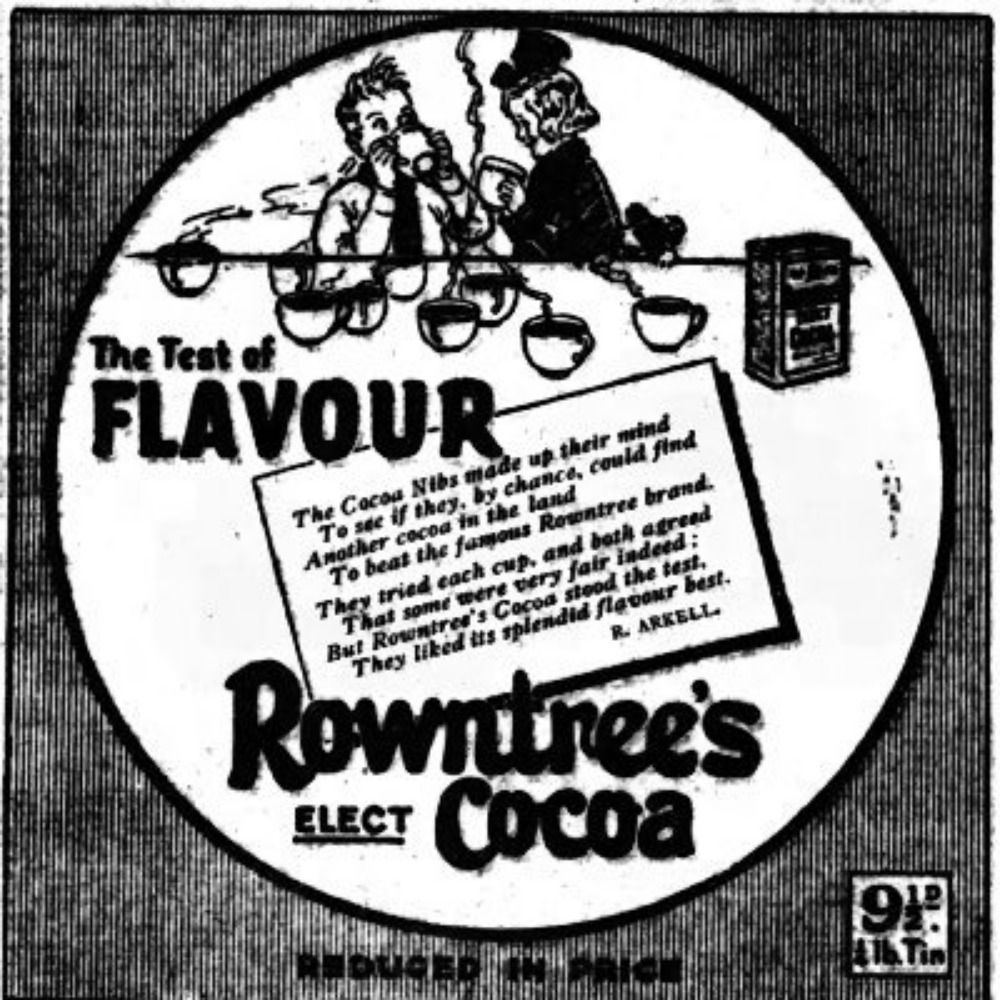
Jan 1932: Bell Fireplace; Bovril; BBC, and Dennison ads
«YOUR
SPRING
FLOWERS
FREE!»
«YOUR
SPRING
FLOWERS
FREE!»

January 9, 2026 at 7:30 PM
Bell Fireplaces. Now a boujee ‘home lifestyle store’ in Kingsthorpe Hollow. You can still buy log burners, gas fires, bbqs and all that caper though.

A bitterly cold start to Sunday. Your current county lows:
Desborough -6°C
Kingsthorpe -6°C
Woodford Halse -5°C
Hunsbury -5°C
Sywell -5°C
Welton -5°C
Ravensthorpe -5°C
Desborough -6°C
Kingsthorpe -6°C
Woodford Halse -5°C
Hunsbury -5°C
Sywell -5°C
Welton -5°C
Ravensthorpe -5°C

January 4, 2026 at 8:46 AM
A bitterly cold start to Sunday. Your current county lows:
Desborough -6°C
Kingsthorpe -6°C
Woodford Halse -5°C
Hunsbury -5°C
Sywell -5°C
Welton -5°C
Ravensthorpe -5°C
Desborough -6°C
Kingsthorpe -6°C
Woodford Halse -5°C
Hunsbury -5°C
Sywell -5°C
Welton -5°C
Ravensthorpe -5°C

Kingsthorpe Surprise Major 🔔
January 2, 2026 at 6:56 AM
Kingsthorpe Surprise Major 🔔
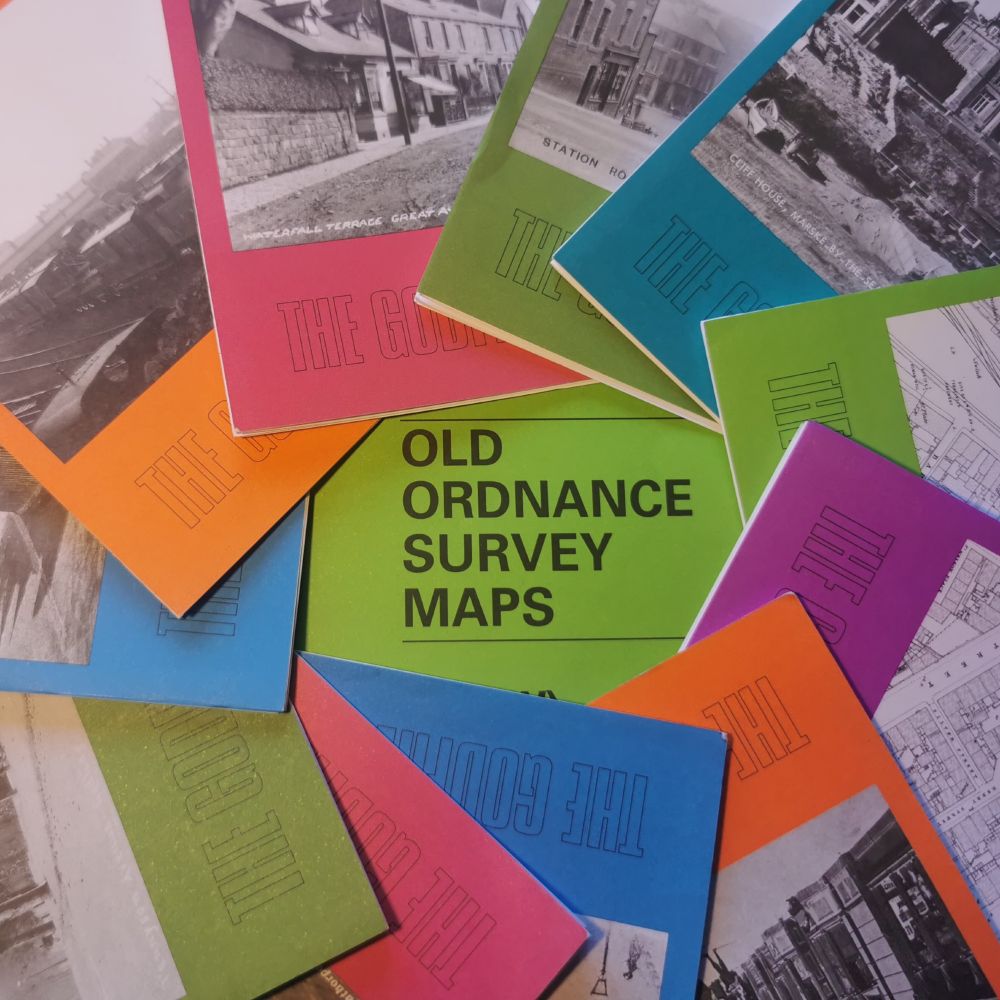
Barrie Trinder takes us to Kingsthorpe 1924 & the one-time heart of the British shoe/leather industry.
Our sample today though focuses on a church dating back almost 1000yrs whose library holds rare examples of many notable books including Foxe’s Book Of Martyrs.
www.alangodfreymaps.co.uk/nn4501.htm
Our sample today though focuses on a church dating back almost 1000yrs whose library holds rare examples of many notable books including Foxe’s Book Of Martyrs.
www.alangodfreymaps.co.uk/nn4501.htm


December 18, 2025 at 7:53 AM
Barrie Trinder takes us to Kingsthorpe 1924 & the one-time heart of the British shoe/leather industry.
Our sample today though focuses on a church dating back almost 1000yrs whose library holds rare examples of many notable books including Foxe’s Book Of Martyrs.
www.alangodfreymaps.co.uk/nn4501.htm
Our sample today though focuses on a church dating back almost 1000yrs whose library holds rare examples of many notable books including Foxe’s Book Of Martyrs.
www.alangodfreymaps.co.uk/nn4501.htm

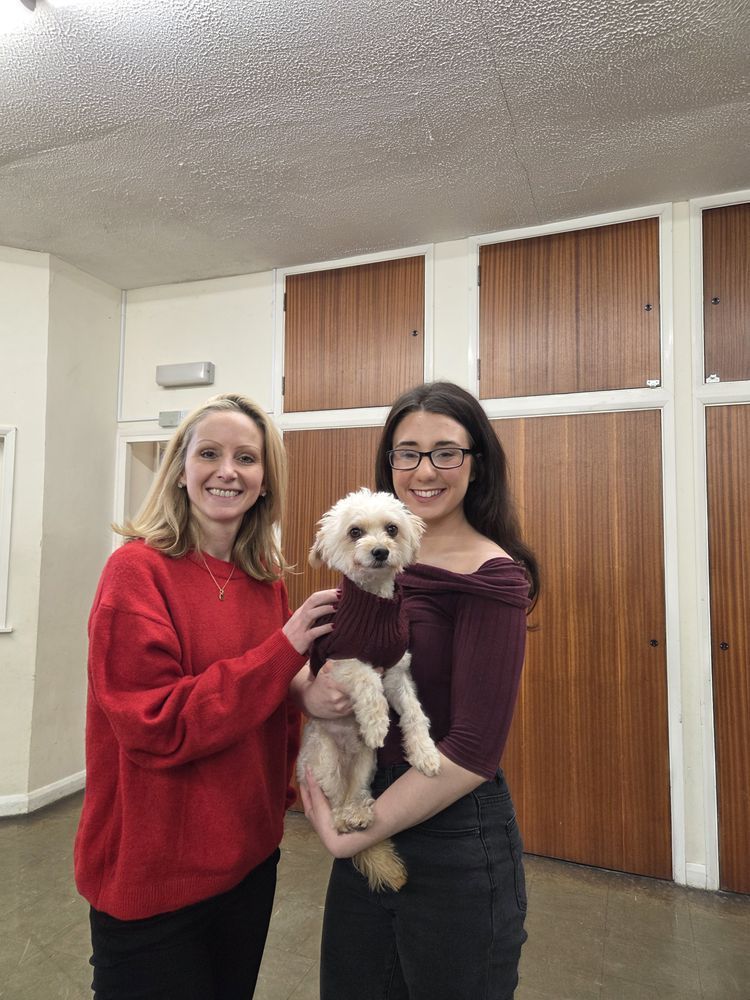
Great coffee morning at St Albans Church. Always good to see our local PCSOs (and special mention to Kingsthorpe resident Teddy 🐶)

December 6, 2025 at 1:49 PM
Great coffee morning at St Albans Church. Always good to see our local PCSOs (and special mention to Kingsthorpe resident Teddy 🐶)

Reflective Christmas – A Quiet Service of Love and Hope
Tomorrow (Sunday) from 3pm at St Mark’s Church, Eastern Ave South, Kingsthorpe NN2 8EG
ℹ️ Service details on the attached poster
Refreshments will be served afterwards
Tomorrow (Sunday) from 3pm at St Mark’s Church, Eastern Ave South, Kingsthorpe NN2 8EG
ℹ️ Service details on the attached poster
Refreshments will be served afterwards

December 6, 2025 at 12:44 PM
Reflective Christmas – A Quiet Service of Love and Hope
Tomorrow (Sunday) from 3pm at St Mark’s Church, Eastern Ave South, Kingsthorpe NN2 8EG
ℹ️ Service details on the attached poster
Refreshments will be served afterwards
Tomorrow (Sunday) from 3pm at St Mark’s Church, Eastern Ave South, Kingsthorpe NN2 8EG
ℹ️ Service details on the attached poster
Refreshments will be served afterwards
Reflective Christmas – A Quiet Service of Love and Hope
Sun 7th Dec from 3pm at St Mark’s Church, Eastern Ave South
Kingsthorpe NN2 8EG
ℹ️ Service details on the attached poster
Refreshments will be served afterwards
Sun 7th Dec from 3pm at St Mark’s Church, Eastern Ave South
Kingsthorpe NN2 8EG
ℹ️ Service details on the attached poster
Refreshments will be served afterwards

December 2, 2025 at 4:05 PM
Reflective Christmas – A Quiet Service of Love and Hope
Sun 7th Dec from 3pm at St Mark’s Church, Eastern Ave South
Kingsthorpe NN2 8EG
ℹ️ Service details on the attached poster
Refreshments will be served afterwards
Sun 7th Dec from 3pm at St Mark’s Church, Eastern Ave South
Kingsthorpe NN2 8EG
ℹ️ Service details on the attached poster
Refreshments will be served afterwards

Joan Hickson: la encarnación de la sagacidad británica
Biografía del artista Breve reseña de su vidaJoan Bogle Hickson nació el 5 de agosto de 1906 en Kingsthorpe, Northamptonshire, Inglaterra. Wikipedia+1 Su madre se llamaba Edith Mary (née Bogle) y su padre Alfred Harold Hickson, fabricante de…
Biografía del artista Breve reseña de su vidaJoan Bogle Hickson nació el 5 de agosto de 1906 en Kingsthorpe, Northamptonshire, Inglaterra. Wikipedia+1 Su madre se llamaba Edith Mary (née Bogle) y su padre Alfred Harold Hickson, fabricante de…

Joan Hickson: la encarnación de la sagacidad británica
Biografía del artista Breve reseña de su vidaJoan Bogle Hickson nació el 5 de agosto de 1906 en Kingsthorpe, Northamptonshire, Inglaterra. Wikipedia+1 Su madre se llamaba Edith Mary (née Bogle) y su padre Alfred Harold Hickson, fabricante de calzado. Wikipedia+1 Después de estudiar actuación en la prestigiosa Royal Academy of Dramatic Art (RADA) en Londres, debutó en el escenario en 1927, iniciando una dilatada carrera teatral antes de hacerse conocida en cine y televisión.
tomamoscafe.hatthieves.es
November 6, 2025 at 3:41 PM
Joan Hickson: la encarnación de la sagacidad británica
Biografía del artista Breve reseña de su vidaJoan Bogle Hickson nació el 5 de agosto de 1906 en Kingsthorpe, Northamptonshire, Inglaterra. Wikipedia+1 Su madre se llamaba Edith Mary (née Bogle) y su padre Alfred Harold Hickson, fabricante de…
Biografía del artista Breve reseña de su vidaJoan Bogle Hickson nació el 5 de agosto de 1906 en Kingsthorpe, Northamptonshire, Inglaterra. Wikipedia+1 Su madre se llamaba Edith Mary (née Bogle) y su padre Alfred Harold Hickson, fabricante de…
Jumble Sale
Tomorrow (Saturday) from 10am-11:30am at Kingsthorpe Community Church (entrance via Waitrose car park)
🎟 Admission 20p
Tomorrow (Saturday) from 10am-11:30am at Kingsthorpe Community Church (entrance via Waitrose car park)
🎟 Admission 20p

October 24, 2025 at 6:28 PM
Jumble Sale
Tomorrow (Saturday) from 10am-11:30am at Kingsthorpe Community Church (entrance via Waitrose car park)
🎟 Admission 20p
Tomorrow (Saturday) from 10am-11:30am at Kingsthorpe Community Church (entrance via Waitrose car park)
🎟 Admission 20p
"The most flamboyant boot & shoe factory in this area is Footshape Works on E side of Kingsthorpe Road. Its …terracotta frontage is capped by lettering declaring the building’s name… advertisements persuaded customers to send in tracings of their feet– hence the factory was called ‘Footshape’.”
2/
2/

October 1, 2025 at 4:58 PM
"The most flamboyant boot & shoe factory in this area is Footshape Works on E side of Kingsthorpe Road. Its …terracotta frontage is capped by lettering declaring the building’s name… advertisements persuaded customers to send in tracings of their feet– hence the factory was called ‘Footshape’.”
2/
2/
I’m holding my next advice surgery in #kingsthorpe next Friday. If you need help or advice, please book an appointment by emailing [email protected].
For details of further surgeries (in person & over the ☎️), sign up to my newsletter 👉 www.lucyrigby.co.uk
For details of further surgeries (in person & over the ☎️), sign up to my newsletter 👉 www.lucyrigby.co.uk

September 26, 2025 at 2:52 PM
I’m holding my next advice surgery in #kingsthorpe next Friday. If you need help or advice, please book an appointment by emailing [email protected].
For details of further surgeries (in person & over the ☎️), sign up to my newsletter 👉 www.lucyrigby.co.uk
For details of further surgeries (in person & over the ☎️), sign up to my newsletter 👉 www.lucyrigby.co.uk
Autumn Open Day at Kingsthorpe Bowling Club
Sun 28th Sept from 11am-3pm
- Try bowls for yourself
- Meet members of the club
All ages welcome
📍 Central Avenue,
Northampton
Sun 28th Sept from 11am-3pm
- Try bowls for yourself
- Meet members of the club
All ages welcome
📍 Central Avenue,
Northampton

September 24, 2025 at 4:32 PM
Autumn Open Day at Kingsthorpe Bowling Club
Sun 28th Sept from 11am-3pm
- Try bowls for yourself
- Meet members of the club
All ages welcome
📍 Central Avenue,
Northampton
Sun 28th Sept from 11am-3pm
- Try bowls for yourself
- Meet members of the club
All ages welcome
📍 Central Avenue,
Northampton
Autumn Open Day at Kingsthorpe Bowling Club
Sun 28th Sept from 11am-3pm
- Try bowls for yourself
- Meet members of the club
All ages welcome
📍 Central Avenue,
Northampton
Sun 28th Sept from 11am-3pm
- Try bowls for yourself
- Meet members of the club
All ages welcome
📍 Central Avenue,
Northampton

September 14, 2025 at 12:33 PM
Autumn Open Day at Kingsthorpe Bowling Club
Sun 28th Sept from 11am-3pm
- Try bowls for yourself
- Meet members of the club
All ages welcome
📍 Central Avenue,
Northampton
Sun 28th Sept from 11am-3pm
- Try bowls for yourself
- Meet members of the club
All ages welcome
📍 Central Avenue,
Northampton
A pleasure to meet with Head of Northgate School, Francesca, & Parent Governor, Richard, to learn more about the school’s offering & the support amongst local parents for the education & opportunities that Northgate provides to their children #Northampton #Kingsthorpe

August 23, 2025 at 3:24 PM
A pleasure to meet with Head of Northgate School, Francesca, & Parent Governor, Richard, to learn more about the school’s offering & the support amongst local parents for the education & opportunities that Northgate provides to their children #Northampton #Kingsthorpe
🍻 Behind the bar at The Olde Cobbler in Kingsthorpe 🍻
Great to chat with owner Louise about the significant social & economic value pubs & hospitality venues bring to our local community.
Great to chat with owner Louise about the significant social & economic value pubs & hospitality venues bring to our local community.

August 23, 2025 at 11:47 AM
🍻 Behind the bar at The Olde Cobbler in Kingsthorpe 🍻
Great to chat with owner Louise about the significant social & economic value pubs & hospitality venues bring to our local community.
Great to chat with owner Louise about the significant social & economic value pubs & hospitality venues bring to our local community.

WHERE DO YOU LIVE SUZANNE? IM IN KINGSTHORPE
August 19, 2025 at 7:19 PM
WHERE DO YOU LIVE SUZANNE? IM IN KINGSTHORPE
Remembered today the late 🇬🇧British stage, film, radio and television actress and narrator #JoanHickson, OBE (5 August 1906 – 17 October 1998) born #OnThisDay in Kingsthorpe, Northampton, England
#filmsky #moviesky
#filmsky #moviesky

August 5, 2025 at 9:41 PM
Remembered today the late 🇬🇧British stage, film, radio and television actress and narrator #JoanHickson, OBE (5 August 1906 – 17 October 1998) born #OnThisDay in Kingsthorpe, Northampton, England
#filmsky #moviesky
#filmsky #moviesky

There was a fantastic cloudburst in Kingsthorpe.
July 20, 2025 at 3:08 PM
There was a fantastic cloudburst in Kingsthorpe.
#drawing 4739 King’s Well, Kingsthorpe #thedailysketch #adrawingaday #artyear
#usknorthampton @usknorthampton.bsky.social @urbansketchers.bsky.social
#usknorthampton @usknorthampton.bsky.social @urbansketchers.bsky.social

July 8, 2025 at 7:50 PM
#drawing 4739 King’s Well, Kingsthorpe #thedailysketch #adrawingaday #artyear
#usknorthampton @usknorthampton.bsky.social @urbansketchers.bsky.social
#usknorthampton @usknorthampton.bsky.social @urbansketchers.bsky.social