John Helmann
johnhelmann.bsky.social
John Helmann
@johnhelmann.bsky.social

Professor at Cornell Univ. Bacillus subtilis physiology and stress responses (metal homeostasis, redox stress, antibiotic resistance & cell envelope). EIC of Mol Microbiol.

Biology 55%
Environmental science 15%

Reposted by John D. Helmann

Reposted by John D. Helmann
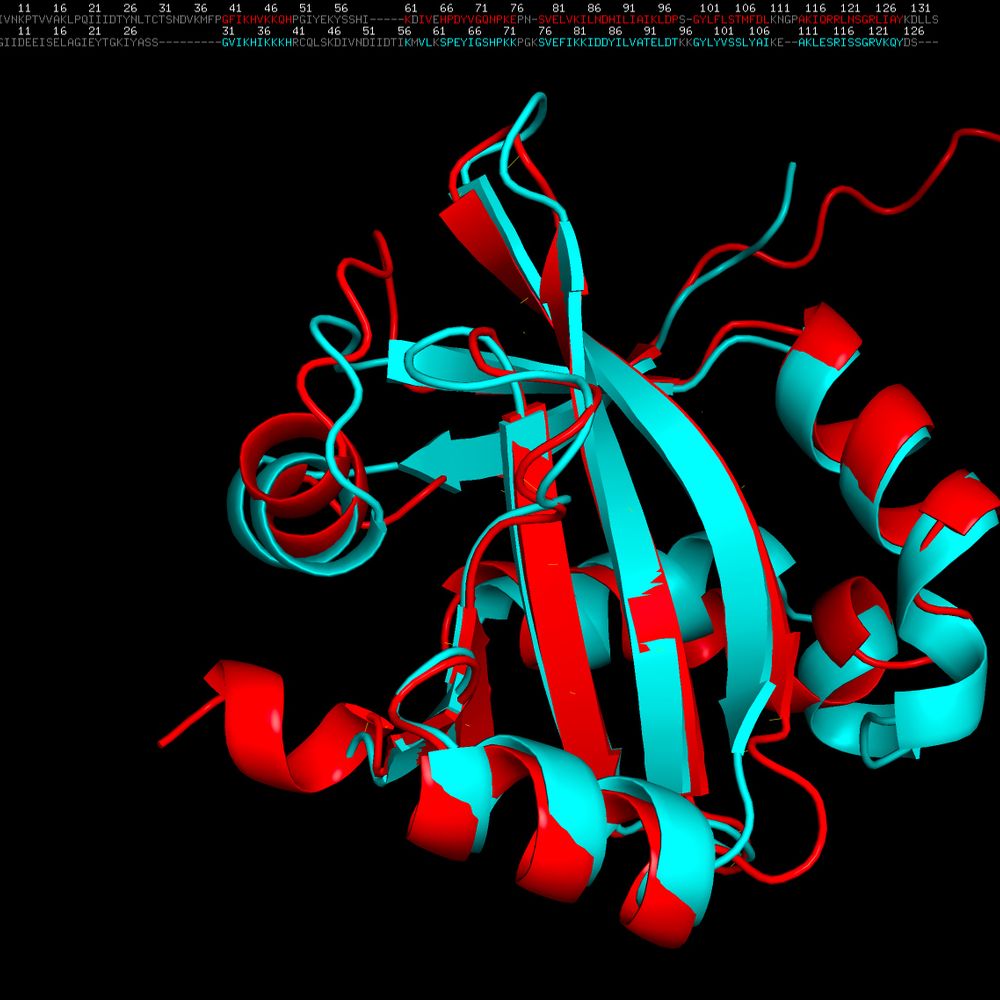
🫴 A mechanotransduction mechanism for antibiotic defense in Gram-positive bacteria (Bacillus subtilis, with some interesting suppressor mutants):

In

Structure www.cell.com/structure/fu...

#subtiWiki #subtilis
A mechanotransduction mechanism for antibiotic defense in Gram-positive bacteria
In this issue of Structure, Yu et al. show that the Bacillus subtilis ytr operon encodes two distinct ABC transporters. The authors present the cryo-EM structures of YtrEF in the apo and ADP-vanadate-...
www.cell.com

Reposted by John D. Helmann

Thrilled to share our latest study, led by @reikatei.bsky.social, in @natchembio.nature.com! We began by asking a simple question—how do cells know if they have too much of a lipid in a particular membrane, and how do they respond to rectify this imbalance?
www.nature.com/articles/s41...
More info 👇
Membrane editing with proximity labeling reveals regulators of lipid homeostasis - Nature Chemical Biology
Coupling an optogenetic lipid-modifying enzyme with proximity labeling reveals protein networks and mechanisms regulating lipid homeostasis in the membranes of target organelles.
www.nature.com

Reposted by John D. Helmann

Registration is open for the 2026 Gordon Research Conference on Microbial Stress Response to be held on July 19-24 2026!! Submit your abstract by February 15th to be considered for a short talk. Apply now before it fills up!! Hope to see you there!! www.grc.org/microbial-st...
2026 Microbial Stress Response Conference GRC
The 2026 Gordon Research Conference on Microbial Stress Response will be held in South Hadley, Massachusetts. Apply today to reserve your spot.
www.grc.org

Reposted by John D. Helmann

🧪HAPPY 2026 EVERYONE!!!! 🥂🍾🥳

When you enjoy your bubbly this evening, do spare a thought about carbonic anhydrase - it's an amazing enzyme (almost as fast as 2025 felt! 😜), and it turns out, it's also responsible for tasting CO2's "fizziness"!!! 🍾

www.science.org/doi/10.1126/...
The Taste of Carbonation
The enzyme carbonic anhydrase mediates the taste sensation of carbonated drinks.
www.science.org

Reposted by John D. Helmann

This work was also our first time doing membrane localization (way to go Cassidy)! And so proud of Bella’s gorgeous Paenibacillus tree showing the distribution of the transmembrane containing Spo0B! Also it’s the lab’s first paper without ribosomes 🫨, but don’t worry - the ribosomes made the Spo0B!

Reposted by John D. Helmann

Interesting new paper on Enterococcus lactis (the species formerly known as Clade B E. faecium)

'The Mannose Phosphotransferase System in Enterococcus lactis Is Essential for Gastrointestinal Colonization'

onlinelibrary.wiley.com/doi/abs/10.1...
The Mannose Phosphotransferase System in Enterococcus lactis Is Essential for Gastrointestinal Colonization
Enterococcus lactis, a recently established species that was previously classified as Enterococcus faecium clade B. Given its recent taxonomic classification, studies on this bacterium are scarce, an...
onlinelibrary.wiley.com

Reposted by John D. Helmann

Our recent paper in npj Antimicrobials and Resistance is a great example of scientific serendipity: after staring at thousands of bacterial growth curves over many studies, we started wondering whether the curve shapes themselves carry mechanistic information 1/9 🦠🧪
www.nature.com/articles/s44...
Predicting drug inactivation by changes in bacterial growth dynamics - npj Antimicrobials and Resistance
npj Antimicrobials and Resistance - Predicting drug inactivation by changes in bacterial growth dynamics
www.nature.com

Reposted by John D. Helmann

We’re excited to share our latest study that reshapes our understanding of Mycobacterium tuberculosis (Mtb) lipid composition, with major implications for drug discovery, immunity, and vaccine development.

www.nature.com/articles/s41...

A thread.
Mycobacterium tuberculosis overcomes phosphate starvation by extensively remodelling its lipidome with phosphorus-free lipids - Nature Communications
Here, the authors show that Mycobacterium tuberculosis manipulates lipid metabolism to overcome host restriction, by remodelling its lipidome and utilising host lipids as an alternative phosphate sour...
www.nature.com

Reposted by John D. Helmann

The FsrA-Mediated Iron-Sparing Response Regulates the Biosynthesis of the Epipeptide EPE in Bacillus subtilis

#MolMicrobiol by Sarah Miercke, Rabea Ghandour, Kai Papenfort and Thorsten Mascher

onlinelibrary.wiley.com/doi/10.1111/...
The FsrA‐Mediated Iron‐Sparing Response Regulates the Biosynthesis of the Epipeptide EPE in Bacillus subtilis
Under iron-limited conditions, FsrA base-pairs with the intergenic region between epeX and epeE, enhancing epeE translation and triggering EPE production. Toxin-mediated cell lysis releases nutrients....
onlinelibrary.wiley.com

Reposted by John D. Helmann

Reposted by John D. Helmann

Contribution of the Bacillus subtilis ytrGABCDEF operon to antibiotic stress adaptation

Microbiology Spectrum from from Michaela Wenzel at Chalmer University of Technology, Gothenburg

journals.asm.org/doi/10.1128/...
Contribution of the Bacillus subtilis ytrGABCDEF operon to antibiotic stress adaptation | Microbiology Spectrum
The Bacillus subtilis ytrGABCDEF operon is a reliable and specific marker for the inhibition of cell wall biosynthesis by antibiotics. It has therefore advanced as a common reporter in transcriptomic,...
journals.asm.org

Reposted by John D. Helmann

journals.asm.org/doi/10.1128/...

We have a new paper out, led by my PhD student Linda! Ni and Cu are common co-occurring contaminants. They are also synergistic in their toxicity. We examined the mechanisms of this synergism, finding that sulfur assimilation and Fe-S cluster biogenesis are targets.
The molecular basis of the synergistic toxicity of nickel and copper, common environmental co-contaminants | Applied and Environmental Microbiology
Many environments are contaminated by metals. These metals are toxic to the microorganisms that inhabit these environments and carry out important ecosystem services. While much is known about bacteri...
journals.asm.org

Reposted by John D. Helmann

Cool new paper on the structure and possible function of the type VII ABC transporter YtrEF in cell wall remodeling in Bacillus subtilis!
#SubtiWiki

www.sciencedirect.com/science/arti...
Structural analysis of a Gram-positive type VII ABC transporter induced by cell wall-targeting antibiotics
Bacteria utilize a variety of mechanisms to remodel the cell wall in response to environmental and antimicrobial stress. In the model organism Bacillu…
www.sciencedirect.com

For those interested in further reading, the studies establishing the triplet nature of the genetic code were also reviewed by both Benzer and Crick in two 1962 Scientific American articles -- both worth a read!
www.jstor.org/stable/24937...
www.jstor.org/stable/24936...
The Fine Structure of the Gene on JSTOR
Seymour Benzer, The Fine Structure of the Gene, Scientific American, Vol. 206, No. 1 (January 1962), pp. 70-87
www.jstor.org

Reposted by John D. Helmann

See our @natmicrobiol.nature.com News&Views on the publication from Yun Chen laboratory

A rapid writing exercise for María Negre Rodríguez, a PhD student in my group

Ecological function of phenazine in soil
www.nature.com/articles/s41...

#MicrobiomeEcology at #LeidenBiology

Reposted by John D. Helmann

🚨 New Preprint Alert 🚨

Our latest work, A Zur-dependent regulatory RNA involved in maintaining zinc homeostasis in Staphylococcus aureus, is now live on bioRxiv! 🧬🦠📄

Check it out here: www.biorxiv.org/content/10.1...

Reposted by John D. Helmann

A new methods paper from us, this time with a focus on reliable monitoring membrane potential and cell lysis at different growth stages and cell densities. Also, note the surprisingly high level of background lysis in seemingly healthy B. subtilis cultures.
www.biorxiv.org/content/10.1...
Monitoring single cell bioenergetic status and cell lysis in dense and differentiating Bacillus subtilis cultures
Bacillus subtilis is a major model organism for studying population heterogeneity in clonal bacterial cultures due to its high genetic tractability and ability to differentiate into subpopulations wit...
www.biorxiv.org

Reposted by John D. Helmann

RagB stimulates the activity of the peptidoglycan polymerase RodA in Bacillus subtilis

[RagB = YrrS]

@emboreports.org by Frédérique Pompeo et al

www.embopress.org/doi/full/10....
RagB stimulates the activity of the peptidoglycan polymerase RodA in Bacillus subtilis | EMBO reports
imageimageRagB regulates the SEDS protein RodA in Bacillus subtilis, by interacting with RodA and by stimulating its activity. This regulation is essential for cell wall synthesis, especially when Cla...
www.embopress.org

Reposted by John D. Helmann

A ptsH mutation (encoding the HPr-G54D variant) suppresses growth defects and antibiotic sensitivity in a Bacillus subtilis cpgA mutant defective in metabolite proofreading!

Where? In Journal of Bacteriology!

🫳 journals.asm.org/doi/10.1128/...

#subtiwiki #subtilis #CCR
A ptsH mutation suppresses growth defects and antibiotic sensitivity in a cpgA mutant defective in metabolite proofreading | Journal of Bacteriology
Metabolism relies on the concerted action of hundreds of enzymes, many of which have some activity with non-canonical substrates. The resulting reactions constitute an often-ignored underground metabolism. Glyceraldehyde-3-phosphate dehydrogenase ...
journals.asm.org

Reposted by John D. Helmann

Elio Schaechter was one of my heroes. His 1958 paper with Ole Maaløe and Niels Kjeldgaard (fondly known as “SMK”) is a North Star for so much work in my group. A wonderful scientist, great communicator, and a very kind person. May his memory be a blessing.

Reposted by John D. Helmann

This first-author publication is my… first! Archaea kill bacteria by targeting their Achilles’ heel: peptidoglycan. Big shoutout to @ahocher.bsky.social‬, @valeriesoo.bsky.social‬, Pauline Misson, @tobiaswarnecke.bsky.social‬ and MRC LMS Proteomics. A thread 🔽
journals.plos.org/plosbiology/...
Archaea produce peptidoglycan hydrolases that kill bacteria
Archaea regularly interact with bacteria but reports of archaea killing bacteria are very rare. This study shows that many archaea encode peptidoglycan hydrolases, which specifically target bacterial ...
journals.plos.org

This paper was led by Dr. Ankita Sachla with contributions from current sr. res. assoc. Ahmed Gaballa and former undergraduate student Diana Herrera (Cornell '19; yes.... this took a while).

The B. subtilis histidine-containing phosphocarrier protein (HPr) supports PTS-sugar import, interacts with GAPDH, and helps mediate carbon catabolite repression (CCR). Here, a mutant HPr protein is shown to alleviate metabolic intoxication in a cpgA mutant.
journals.asm.org/doi/10.1128/...

Reposted by John D. Helmann

Thanks Christoph!

Thanks Peter!

Thanks Betül! I hope your students find this helpful.

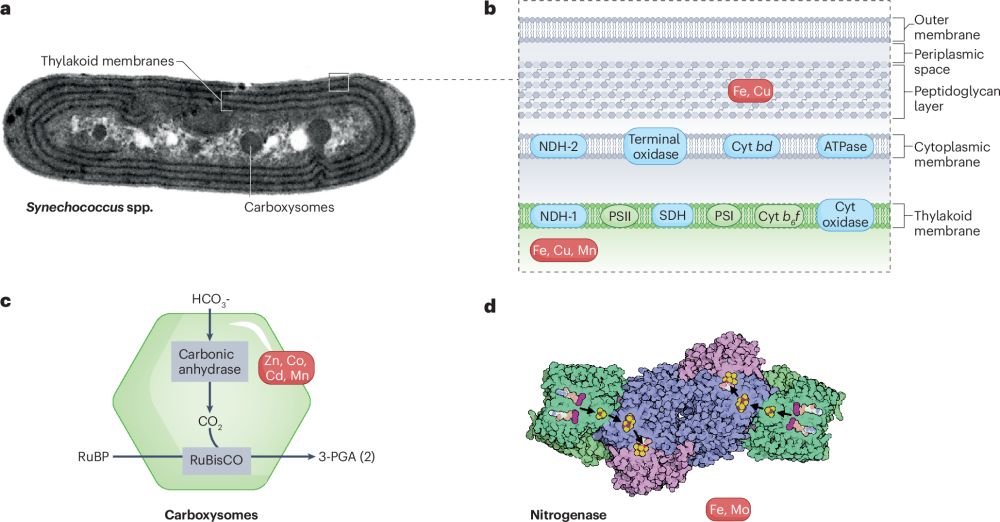
Metal ions are universally required for life, and many of the foundational principles of metal homeostasis have emerged from studies of microbial systems. In this review, I provide a introductory overview targeted to those new to the field.
#MicroSky #Metals

rdcu.be/eycU2
Microbial metal physiology: ions to ecosystems
Nature Reviews Microbiology - Metal ions are required for all cells, and their homeostasis relies on ancient mechanisms that facilitate their import, distribution and storage. In this Review,...
rdcu.be

Reposted by John D. Helmann

Our review on bacterial metallostasis is now online in Chemical Reviews! This collaboration by the Giedroc (@betainverse.bsky.social and @jsrocchio.bsky.social) and Capdevila labs delves into bacterial metal regulation. 🦠 #Microbiology #ChemicalReviews #BacterialMetallostasis doi.org/10.1021/acs....