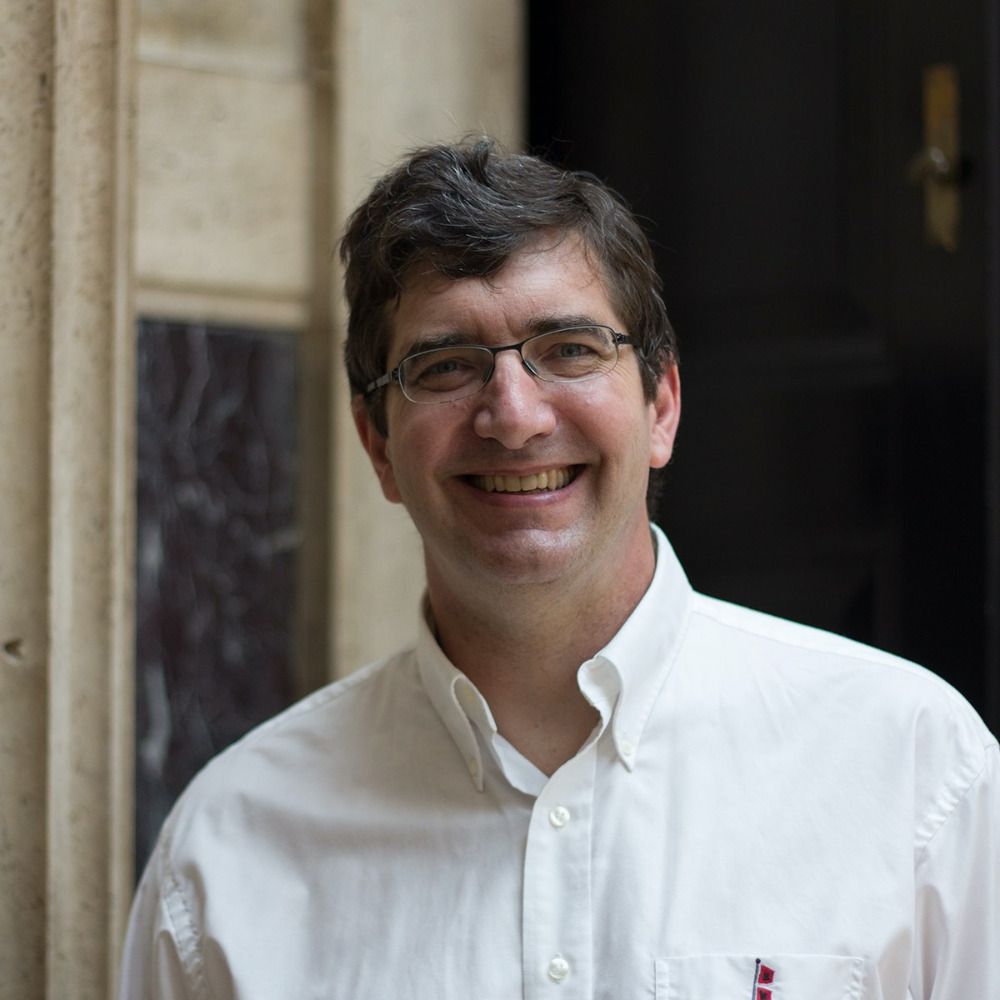
Scott Doney
banner
scottdoney.bsky.social
Scott Doney
@scottdoney.bsky.social

Ocean and climate scientist and professor

Scott Doney is a marine scientist at the University of Virginia known for his work on biogeochemical modeling. Doney is the Joe D. and Helen J. Kington Professor in Environmental Change, a fellow of the American Geophysical Union, the American Association for the Advancement of Science., and the Association for the Sciences of Limnology and Oceanography. He served from 2022 to 2024 as the Assistant Director for Ocean Climate Science and Policy in the White House Office of Science and Technology Policy. .. more

Environmental science 47%
Geology 24%

I'm pretty sure I was invited to Bluesky by @lizneeley.bsky.social (Thanks Liz)

Reposted by Scott C. Doney

πŸ§ͺπŸ“πŸŒŠ πŸ¦‘πŸŽ Paid internship @montereybayaquarium.org in the water quality lab - great people and great opportunity - www.linkedin.com/jobs/view/43...
Monterey Bay Aquarium hiring Applied Water Science Internship in Monterey, CA | LinkedIn
Posted 10:13:06 PM. At the Monterey Bay Aquarium, we are passionate about creating an inclusive workplace that…See this and similar jobs on LinkedIn.
www.linkedin.com

🌊 welcome to Bluesky
Hi, folks! I'm new to BlueSky. I'm a polar oceanographer looking at the drivers of primary production in the Southern Ocean.

Reposted by Scott C. Doney

We’re launching a new public engagement series. The Nature Record is a national assessment of the state of nature in the U.S.β€”our lands, waters, wildlife, and the benefits they provide. Join the conversation and register: open.substack.com/pub/naturere...
A New Public Engagement Series to Shape Nature Together
Join the conversation
open.substack.com
U.S. withdrawal from international climate bodies sidelines scientists when climate impacts are accelerating.

AGU remains engaged at UNFCCC COP, supports U.S. scientists in the next #IPCC assessment, & urges Congress to protect science funding.

Science belongs at the table.

More: buff.ly/sYY3rVB
Eos @eos.org Β· 2d
The ocean keeps getting hotter: In 2025, it absorbed 23 zettajoules (that’s 23 * 10Β²ΒΉ joules) of heat, breaking a record for the ninth consecutive year. πŸ§ͺ🌎🌊 eos.org/research-and...
In 2025, the Ocean Stored a Record-Breaking Amount of Heat, Again - Eos
The ocean soaked up more heat last year than any year since modern measurements began around 1960, according to a new analysis published in Advances in Atmospheric Science.
eos.org

Reposted by Scott C. Doney

Hi, folks! I'm new to BlueSky. I'm a polar oceanographer looking at the drivers of primary production in the Southern Ocean.
Art x Climate is an integral part of the Fifth National Climate Assessment (NCA5), restored by Climate.us.
One of the featured artworks is β€œDrift Ice” by Deborah Pressman. Year and Medium: 2020, ink, oil sticks on paper
"Ocean Heat Content Sets Another Record in 2025" | Our (Yuying Pan et al) new article in Advances in Atmospheric Science: link.springer.com/article/10.1...
* JOB ALERT* Join our team at @brown-ibes.bsky.social as Program Manager for a cross-campus research initiative "Equitable Climate Futures". ecf.brown.edu Apply by 1/15 for full consideration. brown.wd5.myworkdayjobs.com/staff-career...
Equitable Climate Futures | Brown University
Equitable Climate Futures is an initiative that will build Brown’s capacity for climate research, with a strong focus on under-resourced and historically marginalized groups.
ecf.brown.edu

Reposted by Scott C. Doney

Eos @eos.org Β· 3d
The White House has finalized a plan to roll back regulations outlined by one of the United States' bedrock environmental laws.

eos.org/research-and...
Plan to End NEPA’s β€œRegulatory Reign of Terror” Is Finalized - Eos
The Trump administration has finalized a plan to roll back regulations outlined by one of our nation’s bedrock environmental laws.
eos.org

Reposted by Scott C. Doney

Would you like to lead one of the world's premier marine and Antarctic institutes? The IMAS Executive Director role is now advertised careers.utas.edu.au/ci/en/job/50...
Current Vacancies
careers.utas.edu.au

Diurnal signal in XCO2 for the Park Falls (a) TCCON and (b) spatially co‐located OCO‐3 versus hourly bin shown in local time. While diurnal cycle is clear with wealth of ground-based TCCON data, satellite OCO-3 data are not yet sufficiently dense to quantify the climatological diurnal cycle

Summary of how N-required to define diurnal cycle varies with diurnal signal across TCCON sites for the diurnal rate of change, plotted as a function of the calculated monthly diurnal change. Observations are plotted in cool colors, and Carbon Tracker model CT2022 data are plotted in warm colors.

a) Diurnal changes in XCO2 calculated from the Park Falls TCCON across all calendar months and (b) the corresponding number of observations per hour required to detect a diurnal rate of change that excludes 0 ppm/hr within two standard deviations of the mean.

Ground-based data show that at least 10 independent observations per hour per month are required to robustly quantify the diurnal cycle. Figure shows standard deviation of bootstrapped diurnal drawdown at Park Falls for two representative months as a function of available number of samples N

Example of diurnal cycle calculation for the month of June at Park Falls from ground-based TCCON data. The diurnal cycle in total column carbon dioxide (XCO2) due to biological CO2 uptake during the day is less than 1 ppm even during the peak growing season

Annual cycle of column XCO2 detrended anomalies at Park Falls, WI. Speard of TCCON data (purple) on any given
day arises from interannual variability, synoptic variability, and diurnal fluxes. OCO‐3 XCO2 data (orange) coincident with Park Falls between 2019 and 2025 are
overlain on the TCCON data.

Observational Requirements for Quantifying the Diurnal Cycle of XCO2 From Space
Keppel-Aleks et al. JGR Atmosphere

Orbiting Carbon Observatory-3 (OCO-3) data are not yet sufficiently dense to quantify climatological diurnal cycle in column CO2

agupubs.onlinelibrary.wiley.com/doi/10.1029/...

Reposted by Scott C. Doney

πŸ§ͺNew preprint! tinyurl.com/mr7km2pv

When & why do predators share social information? Blue whales produce foraging calls when prey (krill) are abundant & dense, conditions arising from physical oceanographic forcing across temporal scales. Variation in ocean physics shapes blue whale communication!
Biophysical ecosystem variation shapes oceanic predator communication
ecoevorxiv.org
Nominations for @agu.org AGU awards are now being accepted!

Please nominate a deserving colleague. Many qualified people do not win awards because no one nominates them. Also, for many AGU awards, you can self-nominate.

www.agu.org/honors

Reposted by Scott C. Doney
Jelle Bijma and colleagues demonstrate that for monitoring, reporting, and verification (MRV) of enhanced rock weathering, the commonly used carbon-based accounting is ill-suited to close the balance in open systems such as arable land, and argue for a cation-based accounting strategy. πŸ§ͺ
Reviews and syntheses: Carbon vs. cation based MRV of Enhanced Rock Weathering and the issue of soil organic carbon
Abstract. We discuss the β€œmonitoring, reporting and verification” (MRV) strategy of Enhanced Weathering (EW) based on carbon accounting and argue that in open systems such as arable land, this approac...
bg.copernicus.org

Reposted by Scott C. Doney

Trump keeps eyeing Greenland’s oil and minerals.

A geoscientist explains why melting ice, unstable fjords and climate-driven hazards make mining and drilling there extraordinarily risky, expensive and potentially deadly ⬇️
Greenland’s melting ice and landslide-prone fjords make the oil and minerals Trump is eyeing dangerous to extract
Melting ice, thawing permafrost and crumbling fjord walls are just a few of the risks climate change poses for those living and working in Greenland.
buff.ly

Reposted by Scott C. Doney

In less than two weeks, on 17th January, the High Seas Treaty will enter into force 🌊

This landmark agreement is an essential building block for us to regenerate ocean health by 2030.

πŸ“š Read more: https://ow.ly/na6h50XNgWV

πŸ“Έ: Β©Cristina Mittermeier
Community college, junior college & city college faculty, are you interested in going to sea for eight days on an Alaska-to-Bay Area route with STEMSEAS? Join me! stemseas.org/2026-2yc-fac...
We have an informational webinar this Friday afternoon. βš’οΈπŸŒŠ
2026 2YC Faculty Expedition
stemseas.org
New course to be taught this summer at Bamfield Marine Science Center by Andrew Hendry and collaborators (e.g., me), on rapid evolution in the anthropocene:
bamfieldmsc.com/education/pr...
with a focus on both marine & freshwater stickleback, intertidal organisms, & more
Rapid Evolution in the Anthropocene | Bamfield Marine Sciences Centre
bamfieldmsc.com
For any Titanic nerds out there, my colleagues in the UCL Marine safety group have just published an astonishingly detailed analysis and supercomputer simulation of how Titanic sank, linked to witness statements & the best available evidence. Full paper here:
www.tandfonline.com/doi/epdf/10....
🚨 Job Alert! TT Assistant Professor of Marine Biology at the University of Alaska Fairbanks! Looking for a candidate with a focus on coastal ecology. Come be my colleague! Please share.

careers.alaska.edu/jobs/assista...

Reposted by Scott C. Doney
New faculty hire is supported by the Alaska #EPSCoR Interface of Change project. The hiring team is hoping that this person will have research focus on nearshore/coastal communities and a large presence-role in our Scientific Diving program. @uafairbanks.bsky.social πŸ§ͺπŸŒŠπŸ¦‘

youtu.be/1BnykoAPeeY?...
Interface of Change Project Overview
YouTube video by Alaska EPSCoR
youtu.be
I'm looking for postdoc positions in freshwater biogeochemistry! Interested in any projects investigating nutrient and carbon cycling, phytoplankton coupling with dissolved organic matter cycling in human-altered landscapes, or hydrology and spatial modeling!