



Jerome Beetz
@beetzjerome.bsky.social
Neuroethologist studying spatial navigation in diverse species 🐝🦇🦋. Currently, launching my group to study spatial memory in 🐝.
https://www.spatial-navigation.com/
https://www.spatial-navigation.com/
Pinned
Jerome Beetz
@beetzjerome.bsky.social
· Mar 24
Beetz Lab
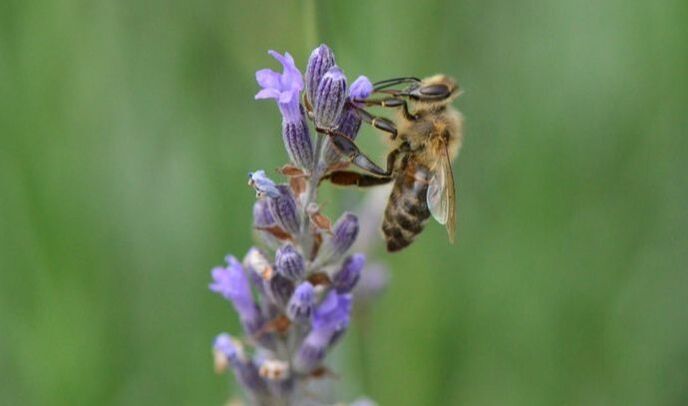
Our group studies the neural mechanisms underlying spatial memory in insects. As central place foragers, honeybees begin their foraging trip at a fixed location, i.e., their nest. This site fidelity.....
www.spatial-navigation.com
Let me introduce our new lab homepage.
www.spatial-navigation.com
We are looking for PhD students and one Postdoc that can start in November 2025.
Contact me if you are in to studying spatial memory of honeybees. @uni-wuerzburg.de
@neuroethology.org
www.spatial-navigation.com
We are looking for PhD students and one Postdoc that can start in November 2025.
Contact me if you are in to studying spatial memory of honeybees. @uni-wuerzburg.de
@neuroethology.org
Reposted by Jerome Beetz

Can also recommend, and there was a nice chapter-by-chapter reading club of it with Georg and lots of other great speakers - videos still up here:
sites.google.com/view/bbtread...
sites.google.com/view/bbtread...
January 17, 2026 at 12:04 PM
Can also recommend, and there was a nice chapter-by-chapter reading club of it with Georg and lots of other great speakers - videos still up here:
sites.google.com/view/bbtread...
sites.google.com/view/bbtread...
Reposted by Jerome Beetz
So cool to see this one out! Congrats @markbrandonlab.bsky.social and the gang!!!!


January 15, 2026 at 1:53 PM
So cool to see this one out! Congrats @markbrandonlab.bsky.social and the gang!!!!
A new study from the Yovel lab @elife.bsky.social reveals that acoustic signals emitted by plants affect the moths oviposition decision. An effect gone in deafened moths. "We reveal evidence for a first acoustic interaction between moths and plants, [...]".
elifesciences.org/articles/104...
elifesciences.org/articles/104...

Female moths incorporate plant acoustic emissions into their oviposition decision-making process
Acoustic ecology introduces an additional dimension in plant-insect communication, revealing that female moths use ultrasonic emissions from dehydrated plants to guide oviposition decisions.
elifesciences.org
January 9, 2026 at 9:37 AM
A new study from the Yovel lab @elife.bsky.social reveals that acoustic signals emitted by plants affect the moths oviposition decision. An effect gone in deafened moths. "We reveal evidence for a first acoustic interaction between moths and plants, [...]".
elifesciences.org/articles/104...
elifesciences.org/articles/104...
Reposted by Jerome Beetz

1/6: New publication from the lab: “Plastic landmark anchoring in zebrafish compass neurons” by Ryosuke Tanaka (@ryosuketanaka.bsky.social) and Ruben is available here:
rdcu.be/eX1L4
rdcu.be/eX1L4

Plastic landmark anchoring in zebrafish compass neurons
Nature - Using two-photon microscopy with a panoramic virtual reality setup, how head direction cells in larval zebrafish integrate visual landmarks and optic flow to track orientation is revealed.
rdcu.be
January 7, 2026 at 8:53 PM
1/6: New publication from the lab: “Plastic landmark anchoring in zebrafish compass neurons” by Ryosuke Tanaka (@ryosuketanaka.bsky.social) and Ruben is available here:
rdcu.be/eX1L4
rdcu.be/eX1L4
Reposted by Jerome Beetz

The sleep patterns of jellyfish and sea anemones share similarities with those of humans, according to research published in Nature Communications. The findings support the hypothesis that sleep evolved across a range of species to protect against DNA damage.🧪

DNA damage modulates sleep drive in basal cnidarians with divergent chronotypes - Nature Communications
Here, the authors use the diurnal upside-down jellyfish and the crepuscular starlet sea anemone as simple nerve net models to examine the potential evolutionary origins of sleep. They describe and define sleep patterns in these species, finding that sleep deprivation increases neuronal DNA damage and that sleep facilitates genome stability.
go.nature.com
January 7, 2026 at 3:04 PM
The sleep patterns of jellyfish and sea anemones share similarities with those of humans, according to research published in Nature Communications. The findings support the hypothesis that sleep evolved across a range of species to protect against DNA damage.🧪
Reposted by Jerome Beetz

On this day in 1930, WHOI was founded, on recommendation of the National Academy of Sciences, "to consider the share of the United States of America in a world-wide program of Oceanographic Research.”
🎉Here's to 96 years of exploration, innovation, and education for our ocean planet!
🎉Here's to 96 years of exploration, innovation, and education for our ocean planet!


January 6, 2026 at 6:59 PM
On this day in 1930, WHOI was founded, on recommendation of the National Academy of Sciences, "to consider the share of the United States of America in a world-wide program of Oceanographic Research.”
🎉Here's to 96 years of exploration, innovation, and education for our ocean planet!
🎉Here's to 96 years of exploration, innovation, and education for our ocean planet!
Reposted by Jerome Beetz

Less than two weeks left to apply for the Cephalopod Neuroscience Gordon Conference! An exciting lineup of speakers and posters, and financial aid is available upon request. 🐙🦑
www.grc.org/cephalopod-n...
www.grc.org/cephalopod-n...

January 6, 2026 at 4:41 PM
Less than two weeks left to apply for the Cephalopod Neuroscience Gordon Conference! An exciting lineup of speakers and posters, and financial aid is available upon request. 🐙🦑
www.grc.org/cephalopod-n...
www.grc.org/cephalopod-n...
Reposted by Jerome Beetz
1/n: A new collaborative preprint from the lab to start the year: "A multi-ring shifter network computes head direction in zebrafish" together with Siyuan Mei, Martin Stemmler and Andreas Herz from the LMU, Munich.

January 2, 2026 at 5:52 PM
1/n: A new collaborative preprint from the lab to start the year: "A multi-ring shifter network computes head direction in zebrafish" together with Siyuan Mei, Martin Stemmler and Andreas Herz from the LMU, Munich.
Reposted by Jerome Beetz
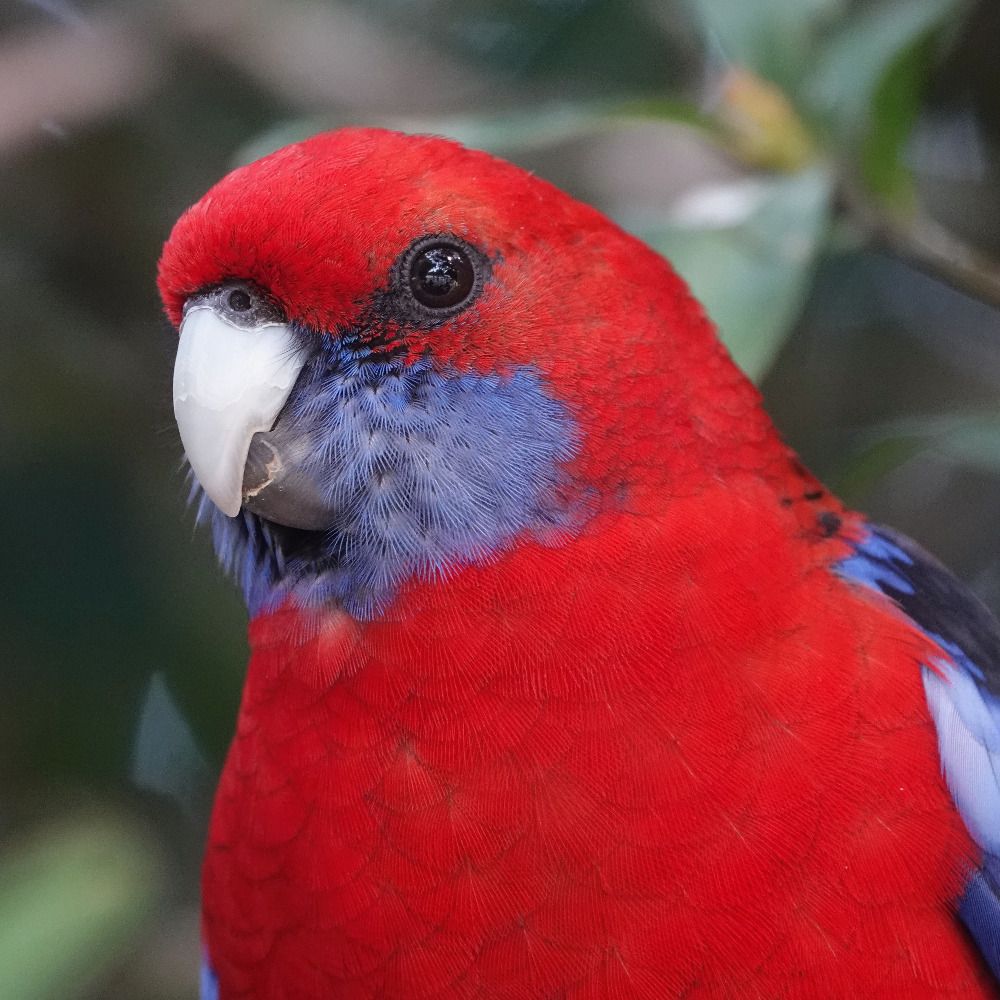
A reminder to anyone interested in #brains #birds or behaviour, our new book is available for FREE as an ebook in addition to print copies.
#neuroethology #neuroskyence #ornithology 🧪🧠🪶
direct.mit.edu/books/oa-mon...
#neuroethology #neuroskyence #ornithology 🧪🧠🪶
direct.mit.edu/books/oa-mon...

Bird Brains and Behavior: A Synthesis
From two avian neurobiologists, a captivating deep dive into the mechanisms that control avian behavior.The last few decades have produced extensive resear
direct.mit.edu
November 20, 2025 at 11:58 AM
A reminder to anyone interested in #brains #birds or behaviour, our new book is available for FREE as an ebook in addition to print copies.
#neuroethology #neuroskyence #ornithology 🧪🧠🪶
direct.mit.edu/books/oa-mon...
#neuroethology #neuroskyence #ornithology 🧪🧠🪶
direct.mit.edu/books/oa-mon...
Reposted by Jerome Beetz

What looked like a hearing organ on a tiny stinkbug’s leg turned out to be something far stranger: a fungal nursery that mother bugs use to coat their newly laid eggs in protective symbiotic hyphae, shielding their offspring from parasitic wasps, a Science study finds. https://scim.ag/3MXQ4bt

Defensive fungal symbiosis on insect hindlegs
Dinidorid stinkbugs were reported to possess a conspicuous tympanal organ on female hindlegs. In this study, we show that this organ is specialized to retain microbial symbionts rather than to perceiv...
scim.ag
December 31, 2025 at 8:15 PM
What looked like a hearing organ on a tiny stinkbug’s leg turned out to be something far stranger: a fungal nursery that mother bugs use to coat their newly laid eggs in protective symbiotic hyphae, shielding their offspring from parasitic wasps, a Science study finds. https://scim.ag/3MXQ4bt
Reposted by Jerome Beetz

Naked-mole rats are specialized to a subterranean lifestlye. Besides of having an extraordinary sense of touch, they show an eusocial lifestlye. The neural underpinnings can now be studied as @malkemper-lab.bsky.social managed to record from freely moving mole-rats.
www.biorxiv.org/content/10.6...
www.biorxiv.org/content/10.6...

Neuronal recordings in head-fixed and freely-moving mole-rats
Mole-rats are subterranean rodents that have evolved remarkable sensory adaptations to life in underground tunnel systems, yet their neural mechanisms remain largely unexplored. Here, we present a pro...
www.biorxiv.org
January 2, 2026 at 10:48 AM
Naked-mole rats are specialized to a subterranean lifestlye. Besides of having an extraordinary sense of touch, they show an eusocial lifestlye. The neural underpinnings can now be studied as @malkemper-lab.bsky.social managed to record from freely moving mole-rats.
www.biorxiv.org/content/10.6...
www.biorxiv.org/content/10.6...
I am very excited to host a symposium about the evolution of sleep 💤 and its underlying neural principles. We will have speakers covering a wide range of organisms from honeybees, cavefish, lizards, birds, to rodents.
More infos about the scientific program: icn2026vancouver.com/symposia/
Symposia – ICN 2026
Susanne Babl & Luciana López-Jury
icn2026vancouver.com
January 2, 2026 at 10:52 AM
I am very excited to host a symposium about the evolution of sleep 💤 and its underlying neural principles. We will have speakers covering a wide range of organisms from honeybees, cavefish, lizards, birds, to rodents.
Reposted by Jerome Beetz

Have you ever wondered what you would find if you could keep your eyes on a bee for more than a few meters? Us, too!
preprint (with videos!) + thread 🧵
Precise, individualized foraging flights in honey #bees 🐝 revealed by multicopter drone-based tracking
www.biorxiv.org/content/10.6...
1/9
preprint (with videos!) + thread 🧵
Precise, individualized foraging flights in honey #bees 🐝 revealed by multicopter drone-based tracking
www.biorxiv.org/content/10.6...
1/9
December 6, 2025 at 2:01 PM
Have you ever wondered what you would find if you could keep your eyes on a bee for more than a few meters? Us, too!
preprint (with videos!) + thread 🧵
Precise, individualized foraging flights in honey #bees 🐝 revealed by multicopter drone-based tracking
www.biorxiv.org/content/10.6...
1/9
preprint (with videos!) + thread 🧵
Precise, individualized foraging flights in honey #bees 🐝 revealed by multicopter drone-based tracking
www.biorxiv.org/content/10.6...
1/9
Reposted by Jerome Beetz

🚨RA/PhD position available in evolutionary neurobiology 🚨
Working on a deep dive into circuit changes during mushroom body expansion in Heliconius butterflies @camzoology.bsky.social
- employment benefits
- 4 years funding
- 1000% fun
Deadline: 14/1/2026
Details:
www.cam.ac.uk/jobs/researc...
Working on a deep dive into circuit changes during mushroom body expansion in Heliconius butterflies @camzoology.bsky.social
- employment benefits
- 4 years funding
- 1000% fun
Deadline: 14/1/2026
Details:
www.cam.ac.uk/jobs/researc...

November 21, 2025 at 2:31 PM
🚨RA/PhD position available in evolutionary neurobiology 🚨
Working on a deep dive into circuit changes during mushroom body expansion in Heliconius butterflies @camzoology.bsky.social
- employment benefits
- 4 years funding
- 1000% fun
Deadline: 14/1/2026
Details:
www.cam.ac.uk/jobs/researc...
Working on a deep dive into circuit changes during mushroom body expansion in Heliconius butterflies @camzoology.bsky.social
- employment benefits
- 4 years funding
- 1000% fun
Deadline: 14/1/2026
Details:
www.cam.ac.uk/jobs/researc...
Reposted by Jerome Beetz
Thank you to the @thetransmitter.bsky.social for being interested in our book this year!
#neuroskyence
www.thetransmitter.org/books/the-tr...
#neuroskyence
www.thetransmitter.org/books/the-tr...

The Transmitter’s most-read neuroscience book excerpts of 2025
Books by Nachum Ulanovsky, Nicole Rust, and Andrew Iwaniuk and Georg Striedter made the list of some of the year's most engaging neuroscience titles.
www.thetransmitter.org
December 24, 2025 at 8:54 PM
Thank you to the @thetransmitter.bsky.social for being interested in our book this year!
#neuroskyence
www.thetransmitter.org/books/the-tr...
#neuroskyence
www.thetransmitter.org/books/the-tr...
Reposted by Jerome Beetz

Check out our new paper on trumpet fish camouflage! ⬇️⬇️⬇️ 🔵🎺🐟🟡

🚨NEW PAPER🚨 Need to #camouflage on the move? Easy - simply seek out something that's coloured like you and move along with it! 🐠 Read the latest #trumpetfish instalment here: tinyurl.com/4tb5h5hk
@royalsociety.org
#shadowing #predator #experiment #marine #movement
@royalsociety.org
#shadowing #predator #experiment #marine #movement

December 22, 2025 at 10:51 AM
Check out our new paper on trumpet fish camouflage! ⬇️⬇️⬇️ 🔵🎺🐟🟡
Reposted by Jerome Beetz
🚨 Tenure-track professorship at Goethe University of Frankfurt, Germany, with a focus on evolutionary ecology of social hymenoptera 🐝🐜
Initially for 6 years:
www.linkedin.com/jobs/view/pr...
Initially for 6 years:
www.linkedin.com/jobs/view/pr...
Goethe University Frankfurt hiring Professur (W1 mit Tenure Track) für Evolutionäre Ökologie der Hymenopteren in Frankfurt, Hesse, Germany | LinkedIn
Posted 11:13:19 PM. Die Professur wird zunächst auf sechs Jahre befristet besetzt, nach erfolgreicher Evaluation…See this and similar jobs on LinkedIn.
www.linkedin.com
December 20, 2025 at 4:43 PM
🚨 Tenure-track professorship at Goethe University of Frankfurt, Germany, with a focus on evolutionary ecology of social hymenoptera 🐝🐜
Initially for 6 years:
www.linkedin.com/jobs/view/pr...
Initially for 6 years:
www.linkedin.com/jobs/view/pr...
Reposted by Jerome Beetz
Got my hands on this amazing social insects trump card game, developed by @elvarobinson.bsky.social & her team to support inclusion bursaries for IUSSI conferences. It even has my favourite bee 😍🐝!
If you want your own, for fun, outreach or teaching: www.iussi-nweurope.org/edi
If you want your own, for fun, outreach or teaching: www.iussi-nweurope.org/edi

December 21, 2025 at 8:43 AM
Got my hands on this amazing social insects trump card game, developed by @elvarobinson.bsky.social & her team to support inclusion bursaries for IUSSI conferences. It even has my favourite bee 😍🐝!
If you want your own, for fun, outreach or teaching: www.iussi-nweurope.org/edi
If you want your own, for fun, outreach or teaching: www.iussi-nweurope.org/edi
Reposted by Jerome Beetz
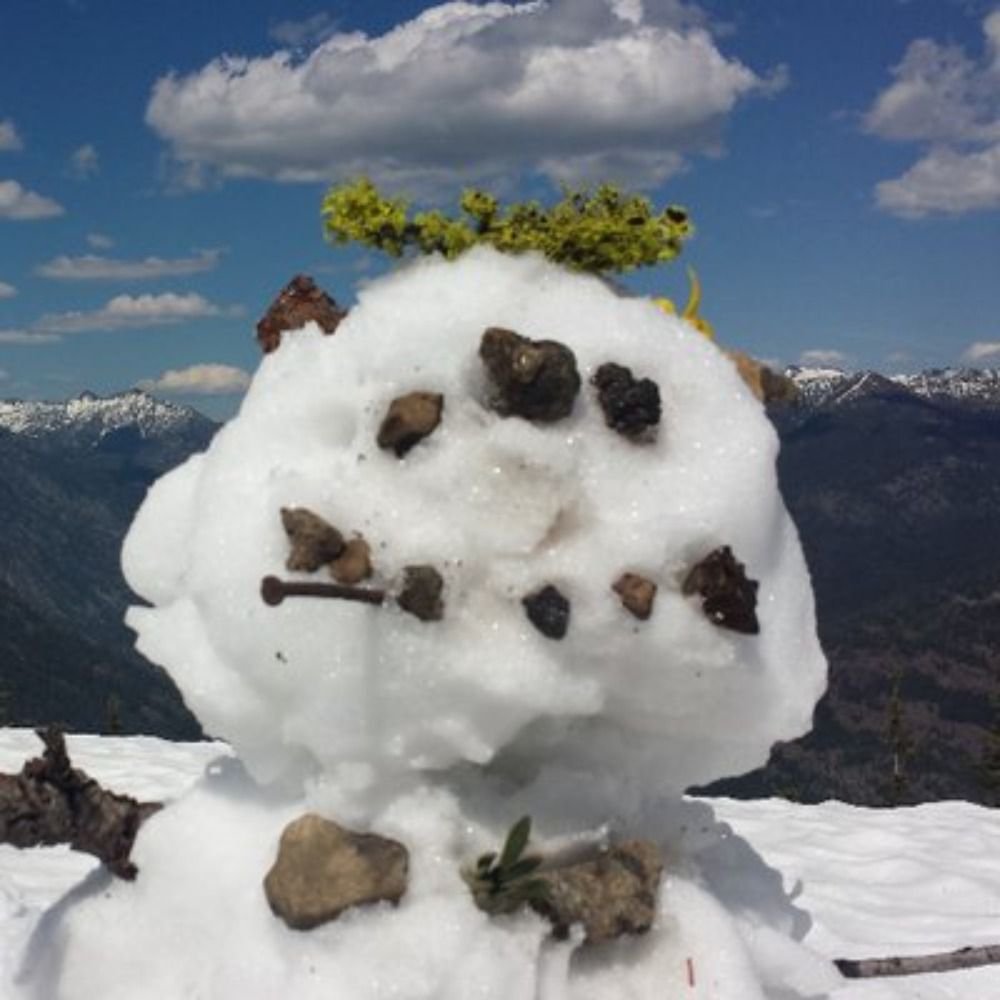
Grateful to @pewtrusts.org for funding our snow fly work, in collaboration with Sebastian Brauchi at Universidad Austral de Chile.
We are now looking for post-docs to work on the biophysical mechanisms that allow snow fly neurons and muscles to function below zero.
newsroom.uw.edu/news-release...
We are now looking for post-docs to work on the biophysical mechanisms that allow snow fly neurons and muscles to function below zero.
newsroom.uw.edu/news-release...

Most insects slow down in bitter cold. Not snow flies. - UW Medicine | Newsroom
newsroom.uw.edu
December 18, 2025 at 10:48 PM
Grateful to @pewtrusts.org for funding our snow fly work, in collaboration with Sebastian Brauchi at Universidad Austral de Chile.
We are now looking for post-docs to work on the biophysical mechanisms that allow snow fly neurons and muscles to function below zero.
newsroom.uw.edu/news-release...
We are now looking for post-docs to work on the biophysical mechanisms that allow snow fly neurons and muscles to function below zero.
newsroom.uw.edu/news-release...
Reposted by Jerome Beetz
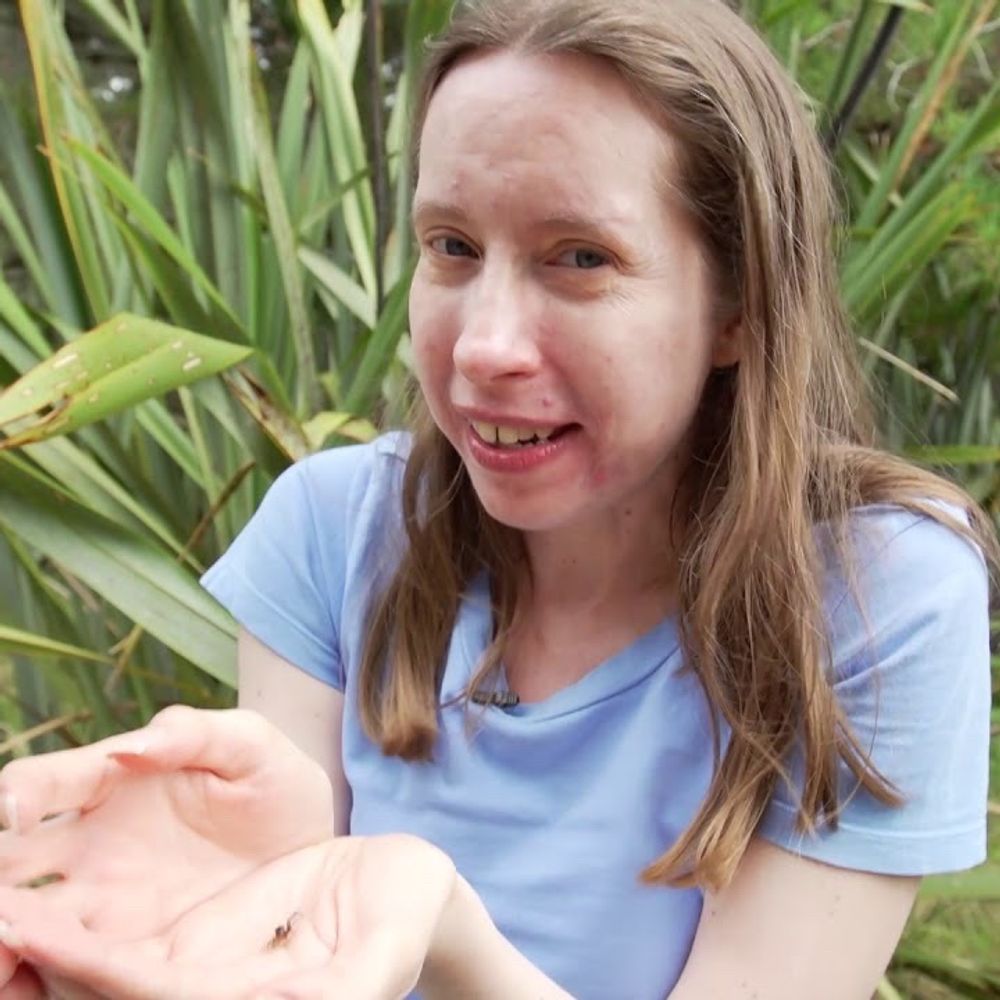
Our latest paper is out, and it's on one my favourite spiders, Evarcha culicivora! Mate choice as a third context in which a mosquito-specialist jumping spider attends to red-coloured cues #OpenAccess royalsocietypublishing.org/rsos/article...

Mate choice as a third context in which a mosquito-specialist jumping spider attends to red-coloured cues
Abstract. For animals living in a noisy world, the volume of potentially relevant information exceeds attentional capacity, but relying on the same cue in
royalsocietypublishing.org
December 18, 2025 at 6:03 PM
Our latest paper is out, and it's on one my favourite spiders, Evarcha culicivora! Mate choice as a third context in which a mosquito-specialist jumping spider attends to red-coloured cues #OpenAccess royalsocietypublishing.org/rsos/article...
Reposted by Jerome Beetz

Come and work with us in our new home @bristolbiosci.bsky.social ! This fully funded PhD opportunity is open to anyone interested in spiders/eyes/light pollution/evolution/development! 🕷️👀
⏰Deadline 15th December, online info event TODAY @2pm! Link in the PhD advert👉 www.findaphd.com/phds/project...
⏰Deadline 15th December, online info event TODAY @2pm! Link in the PhD advert👉 www.findaphd.com/phds/project...
November 24, 2025 at 9:27 AM
Come and work with us in our new home @bristolbiosci.bsky.social ! This fully funded PhD opportunity is open to anyone interested in spiders/eyes/light pollution/evolution/development! 🕷️👀
⏰Deadline 15th December, online info event TODAY @2pm! Link in the PhD advert👉 www.findaphd.com/phds/project...
⏰Deadline 15th December, online info event TODAY @2pm! Link in the PhD advert👉 www.findaphd.com/phds/project...
Reposted by Jerome Beetz

How do insects use vision to interact with flowers? IMPRS-QBEE student @lochlanw.bsky.social, working with @anna-stoeckl.bsky.social tells us more about his work on hummingbird hawkmoths and how they interact with flower patterns
@mpi-animalbehav.bsky.social
youtube.com/shorts/juEhw...
@mpi-animalbehav.bsky.social
youtube.com/shorts/juEhw...

Lochlan Walsh | Insect sensory biology
YouTube video by Max Planck Institute of Animal Behavior
youtube.com
November 24, 2025 at 8:12 AM
How do insects use vision to interact with flowers? IMPRS-QBEE student @lochlanw.bsky.social, working with @anna-stoeckl.bsky.social tells us more about his work on hummingbird hawkmoths and how they interact with flower patterns
@mpi-animalbehav.bsky.social
youtube.com/shorts/juEhw...
@mpi-animalbehav.bsky.social
youtube.com/shorts/juEhw...
Reposted by Jerome Beetz
Praying mantises demontrate remarkable camouflage although they had been thought to be colorblind. A new ERG study reveals that 2 of 3 tested mantises species are trichromatic highlighting a physiological capacity for color vision.
@springernature.com
link.springer.com/article/10.1...
@springernature.com
link.springer.com/article/10.1...

Praying mantises possess multiple spectral photoreceptor classes - Journal of Comparative Physiology A
Praying mantises often display elaborate camouflage, disappearing into the shapes, textures, and colors around them. But they have largely been thought to be monochromats, unable to perceive the color...
link.springer.com
November 24, 2025 at 11:10 AM
Praying mantises demontrate remarkable camouflage although they had been thought to be colorblind. A new ERG study reveals that 2 of 3 tested mantises species are trichromatic highlighting a physiological capacity for color vision.
@springernature.com
link.springer.com/article/10.1...
@springernature.com
link.springer.com/article/10.1...
Reposted by Jerome Beetz
Bats are highly social animals showing a huge vocal repetoire. A new study of the Simmons lab monitored vocalizations between pairs of 🦇 that were competing for food in the lab. Six social call types, e.g., frequency-modulated bouts (FMBs), were common.
www.frontiersin.org/journals/eco...
www.frontiersin.org/journals/eco...

Frontiers | Social calls of big brown bats in a competitive feeding context
Big brown bats (Eptesicus fuscus) have a diverse vocal repertoire. We tested the hypothesis that frequency-modulated bouts (FMBs) are male-specific calls pro...
www.frontiersin.org
November 24, 2025 at 11:25 AM
Bats are highly social animals showing a huge vocal repetoire. A new study of the Simmons lab monitored vocalizations between pairs of 🦇 that were competing for food in the lab. Six social call types, e.g., frequency-modulated bouts (FMBs), were common.
www.frontiersin.org/journals/eco...
www.frontiersin.org/journals/eco...
Reposted by Jerome Beetz

Our paper “Towards a neuroethological approach to consciousness” is out in Phil. Trans. R. Soc. B.
Together with @talking-bat.bsky.social and Lucia Melloni, we suggest bringing Tinbergen’s framework into consciousness research.
Together with @talking-bat.bsky.social and Lucia Melloni, we suggest bringing Tinbergen’s framework into consciousness research.

Towards a neuroethological approach to consciousness | Philosophical Transactions of the Royal Society B: Biological Sciences
Understanding consciousness remains a significant challenge in science. What distinguishes
conscious beings from unconscious systems, such as organoids, artificial intelligence
or other non-sentient e...
royalsocietypublishing.org
November 14, 2025 at 2:43 PM
Our paper “Towards a neuroethological approach to consciousness” is out in Phil. Trans. R. Soc. B.
Together with @talking-bat.bsky.social and Lucia Melloni, we suggest bringing Tinbergen’s framework into consciousness research.
Together with @talking-bat.bsky.social and Lucia Melloni, we suggest bringing Tinbergen’s framework into consciousness research.