




@fillouxlab.bsky.social
Pinned

Happy to be on bsky and to introduce my @SCELSE group in Singapore @NTU and working on #T6SS #Biofilm #c-di-GMP #Pseudomonas #antibiotics From left to right Sujatha, Casandra, Yu Fen, Kay, Qiu Ting and Peggy. They are brilliant so stay tune and follow.
Reposted

Peptidoglycan architecture dictates protein interactions, tissue tropism, and arthritis in the Lyme disease spirochete Borrelia burgdorferi
Exciting new research from @jutraslab.bsky.social
journals.plos.org/plospathogen...
#MicroSky
Exciting new research from @jutraslab.bsky.social
journals.plos.org/plospathogen...
#MicroSky

Peptidoglycan architecture dictates protein interactions, tissue tropism, and arthritis in the Lyme disease spirochete Borrelia burgdorferi
Author summary Many of the pathogenic mechanisms by which Borrelia burgdorferi causes disease involve cell envelope interactions with host components. To further elucidate the role of peptidoglycan in...
journals.plos.org
January 29, 2026 at 8:25 PM
Peptidoglycan architecture dictates protein interactions, tissue tropism, and arthritis in the Lyme disease spirochete Borrelia burgdorferi
Exciting new research from @jutraslab.bsky.social
journals.plos.org/plospathogen...
#MicroSky
Exciting new research from @jutraslab.bsky.social
journals.plos.org/plospathogen...
#MicroSky
Reposted

SCELSE welcomed a delegation from the Embassy of France in Singapore, reaffirming a shared One Health approach and the central role of partnerships in the France–Singapore relationship. The visit included lab tours and talks on lab-to-market translation. @fillouxlab.bsky.social @cwhitch.bsky.social


January 29, 2026 at 7:34 AM
SCELSE welcomed a delegation from the Embassy of France in Singapore, reaffirming a shared One Health approach and the central role of partnerships in the France–Singapore relationship. The visit included lab tours and talks on lab-to-market translation. @fillouxlab.bsky.social @cwhitch.bsky.social
Reposted

In #MRAJournal: a KBase tutorial narrative demonstrating construction of stoichiometric metabolic models of iron-oxidizing bacteria, enabling predictions of physiological dynamics, metabolic fluxes and the role of iron oxidation in environmental systems. asm.social/2MW

January 28, 2026 at 5:29 PM
In #MRAJournal: a KBase tutorial narrative demonstrating construction of stoichiometric metabolic models of iron-oxidizing bacteria, enabling predictions of physiological dynamics, metabolic fluxes and the role of iron oxidation in environmental systems. asm.social/2MW
Reposted

New paper out in @pnas.org, and it made the cover! 👁️
We represent plasmids as circles and mutations as dots, resembling an eye, because in this paper we literally 𝑤𝑎𝑡𝑐ℎ plasmids evolve.
‼️Check Paula’s 🧵 and the paper👇
𝗣𝗹𝗮𝘀𝗺𝗶𝗱 𝗺𝘂𝘁𝗮𝘁𝗶𝗼𝗻 𝗿𝗮𝘁𝗲𝘀 𝘀𝗰𝗮𝗹𝗲 𝘄𝗶𝘁𝗵 𝗰𝗼𝗽𝘆 𝗻𝘂𝗺𝗯𝗲𝗿
www.pnas.org/doi/10.1073/...
We represent plasmids as circles and mutations as dots, resembling an eye, because in this paper we literally 𝑤𝑎𝑡𝑐ℎ plasmids evolve.
‼️Check Paula’s 🧵 and the paper👇
𝗣𝗹𝗮𝘀𝗺𝗶𝗱 𝗺𝘂𝘁𝗮𝘁𝗶𝗼𝗻 𝗿𝗮𝘁𝗲𝘀 𝘀𝗰𝗮𝗹𝗲 𝘄𝗶𝘁𝗵 𝗰𝗼𝗽𝘆 𝗻𝘂𝗺𝗯𝗲𝗿
www.pnas.org/doi/10.1073/...

January 27, 2026 at 8:23 PM
New paper out in @pnas.org, and it made the cover! 👁️
We represent plasmids as circles and mutations as dots, resembling an eye, because in this paper we literally 𝑤𝑎𝑡𝑐ℎ plasmids evolve.
‼️Check Paula’s 🧵 and the paper👇
𝗣𝗹𝗮𝘀𝗺𝗶𝗱 𝗺𝘂𝘁𝗮𝘁𝗶𝗼𝗻 𝗿𝗮𝘁𝗲𝘀 𝘀𝗰𝗮𝗹𝗲 𝘄𝗶𝘁𝗵 𝗰𝗼𝗽𝘆 𝗻𝘂𝗺𝗯𝗲𝗿
www.pnas.org/doi/10.1073/...
We represent plasmids as circles and mutations as dots, resembling an eye, because in this paper we literally 𝑤𝑎𝑡𝑐ℎ plasmids evolve.
‼️Check Paula’s 🧵 and the paper👇
𝗣𝗹𝗮𝘀𝗺𝗶𝗱 𝗺𝘂𝘁𝗮𝘁𝗶𝗼𝗻 𝗿𝗮𝘁𝗲𝘀 𝘀𝗰𝗮𝗹𝗲 𝘄𝗶𝘁𝗵 𝗰𝗼𝗽𝘆 𝗻𝘂𝗺𝗯𝗲𝗿
www.pnas.org/doi/10.1073/...
Reposted
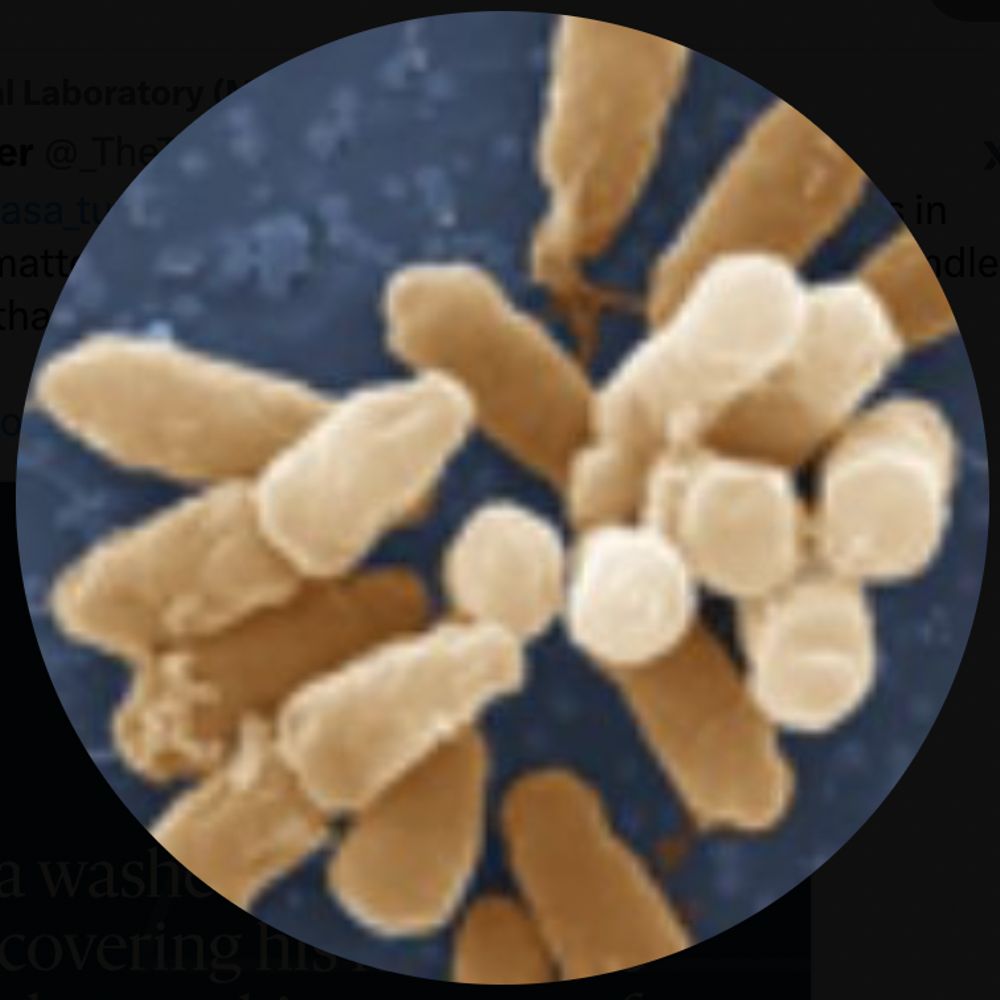
JB Editor's Pick: Dohmen, Hoff et al. use bioinformatic approaches to identify members of the signal transduction system for Photoactive Yellow Protein. These studies provide direction for answering key questions in the field.
journals.asm.org/doi/10.1128/...
@asm.org #JBacteriology
journals.asm.org/doi/10.1128/...
@asm.org #JBacteriology

January 27, 2026 at 2:03 PM
JB Editor's Pick: Dohmen, Hoff et al. use bioinformatic approaches to identify members of the signal transduction system for Photoactive Yellow Protein. These studies provide direction for answering key questions in the field.
journals.asm.org/doi/10.1128/...
@asm.org #JBacteriology
journals.asm.org/doi/10.1128/...
@asm.org #JBacteriology
Reposted

Lactic acid lover? Check out @ronni.bsky.social 's new work in
@cp-cellhostmicrobe.bsky.social showing how Enterococcus faecalis-derived LA suppresses macrophage activation, in turn promoting bacterial persistence and polymicrobial wound infection in vivo.
www.sciencedirect.com/science/arti...
@cp-cellhostmicrobe.bsky.social showing how Enterococcus faecalis-derived LA suppresses macrophage activation, in turn promoting bacterial persistence and polymicrobial wound infection in vivo.
www.sciencedirect.com/science/arti...

Enterococcus faecalis-derived lactic acid suppresses macrophage activation to facilitate persistent and polymicrobial wound infections
Macrophage activation is essential for innate immunity and antimicrobial defense. We show that Enterococcus faecalis suppresses macrophage activation …
www.sciencedirect.com
January 27, 2026 at 7:11 PM
Lactic acid lover? Check out @ronni.bsky.social 's new work in
@cp-cellhostmicrobe.bsky.social showing how Enterococcus faecalis-derived LA suppresses macrophage activation, in turn promoting bacterial persistence and polymicrobial wound infection in vivo.
www.sciencedirect.com/science/arti...
@cp-cellhostmicrobe.bsky.social showing how Enterococcus faecalis-derived LA suppresses macrophage activation, in turn promoting bacterial persistence and polymicrobial wound infection in vivo.
www.sciencedirect.com/science/arti...
Reposted
SCELSE hosted CNRS@CREATE delegates to explore translating science into impact: from biofilms & microbiomes to human-centric, trustworthy AI. The visit included tours of sequencing, imaging and bioreactor facilities, with discussions on the DesCartes Hybrid AI programme. @fillouxlab.bsky.social


January 27, 2026 at 8:52 AM
SCELSE hosted CNRS@CREATE delegates to explore translating science into impact: from biofilms & microbiomes to human-centric, trustworthy AI. The visit included tours of sequencing, imaging and bioreactor facilities, with discussions on the DesCartes Hybrid AI programme. @fillouxlab.bsky.social
Reposted
JB Editor's Choice: Tran and Burrows review the field of "phage steering", which can be used to drive bacteria bacteria towards reduced pathogenicity, increased antibiotic susceptibility, or immune clearance
journals.asm.org/doi/10.1128/...
@asm.org #Jbacteriology
journals.asm.org/doi/10.1128/...
@asm.org #Jbacteriology

January 26, 2026 at 6:25 PM
JB Editor's Choice: Tran and Burrows review the field of "phage steering", which can be used to drive bacteria bacteria towards reduced pathogenicity, increased antibiotic susceptibility, or immune clearance
journals.asm.org/doi/10.1128/...
@asm.org #Jbacteriology
journals.asm.org/doi/10.1128/...
@asm.org #Jbacteriology
Reposted

Spatial-temporal genome analysis and its application for the prediction of functional systems in bacteria and archaea
#microbiology #archaea #bacteria #MicroSky
@asm.org
doi.org/10.1128/mbio...
#microbiology #archaea #bacteria #MicroSky
@asm.org
doi.org/10.1128/mbio...

Spatial-temporal genome analysis and its application for the prediction of functional systems in bacteria and archaea | mBio
With many thousands of diverse bacterial and archaeal genomes made available by the
fast advancing genomic and metagenomic sequencing, methods for in-depth analysis of
genome organization and evolutio...
doi.org
January 25, 2026 at 7:31 PM
Spatial-temporal genome analysis and its application for the prediction of functional systems in bacteria and archaea
#microbiology #archaea #bacteria #MicroSky
@asm.org
doi.org/10.1128/mbio...
#microbiology #archaea #bacteria #MicroSky
@asm.org
doi.org/10.1128/mbio...
Reposted
New in JB: Raghav, Prajapati & Jain explore the role of the various domains of the GTPase FlhF in polarity and patterning of flagella in P. aeruginosa.
journals.asm.org/doi/10.1128/...
@asm.org #JBacteriology
journals.asm.org/doi/10.1128/...
@asm.org #JBacteriology

January 21, 2026 at 6:37 PM
New in JB: Raghav, Prajapati & Jain explore the role of the various domains of the GTPase FlhF in polarity and patterning of flagella in P. aeruginosa.
journals.asm.org/doi/10.1128/...
@asm.org #JBacteriology
journals.asm.org/doi/10.1128/...
@asm.org #JBacteriology
It is with emotion and sadness that we heard the passing away of Peer Bork on Jan 16. This was unexpected to us and a dramatic loss for our scientific community. Peer was an asset on the SCELSE Scientific Advisory Board over the past 15 years. Our thoughts go to his family, friends and colleagues.

January 21, 2026 at 3:12 AM
It is with emotion and sadness that we heard the passing away of Peer Bork on Jan 16. This was unexpected to us and a dramatic loss for our scientific community. Peer was an asset on the SCELSE Scientific Advisory Board over the past 15 years. Our thoughts go to his family, friends and colleagues.
Reposted

Nature research paper: Disease tolerance and infection pathogenesis age-related tradeoffs in mice
go.nature.com/4pBODwV
go.nature.com/4pBODwV

Disease tolerance and infection pathogenesis age-related tradeoffs in mice - Nature
Disease course and pathology an infection may cause can change owing to the structural and functional physiological changes that accumulate with age, but therapy can be tailored accordingly; disease tolerance genes show antagonistic pleiotropy.
go.nature.com
January 19, 2026 at 6:36 PM
Nature research paper: Disease tolerance and infection pathogenesis age-related tradeoffs in mice
go.nature.com/4pBODwV
go.nature.com/4pBODwV
Reposted

Salmonella relies on siderophore exploitation at low pH
#microLife by @ferrytin.bsky.social et al from Olivier Cunrath
academic.oup.com/microlife/ad...
#microLife by @ferrytin.bsky.social et al from Olivier Cunrath
academic.oup.com/microlife/ad...

Salmonella relies on siderophore exploitation at low pH
Abstract. Salmonella enterica, a prominent enteric pathogen, employs sophisticated iron acquisition mechanisms to overcome host-imposed iron limitation, no
academic.oup.com
January 18, 2026 at 1:18 PM
Salmonella relies on siderophore exploitation at low pH
#microLife by @ferrytin.bsky.social et al from Olivier Cunrath
academic.oup.com/microlife/ad...
#microLife by @ferrytin.bsky.social et al from Olivier Cunrath
academic.oup.com/microlife/ad...
Reposted
Impact of changed c-di-AMP levels and hypoosmotic stress on the transcriptome of Haloferax volcanii and onRCK domain-containing proteins
#microbiology #archaea #MicroSky #ArchaeaSky
@femsmicro.org @femsjournals.bsky.social
doi.org/10.1093/fems...
#microbiology #archaea #MicroSky #ArchaeaSky
@femsmicro.org @femsjournals.bsky.social
doi.org/10.1093/fems...

Impact of changed c-di-AMP levels and hypoosmotic stress on the transcriptome of Haloferax volcanii and on RCK domain-containing proteins
This study explores how the second messenger c-di-AMP controls osmotic balance in Haloferax volcanii. Using transcriptomics and RCK-protein knockouts, we s
doi.org
January 18, 2026 at 6:58 PM
Impact of changed c-di-AMP levels and hypoosmotic stress on the transcriptome of Haloferax volcanii and onRCK domain-containing proteins
#microbiology #archaea #MicroSky #ArchaeaSky
@femsmicro.org @femsjournals.bsky.social
doi.org/10.1093/fems...
#microbiology #archaea #MicroSky #ArchaeaSky
@femsmicro.org @femsjournals.bsky.social
doi.org/10.1093/fems...
Reposted

One of the big stories of my thesis is out!
We identified HsbA as a novel regulator of the starvation-induced biofilm dispersal response in P. putida that inhibits c-di-GMP synthesis by CfcR.
www.sciencedirect.com/science/arti...
We identified HsbA as a novel regulator of the starvation-induced biofilm dispersal response in P. putida that inhibits c-di-GMP synthesis by CfcR.
www.sciencedirect.com/science/arti...

HsbA represses stationary phase biofilm formation in Pseudomonas putida
Pseudomonas putida biofilm growth is associated to nutrient-sufficient conditions and biofilm dispersal is induced by nutrient starvation, signaled by…
www.sciencedirect.com
January 18, 2026 at 6:25 PM
One of the big stories of my thesis is out!
We identified HsbA as a novel regulator of the starvation-induced biofilm dispersal response in P. putida that inhibits c-di-GMP synthesis by CfcR.
www.sciencedirect.com/science/arti...
We identified HsbA as a novel regulator of the starvation-induced biofilm dispersal response in P. putida that inhibits c-di-GMP synthesis by CfcR.
www.sciencedirect.com/science/arti...
Reposted

#NatMicroPicks
gut microbes protect from pneumonia! 🦠🫁
SFB colonization reprograms alveolar macrophages to resist influenza‑induced depletion and enhances their antibacterial function protecting mice from secondary bacterial pneumonia
#MicroSky
www.science.org/doi/10.1126/...
gut microbes protect from pneumonia! 🦠🫁
SFB colonization reprograms alveolar macrophages to resist influenza‑induced depletion and enhances their antibacterial function protecting mice from secondary bacterial pneumonia
#MicroSky
www.science.org/doi/10.1126/...

Segmented filamentous bacteria reprogramming of alveolar macrophages limits postinfluenza bacterial pneumonia
SFB colonization phenotypically alters alveolar macrophages, maintaining their antibacterial functions in inflamed interferon-rich lungs.
www.science.org
January 16, 2026 at 2:50 PM
#NatMicroPicks
gut microbes protect from pneumonia! 🦠🫁
SFB colonization reprograms alveolar macrophages to resist influenza‑induced depletion and enhances their antibacterial function protecting mice from secondary bacterial pneumonia
#MicroSky
www.science.org/doi/10.1126/...
gut microbes protect from pneumonia! 🦠🫁
SFB colonization reprograms alveolar macrophages to resist influenza‑induced depletion and enhances their antibacterial function protecting mice from secondary bacterial pneumonia
#MicroSky
www.science.org/doi/10.1126/...
Reposted
Bacteria sense the antibiotic rifampicin through a widespread dual-promoter based alarm system
@narjournal.bsky.social from Libor Krasny
academic.oup.com/nar/article/...
@narjournal.bsky.social from Libor Krasny
academic.oup.com/nar/article/...

Bacteria sense the antibiotic rifampicin through a widespread dual-promoter based alarm system
Abstract. Most antibiotics are natural compounds or their derivatives, and bacteria have evolved defensive mechanisms to resist them. Many of these mechani
academic.oup.com
January 16, 2026 at 2:00 PM
Bacteria sense the antibiotic rifampicin through a widespread dual-promoter based alarm system
@narjournal.bsky.social from Libor Krasny
academic.oup.com/nar/article/...
@narjournal.bsky.social from Libor Krasny
academic.oup.com/nar/article/...
Reposted
We’ve discovered how the superbug E. faecalis prevents chronic wounds from healing.
It’s not a toxin. It’s metabolism.
The bacteria use extracellular electron transport (EET) to electrochemically generate ROS, effectively "freezing" skin cells in place.
doi.org/10.1126/sciadv.aeb5297
It’s not a toxin. It’s metabolism.
The bacteria use extracellular electron transport (EET) to electrochemically generate ROS, effectively "freezing" skin cells in place.
doi.org/10.1126/sciadv.aeb5297

Enterococcus faecalis redox metabolism activates the unfolded protein response to impair wound healing
E. faecalis EET generates ROS, which induces the UPR in keratinocytes, inhibiting in vitro migration.
doi.org
January 17, 2026 at 1:26 AM
We’ve discovered how the superbug E. faecalis prevents chronic wounds from healing.
It’s not a toxin. It’s metabolism.
The bacteria use extracellular electron transport (EET) to electrochemically generate ROS, effectively "freezing" skin cells in place.
doi.org/10.1126/sciadv.aeb5297
It’s not a toxin. It’s metabolism.
The bacteria use extracellular electron transport (EET) to electrochemically generate ROS, effectively "freezing" skin cells in place.
doi.org/10.1126/sciadv.aeb5297
Reposted
Out Now! A phage protein screen identifies triggers of the bacterial innate immune system #MicroSky

A phage protein screen identifies triggers of the bacterial innate immune system
Nature Microbiology, Published online: 16 January 2026; doi:10.1038/s41564-025-02239-6A library of 400 phage protein-coding genes is used to find a trove of antiphage systems, revealing systems that target tail fibre and major capsid proteins.
go.nature.com
January 16, 2026 at 4:53 PM
Out Now! A phage protein screen identifies triggers of the bacterial innate immune system #MicroSky
Reposted
Discover how SCELSE advanced biofilm & microbiome research in FY2024. From top-ranked publications to education, industry engagement, and real-world impact. Scan to read the SCELSE Year in Review flipbook now.
@fillouxlab.bsky.social @cwhitch.bsky.social @drlauranolan.bsky.social
@fillouxlab.bsky.social @cwhitch.bsky.social @drlauranolan.bsky.social

January 15, 2026 at 9:49 AM
Discover how SCELSE advanced biofilm & microbiome research in FY2024. From top-ranked publications to education, industry engagement, and real-world impact. Scan to read the SCELSE Year in Review flipbook now.
@fillouxlab.bsky.social @cwhitch.bsky.social @drlauranolan.bsky.social
@fillouxlab.bsky.social @cwhitch.bsky.social @drlauranolan.bsky.social
Reposted

I am thrilled to share with you the outcome of the first collaboration with Albesa-Jove's lab (albesalab.org), in which we characterised the molecular mechanisms underlying the binding of a T6SS adaptor-effector pair in P. putida, Tap3–Tke5. (🧵1/9). Read the full paper here: doi.org/10.1038/s443...

January 14, 2026 at 11:38 AM
I am thrilled to share with you the outcome of the first collaboration with Albesa-Jove's lab (albesalab.org), in which we characterised the molecular mechanisms underlying the binding of a T6SS adaptor-effector pair in P. putida, Tap3–Tke5. (🧵1/9). Read the full paper here: doi.org/10.1038/s443...
Reposted

Phage-host interactions have a role shaping microbial ecosystems, but what happens in #microgravity? Experiments aboard the #ISS reveal distinct evolutionary adaptations in T7 bacteriophage & #Ecoli, revealing #phage variants effective against resistant pathogens @plosbiology.org 🧪 plos.io/3LtKOfs

January 14, 2026 at 5:35 PM
Phage-host interactions have a role shaping microbial ecosystems, but what happens in #microgravity? Experiments aboard the #ISS reveal distinct evolutionary adaptations in T7 bacteriophage & #Ecoli, revealing #phage variants effective against resistant pathogens @plosbiology.org 🧪 plos.io/3LtKOfs
Reposted

Such a privilege to share the Phage Foundry (phagefoundry.org) team’s work at the inaugural GRC meeting on Microbiome Editing 🎉🎊.

January 13, 2026 at 11:56 PM
Such a privilege to share the Phage Foundry (phagefoundry.org) team’s work at the inaugural GRC meeting on Microbiome Editing 🎉🎊.
Reposted
Send your biofilm papers to JB!
🧫 Research on bacterial biofilms has exploded over the last 3 decades. 🧬 In response, #JBacteriology invites you to contribute your research to the JB Biofilms Special Collection! 📅 Submit by May 31: asm.social/2Lq

January 13, 2026 at 3:09 PM
Send your biofilm papers to JB!
Reposted

🔍Salmonella enterica contaminates essential food sources and causes serious illness. Peter Katsande takes us behind the scenes of their latest #MGEN publication investigating its genetic profile in the food supply chain of Zimbabwe. Read the full blog🔗 microb.io/3NtC4GA

January 13, 2026 at 10:00 AM
🔍Salmonella enterica contaminates essential food sources and causes serious illness. Peter Katsande takes us behind the scenes of their latest #MGEN publication investigating its genetic profile in the food supply chain of Zimbabwe. Read the full blog🔗 microb.io/3NtC4GA