



Frerk Pöppelmeier
@fpoeppelmeier.bsky.social
Ocean modeller and marine geochemist at University of Bern. Interested in ocean physics/chemistry and climate change of the past and future.
✨I have a vacant 3-yr postdoc position in biogeochemical Earth system model development. If you're interested in geochemical isotopes and their use as paleoceanographic proxies, please consider applying. For any questions on the position, just get in touch✨
ohws.prospective.ch/public/v1/jo...
ohws.prospective.ch/public/v1/jo...

Uni Bern: Postdoc position: Earth system model development
(3 years)
ohws.prospective.ch
January 12, 2026 at 8:53 AM
✨I have a vacant 3-yr postdoc position in biogeochemical Earth system model development. If you're interested in geochemical isotopes and their use as paleoceanographic proxies, please consider applying. For any questions on the position, just get in touch✨
ohws.prospective.ch/public/v1/jo...
ohws.prospective.ch/public/v1/jo...
If you are interested in past carbon cycle changes and thinking of presenting your research at #EGU26.
Please consider submitting your abstract to session CL1.2.5: Earth system and carbon cycle change: new insights from radio- and stable carbon isotopes
www.egu26.eu/session/56936
Please consider submitting your abstract to session CL1.2.5: Earth system and carbon cycle change: new insights from radio- and stable carbon isotopes
www.egu26.eu/session/56936
Session CL1.2.5
www.egu26.eu
January 5, 2026 at 1:22 PM
If you are interested in past carbon cycle changes and thinking of presenting your research at #EGU26.
Please consider submitting your abstract to session CL1.2.5: Earth system and carbon cycle change: new insights from radio- and stable carbon isotopes
www.egu26.eu/session/56936
Please consider submitting your abstract to session CL1.2.5: Earth system and carbon cycle change: new insights from radio- and stable carbon isotopes
www.egu26.eu/session/56936
Reposted by Frerk Pöppelmeier
📣 We seek to appoint a Chair (with rank of professor) within the School of Earth & Environmental Sciences. The successful candidate will be an outstanding scholar of international standing in the field.
🗓 Closing Date: 23 March 2026
Full details: www.vacancies.st-andrews.ac.uk/Vacancies/I/...
🗓 Closing Date: 23 March 2026
Full details: www.vacancies.st-andrews.ac.uk/Vacancies/I/...
Chair in Earth Sciences - AC2672
Chair in Earth Sciences - AC2672,
Earth and Environmental Sciences
Salary: Grade 9/Negotiable
Start Date: September 2026
,
<p style="margin-right: 22.7pt; text-align: justify;"><span style="color: bl...
www.vacancies.st-andrews.ac.uk
December 23, 2025 at 12:47 PM
📣 We seek to appoint a Chair (with rank of professor) within the School of Earth & Environmental Sciences. The successful candidate will be an outstanding scholar of international standing in the field.
🗓 Closing Date: 23 March 2026
Full details: www.vacancies.st-andrews.ac.uk/Vacancies/I/...
🗓 Closing Date: 23 March 2026
Full details: www.vacancies.st-andrews.ac.uk/Vacancies/I/...
Reposted by Frerk Pöppelmeier

Antarctic Intermediate Water Variability in the South Atlantic Over the Last 600,000 years - Soaga - 2025 - Paleoceanography and Paleoclimatology - Wiley Online Library

December 10, 2025 at 7:25 PM
Antarctic Intermediate Water Variability in the South Atlantic Over the Last 600,000 years - Soaga - 2025 - Paleoceanography and Paleoclimatology - Wiley Online Library
Reposted by Frerk Pöppelmeier

⚒️ Article: Antarctic Bottom Water progressively filled more of the deep Southern Ocean through the last deglaciation, potentially contributing to the increase in atmospheric CO2
www.nature.com/articles/s41...
www.nature.com/articles/s41...

Expansion of Antarctic Bottom Water driven by Antarctic warming in the last deglaciation - Nature Geoscience
Antarctic Bottom Water progressively filled more of the deep Southern Ocean through the last deglaciation, potentially contributing to the increase in atmospheric CO2, according to neodymium isotope r...
www.nature.com
December 1, 2025 at 4:00 PM
⚒️ Article: Antarctic Bottom Water progressively filled more of the deep Southern Ocean through the last deglaciation, potentially contributing to the increase in atmospheric CO2
www.nature.com/articles/s41...
www.nature.com/articles/s41...
Reposted by Frerk Pöppelmeier

New publication: how does a collapse of the Atlantic Meridional Overturning Circulation (AMOC) affect carbon and d13C cycles in the ocean?
doi.org/10.1029/2025...
doi.org/10.1029/2025...
doi.org/10.1029/2025...
doi.org/10.1029/2025...

Impact of Atlantic Meridional Overturning Circulation Collapse on Carbon‐13 Components in the Ocean
Simulated collapse of the Atlantic Meridional Overturning Circulation affects atmospheric CO2 ${\text{CO}}_{2}$ and δ13CCO2 ${C}_{\mathit{CO2}}$ Largest effect on ocean δ13CDIC ${C}_{\mathit{DIC}...
doi.org
December 1, 2025 at 8:29 PM
New publication: how does a collapse of the Atlantic Meridional Overturning Circulation (AMOC) affect carbon and d13C cycles in the ocean?
doi.org/10.1029/2025...
doi.org/10.1029/2025...
doi.org/10.1029/2025...
doi.org/10.1029/2025...
Reposted by Frerk Pöppelmeier

📢📢PhD position available!! 📢📢
"Improving future climate prediction through
modelling and data of Earth’s past"
At the University of Bristol, UK.
More details and how to apply:
shorturl.at/wKh2W
..or message me here directly.
"Improving future climate prediction through
modelling and data of Earth’s past"
At the University of Bristol, UK.
More details and how to apply:
shorturl.at/wKh2W
..or message me here directly.


November 25, 2025 at 2:07 PM
📢📢PhD position available!! 📢📢
"Improving future climate prediction through
modelling and data of Earth’s past"
At the University of Bristol, UK.
More details and how to apply:
shorturl.at/wKh2W
..or message me here directly.
"Improving future climate prediction through
modelling and data of Earth’s past"
At the University of Bristol, UK.
More details and how to apply:
shorturl.at/wKh2W
..or message me here directly.
Reposted by Frerk Pöppelmeier
ITS2.11/CL0.1
Past to future - towards fully paleo-informed future climate projections www.egu26.eu/session/57722 for paleo constrains on climate that can inform models, spatio-temporal, variability, state approaches to incorporate #palaeoclimate information into GCMs
Past to future - towards fully paleo-informed future climate projections www.egu26.eu/session/57722 for paleo constrains on climate that can inform models, spatio-temporal, variability, state approaches to incorporate #palaeoclimate information into GCMs
Session ITS2.11/CL0.1
www.egu26.eu
November 21, 2025 at 10:27 AM
ITS2.11/CL0.1
Past to future - towards fully paleo-informed future climate projections www.egu26.eu/session/57722 for paleo constrains on climate that can inform models, spatio-temporal, variability, state approaches to incorporate #palaeoclimate information into GCMs
Past to future - towards fully paleo-informed future climate projections www.egu26.eu/session/57722 for paleo constrains on climate that can inform models, spatio-temporal, variability, state approaches to incorporate #palaeoclimate information into GCMs
Reposted by Frerk Pöppelmeier

A new Nature paper accompanying the Global Carbon Budget finds that the land and ocean sinks are 25% smaller and 7% smaller, respectively, than they would have been without the effects of climate change over 2015-24:
Emerging climate impact on carbon sinks in a consolidated carbon budget | Nature
Despite the adoption of the Paris Agreement ten years ago, fossil CO2 emissions continue to rise, pushing atmospheric CO2 levels to 423 ppm in 2024 and driving human-induced warming to 1.36°C, within years of breaching the 1.5°C limit 1,2. Accurate reporting of anthropogenic and natural CO2 sources and sinks is a prerequisite to tracking the effectiveness of climate policy and detecting carbon sink responses to climate change. Yet notable mismatches between reported emissions and sinks have so far prevented confident interpretation of their trends and drivers 1. Here, we present and integrate recent advances in observations and process understanding to address some long-standing issues in the global carbon budget estimates. We show that the magnitude of the natural land sink is substantially smaller than previously estimated, while net emissions from anthropogenic land-use change are revised upwards 1. The ocean sink is 15% larger than the land sink, consistent with new evidence from oceanic and atmospheric observations 3,4. Climate change reduces the efficiency of the sinks, particularly on land, contributing 8.3 ± 1.4 ppm to the atmospheric CO2 increase since 1960. The combined effects of climate change and deforestation turn Southeast Asian and large parts of South American tropical forests from CO2 sinks to sources. This underscores the need to halt deforestation and limit warming to prevent further loss of carbon stored on land. Improved confidence in assessments of CO2 sources and sinks is fundamental for effective climate policy.
www.nature.com
November 13, 2025 at 3:26 AM
A new Nature paper accompanying the Global Carbon Budget finds that the land and ocean sinks are 25% smaller and 7% smaller, respectively, than they would have been without the effects of climate change over 2015-24:
Reposted by Frerk Pöppelmeier

Destabilization of Earth system tipping elements
(Review) suggesting key Earth system tipping points - like the Greenland Ice Sheet, Amazon rainforest, and AMOC - are losing stability and nearing critical thresholds
Interactions may mask warning signs
www.nature.com/articles/s41...
(Review) suggesting key Earth system tipping points - like the Greenland Ice Sheet, Amazon rainforest, and AMOC - are losing stability and nearing critical thresholds
Interactions may mask warning signs
www.nature.com/articles/s41...

Destabilization of Earth system tipping elements - Nature Geoscience
A review of observation-based evidence suggests that four interconnected Earth system tipping elements have moved towards their critical thresholds, highlighting the need for better monitoring and increased mitigation efforts.
www.nature.com
October 2, 2025 at 5:25 AM
Destabilization of Earth system tipping elements
(Review) suggesting key Earth system tipping points - like the Greenland Ice Sheet, Amazon rainforest, and AMOC - are losing stability and nearing critical thresholds
Interactions may mask warning signs
www.nature.com/articles/s41...
(Review) suggesting key Earth system tipping points - like the Greenland Ice Sheet, Amazon rainforest, and AMOC - are losing stability and nearing critical thresholds
Interactions may mask warning signs
www.nature.com/articles/s41...
Reposted by Frerk Pöppelmeier

Do you think climate science needs to be better communicated? We do too! That's why we are looking for a climate science communication specialist to join the Technical Support Unit of the IPCC Working Group I.
All details can be found here: www.ipcc.ch/2025/09/17/c...
Please share!
All details can be found here: www.ipcc.ch/2025/09/17/c...
Please share!
September 22, 2025 at 10:51 AM
Do you think climate science needs to be better communicated? We do too! That's why we are looking for a climate science communication specialist to join the Technical Support Unit of the IPCC Working Group I.
All details can be found here: www.ipcc.ch/2025/09/17/c...
Please share!
All details can be found here: www.ipcc.ch/2025/09/17/c...
Please share!
Reposted by Frerk Pöppelmeier

Day 2 #ICP15 @fpoeppelmeier.bsky.social introducing #AMOC and Constraining past ocean circulation with proxy-enabled Earth system models; introducing the talk is our ECR convenor Pratyusha Chanda 🙏🏼


September 2, 2025 at 4:34 AM
Day 2 #ICP15 @fpoeppelmeier.bsky.social introducing #AMOC and Constraining past ocean circulation with proxy-enabled Earth system models; introducing the talk is our ECR convenor Pratyusha Chanda 🙏🏼
Reposted by Frerk Pöppelmeier
#ICP15 programme is now live 👇🏼 Find it under ‘My ICP’ -> Programme on the website 🙏🏼
#biogeochemistry
#paleoceanography #paleoclimate
#climate
#earthsystemscience
#conference
#biogeochemistry
#paleoceanography #paleoclimate
#climate
#earthsystemscience
#conference

August 11, 2025 at 10:49 AM
#ICP15 programme is now live 👇🏼 Find it under ‘My ICP’ -> Programme on the website 🙏🏼
#biogeochemistry
#paleoceanography #paleoclimate
#climate
#earthsystemscience
#conference
#biogeochemistry
#paleoceanography #paleoclimate
#climate
#earthsystemscience
#conference
Fresh of the press, a new study where we investigated the response of the Greenland ice-sheet and AMOC to warming scenarios, in a coupled Earth system model:
iopscience.iop.org/article/10.1...
iopscience.iop.org/article/10.1...
Radware Bot Manager Captcha
To ensure we keep this website safe, please can you confirm you are a human by ticking the box below.
iopscience.iop.org
August 8, 2025 at 12:02 PM
Fresh of the press, a new study where we investigated the response of the Greenland ice-sheet and AMOC to warming scenarios, in a coupled Earth system model:
iopscience.iop.org/article/10.1...
iopscience.iop.org/article/10.1...
Reposted by Frerk Pöppelmeier
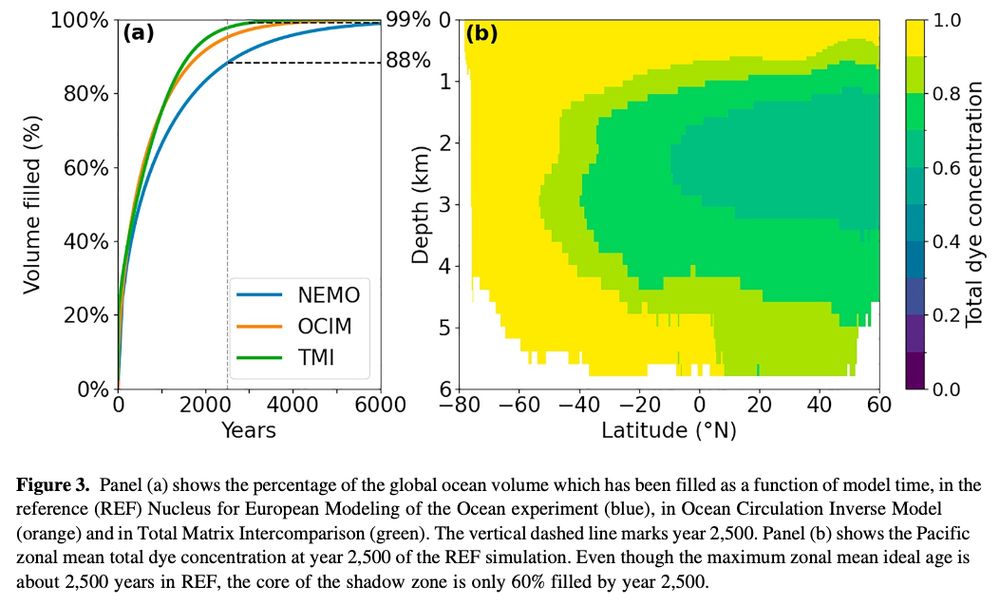
another (very unintuitive) finding is that the filling time of the ocean is about 2x its maximum ideal age - it takes over 3000 years to fill the mid-depths of the Pacific!
July 21, 2025 at 5:21 PM
another (very unintuitive) finding is that the filling time of the ocean is about 2x its maximum ideal age - it takes over 3000 years to fill the mid-depths of the Pacific!
Reposted by Frerk Pöppelmeier
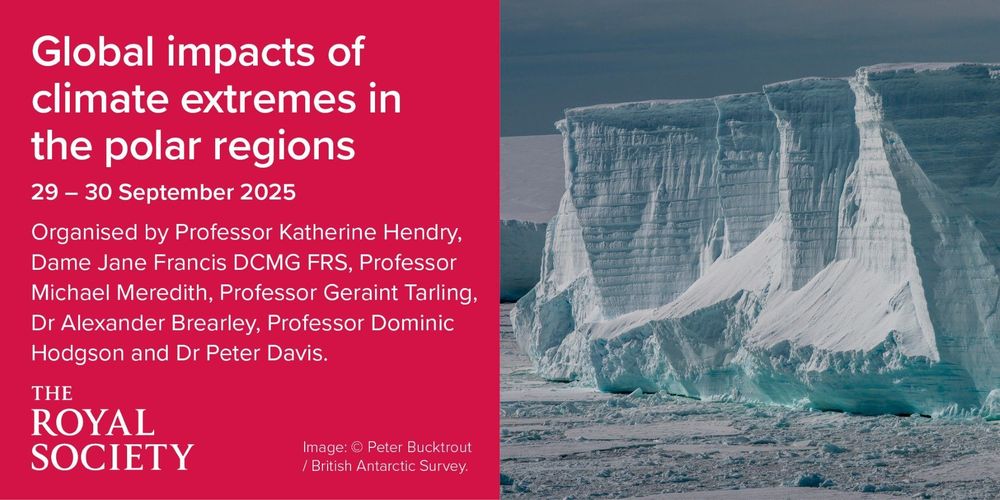
I am co-convening a meeting at the Royal Society later this year, with @krhendry.bsky.social and other very excellent polar science colleagues. If you have interests relating to Antarctica and the impacts of climate change, please consider participating!

Are you a scientist with an interest in #ClimateChange and Antarctica? This September, join a team of leading oceanographers & climate scientists from @bas.ac.uk for a scientific meeting at the Royal Society: royalsociety.org/science-even... @oceanandice.bsky.social @krhendry.bsky.social
July 12, 2025 at 6:19 PM
I am co-convening a meeting at the Royal Society later this year, with @krhendry.bsky.social and other very excellent polar science colleagues. If you have interests relating to Antarctica and the impacts of climate change, please consider participating!
Reposted by Frerk Pöppelmeier

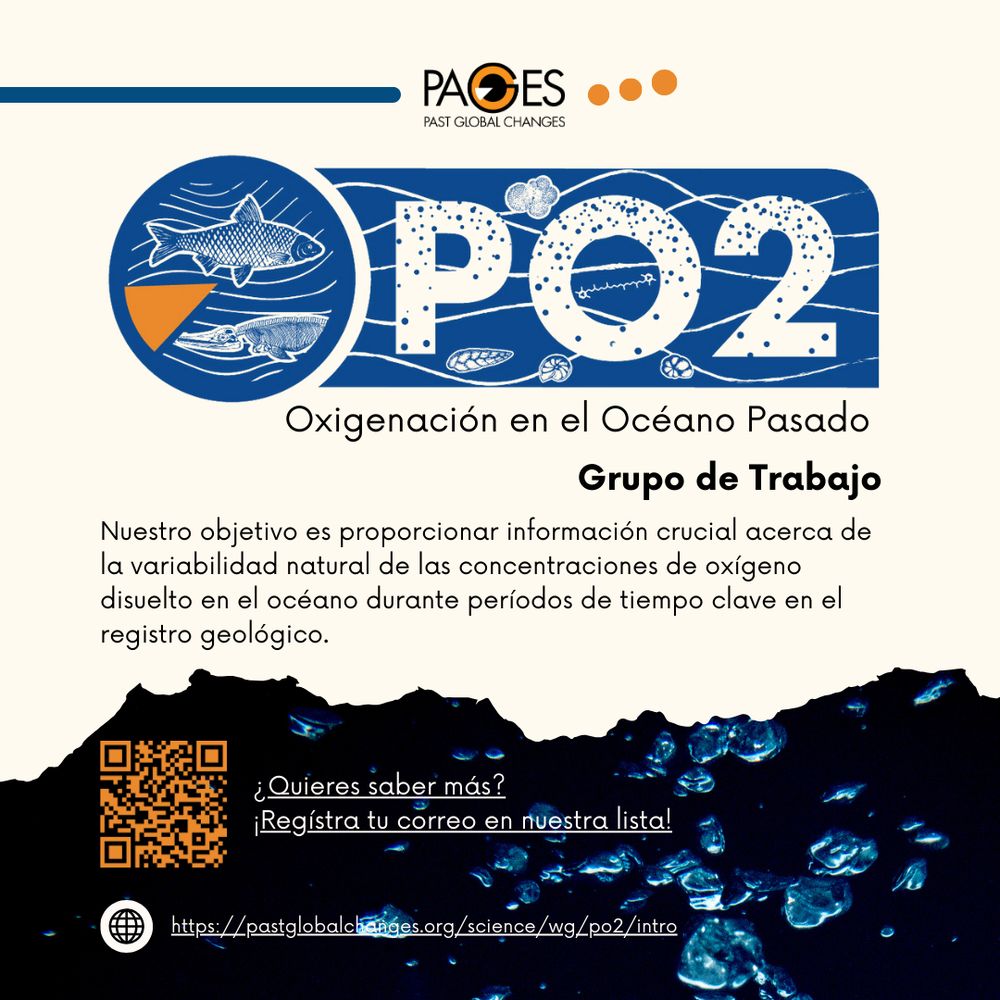
📢The Past Ocean Oxygenation @pages-ipo.bsky.social Working Group is here! 🚤 We provide insights into the natural variability of seawater oxygen in key periods of the geological record & communicate the science behind oxygen reconstructions 🐳 PO2 is here! pastglobalchanges.org/science/wg/p...
June 11, 2025 at 6:16 PM
📢The Past Ocean Oxygenation @pages-ipo.bsky.social Working Group is here! 🚤 We provide insights into the natural variability of seawater oxygen in key periods of the geological record & communicate the science behind oxygen reconstructions 🐳 PO2 is here! pastglobalchanges.org/science/wg/p...
Reposted by Frerk Pöppelmeier

What do sea-ice associated seabirds do during a season with little sea ice? Results from GPS tracking on snow petrels is now published, led by @elliehonan.bsky.social funded by @erc.europa.eu @leverhulme.ac.uk details here: www.antsie.webspace.durham.ac.uk/2025/06/06/snow-petrel-tracking/ 🧪🐙
www.antsie.webspace.durham.ac.uk
June 6, 2025 at 11:14 AM
What do sea-ice associated seabirds do during a season with little sea ice? Results from GPS tracking on snow petrels is now published, led by @elliehonan.bsky.social funded by @erc.europa.eu @leverhulme.ac.uk details here: www.antsie.webspace.durham.ac.uk/2025/06/06/snow-petrel-tracking/ 🧪🐙
Reposted by Frerk Pöppelmeier
🚨--- New Paper ---🚨
Watch Florian Krauss @iceflow42.bsky.social wield the ¹³C of CO₂ sword across the highest, NATURAL spike in CO₂ and CH₄ of the last 800,000 years.
www.pnas.org/doi/10.1073/...
Watch Florian Krauss @iceflow42.bsky.social wield the ¹³C of CO₂ sword across the highest, NATURAL spike in CO₂ and CH₄ of the last 800,000 years.
www.pnas.org/doi/10.1073/...
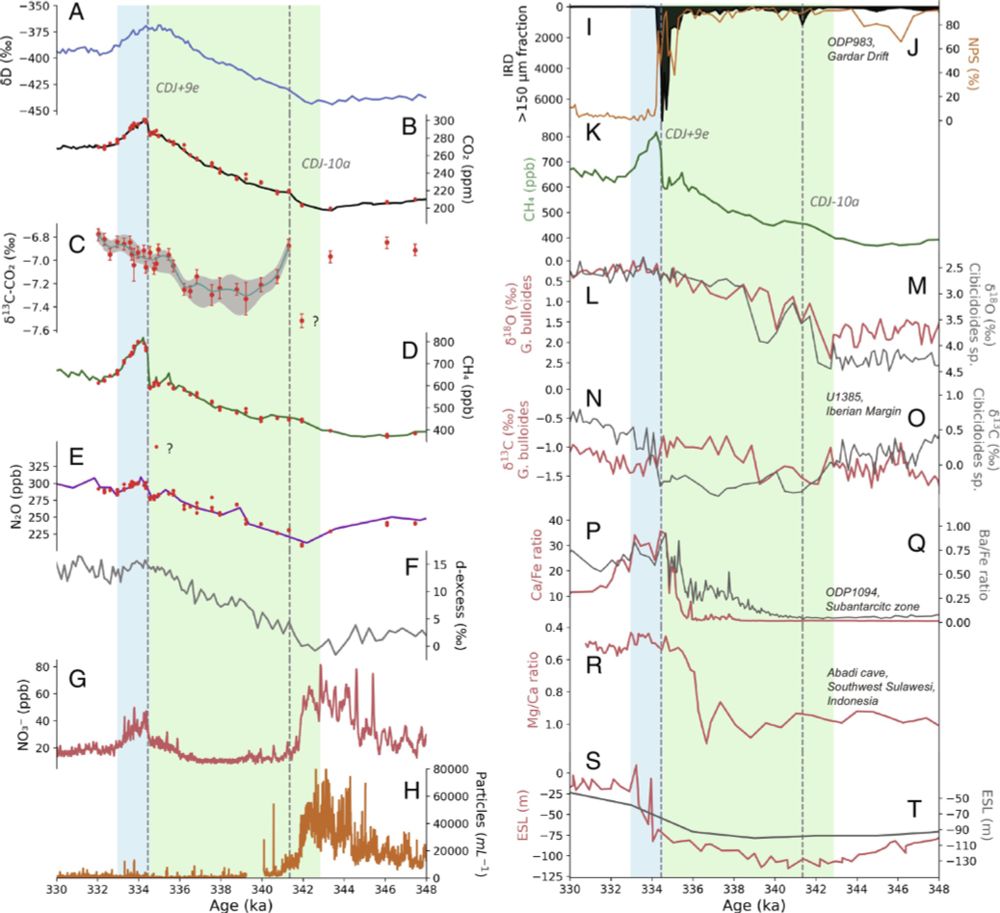
Multiple sources of atmospheric CO2 activated by AMOC recovery at the onset of interglacial MIS 9 | PNAS
Using high-precision ice core measurements of CO2, δ13C–CO2, CH4, and N2O, this study
provides carbon isotope constraints on a sizeable, centennial...
www.pnas.org
June 3, 2025 at 10:50 AM
🚨--- New Paper ---🚨
Watch Florian Krauss @iceflow42.bsky.social wield the ¹³C of CO₂ sword across the highest, NATURAL spike in CO₂ and CH₄ of the last 800,000 years.
www.pnas.org/doi/10.1073/...
Watch Florian Krauss @iceflow42.bsky.social wield the ¹³C of CO₂ sword across the highest, NATURAL spike in CO₂ and CH₄ of the last 800,000 years.
www.pnas.org/doi/10.1073/...
Reposted by Frerk Pöppelmeier

Our new paper authored by the Scientific Committee of the
#OOSC on "US federal cuts threaten international ocean science and diplomacy" has been published. www.nature.com/articles/s41...
#OOSC on "US federal cuts threaten international ocean science and diplomacy" has been published. www.nature.com/articles/s41...
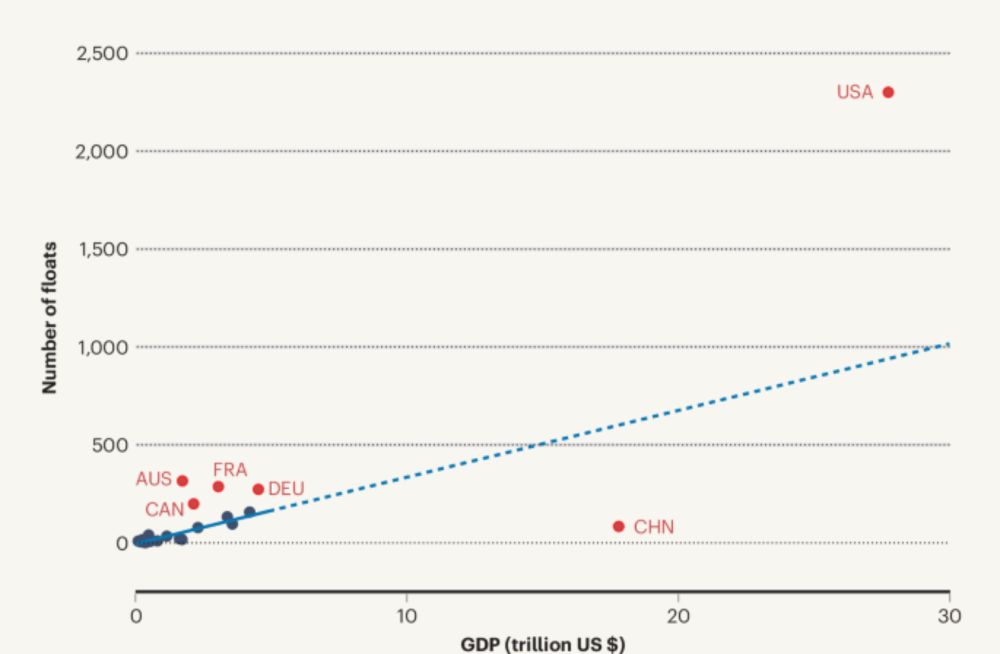
US federal cuts threaten international ocean science and diplomacy - Nature Ecology & Evolution
Nature Ecology & Evolution - US federal cuts threaten international ocean science and diplomacy
www.nature.com
May 28, 2025 at 12:25 PM
Our new paper authored by the Scientific Committee of the
#OOSC on "US federal cuts threaten international ocean science and diplomacy" has been published. www.nature.com/articles/s41...
#OOSC on "US federal cuts threaten international ocean science and diplomacy" has been published. www.nature.com/articles/s41...
Reposted by Frerk Pöppelmeier
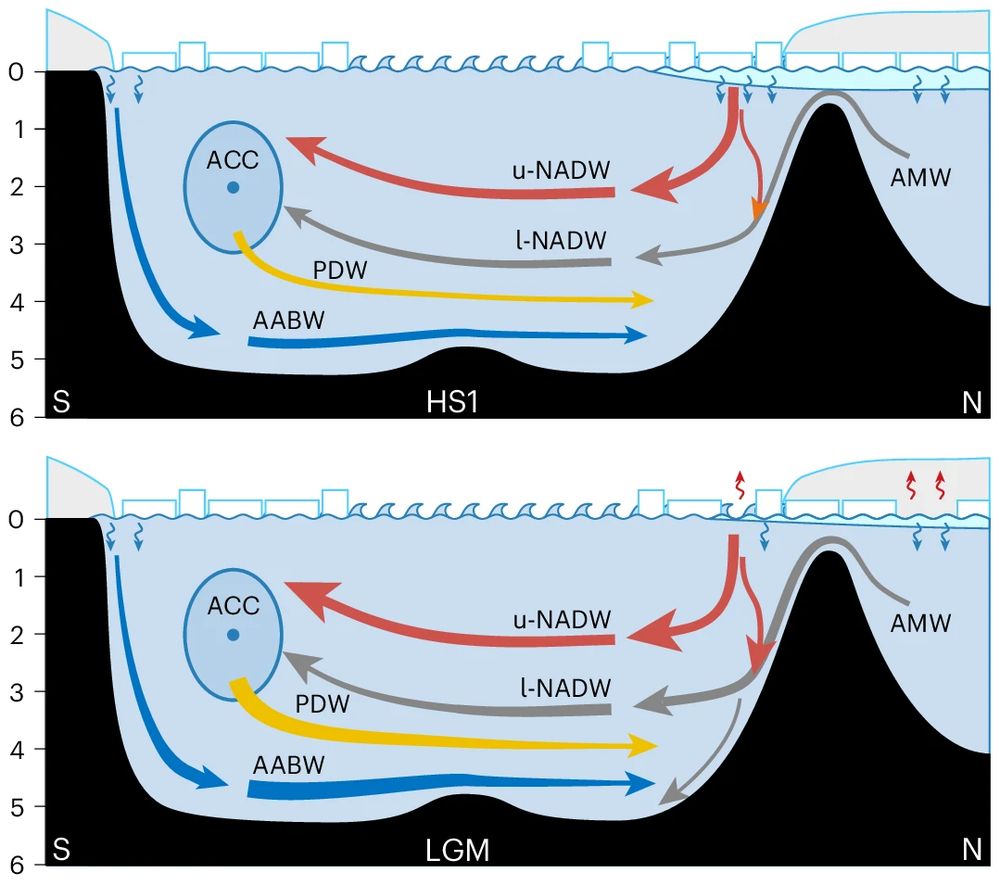
⚒️ Article: North Atlantic Deep Water formation was only moderately weaker than present during the Last Glacial Period, even when freshwater inputs were high
@paddylaser.bsky.social @unil.bsky.social @fpoeppelmeier.bsky.social @unibe.ch
www.nature.com/articles/s41...
@paddylaser.bsky.social @unil.bsky.social @fpoeppelmeier.bsky.social @unibe.ch
www.nature.com/articles/s41...
May 6, 2025 at 3:00 PM
⚒️ Article: North Atlantic Deep Water formation was only moderately weaker than present during the Last Glacial Period, even when freshwater inputs were high
@paddylaser.bsky.social @unil.bsky.social @fpoeppelmeier.bsky.social @unibe.ch
www.nature.com/articles/s41...
@paddylaser.bsky.social @unil.bsky.social @fpoeppelmeier.bsky.social @unibe.ch
www.nature.com/articles/s41...
Reposted by Frerk Pöppelmeier
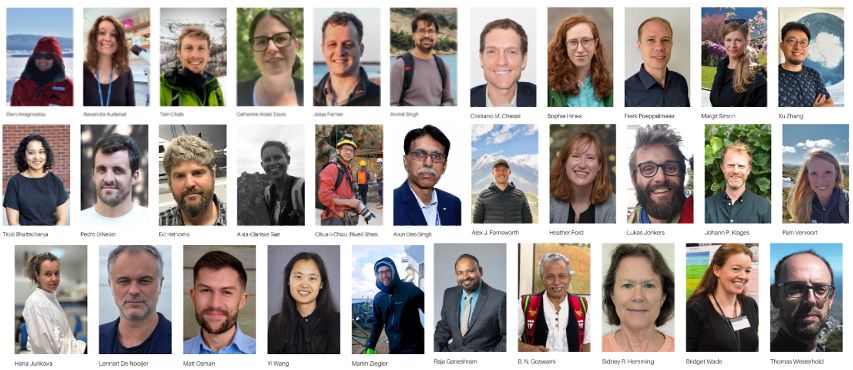
#ICP15 #registration and abstract submission deadlines are on 30th April -👇🏼
www.icp15.com/news/registr...
👇🏼 our #plenary #speakers across five themes of #paleoceanography and #paleoclimatology will share new research, ideas and future directions of the field and aims to inspire you all!
www.icp15.com/news/registr...
👇🏼 our #plenary #speakers across five themes of #paleoceanography and #paleoclimatology will share new research, ideas and future directions of the field and aims to inspire you all!
April 19, 2025 at 10:18 AM
#ICP15 #registration and abstract submission deadlines are on 30th April -👇🏼
www.icp15.com/news/registr...
👇🏼 our #plenary #speakers across five themes of #paleoceanography and #paleoclimatology will share new research, ideas and future directions of the field and aims to inspire you all!
www.icp15.com/news/registr...
👇🏼 our #plenary #speakers across five themes of #paleoceanography and #paleoclimatology will share new research, ideas and future directions of the field and aims to inspire you all!
Together with Beni Stocker @stineb.bsky.social we have an open postdoc position (2yr with possibility of extension) in coupled Earth system modelling with a focus on dynamic global vegetation modelling.
ohws.prospective.ch/public/v1/jo...
Get in touch if you are interested.
ohws.prospective.ch/public/v1/jo...
Get in touch if you are interested.
Uni Bern: Postdoc position: “Coupled Earth System Modeling”
(2 years)
ohws.prospective.ch
April 18, 2025 at 8:15 AM
Together with Beni Stocker @stineb.bsky.social we have an open postdoc position (2yr with possibility of extension) in coupled Earth system modelling with a focus on dynamic global vegetation modelling.
ohws.prospective.ch/public/v1/jo...
Get in touch if you are interested.
ohws.prospective.ch/public/v1/jo...
Get in touch if you are interested.
Reposted by Frerk Pöppelmeier

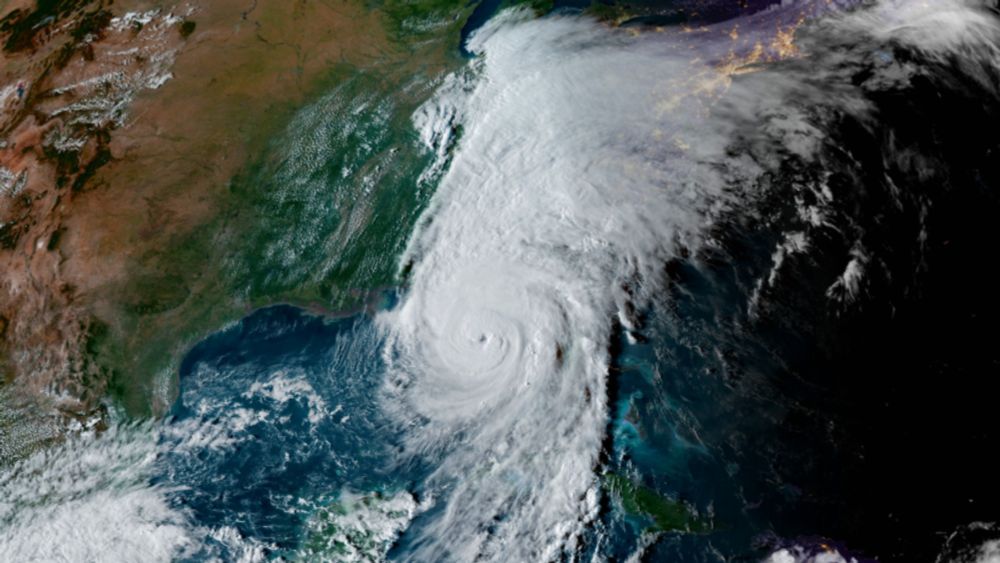
The Trump administration plans to eliminate the research arm of National Oceanic and Atmospheric Administration, close all weather and climate labs and eviscerate its budget along with several other NOAA offices, according to internal documents obtained by CNN.
Trump’s draft budget eviscerates weather and climate tracking and research | CNN
The move would devastate weather and climate research even as weather is becoming more erratic and extreme, and would cripple the US industries — including agriculture — that depend on free, accurate ...
www.cnn.com
April 11, 2025 at 4:47 PM
The Trump administration plans to eliminate the research arm of National Oceanic and Atmospheric Administration, close all weather and climate labs and eviscerate its budget along with several other NOAA offices, according to internal documents obtained by CNN.
Reposted by Frerk Pöppelmeier
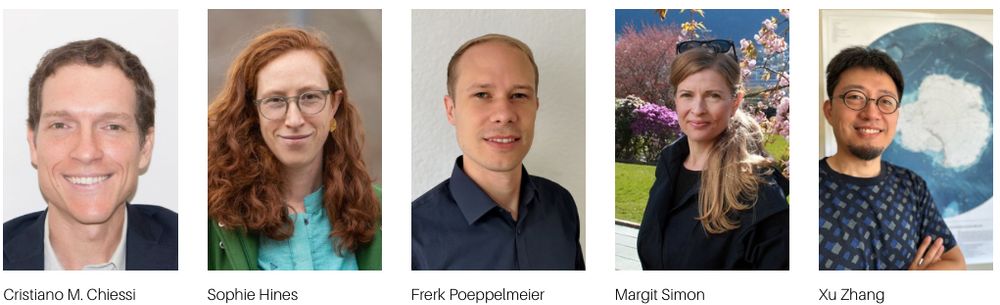
#ICP15 announces #invited #plenary #speakers on #ocean-climate dynamics
Cristiano Chiessi
Sophie Hines @whoi.edu
@fpoeppelmeier.bsky.social Margit Simon @bjerknes.bsky.social
And Xu Zhang @bas.ac.uk
Cristiano Chiessi
Sophie Hines @whoi.edu
@fpoeppelmeier.bsky.social Margit Simon @bjerknes.bsky.social
And Xu Zhang @bas.ac.uk
March 10, 2025 at 1:18 PM
#ICP15 announces #invited #plenary #speakers on #ocean-climate dynamics
Cristiano Chiessi
Sophie Hines @whoi.edu
@fpoeppelmeier.bsky.social Margit Simon @bjerknes.bsky.social
And Xu Zhang @bas.ac.uk
Cristiano Chiessi
Sophie Hines @whoi.edu
@fpoeppelmeier.bsky.social Margit Simon @bjerknes.bsky.social
And Xu Zhang @bas.ac.uk