



Geological Outreach
@geooutreach.bsky.social
M6.6 earthquake, Japan, at 21.52 UTC on 8 December 2025. Recorded in Nottingham using 'slinky' (top) and horizontal pendulum school seismometers
#earthquake ⚒️ #geology 🦕
earthquake.usgs.gov/earthquakes/...
#earthquake ⚒️ #geology 🦕
earthquake.usgs.gov/earthquakes/...

December 8, 2025 at 11:04 PM
M6.6 earthquake, Japan, at 21.52 UTC on 8 December 2025. Recorded in Nottingham using 'slinky' (top) and horizontal pendulum school seismometers
#earthquake ⚒️ #geology 🦕
earthquake.usgs.gov/earthquakes/...
#earthquake ⚒️ #geology 🦕
earthquake.usgs.gov/earthquakes/...
M7.6 earthquake, Japan, at 14.15 UTC on 8 December 2025. Recorded in Nottingham using (from top) 'slinky', horizontal pendulum, and LEGO school seismometers
#earthquake ⚒️ #geology 🦕
earthquake.usgs.gov/earthquakes/...
#earthquake ⚒️ #geology 🦕
earthquake.usgs.gov/earthquakes/...

December 8, 2025 at 3:46 PM
M7.6 earthquake, Japan, at 14.15 UTC on 8 December 2025. Recorded in Nottingham using (from top) 'slinky', horizontal pendulum, and LEGO school seismometers
#earthquake ⚒️ #geology 🦕
earthquake.usgs.gov/earthquakes/...
#earthquake ⚒️ #geology 🦕
earthquake.usgs.gov/earthquakes/...
Reposted by Geological Outreach

A detailed report about the M7.0 Hubbard Glacier #earthquake was just released by Earthquake Insights. ⚒️🧪
open.substack.com/pub/earthqua...
open.substack.com/pub/earthqua...
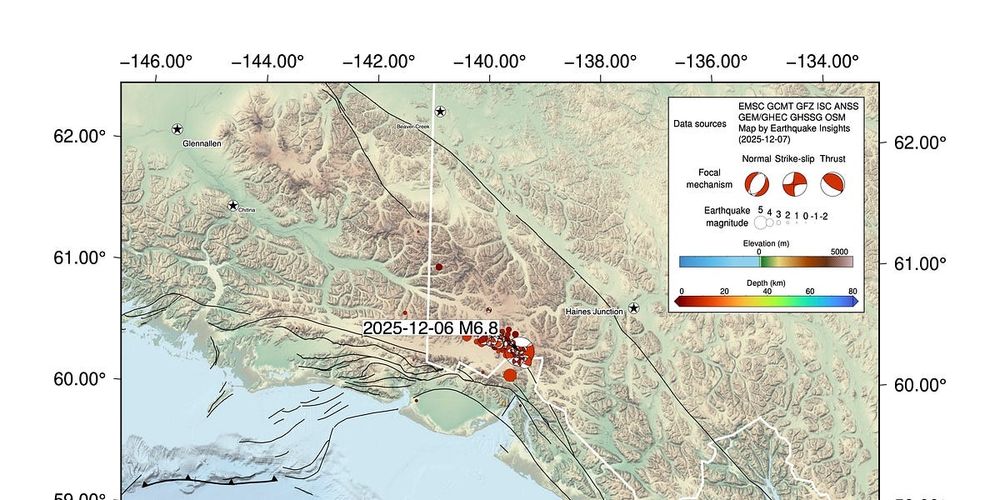
M7.0 earthquake strikes Alaska-Canada border
Aftershocks suggest an unmapped fault beneath the Hubbard Glacier
open.substack.com
December 7, 2025 at 6:38 PM
A detailed report about the M7.0 Hubbard Glacier #earthquake was just released by Earthquake Insights. ⚒️🧪
open.substack.com/pub/earthqua...
open.substack.com/pub/earthqua...
M7.0 earthquake, Canada, at 20.41 UTC on 6 December 2025. Recorded in Nottingham using (from top) 'slinky', horizontal pendulum, and Lego school seismometers
#earthquake ⚒️ #geology 🦕
earthquake.usgs.gov/earthquakes/...
#earthquake ⚒️ #geology 🦕
earthquake.usgs.gov/earthquakes/...

December 6, 2025 at 10:56 PM
M7.0 earthquake, Canada, at 20.41 UTC on 6 December 2025. Recorded in Nottingham using (from top) 'slinky', horizontal pendulum, and Lego school seismometers
#earthquake ⚒️ #geology 🦕
earthquake.usgs.gov/earthquakes/...
#earthquake ⚒️ #geology 🦕
earthquake.usgs.gov/earthquakes/...
Reposted by Geological Outreach
Did you feel shaking in Yukon at 1:41 p.m. MST today? That was a M7 #earthquake near the seismically active YK-AK border and 250 km to the west of #Whitehorse.
Shaking was felt across much of Yukon and southeastern AK.
Details and report shaking:
www.earthquakescanada.nrcan.gc.ca/recent/2025/...
⚒️🧪
Shaking was felt across much of Yukon and southeastern AK.
Details and report shaking:
www.earthquakescanada.nrcan.gc.ca/recent/2025/...
⚒️🧪

December 6, 2025 at 10:44 PM
Did you feel shaking in Yukon at 1:41 p.m. MST today? That was a M7 #earthquake near the seismically active YK-AK border and 250 km to the west of #Whitehorse.
Shaking was felt across much of Yukon and southeastern AK.
Details and report shaking:
www.earthquakescanada.nrcan.gc.ca/recent/2025/...
⚒️🧪
Shaking was felt across much of Yukon and southeastern AK.
Details and report shaking:
www.earthquakescanada.nrcan.gc.ca/recent/2025/...
⚒️🧪
Reposted by Geological Outreach

Reposted by Geological Outreach
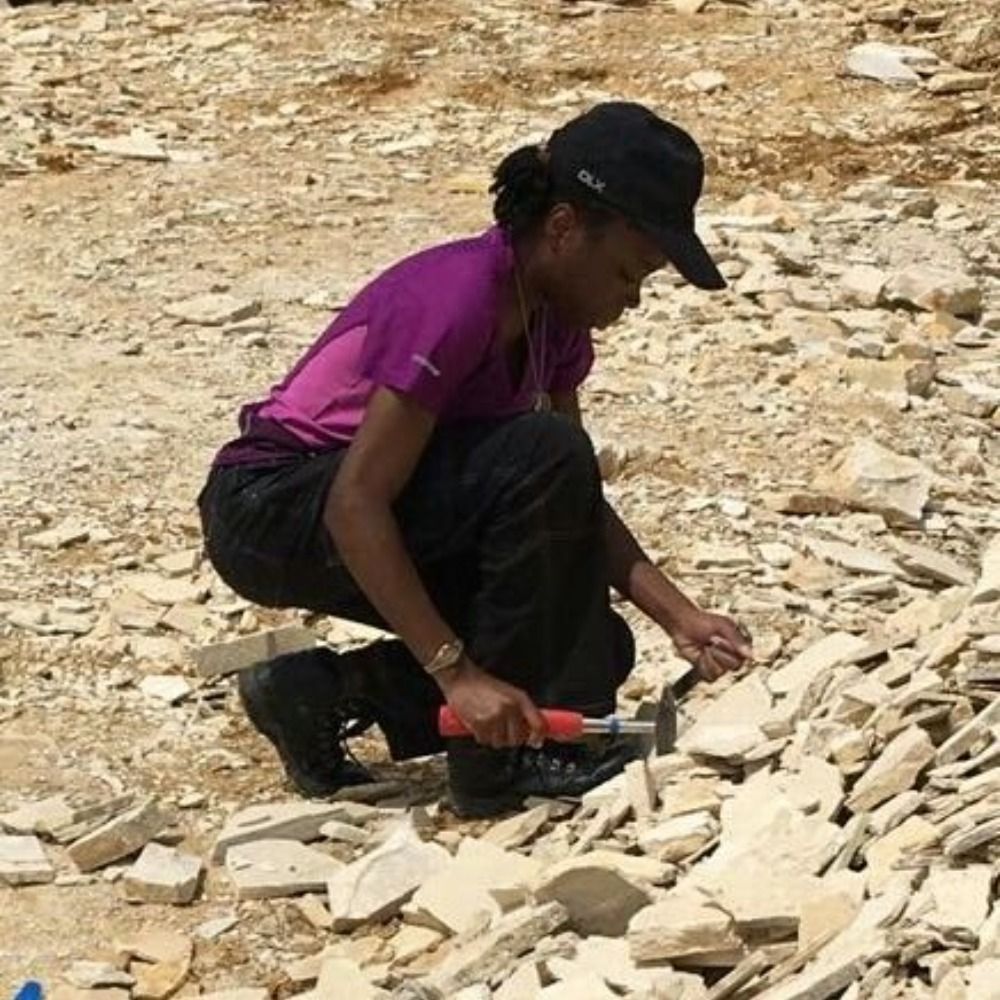
338 of #365Minerals 🧪⚒️
Hibonite:
- Calcium aluminium oxide mineral
- Sometimes contains cerium
- 7.5-8 on the Mohs hardness scale (similar hardness to topaz)
- Found in some high-grade metamorphic rocks
- Named after Paul Hibon, a French prospector who discovered it in 1953 in Madagascar #minerals
Hibonite:
- Calcium aluminium oxide mineral
- Sometimes contains cerium
- 7.5-8 on the Mohs hardness scale (similar hardness to topaz)
- Found in some high-grade metamorphic rocks
- Named after Paul Hibon, a French prospector who discovered it in 1953 in Madagascar #minerals

December 4, 2025 at 10:36 AM
338 of #365Minerals 🧪⚒️
Hibonite:
- Calcium aluminium oxide mineral
- Sometimes contains cerium
- 7.5-8 on the Mohs hardness scale (similar hardness to topaz)
- Found in some high-grade metamorphic rocks
- Named after Paul Hibon, a French prospector who discovered it in 1953 in Madagascar #minerals
Hibonite:
- Calcium aluminium oxide mineral
- Sometimes contains cerium
- 7.5-8 on the Mohs hardness scale (similar hardness to topaz)
- Found in some high-grade metamorphic rocks
- Named after Paul Hibon, a French prospector who discovered it in 1953 in Madagascar #minerals
Reposted by Geological Outreach

There was an earthquake alert that went out this morning for a M5.9 near Reno, NV. This was a false alarm. There was no earthquake.
The USGS is working to identify the issue.
More soon.
The USGS is working to identify the issue.
More soon.
December 4, 2025 at 4:44 PM
There was an earthquake alert that went out this morning for a M5.9 near Reno, NV. This was a false alarm. There was no earthquake.
The USGS is working to identify the issue.
More soon.
The USGS is working to identify the issue.
More soon.
Reposted by Geological Outreach

Cuts to geology programmes, departmental mergers and shrinking university support threaten the long-term health of the discipline. Now, Jan Zalasiewicz examines the developing situation at the University of Leicester: geoscientist.online/sections/vie...
#Geology #Geoscience #HigherEducation
#Geology #Geoscience #HigherEducation

Geology imperilled - GEOSCIENTIST
In recent years, universities across many western nations, including several in the UK, have closed Earth science courses and downsized their geology departments. The University of Leicester is the la...
geoscientist.online
November 26, 2025 at 4:08 PM
Cuts to geology programmes, departmental mergers and shrinking university support threaten the long-term health of the discipline. Now, Jan Zalasiewicz examines the developing situation at the University of Leicester: geoscientist.online/sections/vie...
#Geology #Geoscience #HigherEducation
#Geology #Geoscience #HigherEducation
Reposted by Geological Outreach

P- and S-waves from yesterday’s (23:23:32 UTC 2025/12/03) M3.4 earthquake 3km depth beneath Silverdale Lancashire, UK recorded on my @raspishake.bsky.social in Newcastle-under-Lyme, England (about 130km southsoutheast of the event) ⚒️🧪

December 4, 2025 at 8:41 AM
P- and S-waves from yesterday’s (23:23:32 UTC 2025/12/03) M3.4 earthquake 3km depth beneath Silverdale Lancashire, UK recorded on my @raspishake.bsky.social in Newcastle-under-Lyme, England (about 130km southsoutheast of the event) ⚒️🧪
M5.8 earthquake, China, at 07.44 UTC on 4 December 2025. Recorded in Nottingham using 'slinky' school seismometer
#earthquake ⚒️ #geology 🦕
earthquake.usgs.gov/earthquakes/...
#earthquake ⚒️ #geology 🦕
earthquake.usgs.gov/earthquakes/...

December 4, 2025 at 1:19 PM
M5.8 earthquake, China, at 07.44 UTC on 4 December 2025. Recorded in Nottingham using 'slinky' school seismometer
#earthquake ⚒️ #geology 🦕
earthquake.usgs.gov/earthquakes/...
#earthquake ⚒️ #geology 🦕
earthquake.usgs.gov/earthquakes/...
M3.4 earthquake, Lancashire UK, at 23.23 UTC on 3 December 2025. Recorded in Nottingham using (from top) 'slinky', horizontal pendulum, and LEGO school seismometers
#earthquake ⚒️ #geology 🦕
earthquake.usgs.gov/earthquakes/...
#earthquake ⚒️ #geology 🦕
earthquake.usgs.gov/earthquakes/...

December 4, 2025 at 12:55 PM
M3.4 earthquake, Lancashire UK, at 23.23 UTC on 3 December 2025. Recorded in Nottingham using (from top) 'slinky', horizontal pendulum, and LEGO school seismometers
#earthquake ⚒️ #geology 🦕
earthquake.usgs.gov/earthquakes/...
#earthquake ⚒️ #geology 🦕
earthquake.usgs.gov/earthquakes/...
M5.6 earthquake near Fiji at 23.35 UTC on 2 December 2025. Recorded in Nottingham using 'slinky' (top) and LEGO school seismometers
#earthquake ⚒️ #geology 🦕
earthquake.usgs.gov/earthquakes/...
#earthquake ⚒️ #geology 🦕
earthquake.usgs.gov/earthquakes/...

December 3, 2025 at 7:47 PM
M5.6 earthquake near Fiji at 23.35 UTC on 2 December 2025. Recorded in Nottingham using 'slinky' (top) and LEGO school seismometers
#earthquake ⚒️ #geology 🦕
earthquake.usgs.gov/earthquakes/...
#earthquake ⚒️ #geology 🦕
earthquake.usgs.gov/earthquakes/...
Reposted by Geological Outreach
333 of #365Minerals 🧪⚒️
Anorthoclase:
- A potassium-rich variety of albite
- Forms in sodium-rich volcanic rocks
- Its name comes from the Greek words for oblique and fracture, because of its cleavage angle #minerals
Anorthoclase:
- A potassium-rich variety of albite
- Forms in sodium-rich volcanic rocks
- Its name comes from the Greek words for oblique and fracture, because of its cleavage angle #minerals

November 29, 2025 at 11:55 AM
333 of #365Minerals 🧪⚒️
Anorthoclase:
- A potassium-rich variety of albite
- Forms in sodium-rich volcanic rocks
- Its name comes from the Greek words for oblique and fracture, because of its cleavage angle #minerals
Anorthoclase:
- A potassium-rich variety of albite
- Forms in sodium-rich volcanic rocks
- Its name comes from the Greek words for oblique and fracture, because of its cleavage angle #minerals
Reposted by Geological Outreach
332 of #365Minerals 🧪⚒️
Glaucophane:
- An amphibole group mineral
- Forms in the blueschist metamorphic facies (low temperature, high pressure)
- Its name comes from the Greek words "γλαυκός/glaukos" (sky blue) and "φαίνεσθαι/phainestai" (to appear) because of its colour #minerals
Glaucophane:
- An amphibole group mineral
- Forms in the blueschist metamorphic facies (low temperature, high pressure)
- Its name comes from the Greek words "γλαυκός/glaukos" (sky blue) and "φαίνεσθαι/phainestai" (to appear) because of its colour #minerals

November 28, 2025 at 10:55 AM
332 of #365Minerals 🧪⚒️
Glaucophane:
- An amphibole group mineral
- Forms in the blueschist metamorphic facies (low temperature, high pressure)
- Its name comes from the Greek words "γλαυκός/glaukos" (sky blue) and "φαίνεσθαι/phainestai" (to appear) because of its colour #minerals
Glaucophane:
- An amphibole group mineral
- Forms in the blueschist metamorphic facies (low temperature, high pressure)
- Its name comes from the Greek words "γλαυκός/glaukos" (sky blue) and "φαίνεσθαι/phainestai" (to appear) because of its colour #minerals
Reposted by Geological Outreach

Geology and palaeobiology at the University of Leicester are under threat, with at least 14 staff expected to be made redundant. Support them, their postdocs, and their students by signing this petition: c.org/SK8Xm8dhqK

Sign the Petition
Save Geology at the University of Leicester
c.org
November 19, 2025 at 11:31 AM
Geology and palaeobiology at the University of Leicester are under threat, with at least 14 staff expected to be made redundant. Support them, their postdocs, and their students by signing this petition: c.org/SK8Xm8dhqK
Reposted by Geological Outreach
Quite a big #earthquake with a magnitude of M6.0 about 60 northeast of Anchorage, #Alaska, a few minutes ago. Here's the seismic signal of my Raspishake seismometer 11 mins after origin time in Herne, Germany, which is 7300 km away from the epicenter. 🧪⚒️ #geology @raspishake.bsky.social

November 27, 2025 at 5:27 PM
Quite a big #earthquake with a magnitude of M6.0 about 60 northeast of Anchorage, #Alaska, a few minutes ago. Here's the seismic signal of my Raspishake seismometer 11 mins after origin time in Herne, Germany, which is 7300 km away from the epicenter. 🧪⚒️ #geology @raspishake.bsky.social
Reposted by Geological Outreach
Thin Section Thursday!
Ophitic texture of plagioclase laths encased in clinopyroxene in a gabbro from the Glen Mtns. Layered Complex in southwestern Oklahoma. Contributed by Robert Puckett. You can contribute too! Send images to akoziol1 at udayton dot edu. #thinsectionthursday
Ophitic texture of plagioclase laths encased in clinopyroxene in a gabbro from the Glen Mtns. Layered Complex in southwestern Oklahoma. Contributed by Robert Puckett. You can contribute too! Send images to akoziol1 at udayton dot edu. #thinsectionthursday

November 27, 2025 at 1:32 PM
Thin Section Thursday!
Ophitic texture of plagioclase laths encased in clinopyroxene in a gabbro from the Glen Mtns. Layered Complex in southwestern Oklahoma. Contributed by Robert Puckett. You can contribute too! Send images to akoziol1 at udayton dot edu. #thinsectionthursday
Ophitic texture of plagioclase laths encased in clinopyroxene in a gabbro from the Glen Mtns. Layered Complex in southwestern Oklahoma. Contributed by Robert Puckett. You can contribute too! Send images to akoziol1 at udayton dot edu. #thinsectionthursday
M6.6 earthquake, Indonesia, at 04.56 UTC on 27 November 2025. Recorded in Nottingham using horizontal pendulum school seismometer
#earthquake ⚒️ #geology 🦕
earthquake.usgs.gov/earthquakes/...
#earthquake ⚒️ #geology 🦕
earthquake.usgs.gov/earthquakes/...

November 27, 2025 at 4:35 PM
M6.6 earthquake, Indonesia, at 04.56 UTC on 27 November 2025. Recorded in Nottingham using horizontal pendulum school seismometer
#earthquake ⚒️ #geology 🦕
earthquake.usgs.gov/earthquakes/...
#earthquake ⚒️ #geology 🦕
earthquake.usgs.gov/earthquakes/...
A small gift to myself

November 24, 2025 at 9:09 PM
A small gift to myself
Limited success with the bee hotel. 19 red mason cocoons and signs of interest from a leaf cutter bee

November 24, 2025 at 8:34 PM
Limited success with the bee hotel. 19 red mason cocoons and signs of interest from a leaf cutter bee
Reposted by Geological Outreach
326 of #365Minerals 🧪⚒️
Periclase:
- A magnesium oxide mineral
- Forms via high temperature contact metamorphism
- Used in the production of fire bricks
- Its name comes from the Greek word "περικλάω/perikláo" (to break around) because of its cleavage #minerals
Periclase:
- A magnesium oxide mineral
- Forms via high temperature contact metamorphism
- Used in the production of fire bricks
- Its name comes from the Greek word "περικλάω/perikláo" (to break around) because of its cleavage #minerals


November 22, 2025 at 10:42 AM
326 of #365Minerals 🧪⚒️
Periclase:
- A magnesium oxide mineral
- Forms via high temperature contact metamorphism
- Used in the production of fire bricks
- Its name comes from the Greek word "περικλάω/perikláo" (to break around) because of its cleavage #minerals
Periclase:
- A magnesium oxide mineral
- Forms via high temperature contact metamorphism
- Used in the production of fire bricks
- Its name comes from the Greek word "περικλάω/perikláo" (to break around) because of its cleavage #minerals
M5.7 earthquake, Kamchatka, at 22.38 UTC on 21 November 2025. P-waves recorded in Nottingam using 'slinky' (top) and LEGO school seismometers
#earthquake ⚒️ #geology 🦕
earthquake.usgs.gov/earthquakes/...
#earthquake ⚒️ #geology 🦕
earthquake.usgs.gov/earthquakes/...

November 22, 2025 at 4:43 PM
M5.7 earthquake, Kamchatka, at 22.38 UTC on 21 November 2025. P-waves recorded in Nottingam using 'slinky' (top) and LEGO school seismometers
#earthquake ⚒️ #geology 🦕
earthquake.usgs.gov/earthquakes/...
#earthquake ⚒️ #geology 🦕
earthquake.usgs.gov/earthquakes/...
Reposted by Geological Outreach

BGS SEISMIC INFORMATION: PUBIL, PERTH & KINROSS 22 NOVEMBER 2025 04:24 UTC 2.5 ML
The following preliminary information is available for this earthquake:
DATE: 22 November 2025
ORIGIN TIME: 04:25 42s UTC
LAT/LON: 56.546° North / 4.532° West
GRID REF: 244kmE / 742kmN
DEPTH: 5 km
MAGNITUDE: 2.5 Ml
The following preliminary information is available for this earthquake:
DATE: 22 November 2025
ORIGIN TIME: 04:25 42s UTC
LAT/LON: 56.546° North / 4.532° West
GRID REF: 244kmE / 742kmN
DEPTH: 5 km
MAGNITUDE: 2.5 Ml

November 22, 2025 at 11:47 AM
BGS SEISMIC INFORMATION: PUBIL, PERTH & KINROSS 22 NOVEMBER 2025 04:24 UTC 2.5 ML
The following preliminary information is available for this earthquake:
DATE: 22 November 2025
ORIGIN TIME: 04:25 42s UTC
LAT/LON: 56.546° North / 4.532° West
GRID REF: 244kmE / 742kmN
DEPTH: 5 km
MAGNITUDE: 2.5 Ml
The following preliminary information is available for this earthquake:
DATE: 22 November 2025
ORIGIN TIME: 04:25 42s UTC
LAT/LON: 56.546° North / 4.532° West
GRID REF: 244kmE / 742kmN
DEPTH: 5 km
MAGNITUDE: 2.5 Ml
Reposted by Geological Outreach

Some more #Charnia content this #FossilFriday, but this time Charnia grandis reins. stat. It had been synonymized with C.masoni and mostly used for gigantic specimens of what is now C.brasieri but its strange rhomboidal branches are very distinct. the 1st branches are 45o and 2nd are at 90o


November 14, 2025 at 11:34 AM
Some more #Charnia content this #FossilFriday, but this time Charnia grandis reins. stat. It had been synonymized with C.masoni and mostly used for gigantic specimens of what is now C.brasieri but its strange rhomboidal branches are very distinct. the 1st branches are 45o and 2nd are at 90o