Jordan Axt
jordanaxt.bsky.social
Jordan Axt
@jordanaxt.bsky.social

Associate Professor of Psychology at McGill, Director of Data and Methodology at Project Implicit.

Psychology 37%
Political science 26%

Should be available to download here: osf.io/nh5wg/files/...
OSF
osf.io

Other Bluesky authors include @michelangelo77.bsky.social @adamhahn.bsky.social and @tomcostello.bsky.social. But again check out the full paper here! osf.io/preprints/ps....
OSF
osf.io

Such a pleasure to work on this project, especially with co-leads Paul Connor and Suzanne Hoogeveen. Additional thanks to Eric Uhlmann, Cory Clark, Gregory Mitchell and Philip Tetlock, who made sure the adversarial collaboration model could be used to contribute to the study of implicit attitudes.

Much, much more -- including tests of various moderators -- is available in the paper. In all we think this work lends itself to optimistic and pessimistic interpretations of the results and what the findings mean for the larger field of implicit social cognition.

Notably, our behavioral tasks did not show anti-Black discrimination on average -- several showed slight pro-Black biases in behavior. This complicates some of our conclusions and raises more general questions about whether we can expect anti-Black discrimination to arise in typical "lab" studies.
Implicit racial attitudes accounted for ~2.5% of variance in behavior beyond explicit racial attitudes, an effect size that was *just* over our agreed upon threshold for what would constitute a practically significant effect. Explicit racial attitudes still explained much more variance (~45%).

Over 2000 White American adults across two study sessions completed: four measures of implicit racial attitudes (IAT, SC-IAT, AMP, EPT), four measures of explicit racial attitudes, and four behavioral discrimination measures (like hypothetical admissions or hiring tasks).

Proponents, skeptics and more neutral observers of indirect measures like the IAT worked together to design a study and pre-register analyses, with everyone agreeing that results would be an informative test of our central questions.
New paper in press at JPSP! An adversarial collaboration focusing on a large-scale test of how strongly implicit racial attitudes predict discriminatory behavior. Pre-print here: osf.io/preprints/ps...

But please read the full paper here! osf.io/preprints/ps....
OSF
osf.io

Such a pleasure to work on this project, especially with co-leads Paul Connor and Suzanne Hoogeveen. Additional thanks to Eric Uhlmann, Cory Clark, Gregory Mitchell and Philip Tetlock, who made sure this adversarial collaboration model could make a contribution to the study of implicit attitudes.

Much more -- including tests of various moderators -- in the paper. In all we think this work lends itself to both comparatively optimistic and pessimistic interpretations of the results and what the findings mean for larger discussions about the field of implicit social cognition.

Notably, our behavioral tasks did not show anti-Black discrimination on average—several showed slight “pro-Black” biases in behavior. This complicates some of our conclusions and raises more general questions about whether we can expect anti-Black discrimination to arise in typical “lab” studies.

Implicit racial attitudes accounted for ~2.5% of variance beyond explicit attitudes on behavior, an effect size that was *just* over our agreed upon threshold for what would constitute a practically significant effect. Explicit racial attitudes still explained much more variance in behavior (~45%).

In the study, over 2000 White American adults completed: four measures of implicit racial attitudes (IAT, SC-IAT, AMP, EPT), four measures of explicit racial attitudes, and four behavioral discrimination measures (like hypothetical admissions or hiring tasks).

Proponents, skeptics and more neutral observers of indirect measures like the IAT worked together to agree on measures, design the study, and pre-register analyses, with all agreeing that results would be an informative test of our central questions.
Delighted to share that we are currently hiring for a tenure-track position (open rank) in Clinical Psychology in the Department of Psychology at McGill University. Come join a great department! Link to apply: mcgill.wd3.myworkdayjobs.com/en-US/mcgill....

Reposted by Jordan Axt

ISCON is excited to announce that the 2023 Best Social Cognition Paper Award goes to Hester, N., & Hehman, E. (2023). Dress is a fundamental component of person perception. Personality and Social Psychology Review, 27(4), 414-433! Congrats @neilrhester.bsky.social and @erichehman.bsky.social!
New JPSP article is out, with @jordanaxt.bsky.social, @calvinklai.bsky.social, and many collaborators! We organised a contest study with an open call for interested researchers to submit their discrimination-reduction intervention ideas. doi.org/10.1037/pspa...

For sure, I think there is a "physiological" component here that contributes to differences in *desired* portion sizes. Though there are also societal factors in terms of bodily expectations. Paper finds that explicit gender-portion beliefs do correlate with things like support for beauty ideals.

Though also interesting that many people seem to believe in a gender effect. Check out the 500k likes on this video, for example: www.tiktok.com/@travelintho...
Your husband orders your chipotle order… when he orders it for me, I get wayyyy more food #chipotle #chipotlehacks #foodie #mexicanfood #burritobowl #rvlife #fulltimetraveler #husbandgoals
TikTok video by Fulltime Travel| Libby & Alex
www.tiktok.com

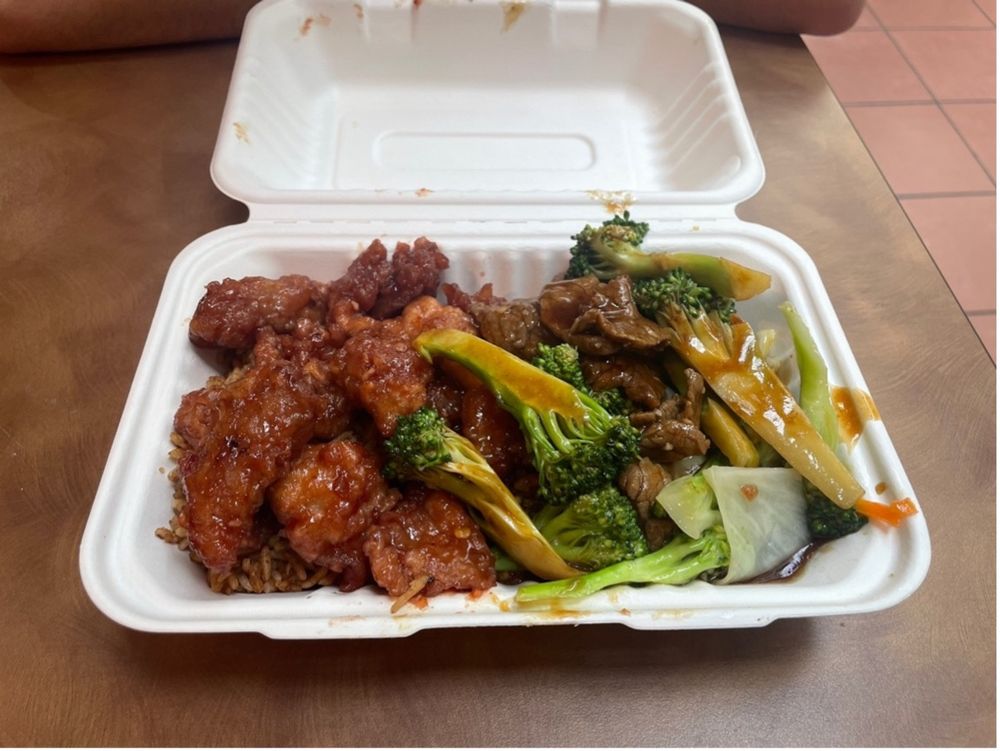
Yeah, I think that's right. There is certainly variance in portion sizes given at these restos -- here is a fun demonstration of that:
www.cnn.com/chipotle-por...
But that variance does not seem related to customer gender alone. Could also be as you note that men are more into order 'hacks'

Read much more about this (open access) work, led by lab members Elisabeth Irvine and William Li, here: authors.elsevier.com/sd/article/S...
ScienceDirect.com | Science, health and medical journals, full text articles and books.
authors.elsevier.com

This field study finding was far from obvious, though – a majority of both a laypeople and social psychologist sample predicted that men would receive larger portions than women in our field study.

Perhaps surprisingly, the field study showed no significant difference in portion sizes given to men vs. women. Hard to know exactly why this occurred, but one possibility is that standardization in serving practices at such restaurants may have limited the impact of gender on portion decisions.

But my favorite (and most expensive) part is the field study, where we sent 91 pairs of men and women – matched on BMI -- to fast-casual restaurants where they ordered the exact same meal from the same server separated by a few minutes. We then weighed their portions outside the restaurant.

Another study showed that these stereotypes impact memory. Using a “Who ordered what?” paradigm found that people remembered counter-stereotypical pairings (women with large portions, men with small portions) better than stereotype-consistent ones!

First, studies using both direct and indirect measures found that gender-portion stereotypes exist -- people consistently associate men with larger food portions and women with smaller portions, even when using the exact same foods but just showing different amounts.

Reposted by Eric Hehman

New lab paper in JESP! What is the association between gender and food portion sizes? And how might such associations impact actual real-world treatment? We used lab and field studies to explore this question 🍽️