


KunzLab@LMU
@kunzlab.bsky.social
Passionately researching to understand the transport processes and genes required for proper chloroplast function and photosynthesis.
Pinned

The chloroplast ionome shines light on the dynamics of organellar iron homeostasis
Loss of chloroplast iron (Fe) ferritin storage leads to Fe re-shuttling into the vacuole and reduced leaf tissue Fe content.
academic.oup.com
Plz read our study by @lmumuenchen.bsky.social PhD cand. Lorenz. He describes chloroplast ionomes for several 🌱species & shows how plastid iron can be massively increased. Terrific help by peers from @ruhr-uni-bochum.de, @mizzouid.bsky.social and @uni-saarland.de academic.oup.com/plcell/artic...
Plz read our study by @lmumuenchen.bsky.social PhD cand. Lorenz. He describes chloroplast ionomes for several 🌱species & shows how plastid iron can be massively increased. Terrific help by peers from @ruhr-uni-bochum.de, @mizzouid.bsky.social and @uni-saarland.de academic.oup.com/plcell/artic...
The chloroplast ionome shines light on the dynamics of organellar iron homeostasis
Loss of chloroplast iron (Fe) ferritin storage leads to Fe re-shuttling into the vacuole and reduced leaf tissue Fe content.
academic.oup.com
February 2, 2026 at 8:16 AM
Plz read our study by @lmumuenchen.bsky.social PhD cand. Lorenz. He describes chloroplast ionomes for several 🌱species & shows how plastid iron can be massively increased. Terrific help by peers from @ruhr-uni-bochum.de, @mizzouid.bsky.social and @uni-saarland.de academic.oup.com/plcell/artic...
Reposted by KunzLab@LMU

Please share!
My group at @zmbp-tuebingen.bsky.social is offering a post-doctoral position (4 years). We look for a structural biologist with experience in Cryo-EM/Cryo-ET to investigate the mechanisms of host invasion by pathogenic fungi. Deadline February 28th!
uni-tuebingen.de/universitaet...
My group at @zmbp-tuebingen.bsky.social is offering a post-doctoral position (4 years). We look for a structural biologist with experience in Cryo-EM/Cryo-ET to investigate the mechanisms of host invasion by pathogenic fungi. Deadline February 28th!
uni-tuebingen.de/universitaet...

January 30, 2026 at 1:56 PM
Please share!
My group at @zmbp-tuebingen.bsky.social is offering a post-doctoral position (4 years). We look for a structural biologist with experience in Cryo-EM/Cryo-ET to investigate the mechanisms of host invasion by pathogenic fungi. Deadline February 28th!
uni-tuebingen.de/universitaet...
My group at @zmbp-tuebingen.bsky.social is offering a post-doctoral position (4 years). We look for a structural biologist with experience in Cryo-EM/Cryo-ET to investigate the mechanisms of host invasion by pathogenic fungi. Deadline February 28th!
uni-tuebingen.de/universitaet...
Reposted by KunzLab@LMU
The chloroplast ionome shines light on the dynamics of organellar iron homeostasis academic.oup.com/plcell/artic... @theplantcell.bsky.social

The chloroplast ionome shines light on the dynamics of organellar iron homeostasis
Loss of chloroplast iron (Fe) ferritin storage leads to Fe re-shuttling into the vacuole and reduced leaf tissue Fe content.
academic.oup.com
January 30, 2026 at 2:30 PM
The chloroplast ionome shines light on the dynamics of organellar iron homeostasis academic.oup.com/plcell/artic... @theplantcell.bsky.social
Reposted by KunzLab@LMU
We have a new PhD position available in our group to study the Influence of Global Change Factors on Plant-Insect Interactions. Please pass this information to potentially interested people:
uni-bielefeld.hr4you.org/job/view/406...
uni-bielefeld.hr4you.org/job/view/406...
Research Position (PhD candidate)
<div>The Department of Chemical Ecology investigates the role of natural products that are involved in communication between individuals of the ...
uni-bielefeld.hr4you.org
January 27, 2025 at 11:59 AM
We have a new PhD position available in our group to study the Influence of Global Change Factors on Plant-Insect Interactions. Please pass this information to potentially interested people:
uni-bielefeld.hr4you.org/job/view/406...
uni-bielefeld.hr4you.org/job/view/406...
Reposted by KunzLab@LMU
Excited to join the Editorial Board of @plosbiology.org, the #PLOS flagship journal in the Life Sciences, that's blazing a trail in support of selective, equitable #OpenScience and reaching global audiences to help advance science faster 📝 🤓 🌱
January 29, 2026 at 5:28 PM
Excited to join the Editorial Board of @plosbiology.org, the #PLOS flagship journal in the Life Sciences, that's blazing a trail in support of selective, equitable #OpenScience and reaching global audiences to help advance science faster 📝 🤓 🌱
Reposted by KunzLab@LMU

#MAdLand Expression: adding sexual reproduction stages to the #Physcomitrium patens web tool. Great collaboration with @noefpbio.bsky.social @jandevries.bsky.social
@watertoland.bsky.social
Paper online in @theplantjournal.bsky.social
doi.org/10.1111/tpj....
@watertoland.bsky.social
Paper online in @theplantjournal.bsky.social
doi.org/10.1111/tpj....

January 29, 2026 at 3:22 PM
#MAdLand Expression: adding sexual reproduction stages to the #Physcomitrium patens web tool. Great collaboration with @noefpbio.bsky.social @jandevries.bsky.social
@watertoland.bsky.social
Paper online in @theplantjournal.bsky.social
doi.org/10.1111/tpj....
@watertoland.bsky.social
Paper online in @theplantjournal.bsky.social
doi.org/10.1111/tpj....
Reposted by KunzLab@LMU
Someone has been sending fake/phishing emails that impersonate my work email. If you get such an email- it is probably obvious- please check with me/delete.
January 28, 2026 at 10:58 AM
Someone has been sending fake/phishing emails that impersonate my work email. If you get such an email- it is probably obvious- please check with me/delete.
Reposted by KunzLab@LMU

@labcosta.bsky.social Out now in ScienceAdvances
our new work with @AndreaBassi78
MAcro Plant Projection Imaging (MAPPI): An open, scalable platform for whole-plant fluorescence real-time imaging | Science Advances science.org/doi/10.1126/...
our new work with @AndreaBassi78
MAcro Plant Projection Imaging (MAPPI): An open, scalable platform for whole-plant fluorescence real-time imaging | Science Advances science.org/doi/10.1126/...
January 23, 2026 at 8:13 PM
@labcosta.bsky.social Out now in ScienceAdvances
our new work with @AndreaBassi78
MAcro Plant Projection Imaging (MAPPI): An open, scalable platform for whole-plant fluorescence real-time imaging | Science Advances science.org/doi/10.1126/...
our new work with @AndreaBassi78
MAcro Plant Projection Imaging (MAPPI): An open, scalable platform for whole-plant fluorescence real-time imaging | Science Advances science.org/doi/10.1126/...
Proton channel inactivation results in loss of chloroplast NDH complex activity url: academic.oup.com/plphys/artic...

Proton channel inactivation results in loss of chloroplast NDH complex activity
Mutation of protonmotive residues in the NdhF subunit of photosynthetic complex I leads to a nonfunctional complex, demonstrating tight coupling of proton
academic.oup.com
January 21, 2026 at 7:40 AM
Proton channel inactivation results in loss of chloroplast NDH complex activity url: academic.oup.com/plphys/artic...
Reposted by KunzLab@LMU
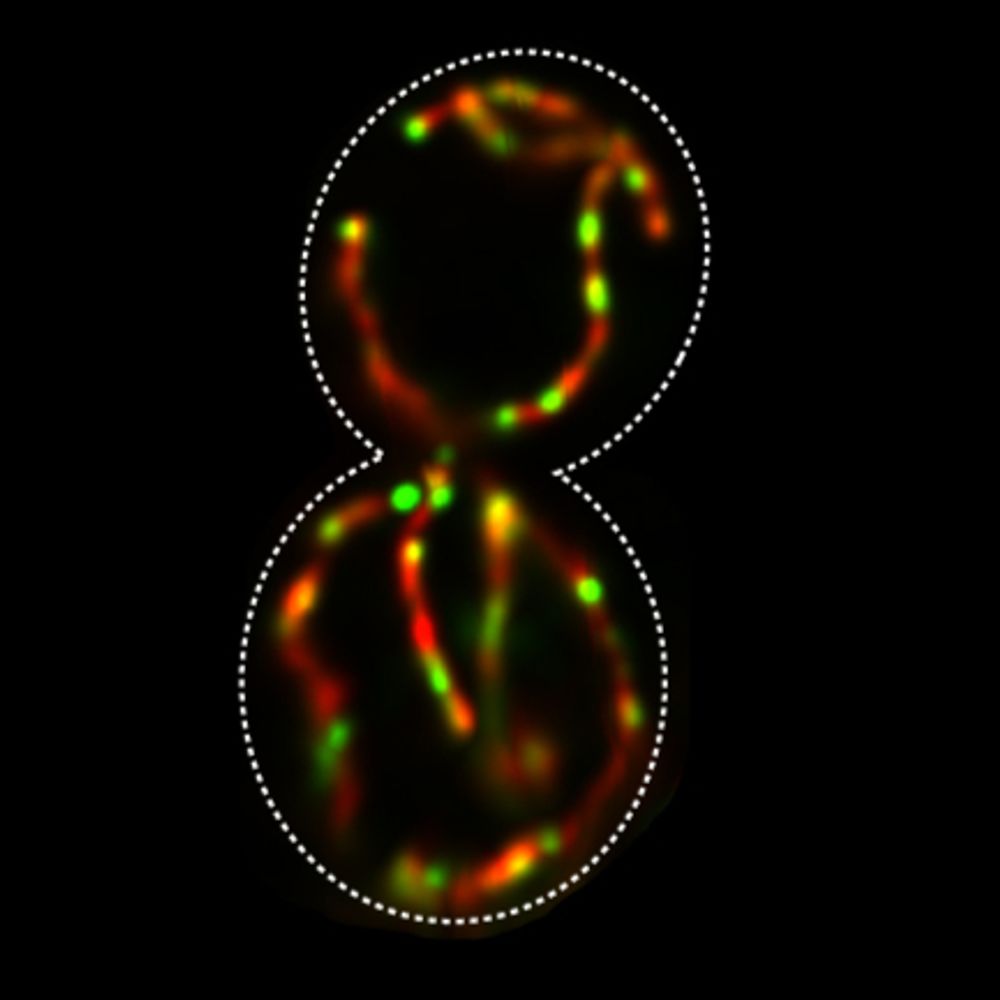
Our new paper is out 🎉 in @narjournal.bsky.social
A fascinating complex composed of Mrx6, Mam33, and Pim1 controls #mtDNA copy number by regulating Lon-dependent substrate turnover in #yeast.
Congrats to @simonrecyclable.bsky.social, all co-authors and collaborators!
academic.oup.com/nar/article/...
A fascinating complex composed of Mrx6, Mam33, and Pim1 controls #mtDNA copy number by regulating Lon-dependent substrate turnover in #yeast.
Congrats to @simonrecyclable.bsky.social, all co-authors and collaborators!
academic.oup.com/nar/article/...

Mrx6 binds the Lon protease Pim1 N-terminal domain to confer selective substrate specificity and regulate mtDNA copy number
Abstract. Mitochondrial DNA (mtDNA) copy number regulation remains incompletely understood, despite its importance in cellular function. In Saccharomyces c
academic.oup.com
January 15, 2026 at 3:40 PM
Our new paper is out 🎉 in @narjournal.bsky.social
A fascinating complex composed of Mrx6, Mam33, and Pim1 controls #mtDNA copy number by regulating Lon-dependent substrate turnover in #yeast.
Congrats to @simonrecyclable.bsky.social, all co-authors and collaborators!
academic.oup.com/nar/article/...
A fascinating complex composed of Mrx6, Mam33, and Pim1 controls #mtDNA copy number by regulating Lon-dependent substrate turnover in #yeast.
Congrats to @simonrecyclable.bsky.social, all co-authors and collaborators!
academic.oup.com/nar/article/...
Reposted by KunzLab@LMU

We are looking for a Head of Cell Biology here at @kwsgroup.bsky.social Vegetables.
This is a permanent, full-time position located in Wageningen, Netherlands.
jobs.kws.com/job/Wagening...
#PlantScience #PlantSciJobs #PlantScienceJobs #PlantCellBiology #PlantBreeding #PlantSciJob #PlantScienceJob
This is a permanent, full-time position located in Wageningen, Netherlands.
jobs.kws.com/job/Wagening...
#PlantScience #PlantSciJobs #PlantScienceJobs #PlantCellBiology #PlantBreeding #PlantSciJob #PlantScienceJob
Head of Cell Biology KWS Vegetables
Head of Cell Biology KWS Vegetables
jobs.kws.com
December 1, 2025 at 1:36 PM
We are looking for a Head of Cell Biology here at @kwsgroup.bsky.social Vegetables.
This is a permanent, full-time position located in Wageningen, Netherlands.
jobs.kws.com/job/Wagening...
#PlantScience #PlantSciJobs #PlantScienceJobs #PlantCellBiology #PlantBreeding #PlantSciJob #PlantScienceJob
This is a permanent, full-time position located in Wageningen, Netherlands.
jobs.kws.com/job/Wagening...
#PlantScience #PlantSciJobs #PlantScienceJobs #PlantCellBiology #PlantBreeding #PlantSciJob #PlantScienceJob
Plant Science aficionados in 🇫🇷&🇩🇪&🇦🇹: The 🎬🍿Silent Friend takes you on a journey about the passion to researching plants in different epochs. Check out the trailer youtu.be/_6PAShC_ILg and when to watch it where: www.pandorafilm.de/filme/silent... #plantscience

SILENT FRIEND I HD-Trailer I Ab 15.01.2026 im Kino
YouTube video by Pandora Film Verleih
youtu.be
January 13, 2026 at 9:35 PM
Plant Science aficionados in 🇫🇷&🇩🇪&🇦🇹: The 🎬🍿Silent Friend takes you on a journey about the passion to researching plants in different epochs. Check out the trailer youtu.be/_6PAShC_ILg and when to watch it where: www.pandorafilm.de/filme/silent... #plantscience
Reposted by KunzLab@LMU
Biogenic retrograde signaling via GUN1 ensures thermotolerant chloroplast biogenesis during seedling establishment in Arabidopsis thaliana onlinelibrary.wiley.com/doi/full/10.... @jipb.bsky.social
onlinelibrary.wiley.com
January 4, 2026 at 5:14 AM
Biogenic retrograde signaling via GUN1 ensures thermotolerant chloroplast biogenesis during seedling establishment in Arabidopsis thaliana onlinelibrary.wiley.com/doi/full/10.... @jipb.bsky.social
Reposted by KunzLab@LMU

New Preprint: Diploid potato lines for the study and improvement of starch metabolism and structure (2025)
https://www.tsl.ac.uk/publications/161537
https://www.tsl.ac.uk/publications/161537

bioRxiv: Diploid potato lines for the study and improvement of starch metabolism and structure (2025)
Diploid potato breeding enables faster genetic improvement via selection against deleterious alleles in inbred lines, unlike breeding by intercrossing tetraploid varieties. Starch is the major source of calories in potato tubers, but the starch properties of diploid lines have rarely been reported. In this study, we provide a comprehensive characterisation of tuber and starch properties in two diploid lines that are early isolates from the Solynta breeding program, B26 and B100, and their F1 hybrids. B100 produced fewer, but larger tubers compared to B26, and both diploid lines produced tubers that are smaller than the tetraploid variety, Clearwater Russet. The low tuber yield of B100 correlates with its high self-compatibility and fruit production. Pruning of fruits in B100 significantly increased total tuber yield per plant by stimulating more tuber initiations, but had no effect on average tuber weight, starch content or starch structure. Among the diploid, hybrid and tetraploid lines examined, there were no differences in the total starch content of tubers. Although amylopectin structure and amylose content were similar between the two diploid lines and the tetraploid comparison, B26 had elevated levels of resistant starch and a striking elongated granule morphology. Our results showcase the variation in source-sink relations and starch structure in diploid potato breeding material, demonstrating their potential for research into the genetics underpinning metabolic and quality traits.
doi.org
December 30, 2025 at 11:16 AM
New Preprint: Diploid potato lines for the study and improvement of starch metabolism and structure (2025)
https://www.tsl.ac.uk/publications/161537
https://www.tsl.ac.uk/publications/161537
Reposted by KunzLab@LMU
🔥 New episode of the Night Science Podcast comes out today! Kenneth Stanley tells us how "the only way to eventually solve the problem is to stop caring about the problem, which is what we meant when we said abandoning objectives." Check out this episode on why greatness cannot be planned.

December 29, 2025 at 3:35 PM
🔥 New episode of the Night Science Podcast comes out today! Kenneth Stanley tells us how "the only way to eventually solve the problem is to stop caring about the problem, which is what we meant when we said abandoning objectives." Check out this episode on why greatness cannot be planned.
Reposted by KunzLab@LMU

Explore plasma's extracellular vesicles: 4,500 proteins, 829 lipids unraveled. New insights into health & disease pathways! PMID:41315767, Nat Cell Biol 2025, @NatureCellBio https://doi.org/10.1038/s41556-025-01795-7 #Medsky #Pharmsky #RNA #ASHG #ESHG 🧪

Multi-omics identify hallmark protein and lipid features of small extracellular vesicles circulating in human plasma | Nature Cell Biology
Extracellular vesicles (EVs) are an essential signalling entity in human plasma implicated in health and disease. Still, their core protein and lipid componentry, which lie at the centre of EV form and function, remain poorly defined. Here we performed high-resolution density gradient fractionation of over 140 human plasma samples to isolate circulating EVs, and systematically constructed their quantitative proteome (4,500 proteins) and lipidome (829 lipids) landscapes using mass spectrometry. We identified a highly conserved panel of 182 proteins (including ADAM10, STEAP23 and STX7) and 52 lipids (including PS, PIPs, Hex2Cer and PAs), providing a deep survey of hallmark molecular features and biological pathways characteristic to circulating EVs. We also mapped the surfaceome diversity, identifying 151 proteins on the EV surface. We further established a set of 42 proteins and 114 lipids features that served as hallmark features of non-EV particles in plasma. We submit ADAM10 and PS(3
doi.org
December 26, 2025 at 9:10 AM
Reposted by KunzLab@LMU

Thanks for the shout-out! If anybody wants to get an overview of expansion microscopy techniques in plants, give this a read! 🔬
🔬 EXPERT VIEW 🔬
In this review, Cox & Czymmek cover the recent developments of expansion microscopy techniques in plant systems and provides examples of their applications in plant biology research.
🔗 doi.org/10.1093/jxb/...
#PlantScience 🧪 @kcox-bioguy.bsky.social
In this review, Cox & Czymmek cover the recent developments of expansion microscopy techniques in plant systems and provides examples of their applications in plant biology research.
🔗 doi.org/10.1093/jxb/...
#PlantScience 🧪 @kcox-bioguy.bsky.social

December 27, 2025 at 7:31 PM
Thanks for the shout-out! If anybody wants to get an overview of expansion microscopy techniques in plants, give this a read! 🔬
Reposted by KunzLab@LMU
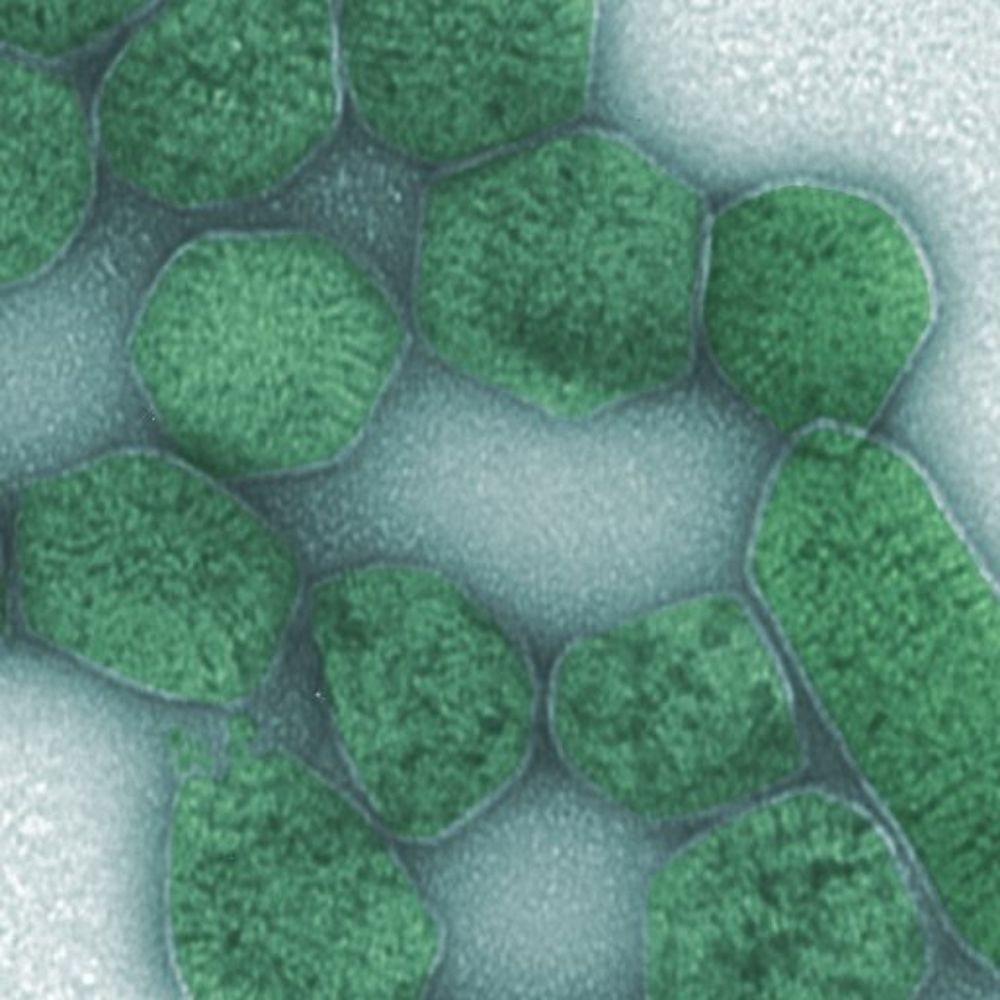
High-Throughput Detection of Cyanobacterial Form I Rubisco Assembly | ACS Synthetic Biology pubs.acs.org/doi/full/10....

High-Throughput Detection of Cyanobacterial Form I Rubisco Assembly
Rubisco catalyzes the CO2 fixation step in the dark reactions of photosynthesis. Transgenic expression of better-performing Rubisco orthologs in plants or discovery of improved mutants of Rubisco via ...
pubs.acs.org
December 27, 2025 at 9:07 AM
High-Throughput Detection of Cyanobacterial Form I Rubisco Assembly | ACS Synthetic Biology pubs.acs.org/doi/full/10....
Reposted by KunzLab@LMU

Online Now: Toward community-driven visual proteomics with large-scale cryo-electron tomography of Chlamydomonas reinhardtii Online now:

Toward community-driven visual proteomics with large-scale cryo-electron tomography of Chlamydomonas reinhardtii
Using the latest advances in instrumentation and computational workflows, Kelley et al. present a large-scale annotated cryo-electron tomography dataset of the model green alga, Chlamydomonas reinhardtii. This unprecedented community resource is rich in high-resolution biological information and empowers the development of new methods for visual proteomics.
dlvr.it
December 24, 2025 at 8:14 PM
Online Now: Toward community-driven visual proteomics with large-scale cryo-electron tomography of Chlamydomonas reinhardtii Online now:
Reposted by KunzLab@LMU
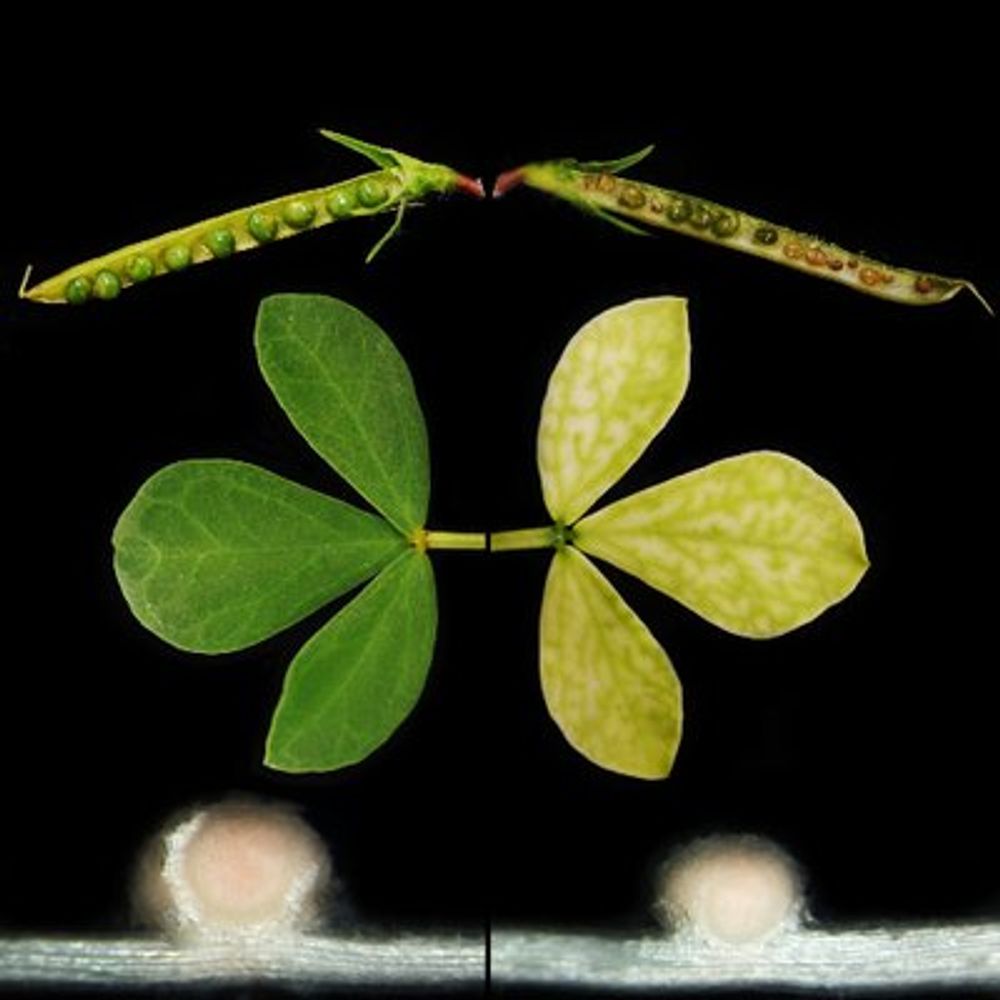
Mitochondrial formate dehydrogenase links mitochondrial and cytosolic one carbon metabolism via a one-carbon shunt (Marc-Sven Roell , Franziska Kuhnert , Philipp Westhoff , Sompop Saeheng , Sanja Roje , Andreas P M Weber) doi.org/10.1093/plph... #PlantScience @aspbofficial @franzikuhnert

Mitochondrial formate dehydrogenase links mitochondrial and cytosolic one carbon metabolism via a one-carbon shunt
Mitochondrial formate dehydrogenase regulates the metabolic flux within the one-carbon shunt to connect cytosolic and mitochondrial one-carbon metabolism.
doi.org
December 23, 2025 at 1:42 PM
Mitochondrial formate dehydrogenase links mitochondrial and cytosolic one carbon metabolism via a one-carbon shunt (Marc-Sven Roell , Franziska Kuhnert , Philipp Westhoff , Sompop Saeheng , Sanja Roje , Andreas P M Weber) doi.org/10.1093/plph... #PlantScience @aspbofficial @franzikuhnert
Reposted by KunzLab@LMU
Thanks @jxbotany.bsky.social for highlighting our article.
Congratulations to @ohazel.bsky.social and @jessicaa-orr.bsky.social -- two of my awesome students from the lab.
Long way to go! 🔬☘️💚
Congratulations to @ohazel.bsky.social and @jessicaa-orr.bsky.social -- two of my awesome students from the lab.
Long way to go! 🔬☘️💚
🔬 SPECIAL ISSUE REVIEW 🔬
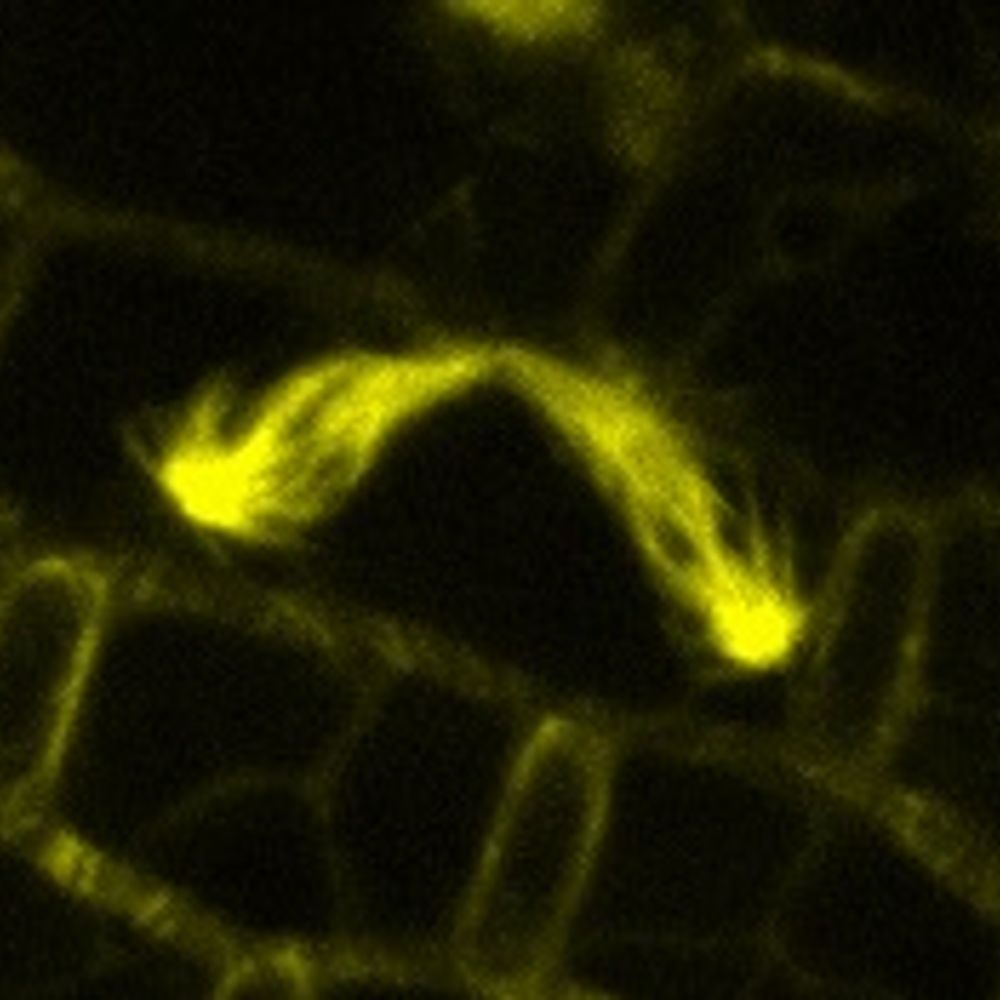
📝 This review by Hazelwood et al. highlights the discoveries focused on nuclear position manipulation and the importance of nuclear position in deciding future cell division sites.
🔗 doi.org/10.1093/jxb/...
#PlantScience 🧪 @ohazel.bsky.social @aribidopsis.bsky.social
📝 This review by Hazelwood et al. highlights the discoveries focused on nuclear position manipulation and the importance of nuclear position in deciding future cell division sites.
🔗 doi.org/10.1093/jxb/...
#PlantScience 🧪 @ohazel.bsky.social @aribidopsis.bsky.social

December 20, 2025 at 7:39 PM
Thanks @jxbotany.bsky.social for highlighting our article.
Congratulations to @ohazel.bsky.social and @jessicaa-orr.bsky.social -- two of my awesome students from the lab.
Long way to go! 🔬☘️💚
Congratulations to @ohazel.bsky.social and @jessicaa-orr.bsky.social -- two of my awesome students from the lab.
Long way to go! 🔬☘️💚
Reposted by KunzLab@LMU

CONGRATS to team @effectomics.bsky.social and @steidele.bsky.social . Transcriptional Response of Magnaporthe oryzae Towards Barley-Microbiome Derived Bacteria | Molecular Plant-Microbe Interactions® apsjournals.apsnet.org/doi/10.1094/...

Transcriptional Response of Magnaporthe oryzae Towards Barley-Microbiome Derived Bacteria | Molecular Plant-Microbe Interactions®
The composition of the plant microbiome is shaped not only by the host plant and abiotic environmental factors, but also by inter-microbial cooperation and competition. Plant pathogens, therefore must...
apsjournals.apsnet.org
December 20, 2025 at 2:19 PM
CONGRATS to team @effectomics.bsky.social and @steidele.bsky.social . Transcriptional Response of Magnaporthe oryzae Towards Barley-Microbiome Derived Bacteria | Molecular Plant-Microbe Interactions® apsjournals.apsnet.org/doi/10.1094/...
Reposted by KunzLab@LMU

Understanding how plants regulate synthesis of both oil and protein in seeds continues to be key to enhancing crops. Check this out!
PII interactions with the acetyl-CoA carboxylase subunits BADC and BCCP co-regulate lipid and nitrogen metabolism in Arabidopsis url: academic.oup.com/plphys/artic...
PII interactions with the acetyl-CoA carboxylase subunits BADC and BCCP co-regulate lipid and nitrogen metabolism in Arabidopsis url: academic.oup.com/plphys/artic...
Validate User
academic.oup.com
December 20, 2025 at 4:16 PM
Understanding how plants regulate synthesis of both oil and protein in seeds continues to be key to enhancing crops. Check this out!
PII interactions with the acetyl-CoA carboxylase subunits BADC and BCCP co-regulate lipid and nitrogen metabolism in Arabidopsis url: academic.oup.com/plphys/artic...
PII interactions with the acetyl-CoA carboxylase subunits BADC and BCCP co-regulate lipid and nitrogen metabolism in Arabidopsis url: academic.oup.com/plphys/artic...
Reposted by KunzLab@LMU
Dear Plant ECRs, don't miss this wonderful opportunity!
Are you an experienced PhD student or postdoc in plant science looking to connect, present your work, and discuss career paths?
Join us at the 3rd Early Career Plant Researchers Network Meeting, Halle (Saale), 20–21 April 2026
Deadline: 23 January 2026
plant-ecr-networking.eu
Join us at the 3rd Early Career Plant Researchers Network Meeting, Halle (Saale), 20–21 April 2026
Deadline: 23 January 2026
plant-ecr-networking.eu

December 19, 2025 at 3:04 PM
Dear Plant ECRs, don't miss this wonderful opportunity!
Reposted by KunzLab@LMU

📢 Seminar Announcement
We’re excited to welcome Jörg Beckmann (Nuremberg Zoo) for a talk on the new roles of modern zoos — from research to conservation and beyond.
🗓️ 12 Jan 2026, 4 PM
📍 LMU Biozentrum, Lecture Hall B01.019
See you there! 🦒🦍
We’re excited to welcome Jörg Beckmann (Nuremberg Zoo) for a talk on the new roles of modern zoos — from research to conservation and beyond.
🗓️ 12 Jan 2026, 4 PM
📍 LMU Biozentrum, Lecture Hall B01.019
See you there! 🦒🦍

December 18, 2025 at 3:50 PM
📢 Seminar Announcement
We’re excited to welcome Jörg Beckmann (Nuremberg Zoo) for a talk on the new roles of modern zoos — from research to conservation and beyond.
🗓️ 12 Jan 2026, 4 PM
📍 LMU Biozentrum, Lecture Hall B01.019
See you there! 🦒🦍
We’re excited to welcome Jörg Beckmann (Nuremberg Zoo) for a talk on the new roles of modern zoos — from research to conservation and beyond.
🗓️ 12 Jan 2026, 4 PM
📍 LMU Biozentrum, Lecture Hall B01.019
See you there! 🦒🦍