



Max Haase
@maxhaase.bsky.social
Chief Yeast Officer. Evolution, genomes, chromatin, cell cycle, centromeres, and kinetochore are scientific passions. PhD w/ Jef Boeke, PostDoc w/ Andrea Musacchio @ MPI-Dortmund. 🇺🇸 (🧀->🗽) -> 🇩🇪
Pinned
Max Haase
@maxhaase.bsky.social
· Apr 25

Ancient co-option of LTR retrotransposons as yeast centromeres
The evolutionary origins of the genetic point centromere in the brewer's yeast Saccharomyces cerevisiae, a member of the order Saccharomycetales, are still unknown. Competing hypotheses suggest that t...
www.biorxiv.org
It’s out! The evolutionary origins of yeast point centromeres uncovered!
“Ancient co-option of LTR retrotransposons as yeast centromeres”
www.biorxiv.org/content/10.1...
“Ancient co-option of LTR retrotransposons as yeast centromeres”
www.biorxiv.org/content/10.1...
Reposted by Max Haase

I don't envy people who start their PhDs now. What they should be trying to do - I think - is to first become confident experts in certain things, and this might involve using as little AI as possible not to become dependent or have their view distorted.
February 16, 2026 at 11:41 AM
I don't envy people who start their PhDs now. What they should be trying to do - I think - is to first become confident experts in certain things, and this might involve using as little AI as possible not to become dependent or have their view distorted.
Reposted by Max Haase

I appreciate the comments by Max Raas, Eelco Tromer and others on my paper published last year "Hypothesis that ancestral eukaryotes sexually proliferated without kinetochores or mitosis". However, I do not think their critiques can reject my hypothesis. For details, please read the paper. 1/n

Recently, a Hypothesis was posed in @jcellsci.bsky.social in which the root of eukaryotes was placed between kinetoplastids and all other eukaryotes. From this, it was implied that LECA did not have a kinetochore. We argue this is highly unlikely. A 🧵(1/12)
Read our reply here: tinyurl.com/n87myhpr
Read our reply here: tinyurl.com/n87myhpr

The LECA had a conventional kinetochore and the kinetoplastid kinetochore is a derived feature – a critical evaluation of Akiyoshi, 2025
Summary:Akiyoshi, 2025 presented a hypothesis with implications for the early evolution of eukaryotes and eukaryotic cell division machinery. In this Correspondence, the authors conclude that this hyp...
tinyurl.com
February 13, 2026 at 10:08 PM
I appreciate the comments by Max Raas, Eelco Tromer and others on my paper published last year "Hypothesis that ancestral eukaryotes sexually proliferated without kinetochores or mitosis". However, I do not think their critiques can reject my hypothesis. For details, please read the paper. 1/n
Love a good disagreement, means the field is alive and well!
One wonders wether lost genes are truly lost in highly divergent lineages or they are just hiding in plain sight?
One wonders wether lost genes are truly lost in highly divergent lineages or they are just hiding in plain sight?
Recently, a Hypothesis was posed in @jcellsci.bsky.social in which the root of eukaryotes was placed between kinetoplastids and all other eukaryotes. From this, it was implied that LECA did not have a kinetochore. We argue this is highly unlikely. A 🧵(1/12)
Read our reply here: tinyurl.com/n87myhpr
Read our reply here: tinyurl.com/n87myhpr
The LECA had a conventional kinetochore and the kinetoplastid kinetochore is a derived feature – a critical evaluation of Akiyoshi, 2025
Summary:Akiyoshi, 2025 presented a hypothesis with implications for the early evolution of eukaryotes and eukaryotic cell division machinery. In this Correspondence, the authors conclude that this hyp...
tinyurl.com
February 13, 2026 at 4:59 PM
Love a good disagreement, means the field is alive and well!
One wonders wether lost genes are truly lost in highly divergent lineages or they are just hiding in plain sight?
One wonders wether lost genes are truly lost in highly divergent lineages or they are just hiding in plain sight?
someone should tell the physicists that biologists found dark matter sitting right in our genomes!

Researchers are launching a Human RNome Project to map every bit of RNA and its chemical modifications, and this work could transform how we treat cancer, neurological disorders and more
buff.ly/KCr3yRR
🧪🩺
buff.ly/KCr3yRR
🧪🩺

RNA is key to the dark matter of the genome − scientists are sequencing it to illuminate human health and disease
Researchers are embarking on the RNA equivalent of the Human Genome Project, including sequencing all the chemical modifications that make cells unique.
buff.ly
February 12, 2026 at 8:41 AM
someone should tell the physicists that biologists found dark matter sitting right in our genomes!
Reposted by Max Haase

No, DeepMind has not solved the protein folding problem.
#Alphafold predictions are valuable hypotheses and accelerate but do not replace experimental structure determination.
#Alphafold predictions are valuable hypotheses and accelerate but do not replace experimental structure determination.

Human chemists spent their entire careers trying to solve the protein folding problem.
DeepMind's AlphaFold solved it in a couple of years, creating an enormously valuable data set for other scientists to use.
The scientists who made it their life's work to solve protein folding? Moving on.
DeepMind's AlphaFold solved it in a couple of years, creating an enormously valuable data set for other scientists to use.
The scientists who made it their life's work to solve protein folding? Moving on.
February 5, 2026 at 8:49 AM
No, DeepMind has not solved the protein folding problem.
#Alphafold predictions are valuable hypotheses and accelerate but do not replace experimental structure determination.
#Alphafold predictions are valuable hypotheses and accelerate but do not replace experimental structure determination.
Reposted by Max Haase

It’s out! 🥳 Excited to share our new paper (with Kai Walstein, @andrea-musacchio.bsky.social and all others) on the role of M18BP1 in CENP-A loading!
“M18BP1 valency and a distributed interaction footprint determine epigenetic centromere specification in humans”
link.springer.com/article/10.1...
“M18BP1 valency and a distributed interaction footprint determine epigenetic centromere specification in humans”
link.springer.com/article/10.1...

M18BP1 valency and a distributed interaction footprint determine epigenetic centromere specification in humans - The EMBO Journal
The histone H3 variant CENP-A is considered an epigenetic landmark of centromeres. Its deposition reflects cell-cycle-regulated assembly of M18BP1, HJURP, and PLK1 on a divalent MIS18α/β scaffold. The...
link.springer.com
February 2, 2026 at 10:32 PM
It’s out! 🥳 Excited to share our new paper (with Kai Walstein, @andrea-musacchio.bsky.social and all others) on the role of M18BP1 in CENP-A loading!
“M18BP1 valency and a distributed interaction footprint determine epigenetic centromere specification in humans”
link.springer.com/article/10.1...
“M18BP1 valency and a distributed interaction footprint determine epigenetic centromere specification in humans”
link.springer.com/article/10.1...
Reposted by Max Haase

Two new papers from the lab published in The EMBO Journal!
link.springer.com/article/10.1...
By Kai Walstein, @louisa-hill.bsky.social and others – On role of M18BP1 in CENP-A loading
link.springer.com/article/10.1...
By Arianna Esposito Verza and others – On mechanism of activation of PLK1
link.springer.com/article/10.1...
By Kai Walstein, @louisa-hill.bsky.social and others – On role of M18BP1 in CENP-A loading
link.springer.com/article/10.1...
By Arianna Esposito Verza and others – On mechanism of activation of PLK1
February 2, 2026 at 4:18 PM
Two new papers from the lab published in The EMBO Journal!
link.springer.com/article/10.1...
By Kai Walstein, @louisa-hill.bsky.social and others – On role of M18BP1 in CENP-A loading
link.springer.com/article/10.1...
By Arianna Esposito Verza and others – On mechanism of activation of PLK1
link.springer.com/article/10.1...
By Kai Walstein, @louisa-hill.bsky.social and others – On role of M18BP1 in CENP-A loading
link.springer.com/article/10.1...
By Arianna Esposito Verza and others – On mechanism of activation of PLK1
Reposted by Max Haase

Arianna Esposito Verza, @andrea-musacchio.bsky.social et al describe the long-sought-after mechanism of Bora dependency of PLK1 activation by Aurora A kinase during mitotic entry
Another #RefereedPreprint ℅ @reviewcommons.org
link.springer.com/article/10.1...
Another #RefereedPreprint ℅ @reviewcommons.org
link.springer.com/article/10.1...

Molecular requirements for PLK1 activation by T-loop phosphorylation - The EMBO Journal
Activation of PLK1, a master mitotic kinase, requires phosphorylation of its activation segment on Thr210, within a basic consensus sequence for Aurora kinases. Aurora B-dependent phosphorylation of T...
link.springer.com
January 28, 2026 at 2:42 PM
Arianna Esposito Verza, @andrea-musacchio.bsky.social et al describe the long-sought-after mechanism of Bora dependency of PLK1 activation by Aurora A kinase during mitotic entry
Another #RefereedPreprint ℅ @reviewcommons.org
link.springer.com/article/10.1...
Another #RefereedPreprint ℅ @reviewcommons.org
link.springer.com/article/10.1...
Reposted by Max Haase

Excited to announce our latest publication in reporting evidence for three (3!) new whole genome duplications (WGDs) in yeasts. Scientists have often wondered why WGD is so rare in fungi, it turns out we may just not have been looking hard enough! 🧪 🍄 🧬
www.sciencedirect.com/science/arti...
www.sciencedirect.com/science/arti...

Discovery of additional ancient genome duplications in yeasts
Whole-genome duplication (WGD) has had profound macroevolutionary impacts on diverse lineages,1,2 preceding adaptive radiations in vertebrates,3,4,5 t…
www.sciencedirect.com
January 28, 2026 at 5:49 PM
Excited to announce our latest publication in reporting evidence for three (3!) new whole genome duplications (WGDs) in yeasts. Scientists have often wondered why WGD is so rare in fungi, it turns out we may just not have been looking hard enough! 🧪 🍄 🧬
www.sciencedirect.com/science/arti...
www.sciencedirect.com/science/arti...
Reposted by Max Haase

We warmly welcome our new independent @maxplanck.de Group Leader Andrija Sente. His group will investigate the molecular mechanisms of neuronal communication.
Learn more about Andrija and his work and click on the link🔗
www.mpi-dortmund.mpg.de/news/new-max...
Learn more about Andrija and his work and click on the link🔗
www.mpi-dortmund.mpg.de/news/new-max...

January 23, 2026 at 11:39 AM
We warmly welcome our new independent @maxplanck.de Group Leader Andrija Sente. His group will investigate the molecular mechanisms of neuronal communication.
Learn more about Andrija and his work and click on the link🔗
www.mpi-dortmund.mpg.de/news/new-max...
Learn more about Andrija and his work and click on the link🔗
www.mpi-dortmund.mpg.de/news/new-max...
Excited to share a new paper led by Cristina Santarossa (Bhabha & Ekiert groups) on LetA, a bacterial phospholipid transporter that defines a structurally distinct transporter family. Really enjoyed working with Cristina on their deep mutational scanning work.
www.nature.com/articles/s41...
www.nature.com/articles/s41...

LetA defines a structurally distinct transporter family - Nature
The distinct architecture of the Escherichia coli membrane transporter LetA mediates lipid trafficking across the bacterial envelope in partnership with the tunnel-like complex LetB.
www.nature.com
January 22, 2026 at 9:51 AM
Excited to share a new paper led by Cristina Santarossa (Bhabha & Ekiert groups) on LetA, a bacterial phospholipid transporter that defines a structurally distinct transporter family. Really enjoyed working with Cristina on their deep mutational scanning work.
www.nature.com/articles/s41...
www.nature.com/articles/s41...
Reposted by Max Haase

Absolutely thrilled to share the latest work from my lab focused on the variation and evolution of human centromeres among global populations! We assembled 2,110 human centromeres, identifying 226 new major haplotypes and 1,870 α-satellite HOR variants. www.biorxiv.org/content/10.6...

December 16, 2025 at 4:06 PM
Absolutely thrilled to share the latest work from my lab focused on the variation and evolution of human centromeres among global populations! We assembled 2,110 human centromeres, identifying 226 new major haplotypes and 1,870 α-satellite HOR variants. www.biorxiv.org/content/10.6...
Fellow yeast enthusiasts, does anyone have the genomic or amino-acid substitution for the cdc20-1 ts mutant - thanks!
December 11, 2025 at 10:31 AM
Fellow yeast enthusiasts, does anyone have the genomic or amino-acid substitution for the cdc20-1 ts mutant - thanks!
Very cool to see Jana’s epic on point centromere evolution published. Congratulations to all!
Although, it makes one wonder how these strange centromeres evolved in the first place?
Although, it makes one wonder how these strange centromeres evolved in the first place?
How do new centromeres evolve while staying compatible with the division machinery?
Discover it in our new Nature paper! We show centromeres transition gradually via a mix of drift, selection, and sex, reaching new states that still work with the kinetochore.
👉 doi.org/10.1038/s41586-025-09779-1
Discover it in our new Nature paper! We show centromeres transition gradually via a mix of drift, selection, and sex, reaching new states that still work with the kinetochore.
👉 doi.org/10.1038/s41586-025-09779-1

December 1, 2025 at 4:51 PM
Very cool to see Jana’s epic on point centromere evolution published. Congratulations to all!
Although, it makes one wonder how these strange centromeres evolved in the first place?
Although, it makes one wonder how these strange centromeres evolved in the first place?
Reposted by Max Haase

www.embopress.org/doi/full/10....
Our latest now online at EMBO Journal. Read if you are interested in how epimutations mediate antifungal resistance & how this might result in heteroresistance in human & cereal crop fungal pathogens. Big Thx & congrats to Andreas Fellas, Pin Tong & Alison Pidoux
Our latest now online at EMBO Journal. Read if you are interested in how epimutations mediate antifungal resistance & how this might result in heteroresistance in human & cereal crop fungal pathogens. Big Thx & congrats to Andreas Fellas, Pin Tong & Alison Pidoux

Heterochromatin epimutations impose mitochondrial dysfunction to confer antifungal resistance | The EMBO Journal
imageimageHeterochromatin-island epimutations can provide resistance to caffeine and antifungal
drugs in the fission yeast Schizosaccharomyces pombe. This study reveals that some epimutations cause re...
www.embopress.org
December 1, 2025 at 3:44 PM
www.embopress.org/doi/full/10....
Our latest now online at EMBO Journal. Read if you are interested in how epimutations mediate antifungal resistance & how this might result in heteroresistance in human & cereal crop fungal pathogens. Big Thx & congrats to Andreas Fellas, Pin Tong & Alison Pidoux
Our latest now online at EMBO Journal. Read if you are interested in how epimutations mediate antifungal resistance & how this might result in heteroresistance in human & cereal crop fungal pathogens. Big Thx & congrats to Andreas Fellas, Pin Tong & Alison Pidoux
1/ 🐶💤
In Tony Hyman–style LLPS land:
Scaffold = the dog bed
Clients = extra dogs + toys that hop on
Rule of the game:
The bed decides where the nap-pile forms.
Other dogs can jump on, but somehow they don’t change how the bed behaves.
In Tony Hyman–style LLPS land:
Scaffold = the dog bed
Clients = extra dogs + toys that hop on
Rule of the game:
The bed decides where the nap-pile forms.
Other dogs can jump on, but somehow they don’t change how the bed behaves.

Oh wow! I wish someone can explain it to me "like a child or a Golden Retriever" (paraphrasing Margin Call).
December 1, 2025 at 4:04 PM
1/ 🐶💤
In Tony Hyman–style LLPS land:
Scaffold = the dog bed
Clients = extra dogs + toys that hop on
Rule of the game:
The bed decides where the nap-pile forms.
Other dogs can jump on, but somehow they don’t change how the bed behaves.
In Tony Hyman–style LLPS land:
Scaffold = the dog bed
Clients = extra dogs + toys that hop on
Rule of the game:
The bed decides where the nap-pile forms.
Other dogs can jump on, but somehow they don’t change how the bed behaves.
Reposted by Max Haase
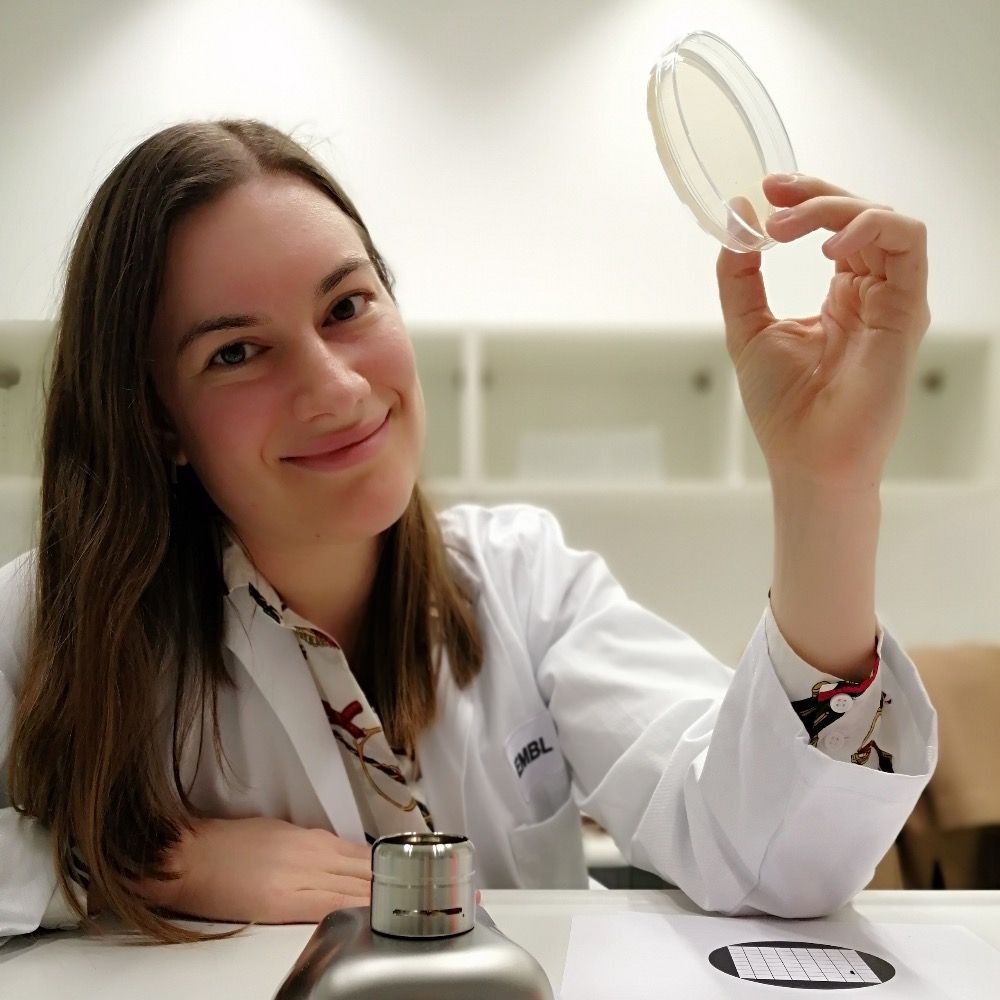
How do new centromeres evolve while staying compatible with the division machinery?
Discover it in our new Nature paper! We show centromeres transition gradually via a mix of drift, selection, and sex, reaching new states that still work with the kinetochore.
👉 doi.org/10.1038/s41586-025-09779-1
Discover it in our new Nature paper! We show centromeres transition gradually via a mix of drift, selection, and sex, reaching new states that still work with the kinetochore.
👉 doi.org/10.1038/s41586-025-09779-1
November 26, 2025 at 4:21 PM
How do new centromeres evolve while staying compatible with the division machinery?
Discover it in our new Nature paper! We show centromeres transition gradually via a mix of drift, selection, and sex, reaching new states that still work with the kinetochore.
👉 doi.org/10.1038/s41586-025-09779-1
Discover it in our new Nature paper! We show centromeres transition gradually via a mix of drift, selection, and sex, reaching new states that still work with the kinetochore.
👉 doi.org/10.1038/s41586-025-09779-1
Reposted by Max Haase

Happy to share our latest preprint.
We uncover a previously uncharacterised and evolutionarily conserved chromatin architecture in premeiotic gonadal germ cells, revealed through integrated cytological and high-resolution Hi-C approaches.
www.biorxiv.org/content/10.1...
Thread🧵🔽
We uncover a previously uncharacterised and evolutionarily conserved chromatin architecture in premeiotic gonadal germ cells, revealed through integrated cytological and high-resolution Hi-C approaches.
www.biorxiv.org/content/10.1...
Thread🧵🔽
November 18, 2025 at 4:57 PM
Happy to share our latest preprint.
We uncover a previously uncharacterised and evolutionarily conserved chromatin architecture in premeiotic gonadal germ cells, revealed through integrated cytological and high-resolution Hi-C approaches.
www.biorxiv.org/content/10.1...
Thread🧵🔽
We uncover a previously uncharacterised and evolutionarily conserved chromatin architecture in premeiotic gonadal germ cells, revealed through integrated cytological and high-resolution Hi-C approaches.
www.biorxiv.org/content/10.1...
Thread🧵🔽
Sooo.... um... it appears trump gave bill clinton a blowy? And Putin has photos 😳
Fake news or not, I'll believe this as canon for now on
journaliststudio.google.com/pinpoint/doc...
drive.google.com/file/d/1uwNM...
Fake news or not, I'll believe this as canon for now on
journaliststudio.google.com/pinpoint/doc...
drive.google.com/file/d/1uwNM...
Pinpoint
journaliststudio.google.com
November 14, 2025 at 12:29 PM
Sooo.... um... it appears trump gave bill clinton a blowy? And Putin has photos 😳
Fake news or not, I'll believe this as canon for now on
journaliststudio.google.com/pinpoint/doc...
drive.google.com/file/d/1uwNM...
Fake news or not, I'll believe this as canon for now on
journaliststudio.google.com/pinpoint/doc...
drive.google.com/file/d/1uwNM...
Reposted by Max Haase

NEW pub in @science.org 🥳
Is it sponges (panels A & B) or comb jellies (C & D) that root the animal tree of life?
For over 15 years, #phylogenomic studies have been divided.
We provide new evidence suggesting that...
🔗: www.science.org/doi/10.1126/...
Is it sponges (panels A & B) or comb jellies (C & D) that root the animal tree of life?
For over 15 years, #phylogenomic studies have been divided.
We provide new evidence suggesting that...
🔗: www.science.org/doi/10.1126/...

November 13, 2025 at 8:34 PM
NEW pub in @science.org 🥳
Is it sponges (panels A & B) or comb jellies (C & D) that root the animal tree of life?
For over 15 years, #phylogenomic studies have been divided.
We provide new evidence suggesting that...
🔗: www.science.org/doi/10.1126/...
Is it sponges (panels A & B) or comb jellies (C & D) that root the animal tree of life?
For over 15 years, #phylogenomic studies have been divided.
We provide new evidence suggesting that...
🔗: www.science.org/doi/10.1126/...
Men will really come up with every stupid reason not to recognize their women colleagues’ contributions.
www.nature.com/articles/d41...
www.nature.com/articles/d41...

Prizes must recognize machine contributions to discovery
The future of science will be written by humans and machines together. Awards should reflect that reality.
www.nature.com
October 10, 2025 at 6:43 AM
Men will really come up with every stupid reason not to recognize their women colleagues’ contributions.
www.nature.com/articles/d41...
www.nature.com/articles/d41...
Apparently termites have spent the past few millennia secretly building the "equivalent to ∼4000 great pyramids of Giza" in Brazil.
www.cell.com/current-biol...
www.cell.com/current-biol...

A vast 4,000-year-old spatial pattern of termite mounds
Martin et al. show that in Northeast Brazil an estimated 200 million, regularly spaced,
termite mounds are up to 4000 years old. Each mound is 2-4m high by 9 m in diameter;
they occupy 230,000 km2, an...
www.cell.com
October 2, 2025 at 8:29 AM
Apparently termites have spent the past few millennia secretly building the "equivalent to ∼4000 great pyramids of Giza" in Brazil.
www.cell.com/current-biol...
www.cell.com/current-biol...
Reposted by Max Haase

New preprint from the lab: we show that the ability to switch mating type was lost at least 13 times independently in the evolution of S. cerevisiae. At least 27% of isolates are heterothallic with a strong association with polyploidy and heterozygosity
www.biorxiv.org/content/10.1...
www.biorxiv.org/content/10.1...

Repeated losses of self-fertility shaped heterozygosity and polyploidy in yeast evolution
Evolutionary transitions in mating strategy have profound consequences for genetic variation and adaptation. In Saccharomyces cerevisiae, mating-type switching is a central feature of the life cycle t...
www.biorxiv.org
September 16, 2025 at 6:42 PM
New preprint from the lab: we show that the ability to switch mating type was lost at least 13 times independently in the evolution of S. cerevisiae. At least 27% of isolates are heterothallic with a strong association with polyploidy and heterozygosity
www.biorxiv.org/content/10.1...
www.biorxiv.org/content/10.1...
Reposted by Max Haase
The BUB1 and BUBR1 paralogs scaffold the kinetochore fibrous corona | Science Advances www.science.org/doi/10.1126/...
Congratulations @vcmentowski.bsky.social for solving a remarkably challenging molecular puzzle
Congratulations @vcmentowski.bsky.social for solving a remarkably challenging molecular puzzle

The BUB1 and BUBR1 paralogs scaffold the kinetochore fibrous corona
The kinetochore fibrous corona docks on CENP-E and a second elusive receptor identified as the checkpoint protein BUB1.
www.science.org
September 15, 2025 at 4:50 AM
The BUB1 and BUBR1 paralogs scaffold the kinetochore fibrous corona | Science Advances www.science.org/doi/10.1126/...
Congratulations @vcmentowski.bsky.social for solving a remarkably challenging molecular puzzle
Congratulations @vcmentowski.bsky.social for solving a remarkably challenging molecular puzzle