




Miranda Yaver
@mirandayaver.bsky.social
Political scientist. Health policy prof at Pitt (Secondary appts: Poli Sci, SPIA). Cal bear, Columbia PhD. Bylines: NYT, WaPo, Guardian, MSNBC. Writing on health insurance and admin burden. Pre-order Coverage Denied (out 4/23): https://cup.org/4nfM2IM
Pinned
Miranda Yaver
@mirandayaver.bsky.social
· Sep 25

Coming 2026!
@mirandayaver.bsky.social's Coverage Denied: How Health Insurers Drive Inequality in the United States is a sobering account of the ways in which coverage denials damage patient health and exacerbate inequalities.
Pre-order now! 🗺️ 🩺📊
https://cup.org/4nfM2IM
@mirandayaver.bsky.social's Coverage Denied: How Health Insurers Drive Inequality in the United States is a sobering account of the ways in which coverage denials damage patient health and exacerbate inequalities.
Pre-order now! 🗺️ 🩺📊
https://cup.org/4nfM2IM

You've heard me talk about it.
You've seen me write about it.
And now it's your chance to pre-order my forthcoming book Coverage Denied!
Combining survey & administrative data with extensive interviews, my book highlights the harms caused by coverage barriers. Hope you'll read it!
cup.org/4nfM2IM
You've seen me write about it.
And now it's your chance to pre-order my forthcoming book Coverage Denied!
Combining survey & administrative data with extensive interviews, my book highlights the harms caused by coverage barriers. Hope you'll read it!
cup.org/4nfM2IM
Reposted by Miranda Yaver


I’m a Springsteen diehard (46 shows and a tattoo) for many reasons: he’s the soundtrack of my life, he’s a gifted storyteller, and he puts on the BEST concerts.
But I also love that he doesn’t shy away from speaking out on social justice issues, from police brutality to immigration. Thanks, Boss.
But I also love that he doesn’t shy away from speaking out on social justice issues, from police brutality to immigration. Thanks, Boss.

In a surprise appearance in New Jersey, Bruce Springsteen denounced the Trump administration’s ICE deployments and dedicated a song to Renee Good, the woman killed by an ICE agent in Minneapolis this month.

Springsteen Denounces ICE Deployments and Renee Good’s Killing
In a surprise appearance in New Jersey, the musician dedicated his song “The Promised Land” to Ms. Good, who was killed by an ICE agent in Minneapolis this month.
nyti.ms
January 18, 2026 at 8:21 PM
I’m a Springsteen diehard (46 shows and a tattoo) for many reasons: he’s the soundtrack of my life, he’s a gifted storyteller, and he puts on the BEST concerts.
But I also love that he doesn’t shy away from speaking out on social justice issues, from police brutality to immigration. Thanks, Boss.
But I also love that he doesn’t shy away from speaking out on social justice issues, from police brutality to immigration. Thanks, Boss.
My mom got us this interactive mat for the cats to play with.
At this rate, Maude will have killed it before dinner time.
At this rate, Maude will have killed it before dinner time.

January 18, 2026 at 8:11 PM
My mom got us this interactive mat for the cats to play with.
At this rate, Maude will have killed it before dinner time.
At this rate, Maude will have killed it before dinner time.
Reposted by Miranda Yaver
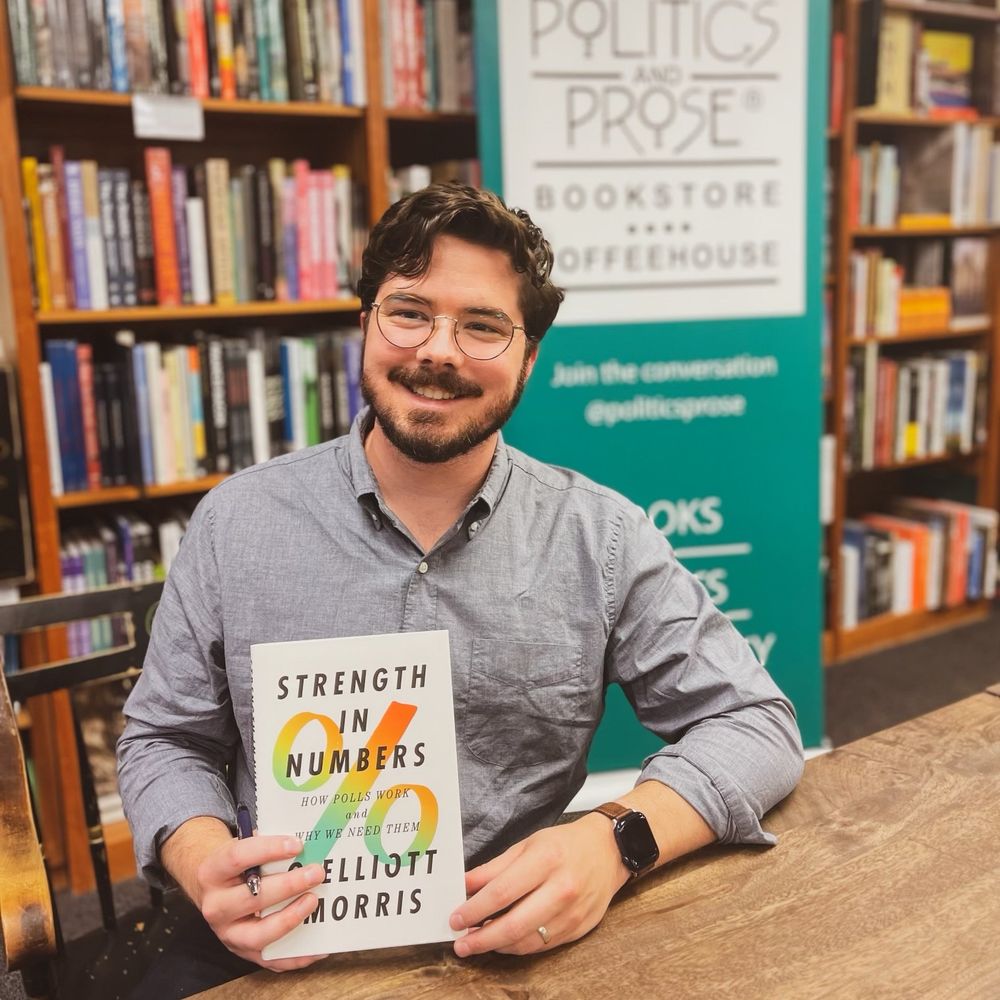
Gallego ("moderate" Dem) is going with "ICE needs to be totally torn down" (not "reform and retrain"). This is a pivot point for the country on immigration. You have been seeing this in the data for a while, and now officials are snapping to the public opinion www.gelliottmorris.com/p/ice-is-a-7...

January 18, 2026 at 8:05 PM
Gallego ("moderate" Dem) is going with "ICE needs to be totally torn down" (not "reform and retrain"). This is a pivot point for the country on immigration. You have been seeing this in the data for a while, and now officials are snapping to the public opinion www.gelliottmorris.com/p/ice-is-a-7...
I cannot wait to max out to Fetterman’s challenger.

OOP: “While Fetterman is supporting Trump’s use of American tax dollars to ‘run’ Venezuela or buy Greenland, 500,000 Pennsylvanians are about to see their health care premiums rise because of the Republican budget bill he supported,” said Nick Gavio [of the WFP] and *a former Fetterman staffer*.

Progressive effort to primary Sen. John Fetterman ramps up
The Working Families Party launched a website where, among other efforts, voters can request refunds from Fetterman’s campaign.
www.nbcnews.com
January 18, 2026 at 7:27 PM
I cannot wait to max out to Fetterman’s challenger.
Reposted by Miranda Yaver

Trump is Veruca Salt and we should all take Wonka's approach to dealing with him.

Dont Care How I Want It Now Willy Wonka And The Chocolate Factory GIF
ALT: Dont Care How I Want It Now Willy Wonka And The Chocolate Factory GIF
media.tenor.com
January 18, 2026 at 5:38 PM
Trump is Veruca Salt and we should all take Wonka's approach to dealing with him.
Reposted by Miranda Yaver

This is important & revealing. Gallego is from AZ. He ran to the right of Dems in 2024 on immigration. The fact he's saying this speaks volumes. He sees where the public is on ICE. Tear it down. Build another non-police-state-freak-show immigration enforcement agency.

Arizona’s @gallego.senate.gov : "I think ICE needs to be totally torn down… People want immigration enforcement that goes after criminals, not the goon squad that has come from Stephen Miller and Trump."
January 18, 2026 at 5:25 PM
This is important & revealing. Gallego is from AZ. He ran to the right of Dems in 2024 on immigration. The fact he's saying this speaks volumes. He sees where the public is on ICE. Tear it down. Build another non-police-state-freak-show immigration enforcement agency.
Reposted by Miranda Yaver

To put 200 active measles infections in one state in context, the Disneyland measles outbreak a decade ago - which I did some work on in grad school - was 131 total cases in California. That was a notable outbreak. That's an outbreak with its own Wikipedia page. And it's just like this now

'Staring over the edge': South Carolina measles outbreak doubles in a week www.nbcnews.com/health/healt...

'Staring over the edge': South Carolina measles outbreak doubles in a week
More than 500 people are in a 21-day quarantine and about 200 are "actively infected." The largest outbreak currently in the U.S. has spread to at least three other states.
www.nbcnews.com
January 18, 2026 at 6:29 PM
To put 200 active measles infections in one state in context, the Disneyland measles outbreak a decade ago - which I did some work on in grad school - was 131 total cases in California. That was a notable outbreak. That's an outbreak with its own Wikipedia page. And it's just like this now
There were suggestions of local, Pittsburgh plot lines that The Pitt could use.
These posts about the awful Pirates owner are A+
These posts about the awful Pirates owner are A+

January 18, 2026 at 6:07 PM
There were suggestions of local, Pittsburgh plot lines that The Pitt could use.
These posts about the awful Pirates owner are A+
These posts about the awful Pirates owner are A+
Reposted by Miranda Yaver
Every. Single. Word. www.youtube.com/watch?v=kozx...

Promised Land - for Renee Good, Bruce Springsteen, Light of Day, 1/17/26, Count Basie Theater
YouTube video by MarcGlenRock
www.youtube.com
January 18, 2026 at 5:58 PM
Every. Single. Word. www.youtube.com/watch?v=kozx...
Reposted by Miranda Yaver

"So what does he say? He says he's going to put a 10% cap on interest rates. You know what he hasn't done? Put a 10% cap on credit card interest rates. There's all sorts of things that come out of the man's mouth."
Too often we talk about what he's talking about, instead of what he's doing.
Too often we talk about what he's talking about, instead of what he's doing.
January 18, 2026 at 5:46 PM
"So what does he say? He says he's going to put a 10% cap on interest rates. You know what he hasn't done? Put a 10% cap on credit card interest rates. There's all sorts of things that come out of the man's mouth."
Too often we talk about what he's talking about, instead of what he's doing.
Too often we talk about what he's talking about, instead of what he's doing.
I just have a few questions…

January 18, 2026 at 5:43 PM
I just have a few questions…
Reposted by Miranda Yaver

Knee-benders and quislings. He knew.

January 18, 2026 at 5:17 PM
Knee-benders and quislings. He knew.
Okay this is my favorite of this genre of post.
It’s a major award!
It’s a major award!

January 18, 2026 at 5:03 PM
Okay this is my favorite of this genre of post.
It’s a major award!
It’s a major award!
Jesus fucking Christ, who gives a flying fuck about profanity when there are actually fucking heinous injustices taking place right before our eyes on a daily basis amid this administration’s institutional arson?
Re-upping what I wrote on rigid adherence to civility open.substack.com/pub/miranday...
Re-upping what I wrote on rigid adherence to civility open.substack.com/pub/miranday...
January 18, 2026 at 4:47 PM
Jesus fucking Christ, who gives a flying fuck about profanity when there are actually fucking heinous injustices taking place right before our eyes on a daily basis amid this administration’s institutional arson?
Re-upping what I wrote on rigid adherence to civility open.substack.com/pub/miranday...
Re-upping what I wrote on rigid adherence to civility open.substack.com/pub/miranday...
Reposted by Miranda Yaver

Really wish John Roberts hadn’t torched the Constitution.
January 18, 2026 at 4:40 PM
Really wish John Roberts hadn’t torched the Constitution.
Reposted by Miranda Yaver

"If you take PRObiotics and ANTIbiotics at the same time, you'll get the perfect amount of biotics"
This is laugh-out-loud funny!
This is laugh-out-loud funny!

January 17, 2026 at 3:54 PM
"If you take PRObiotics and ANTIbiotics at the same time, you'll get the perfect amount of biotics"
This is laugh-out-loud funny!
This is laugh-out-loud funny!
“Thank you sir, may I have another?”

Cassidy’s pinned tweet right now as Trump endorses a Republican to end his career

January 18, 2026 at 2:27 PM
“Thank you sir, may I have another?”
May you stay forever young

January 18, 2026 at 1:02 PM
May you stay forever young
Reposted by Miranda Yaver


Bill Cassidy voted for someone he absolutely knew would damage our public health system, endanger countless lives, and ignore scientific evidence on vaccines, in effort to escape Trump’s wrath.
Trump burned Cassidy anyway.
Well done, everyone.
Trump burned Cassidy anyway.
Well done, everyone.

Trump says he will endorse Julia Letlow if she runs against Bill Cassidy in a Republican senate primary.

January 18, 2026 at 3:07 AM
Bill Cassidy voted for someone he absolutely knew would damage our public health system, endanger countless lives, and ignore scientific evidence on vaccines, in effort to escape Trump’s wrath.
Trump burned Cassidy anyway.
Well done, everyone.
Trump burned Cassidy anyway.
Well done, everyone.
Reposted by Miranda Yaver

This person who successfully committed suicide (something which jails are supposed to protect against) was being held at a random Georgia jail through a contract with the U.S. Marshal Service, which let ICE use its network of contracts with local jails. This is not a big detention center.


January 18, 2026 at 2:11 AM
This person who successfully committed suicide (something which jails are supposed to protect against) was being held at a random Georgia jail through a contract with the U.S. Marshal Service, which let ICE use its network of contracts with local jails. This is not a big detention center.
What sociopath has nostalgia for 2016?

Analysis: What’s hot in 2026?
Oh, that’s easy: 2016. We gathered a Gen Z and a millennial to discuss why 2016 is striking a cultural nerve a decade later, what’s driving it and what we can learn from the past.
Oh, that’s easy: 2016. We gathered a Gen Z and a millennial to discuss why 2016 is striking a cultural nerve a decade later, what’s driving it and what we can learn from the past.

Analysis | Why 2016 has taken over 2026
In 2026, nostalgia for 2016 is trending, especially among Gen Z.
www.washingtonpost.com
January 18, 2026 at 1:02 AM
What sociopath has nostalgia for 2016?
Reposted by Miranda Yaver

please put down the historical analogy and back away slowly

January 18, 2026 at 12:27 AM
please put down the historical analogy and back away slowly