



Pedro Rocha
@pedroprocha.bsky.social
Tenure-Tracking @ NICHD_NIH
#gene_regulation #nuclear_organization #development | handkerchief user | views are mine alone, probably for the best
rochalab.nichd.nih.gov
#gene_regulation #nuclear_organization #development | handkerchief user | views are mine alone, probably for the best
rochalab.nichd.nih.gov
Pinned
Pedro Rocha
@pedroprocha.bsky.social
· Jul 21
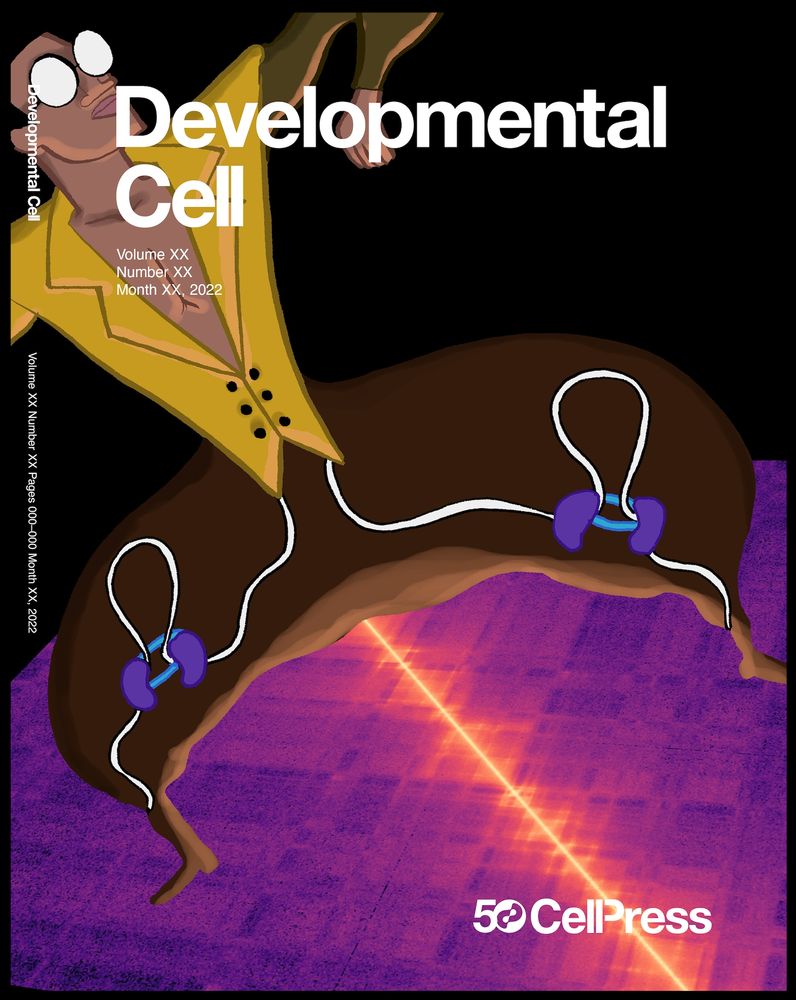
It had been 18 years since i last "commissioned" my college buddy @pedromics.bsky.social Our paper showing dramatic phenotypes upon loss of a single CTCF motif gave us the best excuse to do it again. We recruited MC hammer to deliver the main message: U Can't Touch This!
tinyurl.com/4rz8kusj
tinyurl.com/4rz8kusj
Reposted by Pedro Rocha

Preprint alert! 🥸
Yajie Zhu (PhD graduate) and Mariano Barbieri (postdoc, @spp2202.bsky.social Accelerator award) produced a package that will classify loops in your #3Dgenomics data based on (whichever) epigenomic data you have available. Keep reading...
1/n
www.biorxiv.org/content/10.6...
Yajie Zhu (PhD graduate) and Mariano Barbieri (postdoc, @spp2202.bsky.social Accelerator award) produced a package that will classify loops in your #3Dgenomics data based on (whichever) epigenomic data you have available. Keep reading...
1/n
www.biorxiv.org/content/10.6...
LoopBin – a VaDE-based neural network for chromatin loop classification
Classifying chromatin loops from 3D genomics data according to their epigenetic and structural attributes is important for inferring their functional roles. Currently, such classification typically relies on the manual intersection of epigenomic signal peaks and loop anchor locations. To automate this, remove peak-calling biases and include information inherent to 3D genomics signal structure, we developed LoopBin, a framework based on a variational deep embedding (VaDE) neural network. We applied LoopBin to kilobase-resolution Micro-C data and segmented tens of thousands of loops into clusters with distinct features using minimal histone modification and transcription factor-binding data. These features were indicative of apparently distinct biological function by each subgroup of loops. Therefore, LoopBin can provide insights into the dynamic shifts in loop classification that can occur upon perturbation of cell homeostasis or signaling. ### Competing Interest Statement The authors have declared no competing interest.
www.biorxiv.org
January 21, 2026 at 9:05 AM
Preprint alert! 🥸
Yajie Zhu (PhD graduate) and Mariano Barbieri (postdoc, @spp2202.bsky.social Accelerator award) produced a package that will classify loops in your #3Dgenomics data based on (whichever) epigenomic data you have available. Keep reading...
1/n
www.biorxiv.org/content/10.6...
Yajie Zhu (PhD graduate) and Mariano Barbieri (postdoc, @spp2202.bsky.social Accelerator award) produced a package that will classify loops in your #3Dgenomics data based on (whichever) epigenomic data you have available. Keep reading...
1/n
www.biorxiv.org/content/10.6...
Reposted by Pedro Rocha
Preprint alert: Jiangyuan Liu developed a new workflow for chromatin loop calling across Hi-C datasets, e.g., during differentiation. Most loops are shared between datasets/cell states. Important work for all interested in chromatin loops and how to identify them!
www.biorxiv.org/content/10.6...
www.biorxiv.org/content/10.6...
www.biorxiv.org
January 21, 2026 at 11:20 AM
Preprint alert: Jiangyuan Liu developed a new workflow for chromatin loop calling across Hi-C datasets, e.g., during differentiation. Most loops are shared between datasets/cell states. Important work for all interested in chromatin loops and how to identify them!
www.biorxiv.org/content/10.6...
www.biorxiv.org/content/10.6...
Reposted by Pedro Rocha
Our work on #RegulatoryTrajectories is out today in Nat. Comms: www.nature.com/articles/s41...
Led by @raquelrouco.bsky.social, this study establishes a new framework to study how enhancer landscapes act sequentially at developmental loci and are silenced to shape gene expression patterns. (1/n)
Led by @raquelrouco.bsky.social, this study establishes a new framework to study how enhancer landscapes act sequentially at developmental loci and are silenced to shape gene expression patterns. (1/n)
Client Challenge
www.nature.com
January 12, 2026 at 11:48 AM
Our work on #RegulatoryTrajectories is out today in Nat. Comms: www.nature.com/articles/s41...
Led by @raquelrouco.bsky.social, this study establishes a new framework to study how enhancer landscapes act sequentially at developmental loci and are silenced to shape gene expression patterns. (1/n)
Led by @raquelrouco.bsky.social, this study establishes a new framework to study how enhancer landscapes act sequentially at developmental loci and are silenced to shape gene expression patterns. (1/n)
Reposted by Pedro Rocha

Our work on the evolution of the regulatory genome of echinoderms is now out in @natecoevo.nature.com. Led by my former PhD Marta Magri, Danila Voronov & Saoirse Foley. Great collaboration of Arnone, Hinman & Maeso labs, started long time ago with our missed José Luis Gomez-Skarmeta: rdcu.be/eXX8l

Deep conservation of cis-regulatory elements and chromatin organization in echinoderms uncover ancestral regulatory features of animal genomes
Nature Ecology & Evolution - Analysis of the 3D chromatin architecture and cis-regulatory elements in a sea urchin and a sea star reveals mechanisms of 3D chromatin organization in echinoderms...
rdcu.be
January 7, 2026 at 7:33 PM
Our work on the evolution of the regulatory genome of echinoderms is now out in @natecoevo.nature.com. Led by my former PhD Marta Magri, Danila Voronov & Saoirse Foley. Great collaboration of Arnone, Hinman & Maeso labs, started long time ago with our missed José Luis Gomez-Skarmeta: rdcu.be/eXX8l
Reposted by Pedro Rocha

Stress controls epigenetic inheritance!
A histone ubiquitylation-based regulatory hub links stress/environmental signaling to heterochromatin self-propagation and epigenetic inheritance-reshaping how we think about development, drug resistance, and cancer
👉 nature.com/articles/s41586-025-09899-8
A histone ubiquitylation-based regulatory hub links stress/environmental signaling to heterochromatin self-propagation and epigenetic inheritance-reshaping how we think about development, drug resistance, and cancer
👉 nature.com/articles/s41586-025-09899-8

January 7, 2026 at 4:46 PM
Stress controls epigenetic inheritance!
A histone ubiquitylation-based regulatory hub links stress/environmental signaling to heterochromatin self-propagation and epigenetic inheritance-reshaping how we think about development, drug resistance, and cancer
👉 nature.com/articles/s41586-025-09899-8
A histone ubiquitylation-based regulatory hub links stress/environmental signaling to heterochromatin self-propagation and epigenetic inheritance-reshaping how we think about development, drug resistance, and cancer
👉 nature.com/articles/s41586-025-09899-8
Reposted by Pedro Rocha

Glad to share our latest work that came out recently. We dive into the mechanisms of how Transcription Factors (TFs) like the nuclear receptor, ERα navigate the genome to find their targets.

December 25, 2025 at 2:44 AM
Glad to share our latest work that came out recently. We dive into the mechanisms of how Transcription Factors (TFs) like the nuclear receptor, ERα navigate the genome to find their targets.
Reposted by Pedro Rocha
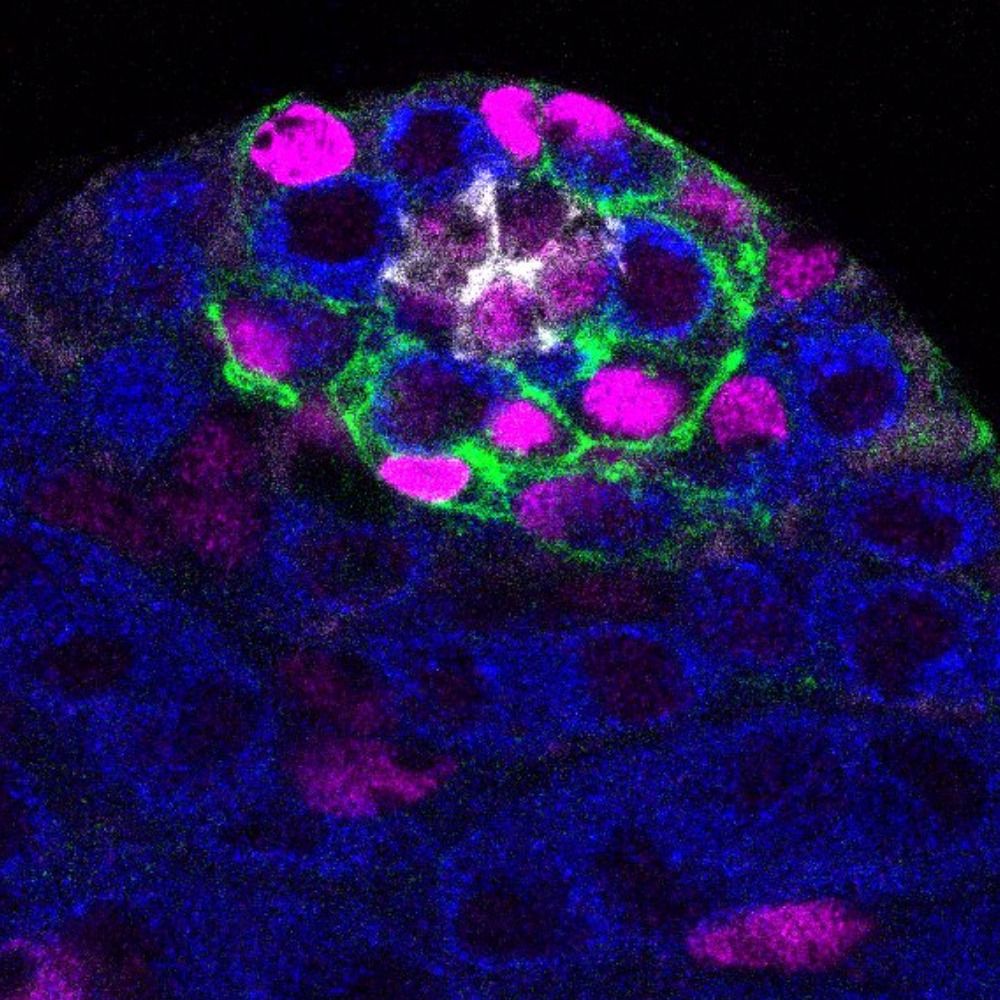
🚨Seeking developmental or cell biologists🔬!🚨
Our department @ucl-cdb.bsky.social is looking to support scientists seeking to establish their lab with a fellowship. Deadline: 30 Jan. Apply here: www.ucl.ac.uk/work-at-ucl/...
Our department @ucl-cdb.bsky.social is looking to support scientists seeking to establish their lab with a fellowship. Deadline: 30 Jan. Apply here: www.ucl.ac.uk/work-at-ucl/...
December 18, 2025 at 6:38 PM
🚨Seeking developmental or cell biologists🔬!🚨
Our department @ucl-cdb.bsky.social is looking to support scientists seeking to establish their lab with a fellowship. Deadline: 30 Jan. Apply here: www.ucl.ac.uk/work-at-ucl/...
Our department @ucl-cdb.bsky.social is looking to support scientists seeking to establish their lab with a fellowship. Deadline: 30 Jan. Apply here: www.ucl.ac.uk/work-at-ucl/...
Reposted by Pedro Rocha
🚨Reposts appreciated‼️If I had read this PhD offer five years ago, I wouldn’t have hesitated for a second to apply 😉
Passionate about gene regulation, chromatin, and developmental biology? Just contact @radaiglesiaslab.bsky.social at @ibbtec.bsky.social 🧬✨
#PhD #3DGenome
Passionate about gene regulation, chromatin, and developmental biology? Just contact @radaiglesiaslab.bsky.social at @ibbtec.bsky.social 🧬✨
#PhD #3DGenome

November 15, 2025 at 9:53 AM
🚨Reposts appreciated‼️If I had read this PhD offer five years ago, I wouldn’t have hesitated for a second to apply 😉
Passionate about gene regulation, chromatin, and developmental biology? Just contact @radaiglesiaslab.bsky.social at @ibbtec.bsky.social 🧬✨
#PhD #3DGenome
Passionate about gene regulation, chromatin, and developmental biology? Just contact @radaiglesiaslab.bsky.social at @ibbtec.bsky.social 🧬✨
#PhD #3DGenome
Reposted by Pedro Rocha

We recently reported that promoter competition can contribute to the robust insulation of gene regulatory domains (www.nature.com/articles/s41...).
We now offer a 4-years PhD contract to investigate whether the dirsuption of this regulatory mechanism can lead to congenital defects. More details 👇
We now offer a 4-years PhD contract to investigate whether the dirsuption of this regulatory mechanism can lead to congenital defects. More details 👇

November 6, 2025 at 6:37 PM
We recently reported that promoter competition can contribute to the robust insulation of gene regulatory domains (www.nature.com/articles/s41...).
We now offer a 4-years PhD contract to investigate whether the dirsuption of this regulatory mechanism can lead to congenital defects. More details 👇
We now offer a 4-years PhD contract to investigate whether the dirsuption of this regulatory mechanism can lead to congenital defects. More details 👇
Reposted by Pedro Rocha
Our latest paper has just been published in Cell!
doi.org/10.1016/j.ce...
We developed a new method called MCC ultra, which allows 3D chromatin structure to be visualised with a 1 base pair pixel size.
doi.org/10.1016/j.ce...
We developed a new method called MCC ultra, which allows 3D chromatin structure to be visualised with a 1 base pair pixel size.

November 5, 2025 at 5:20 PM
Our latest paper has just been published in Cell!
doi.org/10.1016/j.ce...
We developed a new method called MCC ultra, which allows 3D chromatin structure to be visualised with a 1 base pair pixel size.
doi.org/10.1016/j.ce...
We developed a new method called MCC ultra, which allows 3D chromatin structure to be visualised with a 1 base pair pixel size.
Reposted by Pedro Rocha

Having a lot of fun at #EMBOMobileGenome 😃
Perfect timing for our paper from the lab of @toddmacfarlan.bsky.social to be out @natcomms.nature.com!!
…and I’m currently on the job market looking for a new scientific home!
www.nature.com/articles/s41...
Perfect timing for our paper from the lab of @toddmacfarlan.bsky.social to be out @natcomms.nature.com!!
…and I’m currently on the job market looking for a new scientific home!
www.nature.com/articles/s41...

Young KRAB-zinc finger gene clusters are highly dynamic incubators of ERV-driven genetic heterogeneity in mice - Nature Communications
KRAB-zinc finger proteins repress retrotransposons and rapidly evolve in mammals. Here, the authors show that ERV insertions drive the emergence and diversification of new KZFP genes in mice, revealin...
www.nature.com
November 6, 2025 at 9:40 AM
Having a lot of fun at #EMBOMobileGenome 😃
Perfect timing for our paper from the lab of @toddmacfarlan.bsky.social to be out @natcomms.nature.com!!
…and I’m currently on the job market looking for a new scientific home!
www.nature.com/articles/s41...
Perfect timing for our paper from the lab of @toddmacfarlan.bsky.social to be out @natcomms.nature.com!!
…and I’m currently on the job market looking for a new scientific home!
www.nature.com/articles/s41...
Reposted by Pedro Rocha

Really excited to see this out in the open: www.life-science-alliance.org/content/9/1/...! @isabellavoelkl.bsky.social explored and compared different in vitro developmental model systems to study ciliogenesis.

In vitro approaches to study centriole and cilium function in early mouse embryogenesis
Although centrioles and primary cilia play an essential role in early mammalian development, their specific function during the interval between their initial formation and the subsequent arrest of em...
www.life-science-alliance.org
October 30, 2025 at 9:17 AM
Really excited to see this out in the open: www.life-science-alliance.org/content/9/1/...! @isabellavoelkl.bsky.social explored and compared different in vitro developmental model systems to study ciliogenesis.
Reposted by Pedro Rocha

Spread the word! There is a professor position opening at our University @upcite.bsky.social. There are several possible (great) labs to join, but if you are interested in DNA methylation and epigenetics in mammals, don't hesitate to contact me directly!

#JobOffer
💼 Un poste susceptible d’être vacant de Professeur en stabilité des génomes devrait s’ouvrir pour la rentrée 2026 au sein de l’Institut Jacques Monod
➡️ Informations concernant ce poste et la procédure de candidature 🔗 www.ijm.fr/poste-de-pro...
💼 Un poste susceptible d’être vacant de Professeur en stabilité des génomes devrait s’ouvrir pour la rentrée 2026 au sein de l’Institut Jacques Monod
➡️ Informations concernant ce poste et la procédure de candidature 🔗 www.ijm.fr/poste-de-pro...

October 28, 2025 at 1:51 PM
Spread the word! There is a professor position opening at our University @upcite.bsky.social. There are several possible (great) labs to join, but if you are interested in DNA methylation and epigenetics in mammals, don't hesitate to contact me directly!
Reposted by Pedro Rocha

Federal worker here.

October 27, 2025 at 4:37 PM
Federal worker here.
Reposted by Pedro Rocha
Happy to share our latest publication, in which we show that the arrangement of nucleosomes around CTCF sites contributes to higher-order organisation of chromatin into TADs: www.embopress.org/doi/full/10....

October 27, 2025 at 11:49 AM
Happy to share our latest publication, in which we show that the arrangement of nucleosomes around CTCF sites contributes to higher-order organisation of chromatin into TADs: www.embopress.org/doi/full/10....
Reposted by Pedro Rocha

Our collab w. V Goel, @nicholas-aboreden.bsky.social , J Jusuf, G Blobel, L Mirny, @irate-physicist.bsky.social out in @natsmb.nature.com www.nature.com/articles/s41...
Was co-submitted with @allanaschooley.bsky.social @jobdekker.bsky.social whose paper should also come out soon
Brief thread 👇
Was co-submitted with @allanaschooley.bsky.social @jobdekker.bsky.social whose paper should also come out soon
Brief thread 👇
October 20, 2025 at 6:36 PM
Our collab w. V Goel, @nicholas-aboreden.bsky.social , J Jusuf, G Blobel, L Mirny, @irate-physicist.bsky.social out in @natsmb.nature.com www.nature.com/articles/s41...
Was co-submitted with @allanaschooley.bsky.social @jobdekker.bsky.social whose paper should also come out soon
Brief thread 👇
Was co-submitted with @allanaschooley.bsky.social @jobdekker.bsky.social whose paper should also come out soon
Brief thread 👇
Reposted by Pedro Rocha
What is a promoter? And how does it work?
We very happy to share our latest work trying to understand enhancer-promoter compatibility.
I am very excited about the results of @blanka-majchrzycka.bsky.social, which changed the way I think about promoters
www.biorxiv.org/content/10.1...
We very happy to share our latest work trying to understand enhancer-promoter compatibility.
I am very excited about the results of @blanka-majchrzycka.bsky.social, which changed the way I think about promoters
www.biorxiv.org/content/10.1...

Enhancer-promoter compatibility is mediated by the promoter-proximal region
Gene promoters induce transcription in response to distal enhancers. How enhancers specifically activate their target promoter while bypassing other promoters remains unclear. Here, we find that the p...
www.biorxiv.org
October 16, 2025 at 3:06 PM
What is a promoter? And how does it work?
We very happy to share our latest work trying to understand enhancer-promoter compatibility.
I am very excited about the results of @blanka-majchrzycka.bsky.social, which changed the way I think about promoters
www.biorxiv.org/content/10.1...
We very happy to share our latest work trying to understand enhancer-promoter compatibility.
I am very excited about the results of @blanka-majchrzycka.bsky.social, which changed the way I think about promoters
www.biorxiv.org/content/10.1...
Reposted by Pedro Rocha
Ever wondered what drives enhancer-promoter specificity? Why would an enhancer activate one gene rather than another neighboring one?
Check our latest preprint, led by @mmasoura.bsky.social, to find out!
www.biorxiv.org/content/10.1...
Check our latest preprint, led by @mmasoura.bsky.social, to find out!
www.biorxiv.org/content/10.1...

Promoter-proximal gatekeepers restrict pleiotropic enhancer inputs to achieve tissue specificity
Developmental enhancers are central regulatory elements that can activate multiple genes, yet how they selectively regulate one gene over its neighbours remains unclear. Using the Drosophila twist E3 ...
www.biorxiv.org
October 16, 2025 at 12:34 PM
Ever wondered what drives enhancer-promoter specificity? Why would an enhancer activate one gene rather than another neighboring one?
Check our latest preprint, led by @mmasoura.bsky.social, to find out!
www.biorxiv.org/content/10.1...
Check our latest preprint, led by @mmasoura.bsky.social, to find out!
www.biorxiv.org/content/10.1...
Reposted by Pedro Rocha

If you’re interested in exploring the relationship between chromatin organization and epigenetic memory using chromatin tracing microscopy, my group is recruiting a talented PhD student 🥳

🚨 Please share! We are seeking motivated PhD students who wish to work at the intersection of molecular life sciences and computational sciences.
#IMPRS #IMPRSBAC @freieuniversitaet.bsky.social @maxplanck.de
Check out our projects and apply by Jan 7th, 2026!
www.molgen.mpg.de/IMPRSPhDproj...
#IMPRS #IMPRSBAC @freieuniversitaet.bsky.social @maxplanck.de
Check out our projects and apply by Jan 7th, 2026!
www.molgen.mpg.de/IMPRSPhDproj...

October 8, 2025 at 5:05 PM
If you’re interested in exploring the relationship between chromatin organization and epigenetic memory using chromatin tracing microscopy, my group is recruiting a talented PhD student 🥳
Reposted by Pedro Rocha
Many enhancers that drive tissue-specific gene expression are already connected to gene promoters in human pluripotent cells.
In a new preprint, we share some clues about when, how, and why this happens!
www.biorxiv.org/content/10.1...
In a new preprint, we share some clues about when, how, and why this happens!
www.biorxiv.org/content/10.1...

Poising and connectivity of emergent human developmental enhancers in the transition from naive to primed pluripotency
In primed human pluripotent stem cells (hPSCs) resembling post-implantation epiblast, numerous lineage-specific enhancers assume the poised chromatin state, co-marked by H3K4me1 and Polycomb-associate...
www.biorxiv.org
October 3, 2025 at 3:09 PM
Many enhancers that drive tissue-specific gene expression are already connected to gene promoters in human pluripotent cells.
In a new preprint, we share some clues about when, how, and why this happens!
www.biorxiv.org/content/10.1...
In a new preprint, we share some clues about when, how, and why this happens!
www.biorxiv.org/content/10.1...
Reposted by Pedro Rocha

New preprint from the lab !! Loop extrusion may provide mechanical robustness to chromatin. Great work by Hossein Salari. @cnrs.fr @lbmcinlyon.bsky.social
www.biorxiv.org/content/10.1...
www.biorxiv.org/content/10.1...

Loop extrusion provides mechanical robustness to chromatin
Chromosomes are complex biopolymers folded into dynamic loops via a loop extrusion process and may experience various mechanical forces in vivo . We develop a force-dependent model of chromatin loop e...
www.biorxiv.org
September 29, 2025 at 1:24 PM
New preprint from the lab !! Loop extrusion may provide mechanical robustness to chromatin. Great work by Hossein Salari. @cnrs.fr @lbmcinlyon.bsky.social
www.biorxiv.org/content/10.1...
www.biorxiv.org/content/10.1...
Reposted by Pedro Rocha
Interested in morphogens and how they can robustly specifiy different cell types with single-cell resolution?
Check out this preprint combining experiments and modelling by our colleagues and partners in crime @ucl-cdb.bsky.social:
www.biorxiv.org/content/10.1...
Check out this preprint combining experiments and modelling by our colleagues and partners in crime @ucl-cdb.bsky.social:
www.biorxiv.org/content/10.1...

Morphogen and juxtacrine signalling dynamically integrate to specify cell fates with single-cell resolution
Morphogen gradients guide tissue patterning but do not act in isolation. How they integrate with other signalling modalities, like juxtacrine signalling, and how these integrations influence pattern r...
www.biorxiv.org
September 25, 2025 at 2:27 PM
Interested in morphogens and how they can robustly specifiy different cell types with single-cell resolution?
Check out this preprint combining experiments and modelling by our colleagues and partners in crime @ucl-cdb.bsky.social:
www.biorxiv.org/content/10.1...
Check out this preprint combining experiments and modelling by our colleagues and partners in crime @ucl-cdb.bsky.social:
www.biorxiv.org/content/10.1...
Reposted by Pedro Rocha

🚨Please share! We are hiring a post-doc! 🪱 🐀
Job posting: www.training.nih.gov/jobs/pdf-gb-...
Lab Website: www.niddk.nih.gov/research-fun...
NIH Trainee info: www.training.nih.gov
Job posting: www.training.nih.gov/jobs/pdf-gb-...
Lab Website: www.niddk.nih.gov/research-fun...
NIH Trainee info: www.training.nih.gov

September 24, 2025 at 7:25 PM
🚨Please share! We are hiring a post-doc! 🪱 🐀
Job posting: www.training.nih.gov/jobs/pdf-gb-...
Lab Website: www.niddk.nih.gov/research-fun...
NIH Trainee info: www.training.nih.gov
Job posting: www.training.nih.gov/jobs/pdf-gb-...
Lab Website: www.niddk.nih.gov/research-fun...
NIH Trainee info: www.training.nih.gov
Reposted by Pedro Rocha
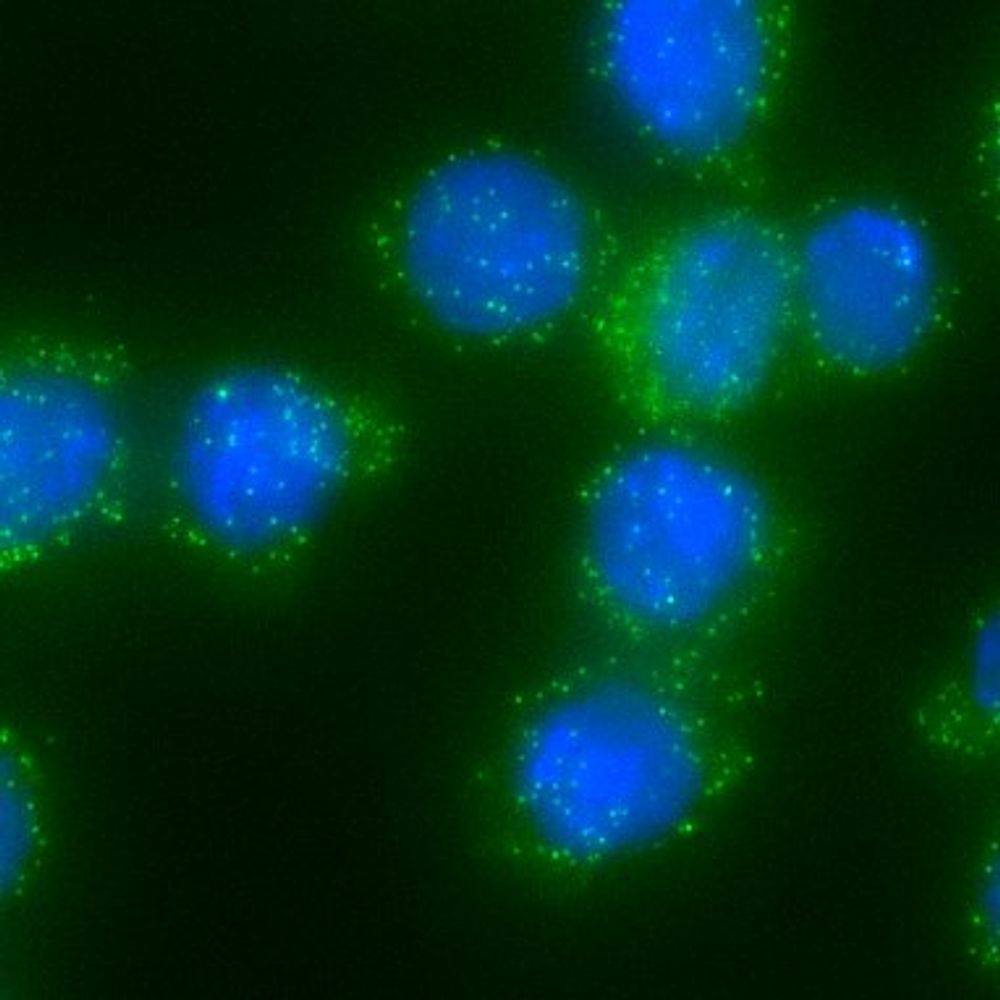
Really excited to share our latest work led by @mattiaubertini.bsky.social and @nesslfy.bsky.social: we report that cohesin loop extrusion creates rare but long-lived encounters between genomic sequences which underlie efficient enhancer-promoter communication.
www.biorxiv.org/content/10.1...
A🧵👇
www.biorxiv.org/content/10.1...
A🧵👇
September 24, 2025 at 9:45 PM
Really excited to share our latest work led by @mattiaubertini.bsky.social and @nesslfy.bsky.social: we report that cohesin loop extrusion creates rare but long-lived encounters between genomic sequences which underlie efficient enhancer-promoter communication.
www.biorxiv.org/content/10.1...
A🧵👇
www.biorxiv.org/content/10.1...
A🧵👇
Reposted by Pedro Rocha

Some (+)ve news to lighten another heavy weekend: our latest preprint (c/o Mattiroli + Ramani labs) is up!
www.biorxiv.org/content/10.1...
A tour-de-force by 1st authors Bruna Eckhardt & @palindromephd.bsky.social, focusing on chromatin replication. RTs welcome; tweetorial in 3,2...(1/n)
www.biorxiv.org/content/10.1...
A tour-de-force by 1st authors Bruna Eckhardt & @palindromephd.bsky.social, focusing on chromatin replication. RTs welcome; tweetorial in 3,2...(1/n)

The eukaryotic replisome intrinsically generates asymmetric daughter chromatin fibers
DNA replication is molecularly asymmetric, due to distinct mechanisms for lagging and leading strand DNA synthesis. Whether chromatin assembly on newly replicated strands is also asymmetric remains un...
www.biorxiv.org
September 20, 2025 at 4:10 PM
Some (+)ve news to lighten another heavy weekend: our latest preprint (c/o Mattiroli + Ramani labs) is up!
www.biorxiv.org/content/10.1...
A tour-de-force by 1st authors Bruna Eckhardt & @palindromephd.bsky.social, focusing on chromatin replication. RTs welcome; tweetorial in 3,2...(1/n)
www.biorxiv.org/content/10.1...
A tour-de-force by 1st authors Bruna Eckhardt & @palindromephd.bsky.social, focusing on chromatin replication. RTs welcome; tweetorial in 3,2...(1/n)