




Robert Arkowitz
@robertarkowitz.bsky.social
Fascinated by fungal growth & asymmetries. Institute of Biology Valrose, CNRS-Inserm-Université Côté d’Azur, Nice. Microscopy addict, all things cell biological
Pinned

Tolerance to the antifungal drug fluconazole is mediated by tuning cytoplasmic fluidity
Treatment failure rates for fungal infections cannot be explained simply by increased rates of drug resistance. Antifungal drug tolerance, the ability of a susceptible isolate to grow in the presence ...
www.biorxiv.org
Excited to share our new study on antifungal drug tolerance in the human fungal pathogen Candida albicans.
This work highlights a link between between drug tolerance and cytoplasmic fluidity.
👇(1/3)
www.biorxiv.org/content/10.6...
#Science #Microbiology #CellBiology #Fungi
This work highlights a link between between drug tolerance and cytoplasmic fluidity.
👇(1/3)
www.biorxiv.org/content/10.6...
#Science #Microbiology #CellBiology #Fungi
A general one-step protocol to generate impermeable fluorescent HaloTag substrates for in situ live cell application and super-resolution imaging
www.nature.com/articles/s41...
www.nature.com/articles/s41...
Client Challenge
www.nature.com
January 13, 2026 at 6:36 PM
A general one-step protocol to generate impermeable fluorescent HaloTag substrates for in situ live cell application and super-resolution imaging
www.nature.com/articles/s41...
www.nature.com/articles/s41...
Reposted by Robert Arkowitz

New Article! Hydrogen/deuterium exchange mass spectrometry analysis of ribosome-nascent chain complexes to study protein biogenesis at the peptide level

Hydrogen/deuterium exchange mass spectrometry analysis of ribosome-nascent chain complexes to study protein biogenesis at the peptide level
Nature Protocols, Published online: 12 January 2026; doi:10.1038/s41596-025-01279-wA strategy for isolating Escherichia coli ribosome–nascent chain complexes and analyzing their conformational dynamics and interactors at peptide level using hydrogen–deuterium exchange mass spectrometry is presented.
dlvr.it
January 12, 2026 at 10:48 AM
New Article! Hydrogen/deuterium exchange mass spectrometry analysis of ribosome-nascent chain complexes to study protein biogenesis at the peptide level
Reposted by Robert Arkowitz

Why does life explore so few of the forms it could possibly take? Using fractal descriptors, this #scienceadvances paper shows that Earth’s biosphere clusters around simple shapes, reflecting deep evolutionary constraints. @artemyte.bsky.social @manlius.bsky.social www.science.org/doi/pdf/10.1...

January 11, 2026 at 1:23 PM
Why does life explore so few of the forms it could possibly take? Using fractal descriptors, this #scienceadvances paper shows that Earth’s biosphere clusters around simple shapes, reflecting deep evolutionary constraints. @artemyte.bsky.social @manlius.bsky.social www.science.org/doi/pdf/10.1...
Reposted by Robert Arkowitz

#ResultatScientifique🔎| Quand Candida albicans réduit ses ribosomes, ses cellules deviennent plus fluides, ce qui l’aide à changer de forme et à mieux infecter l’organisme 🍄
✍️ Robert Arkowitz
📕 @natmicrobiol.nature.com | buff.ly/zPSLael
✍️ Robert Arkowitz
📕 @natmicrobiol.nature.com | buff.ly/zPSLael

Fluidité intracellulaire et pouvoir infectieux du champignon Candida albicans
Dans un article publié dans la revue Nature Microbiology, des scientifiques mettent en évidence un mécanisme jusque-là inconnu chez Candida albic
www.insb.cnrs.fr
January 9, 2026 at 1:00 PM
#ResultatScientifique🔎| Quand Candida albicans réduit ses ribosomes, ses cellules deviennent plus fluides, ce qui l’aide à changer de forme et à mieux infecter l’organisme 🍄
✍️ Robert Arkowitz
📕 @natmicrobiol.nature.com | buff.ly/zPSLael
✍️ Robert Arkowitz
📕 @natmicrobiol.nature.com | buff.ly/zPSLael
Reposted by Robert Arkowitz


Reposted by Robert Arkowitz


AI is transforming peer review — and many scientists are worried www.nature.com/articles/d41...

AI is transforming peer review — and many scientists are worried
Artificial intelligence software is increasingly involved in reviewing papers, provoking interest and unease.
www.nature.com
December 28, 2025 at 2:58 PM
AI is transforming peer review — and many scientists are worried www.nature.com/articles/d41...

Reposted by Robert Arkowitz

We gave Jay Bhattacharya an opportunity to clarify his vaccine stance: does he REALLY believe that the vaccine is worse than the disease? Instead, he launched into a defense of MAHA as the future of scientific inquiry, and never really gave us a straight answer...
@repauchincloss.bsky.social
@repauchincloss.bsky.social
December 16, 2025 at 2:55 PM
We gave Jay Bhattacharya an opportunity to clarify his vaccine stance: does he REALLY believe that the vaccine is worse than the disease? Instead, he launched into a defense of MAHA as the future of scientific inquiry, and never really gave us a straight answer...
@repauchincloss.bsky.social
@repauchincloss.bsky.social

Reposted by Robert Arkowitz

#NewResearch
During filamentous growth in the human fungal pathogen Candida albicans, a reduction in ribosome concentration leads to a decrease in macromolecular crowding. Inhibition of ribosome biogenesis can trigger filamentous growth in this pathogen.
#MicroSky 🦠
www.nature.com/articles/s41...
During filamentous growth in the human fungal pathogen Candida albicans, a reduction in ribosome concentration leads to a decrease in macromolecular crowding. Inhibition of ribosome biogenesis can trigger filamentous growth in this pathogen.
#MicroSky 🦠
www.nature.com/articles/s41...

Decreased cytoplasmic crowding via inhibition of ribosome biogenesis can trigger Candida albicans filamentous growth - Nature Microbiology
During filamentous growth in the human fungal pathogen Candida albicans, a reduction in ribosome concentration leads to a decrease in macromolecular crowding. Inhibition of ribosome biogenesis can tri...
www.nature.com
December 11, 2025 at 2:35 PM
#NewResearch
During filamentous growth in the human fungal pathogen Candida albicans, a reduction in ribosome concentration leads to a decrease in macromolecular crowding. Inhibition of ribosome biogenesis can trigger filamentous growth in this pathogen.
#MicroSky 🦠
www.nature.com/articles/s41...
During filamentous growth in the human fungal pathogen Candida albicans, a reduction in ribosome concentration leads to a decrease in macromolecular crowding. Inhibition of ribosome biogenesis can trigger filamentous growth in this pathogen.
#MicroSky 🦠
www.nature.com/articles/s41...
Reposted by Robert Arkowitz

Out now! Decreased cytoplasmic crowding via inhibition of ribosome biogenesis can trigger Candida albicans filamentous growth
@robertarkowitz.bsky.social
Read it here: rdcu.be/eT3CP
www.nature.com/articles/s41...
@robertarkowitz.bsky.social
Read it here: rdcu.be/eT3CP
www.nature.com/articles/s41...

Decreased cytoplasmic crowding via inhibition of ribosome biogenesis can trigger Candida albicans filamentous growth - Nature Microbiology
During filamentous growth in the human fungal pathogen Candida albicans, a reduction in ribosome concentration leads to a decrease in macromolecular crowding. Inhibition of ribosome biogenesis can tri...
www.nature.com
December 10, 2025 at 8:52 PM
Out now! Decreased cytoplasmic crowding via inhibition of ribosome biogenesis can trigger Candida albicans filamentous growth
@robertarkowitz.bsky.social
Read it here: rdcu.be/eT3CP
www.nature.com/articles/s41...
@robertarkowitz.bsky.social
Read it here: rdcu.be/eT3CP
www.nature.com/articles/s41...
👉Excited to share our latest work @natmicrobiol.nature.com, revealing a decrease in cytoplasmic crowding during filamentous growth in the human fungal pathogen Candida albicans. Furthermore we found that inhibition of ribosome biogenesis can trigger filamentous growth in this pathogen
rdcu.be/eT1Su
rdcu.be/eT1Su

Decreased cytoplasmic crowding via inhibition of ribosome biogenesis can trigger Candida albicans filamentous growth
Nature Microbiology - During filamentous growth in the human fungal pathogen Candida albicans, a reduction in ribosome concentration leads to a decrease in macromolecular crowding. Inhibition of...
rdcu.be
December 10, 2025 at 12:23 PM
👉Excited to share our latest work @natmicrobiol.nature.com, revealing a decrease in cytoplasmic crowding during filamentous growth in the human fungal pathogen Candida albicans. Furthermore we found that inhibition of ribosome biogenesis can trigger filamentous growth in this pathogen
rdcu.be/eT1Su
rdcu.be/eT1Su
Reposted by Robert Arkowitz
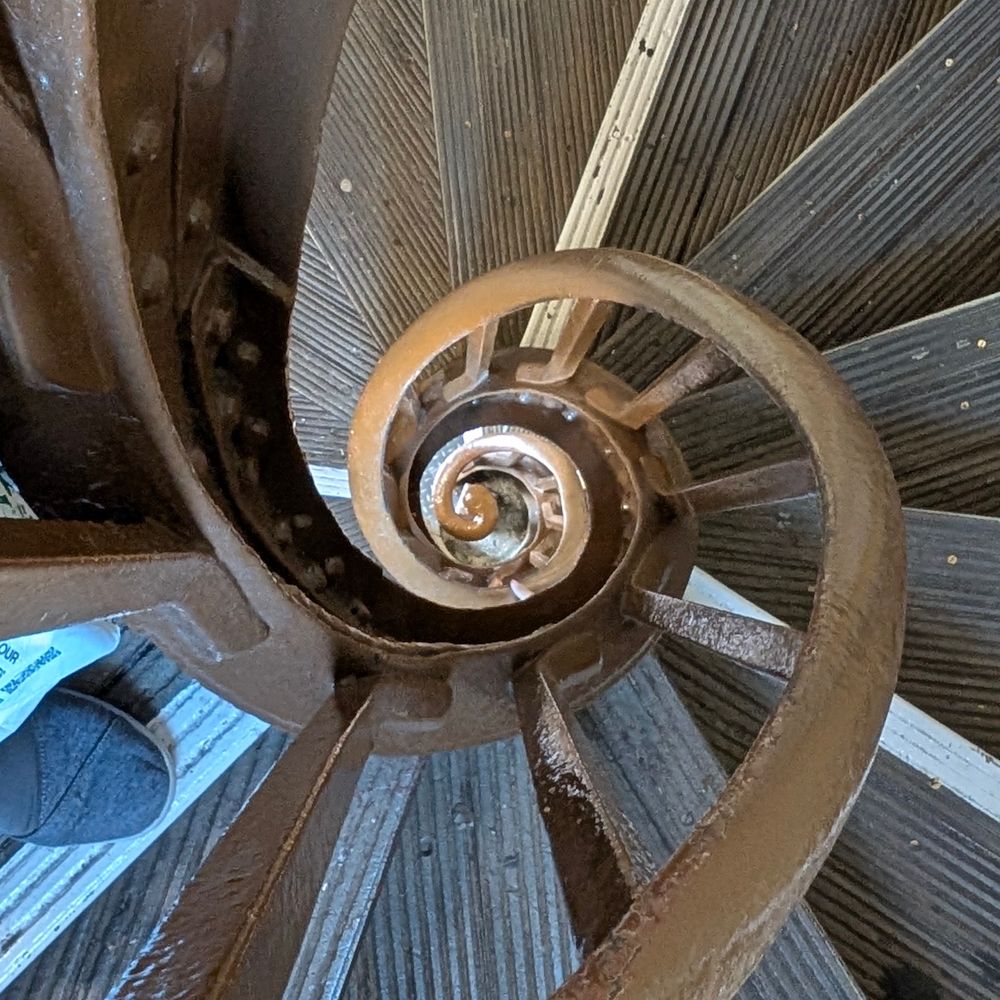
🚨 The NIH open access policy requiring immediate open access for all NIH funded papers is derailing all kinds of research programs because of the high $$$ associated with journal open access fees. Thanks to @docsirianni.bsky.social for your continued advocacy
www.insidehighered.com/news/faculty...
www.insidehighered.com/news/faculty...

The NIH Policy Holding Researchers “Hostage”
An effort to make NIH-funded research immediately accessible to the public has led to disruption and financial strain for scientists already navigating a precarious funding environment. It also spotli...
www.insidehighered.com
December 9, 2025 at 8:30 PM
🚨 The NIH open access policy requiring immediate open access for all NIH funded papers is derailing all kinds of research programs because of the high $$$ associated with journal open access fees. Thanks to @docsirianni.bsky.social for your continued advocacy
www.insidehighered.com/news/faculty...
www.insidehighered.com/news/faculty...


www.biorxiv.org
December 9, 2025 at 6:05 AM
Reposted by Robert Arkowitz

www.nytimes.com/2025/12/05/c...
Micro organisms rule!
Micro organisms rule!

What Scientists Found When a Deep Sea Mining Company Invited Them In
www.nytimes.com
December 6, 2025 at 10:53 PM
www.nytimes.com/2025/12/05/c...
Micro organisms rule!
Micro organisms rule!
Reposted by Robert Arkowitz



Reposted by Robert Arkowitz

Extensive horizontal transfer of transposable elements shapes fungal mobilomes
@currentbiology.bsky.social by @jromeijn.bsky.social et al from @mfseidl.bsky.social
www.cell.com/current-biol...
@currentbiology.bsky.social by @jromeijn.bsky.social et al from @mfseidl.bsky.social
www.cell.com/current-biol...

Extensive horizontal transfer of transposable elements shapes fungal mobilomes
Romeijn et al. reveal that horizontal transposon transfer is widespread in fungi,
contributing up to 70% of transposon content in some taxa. The authors uncover thousands
of events across diverse line...
www.cell.com
December 6, 2025 at 9:22 AM
Extensive horizontal transfer of transposable elements shapes fungal mobilomes
@currentbiology.bsky.social by @jromeijn.bsky.social et al from @mfseidl.bsky.social
www.cell.com/current-biol...
@currentbiology.bsky.social by @jromeijn.bsky.social et al from @mfseidl.bsky.social
www.cell.com/current-biol...
Reposted by Robert Arkowitz
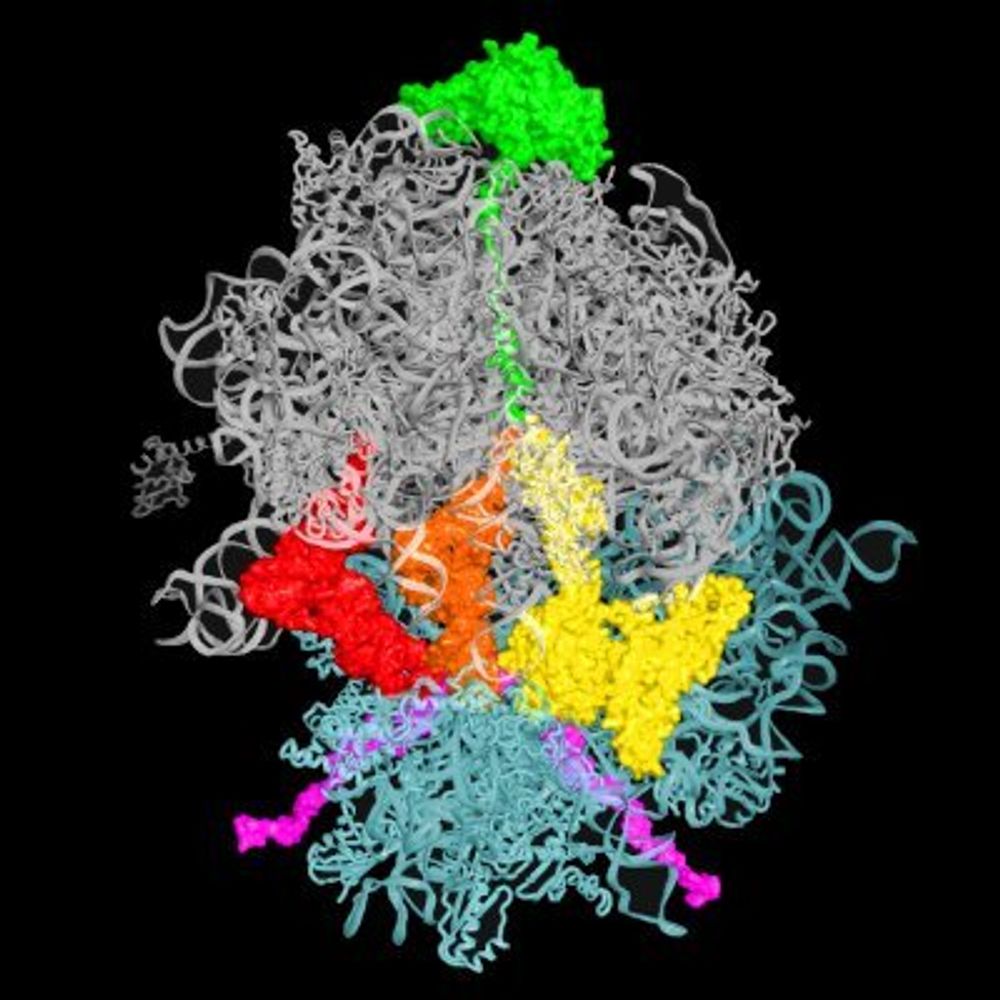
GTPBP1 is a GTPase implicated in neurodevelopment. Our cryo-EM maps show GTPBP1 delivering tRNA to ribosome.
Due to delayed GTPase dissociation, mRNA decoding is more stringent than with bona fide delivery factor eEF1A.
Congrats to Denis Susorov and collab with Pestova lab! tinyurl.com/3smdvt3v
Due to delayed GTPase dissociation, mRNA decoding is more stringent than with bona fide delivery factor eEF1A.
Congrats to Denis Susorov and collab with Pestova lab! tinyurl.com/3smdvt3v
December 5, 2025 at 6:30 PM
GTPBP1 is a GTPase implicated in neurodevelopment. Our cryo-EM maps show GTPBP1 delivering tRNA to ribosome.
Due to delayed GTPase dissociation, mRNA decoding is more stringent than with bona fide delivery factor eEF1A.
Congrats to Denis Susorov and collab with Pestova lab! tinyurl.com/3smdvt3v
Due to delayed GTPase dissociation, mRNA decoding is more stringent than with bona fide delivery factor eEF1A.
Congrats to Denis Susorov and collab with Pestova lab! tinyurl.com/3smdvt3v