




Tim Straub
@timothystraub.com
Senior Data Scientist @ Tiny Health
Data science | bioinformatics| computational biology
Broadly interested in NGS and multi-omics, microbiome, infectious disease, ML/AI, cool science, and big data. Also golden retrievers.
All views are my own.
Data science | bioinformatics| computational biology
Broadly interested in NGS and multi-omics, microbiome, infectious disease, ML/AI, cool science, and big data. Also golden retrievers.
All views are my own.
This work shows that precision microbiome-based therapies like VOWST can durably restore colonization resistance, shifting rCDI care beyond repeated antibiotics toward short-course, mechanism-driven treatment that rebuilds a resilient gut ecosystem.
January 6, 2026 at 2:53 AM
This work shows that precision microbiome-based therapies like VOWST can durably restore colonization resistance, shifting rCDI care beyond repeated antibiotics toward short-course, mechanism-driven treatment that rebuilds a resilient gut ecosystem.
We found:
- High-dose VOWST enabled rapid, durable engraftment and rescued efficacy in phase 3 vs phase 2
- VOWST shifted the gut toward a healthy-like community, reducing Proteobacteria and C. diff
- Engrafted Firmicutes restored key metabolites (secondary bile acids, SCFAs) that inhibit C. diff
- High-dose VOWST enabled rapid, durable engraftment and rescued efficacy in phase 3 vs phase 2
- VOWST shifted the gut toward a healthy-like community, reducing Proteobacteria and C. diff
- Engrafted Firmicutes restored key metabolites (secondary bile acids, SCFAs) that inhibit C. diff
January 6, 2026 at 2:53 AM
We found:
- High-dose VOWST enabled rapid, durable engraftment and rescued efficacy in phase 3 vs phase 2
- VOWST shifted the gut toward a healthy-like community, reducing Proteobacteria and C. diff
- Engrafted Firmicutes restored key metabolites (secondary bile acids, SCFAs) that inhibit C. diff
- High-dose VOWST enabled rapid, durable engraftment and rescued efficacy in phase 3 vs phase 2
- VOWST shifted the gut toward a healthy-like community, reducing Proteobacteria and C. diff
- Engrafted Firmicutes restored key metabolites (secondary bile acids, SCFAs) that inhibit C. diff
It's finally out today in Nature Medicine - a huge shout out to Jess Bryant and the entire Seres team, past and present, on this post hoc analysis of microbiome omics data across all three clinical trials of VOWST (aka SER-109).
Read it here:
www.nature.com/articles/s41...
Read it here:
www.nature.com/articles/s41...

The impact of an oral purified microbiome therapeutic on the gastrointestinal microbiome - Nature Medicine
An exploratory analysis of the phase 3 ECOSPOR III trial shows that a higher dosage of the oral microbiome therapeutic VOWST led to enhanced pharmacokinetics, increased species engraftment and altered...
www.nature.com
January 6, 2026 at 2:53 AM
It's finally out today in Nature Medicine - a huge shout out to Jess Bryant and the entire Seres team, past and present, on this post hoc analysis of microbiome omics data across all three clinical trials of VOWST (aka SER-109).
Read it here:
www.nature.com/articles/s41...
Read it here:
www.nature.com/articles/s41...
Find more info on how to participate here: www.tinyhealth.com/research/ora...
Tiny Health
www.tinyhealth.com
December 16, 2025 at 6:24 PM
Find more info on how to participate here: www.tinyhealth.com/research/ora...
Check out the latest research edition from Tiny Health (my company) looking at the oral-gut axis, partnering with Bristle Health to simultaneously test your oral and gut microbiomes.

Tiny Health and Bristle Health Launch Groundbreaking Study on Oral-Gut Health Connection
Tiny Health and Bristle Health recruit participants for pioneering research on the oral–gut microbiome connection and digestive health....
www.globenewswire.com
December 16, 2025 at 6:24 PM
Check out the latest research edition from Tiny Health (my company) looking at the oral-gut axis, partnering with Bristle Health to simultaneously test your oral and gut microbiomes.
Reposted by Tim Straub

Review: Evaluation of metagenome binning: advances and challenges academic.oup.com/bib/article/... 🧬🖥️🧪

November 21, 2025 at 7:00 PM
Review: Evaluation of metagenome binning: advances and challenges academic.oup.com/bib/article/... 🧬🖥️🧪
Reposted by Tim Straub

Research linking gut microbes to autism is deeply flawed, critics say. Amid growing investment in the field, a new paper argues it rests on shaky foundations. | Science | AAAS www.science.org/content/arti...

Research linking gut microbes to autism is deeply flawed, critics say
Amid growing investment in the field, a new paper argues it rests on shaky foundations
www.science.org
November 13, 2025 at 8:04 PM
Research linking gut microbes to autism is deeply flawed, critics say. Amid growing investment in the field, a new paper argues it rests on shaky foundations. | Science | AAAS www.science.org/content/arti...
Reposted by Tim Straub
Can we leverage bacterial competition for targeted replacement of harmful strains? Maybe! Our recent piece in @natmicrobiol.nature.com provides a theoretical framework and a set of experiments to show what it might take: www.nature.com/articles/s41...

Strain displacement in microbiomes via ecological competition - Nature Microbiology
Mathematical modelling and experimental tests reveal principles that govern displacement of a resident strain by an invader in microbial communities.
www.nature.com
November 7, 2025 at 10:34 PM
Can we leverage bacterial competition for targeted replacement of harmful strains? Maybe! Our recent piece in @natmicrobiol.nature.com provides a theoretical framework and a set of experiments to show what it might take: www.nature.com/articles/s41...
Reposted by Tim Straub

Interested in #drugs, #microbiome and #antibiotic resistance, then check out our paper on the effects of over 300 drugs on the gut microbiome. Exciting results as well on the role of antibiotic resistance defining how microbiomes respond to drugs.
@quadraminstitute.bsky.social
rdcu.be/eMmcT
@quadraminstitute.bsky.social
rdcu.be/eMmcT

Systematic metaproteomics mapping reveals functional and ecological landscapes of Ex vivo human gut microbiota responses to therapeutic drugs
Nature Communications - Here, the authors systematically map metaproteomic responses of ex vivo human gut microbiota to common therapeutics, identifying several drug classes inducing strong...
rdcu.be
October 24, 2025 at 4:20 PM
Interested in #drugs, #microbiome and #antibiotic resistance, then check out our paper on the effects of over 300 drugs on the gut microbiome. Exciting results as well on the role of antibiotic resistance defining how microbiomes respond to drugs.
@quadraminstitute.bsky.social
rdcu.be/eMmcT
@quadraminstitute.bsky.social
rdcu.be/eMmcT
Reposted by Tim Straub

Looks interesting 👀: Distinguishing diet- and microbe-derived metabolites in the human gut microbiomejournal.biomedcentral.com/articles/10....

Distinguishing diet- and microbe-derived metabolites in the human gut - Microbiome
Background Human gut microbes metabolize food and host secretions, consuming and producing small molecules that are important to health and homeostasis. Here, we present an atlas of diet- and microbio...
microbiomejournal.biomedcentral.com
October 18, 2025 at 7:07 PM
Looks interesting 👀: Distinguishing diet- and microbe-derived metabolites in the human gut microbiomejournal.biomedcentral.com/articles/10....
I welcome another promising tool to analyze strain-resolved WMS data! #microbiome

Strainify: Strain-Level Microbiome Profiling for Low-Coverage Short-Read Metagenomic Datasets https://www.biorxiv.org/content/10.1101/2025.10.10.681738v1
October 14, 2025 at 1:59 AM
I welcome another promising tool to analyze strain-resolved WMS data! #microbiome
👀 What an interesting and under-explored idea!
Is a healthy microbiome one that is rich in phages? 🦠 Excited to share our paper out in Lancet Microbe with @bkoskella.bsky.social & @dholtappels.bsky.social where we test whether virome diversity can be used a broad signature of microbiome health 📈

New research article
Evaluation of bacteriophages as a signature of #microbiome health: a systematic review and meta-analysis
www.thelancet.com/journals/lan...
#IDSky #ClinMicro #ViroSky #Phage #OpenAccess #OA
Evaluation of bacteriophages as a signature of #microbiome health: a systematic review and meta-analysis
www.thelancet.com/journals/lan...
#IDSky #ClinMicro #ViroSky #Phage #OpenAccess #OA
October 10, 2025 at 2:39 PM
👀 What an interesting and under-explored idea!
Reposted by Tim Straub

SAVE THE DATE: 27 October, 2025
and join speakers from both illumina and #MVIF!
Registration for the webinar is free: emea.illumina.com/events/webin...
and join speakers from both illumina and #MVIF!
Registration for the webinar is free: emea.illumina.com/events/webin...

October 10, 2025 at 1:58 PM
SAVE THE DATE: 27 October, 2025
and join speakers from both illumina and #MVIF!
Registration for the webinar is free: emea.illumina.com/events/webin...
and join speakers from both illumina and #MVIF!
Registration for the webinar is free: emea.illumina.com/events/webin...
👀 One of the first two articles published for the collection on #Microbiome and Reproductive Health!
link.springer.com/collections/...
link.springer.com/collections/...
October 3, 2025 at 3:56 PM
👀 One of the first two articles published for the collection on #Microbiome and Reproductive Health!
link.springer.com/collections/...
link.springer.com/collections/...
Reposted by Tim Straub

Happy to share this paper in final form rdcu.be/eH8tj, with more info on neuronal responses and potential mechanism of actions! The results suggest that there is neural interoception of microbial metabolic state 🧠🦠 We hope they can inspire more work in this area!
September 25, 2025 at 3:36 PM
Happy to share this paper in final form rdcu.be/eH8tj, with more info on neuronal responses and potential mechanism of actions! The results suggest that there is neural interoception of microbial metabolic state 🧠🦠 We hope they can inspire more work in this area!
Reposted by Tim Straub

our software, microbetag, for the annotation of microbial co-occurrence networks with phenotypic traits & metabolic complementarities was just published
A Cytoscape app is also available to make your life easier (and prettier)
#microbiome #metabolic-modeling #networks
A Cytoscape app is also available to make your life easier (and prettier)
#microbiome #metabolic-modeling #networks

microbetag: simplifying microbial network interpretation through annotation, enrichment tests, and metabolic complementarity analysis - Genome Biology
Microbial co-occurrence network inference is often hindered by low accuracy and tool dependency. We introduce microbetag, a comprehensive software ecosystem designed to annotate microbial networks. No...
doi.org
September 23, 2025 at 9:42 AM
our software, microbetag, for the annotation of microbial co-occurrence networks with phenotypic traits & metabolic complementarities was just published
A Cytoscape app is also available to make your life easier (and prettier)
#microbiome #metabolic-modeling #networks
A Cytoscape app is also available to make your life easier (and prettier)
#microbiome #metabolic-modeling #networks
👀 This looks really interesting–being able to understand genomic context and assess species carriage of #ARGs from WMS data. #microbiome
CARD k-mers: Unmasking the pathogen hosts and genomic contexts of antimicrobial resistance genes in metagenomic sequences https://www.biorxiv.org/content/10.1101/2025.09.15.676352v1
September 19, 2025 at 2:26 AM
👀 This looks really interesting–being able to understand genomic context and assess species carriage of #ARGs from WMS data. #microbiome
Reposted by Tim Straub
We are looking for a postdoc to study single-cell transcriptional heterogeneity in the human skin microbiome.
We have a new protocol mostly developed, but need someone to see it through. Experience with protocol dev or RNAseq appreciated.
Funded by a new grant from MIT-HEALS.
We have a new protocol mostly developed, but need someone to see it through. Experience with protocol dev or RNAseq appreciated.
Funded by a new grant from MIT-HEALS.
September 12, 2025 at 4:49 PM
We are looking for a postdoc to study single-cell transcriptional heterogeneity in the human skin microbiome.
We have a new protocol mostly developed, but need someone to see it through. Experience with protocol dev or RNAseq appreciated.
Funded by a new grant from MIT-HEALS.
We have a new protocol mostly developed, but need someone to see it through. Experience with protocol dev or RNAseq appreciated.
Funded by a new grant from MIT-HEALS.
🧬 Research from the American Gut Project shows that people who eat 30+ different plants per week tend to have a more diverse gut #microbiome than those eating under 10.
At Tiny Health, we're running a fun 7-day challenge to help you get there—plus one winner gets a gut health test ($199 value)!
At Tiny Health, we're running a fun 7-day challenge to help you get there—plus one winner gets a gut health test ($199 value)!
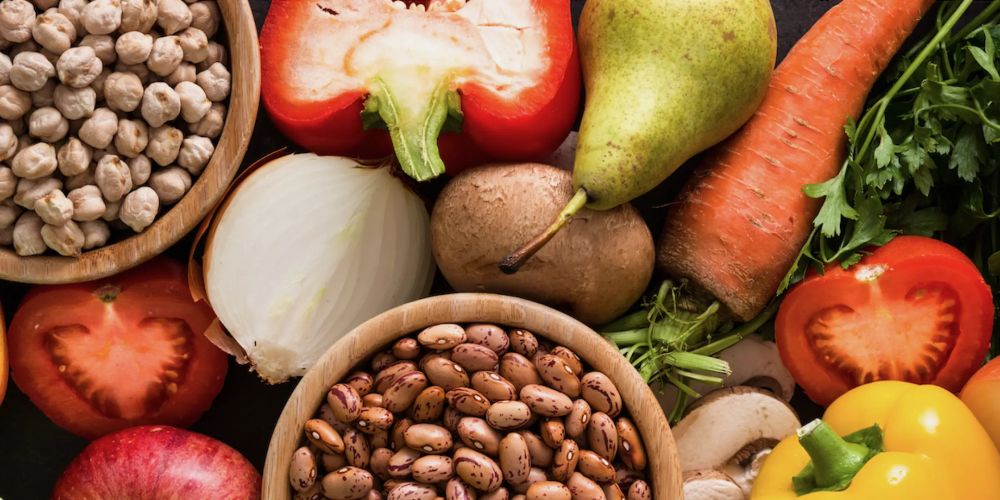
Enter Tiny Health's 30 Plants Challenge for your chance to win big
Join Tiny Health’s free 7-day gut health challenge and get expert tips, daily inspiration, and recipes to help you reach 30 different plants and a healthier gut. Why 30? Research shows that eating a w...
www.tinyhealth.com
September 12, 2025 at 5:15 PM
🧬 Research from the American Gut Project shows that people who eat 30+ different plants per week tend to have a more diverse gut #microbiome than those eating under 10.
At Tiny Health, we're running a fun 7-day challenge to help you get there—plus one winner gets a gut health test ($199 value)!
At Tiny Health, we're running a fun 7-day challenge to help you get there—plus one winner gets a gut health test ($199 value)!
Reposted by Tim Straub
MAGdb: a comprehensive high quality MAGs repository for exploring microbial metagenome-assemble genomes genomebiology.biomedcentral.com/articles/10.... #jcampubs

MAGdb: a comprehensive high quality MAGs repository for exploring microbial metagenome-assemble genomes - Genome Biology
Metagenomic analyses of microbial communities have unveiled a substantial level of interspecies and intraspecies genetic diversity by reconstructing metagenome-assembled genomes (MAGs). The MAG databa...
genomebiology.biomedcentral.com
September 11, 2025 at 4:03 PM
MAGdb: a comprehensive high quality MAGs repository for exploring microbial metagenome-assemble genomes genomebiology.biomedcentral.com/articles/10.... #jcampubs
Authors argue that integrating metagenomics, culturing, and experimental validation to study hidden yet ecologically significant microbial species will advance our understanding of the microbiome in health and disease, and inform next-gen therapeutics leveraging the full diversity of the gut.

🚨 New pre-print from the lab! We performed a large-scale meta-analysis of the uncultured gut #microbiome in >10,000 metagenomes enabling us to identify a new candidate biomarker of health. www.biorxiv.org/content/10.1...

Meta-analysis of the uncultured gut microbiome across 11,115 global metagenomes reveals a new candidate biomarker of health
The human gut microbiome plays an important biological role in host health, yet over 60% of gut species remain uncultured and hence inaccessible to experimental manipulation. Here we analysed 11,115 h...
www.biorxiv.org
September 10, 2025 at 1:11 PM
Authors argue that integrating metagenomics, culturing, and experimental validation to study hidden yet ecologically significant microbial species will advance our understanding of the microbiome in health and disease, and inform next-gen therapeutics leveraging the full diversity of the gut.
Reposted by Tim Straub

There are two recent papers that use sourmash in creative ways - and it gladdens my heart! pubmed.ncbi.nlm.nih.gov/40812187/ by @silask.bsky.social et al looks cleverly at human gut subspecies. www.biorxiv.org/content/10.1... by @rayanchikhi.bsky.social et al counts billions of k-mers. Super neat!

Subspecies of the human gut microbiota carry implicit information for in-depth microbiome research - PubMed
Microbial strains within a single species can exhibit distinct functional characteristics due to variations in gene content and often show individual specificity, which can obscure unbiased associatio...
pubmed.ncbi.nlm.nih.gov
September 8, 2025 at 1:49 PM
There are two recent papers that use sourmash in creative ways - and it gladdens my heart! pubmed.ncbi.nlm.nih.gov/40812187/ by @silask.bsky.social et al looks cleverly at human gut subspecies. www.biorxiv.org/content/10.1... by @rayanchikhi.bsky.social et al counts billions of k-mers. Super neat!
Reposted by Tim Straub

A Nature Outlook article reports on the preliminary evidence that microbiota-based treatments can be beneficial for people with mood disorders, such as depression and anxiety. But how these interventions work is not clear, and human trials are needed. #microbiome #medsky 🧪

Why nurturing the gut microbiota could resolve depression and anxiety
Links between gut microbes and mental health could lead to large-scale trials of probiotic interventions.
go.nature.com
September 6, 2025 at 1:31 AM
A Nature Outlook article reports on the preliminary evidence that microbiota-based treatments can be beneficial for people with mood disorders, such as depression and anxiety. But how these interventions work is not clear, and human trials are needed. #microbiome #medsky 🧪
3/3 Why this matters: C-section babies have higher rates of asthma, allergies, and autoimmune conditions later in life. Early microbiome interventions during the critical infancy window could potentially prevent the 'atopic march' - need larger, longer studies to confirm!
September 4, 2025 at 12:51 AM
3/3 Why this matters: C-section babies have higher rates of asthma, allergies, and autoimmune conditions later in life. Early microbiome interventions during the critical infancy window could potentially prevent the 'atopic march' - need larger, longer studies to confirm!
2/3 Key findings from the study:
• ⬆️ Bifidobacterium abundance (p=0.025)
• ⬆️ HMO degradation genes (α-L-fucosidase, p=0.019)
• C-section index normalized to vaginal birth levels
• Atopic dermatitis OR 0.17 (95% CI: 0.023-0.723, p=0.031)
• ⬆️ Bifidobacterium abundance (p=0.025)
• ⬆️ HMO degradation genes (α-L-fucosidase, p=0.019)
• C-section index normalized to vaginal birth levels
• Atopic dermatitis OR 0.17 (95% CI: 0.023-0.723, p=0.031)
September 4, 2025 at 12:51 AM
2/3 Key findings from the study:
• ⬆️ Bifidobacterium abundance (p=0.025)
• ⬆️ HMO degradation genes (α-L-fucosidase, p=0.019)
• C-section index normalized to vaginal birth levels
• Atopic dermatitis OR 0.17 (95% CI: 0.023-0.723, p=0.031)
• ⬆️ Bifidobacterium abundance (p=0.025)
• ⬆️ HMO degradation genes (α-L-fucosidase, p=0.019)
• C-section index normalized to vaginal birth levels
• Atopic dermatitis OR 0.17 (95% CI: 0.023-0.723, p=0.031)